
Last updated October 9, 2026
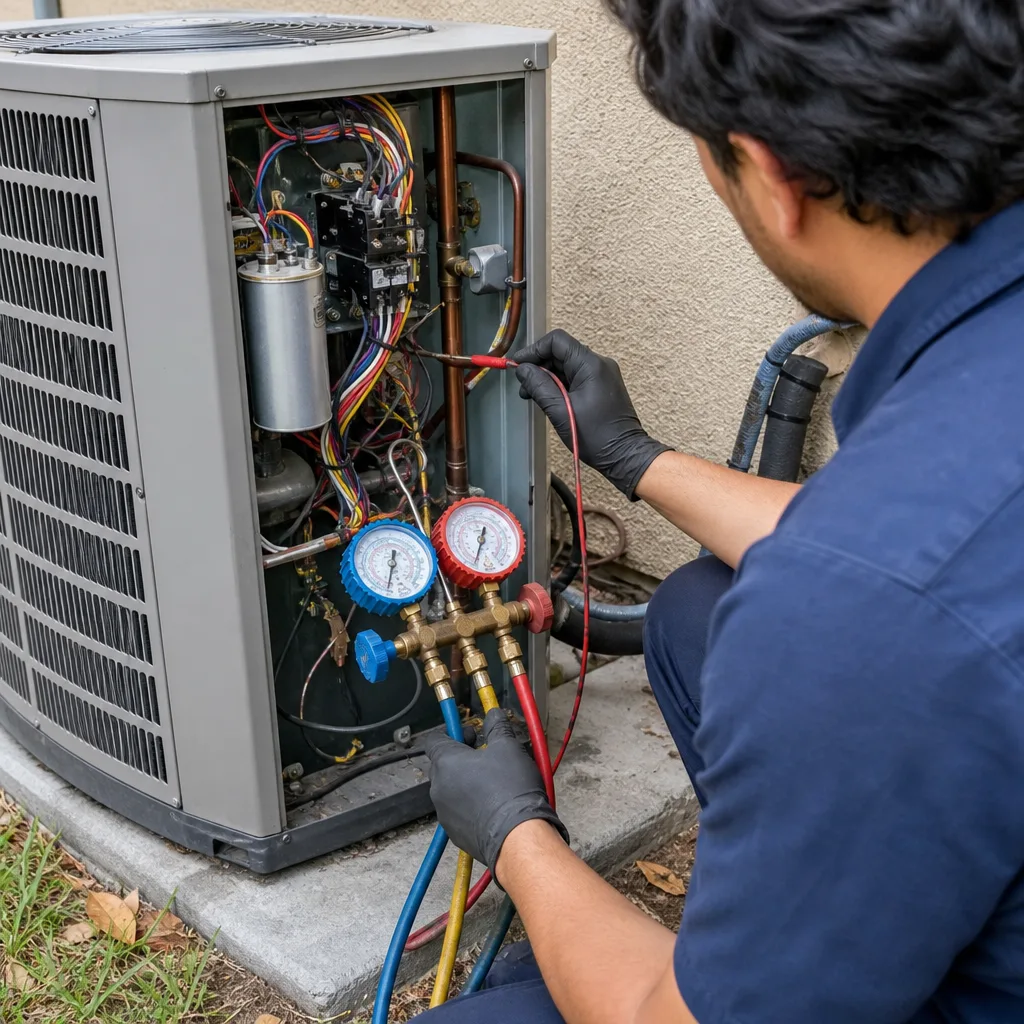
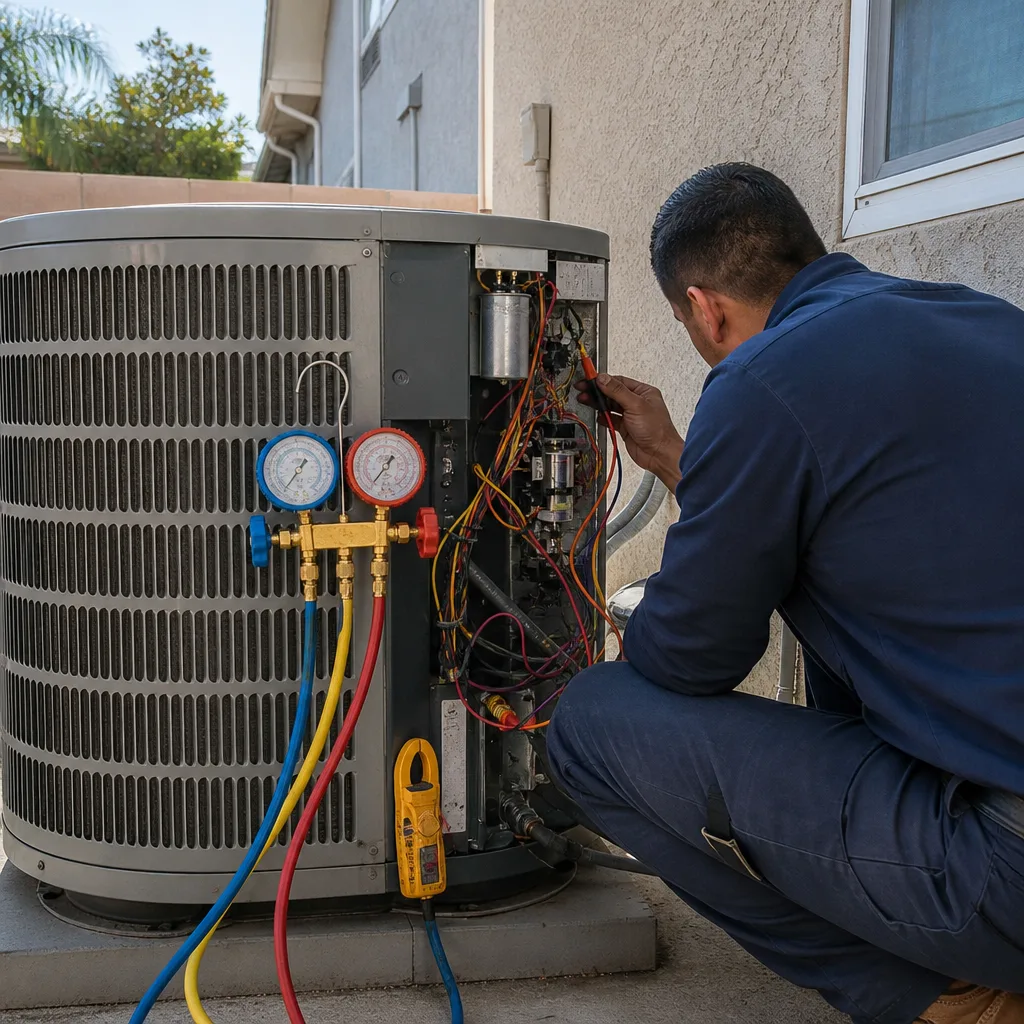
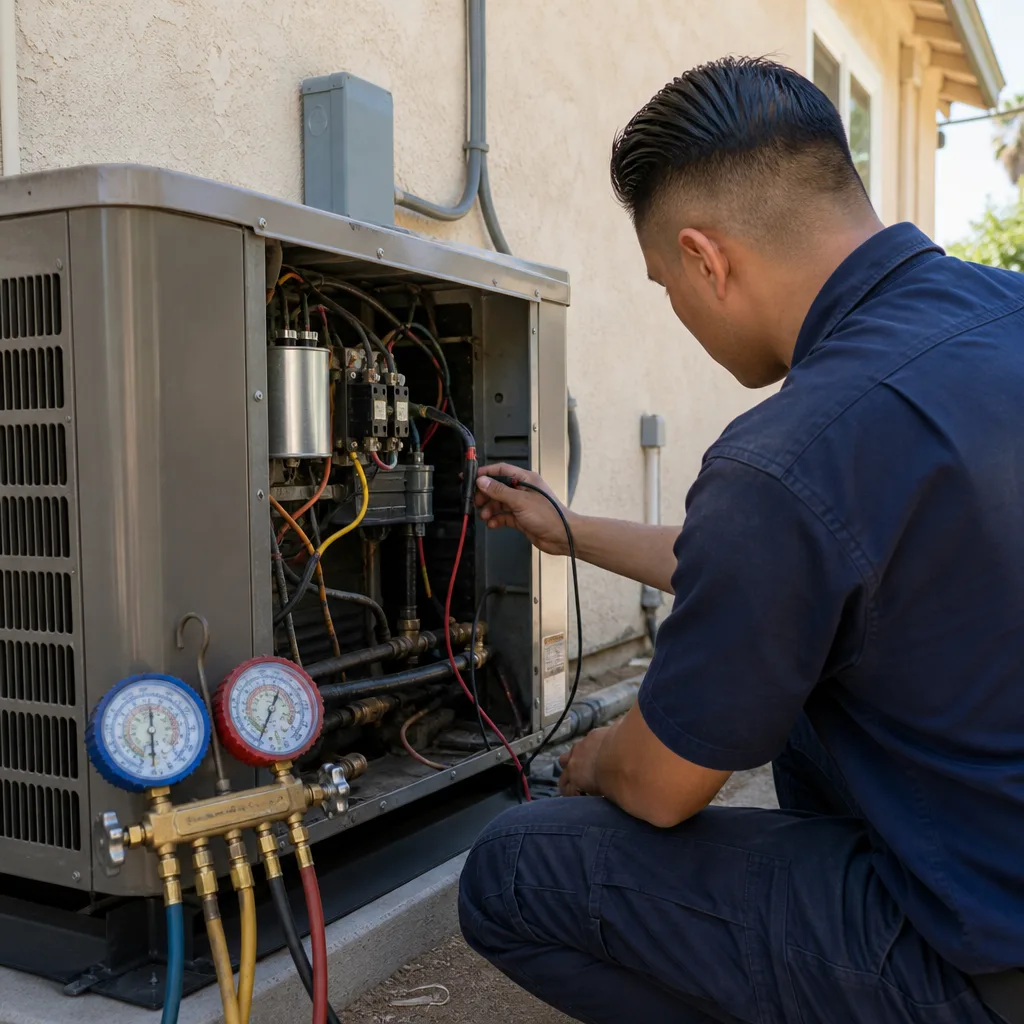
Seasonal tune-up and full diagnostic on your Carrier, Trane, or Goodman system - readings shown to you before any repair is proposed
Diagnosis first, numbers second - you approve the repair price before a single part goes in.
 Before
 After
After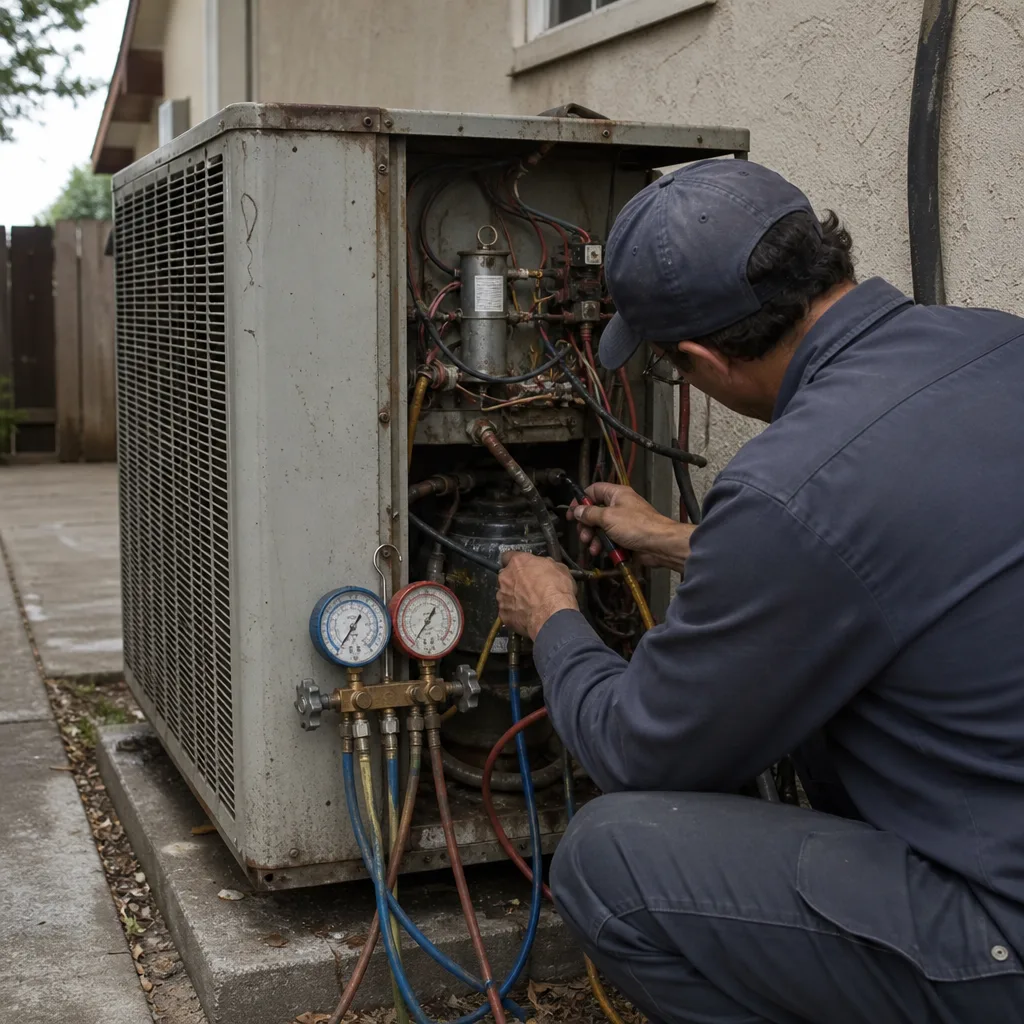 Before
 After
After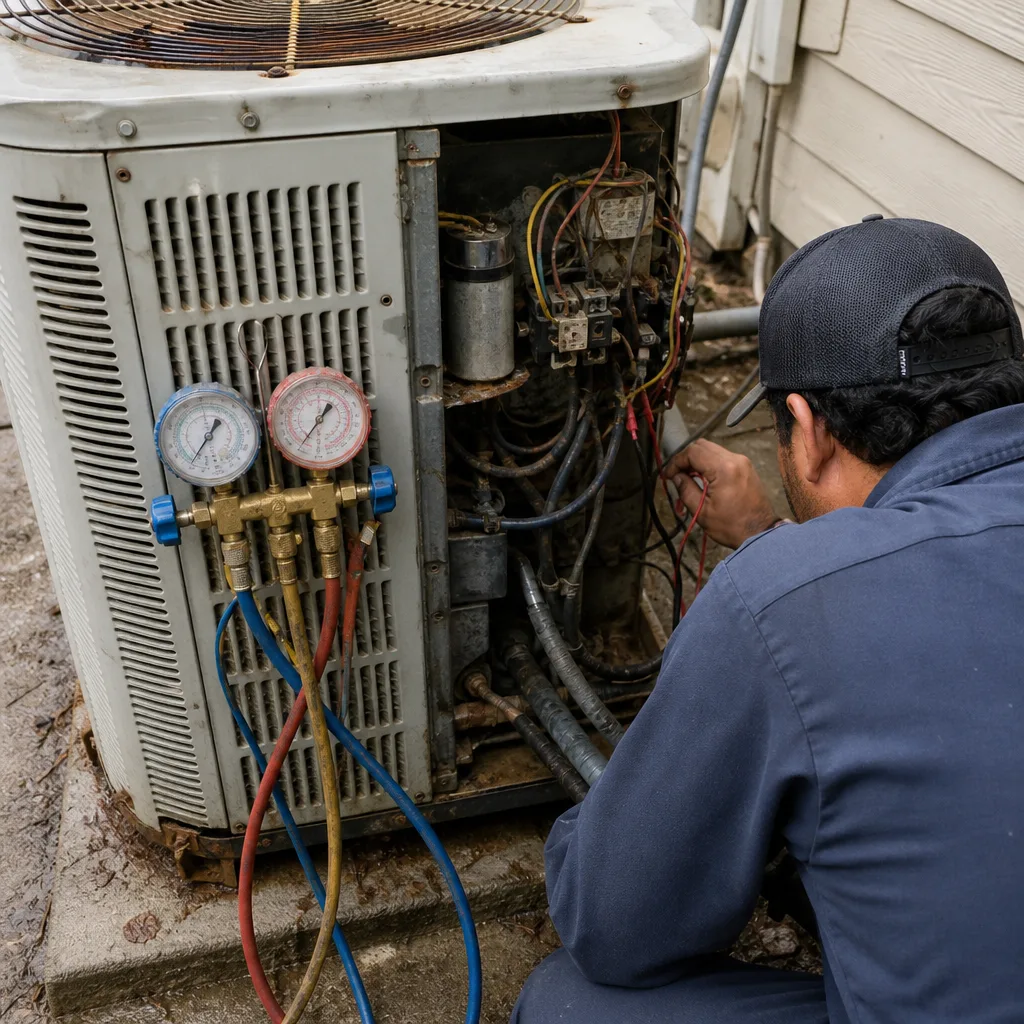 Before
 After
AfterHVAC Cost Breakdown: The Los Angeles Homeowner’s Reference for 2026
Two Los Angeles homeowners in the same zip code can get quotes of $6,500 and $11,000 for the same 3-ton AC replacement, and both quotes might be honest. The difference usually lives in equipment brand tier, duct modification scope, and whether the low bidder pulled a permit. This guide breaks down what actually drives HVAC pricing in Los Angeles so you can read a quote line by line and know what you’re paying for, what you can skip, and where a low number should make you suspicious.
Quick Answer
A full HVAC system replacement in Los Angeles typically runs $9,000 to $18,000 in 2026, while an AC-only replacement lands between $5,500 and $11,000 depending on equipment tier, duct condition, and access difficulty. Permit fees add $200 to $600, and qualifying heat pump installations can bring $1,500 to $3,000 back through LADWP and federal tax credits. Repair work is far cheaper in most cases: most furnace repairs run $150 to $450 depending on the part, and most AC repairs fall between $200 and $600.
Table of Contents
- The Five Most Common LA HVAC Jobs and What They Cost
- Permit Fees: The Line Item That Separates Legit Quotes from Cheap Ones
- Equipment Tiers Explained: What You Actually Get at Each Price Point
- LA Labor Variables: Attics, Flat Roofs, and Prevailing Wage
- LADWP and Federal Tax Credits: Stacking Your Savings
- Repair or Replace: A Decision Framework for LA Homeowners
- How to Read an HVAC Quote Line by Line
The Five Most Common LA HVAC Jobs and What They Cost
The first thing to understand about HVAC pricing in Los Angeles is that “an HVAC system” is not one thing. It’s a collection of components: the condenser outside, the evaporator coil and air handler inside, the furnace or heat pump, the ductwork, the thermostat, and the line set connecting it all. Different jobs touch different parts, and prices vary accordingly. Here are the five jobs we quote most often, with realistic 2026 ranges for the LA market.
1. AC-Only Replacement: $5,500 to $11,000
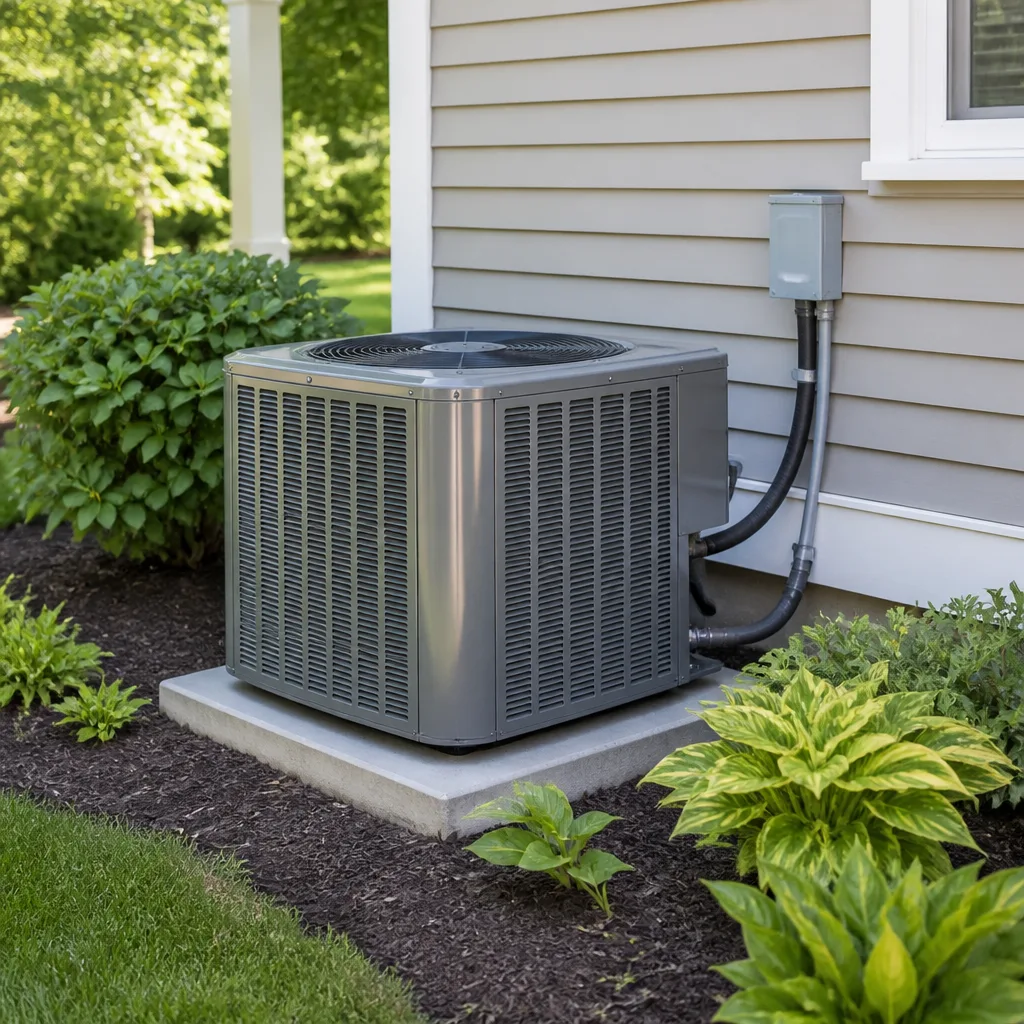
This is a condenser and coil swap, keeping your existing furnace and ducts. Entry-level equipment like Goodman lands at the bottom of the range. Mid-tier Carrier or Lennox units sit in the middle. Premium Trane or Daikin systems with higher SEER2 ratings push toward the top. Most LA homes we see need a 3-ton unit, and that size drives the base price. The spread between the low and high number is mostly equipment cost, not labor.
2. Heat Pump Conversion: $10,000 to $19,000
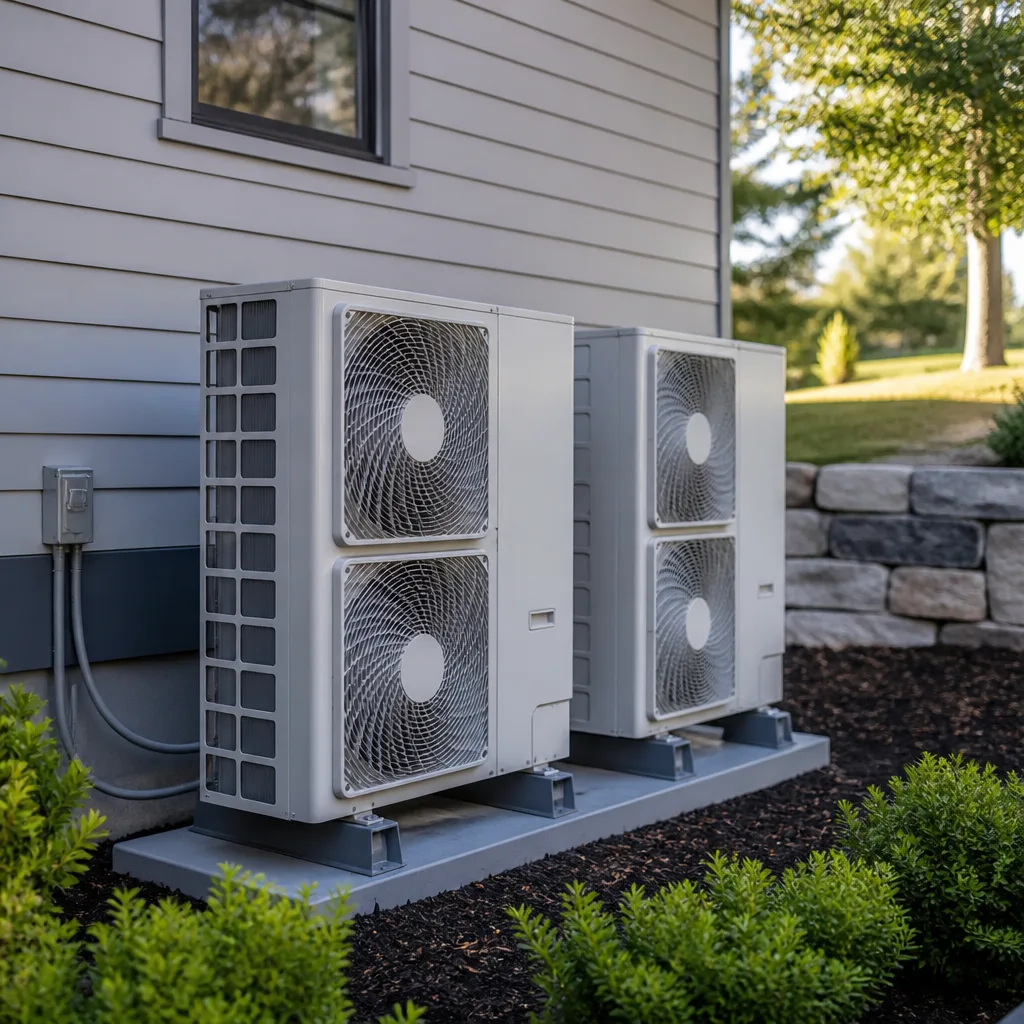
Converting from a gas furnace to a heat pump is more involved than a simple AC swap. You’re replacing both the heating and cooling sides, which means new equipment inside and out, plus rewiring and sometimes a panel upgrade. LA’s mild winters make heat pumps a genuinely good fit, and the rebate math is better than ever. This is also where Heat Pump Installation in Los Angeles costs vary most widely, because duct condition and electrical capacity play a big role.
3. Furnace Replacement: $4,000 to $8,500
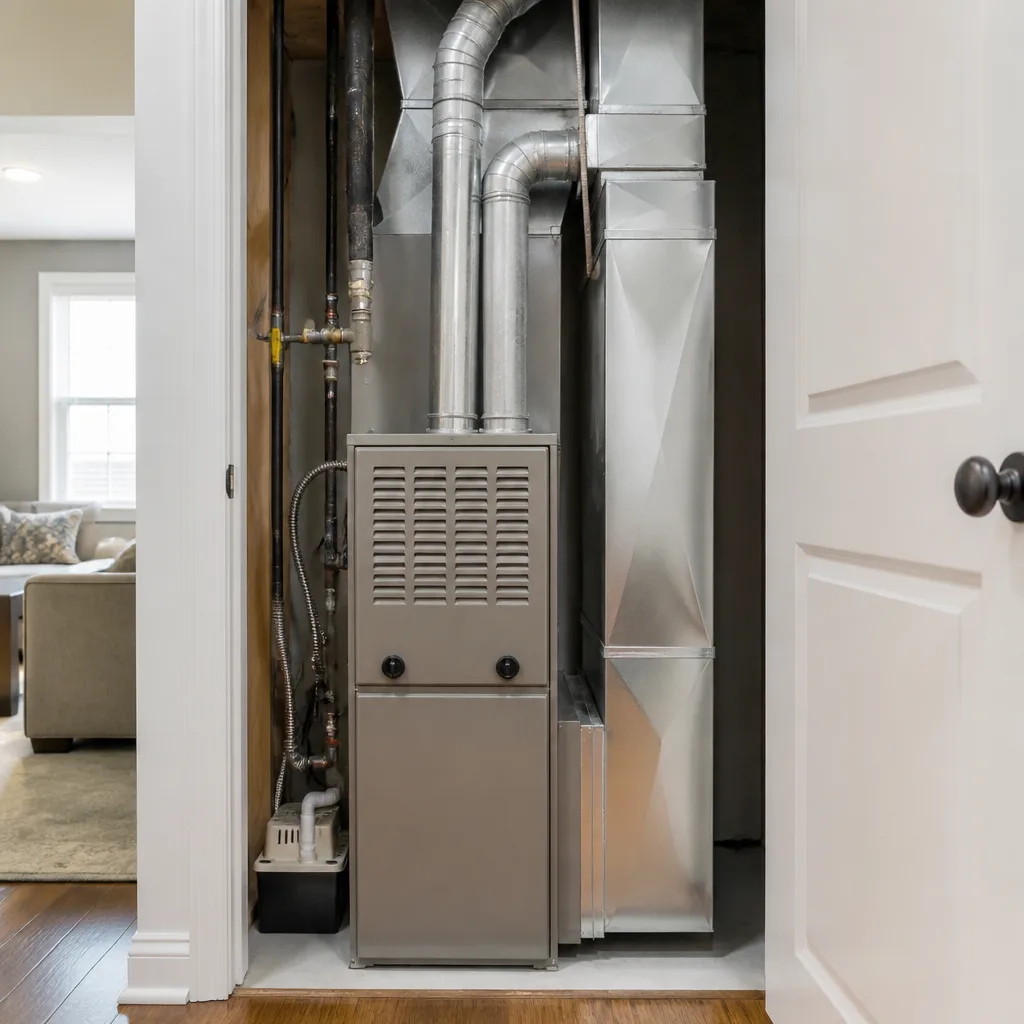
Furnace-only replacement is less common in LA than in colder markets, but older homes in the San Fernando Valley and the foothills still run gas heat. The range covers an 80% AFUE entry-level unit up to a 96% high-efficiency model with a variable-speed blower. If your furnace is 20 years old and you’re thinking about Furnace Repair in Los Angeles, a $150 to $450 repair on a failing heat exchanger is often money better spent toward replacement. We’ll walk you through that math honestly.
4. Full System Replacement: $9,000 to $18,000
This is the big one: new condenser, new coil, new furnace or air handler, new thermostat, new line set, and a full startup and balance. The range reflects equipment tier, system size, and access. A 2.5-ton Goodman system in a single-story ranch with a clear attic will be near the bottom. A 5-ton Trane system with a variable-speed blower in a two-story with a tight attic will be near the top. Neither quote is a ripoff. They’re different jobs.
5. Duct Repair or Replacement: $1,500 to $8,000
Ductwork is the most under-quoted line item in Los Angeles. Homes built before 1980 often have undersized or leaking ducts, and a new high-efficiency system connected to bad ducts will underperform. Sealing and minor repair runs $1,500 to $3,000. Full duct replacement in a large home, especially one with inaccessible runs, can hit $8,000. A reputable contractor will inspect the ducts before quoting a full system replacement. A contractor who skips that step is either cutting corners or planning a change order.
Permit Fees: The Line Item That Separates Legit Quotes from Cheap Ones
In Los Angeles, a mechanical permit is required for any HVAC replacement or new installation, and the process is covered in detail in our HVAC Permits, Codes & Inspections in CA: What You Need to Know guide. That’s not a strong recommendation; it’s the law. City of LA permit fees for a typical residential HVAC replacement run $200 to $600 depending on the scope, and LA County jurisdictions have their own fee schedules in the same range. A quote that doesn’t include a permit line item is a warning sign. It usually means one of two things: either the contractor is skipping the permit entirely, or they’re planning to call you after the job starts and tell you the permit is “an extra.” Neither is acceptable.
The permit isn’t just paperwork. It triggers an inspection by a city or county building inspector who verifies the installation meets current code. That inspection is your protection against a botched install that a contractor walks away from. When we quote a job in Los Angeles, the permit fee is a line item on the written quote, not a surprise. It’s part of the discipline that The Garrison Standard has required since 2003, and it’s one of the reasons our written price before any work starts is a real number, not a starting point.
Equipment Tiers Explained: What You Actually Get at Each Price Point
HVAC equipment falls into roughly three tiers, and the price differences are real but smaller than many homeowners think. The bigger driver of your total cost is usually the install scope, not the nameplate on the unit. Here’s what each tier actually buys you at LA prices.
Entry-Level: Goodman, Ameristar, RunTru
Expect $5,500 to $8,000 installed for a full system. These units are built to a price, not to a performance spec. They’ll cool your house, but the SEER2 ratings are lower, the compressors are single-stage, and the warranties are shorter. Goodman’s reputation is fine for what it is: basic, functional, and cheap to replace if it fails early. Where entry-level equipment makes sense: rentals, homes you plan to sell within five years, and mild coastal climates where the system barely runs.
Mid-Tier: Carrier, Bryant, Lennox
Expect $8,500 to $14,000 installed. This is the sweet spot for most LA homeowners. You get two-stage compressors, better SEER2 ratings, quieter operation, and 10-year parts warranties when registered. Bryant and Carrier share parent company United Technologies, and their equipment is comparable. The difference between a mid-tier system and an entry-level one is most noticeable in the shoulder seasons, April through June, when ambient temperatures swing. A two-stage unit runs longer at lower output, which means more even temperatures and lower humidity in the house.
Premium: Trane, Daikin, American Standard
Expect $12,000 to $18,000 installed. These are variable-speed systems with the highest efficiency ratings, the quietest operation, and the best warranty coverage. Trane and American Standard are built on the same platform with different branding. Daikin owns Goodman but positions its namesake line as flagship quality. Premium equipment pays off in homes where you plan to stay 15-plus years and where annual cooling hours are high, like inland LA neighborhoods in the Valley. The efficiency difference between a 15 SEER2 and a 20 SEER2 unit is real, and it shows up on your LADWP bill every summer.
LA Labor Variables: Attics, Flat Roofs, and Prevailing Wage
Labor is the line item most homeowners can’t compare from quote to quote, because LA install conditions vary wildly. Here are the four variables that legitimately move the labor number by thousands of dollars.
Attic Access
Many LA homes built between 1950 and 1980 have furnaces and evaporator coils in attics with access hatches that are smaller than the equipment going in. That means the crew is working in 130-degree heat, in a crawl space, moving heavy components through a narrow opening. It takes longer, it’s harder on the crew, and it costs more. A contractor who quotes an attic job without seeing the attic is guessing. We inspect before we quote, always.
Flat-Roof Condenser Placement
A lot of LA architecture, especially mid-century and modern builds, puts the condenser on a flat roof. That requires a crane or a four-person carry up a ladder, plus roof curb work and weatherproofing. Flat-roof installs add $500 to $1,200 over ground placement, and that’s a legitimate cost, not padding. If one quote is cheap and the other is expensive and your condenser is going on a roof, ask the cheap bidder how they’re getting it up there.
Multi-Family and High-Rise Work
Condos and apartments in LA often have condensers on balconies, on building roofs, or in chase ways with shared infrastructure. These jobs require coordination with building management, sometimes a lift, and often a second crew member for safety. The labor rate for multi-family work runs 20 to 40 percent higher than single-family residential, and that’s before you get into HOA requirements.
Prevailing Wage Jobs
Some LA jobs, particularly those involving public contracts or certain multi-family developments, trigger prevailing wage requirements. That pushes labor rates up substantially, often to $80 to $120 per hour. It also means payroll reporting and compliance costs. A contractor who bids prevailing wage work without pricing for it will either lose money or cut corners. Neither outcome is good for the homeowner.
LADWP and Federal Tax Credits: Stacking Your Savings
The incentive picture for HVAC work in Los Angeles changed meaningfully in the last two years, and the money available is better than most homeowners realize. Here’s what’s on the table in 2026.
Federal Tax Credit
The federal Energy Efficient Home Improvement Credit covers 30% of the cost, up to $2,000, for qualifying heat pump installations. A qualifying heat pump must meet certain efficiency thresholds, which most mid-tier and premium units do. This is a tax credit, not a rebate, which means you claim it on your return. It applies to the equipment cost, not the full install cost including labor in most interpretations, but the credit is still substantial.
LADWP Rebates
LADWP runs a heat pump rebate program that pays up to $1,500 for qualifying installations depending on equipment type and efficiency. The utility also offers a smaller rebate for high-efficiency central AC replacements. These are cash rebates, typically processed within 60 to 90 days of install completion. Stacking LADWP and federal credits can reduce the net cost of a heat pump conversion by $1,500 to $3,000, which narrows the gap between a basic AC swap and a full heat pump conversion to almost nothing in some cases.
When you call Dalton Heating & Air, part of our job is walking you through which rebates apply to your specific install and making sure the paperwork is handled correctly. The equipment we recommend qualifies for the programs, and the written quote includes expected rebate amounts so you know your net cost before you sign anything.
Repair or Replace: A Decision Framework for LA Homeowners
The most expensive HVAC decision is the one made in a panic on a 105-degree day in August with a technician standing in your living room, which is why we recommend reading our HVAC Emergency Preparedness Guide for Los Angeles Homes before summer hits. Here’s the framework we use when a customer asks us whether to fix or replace. It’s the same math we’d run on our own homes.
- Age matters first. An AC or furnace that’s 15-plus years old is approaching the end of its service life. Even a $400 repair on a 15-year-old system is a bet against the odds. Systems in LA run hard, and the useful life here is shorter than the manufacturer’s brochures suggest.
- Repair cost versus replacement cost. If a repair is under 30% of the replacement cost and the system is under 10 years old, repair usually wins. If it’s over 50% and the system is over 12 years old, replacement usually wins. Between those points, it depends on condition and usage patterns.
- Coolant type matters in 2026. R-22 refrigerant, common in pre-2010 systems, is phased out and expensive. A system with an R-22 leak may need to be replaced rather than recharged, because the refrigerant alone can cost hundreds of dollars and the leak will recur. This is a hard truth we communicate up front.
- Efficiency savings are real but not dramatic. Upgrading from a 13 SEER to an 18 SEER system might save $300 to $600 per year on LADWP bills. That matters over 15 years, but it is not going to pay for the new system by itself. Replacing for efficiency alone only makes sense if the old system is failing anyway.
- Repair frequency tells you something. A system that needs its third repair in 18 months is telling you it’s done. We track every service visit and we’ll show you the pattern. Two repairs in a season is a trend. Three is a replacement waiting to happen.
How to Read an HVAC Quote Line by Line
A legitimate HVAC quote in Los Angeles has specific line items. A vague quote is a red flag, and a quote that’s just a lump sum with no breakdown is how homeowners end up surprised. Here’s what to look for.
- Equipment line items. The quote should name the condenser, coil, furnace or air handler, and thermostat by brand and model number. “New AC system” is not a line item. You need model numbers so you can verify what’s being installed and compare apples to apples across quotes.
- Labor scope. Look for language describing the scope: removal and disposal of old equipment, line set replacement or flush, duct connection, electrical disconnect, condensate drain, and startup. If a line says “installation,” ask what that includes. A legitimate quote spells it out.
- Permit line item. In Los Angeles, it should be there. If it’s missing, ask why. If the answer is “we don’t pull permits” or “that’s extra,” find another contractor. The permit is your proof the job was done to code and your protection if something goes wrong.
- Rebate documentation. If the system qualifies for LADWP or federal incentives, the quote should say so and list expected amounts. A contractor who doesn’t mention rebates is either uninformed or not planning to do the paperwork. Neither inspires confidence.
- Warranty terms in writing. The manufacturer warranty is one thing. The workmanship guarantee is another. Dalton Heating & Air includes a written 365-Day Done Right Promise on every repair. If the work does not hold, we return at no charge. That guarantee is in writing before you sign, not an add-on you discover later.
Common Mistakes to Avoid
- Buying on brand alone. A cheap Goodman installed properly will outperform a Trane installed badly. The install quality matters more than the nameplate, which is why the crew, the training, and the guarantee matter as much as the equipment.
- Skipping the duct inspection. In Los Angeles, old homes often have duct leaks that waste 20 to 30 percent of the air your system produces. A contractor who quotes a system without checking ducts is selling you a boat with a hole in it.
- Ignoring permit requirements. An unpermitted install can show up in a home inspection when you sell, and it can void your homeowner’s insurance in a worst case. The $300 you save today becomes a $5,000 problem at escrow.
- Fixing a 20-year-old system repeatedly. Every repair on a system past its service life is money burned. At some point, usually around 15 to 18 years in LA’s climate, you’re better off replacing. We’ll tell you when that point is, even though it means we lose the repair work.
- Falling for the “too cheap to be real” quote. A full system replacement for $4,500 in Los Angeles is not a deal. It’s a warning. Equipment and labor at licensed, insured rates don’t leave room for that price. You’re either getting used equipment, no permit, or a change order coming later.
- Replacing the system without checking the thermostat or duct returns. Sometimes the problem isn’t the equipment at all. A bad thermostat or an undersized return can make a good system perform badly. A competent tech checks the whole system before recommending replacement.
When to Call a Professional
Call a professional when you see these signs: uneven cooling from room to room, a system that runs constantly without hitting set temperature, odd smells from the vents, coolant leaks or ice on the coils, or utility bills that spike without a change in usage. Any of these points to a system problem that is not going to fix itself. If your system is 15-plus years old and needs a major repair, call a professional to discuss replacement rather than throwing money into a unit near the end of its life. AC Repair in Los Angeles is our most requested service, and every diagnosis includes a written report of what we found, what it costs to fix, and whether replacement makes more sense. Dalton Heating & Air offers free estimates in Los Angeles. Call (361) 306-9515.
Frequently Asked Questions
A full HVAC system replacement in Los Angeles runs $9,000 to $18,000 installed, depending on equipment tier, home size, and access difficulty. A basic AC-only swap on a 2.5-ton system can start around $5,500, while a premium variable-speed heat pump with duct modifications can reach $19,000. Call (361) 306-9515 for a written quote specific to your home, free of charge.
Repair if the system is under 10 years old and the repair is under 30 percent of replacement cost. Replace if the system is 15-plus years old, needs a second major repair within 18 months, or uses phased-out R-22 refrigerant. We apply this same framework on every service call and give you a straight recommendation either way.
The spread is usually explained by equipment tier, permit inclusion, duct scope, and access conditions. Attic installs, flat-roof placements, and older homes with undersized ducts all add legitimate cost. A quote that omits the permit line item or doesn’t mention duct inspection is probably not a complete quote. For help spotting other red flags, see our HVAC Warning Signs: A Los Angeles Homeowner’s Reference Guide.
Yes. The federal Energy Efficient Home Improvement Credit covers 30 percent up to $2,000 on qualifying heat pumps, and LADWP offers cash rebates up to $1,500 depending on equipment. Stacked together, a qualifying Los Angeles heat pump install can return $1,500 to $3,000 in combined savings. Our written quotes include expected rebate amounts.
Most single-family replacements take one to two days on site, assuming the equipment is in stock and no duct modifications are needed. Jobs with full duct replacement or unusual access can extend to three or four days. We schedule the work on a set date, not a window, and the crew arrives when we say they will.
Yes. The City of LA and most LA County jurisdictions require a mechanical permit for HVAC replacement or new installation. Permit fees typically run $200 to $600. Any contractor quoting a system replacement without a permit line item is cutting a corner that can come back on you at home sale or inspection.
The Bottom Line
HVAC pricing in Los Angeles is complicated enough that two honest quotes can be $5,000 apart, but the structure of the cost is knowable. Equipment tier, permit fees, labor conditions, and duct scope explain almost all of the variance. A homeowner who understands those four variables can tell a competitive quote from a padded one and a legitimate job from a corner-cutting one. The cheapest quote is rarely the best; the most expensive is rarely the wisest. The right quote is the one that’s itemized, permitted, and backed by a written guarantee. That’s the standard we’ve held at Dalton Heating & Air home since 2003, and it’s the standard we’ll hold on your job.
Written by Marco Benitez, Owner at Dalton Heating & Air, serving Los Angeles since 2003. For more guides & resources, visit our blog.