
Last updated October 9, 2026
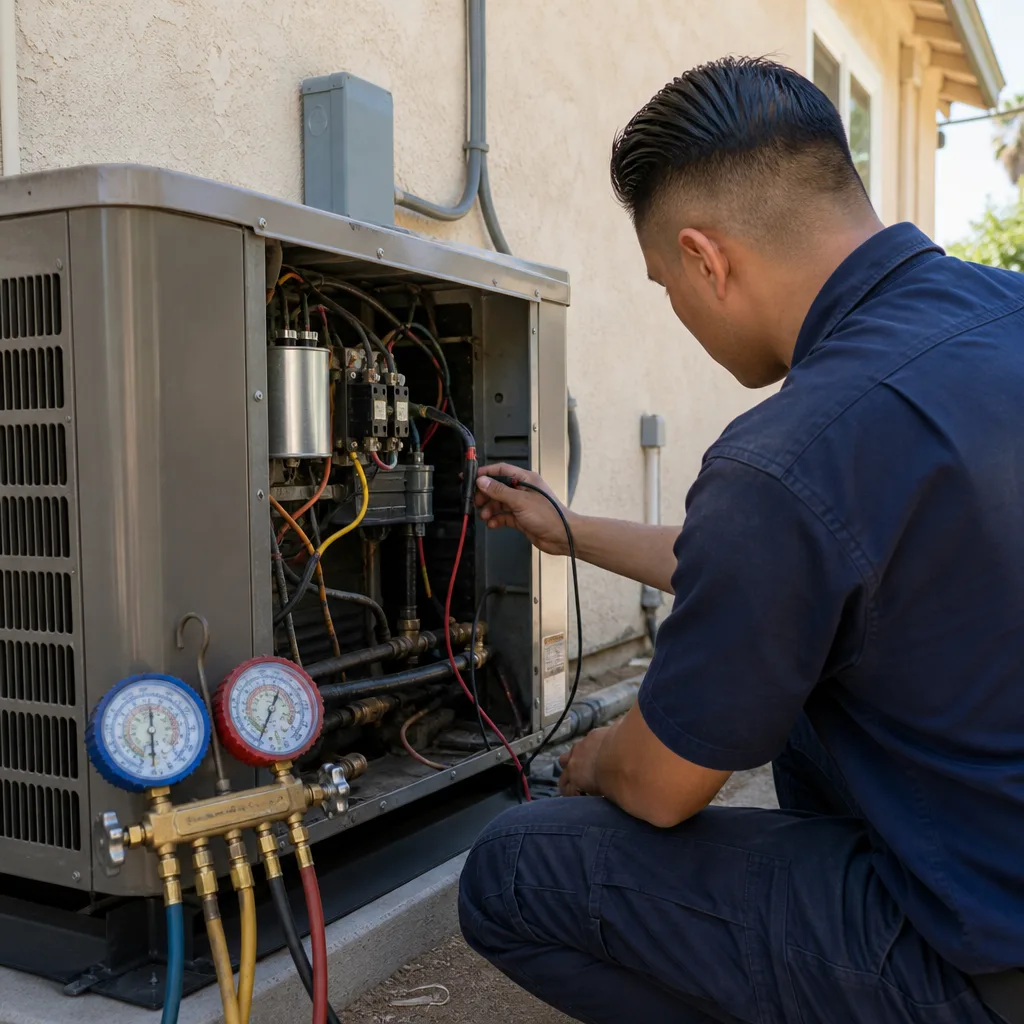
Seasonal tune-up and full diagnostic on your Carrier, Trane, or Goodman system - readings shown to you before any repair is proposed
Diagnosis first, numbers second - you approve the repair price before a single part goes in.
 Before
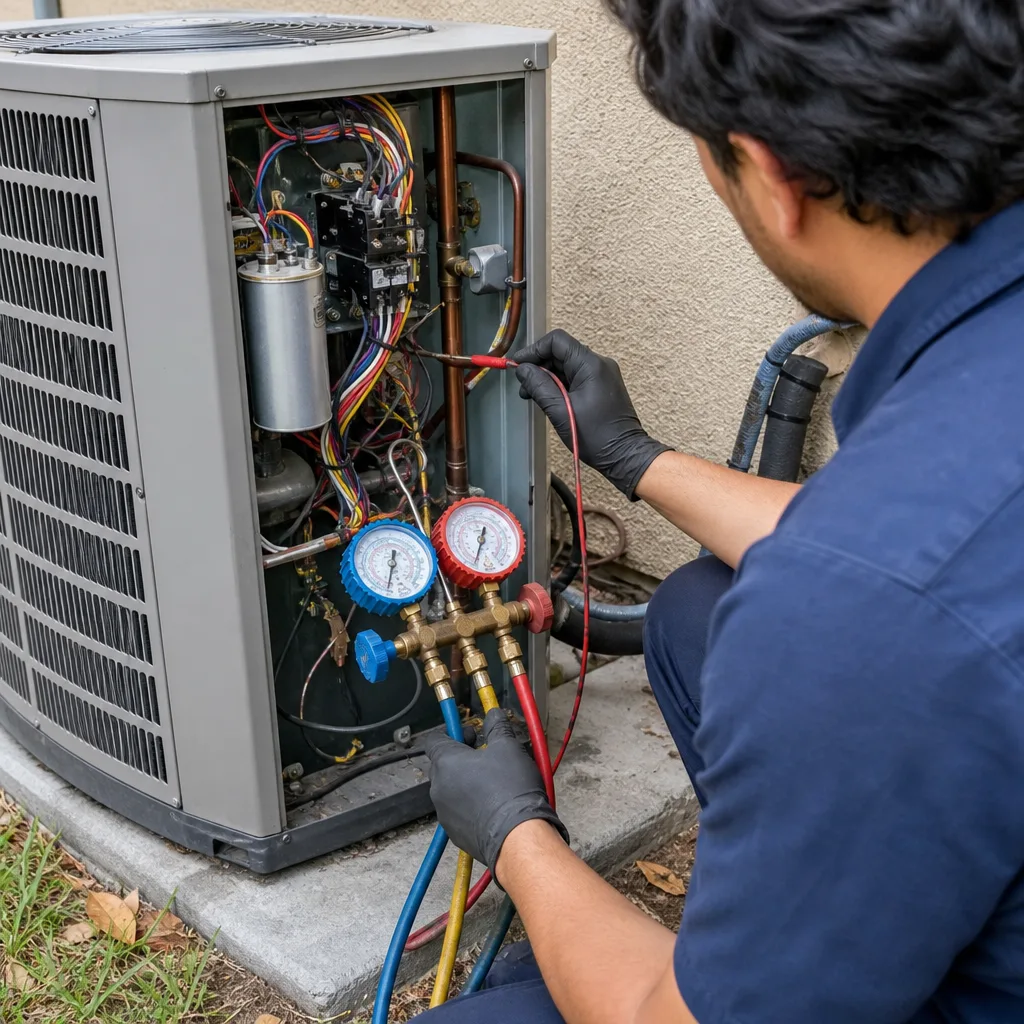 After
After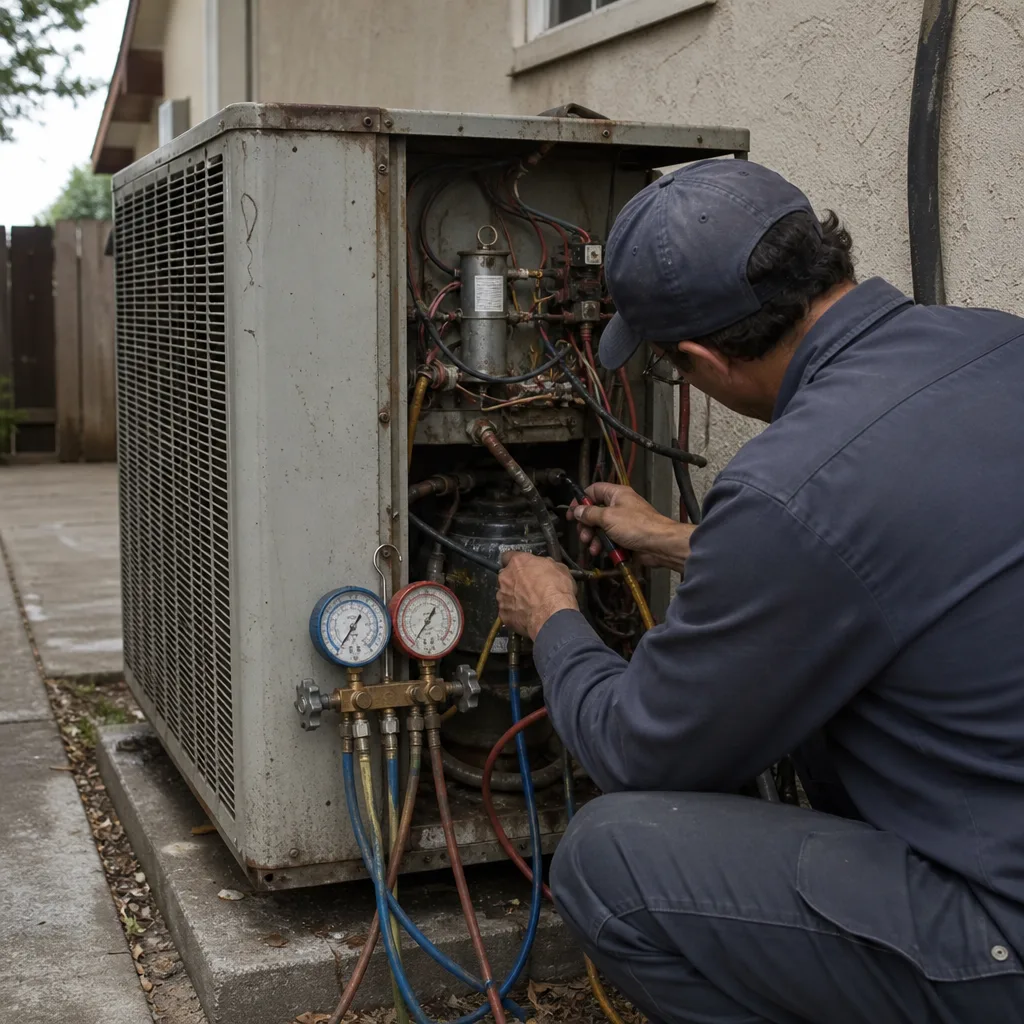 Before
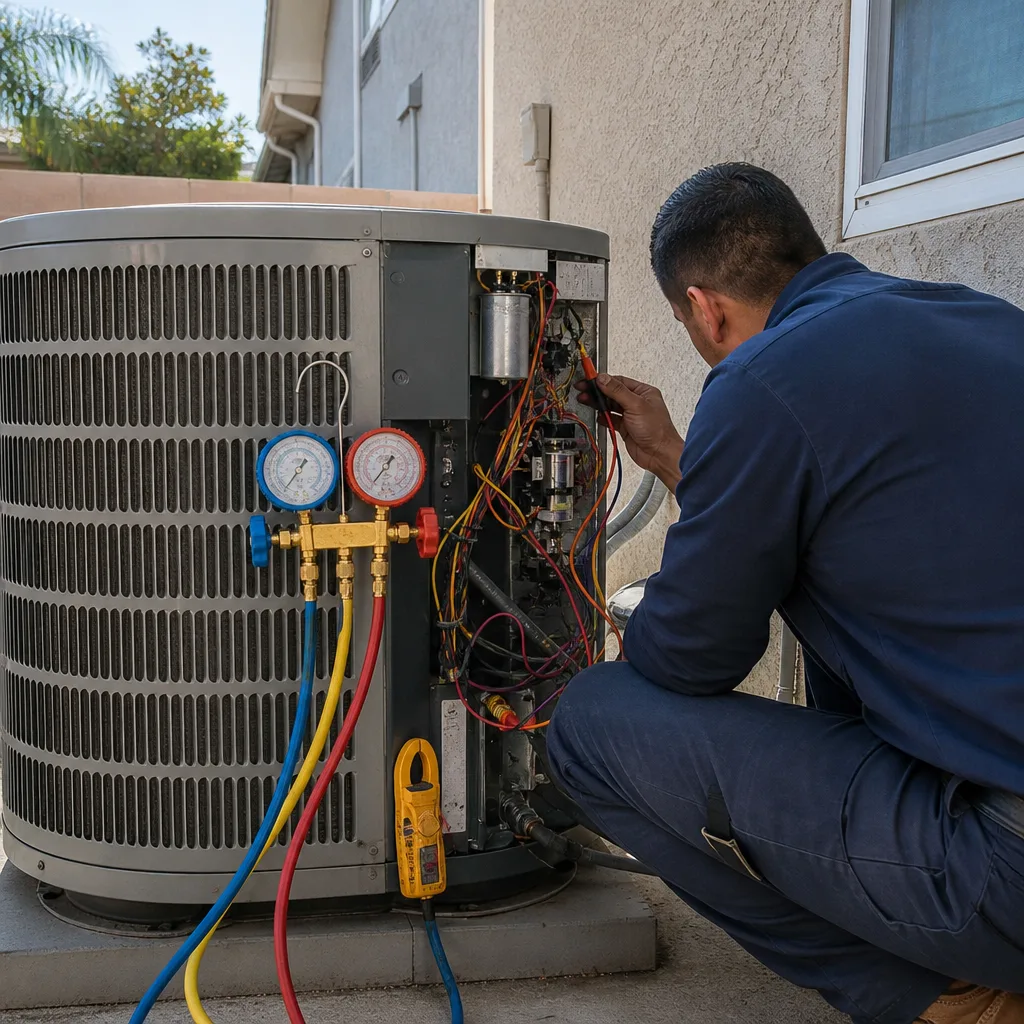 After
After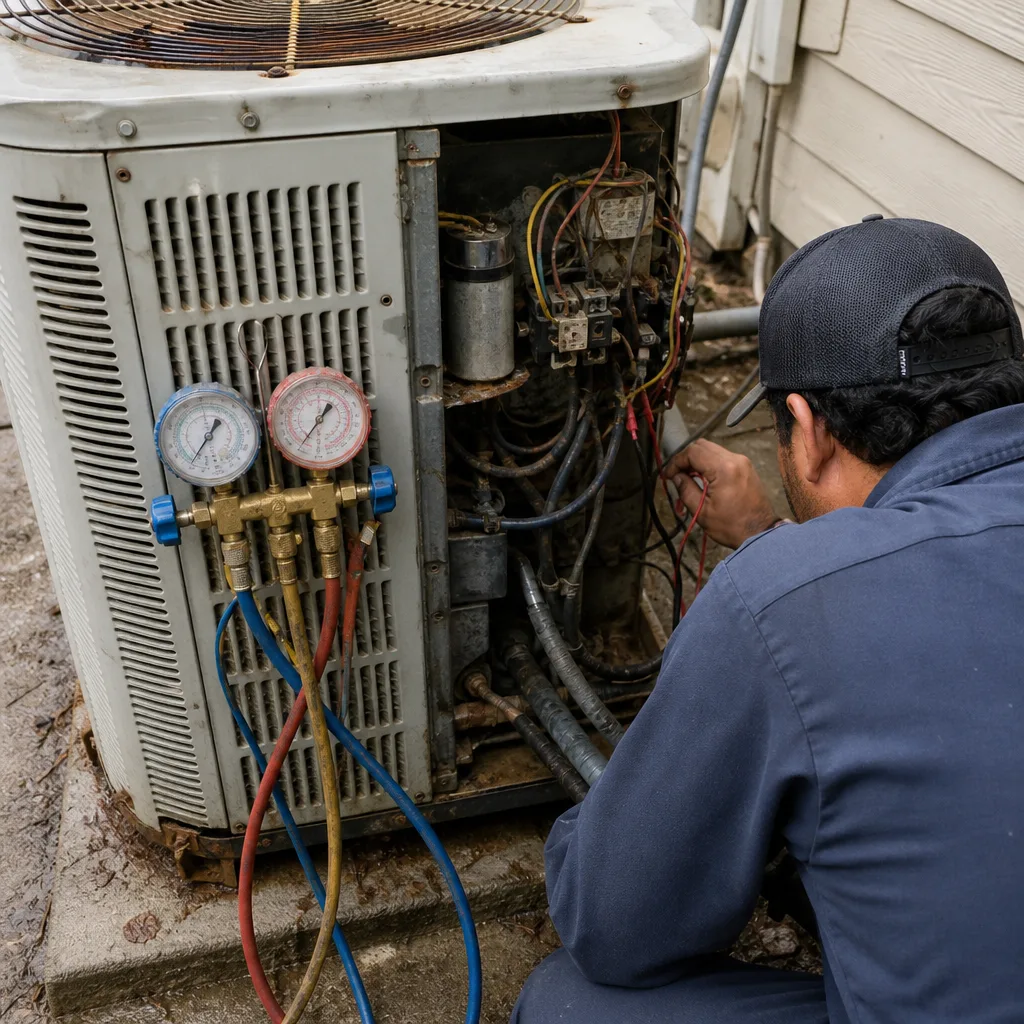 Before
 After
AfterHVAC Permits, Codes & Inspections in CA: What You Need to Know
Here’s a number most homeowners never hear until it’s too late: retroactive permits in Los Angeles County routinely cost three to five times what the original permit would have. A $450 HVAC changeout done without paperwork can become a $2,000+ problem during escrow, complete with wall openings, missed workdays, and a buyer who walks. This guide covers exactly which HVAC jobs need a permit in California, what inspectors actually check, how Title 24 and HERS testing work, and where unpermitted work goes wrong in Los Angeles real estate transactions.
Quick Answer
In California, any HVAC replacement or new installation requires a permit from your local building department. Repairs and part swaps generally do not. A permit plus inspection typically costs $150 – $600 depending on the jurisdiction, takes 1 – 3 weeks end-to-end, and includes a Title 24 compliance check along with HERS duct-sealing verification when ductwork is involved. Skipping the permit creates liability that follows the property, not the contractor.
Table of Contents
- When Is an HVAC Permit Required in California?
- Los Angeles County vs. City of Los Angeles: Different Rules
- Title 24 and HERS Testing: What These Actually Mean
- The Inspection Process, Step by Step
- What Permits Actually Cost in Los Angeles
- The Insurance Angle: When Unpermitted Work Voids Coverage
- Owner-Builder Rules: What You Can Legally Do Yourself
- Common Mistakes to Avoid
- When to Call a Professional
- Frequently Asked Questions
When Is an HVAC Permit Required in California?
California Building Code (CBC) Section 105 and the California Mechanical Code (CMC) Section 104 govern when a permit is triggered. The rule is straightforward: new installations and replacements require a permit. Repairs and component swaps do not.
Here’s the practical breakdown we use with homeowners every week, drawn from our more guides & resources:
- Requires a permit: Full system replacement (condenser, coil, furnace, or any combination), new ductwork installation, relocating a unit, adding a new system to an addition or ADU, upgrading electrical service for a heat pump, converting from gas to electric heat.
- Does not require a permit: Capacitor replacement, contactor replacement, thermostat swap, refrigerant recharge (when no leak repair is done), blower motor replacement, drain line clearing, basic burner cleaning.
- Gray area (varies by jurisdiction): Duct repair when more than 25% of the duct system is being replaced. Some inspectors treat this as new ductwork. Others call it a repair. In Los Angeles, a duct replacement over 25% triggers a permit.
The distinction matters because the California Energy Code (Title 24, Part 6) ties the permit to energy compliance verification. When a permit is pulled, the installing contractor must certify that the equipment meets minimum efficiency standards and that the installation follows manufacturer specs and code. No permit means no verification, which is the root of most downstream problems.
Los Angeles County vs. City of Los Angeles: Different Rules
Los Angeles is a patchwork of jurisdictions, and permit rules shift at city borders. A homeowner in Pasadena, Santa Monica, Long Beach, Burbank, or Torrance deals with a completely different building department than a homeowner in the City of Los Angeles. Los Angeles County unincorporated areas (think Altadena, East Los Angeles, Marina del Rey) use LA County Building and Safety, which has its own fee schedule and inspection protocols.
Key differences that trip people up:
- City of LA (LADBS): HVAC permits are filed through the Mechanical Division. Online permitting through the LADBS ePermit portal covers most residential changeouts. Inspection scheduling is automated. Fees run on a valuation system, so a $12,000 heat pump install carries a higher permit fee than a $7,000 furnace swap.
- LA County (unincorporated): The County’s Building and Safety Division handles permits for areas outside city limits. The process is similar but inspection slots can be harder to get in peak summer, with waits up to 10 business days.
- Independent cities: Glendale, Burbank, Santa Monica, and Pasadena each operate their own building departments. Santa Monica in particular enforces stricter energy standards that exceed state minimums, including additional efficiency requirements for heat pump installations.
A licensed contractor working regularly in the Los Angeles area knows which jurisdiction applies based on the property address, not the mailing address. It’s one of the first things we verify on a Heat Pump Installation in Los Angeles job, because filing in the wrong department wastes a week.
Title 24 and HERS Testing: What These Actually Mean
Title 24 is California’s energy code, and it has teeth. Since the 2022 update, residential HVAC work has been under tighter scrutiny than ever before. There are two parts homeowners need to understand: Title 24 compliance documentation and HERS field verification.
Title 24 Compliance
When a permit is pulled for HVAC work, the contractor must submit a Title 24 compliance form (CF1R) that certifies the equipment meets minimum efficiency ratings for the climate zone. Los Angeles County spans climate zones 6, 8, 9, and 10, which matters because zone 10 (the hotter inland areas like the San Fernando Valley and Santa Clarita) requires higher-efficiency equipment than coastal zone 6.
In plain terms: a 14 SEER unit might pass in coastal Los Angeles but fail in Woodland Hills. The compliance form prevents installers from cheaping out with undersized or low-efficiency equipment.
HERS Testing
HERS stands for Home Energy Rating System. A HERS rater is a third-party verifier who confirms the installation actually matches what the paperwork claims. The two most common HERS tests on HVAC jobs:
- Duct sealing verification: When new or substantially modified ductwork is installed, a HERS rater measures duct leakage. California requires no more than 5% total duct leakage (measured against system airflow) in most residential applications.
- Refrigerant charge check: For split systems, the rater confirms the refrigerant charge is within manufacturer spec. Incorrect charge can cut efficiency by 20% or more.
When a homeowner skips the permit, they skip the HERS test. We’ve returned to Los Angeles homes where unpermitted installs had duct leakage above 25%, a problem flagged in our HVAC Warning Signs: A Los Angeles Homeowner’s Reference Guide. The system runs constantly, the bills are brutal, and the homeowner doesn’t know why. That’s what third-party verification exists to catch.
The Inspection Process, Step by Step
If you’ve never pulled an HVAC permit in Los Angeles, here’s exactly what happens, in order:
- Permit filing: The contractor (or homeowner on an owner-builder permit) files the permit application with the correct jurisdiction, including equipment specs and Title 24 compliance documentation. Most residential changeouts are over-the-counter or ePermit in Los Angeles, meaning approval is same-day.
- Fee payment: Permit fees are calculated based on project valuation. A typical residential HVAC changeout permit runs $150 – $600 depending on the city.
- Work performed: The system is installed to manufacturer specs and current code. The contractor stages the job so the wall cavity, duct connections, and electrical work remain visible for inspection.
- Inspection requested: The contractor schedules the inspection online or by phone. In the City of Los Angeles, inspection slots are typically available within 2 – 5 business days during spring and fall, longer during summer peak.
- Inspector visit: The inspector checks the equipment placement, clearances, electrical connections, condensate drainage, gas line connections (for furnaces), flue venting, duct sealing, and the Title 24 compliance form against the installed equipment.
- Pass or correction: If everything checks out, the inspector signs off and the permit is finalized. If there are corrections, the contractor has to fix them and schedule a re-inspection. Most jurisdictions charge a re-inspection fee of $100 – $200.
- Final documentation: The homeowner receives a finaled permit, which becomes part of the property record. This is the document that matters during a real estate sale.
A failed inspection isn’t rare. Common corrections in Los Angeles include improper condensate drainage, missing disconnect switches, inadequate clearance around the condenser, or duct leakage that exceeds the HERS threshold. A good contractor expects the inspector’s checklist and stages accordingly. A sloppy one learns at the customer’s expense in re-inspection fees and delays.
What Permits Actually Cost in Los Angeles
Here are realistic permit cost ranges for residential HVAC work in the Los Angeles area, based on the current fee schedules in the City of LA, LA County, and the larger independent cities:
- Furnace or AC replacement (like-for-like swap): $150 – $400 permit fee, depending on city valuation tables.
- Full system changeout (furnace + AC + coil): $250 – $600.
- Heat pump conversion (gas to electric): $300 – $700. The permit often triggers an electrical panel review, which can add a separate electrical permit fee.
- New ductwork installation: $200 – $500 for the mechanical permit plus $250 – $600 for the HERS duct-sealing verification, which is paid directly to the HERS rater.
- Retroactive permit (work already done): Original fee plus a penalty multiplier, typically 2 – 4 times the standard fee, plus potential wall-opening costs if the inspector can’t see the work. Retroactive duct permits in Los Angeles that require exposure of concealed ductwork often run $1,500 – $3,000 total by the time the wall is patched and repainted.
For comparison, a typical Furnace Repair in Los Angeles runs $150 – $450 for most parts, which means a retrofit permit on an unpermitted changeout can cost more than three service calls. That’s the hidden premium of skipping the paperwork.
The Insurance Angle: When Unpermitted Work Voids Coverage
California insurers have gotten aggressive about denying claims tied to unpermitted work. The legal theory is straightforward: a homeowner who fails to obtain required permits has breached the insurance contract’s requirement to maintain the property in compliance with local building codes.
Documented scenarios we’ve seen or reviewed with Los Angeles homeowners:
- Fire claims: A furnace installed without a permit in a Los Angeles County home caught fire due to improper gas line connections. The insurer denied the structural damage claim, citing the unpermitted installation as a material breach. The homeowner’s out-of-pocket loss exceeded $80,000.
- Water damage claims: An unpermitted AC install with incorrect condensate drainage caused repeated overflow, leading to mold in a finished basement. The insurer covered the initial water damage but denied mold remediation, arguing the repeated-event damage stemmed from non-code-compliant work.
- Personal injury liability: When a homeowner does an owner-builder permit for HVAC work and later sells the home, the buyer can sue if the work fails. Without a contractor’s license and insurance to absorb the liability, that risk sits squarely on the seller.
The pattern is consistent: insurers in California are not in the business of covering losses that flow from deliberate code non-compliance, and unpermitted HVAC work qualifies. For homeowners with a mortgage, the lender’s interest in the property creates a second enforcement path, since most loan documents require code-compliant improvements.
We mention this not to scare anyone, but because it’s the detail that never comes up until a claim is filed. Marco Benitez, the owner at Dalton Heating & Air, has walked homeowners through the aftermath enough times in the Los Angeles area to know that the permit fee is the cheapest part of any HVAC project.
Owner-Builder Rules: What You Can Legally Do Yourself
California law allows homeowners to act as their own contractor under what’s called an owner-builder exemption. Here’s what it actually permits, and the fine print most people miss.
What an owner-builder can do:
- Pull a permit in their own name for work on their primary residence.
- Perform the installation work personally, assuming they can demonstrate competency to the building department.
- Hire subcontractors for specific trades (electrical, sheet metal) while maintaining the owner-builder permit.
- Sell the home after the work is done, provided they occupied the residence during the permitted period.
The fine print that matters:
- Occupancy requirement: The owner-builder must reside in the home for at least 12 months after completion unless they want to trigger contractor licensing issues on resale.
- Resale liability: When an owner-built home sells within a year of the permitted work, the seller can be treated as a contractor under California law, creating warranty obligations that an unlicensed individual cannot legally fulfill.
- Refrigerant handling: Any work involving refrigerant requires an EPA Section 608 certification. This isn’t optional, and it isn’t waived for owner-builders. Handing refrigerant without the card is a federal violation.
- Gas line work: Furnace gas connections require a pressure test and must meet the California Plumbing Code. An inspector will red-tag a DIY gas connection that leaks, and the homeowner will be paying a licensed contractor to fix it plus the re-inspection fee.
The practical reality: most Los Angeles homeowners can handle basic maintenance, and legally can pull an owner-builder permit for an HVAC changeout. But the gap between legally permitted and practically wise is wide. Refrigerant recovery and charging, electrical disconnects, gas line fittings, and duct sealing all carry real safety risks. A gas leak from a poorly assembled flue or fitting is a carbon monoxide risk, not a cosmetic issue. When the work goes wrong, the owner-builder has no insurance, no warranty, and no path to recover the loss.
Common Mistakes to Avoid
- Believing the contractor when they say a permit “isn’t necessary.” A replacement almost always requires a permit in California. If a contractor tells you otherwise on a system changeout, that’s not a favor. That’s shifting the legal exposure to you.
- Paying to “retroactively permit” without understanding the cost structure. A retroactive permit in Los Angeles is not a simple fee. It can involve opening walls, exposing ductwork, and correcting violations found only after the drywall comes down. Get a written quote for the full scope before committing.
- Assuming a home inspection will catch unpermitted work. Most general home inspectors flag visible issues but do not verify permit history against county records. The permit problem surfaces later, during title review or a seller disclosure.
- Confusing registered with licensed. California requires a C-20 Warm-Air Heating, Ventilating and Air-Conditioning Contractor license for HVAC installations. Handyman services and unlicensed installers often use “registered” or “certified” language that means nothing at the state level.
- Skipping the HERS test to save $300. A HERS duct test is the cheapest quality assurance you’ll ever buy on an HVAC install. Duct leakage above 10% means you’re paying to condition the attic or crawlspace.
- Filing with the wrong Los Angeles jurisdiction. A mailing address that says “Los Angeles” doesn’t mean the property is in the City of LA. Filing with the wrong building department delays the process by at least a week and often requires a new application fee.
When to Call a Professional
Any system replacement, new installation, heat pump conversion, or ductwork project in Los Angeles requires a C-20 licensed contractor who pulls permits as a matter of routine, not as an upsell. If a contractor hesitates on the permit question, that’s your signal to move on. If the job involves refrigerant handling, gas line connections, or electrical disconnects, the safety risks push it firmly out of DIY territory, owner-builder exemption or not.
If you’re unclear whether your project needs a permit, or you want a written price that includes all permit fees, HERS testing, and inspection scheduling, call us. The team at Dalton Heating & Air offers free estimates in Los Angeles. We handle AC Repair in Los Angeles, furnace replacement, and heat pump work with the permit process built into the scope, not bolted on later. Call (361) 306-9515 and we’ll give you a straight answer on what your project requires before you spend a dollar.
Frequently Asked Questions
Yes. Replacing an air conditioning condenser or coil in California requires a building permit from your local jurisdiction. The permit triggers a Title 24 compliance check and, in most Los Angeles-area cities, an inspection of the electrical disconnect, condensate drainage, and equipment clearances. Repairs like capacitor swaps and refrigerant recharges do not require a permit.
California real estate disclosure forms require sellers to report unpermitted work. If the work surfaces during escrow (and it often does, through permit history searches run by the buyer’s title company or agent), the seller typically pays for retroactive permitting, corrections, and sometimes a price reduction. In Los Angeles, retroactive HVAC permits routinely run $1,500 – $3,000 by the time walls are opened and inspections passed.
Most residential HVAC permits in Los Angeles County and the City of Los Angeles run between $150 and $600, depending on the jurisdiction and the project valuation. A like-for-like furnace or AC swap sits at the low end. Heat pump conversions with electrical panel upgrades land at the high end, and HERS testing adds $250 – $600 when ductwork is involved.
Legally, yes, on your primary residence. Practically, refrigerant handling requires an EPA Section 608 certification, gas connections must pass a plumber-grade pressure test, and any resale within 12 months triggers contractor liability rules that can bite you. Most Los Angeles homeowners find the owner-builder path costs more in time and correction fees than a licensed contractor’s permit package.
Title 24 is California’s energy code. For HVAC work, it means the installed equipment must meet minimum efficiency ratings for the specific climate zone, the ductwork must meet air leakage limits, and a compliance form must be filed with the permit. In Los Angeles County, climate zones 6 through 10 have different minimums, so equipment that passes in Santa Monica may not pass in the Valley.
It increasingly does not. California insurers have denied fire, water damage, and mold claims where unpermitted HVAC installations were found to be the cause, citing breach of the policy’s code-compliance requirement. The pattern is consistent enough that skipping a $300 permit is effectively choosing to self-insure against a loss that could run into six figures.
The Bottom Line
An HVAC permit in California costs a few hundred dollars and buys you three things: verified code compliance, a record that protects your property value, and insurance coverage that actually holds up if something goes wrong. Skipping it saves nothing in the long run. In Los Angeles, where homes change hands constantly and building departments keep detailed records, unpermitted HVAC work has a way of surfacing at the worst possible moment. If you’re planning a replacement or installation, get the permit. If you’re not sure whether your project needs one, ask someone who pulls them every week. The question costs nothing. The answer can save you a small fortune.
Written by Marco Benitez, Owner at Dalton Heating & Air, serving Los Angeles since 2003.