
Last updated October 9, 2026
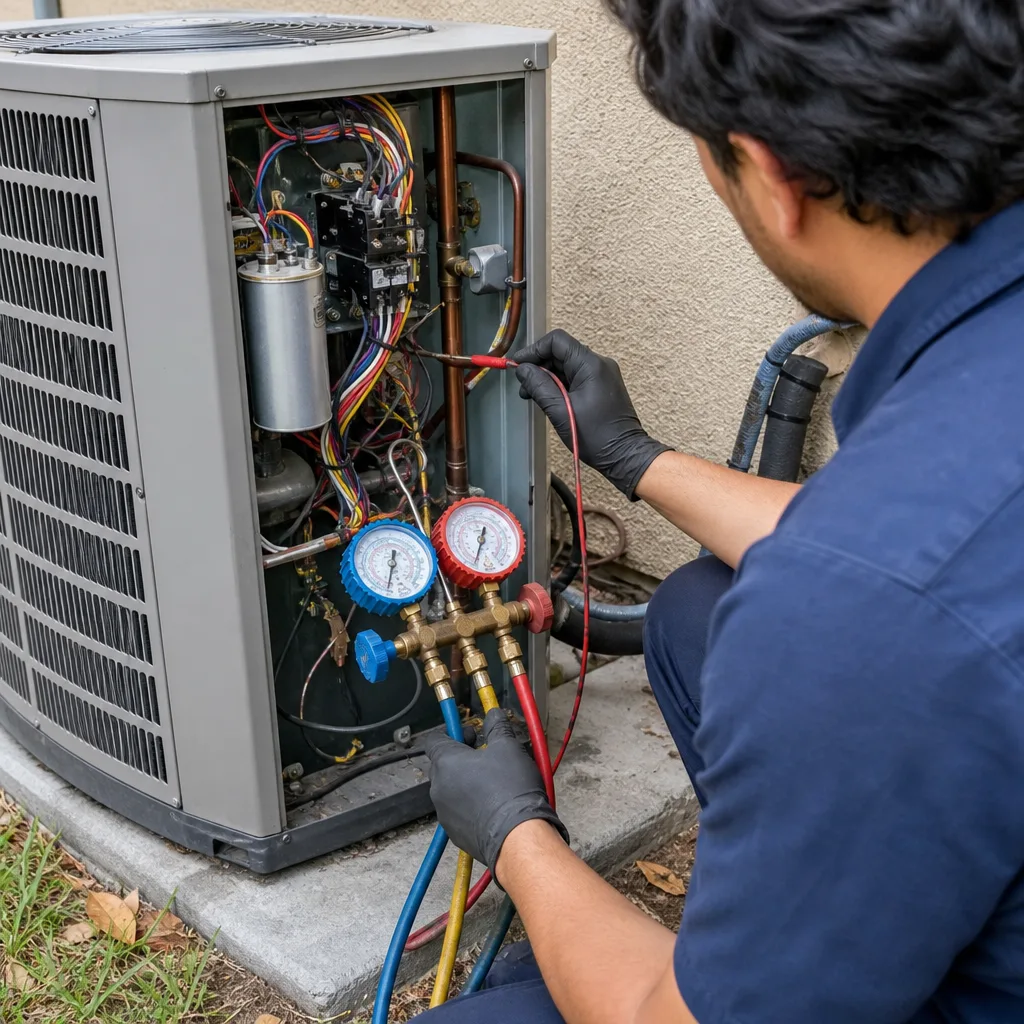
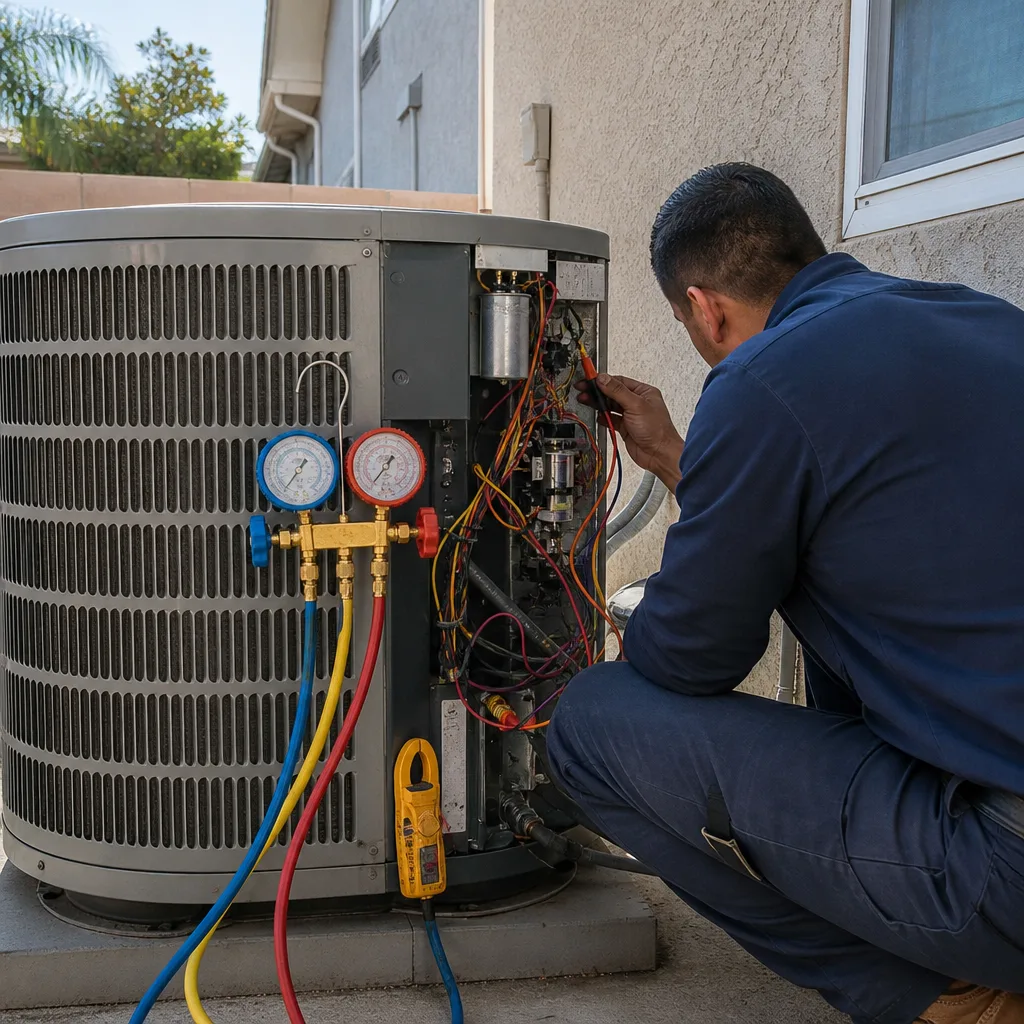
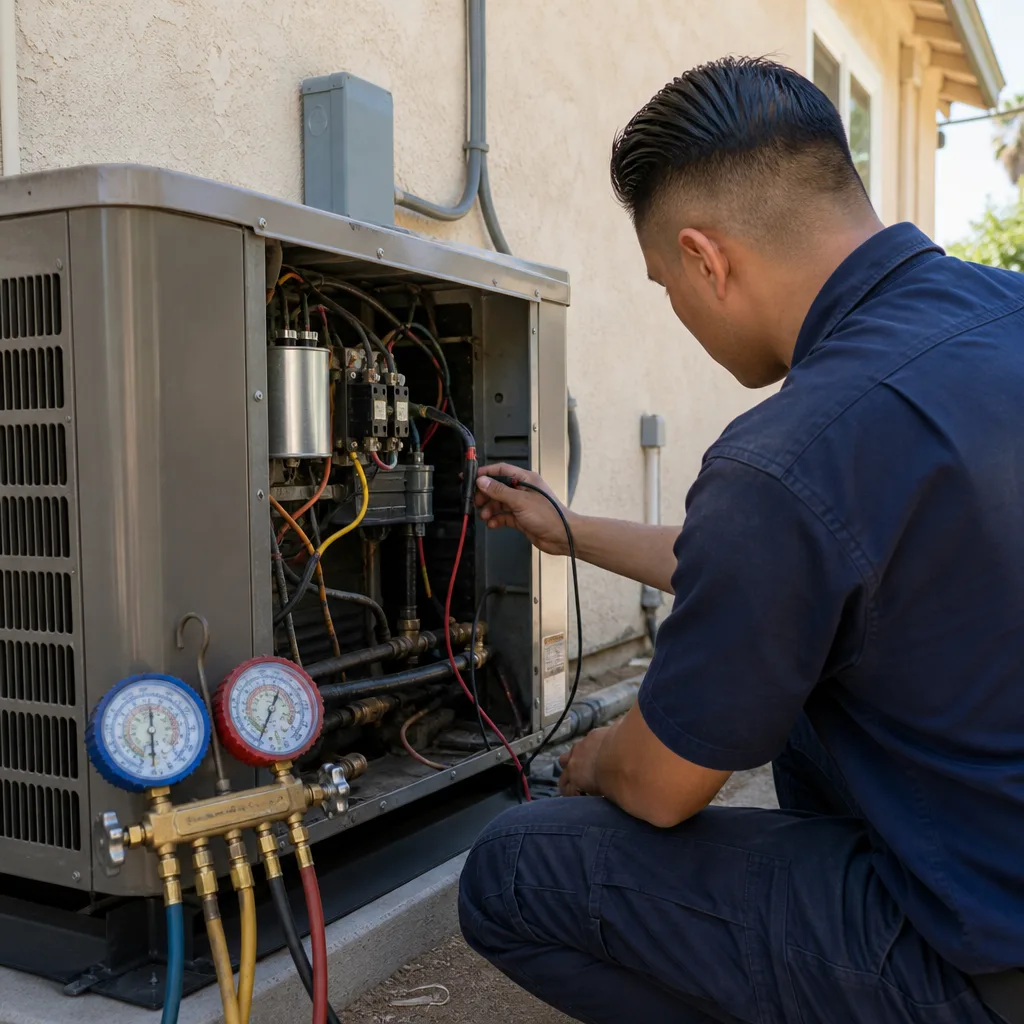
Seasonal tune-up and full diagnostic on your Carrier, Trane, or Goodman system - readings shown to you before any repair is proposed
Diagnosis first, numbers second - you approve the repair price before a single part goes in.
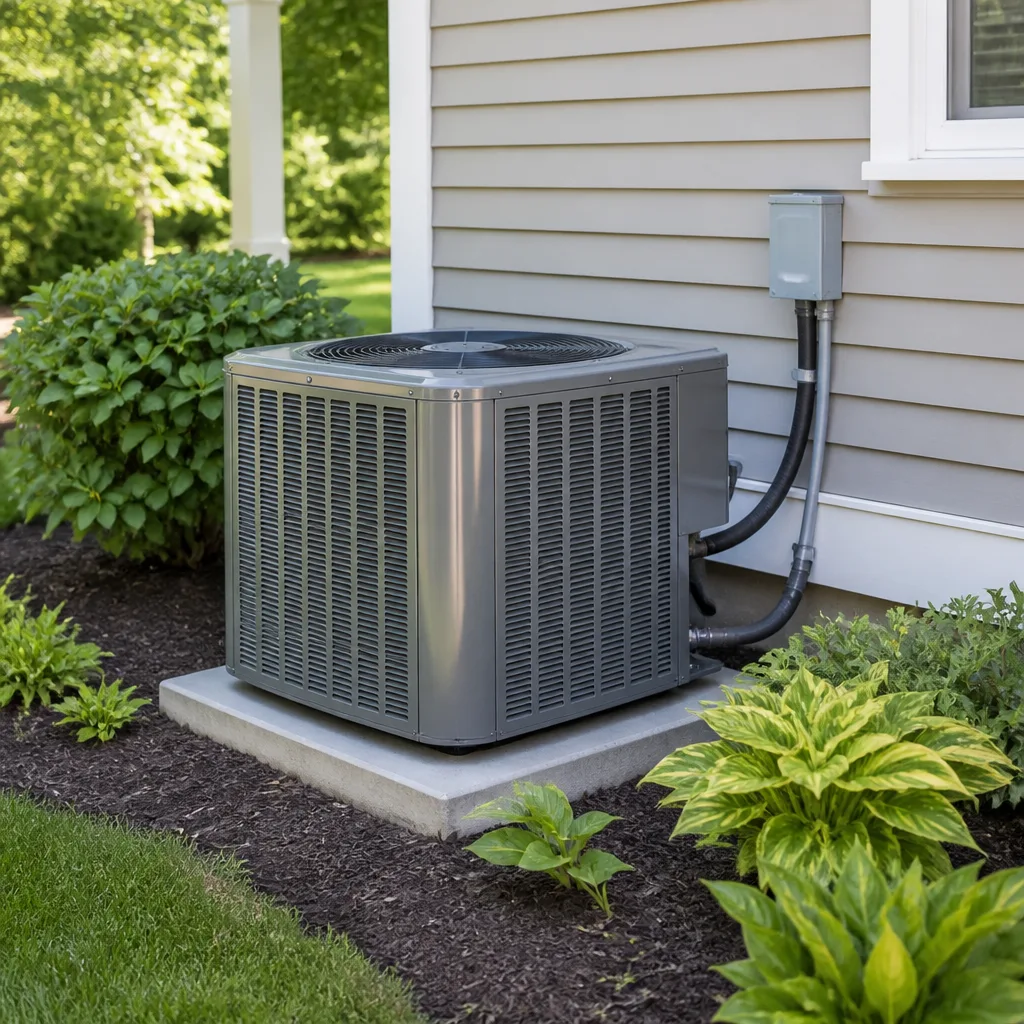
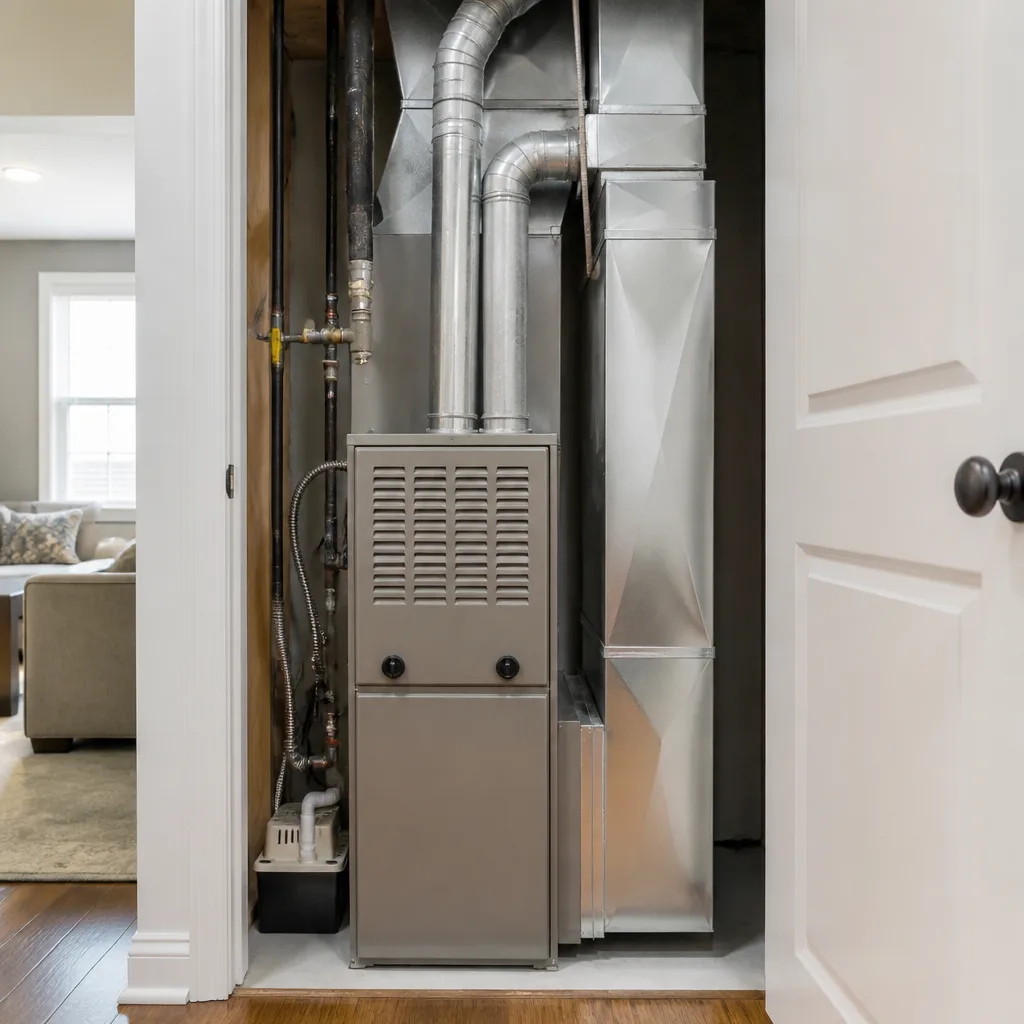
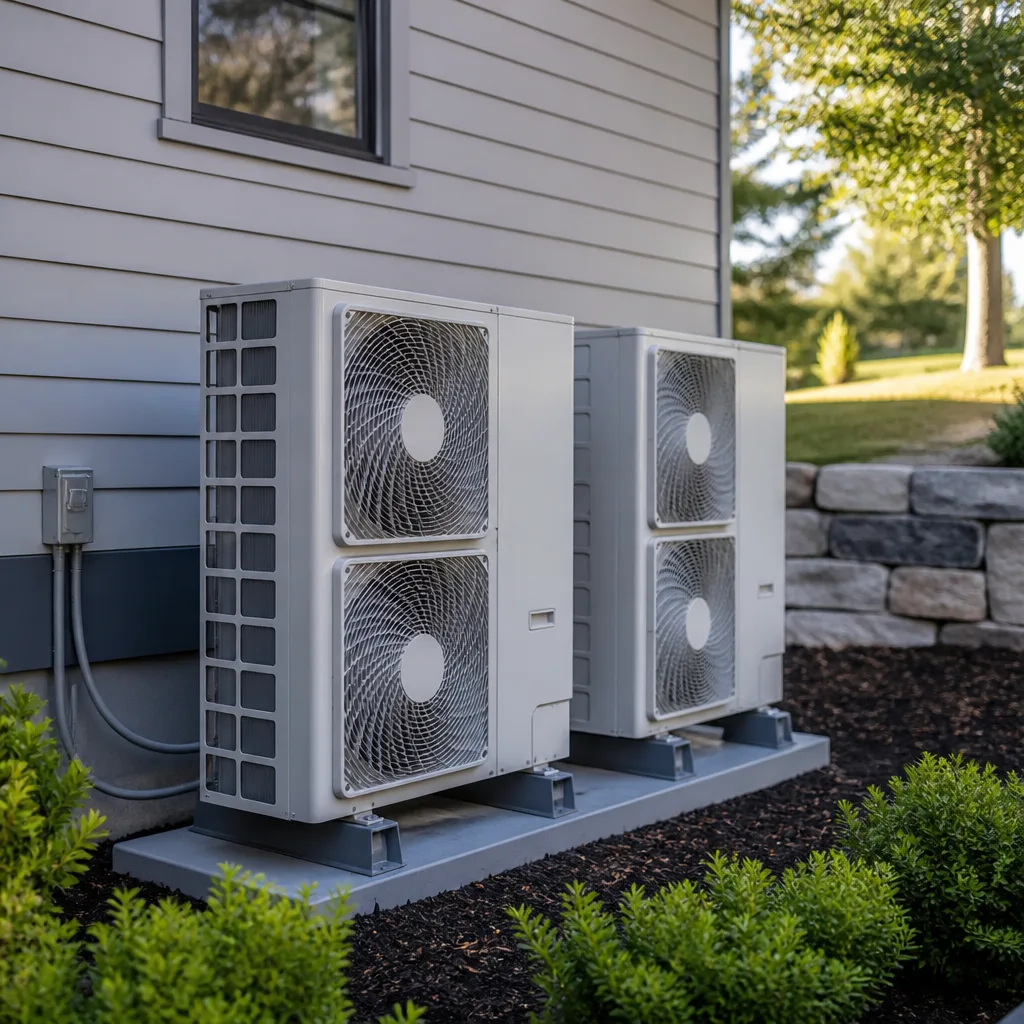
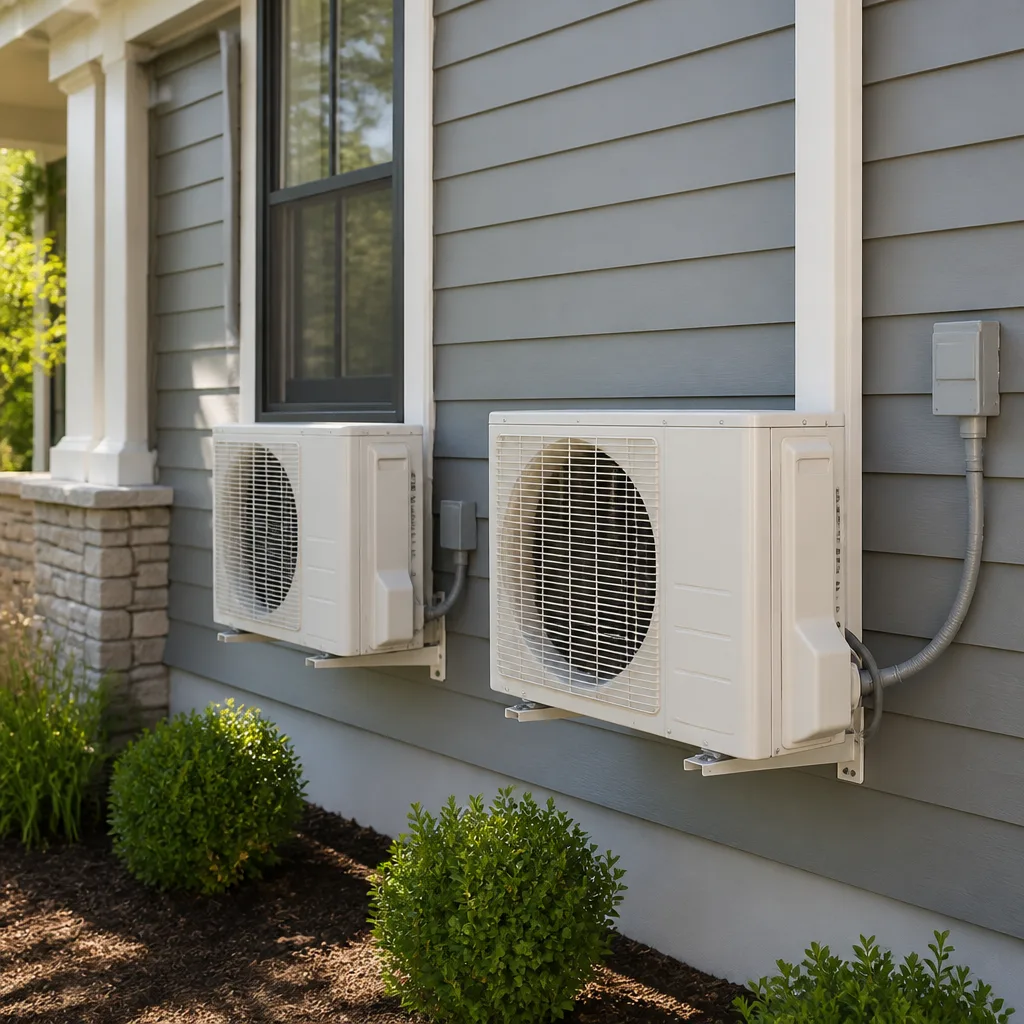
 Before
 After
After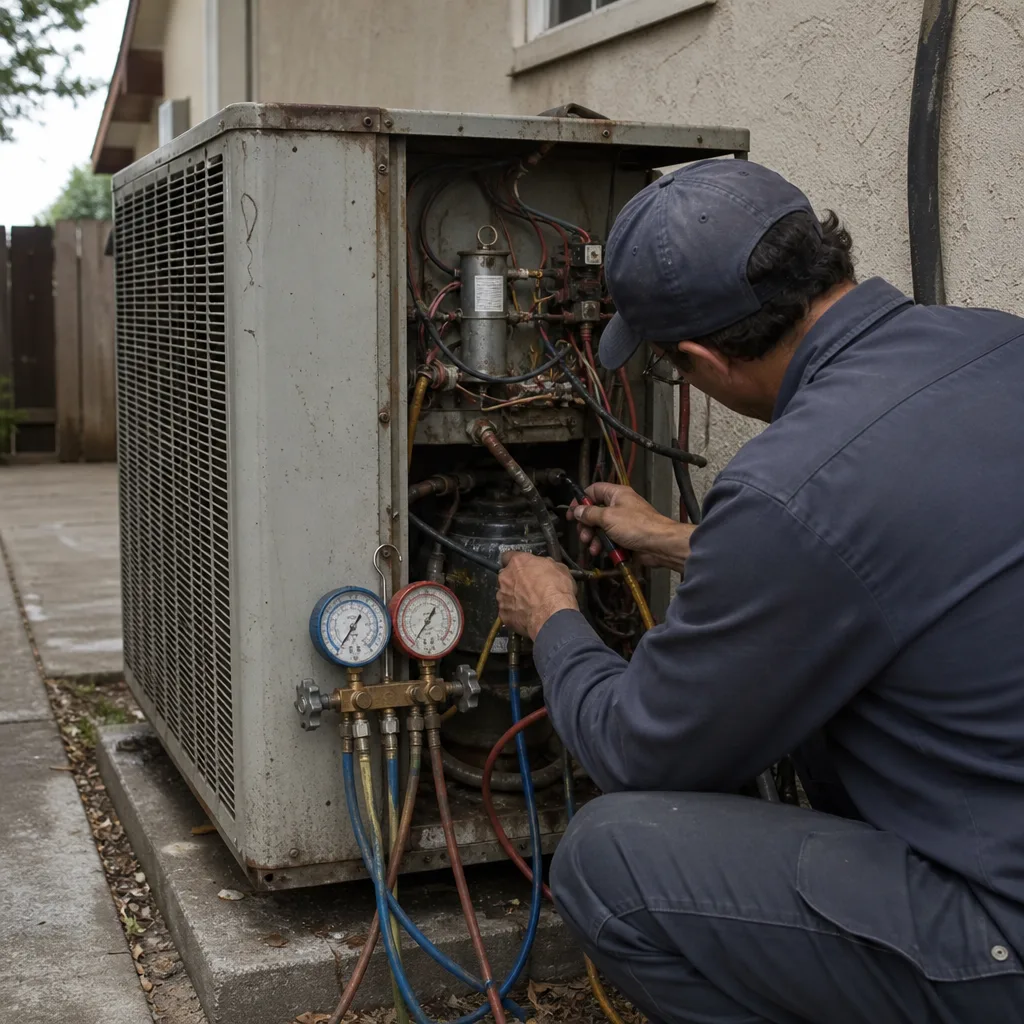 Before
 After
After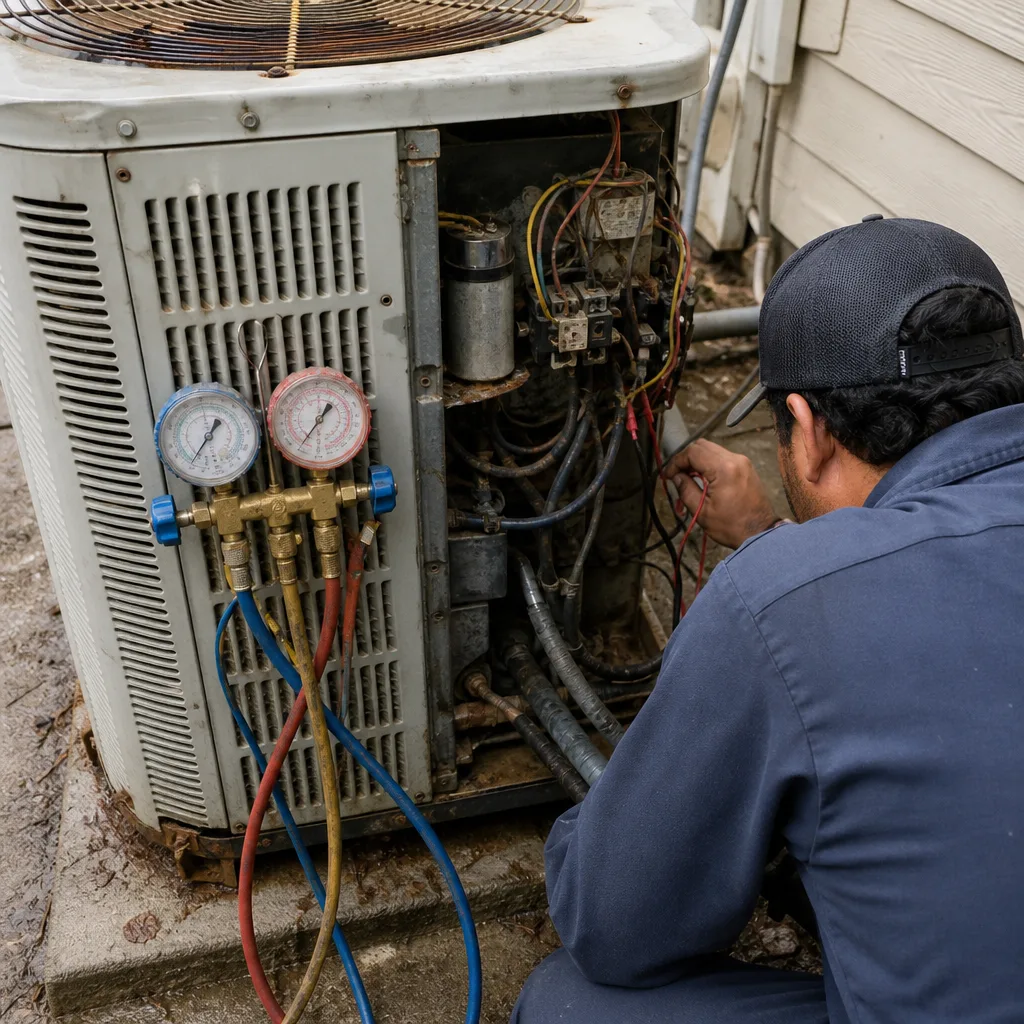 Before
 After
AfterHVAC Warning Signs: A Los Angeles Homeowner’s Reference Guide
A sulfur or rotten-egg smell from a gas furnace is a gas leak until proven otherwise – that’s a 911 call, not an HVAC appointment. Yet the same Los Angeles homeowners who know this will wait two weeks on a burning-rubber smell, which is often a seizing blower motor days away from a $1,200 failure. This guide translates specific symptoms into specific diagnoses, so you can make an informed call about urgency rather than guessing whether that noise or smell requires emergency service or a scheduled visit. For more guides & resources on keeping your system running, visit our blog. You’ll learn the difference between a $12 capacitor and a $3,000 compressor, which sounds demand immediate shutdown, and why some of the scariest symptoms in Los Angeles turn out to be the cheapest fixes.
Quick Answer
Most HVAC warning signs fall into two categories: symptoms that demand immediate shutdown (burning smells, electrical buzzing, refrigerant hissing, or a furnace that won’t light) and symptoms that can wait 24 to 72 hours for a scheduled visit (weak airflow, short cycling, or a room that won’t cool). In Los Angeles, where summer temperatures regularly cross 90°F, the most common warning signs we see are short cycling, warm air from the vents, and ghost cooling – rooms that stay hot despite a running system. Any gas smell from a furnace is an emergency: call 911 first, then your HVAC company.
Table of Contents
- Symptom-to-Cause Reference Table: What That Sound Means
- Why Warm Air From Your AC Is Rarely Low Refrigerant First
- Ghost Cooling: Rooms That Won’t Cool Despite a Working System
- How LA’s Dry Climate Changes Condensate Drain Problems
- Shut It Down Now vs. Schedule a Visit: The Dividing Line
- Furnace Smells: What Each Odor Actually Means
- Short Cycling: The Most Misunderstood Warning Sign
- Unusual Sounds: A Field Guide to What You’re Hearing
- Common Mistakes to Avoid
- When to Call a Professional
- Frequently Asked Questions
Symptom-to-Cause Reference Table: What That Sound Means
Every sound an HVAC system makes is trying to tell you something. The trick is knowing which sounds are expensive and which are cheap. Here’s a symptom-to-cause reference table we’ve built from years of service calls across Los Angeles – from Sherman Oaks bungalows to San Fernando Valley ranch homes. These are the sounds homeowners describe to us over the phone, mapped to the component most likely failing and a realistic repair range for this market.
| Symptom | Most Likely Cause | Typical Repair Range (LA Market) |
|---|---|---|
| Short cycling (system starts and stops every 5-10 minutes) | Oversized unit, dirty condenser coils, or failing capacitor | $150-$450 |
| Grinding noise from outdoor unit | Compressor bearings failing | $1,500-$3,400 (compressor replacement) |
| High-pitched squeal from indoor unit | Blower motor belt or bearings wearing | $200-$600 |
| Repeated clicking from thermostat or furnace | Ignition system failure or control board issue | $150-$500 |
| Banging or clanking on startup | Loose fan blade or debris in blower housing | $100-$350 |
| Constant running without reaching set temp | Low charge, dirty evaporator coil, or undersized system | $180-$1,200 depending on cause |
| Hissing from indoor coil area | Refrigerant leak (line set or coil) | $300-$1,800 depending on location and severity |
The important takeaway here: only two of these symptoms – grinding and hissing – indicate problems that get significantly more expensive the longer you wait. Grinding means metal-on-metal contact inside the compressor, and every hour it runs is another hour of damage. Hissing means refrigerant escaping, which not only costs you cooling power but can also damage the compressor if the system runs low for too long. The rest of these can usually wait a day or two, especially if you shut the system down until a technician arrives.
Why Warm Air From Your AC Is Rarely Low Refrigerant First
When a Los Angeles homeowner calls us and says the AC is blowing warm air, they almost always assume it’s low on refrigerant. It’s a reasonable assumption – refrigerant is the cooling fluid your system needs to reach set temperature, and a refrigerant recharge, which means topping off that fluid, is the fix most people have heard of. But here’s what the data from our service calls actually shows: in Los Angeles, warm air from a central AC is more often caused by dirty evaporator coils or a failed TXV (thermostatic expansion valve) than a refrigerant leak.
The evaporator coil sits inside your air handler and absorbs heat from your home’s air. In LA, where construction dust, dry soil, and pet dander circulate through systems, those coils get coated with a layer of grime that insulates them. A dirty coil can’t absorb heat efficiently, so the air coming out of your vents feels warm even though the system is running. That’s a $150-$350 cleaning, not a $1,000 recharge.
The TXV is a small valve that regulates how much refrigerant flows into the evaporator coil. When it sticks or fails, the refrigerant doesn’t flow properly, and the system can’t cool. A failed TXV is a $300-$600 repair. Compare that to a full refrigerant recharge after a leak, which typically runs $500-$1,800 in Los Angeles depending on the size of the leak and the type of refrigerant your system uses. Here’s the order a qualified technician should follow:
- Check airflow first – a dirty filter or closed register can cause warm air on its own.
- Check the evaporator coil – if it’s dirty, clean it before touching refrigerant.
- Check the TXV – a stuck valve mimics low refrigerant symptoms.
- Check refrigerant charge last – only after ruling out everything above.
If a technician jumps straight to “you need refrigerant,” ask to see the pressure readings and the coil condition before you approve the work. That single question has saved Los Angeles homeowners thousands of dollars. For a full diagnosis of warm air issues, see our AC Repair in Los Angeles page for pricing and coverage details.
Ghost Cooling: Rooms That Won’t Cool Despite a Working System
“Ghost cooling” is a term we use for rooms that stay hot even when the AC is running and other rooms are comfortable. It’s one of the most common complaints in Los Angeles homes, especially in two-story houses built before 1990, where the original ductwork was never designed for modern AC loads or converted garages that were added without proper duct extensions.
The first thing to understand is that ghost cooling has three distinct causes, and each requires a different fix. Duct disconnection means a section of ductwork has physically separated from the main trunk or a register, and conditioned air is being dumped into the attic or crawlspace instead of the room. Register blockage means something is physically blocking the airflow at the vent level – furniture, closed dampers, or accumulated debris in the register itself. Zoning failure means a damper in the system that’s supposed to direct air to a specific zone has failed in the closed or partially-closed position.
Here’s how a homeowner can narrow down which one they’re dealing with before calling a technician:
- Hold a tissue near the register in the hot room. If there’s little to no airflow, the problem is duct disconnection or zoning failure.
- Feel the temperature of the air that is coming out. If it’s cold but weak, the issue is airflow – not cooling capacity.
- Check the register itself. Is it fully open? Is furniture blocking it? That’s the register blockage check, and it’s free.
- If one room is hot but every other room is fine, and you have a zoned system, cycle the thermostat for that zone and listen – a failed zone damper often makes no sound when it should be moving.
Duct disconnection is the most common cause of ghost cooling in Los Angeles, and it’s also one of the most satisfying fixes: a technician reconnects the separated section, seals it with mastic (a heavy-duty adhesive designed for ductwork), and the room cools within hours. Typical cost: $200-$500 depending on access. If the ductwork is collapsed or undersized, replacement runs $800-$2,500 per room. For a deeper look at system performance issues, our Dalton Heating & Air home page covers what a full diagnostic call includes.
How LA’s Dry Climate Changes Condensate Drain Problems
Every AC system produces condensate – the water that forms when warm air hits cold coils. In humid climates like Houston or Miami, condensate drains clog constantly because algae and biological growth thrive in the constant moisture. Los Angeles is different. Our dry climate means condensate drain clogs are less common here, but when they do happen, they’re often more damaging.
Here’s why: in humid climates, the system produces so much water that a clog shows up as a visible drip within days. In Los Angeles, the system produces less water, so a partial clog can go unnoticed for weeks or months. During that time, water backs up in the drain pan, corrodes it, and eventually leaks into the drywall or ceiling below the unit. By the time a Los Angeles homeowner sees the water stain on the ceiling, the pan has been overflowing for a while, and the fix involves drywall repair on top of the HVAC work.
Early warning signs of a developing condensate drain clog in Los Angeles:
- A faint musty smell from the vents when the AC first comes on, even in dry weather
- Water stains on the ceiling or wall below the indoor unit
- A small puddle forming near the indoor unit during long run times
- The system shutting down unexpectedly on hot afternoons (many modern units have a float switch that kills the system when the pan is full)
- Visible moisture or rust around the drain pan after a maintenance visit
The fix for a clogged drain line is straightforward: a technician clears the line with compressed air or a wet vac, then flushes it with a mild solution to break up the remaining sludge. Typical cost in Los Angeles: $100-$250. If the drain pan has rusted through, replacement adds $150-$350. A drip pan overflow is one of those problems that’s genuinely worse in LA specifically because we don’t expect it. That lack of expectation is what lets a $100 fix become a $1,500 ceiling repair.
Shut It Down Now vs. Schedule a Visit: The Dividing Line
One of the most useful things a homeowner can have is a clear, opinionated dividing line between symptoms that require immediate shutdown and symptoms that can wait. Here’s ours, based on years of Los Angeles service calls and the damage we’ve seen from waiting too long. For a deeper look at timing your upkeep, see our AC Repair Maintenance Schedule: What to Do and When.
Shut the system down immediately and call for emergency service if:
- You smell gas (any gas smell from a furnace – shut off the gas valve, leave the house, call 911, then call your HVAC company)
- You smell burning plastic or burning rubber (electrical component overheating or a seizing motor)
- You hear grinding from the outdoor unit (compressor destroying itself internally)
- You hear a loud hissing from the indoor unit (active refrigerant leak)
- The system is tripping the breaker repeatedly (electrical short that could cause a fire)
- Water is actively leaking into the living space (ceiling damage happening in real time)
Schedule a visit within 24-72 hours if:
- The system is short cycling (running 5-10 minutes, then shutting off, then restarting)
- One room won’t cool while others do
- The system is running constantly but not reaching temperature
- You notice weak airflow from all vents
- There’s a rattling noise that comes and goes
- Your energy bill spiked suddenly without a change in usage
The dividing line is simple: if the symptom involves gas, electrical arcing, active water damage, or mechanical destruction, shut it down now. If it involves performance, comfort, or efficiency, a scheduled visit works. In Los Angeles, where the hottest weeks of the year hit 95°F and above, we tell homeowners to err on the side of shutting down when in doubt. A day without AC in a heat wave is uncomfortable; a compressor that seizes because you kept running a grinding unit is a $3,400 replacement. Shutting it down costs you nothing.
Furnace Smells: What Each Odor Actually Means
Furnace odors are the warning signs homeowners get most wrong, so let’s be specific about what each smell means and what to do. We service all major furnace brands in Los Angeles – Carrier, Trane, and Lennox are the most common in homes we visit – and the odor profiles are consistent across brands.
Rotten eggs or sulfur
This is the smell of mercaptan, the chemical added to natural gas to make leaks detectable. It means gas is escaping somewhere in or near your furnace. This is not an HVAC call first – it’s a 911 call first. Evacuate the house, leave the door open if you can do so safely, and do not flip any switches or operate any electronics. Once the gas company has cleared the scene, schedule a furnace inspection to find the source of the leak.
Burning dust (first startup of the season)
The first time a Los Angeles furnace kicks on after months of disuse, a burning smell is normal. Dust settles on the heat exchanger over the summer, and when the furnace fires up, that dust burns off. The smell should clear within 30-60 minutes. If it persists beyond that, it’s something else.
Burning rubber or burning plastic
This is the smell of an overheating electrical component – a blower motor that’s seizing, a capacitor that’s failing, or wiring that’s degrading. It’s serious, and it’s the one homeowners most often wait on, which is a mistake. A seizing blower motor draws excess current, which overheats the windings, which burns the insulation, which eventually causes the motor to fail completely. That’s a $600-$1,200 repair, and it’s often preventable if caught early. Shut the system down at the first sign of burning rubber.
Musty or moldy
This smell means moisture is accumulating somewhere it shouldn’t – usually in the ductwork or around the indoor coil. In a dry climate like Los Angeles, a musty smell from the vents is often the first sign of a condensate drain problem or a small leak that’s been building for weeks. See our section on condensate drains above for the full diagnosis.
For furnace-specific repair details, see our Furnace Repair in Los Angeles page. Most furnace repairs in Los Angeles run $150-$450 depending on the part, and every repair we do carries a written guarantee for a full year.
Short Cycling: The Most Misunderstood Warning Sign
Short cycling is the term for a system that starts up, runs for 5-10 minutes, shuts off, then starts again a few minutes later. It’s the most common warning sign we hear about in Los Angeles, and it’s also the most misunderstood. Our AC Repair Maintenance Checklist for Los Angeles Homeowners covers how to catch this early. Homeowners often assume it’s normal for the system to cycle on and off when it’s hot. It’s not.
A properly sized AC system in Los Angeles should run 15-30 minutes per cycle during peak summer heat. When it’s 90°F outside, longer run cycles are normal and healthy – the system is working steadily to remove heat and humidity from your home. A system that runs 5 minutes and shuts off isn’t getting the job done, and it’s also wearing itself out faster. Every startup is the hardest moment for a motor and compressor: that’s when the most current flows, the most mechanical stress occurs, and the most wear accumulates.
Here are the three most common causes of short cycling in Los Angeles homes, in order of frequency:
- Oversized system. An AC unit that’s too big for the home cools the air so fast that the thermostat shuts it off before it has time to dehumidify or fully condition the space. This is common in Los Angeles homes where a previous owner or contractor installed a unit based on square footage without doing a proper load calculation.
- Dirty condenser coils. When the outdoor coil is caked with dust and debris, the system can’t reject heat efficiently, so it overheats and shuts itself off on a safety switch. This is especially common in Los Angeles valleys where dust and construction traffic are heavy.
- Failing capacitor. The capacitor is a small cylindrical component that provides the electrical jolt needed to start the compressor and fan motor. When it weakens, the system may start, struggle, and shut off prematurely. A failing capacitor is a $150-$250 fix, but if it fails completely, the compressor and fan won’t start at all.
Short cycling is rarely an emergency, but it shouldn’t be ignored. Every short cycle is an incomplete cycle, which means the system isn’t doing the work you’re paying it to do, and it’s burning through its lifespan faster than it should. If you notice your system cycling in bursts of 10 minutes or less, schedule a diagnosis. The fix is usually one of the three causes above, and two of them are inexpensive.
Unusual Sounds: A Field Guide to What You’re Hearing
Sound is the most reliable early-warning system your HVAC unit has. Here’s a field guide to the specific sounds we’ve learned to recognize over two decades of Los Angeles service calls, and what each one means.
High-pitched squeal from the indoor unit
A squeal that starts when the blower comes on and stops when it shuts off is almost always a belt or bearing issue in the blower motor. In older systems, the blower motor uses a belt that stretches and wears. In newer systems, the motor bearings themselves are the culprit. The squeal is the sound of friction – something is resisting rotation. If it’s a belt, the fix is $100-$250. If it’s bearings, the motor is usually replaced for $400-$800. Let it go long enough, and the motor seizes completely, which is the $800-$1,200 version of the same repair.
Grinding or rattling from the outdoor unit
Grinding from the outdoor condenser is the worst sound in HVAC. It’s the sound of the compressor’s internal bearings failing, which means metal parts are grinding against each other inside a sealed component. By the time you hear grinding, the compressor is already damaged. The question is whether it’s still salvageable. A compressor replacement runs $1,500-$3,400 in Los Angeles depending on the unit size and brand. A rattling sound, by contrast, is often just a loose fan blade or a piece of debris caught in the condenser – $100-$350 and usually a quick fix. The difference matters: if you hear rattling, keep calm and schedule a visit. If you hear grinding, shut it down now.
Repeated clicking from the thermostat or furnace
A single click when the system starts is normal – that’s the relay or the contactor engaging. Repeated clicking, especially if the system doesn’t start, is a different story. It usually means the ignition system on a furnace is trying and failing to light, or a control board is failing to hold a signal. On modern furnaces, the ignition system is a hot-surface igniter, a small ceramic component that glows to light the gas. When it fails, the furnace clicks and clicks and never lights. That’s a $150-$350 repair. On a control board, the fix is $200-$600.
Banging or clanking on startup
This is often a loose fan blade or debris in the blower housing that shifts when the system starts up. The fix is a cleaning and tightening – $100-$250. In some older gas furnaces, a delayed ignition can cause a small “bang” when the gas finally lights, which is a symptom of dirty burners. The burner cleaning is $100-$200, and it’s worth doing sooner rather than later because delayed ignition puts stress on the heat exchanger, and a cracked heat exchanger is the most expensive furnace problem there is.
Hissing from the indoor coil area
A steady hissing sound from inside the home, near the indoor unit, usually means refrigerant is escaping. Refrigerant leaks can happen at the coil, at the line set connections, or at the service valves. A small leak might only cause a gradual loss of cooling capacity; a large leak can empty the system in days. Either way, refrigerant doesn’t just leak itself fixed – it requires a technician to locate the leak, repair it, and recharge the system. In Los Angeles, a typical leak repair runs $300-$1,800 depending on the location and severity. The earlier it’s caught, the less refrigerant you’ve lost and the cheaper the recharge.
Why Los Angeles Homes Face Unique HVAC Stress
Los Angeles doesn’t have the most extreme climate in the country, but it has a specific combination of factors that affects HVAC systems in ways homeowners don’t always anticipate. Understanding these local conditions helps explain why some warning signs show up here more often than elsewhere. Our Seasonal HVAC Care for Los Angeles: Year-Round Homeowner’s Guide breaks down what to expect each season.
First, the coastal microclimates. A house in Santa Monica might need cooling 40 days a year. A house in Woodland Hills might need it 140 days a year. Both are Los Angeles, and both systems age differently. A system in the Valley accumulates more runtime hours, more dust, and more wear per calendar year than a system near the coast, which means it ages faster and shows warning signs earlier. If you live in the San Fernando Valley or the San Gabriel Valley, expect your system to need more attention than a coastal system of the same age.
Second, the dust. Los Angeles is built on dry, dusty soil, and the construction boom of the last decade has added constant particulate matter to the air in many neighborhoods. That dust settles on condenser coils, clogs air filters faster than the national average, and accelerates evaporator coil fouling. A filter that lasts 90 days in many parts of the country might need changing in 30-45 days in a Los Angeles neighborhood near active construction.
Third, the age of the housing stock. Many Los Angeles homes were built between 1950 and 1980, which means original ductwork that’s 50 to 70 years old. That ductwork was sized for older, less efficient systems and often wasn’t sealed properly to begin with. As a result, ghost cooling problems and duct disconnection issues are more common in Los Angeles than in newer Sun Belt metros like Phoenix or Austin.
Common Mistakes to Avoid
- Ignoring a burning rubber smell because “it went away.” A seizing blower motor doesn’t stop seizing – it overheats, cools down, then overheats again until it fails. If you smelled burning rubber once this week, shut the system down and have it checked.
- Assuming warm air means low refrigerant. As we covered above, a dirty evaporator coil or failed TXV is more common in Los Angeles, and both are cheaper fixes. If a technician recommends a recharge without checking the coil first, get a second opinion.
- Running a grinding outdoor unit “one more day.” Every hour a grinding compressor runs is another hour of metal-on-metal damage inside a sealed component. That “one more day” can be the difference between a $1,500 repair and a $3,400 replacement.
- Waiting on a condensate drain clog because “it never happened before.” Los Angeles’s dry climate makes these clogs sneakier, and by the time you see the water stain, the drywall damage is done. If you smell mustiness from the vents, investigate now.
- Using a fiberglass filter and forgetting about it. The cheapest filters do the least filtering and clog fastest. A pleated filter with a MERV rating of 8-13 catches more dust and lasts longer. In dusty Los Angeles neighborhoods, check your filter monthly.
- Assuming the system is fine because “it’s still blowing air.” Airflow and cooling are different things. A system can blow strong but warm, or cold but weak. Neither is fine. Pay attention to temperature and airflow separately.
- Skipping annual maintenance because “nothing broke last year.” Maintenance isn’t about fixing things that are broken – it’s about catching the things that are about to break. The most expensive repairs we see in Los Angeles are almost always systems that went years without a tune-up.
When to Call a Professional
If you’ve shut the system down because of a burning smell, grinding noise, gas odor, or active water leak, that’s an emergency call. If you’ve noticed short cycling, ghost cooling, weak airflow, or a spike in your energy bill, that’s a scheduled-visit call within the next 24-72 hours. If you’ve noticed any of the warning signs in this guide and you’re unsure which category you’re in, call and describe what you’re hearing – a qualified technician can often identify the issue over the phone and tell you whether to shut it down or schedule. Dalton Heating & Air offers free estimates in Los Angeles – call (361) 306-9515. Every call is answered by a live person, 24 hours a day, and every repair comes with a written price before work starts and a written guarantee for a full year.
Frequently Asked Questions
The most common warning sign we see in Los Angeles is short cycling – a system that starts and stops every 5-10 minutes. It’s usually caused by an oversized unit, dirty condenser coils, or a failing capacitor, and the fix typically runs $150-$450.
Not sure if your system is short cycling? Call (361) 306-9515 and describe the pattern – we can usually tell you over the phone whether it’s urgent.
Shut the system down immediately if you smell gas, burning plastic, or burning rubber, hear grinding from the outdoor unit, hear a loud hissing from the indoor unit, see active water leaking into the living space, or have a repeatedly tripping breaker.
Any of those symptoms means immediate shutdown is warranted. Call (361) 306-9515 for emergency service in Los Angeles, and we’ll have a technician on the way. If gas is involved, call 911 first.
The most common cause of warm air from a running AC in Los Angeles is a dirty evaporator coil, followed by a failed TXV – not low refrigerant. A dirty coil insulates the system and prevents heat absorption, and the fix is a $150-$350 cleaning.
Before you approve a refrigerant recharge, ask the technician to show you the coil condition and the pressure readings. For a transparent diagnosis, call (361) 306-9515.
Most HVAC diagnostic calls in Los Angeles run $80-$150 for the visit, though many companies – including ours – will apply that fee toward the repair if you approve the work on the spot. The diagnostic itself includes a full system check, not just a look at the symptom.
Dalton Heating & Air provides free estimates in Los Angeles. Call (361) 306-9515 and we’ll give you a written price before any work starts.
A burning dust smell at the first startup of the season is normal and clears within an hour. A burning rubber or burning plastic smell is not normal – it’s an overheating electrical component, usually a blower motor that’s seizing. Shut the system down at the first sign of burning rubber.
A seizing blower motor is a $600-$1,200 repair if caught early. Let it run, and the repair gets more expensive. Call (361) 306-9515 if you smell burning rubber from your furnace.
The rule of thumb: if the repair cost exceeds 50% of the system’s replacement value and the system is over 10 years old, replacement is usually the smarter call. Under that threshold, repair is generally the right move – especially with a written guarantee on the work.
Dalton Heating & Air services nine major brands – Carrier, Trane, Lennox, Goodman, Rheem, York, Daikin, Bryant, and American Standard – so we can give you an honest repair-or-replace recommendation for your specific system. For heat pump replacement options, see our Heat Pump Installation in Los Angeles page. Call (361) 306-9515 for a free estimate.
The Bottom Line
Most HVAC failures in Los Angeles don’t happen suddenly – they announce themselves weeks or months in advance through sounds, smells, and performance changes that are easy to ignore when you’re busy. The key is knowing which warning signs are cheap and which are expensive, which are emergencies and which can wait. A grinding outdoor unit, a burning rubber smell, or a hissing refrigerant leak demands immediate shutdown. Short cycling, ghost cooling, and weak airflow can wait a day or two for a scheduled visit. And the single most valuable habit in Los Angeles is checking your filter monthly, scheduling annual maintenance, and calling at the first sign of something that doesn’t sound, smell, or feel right. The earlier you catch it, the less it costs – and a written guarantee on every repair means you’re never gambling on a fix. Dalton Heating & Air serves Los Angeles with free estimates at (361) 306-9515.
Written by Marco Benitez, Owner at Dalton Heating & Air, serving Los Angeles since 2003.