
Last updated October 9, 2026
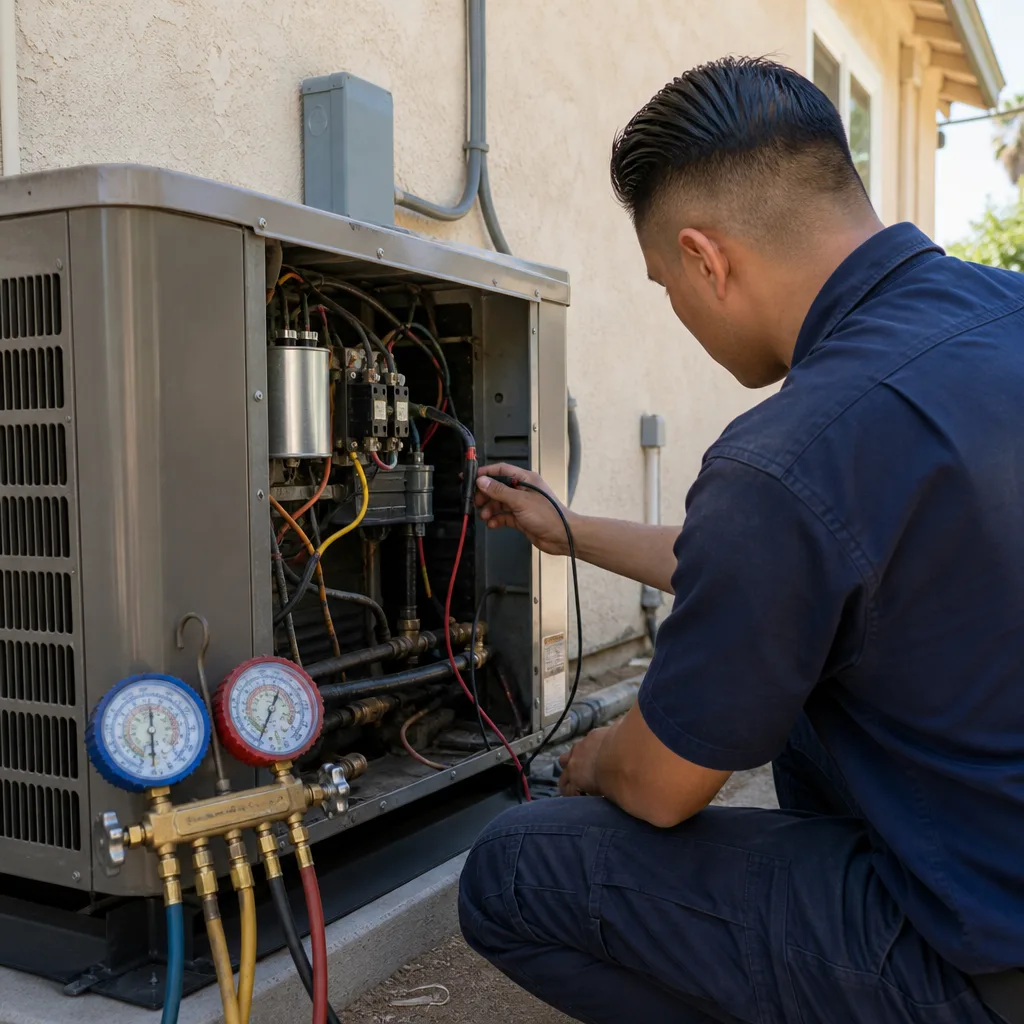
Seasonal tune-up and full diagnostic on your Carrier, Trane, or Goodman system - readings shown to you before any repair is proposed
Diagnosis first, numbers second - you approve the repair price before a single part goes in.
 Before
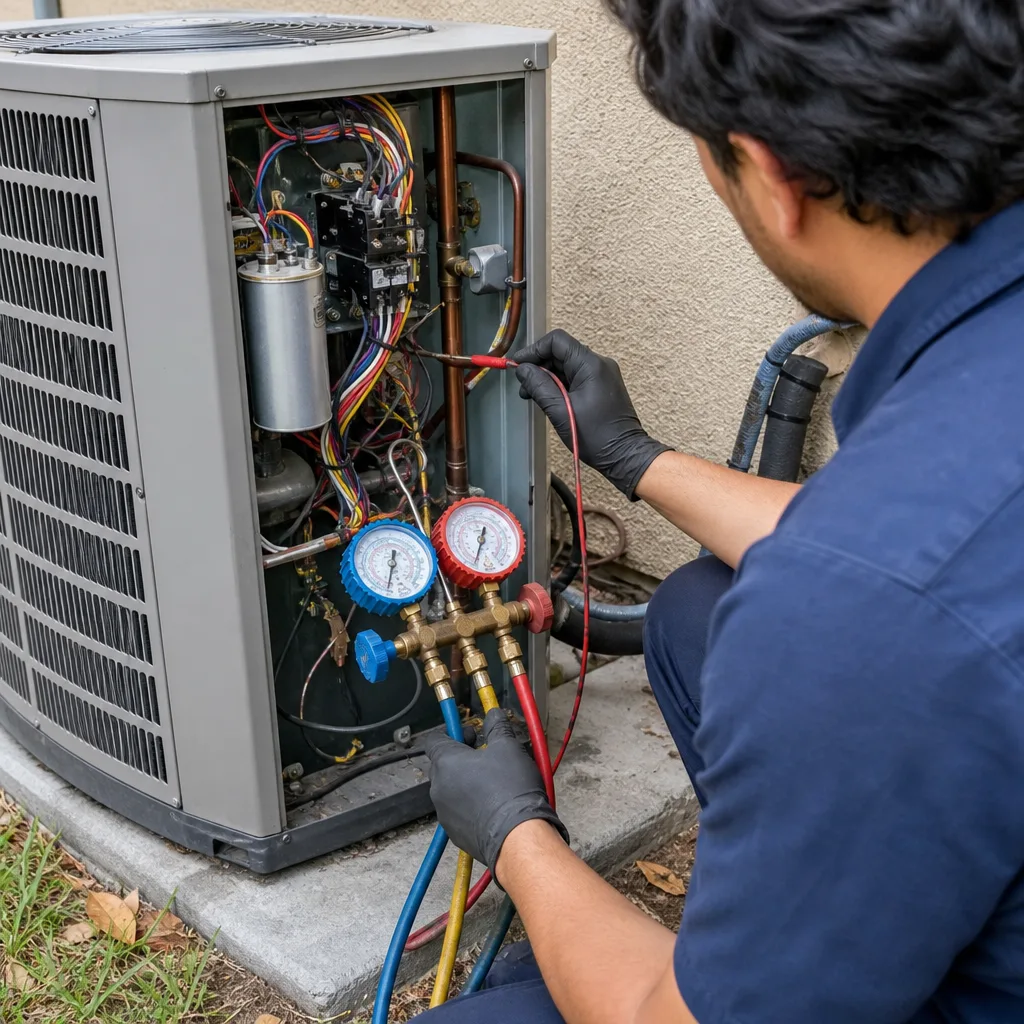 After
After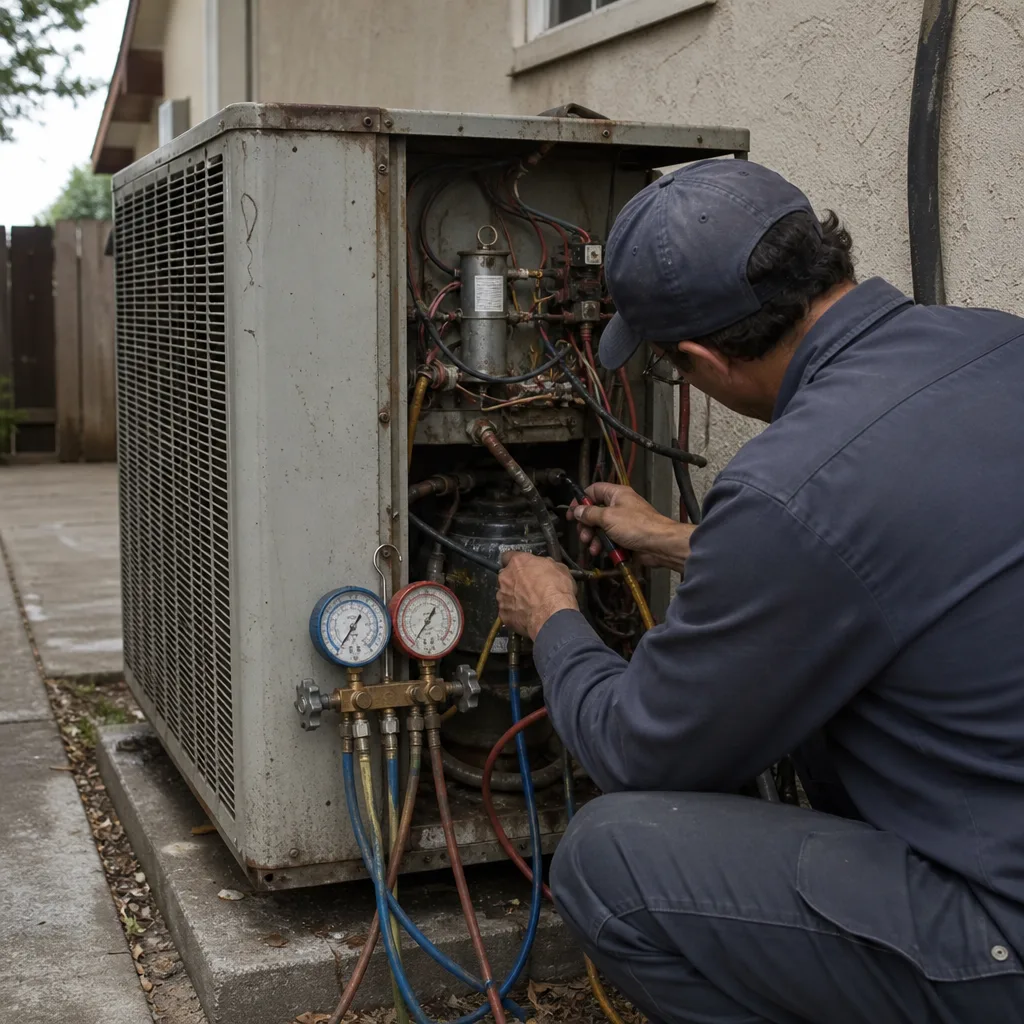 Before
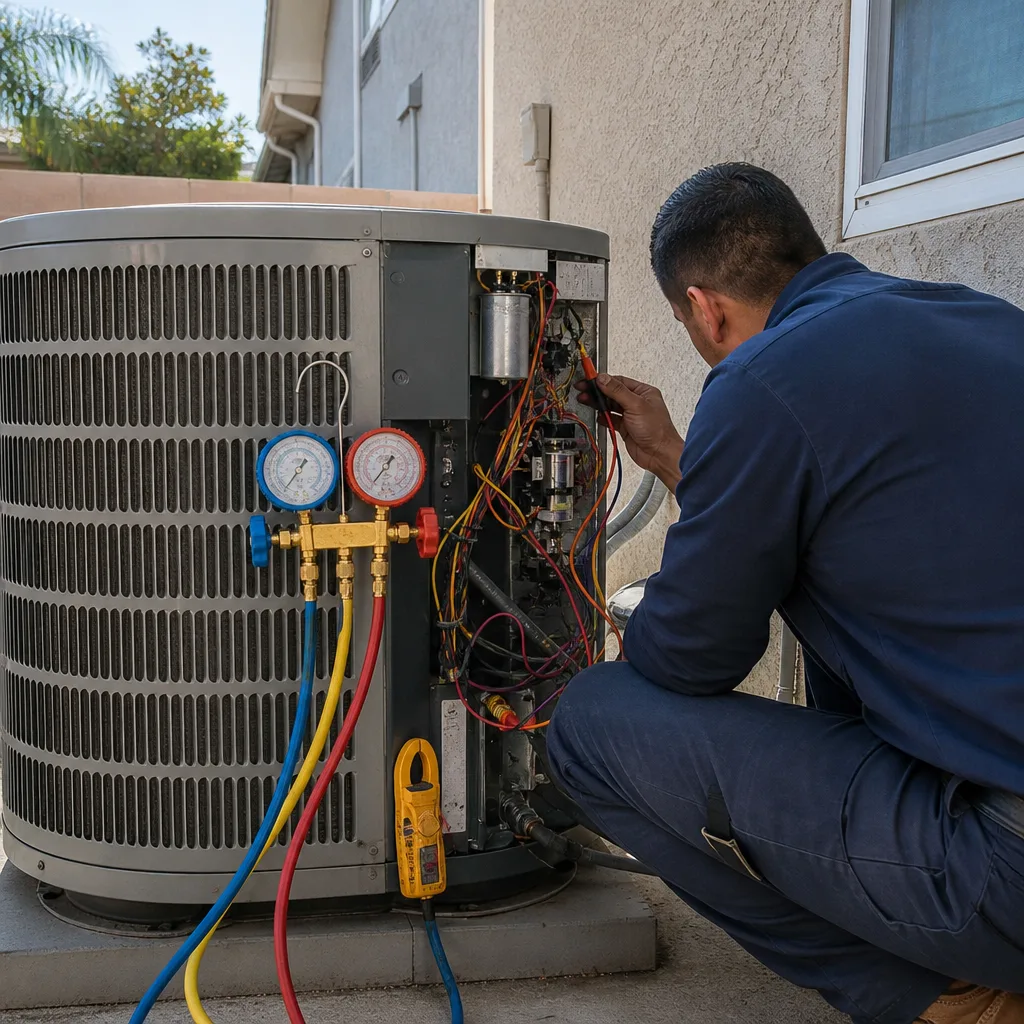 After
After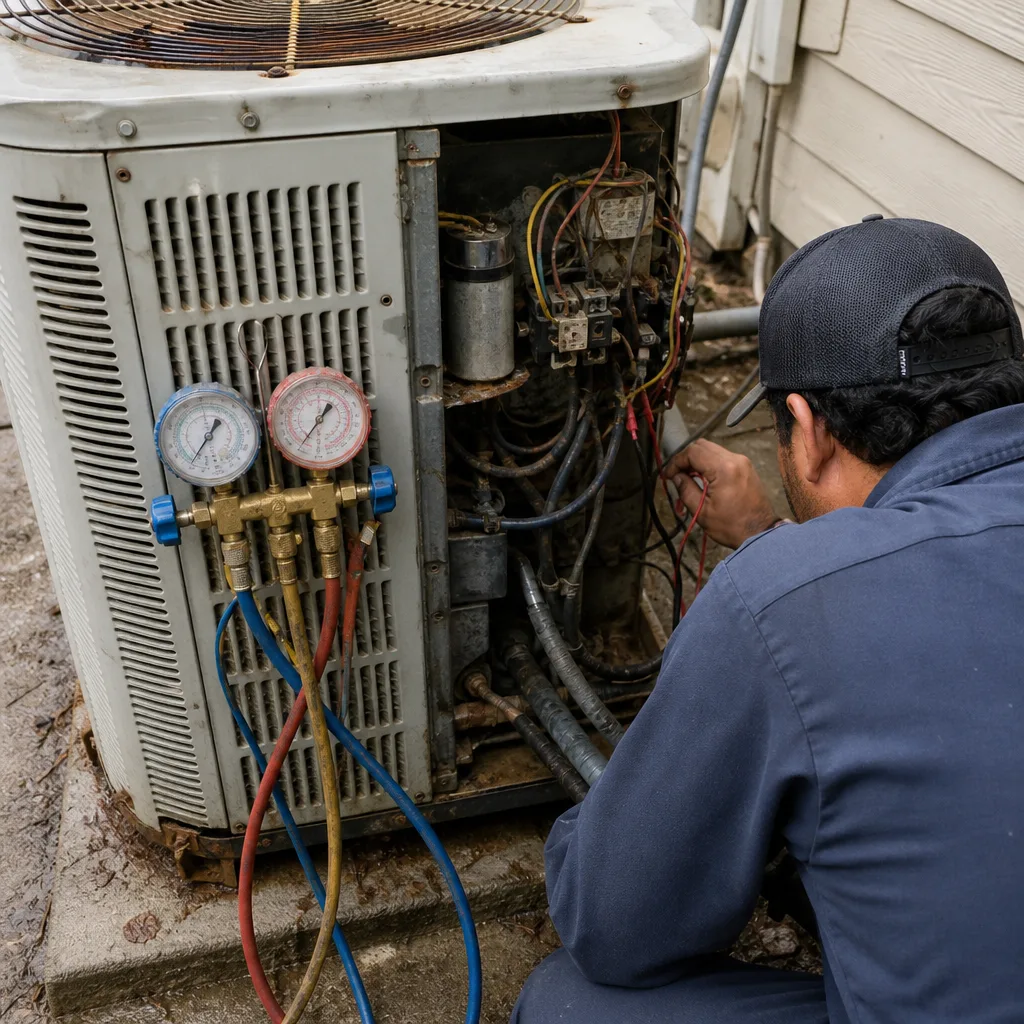 Before
 After
AfterHow Long Does Furnace Repair Take? Timelines and What to Expect
The average furnace repair takes under 90 minutes once a technician is on-site with the correct part. The three-to-five-hour waits Los Angeles homeowners report usually trace back to a first visit that was purely diagnostic and a part that had to be ordered afterward. That’s a scheduling problem, not a repair problem. This guide breaks down exactly where the hours go, which repairs happen same-visit, and how to structure your service call so you’re not waiting on a second appointment.
Quick Answer
Most furnace repairs in Los Angeles take 60 to 90 minutes of actual on-site labor once the technician has the right part. Total elapsed time from your phone call to a working furnace is typically same-day for common failures like igniters, flame sensors, and capacitors, but can stretch to 3 to 5 business days if an uncommon part like a control board or inducer motor has to be ordered from a distributor.
Table of Contents
- The Three Phases of a Furnace Repair
- Repairs That Are Almost Always Same-Visit
- Repairs That Usually Require Part Ordering
- The Heat Exchanger Exception
- What to Tell the Dispatcher Before the Tech Arrives
- What a Completed Same-Visit Repair Should Look Like
- Los Angeles Parts Availability: What the Market Actually Looks Like
- Common Mistakes to Avoid
- When to Call a Professional
- Frequently Asked Questions
The Three Phases of a Furnace Repair
Every furnace repair, whether it’s in a 1920s bungalow in Highland Park or a 1990s tract home in Porter Ranch, breaks into three distinct phases. Understanding these phases is the difference between a two-hour experience and a week of cold mornings.
Phase 1: Diagnosis (20 – 45 minutes). The technician arrives, listens to your description of the symptom, checks the thermostat signal, opens the cabinet, and runs through the sequence of operation: inducer motor spins up, pressure switch closes, igniter glows, gas valve opens, flame sensor proves the flame, blower pushes air. Somewhere in that chain, the sequence stops. A good technician identifies the failed component with a multimeter, often within half an hour. On some calls, the diagnosis is completed in ten minutes because the symptom points directly at a known failure pattern.
Phase 2: Part sourcing (0 minutes to 5 business days). This is the variable that determines whether you’re warm again tonight or waiting. If the failed part is on the truck, the repair proceeds immediately. If it’s not, the technician calls local supply houses across Los Angeles. Many common parts are sitting on shelves within a 30-minute drive. Some are not, and those get ordered from regional distribution centers in the Inland Empire or from the manufacturer, which adds days.
Phase 3: The repair itself (30 – 60 minutes for most components). Once the part is in hand, the actual installation is usually quick. An igniter replacement takes about 20 minutes. A flame sensor swap, perhaps 15. A gas valve replacement runs closer to an hour because it involves shutting off the gas, disconnecting the manifold, and leak-testing every connection afterward with a combustible gas detector.
In our experience across the broader Los Angeles service area, the homeowners who wait longest are the ones whose first visit was pure diagnosis with no parts on the truck. You can influence that before the truck even rolls.
Repairs That Are Almost Always Same-Visit
Certain furnace failures are so common and so predictable that a well-stocked service truck – properly briefed before dispatch – should have these parts on board. In Los Angeles, where many homes run gas furnaces from the major brands, these are the repairs that should never require a second visit:
- Igniter replacement: On furnaces with hot surface igniters (most modern Carrier, Trane, Goodman, and Rheem units), the igniter is a consumable. It cracks after years of heating cycles. Replacement takes about 20 minutes. The part costs $30 – $70 and takes up almost no space on a truck.
- Flame sensor cleaning or replacement: A dirty flame sensor causes short cycling – the burners light, then shut off within seconds. Cleaning it with a soft abrasive pad takes 5 minutes. Replacing it takes 15. This is the single most common repair we see in older Los Angeles neighborhoods where furnaces sit idle most of the year and accumulate dust.
- Capacitor replacement: The blower motor capacitor stores the electrical jolt needed to start the fan. Capacitors fail gradually or suddenly. Most service trucks carry a range of capacitor ratings, making this a same-visit repair almost without exception.
- Thermocouple replacement: Found on older standing-pilot furnaces, the thermocouple senses the pilot flame and tells the gas valve it’s safe to open. They wear out every 5 to 10 years. Any technician working a neighborhood with pre-1990 homes – Atwater Village, parts of Pasadena, much of the San Gabriel Valley – should carry several.
- Pressure switch replacement: The pressure switch confirms the inducer fan is pulling a proper draft before gas flows. A stuck or failed switch is a straightforward replacement, and many common ratings fit a wide range of furnace models.
Your move as a homeowner: when you book the call, describe the symptom in plain language and the dispatcher can often predict which of these parts is likely involved. A furnace that fires up and shuts off in seconds points to a flame sensor. A furnace that never lights at all with a glowing igniter points elsewhere. That information, given up front, lets the technician stock the truck accordingly.
Repairs That Usually Require Part Ordering
Some furnace components are model-specific enough that no service truck in Los Angeles – or anywhere – can reasonably carry every variation. These repairs generally mean a diagnostic visit, a parts order, and a scheduled return trip. That timeline in the Los Angeles market typically runs 2 to 5 business days depending on the part and the distributor.
Inducer motor replacement: The inducer motor pulls combustion gases through the heat exchanger and vents them outside. When it fails, the pressure switch never closes and the furnace won’t fire. Inducer motors are specific to furnace model and orientation. Ordering one means supplying the exact model and serial number. Plan on a return visit in 2 to 4 days.
Control board replacement: The control board is the furnace’s brain – it sequences every component and responds to thermostat input. Boards fail from power surges, moisture, or simple age. Because control boards are unique to specific furnace families, the supply house often has to pull the exact board for your unit. In Los Angeles, parts distributors for brands like Daikin and Bryant stock many common boards, but your specific vintage may need to come from a regional warehouse. Allow 3 to 5 business days.
Gas valve replacement: Gas valves are safety-critical components, and the correct replacement must be an exact match or a manufacturer-approved equivalent. There’s no universal gas valve. Depending on the furnace brand and age, the right valve is often available at a Los Angeles-area distributor within a day or two, though older units can push that out further.
Blower motor replacement: The blower motor moves heated air through your ducts. PSC motors (older, less efficient) are more readily available than ECM motors (newer, variable-speed). An ECM motor for a higher-end Lennox or American Standard furnace can take a few days to arrive.
If your repair requires an ordered part, the right company will tell you exactly that on the first visit, with the price in writing and a scheduled return date before the technician leaves. Not every company in Los Angeles runs that way. The Garrison Standard – the operating discipline our team follows – requires a written price before any work starts and a written guarantee on every repair, so a second or third trip never turns into a moving target on cost.
The Heat Exchanger Exception
A cracked heat exchanger is the one repair that does not get completed same-day regardless of parts availability. The heat exchanger is the metal chamber where gas burns and through which air passes to reach your vents. It separates combustion exhaust from the air your family breathes. A crack in that metal can allow carbon monoxide – an odorless, colorless, and potentially fatal gas – into the home’s airflow.
When a technician finds a cracked heat exchanger, the furnace is shut down on the spot. That’s the correct call, every time. The furnace is red-tagged, the gas is shut off to the unit, and the technician explains the options. This is not a repair-side call; it’s a safety-side call.
In many cases, the heat exchanger is under the manufacturer’s part warranty. The warranty covers the part, but the labor to remove the old heat exchanger and install the new one is significant – often 4 to 6 hours of work with the furnace partly disassembled, plus the heat exchanger itself may take a week to arrive from the manufacturer. For a furnace over 15 years old, replacing the entire furnace is frequently the financially sounder move, and a full system replacement is a separate decision that should involve a load calculation, a written fixed price, and a scheduled installation date, not a same-day scramble.
If you’re told you have a cracked heat exchanger, you deserve an honest conversation. Marco Benitez and the team at Dalton Heating & Air will show you exactly what was found, explain the warranty situation on the spot, and give you written options for both repair and replacement.
What to Tell the Dispatcher Before the Tech Arrives
The single most effective thing you can do to speed up your furnace repair happens before the technician ever reaches your door. The information you give the dispatcher determines whether the truck is stocked with the likely part or arrives for diagnosis only. Here’s what to prepare:
- The furnace’s make, model, and age. The model number is printed on a rating sticker inside the front cabinet. It contains the series and often the design year. This tells the technician which parts platform the furnace uses. A 2012 Trane and a 1998 York share almost no parts.
- The exact symptom, in plain language. “The furnace makes a clicking sound and never lights” is far more useful than “it’s not working.” Clicking without ignition points to an igniter. Lights then shuts off points to a flame sensor or pressure switch. The fan runs but the air is cold points to the burner side. Your description narrows the probable failure before anyone touches a screwdriver.
- Any error code blinking on the control board. Modern furnaces show diagnostic codes through a small sight glass – usually a blinking LED light with a pattern of flashes. If you can safely read and report that pattern (often 2 – 7 flashes, sometimes with pauses), the technician can often identify the failed component over the phone.
- Any work done recently. A new thermostat, a recent tune-up, a DIY filter change, any work by another company. Context matters.
We encourage Los Angeles homeowners to relay this information when they call, and to check our more guides & resources for additional HVAC tips. A dispatcher trained to ask these questions – and a technician who actually reads the notes before arriving – is the operational difference between same-visit repair and a diagnostic throwaway visit. Our phones are answered by a live person around the clock at (361) 306-9515, and those dispatchers ask exactly these questions for this exact reason.
What a Completed Same-Visit Repair Should Look Like
A proper repair has a finish line. When the technician says the furnace is running, you should have received all of these before they pack up:
- A written invoice that names the part replaced. Not “repair – furnace” but the actual component: “Hot surface igniter, part number X, replaced.” You have a right to know what went wrong and what was installed.
- A full test cycle run in front of you. The thermostat is raised, the furnace runs through its complete sequence, and the burners fire. You watch the flames ignite and feel warm air at the register. If the technician declares victory without a test cycle, ask for one.
- The warranty start date confirmed in writing. The guarantee should specify the work and state the coverage window. Our standard is a written guarantee on every repair, backed by the 365-Day Done Right Promise: if the repair fails at any point within that full year, we return at no charge to you.
- The job site left clean. The furnace area should be as tidy as when the technician arrived – perhaps tidier. Screws, old parts, and packaging removed. The cabinet door back in place.
A same-visit repair that meets all four of these is a finished job. If the work does not hold – if the replacement part fails or the same symptom returns inside the guarantee period – a second return visit to Los Angeles homes should not cost you a second dime. That’s the standard every homeowner should hold, and it’s the one The Garrison Code sets for every Dalton Heating & Air call.
Los Angeles Parts Availability: What the Market Actually Looks Like
Los Angeles has a structural advantage over most cities when it comes to furnace parts: the volume of HVAC equipment installed across the basin means distributors stock deeper and supply houses operate more hours. If a part exists within 50 miles, it’s usually attainable same-day or next-day. That’s a meaningful difference from, say, a rural market where even a common igniter might be a three-day wait.
The counterweight is the sheer variety of equipment. Los Angeles homes run furnaces from every major manufacturer – Carrier, Trane, Lennox, Goodman, Rheem, York, Daikin, Bryant, and American Standard all have significant installed bases here. Add in furnace age: we routinely service units from the late 1980s sitting in mid-century homes across the Valley and along the foothill communities. The older the unit, the higher the chance the specific part is no longer stocked at local distributors and must come from a regional or national source.
Climate also shapes parts availability in a way that surprises homeowners. Los Angeles furnaces sit idle for much of the year, and they often fail on the first cold snap in November or December – not because the furnace is old, but because it has been dormant. Those first cold weeks create a run on common parts like igniters and flame sensors at distributors across the Southland. Booking your repair early in a cold stretch, or keeping up with seasonal maintenance that catches worn components before the cold snap, avoids the longest waits of the year.
What this means for your timeline: a Los Angeles homeowner with a common failure on a furnace under 15 years old should expect same-day or next-day repair in most cases. A homeowner with a 25-year-old furnace and a failed control board should expect a few days and should ask honestly whether that furnace is worth the investment.
Common Mistakes to Avoid
- Waiting for the furnace to “fix itself.” Furnaces do not self-heal. A part that fails once will fail again, and repeated failed attempts strain other components, turning a $150 igniter replacement into a $450 control board replacement.
- Calling a company that dispatches a technician with an empty truck. If the first visit is pure diagnosis with no parts on board, you’re signing up for two visits minimum. Ask, when booking, whether the technician stocks common failure parts for your furnace brand.
- Not having the furnace model number handy. The model sticker is inside the front cabinet. Without it, the technician cannot confirm parts compatibility from the truck. Five minutes of preparation can save a return trip.
- Assuming a cracked heat exchanger is repairable same-day. It isn’t, and convincing yourself otherwise can push you toward a decision you’ll regret. Take the downtime to get written options and compare them properly.
- Choosing a company based on the lowest phone quote. A low verbal quote across the phone means nothing until the technician puts a price in writing before starting. If a company won’t commit to written pricing up front, choose one that will.
- Skipping seasonal maintenance on an older unit. A furnace tune-up before the Los Angeles heating season catches worn igniters, dirty burners, and failing capacitors at a fraction of the cost and time of an emergency repair in December.
- Not checking the warranty status of your furnace’s major parts. Heat exchangers, control boards, and inducers often carry manufacturer part warranties that outlast the original labor warranty. A good technician will look this up for you; you have every right to ask.
When to Call a Professional
A furnace that won’t produce heat, that shuts off mid-cycle, that makes a loud banging or screeching sound, or that emits any gas odor is not a DIY project. Gas furnaces mix combustible fuel with an open flame inside your home; the safety margin is the equipment and the knowledge of the person working on it. We’ve walked into Los Angeles homes where a well-intentioned homeowner had partially disassembled a burner assembly and couldn’t get the screws back in the right sequence. The repair that should have cost $200 became a $700 job.
Dalton Heating & Air offers free estimates in Los Angeles – call (361) 306-9515 any time, day or night. A live person answers. A uniformed, background-checked technician arrives inside the stated window. The price goes in writing before any work begins, and the repair is guaranteed for a full year. If it fails in that time, we return at no charge. You can also learn more about our Furnace Repair in Los Angeles services or explore our broader offerings at the Dalton Heating & Air home page. If you’re weighing a heat pump replacement, we also cover Heat Pump Installation in Los Angeles. For cooling-season work, see AC Repair in Los Angeles.
Frequently Asked Questions
Most furnace repairs in Los Angeles take 60 to 90 minutes of on-site labor once the correct part is on hand. Common failures like igniters, flame sensors, and capacitors are usually same-visit, while model-specific parts like inducer motors and control boards add 2 to 5 business days for ordering and a return visit.
Across the Los Angeles market, the most common repair is a failed igniter or a dirty flame sensor. Both cause the furnace to fail to produce heat, both are inexpensive parts, and both are almost always repairable on the spot if the technician’s truck is stocked. Call (361) 306-9515 with your symptom details and we can often identify the probable part before we arrive.
In most cases, yes. The determining factor is whether the failed part is on the truck when the technician arrives. Homeowners who describe the symptom and provide the furnace model number when booking are far more likely to get same-day repair because the technician can stock the probable part, as we explain in How Long Does Heat Pump Installation Take? Timelines and What to Expect. Common parts are same-visit; uncommon or model-specific parts may require a return appointment.
A second visit typically happens when the failed component – often an inducer motor, control board, or gas valve – is specific to your furnace’s exact model and not carried on service trucks. The first visit confirms the diagnosis, the part is ordered from a distributor, and the repair is scheduled once it arrives. The Garrison Standard requires a written price and a scheduled return date before the first visit ends, so the timeline and cost are locked down in writing. See also our guide on How to Hire a HVAC Contractor in Los Angeles: A Step-by-Step Guide.
Most furnace repairs in the Los Angeles area run $150 to $450 depending on the part and the labor involved. Simple repairs like flame sensor or thermocouple replacement fall at the lower end. Control board or gas valve replacements fall at the higher end. A cracked heat exchanger is a separate category, with repair or replacement costs that should always be presented to you in writing before any commitment.
Leave the house immediately and call your gas utility from outside. Do not flip any switches, light matches, or re-enter until the utility has cleared the home. Once the gas line is confirmed safe, call a licensed professional to inspect the furnace before it is operated again. For a gas odor that’s faint and clearly coming from the unit only when first firing, shut the unit off at the thermostat and call (361) 306-9515 – our phones are answered 24/7 by a live person who can walk you through the next steps.
The Bottom Line
Furnace repair time comes down to one variable: whether the right part is on the truck. Common failures – igniters, flame sensors, capacitors – are same-visit repairs when you give the dispatcher the symptom and the model number up front. Rarer failures take a few days because the part must be sourced, not because the work is complex. And the heat exchanger is the exception that demands immediate shutdown and a careful, written decision. Choose a company that puts the price in writing before starting, guarantees the work for a full year, and actually answers the phone. In Los Angeles, that’s the standard every homeowner should expect, and it’s the standard we’ve held every day since 2003.
Written by Marco Benitez, Owner at Dalton Heating & Air, serving Los Angeles since 2003.