
Last updated October 9, 2026
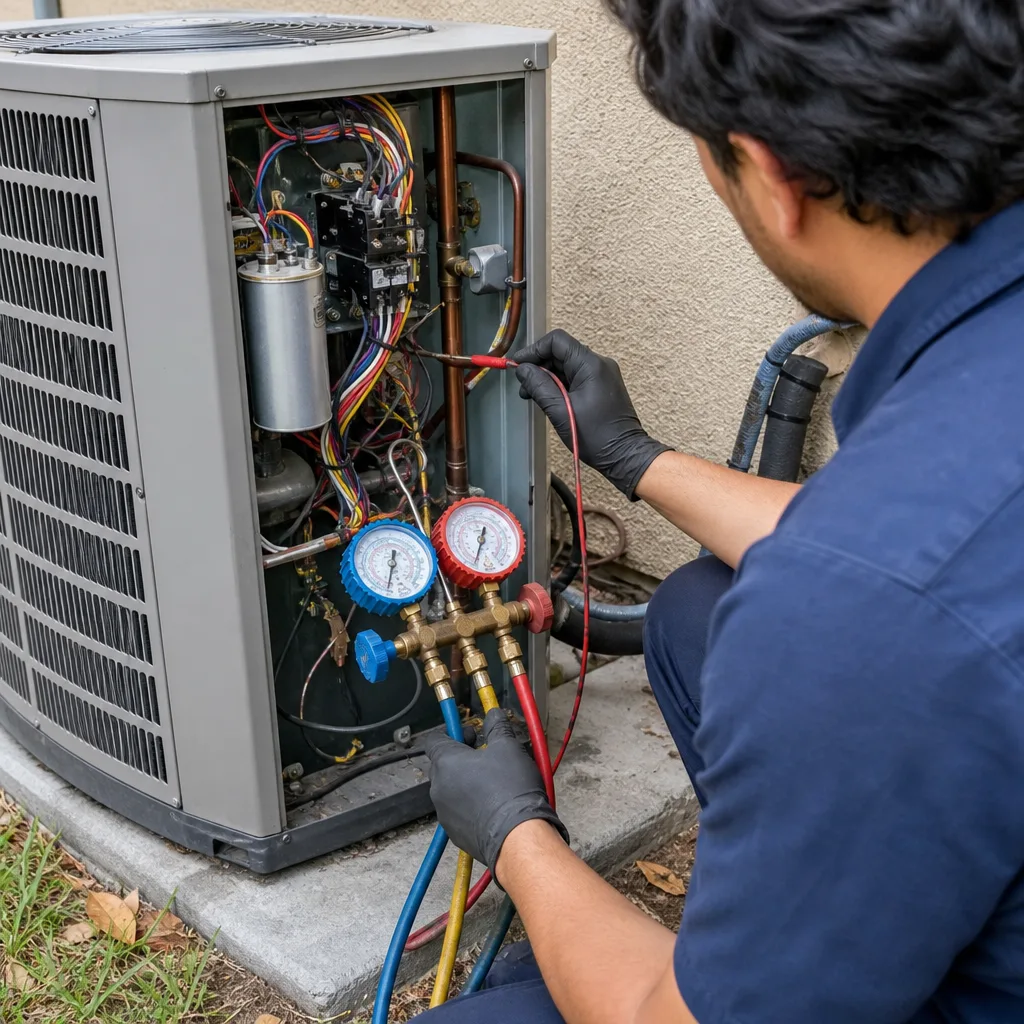
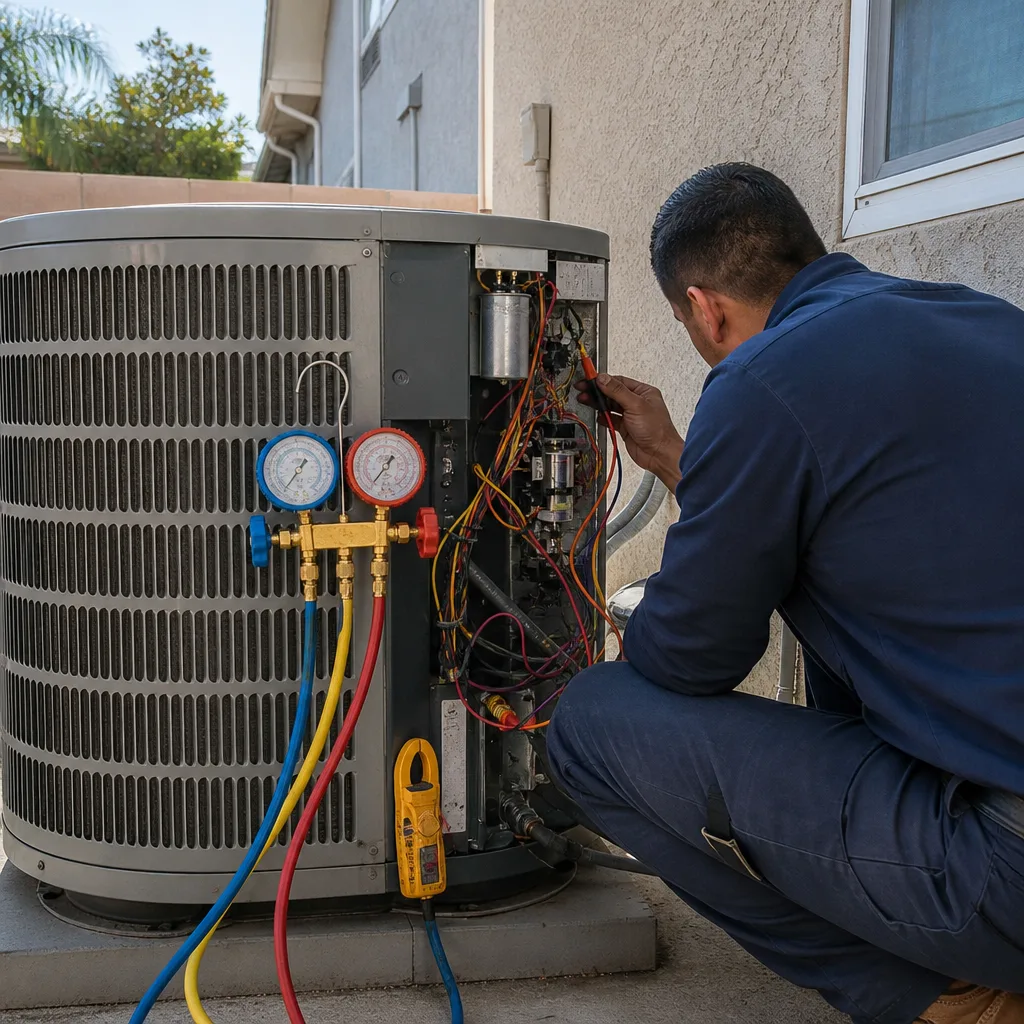
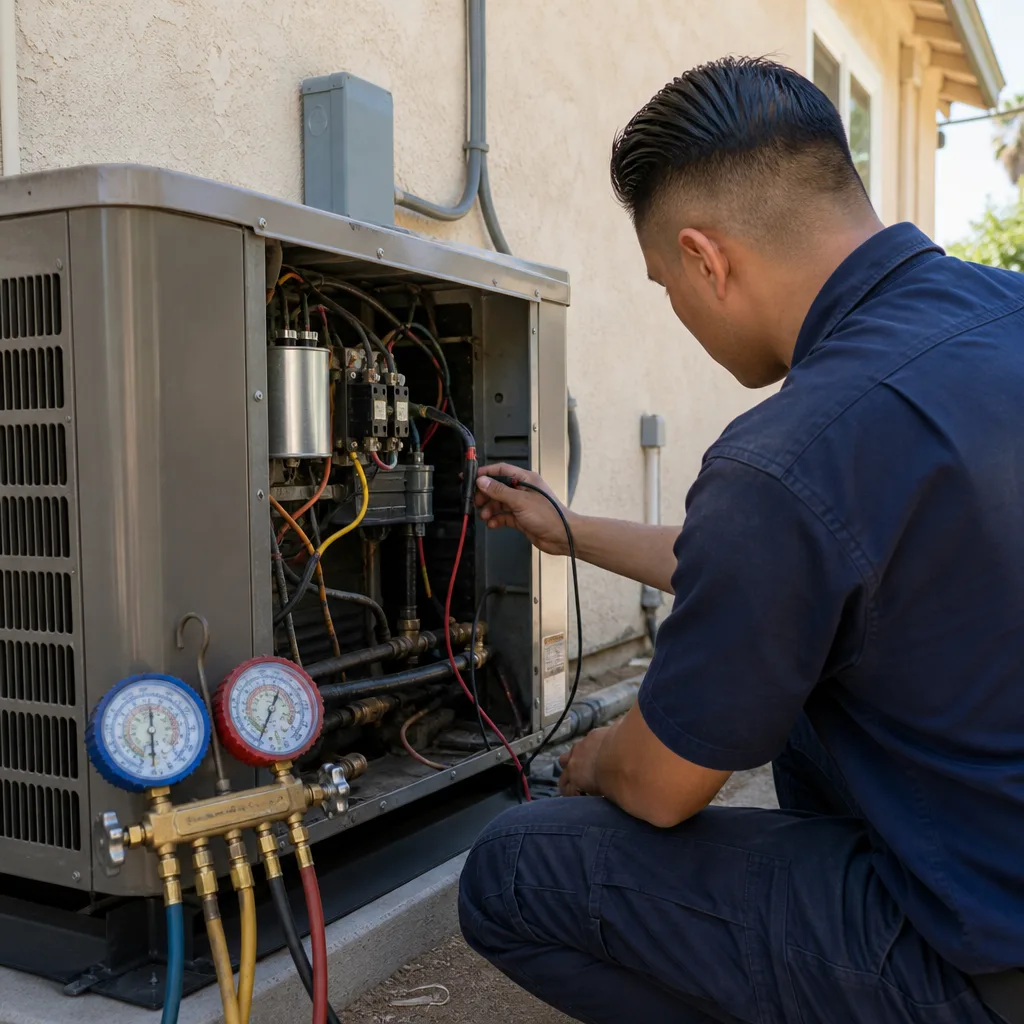
Seasonal tune-up and full diagnostic on your Carrier, Trane, or Goodman system - readings shown to you before any repair is proposed
Diagnosis first, numbers second - you approve the repair price before a single part goes in.
 Before
 After
After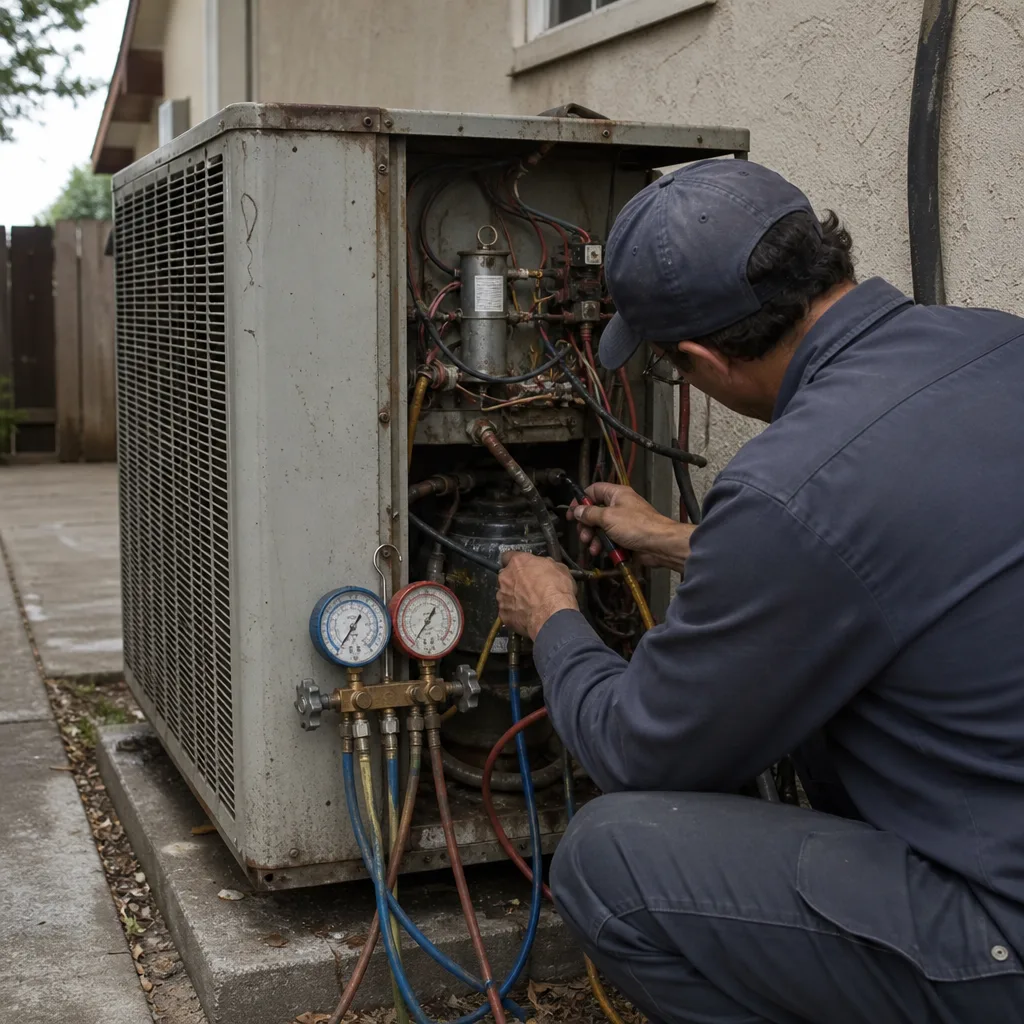 Before
 After
After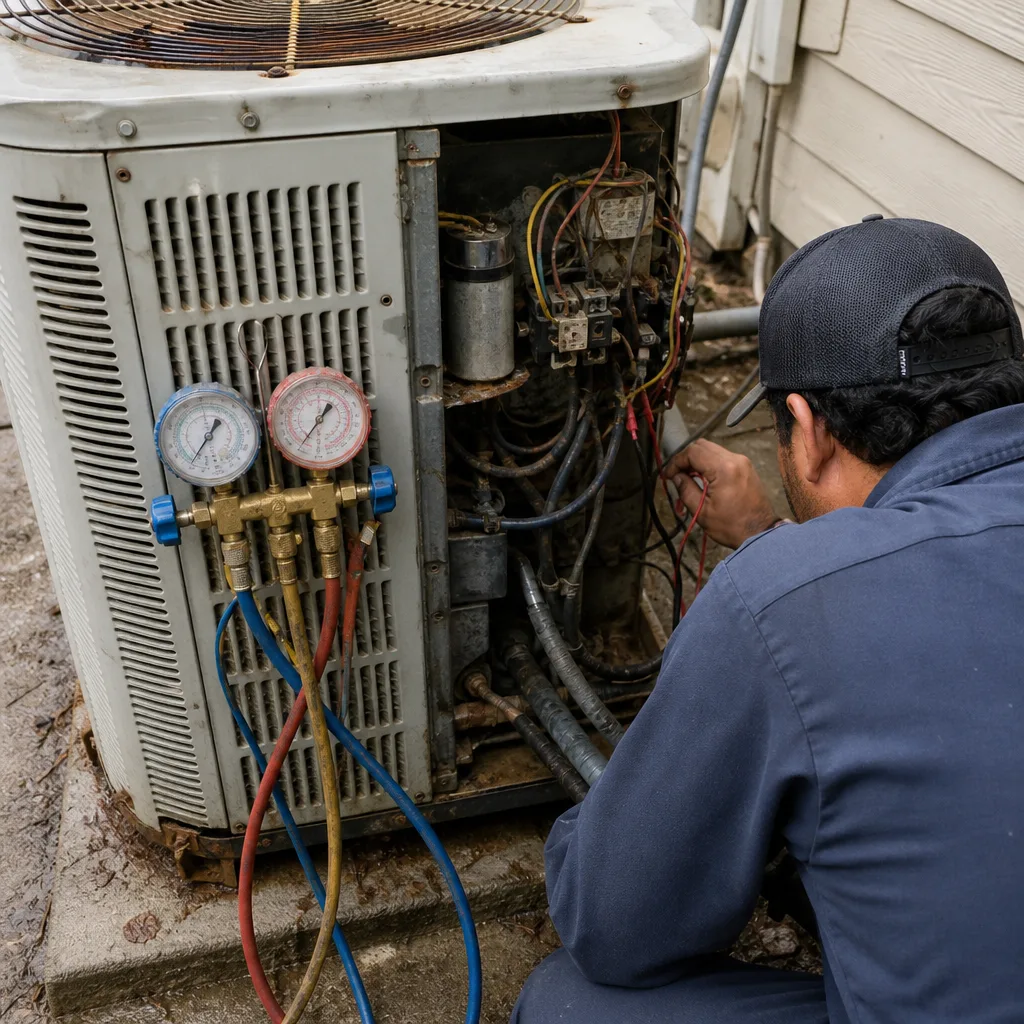 Before
 After
AfterFurnace Repair Troubleshooting: Common Problems and How to Fix Them
A furnace that runs but produces no heat and a furnace that won’t start at all are two completely different diagnostic trees. Conflating them is the first mistake most homeowners make when troubleshooting, and it’s why the first repair call sometimes doesn’t fix the problem. In Los Angeles, where furnaces sit idle for eight months and then get asked to work through December and January, the failure patterns are predictable. This guide teaches you to read those patterns, describe them accurately to a technician, and avoid paying for parts you don’t need.
Quick Answer
Most furnace failures trace to one of six components: the thermostat, the flame sensor, the ignitor, the limit switch, the control board, or the blower motor. Start with the homeowner-safe checks in order – thermostat settings, filter, breaker, gas valve, and error code LED – before calling anyone. If the symptom persists, Furnace Repair in Los Angeles typically costs $150 – $450 depending on the part.
Table of Contents
- The Symptom-to-Cause Matrix: Read the Pattern First
- The Five Homeowner-Safe Checks, in Order
- How to Read Furnace Error Codes
- The Flame Sensor: Why It Causes So Many ‘Won’t Stay On’ Calls
- No Heat, Blower Runs: The Most Misdiagnosed Symptom
- Heat Comes On, Then Shuts Off: Limit Switch and Airflow Patterns
- Runs But Smells: What’s Normal and What’s Not
- What You Can Verify vs. What Requires a Licensed Tech
The Symptom-to-Cause Matrix: Read the Pattern First
Furnaces fail in recognizable patterns. The specific combination of what you hear, what you feel, and what the system does next points to a particular component far more reliably than guesswork. In our experience across Los Angeles, most homeowners call and say “it’s not working” without the detail that would narrow the problem to one or two suspects. Here’s the matrix we use on every diagnostic call.
- No heat, blower runs constantly: Thermostat wiring, control board relay, or a failed ignitor/gas valve sequence. The blower running nonstop usually means the control board never received the signal that ignition happened.
- No start at all, no sound: Thermostat batteries, tripped breaker, blown fuse on the control board, or a bad transformer. This is the cheapest category to fix and the easiest to misdiagnose as “you need a new furnace.”
- Heat comes on, then shuts off after 2 – 5 minutes: Flame sensor oxidation, dirty filter causing limit switch trips, or an undersized return air duct. This is the most common call pattern we see in Los Angeles between late November and February.
- Runs but smells like burning dust: Normal at the start of the season in Los Angeles, where furnaces sit unused for months and collect dust on the heat exchanger. Burning smell that persists past 20 – 30 minutes, or smells like gas, is a different situation entirely.
- Short cycling – on and off every few minutes: Overheating from restricted airflow, a failing limit switch, or an oversized furnace. Los Angeles homes with improperly sized equipment from the original build show this pattern often.
Learn this matrix cold. When you call a technician and say “the blower runs but there’s no heat,” the dispatcher can send the right person with the right parts the first time. When you say “it’s broken,” the tech shows up with a general kit and has to leave and come back. In Los Angeles traffic, that delay can mean another cold night.
The Five Homeowner-Safe Checks, in Order
Do these in order. Every one of them takes under two minutes, requires no tools beyond maybe a flashlight, and eliminates the most common causes before you spend money. We’ve seen these five checks resolve about a quarter of the calls that come into our Los Angeles office.
- Thermostat settings. Confirm the thermostat is set to HEAT, not COOL. Confirm the fan switch is on AUTO, not ON. Replace the batteries if the display is dim or blank. It sounds obvious, but a dead AA battery has cost Los Angeles homeowners hundreds of dollars in service fees over the years.
- Filter condition. Pull the filter and hold it to a light. If you can’t see light through it, replace it. A clogged filter restricts airflow, which causes the limit switch to trip, which causes the furnace to shut down mid-cycle. This is the single most preventable repair call in HVAC. In Los Angeles, where several months of disuse let dust settle in return ducts, the first filter change of the season matters more than most people realize.
- Circuit breaker. Furnaces are on dedicated breakers, usually labeled. Flip the breaker fully OFF, then fully ON. If it trips again immediately, stop and call a tech – that indicates a short, not a nuisance trip. Do not keep resetting it.
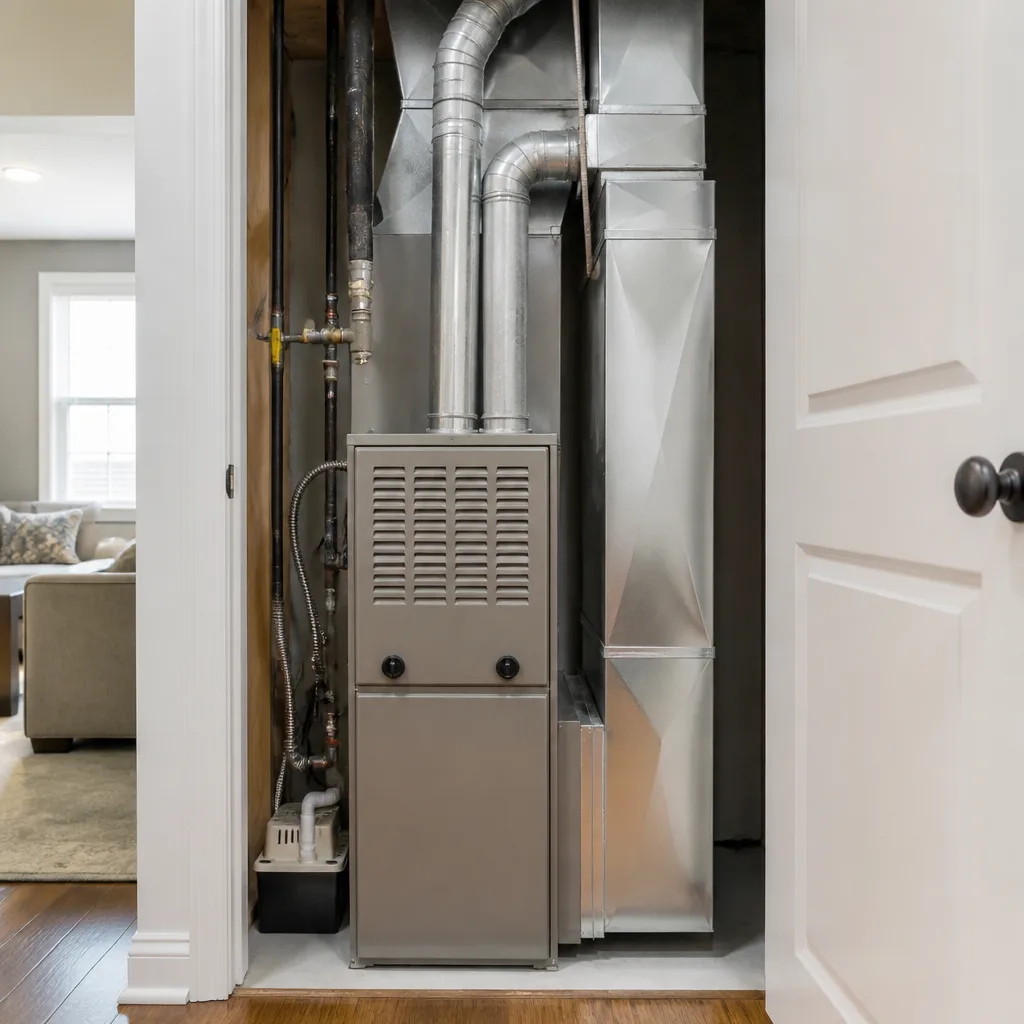
- Gas valve position. Find the gas supply valve near the furnace – a lever handle on the gas line. It should be parallel to the pipe (open). Perpendicular means closed. If you’ve had plumbing or gas work done recently, this is a common culprit.
- Error code LED on the control board. Look through the sight glass on the furnace’s lower panel for a blinking light. Count the blinks. Write down the pattern. That light is the furnace telling you exactly what it thinks is wrong, and the next section explains how to read it.
How to Read Furnace Error Codes
Most furnaces manufactured in the last 25 years have a control board with a small LED light that blinks a code when something fails. The code is a sequence of short and long flashes – for example, three short flashes, pause, three short flashes – that corresponds to a specific fault. The code chart is printed on the inside of the blower compartment door, or in the installation manual.
Reading this code accurately changes the entire diagnostic conversation. When a homeowner tells us “it’s blinking three times,” we can often identify the failed component before we arrive. When a homeowner says “there’s a light blinking but I didn’t count it,” we’re starting from zero. Take 60 seconds and count. Write it down somewhere you won’t lose it.
Common codes across Goodman, Rheem, York, and Daikin furnaces include a pattern for “pressure switch stuck open,” which usually means a blocked vent or condensate drain, and a pattern for “flame loss,” which usually means the flame sensor. The codes aren’t universal across brands, so match the pattern to the chart on your furnace – don’t search the internet for “furnace blinking 3 times” without knowing your brand, because the meaning shifts.
In Los Angeles, where many homes were built in the 1970s and 1980s and still have the original furnace, you might have an older unit with no LED at all. If there’s no sight glass and no blinking light, skip this step and move on. But for anything installed after roughly 1995, the code is there and it’s the most underused diagnostic tool in residential HVAC.
The Flame Sensor: Why It Causes So Many ‘Won’t Stay On’ Calls
The flame sensor is a small metal rod, about the length of your finger, mounted in front of one burner. Its job is to prove that the gas actually ignited. If the sensor doesn’t detect flame within a few seconds of the gas valve opening, the control board shuts the gas off as a safety measure. This happens every time the furnace fires – it’s a designed verification sequence, not a failure.
The sensor fails for a predictable reason: oxidation. Over hundreds of ignition cycles, a thin layer of oxide builds up on the rod. That layer insulates the sensor from the flame’s electrical signal. The sensor isn’t broken – it’s coated. The furnace interprets “no signal” as “no flame” and shuts down. You get heat for a few minutes, then nothing. The blower keeps running. The cycle repeats, or the furnace locks out entirely.
This single component accounts for a disproportionate share of Furnace Repair Warning Signs Every Homeowner Should Know in Los Angeles. It’s also the repair that unscrupulous technicians sometimes inflate into a control board replacement, because the homeowner doesn’t know the difference. A flame sensor replacement or cleaning typically runs $150 – $250 in the Los Angeles market. A control board replacement runs $400 – $700. Knowing the symptom pattern – heat comes on, shuts off after a few minutes, repeats – protects you from that upsell.
We mention this not to alarm anyone but because it’s the most common pattern we see and the easiest one for a homeowner to describe accurately. If you tell us “the furnace lights, runs for about three minutes, then the flames go out but the blower keeps going,” we’re 90% sure it’s the flame sensor before we even leave the office.
No Heat, Blower Runs: The Most Misdiagnosed Symptom
This is the pattern that separates a five-minute diagnostic from an hour of parts-swapping: the blower fan runs continuously, but the air coming from the vents is room temperature. No heat. This means the blower is getting power and the thermostat is calling for heat, but the ignition sequence never completed.
Three components dominate this symptom pattern:
- The ignitor. Modern furnaces use a hot surface ignitor – a silicon carbide or nitride element that glows red-hot to light the gas. If it cracks or burns out, the gas never ignites. On many furnaces, including most Rheem and York models from the last 15 years, you can hear a click and then… nothing. That’s the ignitor failing.
- The gas valve. If the ignitor glows but no gas flows, the gas valve’s solenoid may have failed. You’ll typically hear no “whoosh” of ignition after the glow. Gas valves fail more often in Los Angeles than in colder climates because the long idle season lets internal components stick.
- The control board. The board orchestrates the sequence: inducer motor spin-up, pressure switch confirmation, ignitor warm-up, gas valve open, flame sensor proof. If the board fails at any step, the sequence stops. The blower running constantly is often the board’s “I’m confused” state – it’s powering the fan because the thermostat says HEAT, but it never got flame confirmation.
None of these are homeowner-repairable. Gas valves and ignitors involve combustion components and 120V electrical connections. But knowing which one is the likely suspect – and being able to describe the sequence you hear – speeds the repair and prevents unnecessary parts replacement. Say “the inducer motor runs for about 30 seconds, then everything goes quiet except the blower” or “I hear a click but no flame ever lights.” We hear that and we know exactly what to bring.
Heat Comes On, Then Shuts Off: Limit Switch and Airflow Patterns
If your furnace produces real heat and then shuts down after a few minutes, only to restart and shut down again, you’re looking at a different family of problems. The furnace is overheating, or it thinks it is, and the limit switch is cutting the burners as a safety response.
The limit switch is a temperature sensor mounted near the heat exchanger. When the air inside the furnace cabinet exceeds a set temperature – usually 160 – 200°F – the switch opens and the gas shuts off. The blower keeps running to cool things down. When the temperature drops, the switch closes and the cycle starts again. This isn’t the furnace misbehaving; it’s the furnace protecting itself.
The question is why it’s overheating. The answers, in order of frequency in Los Angeles:
- Dirty filter. Same culprit as always. Restricted airflow means heat builds up in the cabinet instead of being carried into the house.
- Closed or blocked vents. Los Angeles homes often have register dampers closed in unused rooms. Furnaces need a certain volume of air moving through them. Starve the system and it overheats.
- Undersized ductwork. This is a Southern California original-construction problem. Homes built in the 1970s and 1980s sometimes have return air ducting sized for a smaller furnace than what’s installed today.
- Failing limit switch. After thousands of cycles, the switch itself can fail, tripping at too low a temperature. This is a part that wears out, but it’s also a part that gets replaced unnecessarily when the real problem is airflow. A good tech tests the switch before replacing it – a good homeowner asks “did you test the switch, or just replace it?”
On a Goodman furnace from the mid-2000s, we see limit switch issues more than on comparable Rheem or York units from the same era – not because the switches are worse, but because those furnaces were installed in large numbers across Los Angeles during the building boom and are now hitting the age where switches fail.
Runs But Smells: What’s Normal and What’s Not
A furnace that hasn’t run in eight months will smell dusty for the first 20 – 30 minutes of the season. Los Angeles furnaces sit idle from roughly March through November, and dust collects on the heat exchanger and burners. That first firing burns it off. It smells like singed dust, maybe a little like a hot hair dryer. It’s not dangerous and it goes away.
What’s not normal:
- A smell like rotten eggs or sulfur. Natural gas is odorless, so utilities add mercaptan – a sulfur compound – to make leaks detectable. If you smell this, it’s not “normal furnace smell.” Turn the furnace off, don’t operate any electrical switches, leave the house, and call the gas company from outside. This is rare, but it’s the one smell on this list that demands immediate action.
- A smell like burning plastic or electrical burning. This usually indicates overheating wiring, a failing blower motor, or a component on the control board burning out. Shut the furnace off and call a technician.
- A smell like exhaust or car fumes. This can indicate a cracked heat exchanger, which lets combustion gases mix with the air being blown through the house. Carbon monoxide isn’t something to troubleshoot by smell. If you have any suspicion of this, shut the system down and get it checked. Los Angeles homes with furnaces in closets or utility rooms adjacent to living spaces are more exposed to this risk than homes with basement or attic installations.
The dust smell is seasonal and harmless. Everything else on that list means turn it off and call someone. The rule we give our own families: if the smell is dust, wait 30 minutes. If it’s anything else, shut it down.
What You Can Verify vs. What Requires a Licensed Tech
There’s a line between troubleshooting and repair. This guide is built on the premise that the homeowner-safe checks – thermostat, filter, breaker, gas valve position, error code – are within reach for anyone. They involve no disassembly, no combustion components, and no electrical exposure. Do those. Learn those.
Here’s what sits on the other side of the line:
- Anything involving the gas valve or burners. Gas valves operate on low voltage but control high-stakes flow. A mistake with a gas valve doesn’t just fail – it leaks. This is a licensed technician’s work, full stop.
- Anything involving the heat exchanger. The heat exchanger separates combustion gases from the air you breathe. It’s the single most safety-critical component in the furnace. Inspecting it requires removal of the blower assembly and a combustion analysis with testing equipment. No homeowner should open a heat exchanger.
- Anything involving the ignitor or flame sensor replacement. Flame sensor cleaning is borderline – some homeowners do it with fine sandpaper. But the sensor is mounted inside the burner compartment, and that compartment contains the combustion process. If you’re not sure, don’t. We’d rather you call than create a gas or carbon monoxide hazard.
- Anything involving the control board. Control boards operate at line voltage and carry components that store charge. A wrong wire touch can fry the board, and boards cost $400 – $700. This is not a “watch a YouTube video and figure it out” repair.
- Anything involving carbon monoxide testing. A real combustion analysis isn’t a $30 detector from the hardware store. Licensed techs use calibrated instruments that measure CO levels in the flue gas. This is how you know the heat exchanger is intact and the burners are burning clean. Los Angeles homes with furnaces in enclosed closets should get this done as part of any repair.
The pattern to remember: you can verify, you can describe, you can count blinks. You should not disassemble combustion equipment. When in doubt, Furnace Repair in Los Angeles is what we do every day, and a diagnostic visit costs less than a hospital visit for carbon monoxide exposure.
Common Mistakes to Avoid
- Replacing the thermostat before checking the breaker. A blank thermostat screen is more often a dead battery or a tripped breaker than a failed thermostat. We’ve watched homeowners in Los Angeles spend $150 on a new thermostat when the real problem was a $1 fuse on the control board.
- Ignoring the error code because “the light’s just blinking.” That blinking light is the furnace telling you what’s wrong. Count the blinks. Write down the pattern. It changes the entire repair conversation.
- Changing the filter every call instead of actually diagnosing. A dirty filter is a real problem, but if you’ve changed it and the furnace still short-cycles, stop changing filters and start looking at the limit switch or ductwork. More filters won’t fix an airflow problem.
- Assuming a “furnace won’t start” means “furnace is dead.” Most “won’t start” calls are electrical supply issues or failed ignitors – both repairable at a fraction of replacement cost. Don’t let anyone convince you a 10-year-old furnace needs replacing because the ignitor failed.
- Resetting the breaker repeatedly. If a breaker trips twice, there’s a short somewhere. Every reset risks damaging the control board. Call someone.
- Waiting until the first cold snap to test the furnace. Los Angeles winters are mild, which means furnaces get zero exercise for most of the year. Test yours in October. The parts are the same price in October as they are in January, but you’ll wait less and you’ll have heat when you actually need it.
- Describing the problem as “it’s broken” instead of a symptom. “The blower runs but there’s no heat” is a diagnostic statement. “It’s broken” is not. Learn the matrix at the top of this guide and use it when you call.
When to Call a Professional
Call a professional when the symptom involves gas, electrical connections beyond a breaker reset, any burning smell that isn’t seasonal dust, or airflow problems that persist after you’ve changed the filter and opened the vents. If you’ve done the five homeowner-safe checks and the furnace still isn’t working, you’re not going to fix it by staring at it harder. You need someone with a multimeter, a manometer, and a combustion analyzer. Dalton Heating & Air home is the starting point for scheduling. Dalton Heating & Air offers free estimates in Los Angeles – call (361) 306-9515.
Frequently Asked Questions
In most cases, the blower is running because the thermostat is calling for heat, but the ignition sequence never completed – meaning the ignitor failed to light the gas, the gas valve didn’t open, or the control board failed mid-sequence. The fix is a component replacement, not a system replacement, and the specific part depends on what you hear during the startup attempt. Call (361) 306-9515 and describe the exact sounds.
For more guides & resources, visit our blog. Most furnace repairs in Los Angeles run $150 – $450 depending on the part, with common items like flame sensors and ignitors at the lower end and control boards at the higher end. Diagnostic calls typically run $75 – $125, though many companies – Dalton included – apply the diagnostic fee toward the repair if you proceed. Get the price in writing before any work starts.
Look through the sight glass on the furnace’s lower panel for a blinking LED light, count the pattern of short and long flashes, and match it to the code chart printed on the inside of the blower compartment door. The code identifies the specific failure – pressure switch, flame loss, limit switch, or something else – and telling your technician the code saves a diagnostic step.
The limit switch is tripping because the furnace is overheating or thinks it is, which is usually caused by a dirty filter, closed or blocked vents, undersized ductwork, or a failing limit switch itself. Change the filter and open the vents first. If it still short-cycles, the switch or the ductwork needs professional attention.
Dust burning off the heat exchanger at the start of the season is normal and harmless, but a sulfur or rotten egg smell indicates a gas leak, a burning plastic smell indicates an electrical problem, and an exhaust smell could indicate a cracked heat exchanger. The last three mean shut the system down and call a professional immediately. Do not continue running a furnace that smells like anything other than dust.
If the furnace is under 15 years old and the repair cost is under $500, repair it – that’s almost always the right call. If the heat exchanger is cracked, or the furnace is over 20 years old and the repair quote approaches half the cost of replacement, start doing the math on a new system. For Los Angeles homeowners considering either path, Heat Pump Installation in Los Angeles is worth exploring as an alternative that handles both heating and cooling. Get a written quote for both options before deciding.
The Bottom Line
Furnace troubleshooting isn’t about being your own technician. It’s about knowing the five safe checks, reading the error code, and describing the symptom pattern accurately enough that the person you hire shows up with the right part the first time. Most furnace failures trace to six components, and most of those components cost $150 – $450 to replace – far less than the $3,000 – $7,000 replacement quote someone might try to sell you. If you’ve worked through the matrix in this guide and the furnace still isn’t working, AC Repair in Los Angeles is another resource from the same team – and Dalton Heating & Air is one call away at (361) 306-9515 for a free estimate with written pricing before any work begins.
Written by Marco Benitez, Owner at Dalton Heating & Air, serving Los Angeles since 2003.