
Last updated October 9, 2026
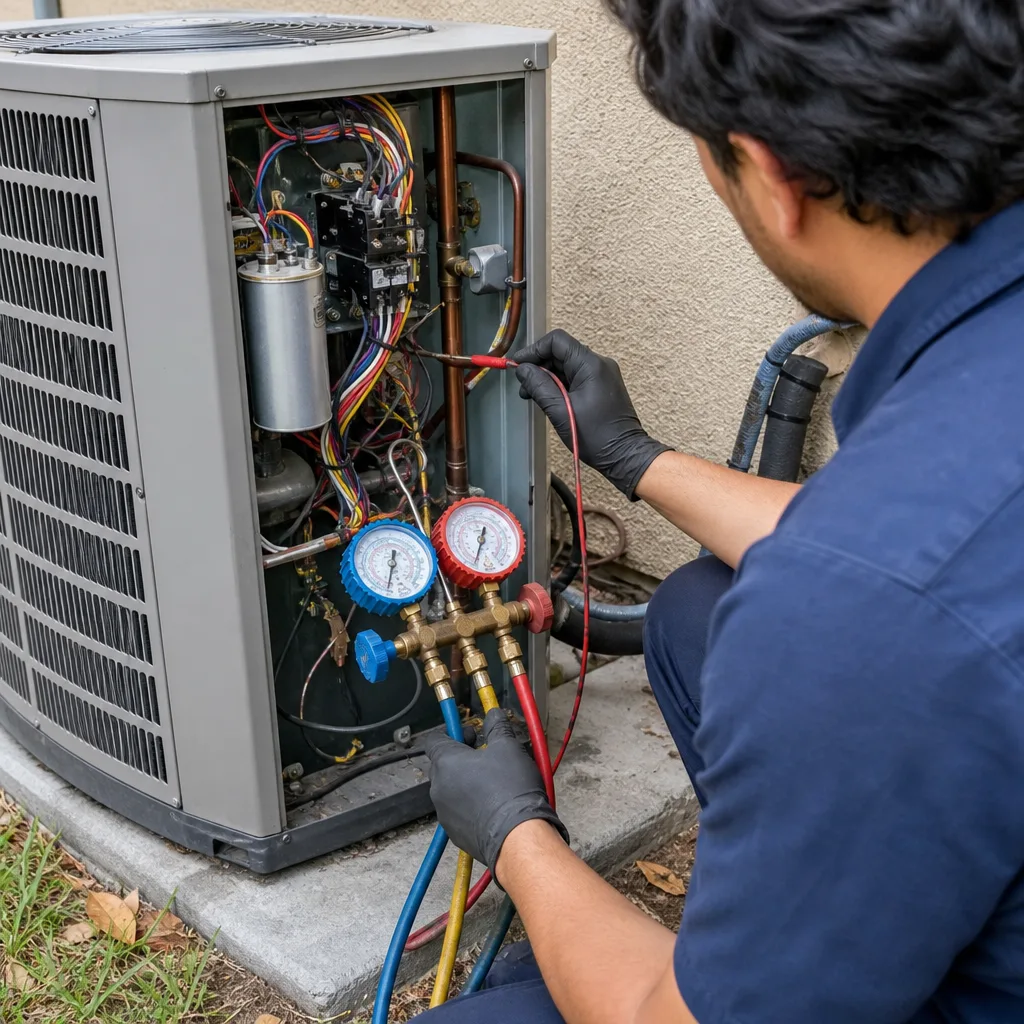
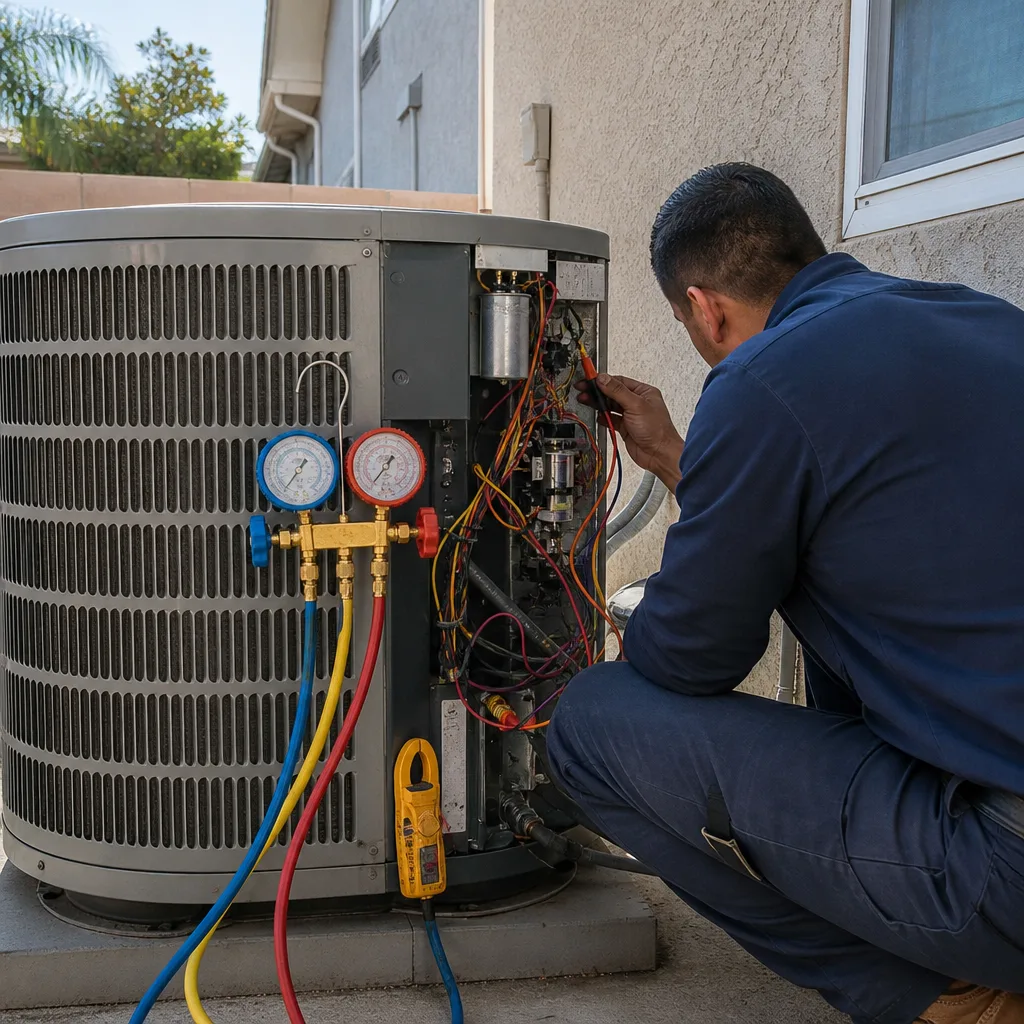
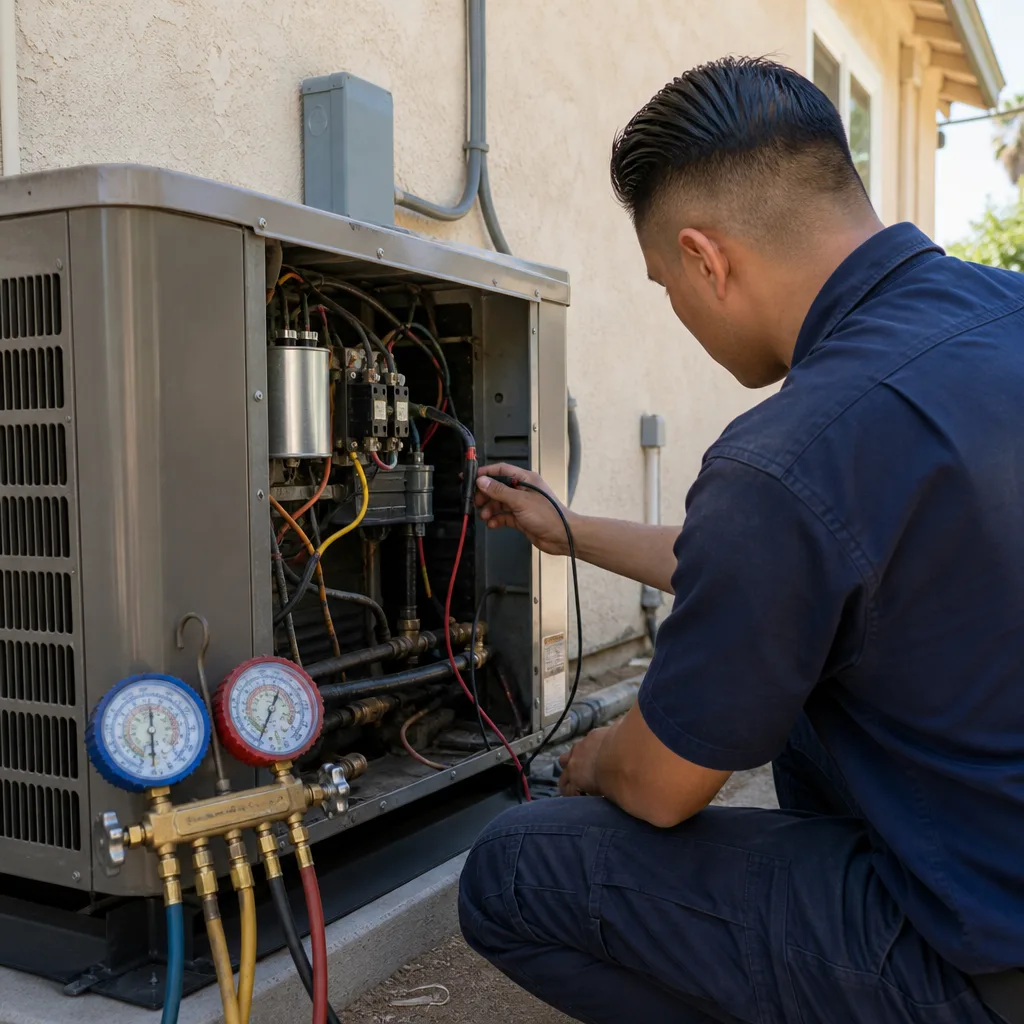
Seasonal tune-up and full diagnostic on your Carrier, Trane, or Goodman system - readings shown to you before any repair is proposed
Diagnosis first, numbers second - you approve the repair price before a single part goes in.
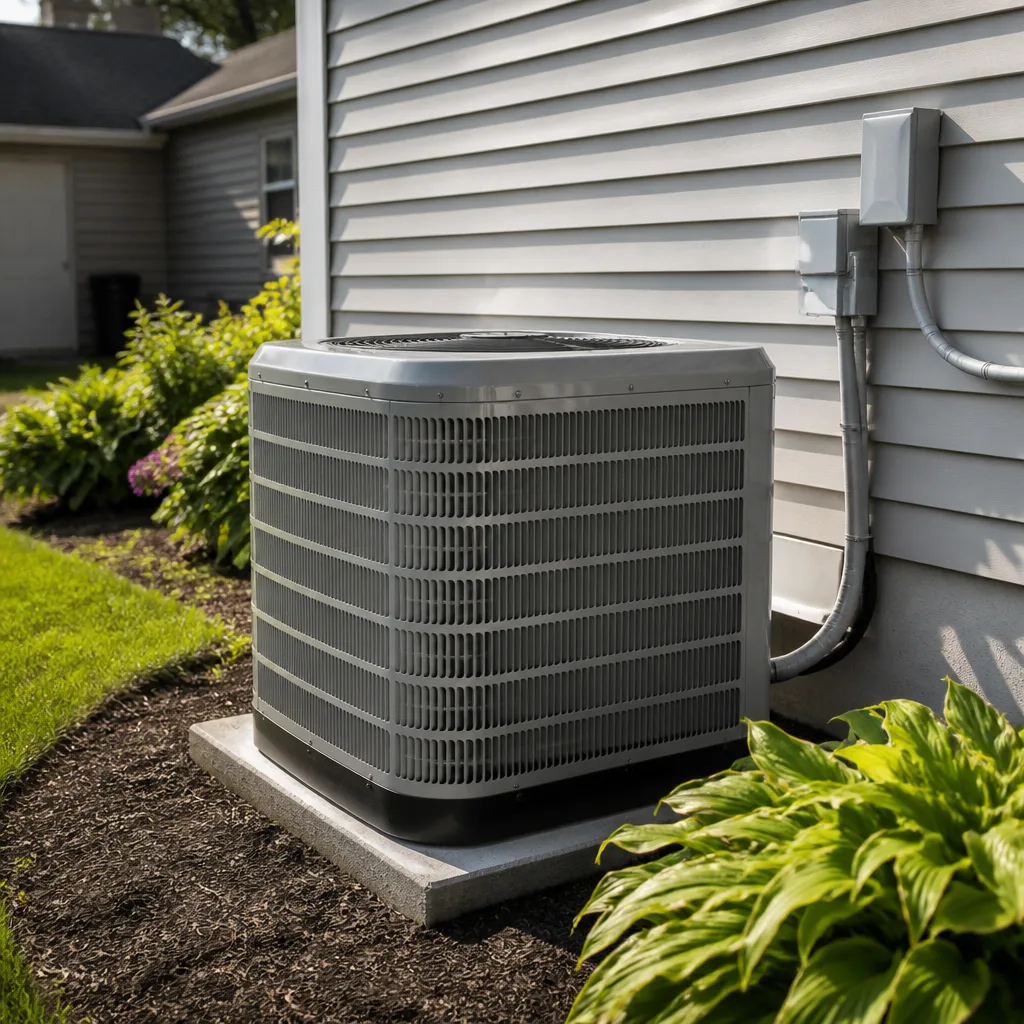
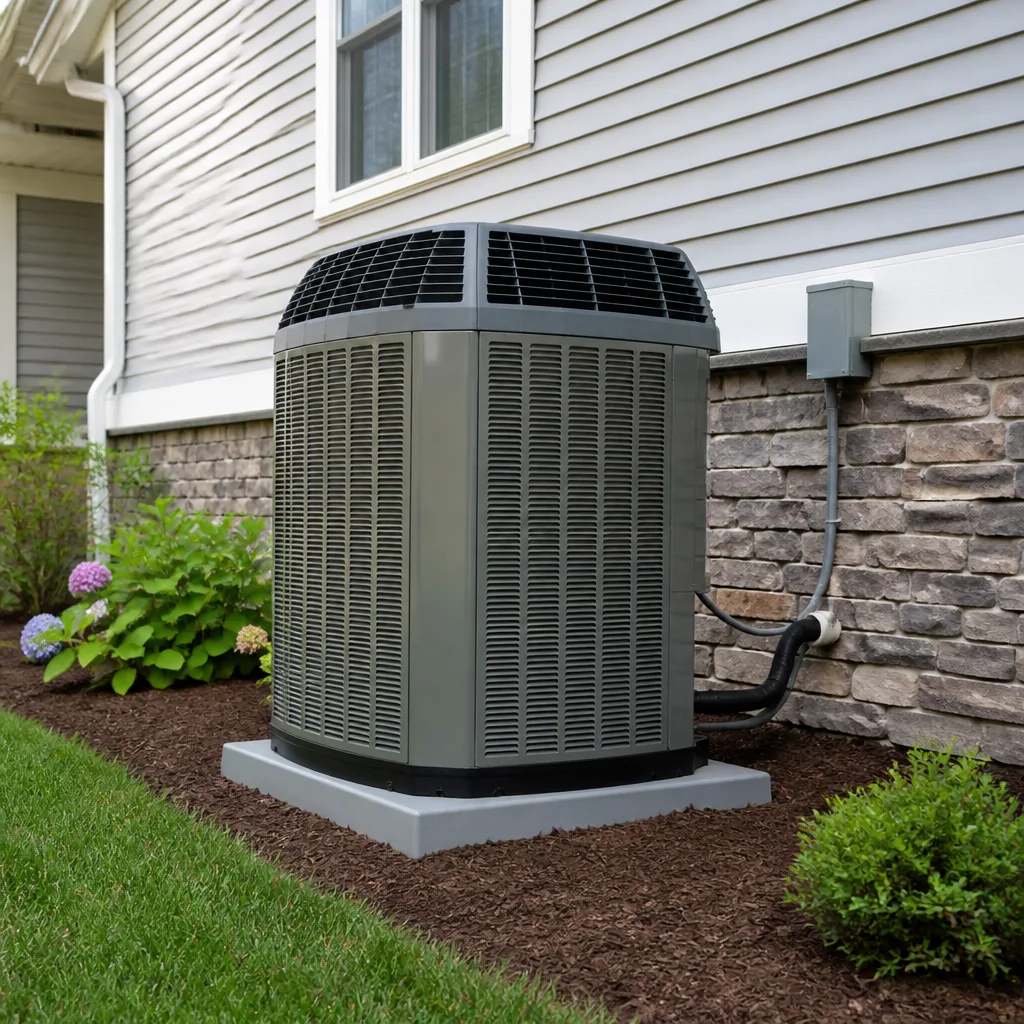
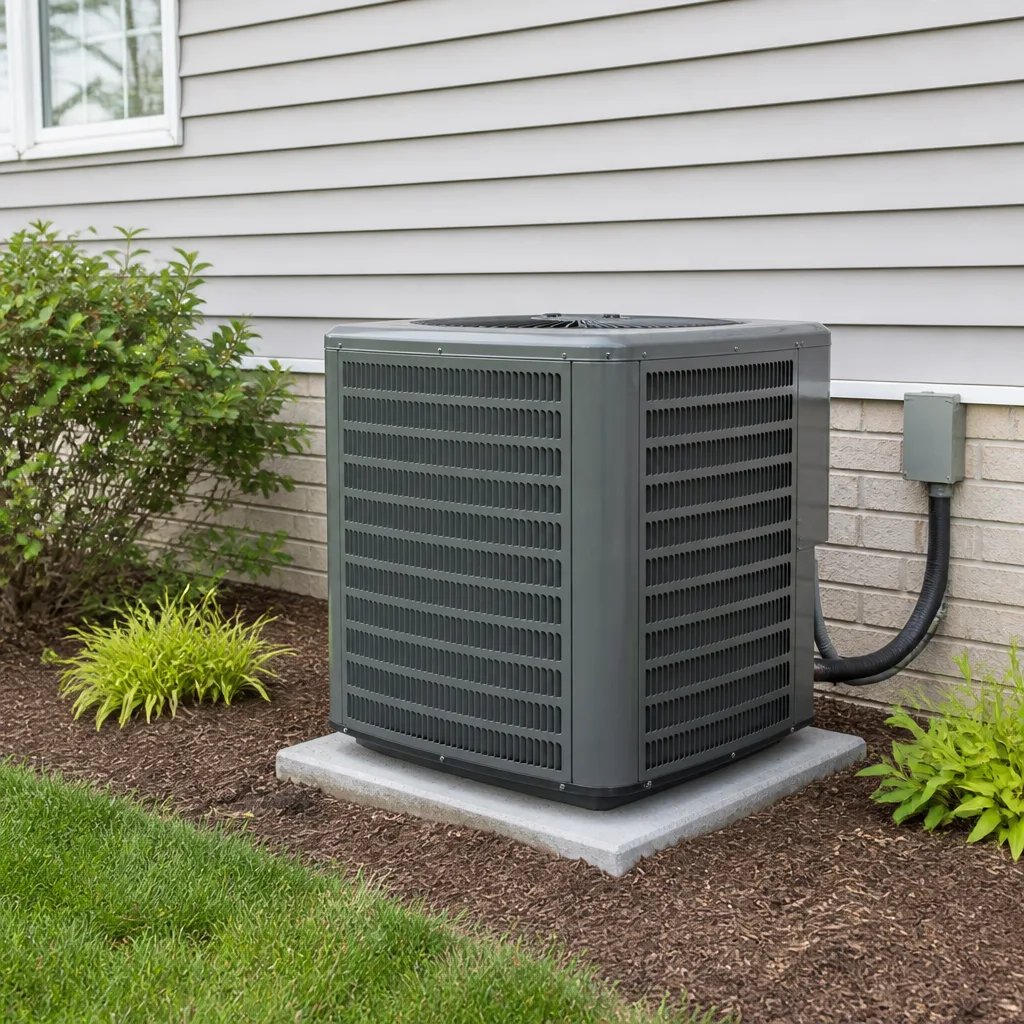
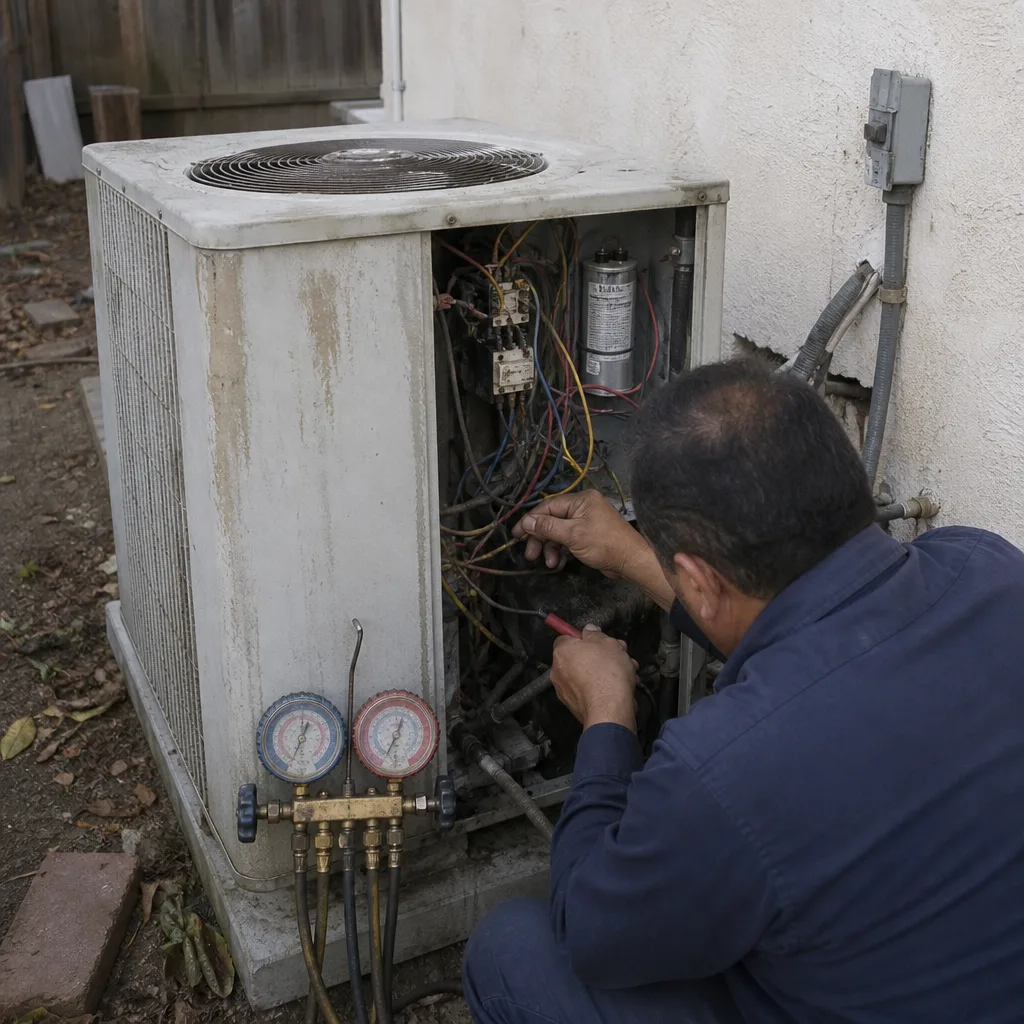 Before
 After
After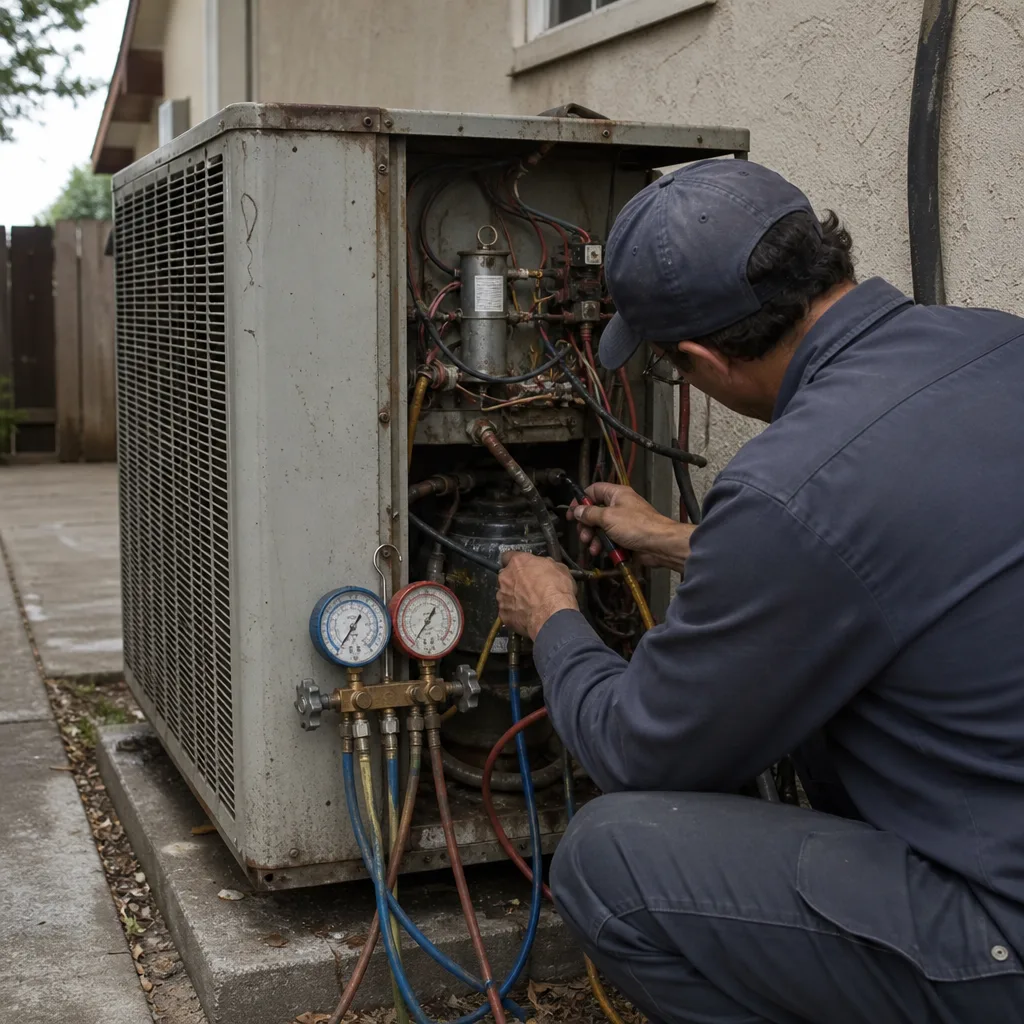 Before
 After
After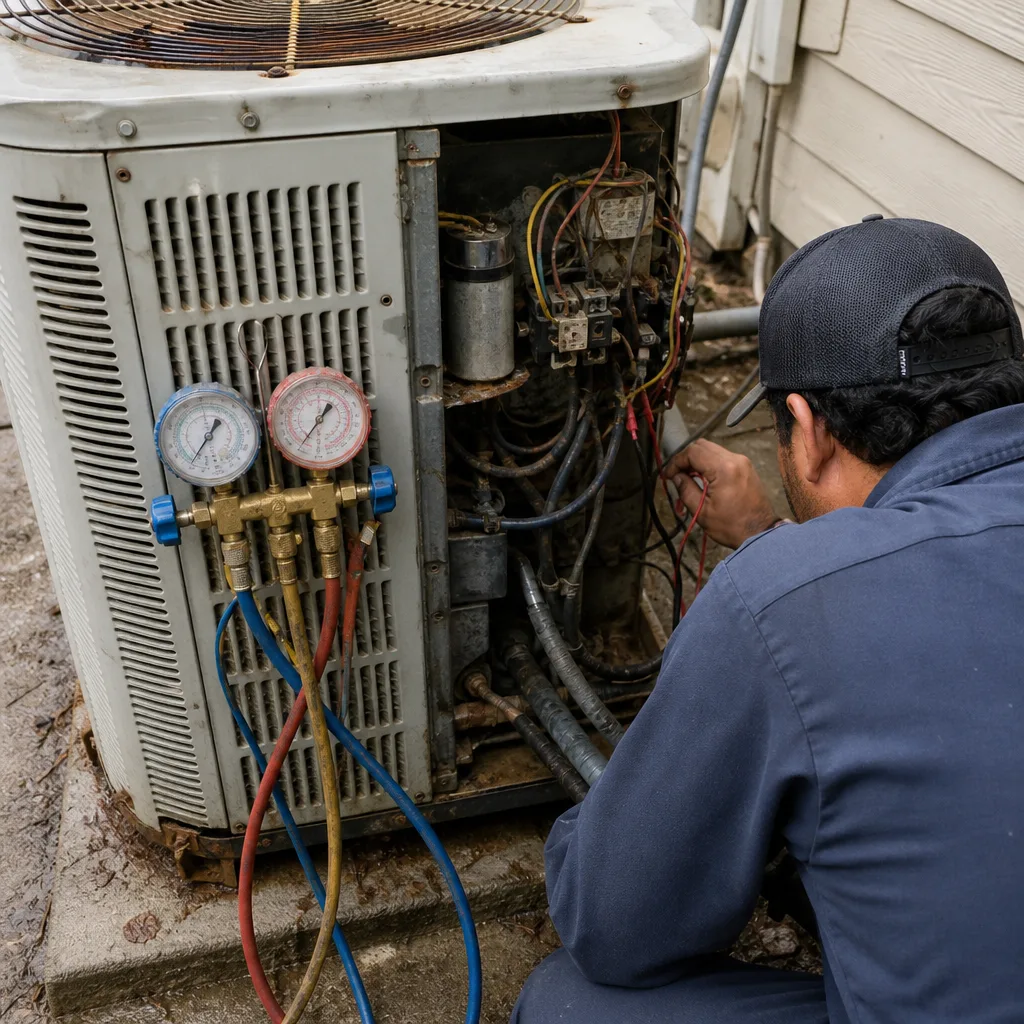 Before
 After
AfterHeat Pump Installation Maintenance Schedule: What to Do and When
A heat pump in Los Angeles accumulates roughly twice the operating hours of a cooling-only AC unit. It runs in cooling mode through the summer, then keeps cycling through LA’s mild winter instead of sitting idle for six months. That changes the maintenance math entirely. Most manufacturer checklists were written for seasonal systems, not a machine that works year-round. This guide walks through the actual task schedule a heat pump needs, when each task matters, and which ones require a trained technician. For related reading, see our Heat Pump Installation Troubleshooting: Common Problems and How to Fix Them.
Quick Answer
A heat pump needs coil cleaning on both the indoor and outdoor units twice a year, filter checks monthly, condensate drain inspection in both heating and cooling modes, and a reversing valve check before each season. The full professional service happens once in spring before cooling season and once in fall before heating season. Between those visits, homeowners handle filter changes, drain line clearing, and airflow checks.
Table of Contents
- Why Heat Pumps Need a Different Maintenance Schedule
- Monthly Maintenance Tasks You Can Do Yourself
- Spring Maintenance: Before Cooling Season
- Fall Maintenance: Before Heating Season
- The Reversing Valve: The Component Cooling-Only Checklists Miss
- Condensate Drainage in Both Modes
- How to Spot a Declining COP Before It Costs You
- California Rebate and Warranty Documentation Requirements
- Common Mistakes to Avoid
- When to Call a Professional
- Frequently Asked Questions
- The Bottom Line
Why Heat Pumps Need a Different Maintenance Schedule
A standard central AC runs maybe 1,200 to 1,800 hours per year in Los Angeles, concentrated in the summer months. A heat pump adds another 800 to 1,200 hours in heating mode spread across late fall, winter, and early spring. That doubling of runtime means wear accumulates faster, and more importantly, it accumulates in a part of the system a cooling-only maintenance plan never looks at.
The key difference is the reversing valve. This is the component that switches refrigerant flow direction so the system can either pull heat from inside and dump it outside, or pull heat from outside and bring it in. On a cooling-only AC, the refrigerant only ever travels one direction. On a heat pump, the valve has to actuate cleanly every time the thermostat calls for a mode change. A valve that sticks open, sticks halfway, or leaks internally will cause subtle performance problems that get worse over time.
There’s also a difference in where condensation forms. A cooling-only system produces condensate at the indoor coil during summer. A heat pump produces condensate at the indoor coil in cooling mode and at the outdoor coil in heating mode. That means two drain paths, two pans, and twice the chance of a clog or overflow. Most maintenance schedules written for central AC only address one of those.
In Los Angeles, we also deal with a specific climate pattern that affects scheduling. The LA basin gets a marine layer in late spring and early summer, which means cool, damp mornings followed by warm afternoons. That moisture cycle creates more condensation on outdoor coils than a dry inland climate would. Then in winter, even though temperatures rarely drop below freezing in most LA neighborhoods, the system still cycles enough in heating mode to build up frost on the outdoor coil during defrost cycles. Homeowners in the Valley, the Westside, and the South Bay all see slightly different patterns, but the twice-yearly maintenance principle holds across the region.
Finally, there’s the matter of coil cleanliness. A heat pump’s outdoor coil is doing double duty. It rejects heat in summer and absorbs heat in winter. If that coil is dirty, you lose capacity in both directions. A dirty outdoor coil on a cooling-only system costs you some cooling efficiency for a few months. On a heat pump, it costs you cooling efficiency in summer and heating capacity in winter. That’s a year-round penalty, not a seasonal one.
Monthly Maintenance Tasks You Can Do Yourself
These are the tasks a homeowner can handle safely and effectively. None of them involve refrigerant, electrical components, or anything that requires a licensed technician. They take about fifteen minutes total.
- Check and replace the air filter. In a heat pump, the filter protects the indoor coil from dust and debris in both modes. A clogged filter restricts airflow, which reduces capacity and causes the system to run longer. In Los Angeles, where wildfire smoke and construction dust are recurring issues, filters often need replacement more frequently than the manufacturer’s 90-day recommendation suggests. Check monthly, replace when visibly dirty. Most one-inch filters run $8 to $20.
- Inspect the outdoor unit for debris. Leaves, grass clippings, plastic bags, and construction debris collect against the outdoor coil. Clear anything within two feet of the unit. In LA, bougainvillea petals and jacaranda flowers are seasonal nuisance debris that clog coil fins.
- Listen for unusual sounds. A heat pump in heating mode makes a different sound than in cooling mode, and the defrost cycle has its own signature sound. If you hear a grinding, rattling, or a loud clunk when the system switches modes, that’s worth noting. Most heat pump failures give audible warning before they become full breakdowns.
- Check the thermostat display and settings. Look for error codes, low battery indicators, or settings that have been changed accidentally. Programmable thermostats can develop schedule drift that affects runtime.
- Verify the condensate drain at the indoor unit. In cooling mode, check that water is actually dripping from the drain line outside. A dry drain in cooling mode means the water is going somewhere else, and that somewhere else is usually the inside of your wall or ceiling.
Spring Maintenance: Before Cooling Season
In Los Angeles, spring maintenance should happen in March or April, before the first real heat wave. By May, the marine layer starts to burn off and daytime temperatures climb into the 80s. Waiting until June means the system has already been working in cooling mode with whatever accumulated issues it picked up over winter.
A proper spring service for a heat pump includes these tasks:
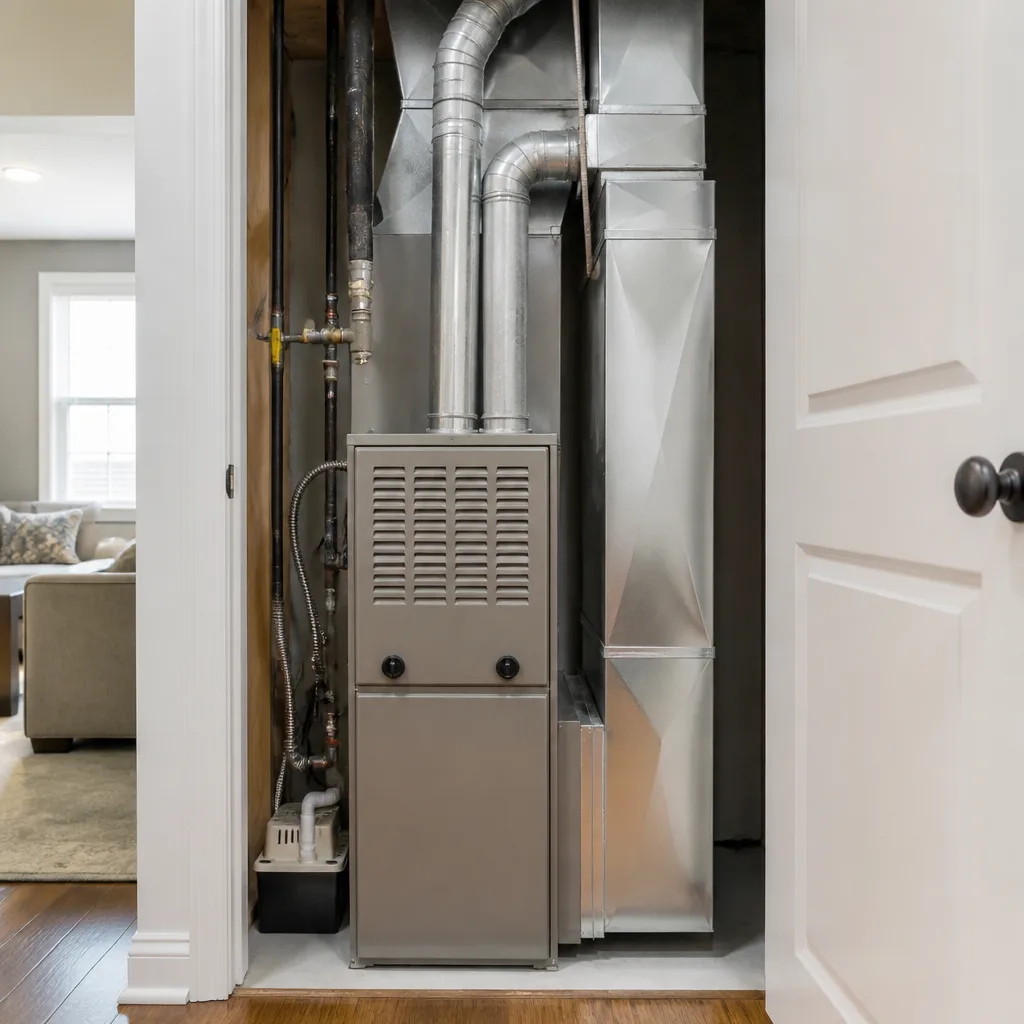
- Clean the indoor coil. This is the coil in the air handler or furnace cabinet. It has been collecting dust all winter in heating mode, and now it needs to be clean for efficient cooling. A dirty indoor coil raises head pressure, reduces cooling capacity, and shortens compressor life.
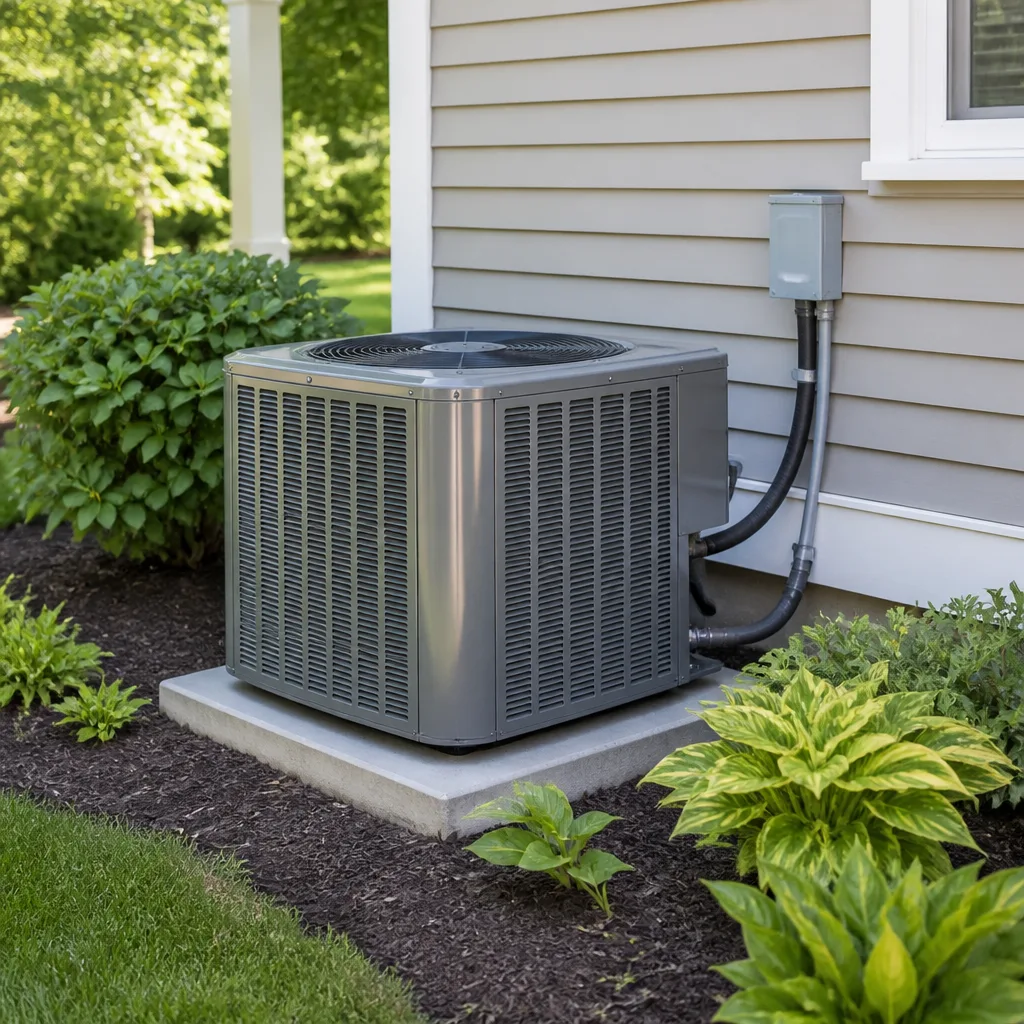
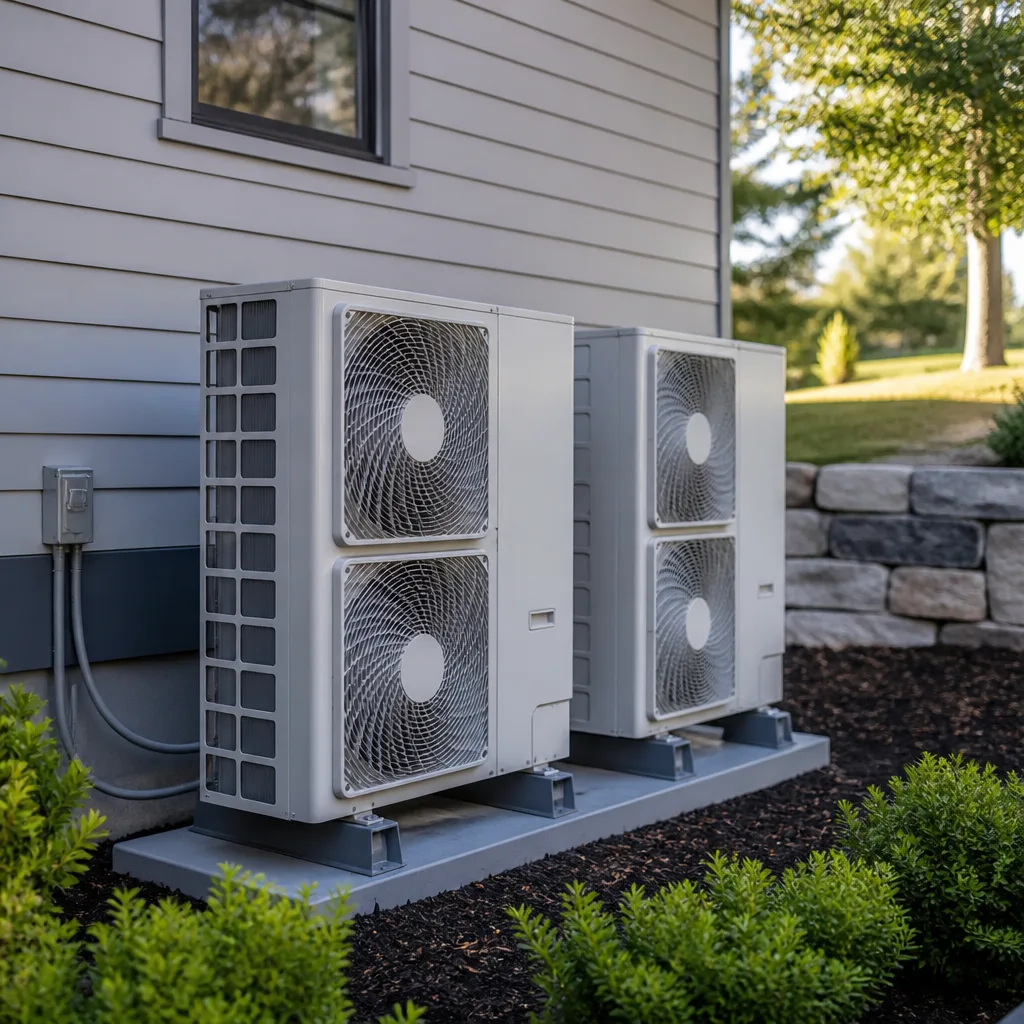
- Clean the outdoor coil. The outdoor coil has been absorbing heat all winter. In spring, it shifts to rejecting heat. Dirt and debris on the fins reduce heat rejection, which forces the compressor to work harder.
- Clear and test the condensate drain. In cooling mode, the indoor coil produces significant condensate. The drain line, drain pan, and any condensate pump need to be clear and functioning before the first humid day.
- Check refrigerant charge. A heat pump’s refrigerant charge is slightly different from a cooling-only system because the charge has to work correctly in both operating modes. The technician measures superheat and subcooling against manufacturer specifications for the current outdoor temperature.
- Test the reversing valve operation. The technician will cycle the system between heating and cooling to verify the valve shifts cleanly. A slow or partial shift in spring means trouble by summer.
- Inspect electrical connections and capacitors. Heat causes electrical components to fail. Loose connections and weak capacitors are the most common causes of mid-summer breakdowns.
The full spring service typically runs $150 to $300 in the Los Angeles market depending on system size, accessibility, and whether any minor parts need replacement. Dalton Heating & Air includes a written price before any work begins on every maintenance visit, so there are no surprises at the end of the appointment.
Fall Maintenance: Before Heating Season
Fall maintenance for a heat pump should happen in October or November in Los Angeles. The system has just finished a full cooling season and is about to shift into heating mode. This is the service visit that cooling-only maintenance schedules skip entirely, and skipping it is how small problems become expensive repairs. Watch for Heat Pump Installation Warning Signs Every Homeowner Should Know to catch issues early.
The fall service focuses on heating-mode performance:
- Clean the outdoor coil again. Yes, twice a year. In heating mode, the outdoor coil absorbs heat from the outside air. A coil that has accumulated six months of LA dust, pollen, and debris struggles to absorb heat, which means the system runs longer and delivers less warmth. This is the single most neglected maintenance task on heat pumps, and in our experience across Los Angeles neighborhoods, it’s the most common cause of “my heat pump runs but doesn’t heat well” service calls in December and January.
- Inspect the reversing valve for heating-mode-specific symptoms. The valve shifts refrigerant flow. If it has been sticking slightly during summer, it may fail entirely when asked to reverse. The classic symptom is a system that cooled fine all summer but won’t heat in winter, or heats poorly while the outdoor coil never defrosts properly.
- Check the outdoor condensate path. In heating mode, the outdoor coil produces condensate during defrost cycles. If the drain holes at the base of the outdoor unit are blocked, water pools and can freeze on cold nights. In LA’s milder winters this is less of a freezing risk than in colder climates, but standing water attracts corrosion and electrical problems.
- Test auxiliary heat operation. Most heat pump installations include some form of backup heat, either electric resistance strips or a dual-fuel furnace. The fall service should verify that the backup heat activates correctly when the heat pump alone cannot maintain setpoint. In Los Angeles, this matters most on the handful of nights when temperatures drop into the 40s and the heat pump’s capacity drops.
- Verify defrost cycle settings. Heat pumps have a defrost control board that periodically reverses the system to melt frost from the outdoor coil. If the defrost cycle runs too often or not often enough, heating performance suffers and energy costs climb.
A fall heat pump service in Los Angeles typically runs $150 to $300, similar to spring. The combined annual cost of two professional services, roughly $300 to $600, is less than the cost of one major compressor or reversing valve replacement, both of which commonly run $1,800 to $3,500.
The Reversing Valve: The Component Cooling-Only Checklists Miss
The reversing valve is a four-way valve in the refrigerant line that changes the direction of refrigerant flow. In cooling mode, it routes hot refrigerant gas to the outdoor coil where heat is rejected. In heating mode, it routes the hot gas to the indoor coil where heat is delivered. When the valve shifts, the indoor and outdoor coils essentially swap roles.
Here’s what the valve actually does, in plain terms: it’s a sliding mechanism inside a brass body, moved by a small solenoid that responds to the thermostat. When the thermostat calls for a mode change, the solenoid moves the slide, which redirects refrigerant. The whole process takes about two to three seconds, and you can usually hear a slight “whoosh” or clunk from the outdoor unit when it happens. That sound is normal.
The problem comes when the valve doesn’t move completely. A partially shifted valve creates a restricted refrigerant path. Symptoms include:
- System heats poorly but cools fine, or cools poorly but heats fine
- Outdoor unit makes a chattering or fluttering sound when switching modes
- System runs in the correct mode but the air coming from the vents is lukewarm rather than properly conditioned
- Higher than expected energy bills with no other explanation
- Frost or ice on the outdoor coil in heating mode that never clears during defrost cycles
A stuck reversing valve is a technician-level repair. The valve itself is a $150 to $350 part, but replacing it requires recovering the refrigerant, brazing in the new valve, pressure testing, and recharging the system. Labor brings the total to $800 to $1,500 in most Los Angeles cases. That’s why checking valve operation during both seasonal services matters. A sticking valve caught early can often be resolved with a simple cleaning or solenoid replacement rather than full valve replacement.
One more thing worth knowing: Rheem and York heat pumps use a slightly different valve configuration than Carrier, Trane, or Lennox. The service procedure is the same, but the factory charge specifications and valve orientation differ. Make sure the technician knows the specific brand before opening the system.
Condensate Drainage in Both Modes
Most homeowners understand that an AC produces water in the summer. The indoor coil gets cold, moisture from the air condenses on it, and that water drains outside through a pipe. What many people don’t realize is that a heat pump produces condensate in heating mode too, just at a different location.
In cooling mode, the indoor coil is cold and the outdoor coil is hot. Condensate forms inside, at the indoor coil, and drains through the primary drain line to the outside or into a condensate pump. This is the same as a traditional AC.
In heating mode, the roles reverse. The outdoor coil is cold and the indoor coil is hot. When the outdoor coil absorbs heat from the outside air, moisture from that air condenses on the coil. In mild conditions, that moisture simply drips off. But as outdoor temperatures drop, the coil can get cold enough to freeze. That’s why heat pumps have a defrost cycle: the system briefly reverses to melt the frost, and the melted water needs somewhere to go.
That means the outdoor unit has its own drainage requirements. The base pan under the outdoor coil has drain holes that allow defrost water to escape. If those holes are blocked by dirt, leaves, or the unit has settled out of level, water pools in the pan. In a place like Los Angeles, where winter nights occasionally dip below 40 degrees but rarely stay there, pooled water can cause corrosion, electrical shorts, or freeze damage on the coldest nights.
Here’s how to verify the drain path in each mode:
- Cooling mode test: Run the system in cooling for 15 to 20 minutes on a warm day. Check the outdoor drain line. You should see water dripping. If the line is dry while the system is actively cooling, the indoor drain is blocked and water is backing up into the air handler.
- Heating mode test: Run the system in heating for 20 to 30 minutes, preferably on a cool day. Check the base of the outdoor unit. During or after a defrost cycle, you should see water draining from the bottom of the unit. If water is pooling inside the pan or running toward the foundation, the drain holes need clearing.
- Visual inspection of the indoor pan: Once a year, open the air handler access panel and look at the drain pan. If it’s cracked, rusted, or has standing water in it, the drain system needs service.
In our experience across Los Angeles properties, the most common heating-mode drainage issue we see is outdoor units installed on small concrete pads that have shifted over time due to soil movement, leaving the unit tilted just enough that defrost water doesn’t reach the drain holes. A quick leveling correction fixes it.
How to Spot a Declining COP Before It Costs You
COP, or coefficient of performance, is the ratio of heat output to energy input. A heat pump with a COP of 3.0 delivers three units of heat for every unit of electricity it consumes. When a heat pump is new and properly charged, its COP under typical Los Angeles winter conditions (45 to 60 degrees outside) runs between 2.5 and 4.0 depending on the model. As the system ages, loses refrigerant, or develops dirty coils, the COP drops. A system that was delivering a COP of 3.2 when new might be at 2.1 after five years of neglected maintenance. That’s a real efficiency loss that shows up as a higher electric bill.
You don’t need specialized equipment to spot a declining COP. You need a thermometer, a kill-a-watt meter (about $25 at any hardware store), and the patience to run two simple tests.
The temperature split test (heating mode):
- Wait for a day when the outdoor temperature is between 45 and 55 degrees, common for Los Angeles winter mornings.
- Set the thermostat to heat and let the system run for at least 15 minutes.
- Measure the air temperature at the return vent and at the supply vent closest to the air handler.
- The supply temperature should be 18 to 30 degrees warmer than the return temperature. If the split is under 15 degrees, the system is underperforming for the conditions. This is the kind of reading a homeowner can check themselves, and if the number is off, a professional visit is warranted.
The kill-a-watt meter test:
- Plug the outdoor unit’s power connection into the kill-a-watt meter (or have the reading taken at the disconnect by a technician if you are not comfortable with electrical work).
- Record the wattage draw while the system runs in heating mode under stable conditions.
- Run the same test a year later under similar outdoor temperatures.
- If the wattage draw has increased by more than 10 percent for the same heat output, the COP has dropped and something is wrong. Common culprits are dirty coils, low refrigerant, or a failing compressor valve.
These tests are not a substitute for a professional performance evaluation, but they give you a baseline. If your numbers drift, you have an early warning before the system fails outright. That warning is cheaper to act on than a mid-winter breakdown call.
California Rebate and Warranty Documentation Requirements
California has some of the most aggressive heat pump incentive programs in the country, and many of them come with maintenance conditions buried in the fine print. If you installed a heat pump with rebate money from TECH Clean California, the Golden State Rebates program, or a local utility program through LADWP or Southern California Edison, you may be required to maintain the system according to manufacturer specifications to keep the rebate valid. Our team can help with our Heat Pump Installation services and ongoing maintenance support.
What does that mean in practice? Here are the documentation requirements we’ve seen on heat pump installations in the Los Angeles area:
- Annual professional service records. Some incentive programs require proof of professional maintenance at least once per year, with a detailed service report showing coil cleaning, refrigerant verification, and electrical inspection. A homeowner’s DIY maintenance log does not satisfy these requirements.
- Filter change documentation. A few programs require proof that filters were replaced at manufacturer-recommended intervals. Keep receipts or take photos with timestamps. It sounds excessive, but when a warranty claim or rebate verification is on the line, documentation is the difference between coverage and denial.
- Manufacturer warranty compliance. Most heat pump brands, including Daikin and Bryant, specify maintenance intervals in their warranty terms. Failure to maintain the system per the manual can void the compressor warranty in some cases. The warranty language matters, and the specific documentation format varies by brand.
- Licensed technician requirement. California rebate programs generally require that maintenance be performed by a licensed HVAC contractor. Independent handyman services or unlicensed operators do not satisfy the requirement, and using them can jeopardize your rebate or warranty position.
The practical takeaway: keep a simple maintenance file. Store service invoices, filter purchase receipts, and any technician reports in one place. If a rebate administrator or warranty claim reviewer ever asks for proof of maintenance, you have it. It’s a ten-minute habit that protects thousands of dollars in incentive money and warranty coverage.
For more information on heat pump installation in Los Angeles, including current rebate programs and system options, visit our Heat Pump Installation in Los Angeles page.
Common Mistakes to Avoid
- Using a cooling-only maintenance checklist. If your service provider treats your heat pump like a standard AC and skips the reversing valve check, the defrost cycle verification, and the outdoor coil cleaning in fall, you are paying for half a service. Heat pumps need both seasonal visits.
- Replacing the filter on a fixed 90-day schedule instead of checking monthly. In Los Angeles, wildfire smoke, Santa Ana wind dust, and construction debris can clog a filter in six weeks. A monthly check with replacement only when dirty is more effective than a rigid calendar.
- Ignoring the outdoor unit in winter. Many homeowners assume the outdoor unit only matters in summer. In heating mode, that outdoor coil is the system’s heat source. A dirty coil in December means a cold house and a high electric bill.
- Setting the thermostat to a much higher temperature in heating mode than in cooling mode. Heat pumps are most efficient when they maintain a steady temperature rather than making large swings. Cranking the heat from 62 to 75 in the morning can trigger the auxiliary heat, which costs two to three times more per BTU than the heat pump itself.
- Assuming the condensate drain only needs attention in summer. The outdoor drain path in heating mode is often overlooked. A blocked outdoor drain leads to standing water, corrosion, and potential electrical issues.
- Waiting for a breakdown before calling a technician. In Los Angeles, the busiest season for HVAC service calls is the first heat wave of summer and the first cold snap of winter. Systems that received their seasonal maintenance in spring and fall rarely fail during those peaks. Systems that skipped maintenance do, and they wait longer for service because everyone else is calling at once.
- Failing to document maintenance for rebate or warranty purposes. We covered this above, but it bears repeating: if your heat pump was installed with California incentive money, the paperwork matters. Keep the file.
When to Call a Professional
Anything involving refrigerant, electrical connections, or the reversing valve requires a trained technician. Heat pump systems operate under pressure, and the electrical components carry enough current to cause serious injury. Do not open the refrigerant lines or attempt to diagnose electrical issues yourself. We say this as a safety matter, not as a sales pitch.
Specific situations that warrant a professional call include: the system runs but doesn’t produce the temperature difference it should in either mode, the reversing valve chatters or fails to shift, the outdoor coil ices up and doesn’t clear during defrost, the breaker trips repeatedly, or you hear a grinding or rattling sound from the compressor. These are not DIY fixes, and delaying often makes the repair more expensive. Dalton Heating & Air offers free estimates in Los Angeles. Call (361) 306-9515 and a live person will answer, day or night. If we come out and the problem is minor, the repair is guaranteed in writing for a full year. If it fails in that time, we return at no charge.
We also handle AC Repair in Los Angeles and Furnace Repair in Los Angeles, whether the system is a heat pump, a traditional split system, or a dual-fuel configuration. Our technicians are factory-trained on Carrier, Trane, Lennox, Goodman, Rheem, York, Daikin, Bryant, and American Standard equipment, so the same crew can service whatever is in your home.
Frequently Asked Questions
A heat pump should be professionally serviced twice a year in Los Angeles: once in spring before cooling season and once in fall before heating season. Because the system runs year-round, the two seasonal visits address different wear patterns and different components. A single annual visit misses either the cooling-mode or heating-mode issues.
A thorough heat pump service includes cleaning both coils, checking and clearing the condensate drain in both directions, testing the reversing valve, verifying refrigerant charge against manufacturer specifications, inspecting electrical connections and capacitors, and confirming defrost cycle operation. The spring and fall visits include all of these, with emphasis on the upcoming season’s critical components.
Yes, the monthly tasks are homeowner-appropriate: filter checks, outdoor unit debris clearing, drain line verification, thermostat inspection, and listening for unusual sounds. The seasonal deep service, including coil cleaning, refrigerant verification, and reversing valve testing, requires a licensed technician with the right tools and training.
Heat pumps are designed to run longer cycles than furnaces. A furnace delivers a burst of high-temperature air and shuts off. A heat pump delivers a steady stream of moderately warm air and runs longer. If the system runs continuously without reaching setpoint, that indicates a problem: dirty coils, low refrigerant, an undersized system, or a failing reversing valve. A temperature split test can help identify whether performance has dropped.
A seasonal heat pump service in the Los Angeles market typically runs $150 to $300 depending on system size, accessibility, and any minor parts replacement. Annual maintenance on both seasons runs $300 to $600. That’s significantly less than a reversing valve replacement at $800 to $1,500 or a compressor replacement at $1,800 to $3,500.
Yes, many California incentive programs, including those administered through TECH Clean California and local utilities like LADWP, require annual professional maintenance as a condition of keeping the rebate valid. Documentation requirements vary by program, but keeping service invoices and filter receipts is the safest approach. Failure to document maintenance can result in rebate repayment or warranty denial.
The Bottom Line
A heat pump is not a central AC that happens to heat. It’s a year-round machine that accumulates twice the operating hours and has components, specifically the reversing valve, that cooling-only systems don’t. The maintenance schedule that protects it is straightforward: monthly homeowner checks, a spring service before cooling season, a fall service before heating season, and documentation kept on file for warranty and rebate purposes. In Los Angeles, where the system runs in both modes every year, skipping either seasonal service is a false economy. The cost of proper maintenance is a fraction of the cost of the repairs it prevents. For a free estimate on heat pump maintenance or any HVAC service in Los Angeles, call Dalton Heating & Air at (361) 306-9515.
Written by Marco Benitez, Owner at Dalton Heating & Air, serving Los Angeles since 2003.