
Last updated October 9, 2026
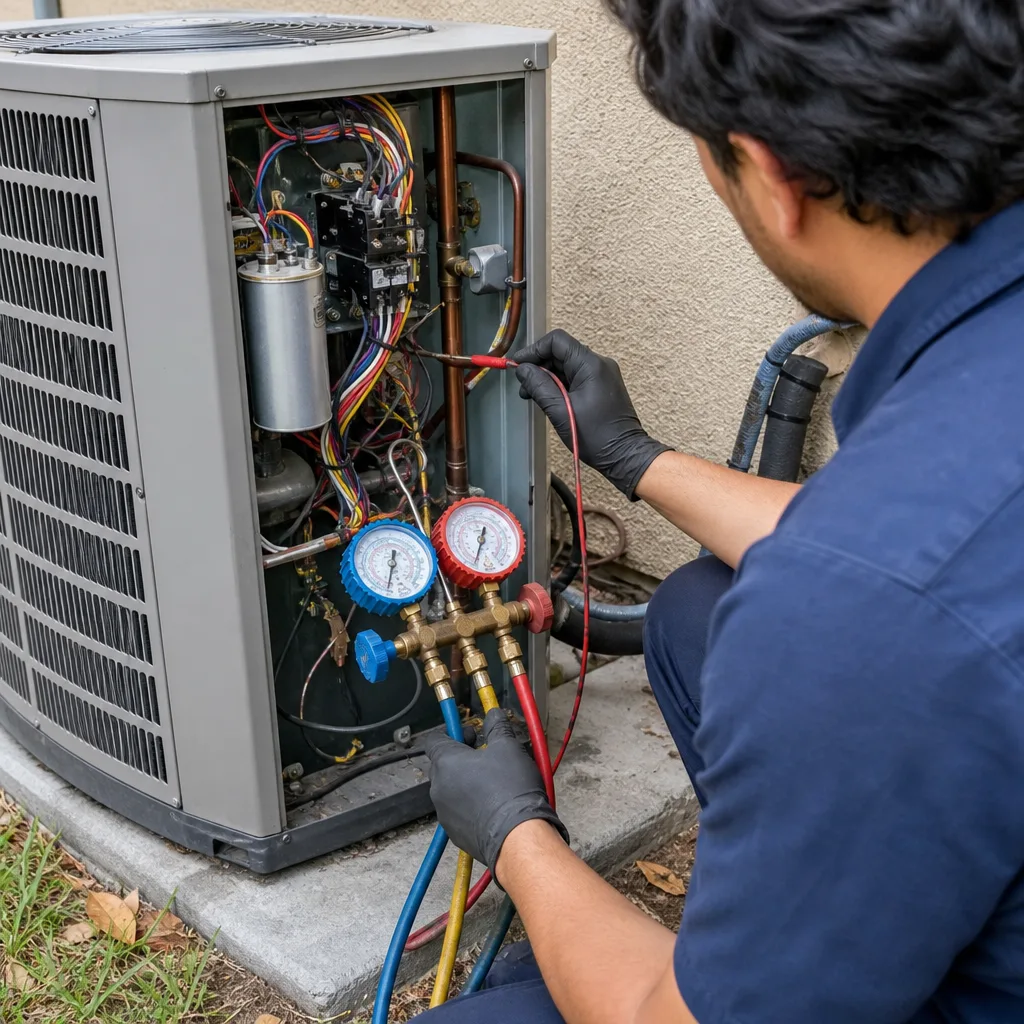
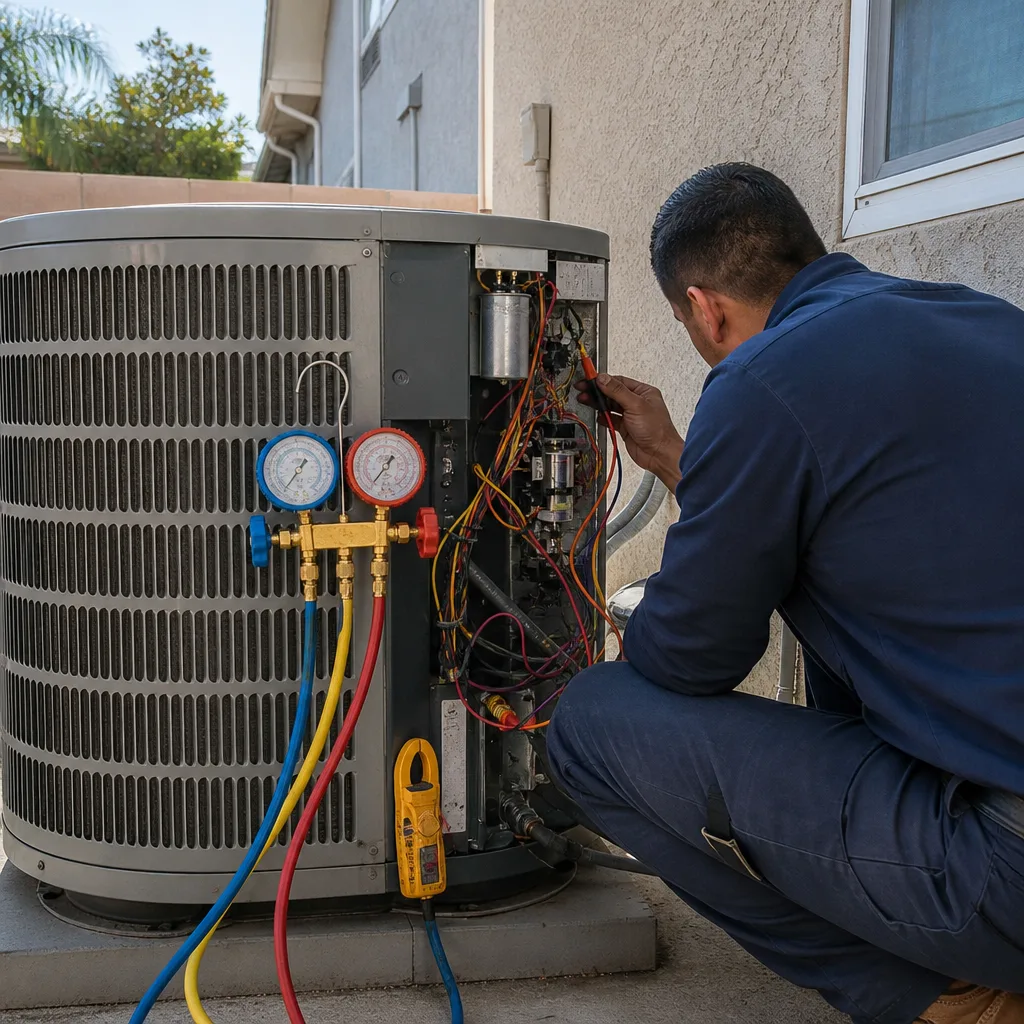
Seasonal tune-up and full diagnostic on your Carrier, Trane, or Goodman system - readings shown to you before any repair is proposed
Diagnosis first, numbers second - you approve the repair price before a single part goes in.
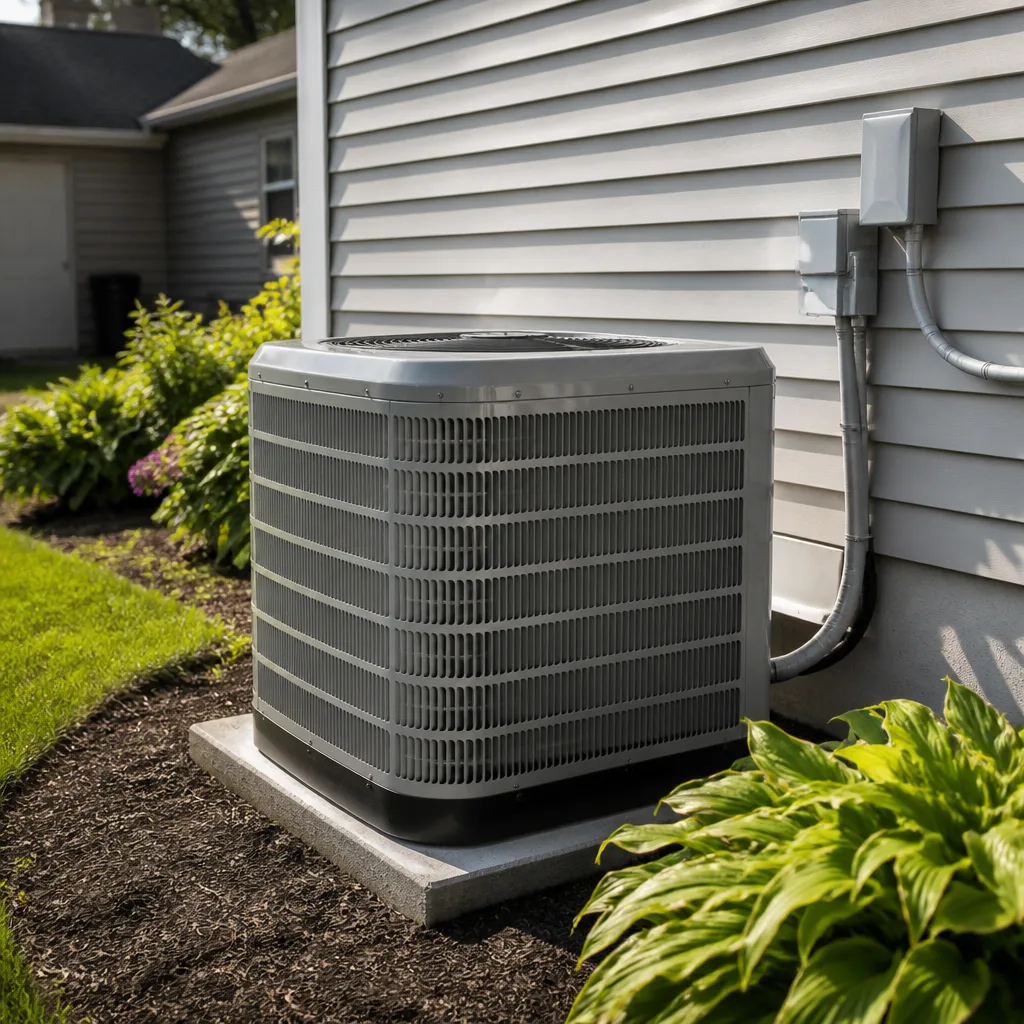
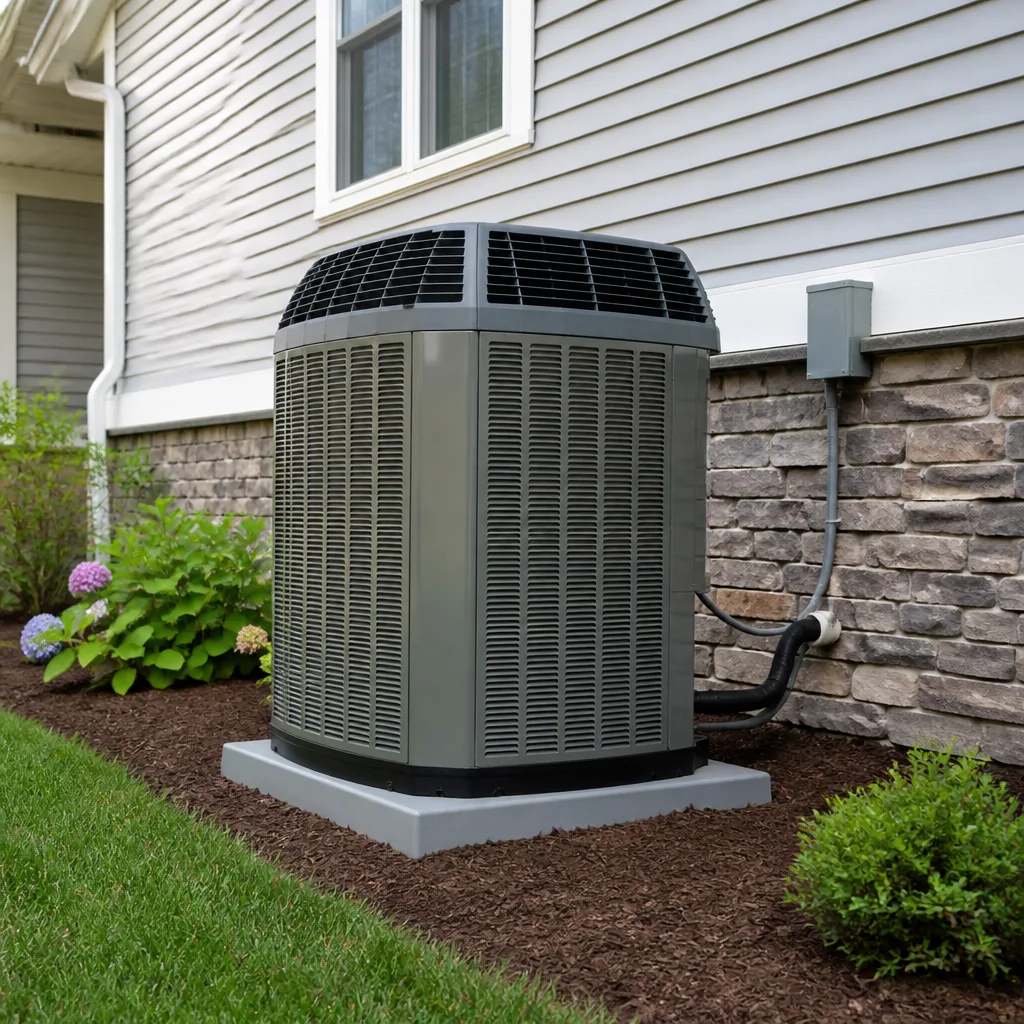
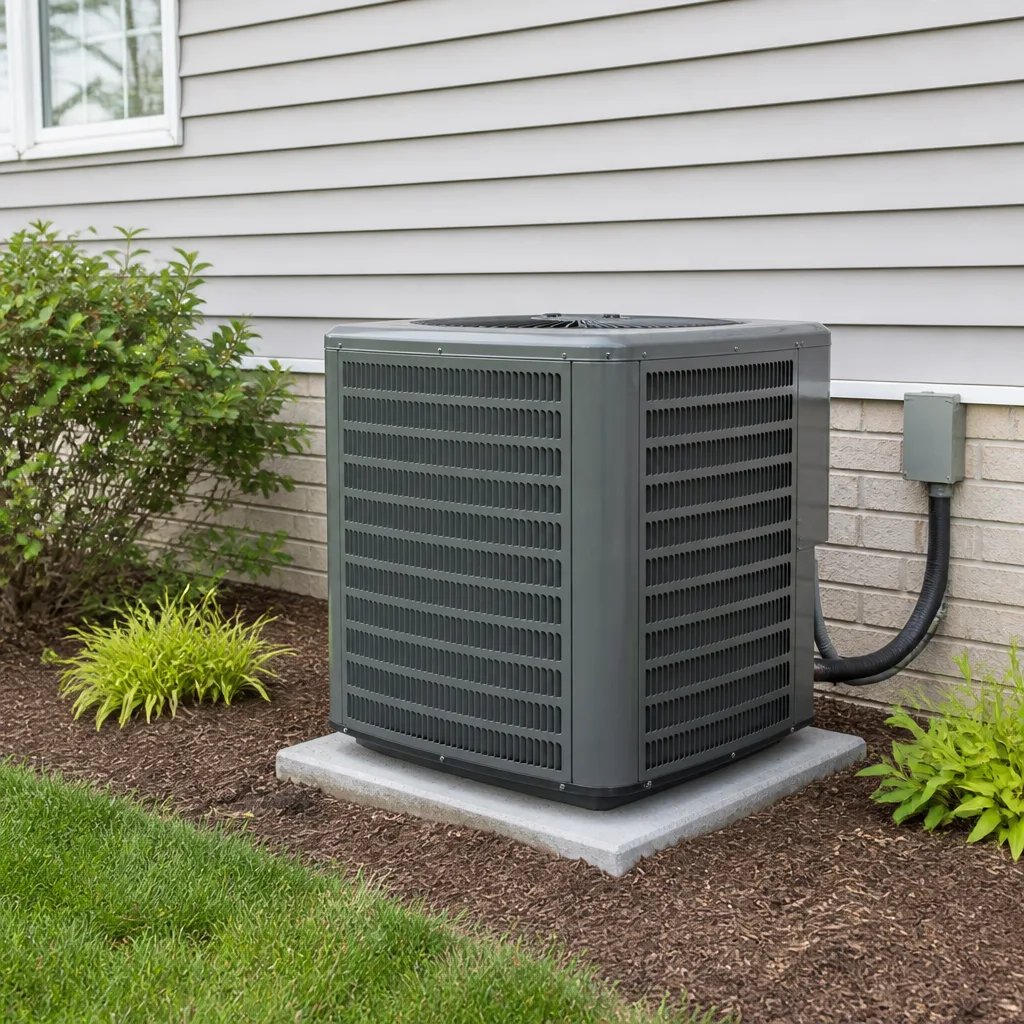
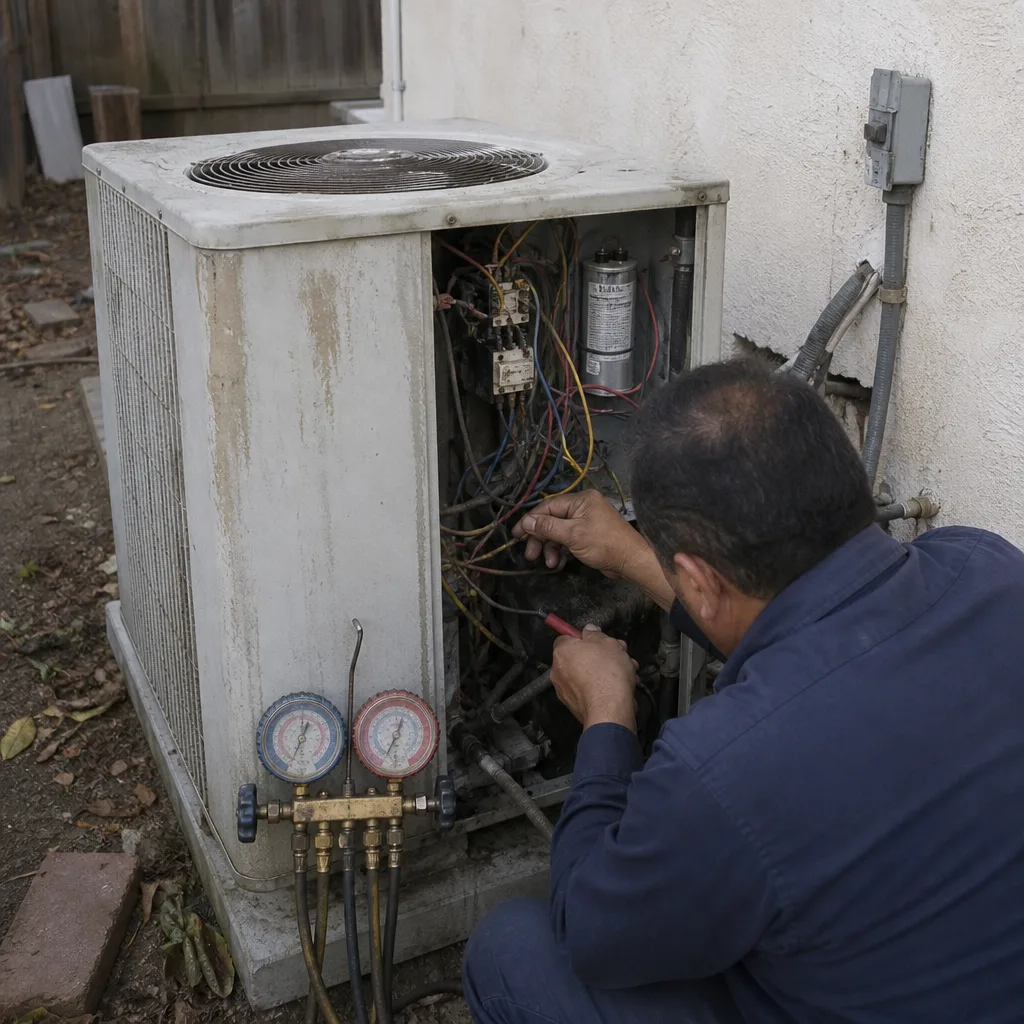 Before
 After
After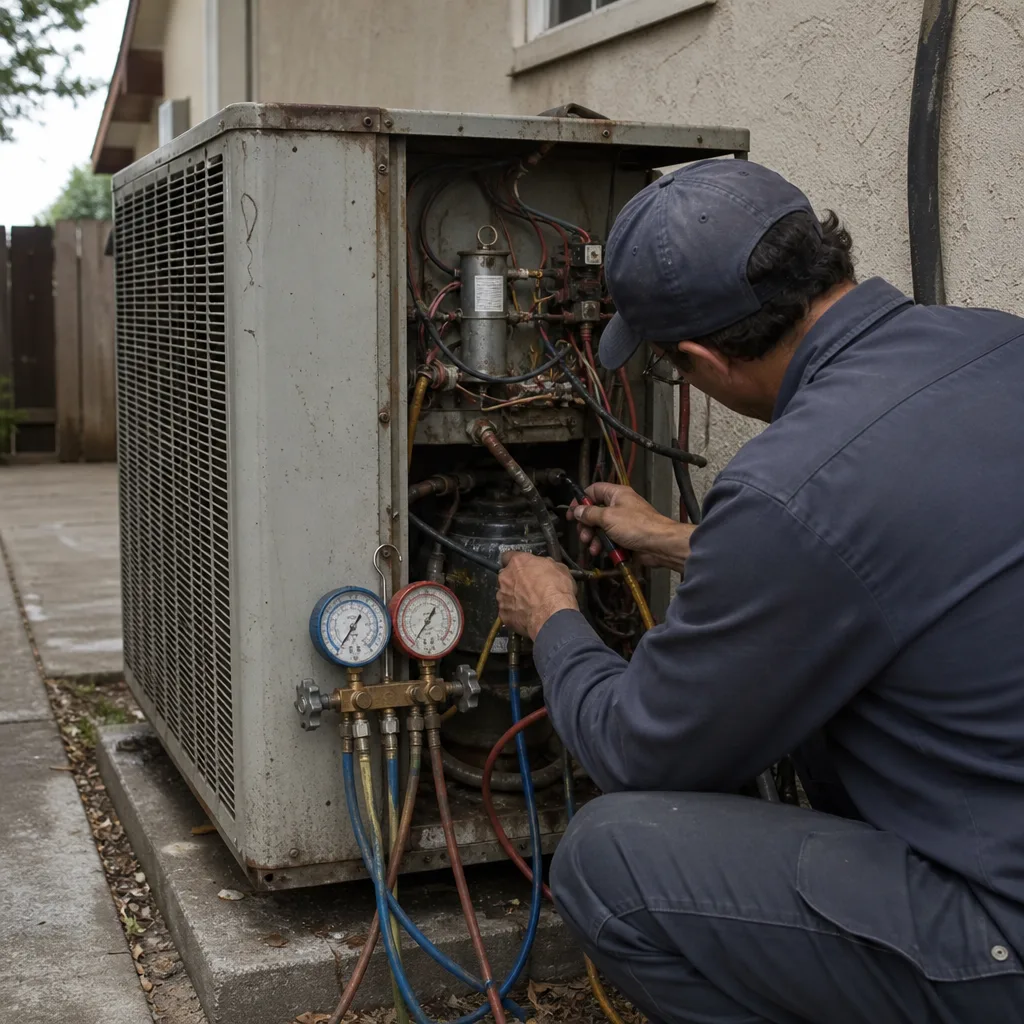 Before
 After
After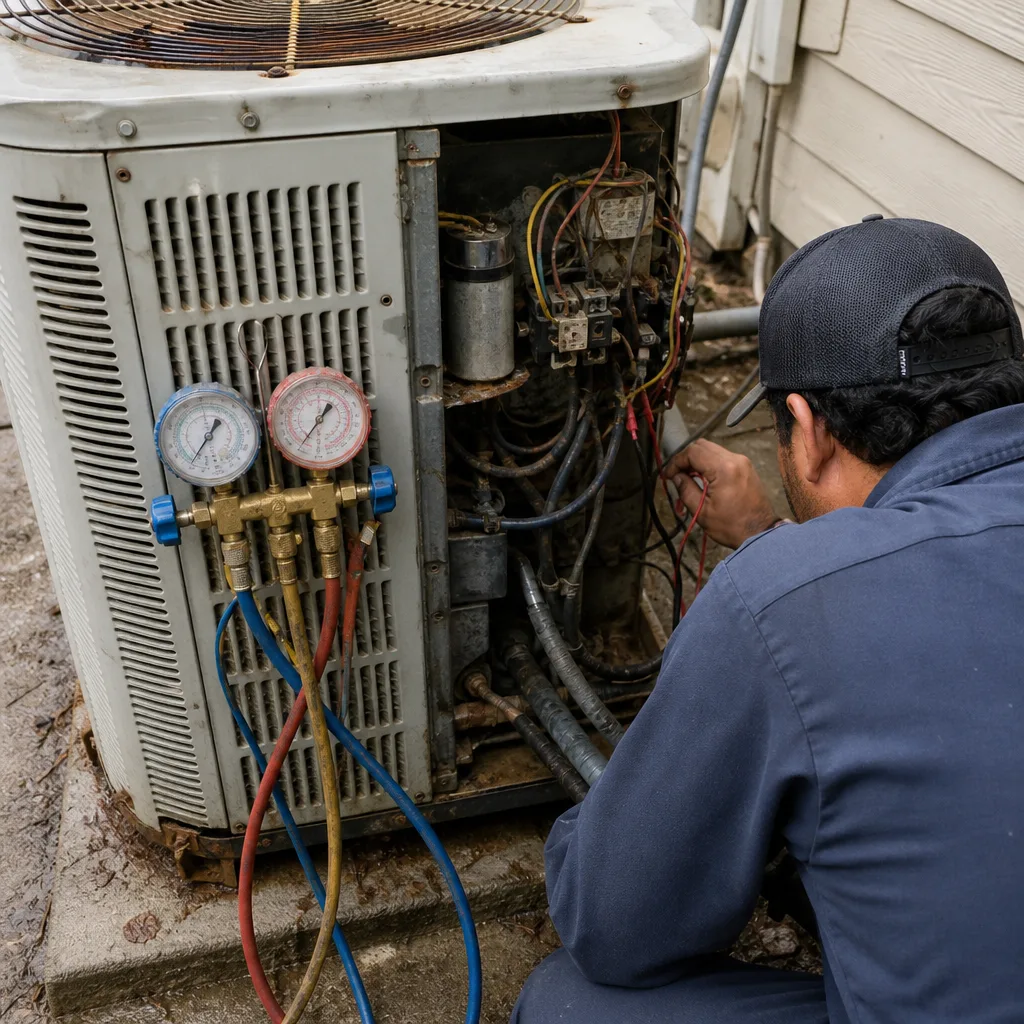 Before
 After
AfterThe Complete Heat Pump Installation Guide for Los Angeles Homeowners
Here’s the statistic that should reshape how Los Angeles homeowners think about heat pumps: in our climate, a properly sized heat pump operates at a coefficient of performance (COP) above 3.0 for roughly 95% of its annual heating hours. That means for every dollar of electricity you spend, you get more than three dollars of heat. In Boston, that number drops to around 60%. Most installation guides are written for cold-climate homeowners wrestling with backup heat strips and efficiency tradeoffs. You don’t have that problem. This guide sizes, selects, and prices heat pumps specifically for Los Angeles homes, because our mild climate changes the math entirely.
Quick Answer
Our Heat Pump Installation services in Los Angeles typically cost $8,500 to $18,500 for a ducted system and $7,000 to $15,000 for a ductless mini-split setup, depending on system size, brand, and whether your home needs electrical or ductwork upgrades. A California Title 24 compliance check and a HERS rating are required on most installations, and your contractor must pull a permit before work begins. Los Angeles homeowners can often stack the federal 25C tax credit (up to $2,000) with LADWP rebates to reduce the final out-of-pocket cost.
Table of Contents
- Why Los Angeles Is the Best Heat Pump Climate in the Country
- Sizing a Heat Pump for an LA Home: Smaller Is Usually Smarter
- California Title 24 and HERS Requirements: What Your Contractor Owes You
- LADWP, SoCalGas, and Federal Tax Credits: How Rebate Stacking Works
- Ducted vs. Ductless: Choosing for LA’s Housing Stock
- What a Written Installation Quote Must Include
- What Happens on Installation Day
- Common Mistakes to Avoid
- When to Call a Professional
- Frequently Asked Questions
Why Los Angeles Is the Best Heat Pump Climate in the Country
Electric heat pumps move heat rather than create it. In cooling mode, they pull heat out of your home and dump it outside, exactly like a standard air conditioner. In heating mode, the process reverses: the outdoor unit absorbs heat from the air, even when it feels cold to you, and moves it inside. The less extreme the outdoor temperature, the less work the system has to do, and the higher its efficiency.
Los Angeles sits in a sweet spot. Winter overnight lows in most LA neighborhoods rarely dip below 40°F, and daytime highs in the 60s are common from November through March. That keeps a heat pump operating in its most efficient range nearly all winter long. When a heat pump has to work in 10°F weather, its COP can fall below 2.0 and it may need electric resistance backup strips, which are expensive to run. In Los Angeles, backup strips are rarely necessary at all. We routinely design LA systems without auxiliary heat, which saves money on equipment and eliminates the single least efficient component a heat pump can have.
The other climate advantage is cooling. Los Angeles gets hot but dry. A heat pump’s inverter-driven compressor, which adjusts output continuously instead of cycling fully on and off, handles partial-load conditions beautifully. That’s exactly what LA demands: a system that ramps down to 30% output on a mild afternoon and ramps up on a 95°F day in the San Fernando Valley. Standard single-stage air conditioners cannot do that. A heat pump can.
If you’re considering replacing an old furnace or AC system, this is the climate where a heat pump makes the strongest financial case. You can read more about our approach on the Dalton Heating & Air home page.
Sizing a Heat Pump for an LA Home: Smaller Is Usually Smarter
The most expensive mistake in DIY vs Professional AC Repair: What’s Safe to Do Yourself or any heat pump installation is oversizing. HVAC contractors have a long habit of quoting oversized equipment because bigger systems cost more and because oversized cooling systems mask poor duct design by blasting cold air. But an oversized heat pump in a mild climate like Los Angeles short-cycles: it runs for 10 minutes, satisfies the thermostat, shuts off, then starts again 15 minutes later. Short-cycling wastes electricity, leaves humidity unmanaged, and wears out compressors prematurely.
Here’s what actually matters for sizing a heat pump in Los Angeles:
- Cooling load, not heating load, drives the calculation. LA cooling seasons are long and hot. Heating seasons are short and mild. A system sized to meet the cooling load on a 99°F design day will almost always exceed the heating requirement on the coldest night LA throws at it.
- Manual J is the industry-standard load calculation. Your contractor should perform one before quoting equipment. It accounts for square footage, window orientation, insulation levels, ceiling height, and airtightness. If a contractor quotes by “square footage per ton” without a load calculation, that’s a red flag.
- 1950s – 1970s slab construction changes the calculation. Many LA homes in neighborhoods like Westchester, the eastern San Fernando Valley, and parts of the South Bay are built on concrete slabs with no attic access and original single-pane windows. These homes lose heat through the slab edge and gain heat through windows faster than newer construction. Load calculations must account for that.
- Inverter heat pumps tolerate slight undersizing better than oversizing. An inverter-driven system from a brand like Daikin or Bryant modulates between roughly 30% and 100% of capacity. If a Manual J says you need 3.2 tons and you install a 3-ton inverter unit, the system will run longer on the hottest days and still hold temperature. That’s fine, and often preferable to buying a 4-ton unit that short-cycles for 300 days of the year.
Our team performs a load calculation on every installation we quote in Los Angeles. No load calculation, no written price. It’s the only way to size equipment honestly.
California Title 24 and HERS Requirements: What Your Contractor Owes You
California’s energy code, Title 24 Part 6, applies to every heat pump installation in Los Angeles County. If your contractor tells you a permit isn’t needed, or that they’ll “handle it later,” stop working with that contractor. Here’s what the code actually requires for heat pump installations:
- A building permit must be pulled before work begins. In the City of Los Angeles, this is issued through the Department of Building and Safety (LADBS). In unincorporated LA County, it runs through LA County Building and Safety. Your contractor should itemize the permit fee in the written quote and handle the permit application for you.
- A HERS rater must verify the installation. HERS stands for Home Energy Rating System. A third-party rater inspects the completed job to confirm the system meets efficiency requirements and was installed to code. The HERS rating is not optional. It’s a required part of Title 24 compliance for HVAC changeouts. Expect a line item on your quote for the HERS verification, typically $200 to $400.
- Duct leakage testing is mandatory when ducts are altered. If your installation includes new or modified ductwork, Title 24 requires a duct leakage test. Leaky ducts waste 20% or more of your system’s output. The test pressurizes the ducts and measures how much air escapes. A passing result matters, not just for code, but for your monthly bill.
- Refrigerant charge and airflow must be verified. The HERS rater confirms the system’s refrigerant charge and airflow are within manufacturer specifications. An incorrectly charged heat pump loses efficiency and shortens its lifespan. This is not a suggestion; it’s a required verification.
On the day the job is complete, your contractor should provide you with a permit sign-off, the HERS certificate, and the Title 24 compliance documentation. If you don’t receive those, the job isn’t finished, regardless of how well the system runs.
LADWP, SoCalGas, and Federal Tax Credits: How Rebate Stacking Works
The financial case for a heat pump in Los Angeles gets made partly at the point of sale and partly at tax time. Here’s what’s available right now and how the pieces fit together.
Federal 25C tax credit. The Inflation Reduction Act expanded the Energy Efficient Home Improvement Credit (25C). Heat pumps that meet efficiency requirements qualify for a credit of 30% of the installed cost, up to $2,000 per year. This is a tax credit, not a deduction. It reduces your tax bill dollar for dollar. If you install a qualifying heat pump for $10,000, you can claim $2,000 as a credit. Heat pumps with a SEER2 rating of 16 or higher and an HSPF2 rating of 9 or higher generally qualify. Your contractor should confirm the specific model meets the criteria and provide the manufacturer’s certification statement for your tax records.
LADWP rebates. The Los Angeles Department of Water and Power offers rebates to its electric customers who install qualifying heat pumps. Rebate amounts vary by equipment type and efficiency tier. A high-efficiency heat pump can qualify for several hundred dollars, and in some cases over a thousand, depending on the program year and available funds. LADWP rebates are claimed after installation with proof of permit and HERS verification. Your installer should give you the completed paperwork. Not all Los Angeles addresses are LADWP customers. Parts of the city and much of LA County are served by Southern California Edison, which runs a separate rebate program. Check your utility bill to confirm your provider.
SoCalGas considerations. If you’re replacing a gas furnace, Southern California Gas Company does not offer a rebate for switching to electric heat. However, SoCalGas customers may qualify for energy efficiency upgrades unrelated to the heat pump itself, such as insulation or smart thermostat rebates. Ryan the stacking logic: the federal credit applies to the heat pump equipment and labor. Utility rebates are separate and can be claimed on top of the federal credit. The two do not conflict.
A realistic example: a ducted heat pump installation in a 1,800-square-foot home in Los Angeles might cost $13,500. A $2,000 federal credit brings it to $11,500. An LADWP rebate of $800 brings it to $10,700. That’s the math to aim for, and a competent installer will walk you through the paperwork line by line. We handle that documentation for our Heat Pump Installation in Los Angeles customers.
Ducted vs. Ductless: Choosing for LA’s Housing Stock
The answer to “ducted or ductless?” depends less on preference and more on the physical realities of your Los Angeles home. Here’s how to think about it.
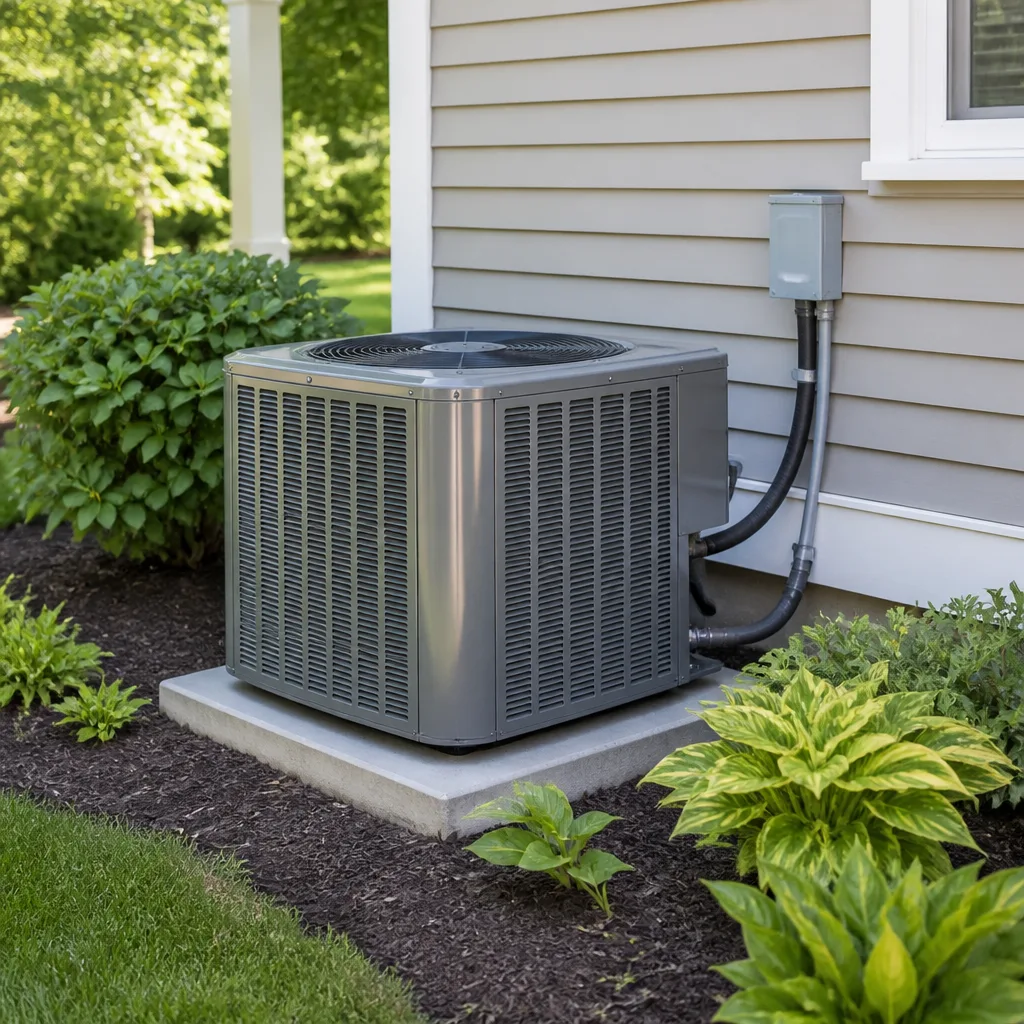
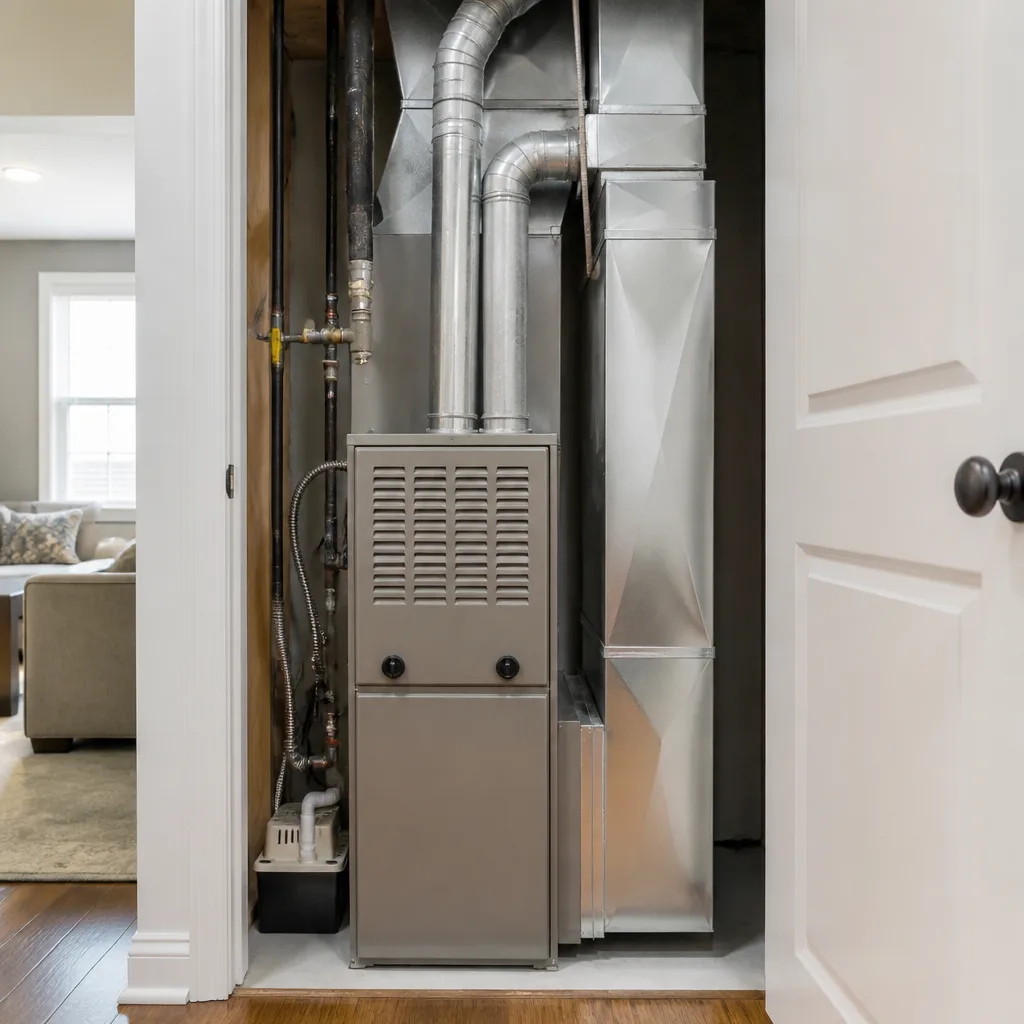
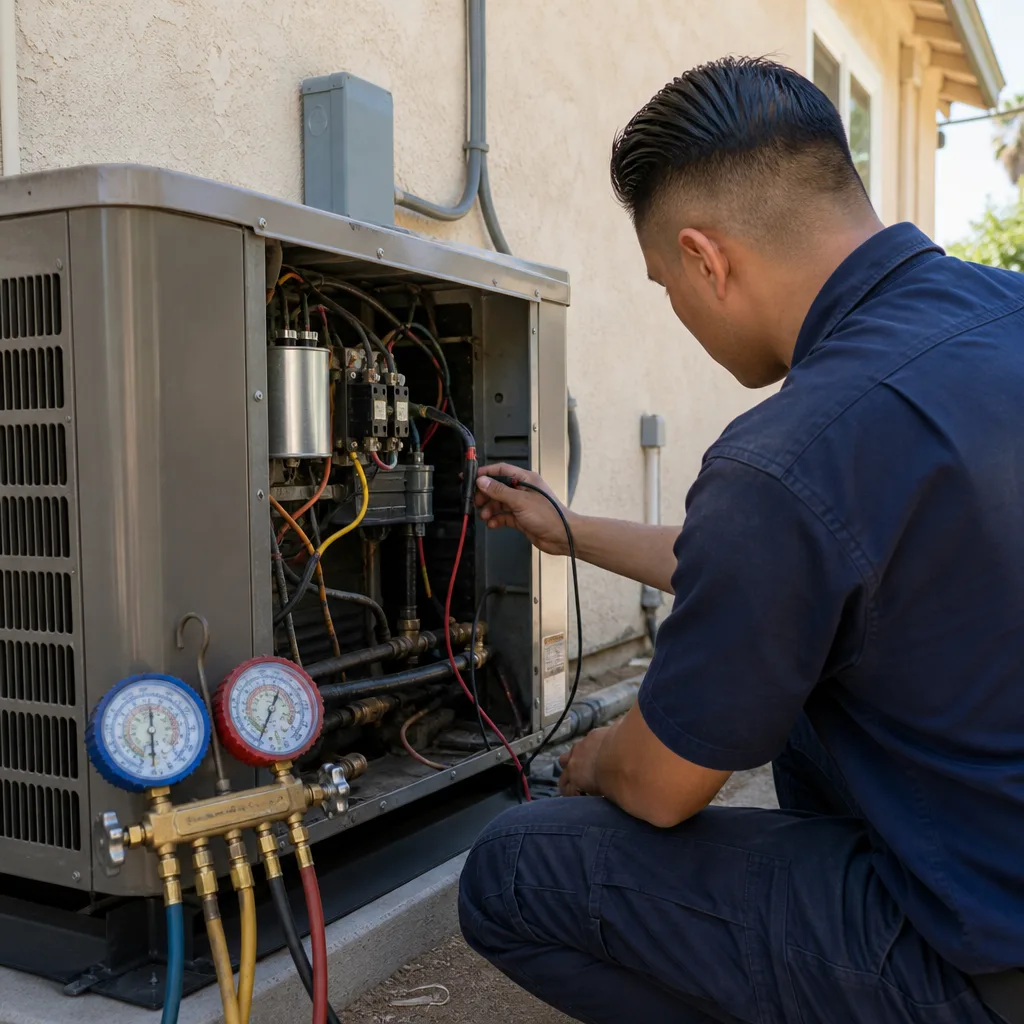
Ducted heat pumps use the same air distribution system as a traditional furnace and central air conditioner. Air travels through supply ducts to registers in each room and returns through a central return grille. If your home already has functional ductwork and you’re replacing an existing furnace or central AC, a ducted heat pump is usually the simpler and more affordable path. The outdoor unit is swapped, the indoor air handler is installed where the furnace or fan coil sat, and existing ducts are reused where they’re in good condition.
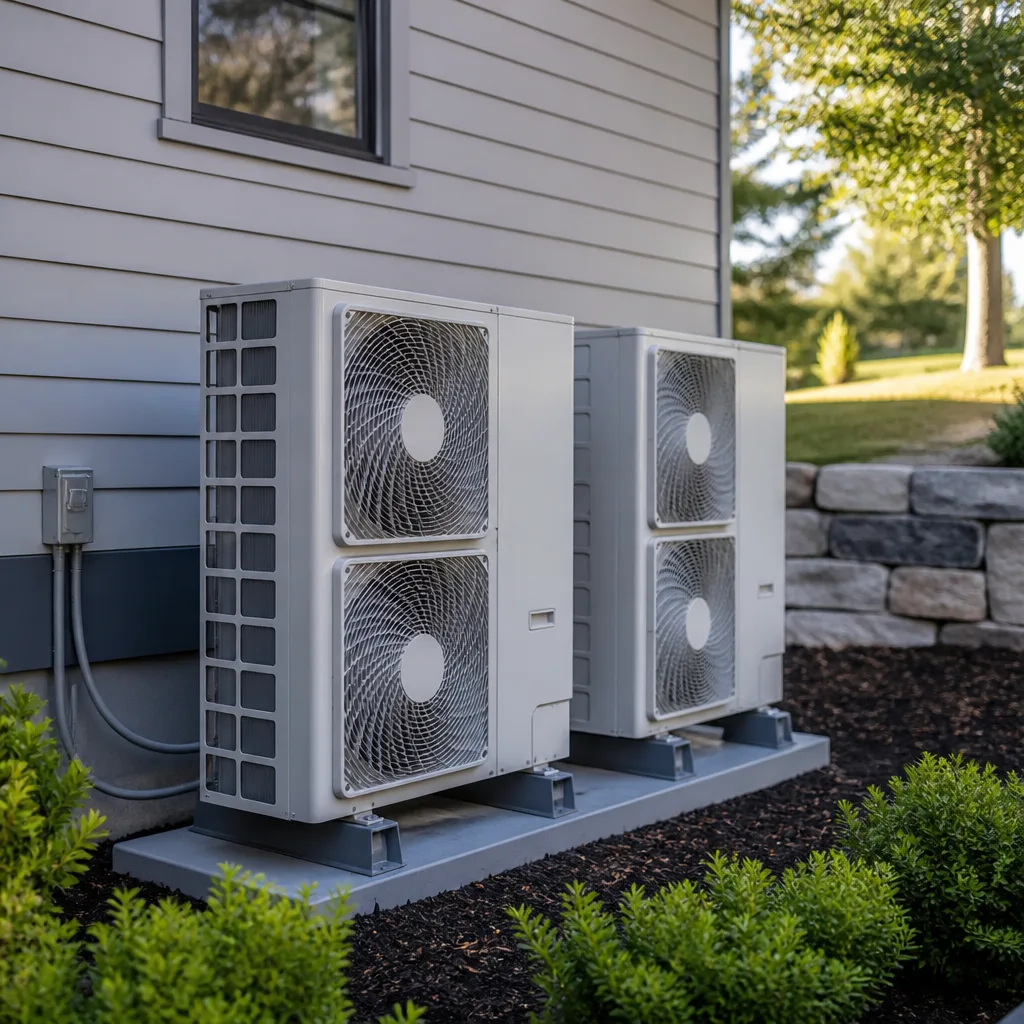
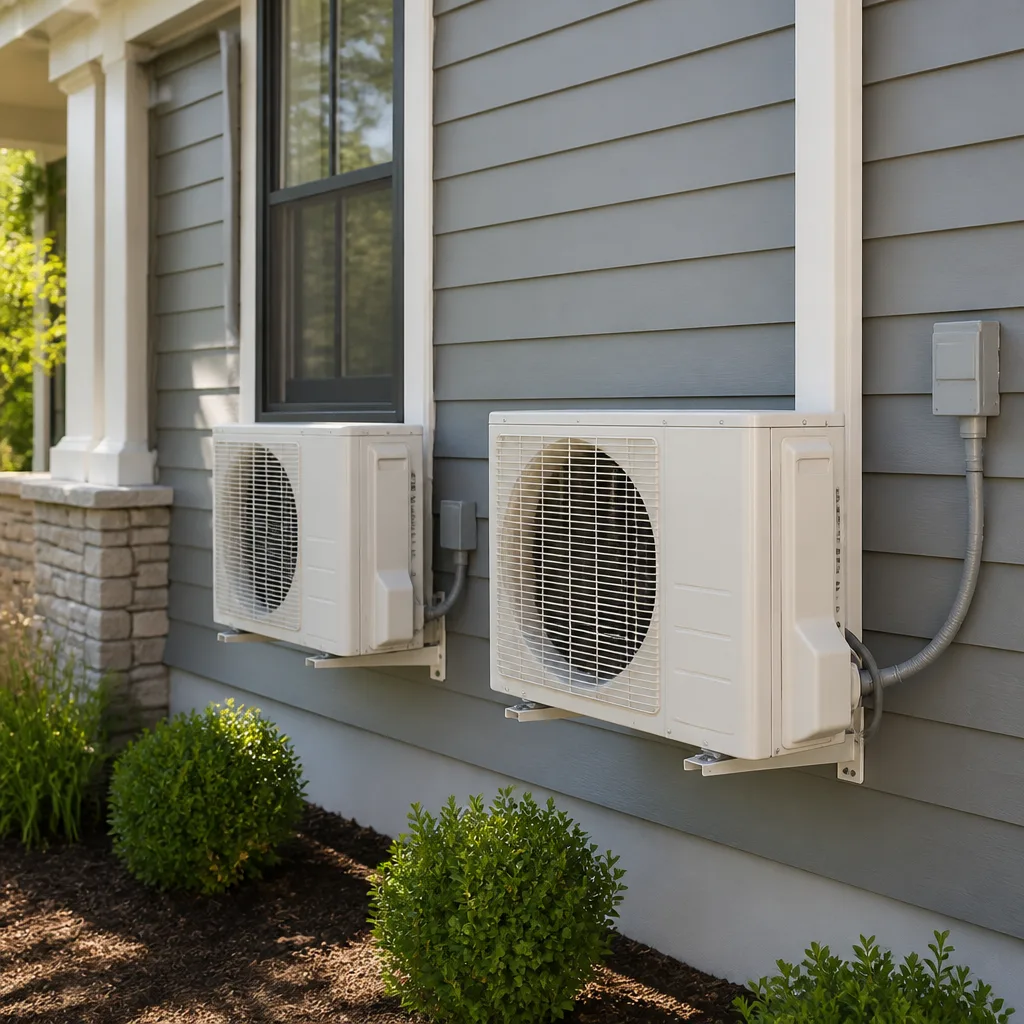
Ductless mini-splits skip ducts entirely. An outdoor heat pump unit connects to one or more indoor wall-mounted units via a small refrigerant line set. Each indoor unit serves its own zone with its own thermostat. Ductless systems excel where ductwork doesn’t exist or where ducts are badly deteriorated.
Here’s the LA-specific pattern we see across the housing stock:
- 1950s – 1970s slab homes with no attic are prime candidates for ductless. Homes in neighborhoods like Reseda, East LA, and parts of Long Beach were often built with the furnace in a hallway closet and ducting squeezed through a low crawl space or soffit. The ducts are undersized, leaky, and impossible to access without cutting drywall. In these homes, a ductless mini-split typically performs better and costs less than replacing buried ductwork.
- Homes with a usable attic and accessible ducts can usually keep the existing ductwork, especially if it was sealed and insulated in the last 15 years. A ducted heat pump installation in this scenario is straightforward.
- Homes with existing forced-air systems and functional ducts are the sweet spot for ducted replacement. The swap is mechanical and electrical, not architectural.
- Multi-zone ductless makes sense for homes with room additions, garage conversions, or bedrooms that never get comfortable. Rather than re-engineer the entire duct layout, a single outdoor unit can serve two or three indoor heads in targeted areas.
Brand matters here, but not as much as the company standing behind the install. We’re factory-trained on Daikin, Bryant, and American Standard equipment, among others. The right brand is the one your installer knows how to size, install, and service correctly.
What a Written Installation Quote Must Include
A legitimate heat pump installation quote in Los Angeles is a multi-page document, not a number scrawled on a business card. If you’re comparing bids, compare line items, not just bottom lines. Here’s what a complete written quote should itemize.
- Equipment model and efficiency ratings. Look for the specific outdoor unit model number, indoor unit model number, SEER2 rating, and HSPF2 rating. If the quote says “3-ton heat pump” without a model number, it’s incomplete.
- Line set and electrical work. The quote should state whether the existing refrigerant line set will be reused or replaced, and whether the electrical service to the unit needs upgrading. Older Los Angeles homes sometimes require a new breaker, a service panel upgrade, or a dedicated circuit. That work should be line-itemed, not buried in a vague “electrical allowance.”
- Permit and HERS fees. The LADBS permit fee and the HERS rater fee should be separate line items. If the quote includes “permit included” but doesn’t list the amount, ask for the breakdown.
- Duct modifications. If the installer is changing, sealing, or replacing any ductwork, that work needs its own line, including the duct leakage test required by Title 24.
- Warranty terms. The manufacturer’s parts warranty, the labor warranty from the installer, and any extended coverage should be written down. At Dalton Heating & Air, every installation includes a written labor warranty, and our 365-Day Done Right Promise covers the work for a full year. If it’s not right, we make it right.
- Payment schedule. A reasonable structure is a deposit at contract signing with the balance due upon completion and passing inspection. Nothing about the payment terms should be verbal.
A quote that says “heat pump installed: $12,000” tells you nothing. A quote that breaks out equipment, electrical, permit, HERS, and warranty tells you exactly what you’re buying. That’s the standard we write into every proposal.
What Happens on Installation Day
Heat pump installation in Los Angeles is typically a one-day job for a like-for-like ducted replacement and one to two days for a ductless multi-zone system or a job involving significant electrical or duct work. Here’s the sequence of a proper installation.
- Pre-install walkthrough. The lead technician walks the site with you, confirms the equipment placement, and reviews the scope of work against the written quote. Nothing starts until the plan is confirmed.
- Equipment staging and space protection. Drop cloths go down, furniture is protected, and the outdoor unit is placed on a pad or wall bracket as specified in the quote.
- Old equipment removal. The existing furnace, air handler, or AC unit is disconnected, recovered of refrigerant per EPA rules, and removed.
- New equipment installation. The indoor air handler or wall-mounted heads are mounted, the outdoor unit is set, the line set is connected, and the system is brazed, pressure-tested, and evacuated to remove air and moisture.
- Electrical and thermostat work. Circuit connections are made, and the thermostat is installed or configured.
- System startup and testing. The technician runs the system in both heating and cooling modes, verifies airflow and refrigerant charge, and confirms the thermostat controls everything correctly.
- Cleanup and walkthrough. The work area is cleaned, the old equipment is hauled away, and the technician walks you through the new thermostat and answers questions.
The job is not done when the system turns on. It’s done when the permit is signed off and the HERS certificate is in your hand. A disciplined installer handles all of that for you. That’s the approach we take on every job, and it’s written into The Garrison Code we operate under.
Common Mistakes to Avoid
- Skipping the load calculation. A contractor who sizes a heat pump based on “experience” or square footage alone is guessing. In Los Angeles, where the cooling load dominates, guessing usually means oversizing, which leads to short-cycling, higher bills, and shorter equipment life.
- Ignoring duct condition. Installing a high-efficiency heat pump on top of leaky, undersized ducts is like putting a race engine in a car with flat tires. If your ducts are 50 years old, address them or choose ductless.
- Choosing the lowest bid without comparing line items. Low bids in Los Angeles often omit the permit, the HERS rating, or the electrical upgrade. The final price catches up with you later, or the job is never code-compliant.
- Buying backup heat strips you don’t need. In most Los Angeles homes, auxiliary electric resistance heat never runs. Paying for it adds cost and complexity without benefit. Our winter lows rarely justify it.
- Not verifying rebate eligibility before signing. Not every heat pump model qualifies for the federal 25C credit or utility rebates. Have the contractor confirm the specific model qualifies and put it in writing.
- Skipping the HERS verification. It’s tempting to let the contractor skip “paperwork” to save a few hundred dollars. That paperwork is a code requirement, and an unverified install can create problems when you sell the home.
- Choosing a brand without a trained installer. A top-tier heat pump installed by someone without factory training performs worse than a mid-tier unit installed correctly. Confirm your installer has training on the specific brand they’re quoting. We’re factory-trained on the brands we sell, including Bryant and Daikin.
When to Call a Professional
Heat pump installation is not a DIY project. Refrigerant handling requires EPA 608 certification. Electrical work requires a permit and a licensed electrician or a contractor with an electrical license. Title 24 compliance requires HERS verification that no homeowner can perform on their own. If you’re replacing an existing system, upgrading from a furnace, or adding cooling to a home that never had it, the best time to call is before you’ve committed to any equipment. A written quote that itemizes equipment, electrical, permit, and HERS costs will tell you exactly what you’re getting into. Dalton Heating & Air offers free estimates in Los Angeles. Call (361) 306-9515 to schedule one. We’ll walk the site, run the load calculation, and give you a written price before any work begins. If you’re comparing against a furnace option, read our Furnace Repair in Los Angeles guide for relevant context. If your existing AC is struggling and you’re weighing replacement, our AC Repair in Los Angeles page breaks down what’s fixable and what isn’t.
Frequently Asked Questions
Heat pump installation in Los Angeles typically runs $8,500 to $18,500 for a ducted system and $7,000 to $15,000 for ductless, depending on system size, brand, and required electrical or ductwork upgrades. The federal 25C tax credit and LADWP rebates can reduce the effective cost by $2,000 or more. Call (361) 306-9515 for an exact written quote on your home.
Yes. Every heat pump installation in the City of Los Angeles requires a building permit through LADBS, and most installations also require a third-party HERS verification. A contractor who skips the permit is breaking code and leaving you with an unverified, potentially unsellable installation.
Yes, ductless mini-splits are designed for exactly that scenario. In LA’s many 1950s – 1970s slab homes without attics, ductless systems often outperform ducted ones because they eliminate the leaky, undersized duct problem entirely. Each indoor unit serves its own zone with its own thermostat.
In almost all cases, no. As we cover in DIY vs Professional Furnace Repair: What’s Safe to Do Yourself, Los Angeles winter temperatures rarely drop low enough to trigger auxiliary heat mode, which means backup resistance strips would sit unused. Skipping them saves money on equipment and avoids the least efficient component of a heat pump system.
A like-for-like ducted heat pump replacement in Los Angeles is typically a one-day job. A multi-zone ductless installation or a job requiring significant electrical or duct work can take two days. Your contractor should give you a specific timeline in the written quote.
Los Angeles homeowners can claim the federal 25C tax credit of 30% up to $2,000 on qualifying heat pumps. LADWP customers may qualify for additional utility rebates. SoCalGas customers should check current incentive programs for complementary upgrades like insulation or smart thermostats. The federal credit and utility rebates stack.
The Bottom Line
Los Angeles is one of the best heat pump markets in the country, and the numbers back it up: high COPs year-round, a cooling load that inverter systems handle with ease, and a heating season mild enough to skip backup heat strips entirely. The keys to a successful installation are a real load calculation, a written quote that itemizes every line, a contractor who handles permits and HERS verification, and equipment sized for LA’s climate rather than a generic national template. For more guides & resources, or if you want a heat pump installed in Los Angeles with a written price before any work starts, call (361) 306-9515. We’ll give you the numbers in writing so you can decide with confidence.
Written by Marco Benitez, Owner at Dalton Heating & Air, serving Los Angeles since 2003.