
Last updated October 9, 2026
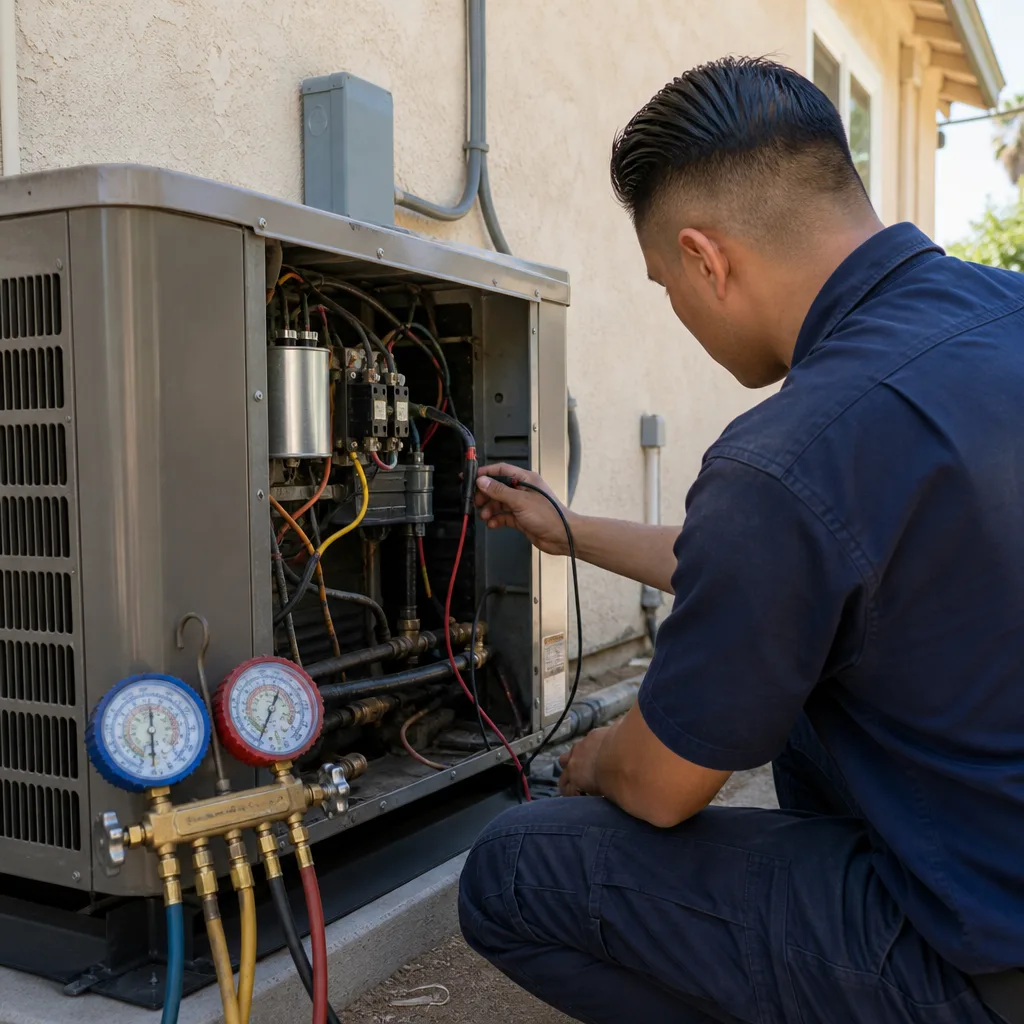
Seasonal tune-up and full diagnostic on your Carrier, Trane, or Goodman system - readings shown to you before any repair is proposed
Diagnosis first, numbers second - you approve the repair price before a single part goes in.
 Before
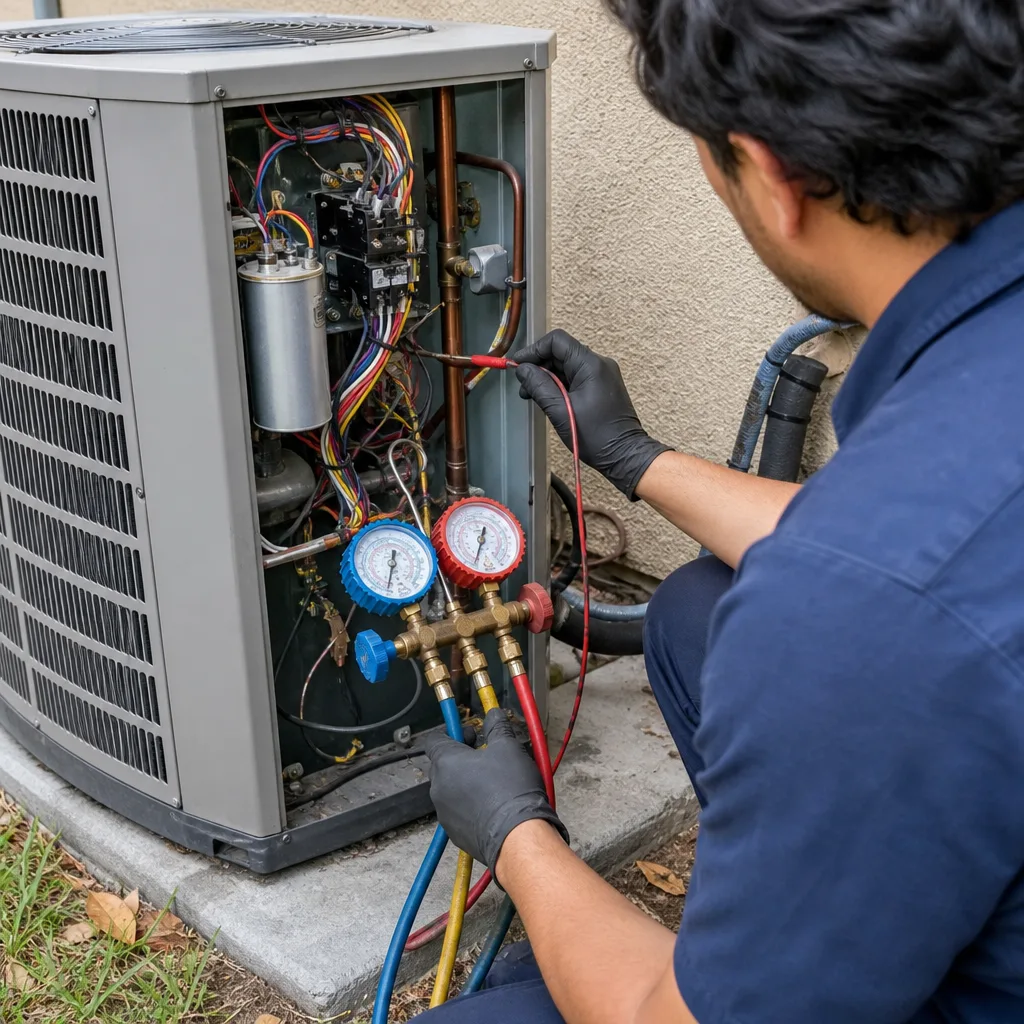 After
After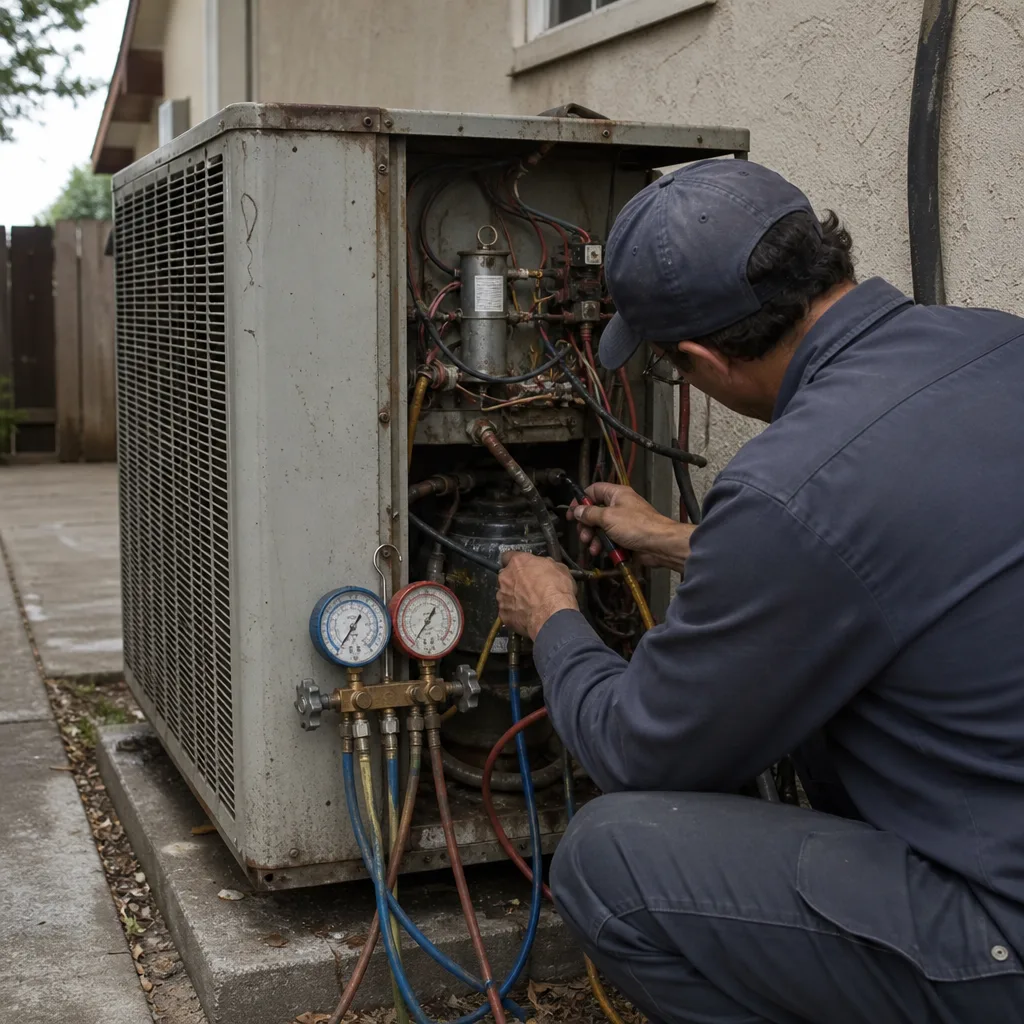 Before
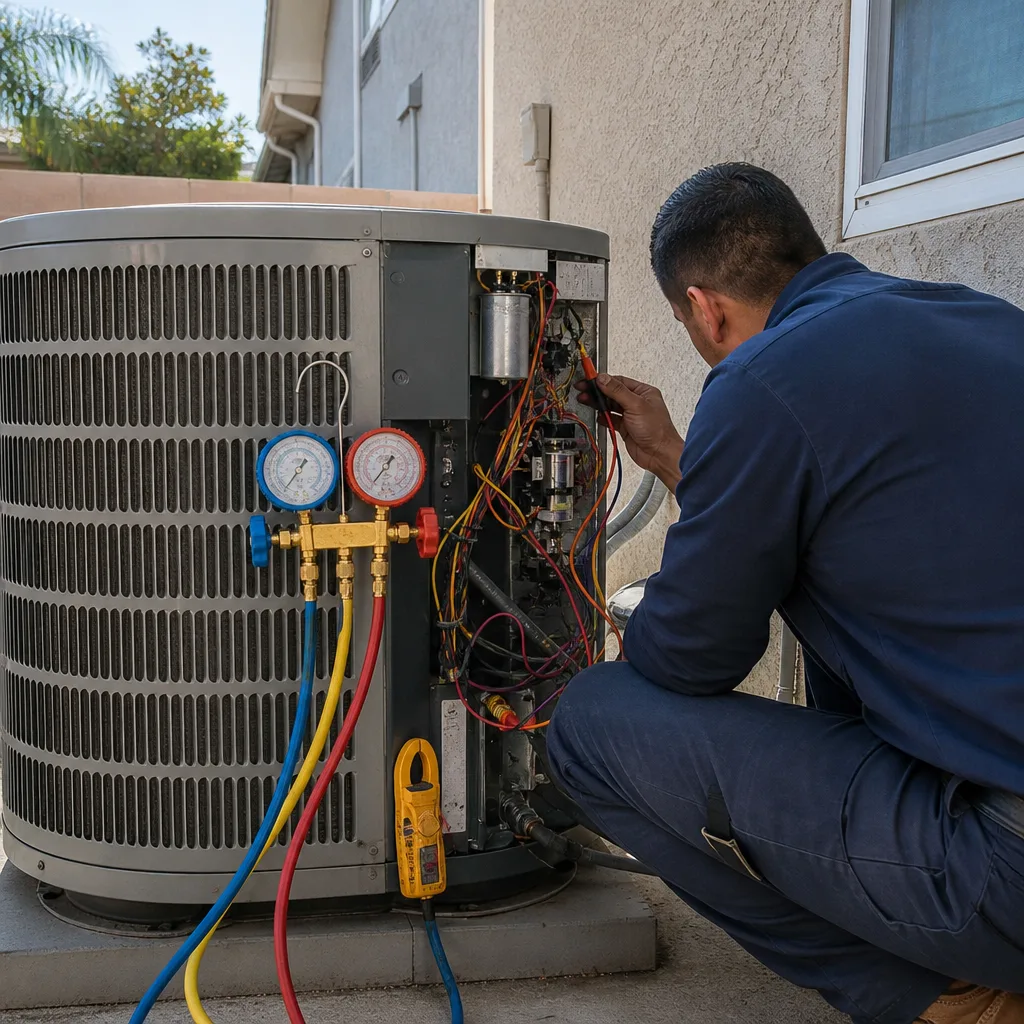 After
After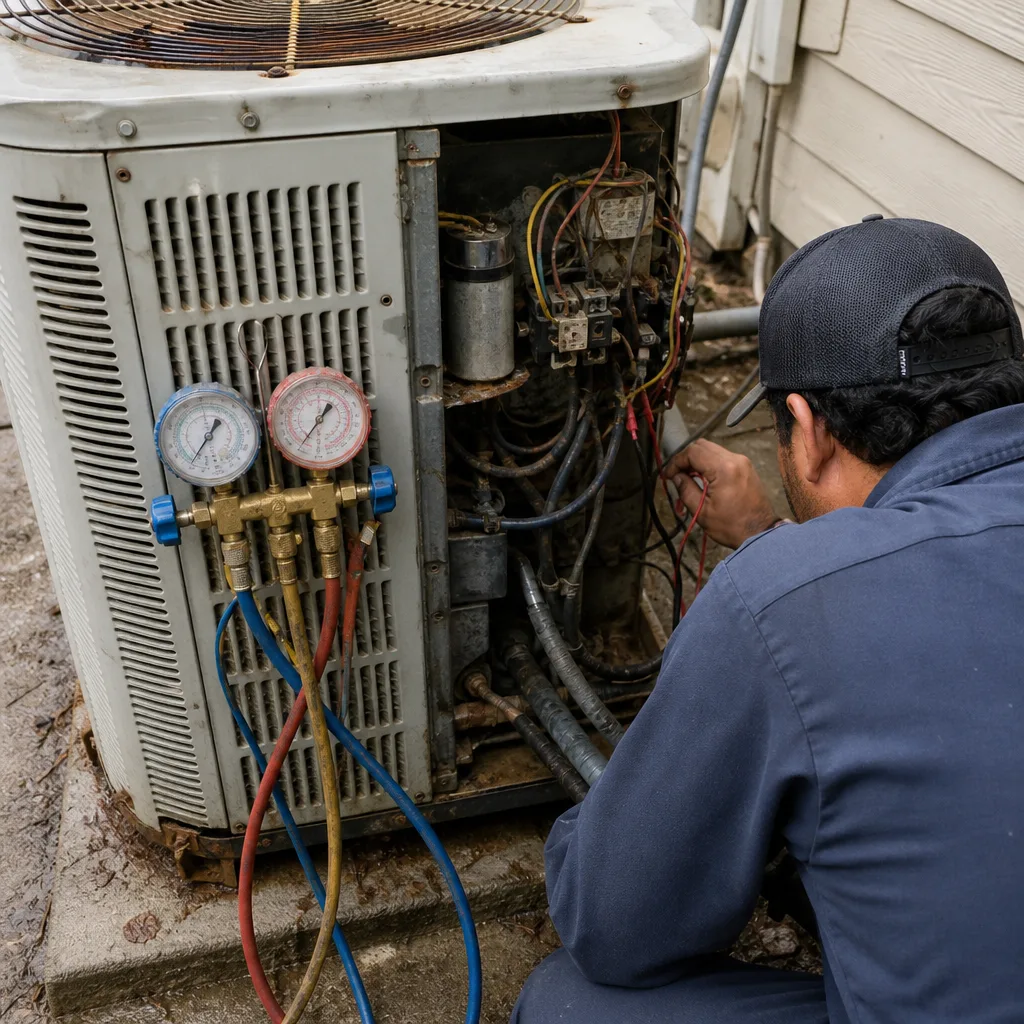 Before
 After
AfterDIY vs Professional Furnace Repair: What’s Safe to Do Yourself
Replacing a furnace filter, resetting a tripped pressure switch, and cleaning a flame sensor with fine steel wool are all legitimate DIY tasks. But they get lumped in with “don’t touch your furnace” advice so often that Los Angeles homeowners end up paying $150 service calls for 10-minute jobs. The real dividing line isn’t your skill level. It’s whether the component you’re about to touch involves combustion byproducts or gas supply, because that’s where a mistake doesn’t just fail, it harms.
This guide draws that line precisely. You’ll learn which Furnace Repair services are genuinely safe to handle yourself, which ones require a licensed professional, what the cost math actually looks like, and how to avoid voiding your warranty or creating a carbon monoxide hazard in your home.
Quick Answer
Homeowners can safely handle furnace tasks that don’t involve gas lines, electrical wiring, or the combustion chamber: filter replacement, thermostat battery swaps, vent obstruction checks, and basic error code reading. Anything touching the gas train, heat exchanger, burners, or control board belongs in the hands of a licensed HVAC technician. Most furnace repairs in Los Angeles run $150 to $450 in labor plus parts, and a professional repair includes a written guarantee that DIY work never carries.
Table of Contents
- The Hard Line: Combustion Byproducts and Gas Supply
- What’s Genuinely Safe to Do Yourself
- What Requires a Licensed Technician
- Why the Heat Exchanger Is Where DIY Stops
- The Honest Cost Math: DIY Parts vs Professional Repair
- Which Repairs Void Your Manufacturer Warranty
- Renters and Landlords: Who’s Responsible in California
- Common Mistakes to Avoid
The Hard Line: Combustion Byproducts and Gas Supply
Every furnace repair question can be answered by asking one thing: does this component touch gas or exhaust? If the answer is yes, stop. That’s the line. It’s not about whether you’re handy. It’s about what happens when a seal doesn’t seat, a fitting gets cross-threaded, or a gasket gets nicked during reassembly. A water leak from a bad DIY plumbing job ruins drywall. A gas leak from a bad DIY furnace repair can fill a house with carbon monoxide while everyone sleeps.
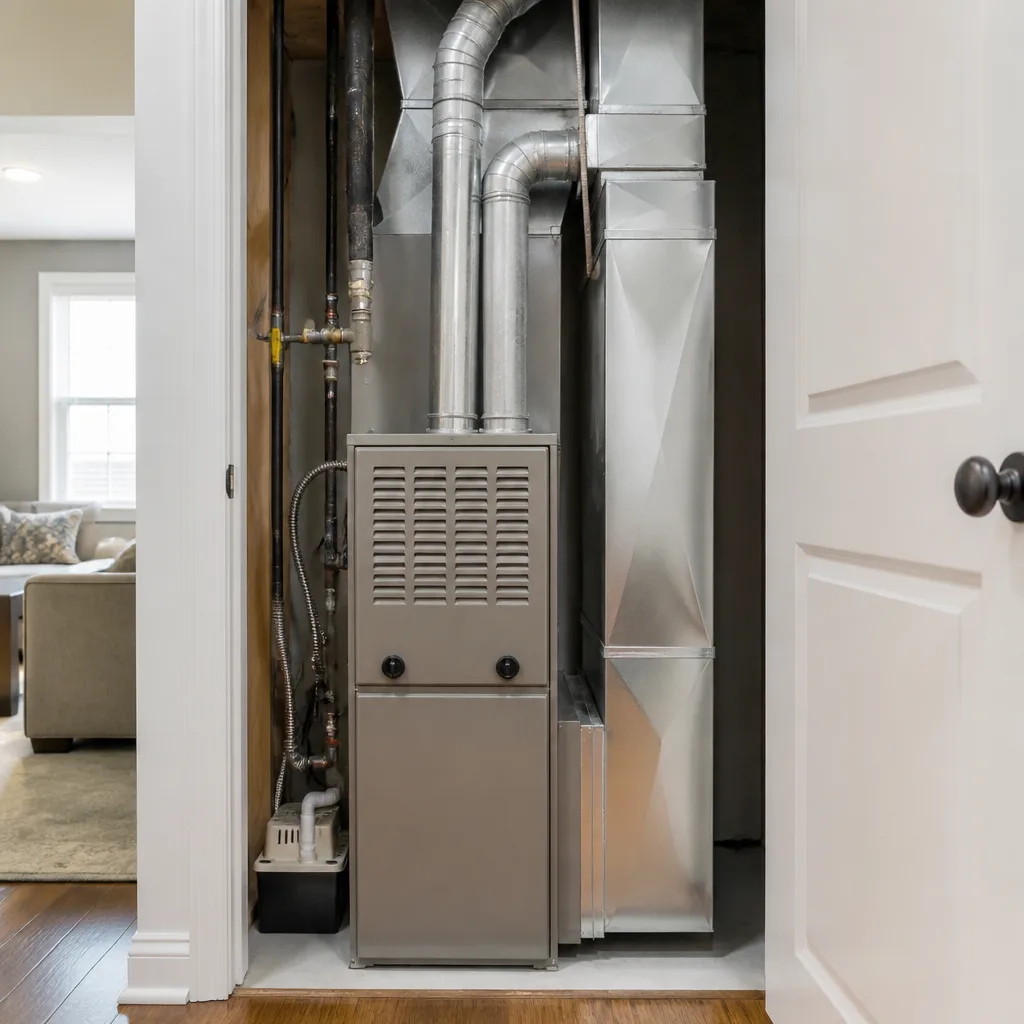
Here’s the logic we use every day at Dalton Heating & Air. A furnace takes natural gas, mixes it with air, ignites it inside a sealed chamber, and pushes the exhaust outside through a flue. Every component in that chain exists to keep combustion contained. The burners, the gas valve, the manifold, the heat exchanger, the inducer motor, the flue connections, the pressure switch that verifies proper venting. If you touch any of these and the reassembly isn’t perfect, combustion byproducts escape. Carbon monoxide is odorless and colorless. You won’t know until symptoms start.
That’s why building codes in Los Angeles require a permit for any gas line work and why your manufacturer warranty specifies licensed contractors for anything inside the burner compartment. It’s not gatekeeping. It’s physics.
The tasks on the safe side of the line are the ones outside that sealed system: the filter, the thermostat, the visible electrical connections at the disconnect switch, and the vents you can see and reach. Everything inside the cabinet where combustion happens is pro territory.
What’s Genuinely Safe to Do Yourself
There’s a decent list of furnace maintenance items that any homeowner can handle without a license, without special tools, and without risk. These are the jobs worth knowing because they account for a significant share of the “my furnace won’t turn on” calls we get. Doing them yourself before calling a technician saves you a service fee when the fix is simple.
Here’s what’s actually safe:
- Replacing the air filter. A clogged filter restricts airflow and triggers the high-limit switch, which shuts the furnace down. This is a 2-minute job that should be done every 1-3 months depending on the filter rating and whether you have pets. The filter size is printed on the existing filter’s frame.
- Checking thermostat batteries and settings. Dead batteries account for a surprising number of no-heat calls. Confirm the thermostat is set to “heat,” the fan is on “auto,” and the set temperature is actually above the room temperature.
- Confirming the furnace switch is on. Furnaces have a light-switch-style disconnect on or near the unit. If it got bumped during storage or cleaning, the furnace won’t respond at all.
- Checking the circuit breaker. A tripped breaker is a 30-second fix. If the breaker trips again immediately, stop resetting it and call a pro. That’s a symptom, not a fluke.
- Clearing visible vent obstructions. Los Angeles homes often have side-wall or roof vents. Leaves, bird nests, or debris blocking the intake or exhaust pipe will shut the furnace down. If you can safely reach the vent, clear it.
- Reading the error code. Modern furnaces flash an LED on the control board in a specific pattern to indicate what’s wrong. The legend is printed on the inside of the blower compartment door. Jot down the pattern. It tells you exactly what to tell the technician when you call.
- Checking for standing water around the unit. High-efficiency furnaces produce condensate. If the drain line clogs, the furnace shuts down. If the drain is visible and accessible, removing the clog is reasonable. If it’s inside the cabinet, that’s a service call.
The key word in this whole section is “visible.” If you can see the component without taking the cabinet apart, and fixing it doesn’t require disconnecting gas or electrical connections, it’s fair game. The moment you need a wrench on a flare fitting or a screwdriver on a control board connector, you’ve crossed the line.
What Requires a Licensed Technician
These are the tasks where the risk isn’t hypothetical. We’re not protecting trade secrets. We’re telling you what can actually go wrong, because we’ve seen the aftermath of homeowner attempts at these repairs in Los Angeles homes from the Valley to the Westside.
- Gas valve replacement or adjustment. The gas valve controls fuel flow into the burners. Wrong pressure = incomplete combustion = carbon monoxide. Or no ignition = gas accumulating in the chamber. Both are emergencies waiting to happen.
- Burner cleaning or replacement. Burners have to be removed, cleaned, and reseated at precise alignment. A misaligned burner creates flame rollout, which burns wires and panels and can crack the heat exchanger.
- Heat exchanger inspection or replacement. This is the single most dangerous component in your furnace. Cracks are invisible to the naked eye in most cases. See the dedicated section below.
- Control board diagnosis and replacement. The board manages the ignition sequence, flame verification, and safety interlocks. Wire it wrong and you can bypass the safety that shuts the gas off when ignition fails.
- Inducer motor or pressure switch replacement. These work together to verify proper venting before and during combustion. If the pressure switch is jumpered or the inducer is wired incorrectly, the furnace will run without proper draft, pushing exhaust into the home.
- Flue pipe repair or replacement. Exhaust joints must be sealed correctly to prevent carbon monoxide from leaking into living space. In Los Angeles, seismic activity can shift flue connections over time. Inspection is technical, not visual.
- Igniter replacement. This one lives in a gray zone. The hot surface igniter is a plug-and-play part in many furnaces. But getting to it requires opening the burner compartment, and if you don’t confirm proper flame sensing afterward, the furnace can cycle gas without ignition. For most homeowners, the $250 – $400 service fee isn’t worth the risk of doing this wrong.
- Any gas line work whatsoever. Los Angeles building code requires a permit and a licensed contractor for any modification to gas piping. This is a hard legal line, not a recommendation.
We carry factory training certifications for Goodman, Rheem, York, and Daikin equipment plus five other major brands. That training matters because each manufacturer routes the gas train, control board, and safety interlocks differently. A repair that’s straightforward on a Goodman might be genuinely dangerous on a York if you don’t know how that specific unit sequences its ignition.
Why the Heat Exchanger Is Where DIY Stops
The heat exchanger is a metal chamber that separates burning gas from the air your family breathes. Combustion happens on one side. Household air flows across the other side and picks up heat. The two must never mix. A crack or hole in that chamber lets carbon monoxide ride into your ductwork and out your vents. This is the failure that kills people.
Homeowners sometimes ask why they can’t just look at the heat exchanger to check for cracks. The answer is geometry. The heat exchanger is buried inside the furnace cabinet, wrapped in insulation, and shaped like a folded serpentine path. Most of its surface isn’t visible without partial disassembly. And even when it is visible, cracks start as hairline fractures that close when the metal is cold and open only when it heats up and expands. Your visual inspection at room temperature will miss exactly the crack that matters.
A proper heat exchanger inspection uses tools you don’t have in your garage. Combustion analyzers that measure carbon monoxide levels in the flue gas, borescopes with articulating cameras that snake into the chamber, and static pressure tests that detect leaks through pressure differentials. A technician also checks for flame distortion, which is an indirect sign that air is entering the combustion chamber where it shouldn’t. None of this is possible with a flashlight and a mirror.
We’ve had Los Angeles homeowners tell us they “checked the heat exchanger” and found nothing, then our combustion analyzer found CO readings that justified immediate shutdown. The scary part is that the furnace was still limping along, producing heat while slowly leaking exhaust into the home. A working furnace is not evidence of a safe furnace.
Given what’s at stake, heat exchanger inspection is included in any professional furnace tune-up. If you have any reason to believe your heat exchanger is compromised, a cracked heat exchanger means furnace replacement in virtually all cases. The repair cost exceeds the value of the unit once you account for labor.
The Honest Cost Math: DIY Parts vs Professional Repair
Let’s talk numbers, because the DIY vs Professional Heat Pump Installation: What’s Safe to Do Yourself decision often comes down to money, and the math isn’t as simple as “part cost versus service fee.”
Here’s what a professional furnace repair in Los Angeles actually costs. The service call fee runs $75 to $120 on average. That covers the technician showing up, diagnosing the problem, and giving you a written estimate. At companies that operate the way we do, that estimate is in writing before any work starts, and the diagnosis fee is typically credited toward the repair if you proceed. Labor for the actual repair runs $150 to $450 depending on what’s being done. Parts cost extra and vary widely: a flame sensor might be $35, a hot surface igniter $60 to $120, an inducer motor $250 to $500, a control board $200 to $450. Total out-the-door for a typical repair: $250 to $700.
Now the DIY version. You can buy a flame sensor, igniter, or pressure switch online or at a supply house for parts-only prices. But here’s what competitors don’t tell you. Several furnace parts are not sold to the public at HVAC supply houses in California. Supply houses serve licensed contractors, not homeowners. You’ll find the parts on retail sites, but you’re guessing at the correct part number, you’re accepting counterfeit or gray-market risk, and you’re eating the cost if you buy the wrong one. Wrong flame sensor? Return it, wait for shipping, try again. Meanwhile the house is cold.
There’s also a hidden cost in DIY: misdiagnosis. That error code that says “pressure switch open” might mean the pressure switch failed or it might mean the inducer isn’t pulling proper draft because a bird built a nest in the flue. You replace the pressure switch for $80, it doesn’t fix the problem, and you’ve now spent $80 plus a Saturday and you still need a technician. The professional diagnosis is the valuable part of the service fee, not the labor itself.
And here’s the part that rarely gets mentioned: a professional repair comes with a written guarantee. When we replace a part at Dalton Heating & Air, the repair is guaranteed in writing for a full year under our 365-Day Done Right Promise. If it fails in that time, we return at no charge. A DIY repair carries no guarantee. If your work fails in three weeks, you’re buying the part again and doing it over. The guarantee is part of what you’re paying for in the labor rate.
Which Repairs Void Your Manufacturer Warranty
Most furnace manufacturers include explicit language in their warranty documents that says self-installed repairs can void coverage. The exact wording varies by brand, but the principle is consistent: the warranty covers defects in materials and workmanship, and the manufacturer has no way to verify that your repair didn’t cause the next failure.
Specific examples from Goodman and Rheem warranty language: any repair performed by someone other than a licensed HVAC contractor voids the warranty for the component replaced, and damage caused by improper installation or repair voids the warranty for related components. York and Daikin have similar clauses. If you replace a control board yourself and miswire it, and that miswiring destroys the inducer motor six months later, the manufacturer will deny the inducer claim because the board repair wasn’t performed by a licensed professional.
This matters more than most homeowners realize because furnace warranties are long. Heat exchanger warranties run 20 years to lifetime on many name-brand furnaces. That’s the most expensive single component in the unit. Void that warranty by performing your own combustion-chamber repairs, and you’re on the hook for a $1,500 to $2,500 heat exchanger replacement that would have been covered.
How to check your specific coverage: find your furnace’s model and serial number (on a sticker inside the blower cabinet), locate the warranty certificate that came with the unit, and read the “exclusions” section. It will tell you exactly what voids coverage. If you can’t find the document, call the manufacturer with your serial number and ask directly whether DIY repair of [specific component] affects warranty coverage. Some manufacturers will transfer warranty coverage when a home is sold; others don’t. That’s worth knowing in Los Angeles, where the housing market moves fast and furnaces change hands with the title.
Renters and Landlords: Who’s Responsible in California
California law is unusually clear on this point, and it matters for the thousands of renters and landlords in Los Angeles. Under California Civil Code Section 1941, landlords are required to maintain rental units in habitable condition. Heating is explicitly listed as a habitability requirement. If a furnace stops working in a rental unit, the landlord is legally responsible for repairing it promptly. A tenant who attempts their own furnace repair is not only taking on personal liability, they’re giving the landlord a defense if something goes wrong.
The liability flow works like this. A tenant disassembles the furnace, replaces a part, and the furnace subsequently malfunctions and causes a fire or carbon monoxide leak. The tenant who performed the repair is potentially liable for the damage because they took an action that a court could find negligent. The landlord’s insurance company will absolutely pursue that claim. Even if the repair was well-intentioned, the tenant stepped outside their legal role and into the contractor’s role without a license.
For landlords, the calculation is different but the conclusion is the same. A landlord who delays a furnace repair in Los Angeles is exposed to rent withholding, repair-and-deduct remedies, and habitability lawsuits. Trying to save a few hundred dollars by having a handyman or property manager open up the gas train is false economy. The California Contractors State License Board requires a C-20 warm-air heating license for any furnace work that goes beyond routine filter replacement. Unlicensed repair work voids your insurance coverage if the repair causes a loss. Using a licensed, insured HVAC contractor protects the property owner from liability, keeps the warranty intact, and documents that the repair met code.
The practical takeaway for both groups: if you rent, call your landlord. It’s their legal obligation. If you’re a landlord, call a licensed contractor. It’s your liability and your asset.
Common Mistakes to Avoid
- Assuming a working furnace is a safe furnace. Carbon monoxide leaks don’t stop the furnace from heating. We’ve measured elevated CO on furnaces in Los Angeles that were producing heat just fine. If you have any combustion-related symptom, get it inspected with a combustion analyzer, not a visual check.
- Jumping the pressure switch to “get through the night.” The pressure switch exists to prove the flue is drafting correctly. Jumping it bypasses the safety that prevents exhaust from backing up into your home. This specific shortcut has caused multiple CO poisoning deaths nationally. Never do this. Not even once.
- Buying parts before the diagnosis is confirmed. An error code tells you which sensor detected a problem, not which part failed. We see homeowners replace a flame sensor when the actual problem was a dirty burner causing intermittent flame. The part didn’t fix it because the part wasn’t the problem.
- Ignoring recurring symptoms. A furnace that trips its high-limit switch occasionally is telling you something. Restricted airflow, an undersized duct system, or a failing blower motor are all possible. The longer you ignore it, the more expensive the eventual fix.
- Skipping annual inspection because “it still works.” The single best way to avoid expensive furnace repair is to catch small issues during a tune-up before they become failures. A $120 tune-up catches a $700 repair 9 times out of 10.
- Attempting repairs on older furnaces without knowing the unit’s history. Los Angeles homes frequently have furnaces that are 20 plus years old. Opening one up to replace a part often reveals additional problems, and the unit may be at the end of its service life. If your furnace is over 15 years old and needs a major component, replacement is usually the better financial call. We walk homeowners through that math honestly, and we also handle furnace repair in Los Angeles for those who choose to keep their existing system.
When to Call a Professional
Call a licensed HVAC technician any time the repair involves gas, exhaust, the heat exchanger, or the control board. Call if you smell gas (and evacuate first, then call). Call if you’ve reset the breaker and it trips again. Call if the error code doesn’t match the symptom you’re seeing. Call if your furnace is over 15 years old and the repair quote is creeping toward half the cost of a new unit. And call if you’ve read this far and still aren’t sure whether your specific situation is DIY-safe. A professional diagnosis costs less than a DIY mistake. Dalton Heating & Air offers free estimates in Los Angeles. Call (361) 306-9515 and a live person answers, 24/7. We’ll give you a written price before any work starts and a written guarantee on every repair.
Frequently Asked Questions
You can, but it requires opening the burner compartment and working around the burners and gas manifold. The flame sensor is a $35 part that most homeowners can replace with a quarter-inch socket, but if you don’t confirm proper flame sensing afterward, the furnace can cycle gas without ignition. If you’re comfortable with the process, go ahead. If you’re unsure, this is a quick, low-cost service call.
California law allows homeowners to perform work on their own primary residence without a contractor’s license, but building code still requires permits for gas line work and certain mechanical modifications. Your homeowner’s insurance may also deny a claim if unlicensed DIY vs Professional HVAC: The Los Angeles Homeowner’s Decision Guide work causes damage. The legality exists, but the liability and safety risk remain.
Most furnace repairs in Los Angeles run $250 to $700 total, including the diagnosis fee, labor, and parts. Simple repairs like a flame sensor or igniter replacement run $200 to $350. Major repairs like an inducer motor or control board run $400 to $700. Replacement of a full system runs $4,000 to $9,000 depending on equipment and installation complexity.
Start with the filter, the thermostat batteries, the circuit breaker, and the furnace’s power switch. If those are all fine, check the LED error code on the control board. If you’re not comfortable diagnosing further, call for professional service. We see a lot of no-heat calls in Los Angeles during the winter months, even though the climate is mild. When furnaces sit unused for months, dust, debris, and minor component failures accumulate.
Generally no. Most homeowners policies exclude damage caused by unlicensed work or by the homeowner’s own repair attempts if negligence can be shown. The insurance company will investigate the cause, and if they determine the damage originated from a DIY repair, the claim can be denied. Licensed HVAC contractors carry their own insurance that covers damage from their work.
A good rule of thumb: if your furnace is over 15 years old and the repair costs more than 50% of the unit’s replacement value, replacement usually makes more sense. Furnaces lose efficiency as they age, and the repair rarely restores original performance. We also install heat pumps, which are increasingly popular in Los Angeles because they handle both heating and cooling. If you’re weighing that decision, we can walk you through it and help you compare heat pump installation against a conventional furnace replacement with honest numbers. And if your furnace just needs a repair to get through another season, our AC repair team handles heating season work too.
The Bottom Line
The DIY-versus-professional furnace question has a clean answer. Homeowner-safe tasks are the ones outside the combustion system: filters, thermostats, breakers, visible vents, and reading error codes. Professional-required tasks are everything inside the gas train, the heat exchanger, and the control board, where mistakes create carbon monoxide risk rather than inconvenience. The cost math favors professionals for any repair beyond a $50 part you can swap without opening the cabinet, because a written guarantee and a correct diagnosis are part of what the service fee buys. In Los Angeles, where furnaces sit idle for months and then work hard during winter nights, a professional inspection before heating season is the cheapest insurance you can buy. If you’re not sure which side of the line your situation falls on, explore our more guides & resources or call and ask. The consultation costs nothing.
Written by Marco Benitez, Owner at Dalton Heating & Air, serving Los Angeles since 2003.