
Last updated October 9, 2026
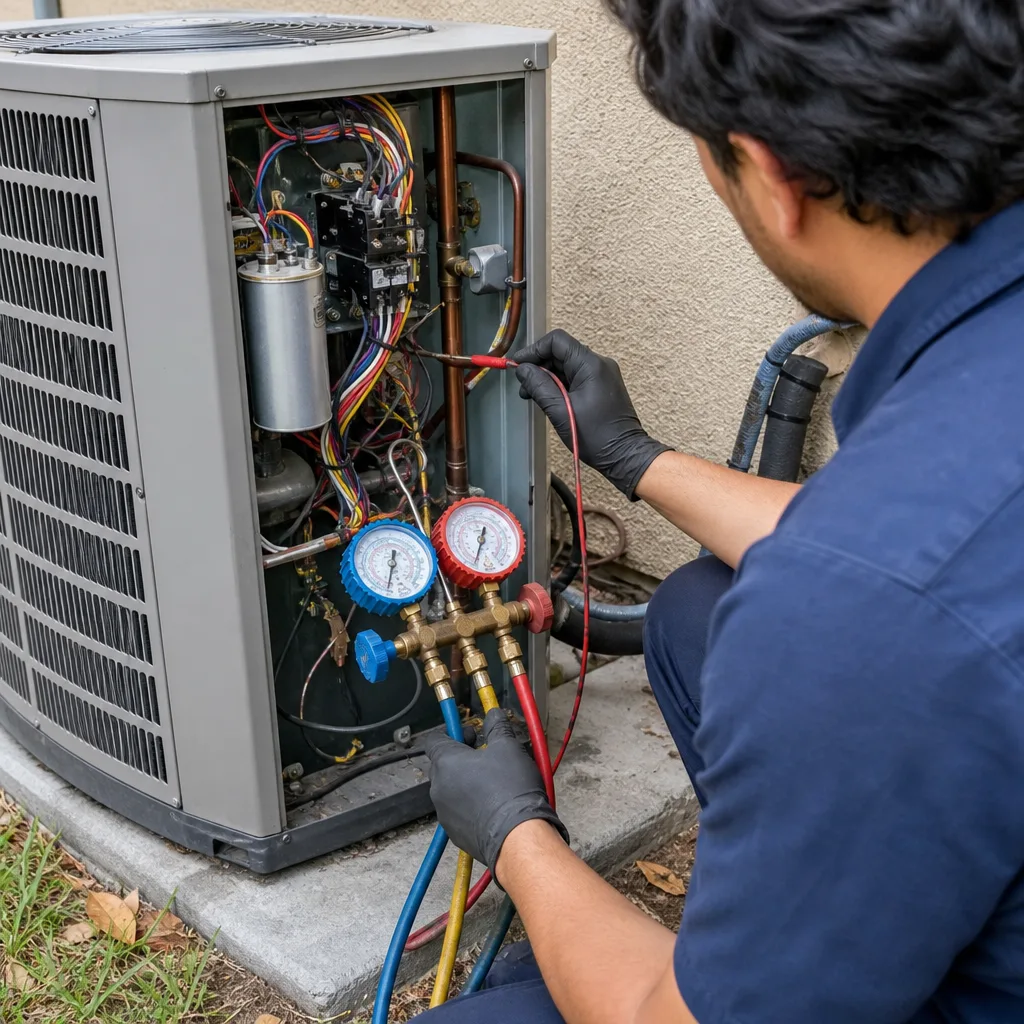
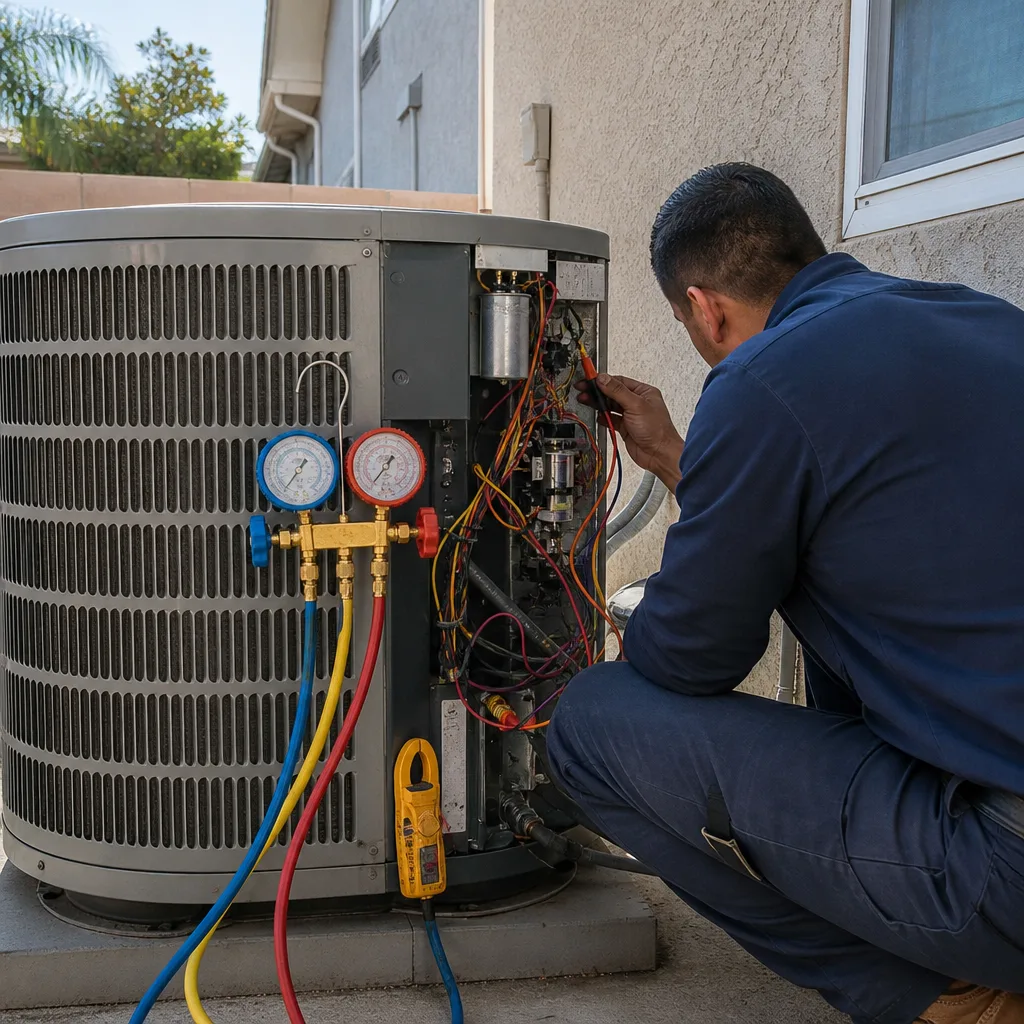
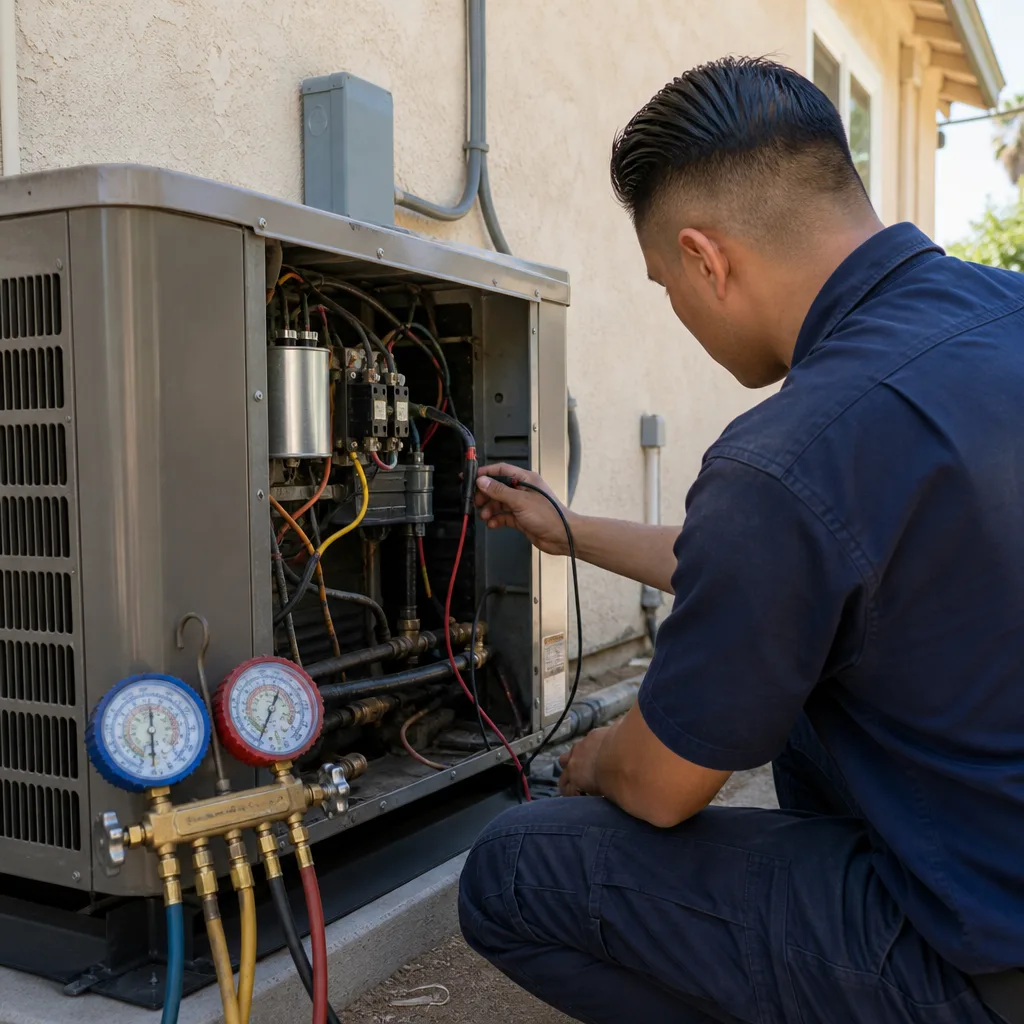
Seasonal tune-up and full diagnostic on your Carrier, Trane, or Goodman system - readings shown to you before any repair is proposed
Diagnosis first, numbers second - you approve the repair price before a single part goes in.
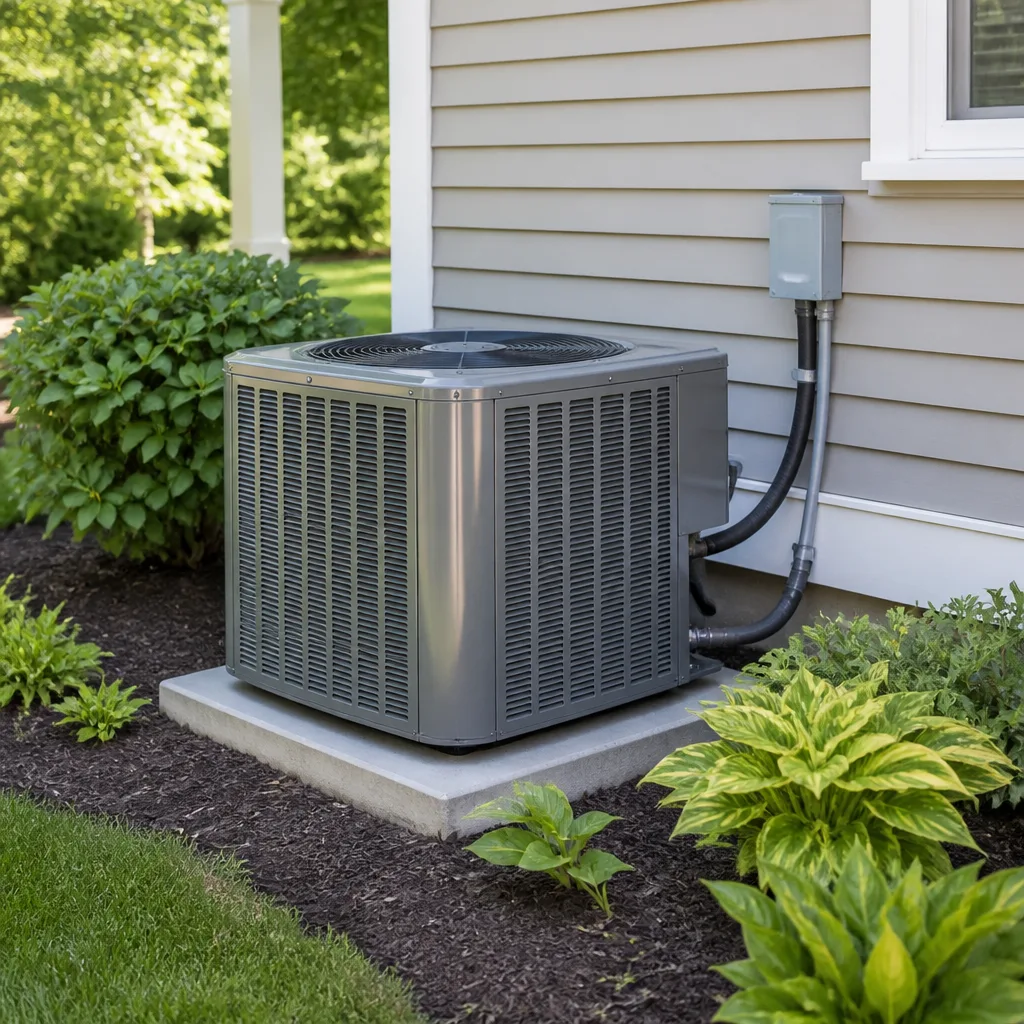
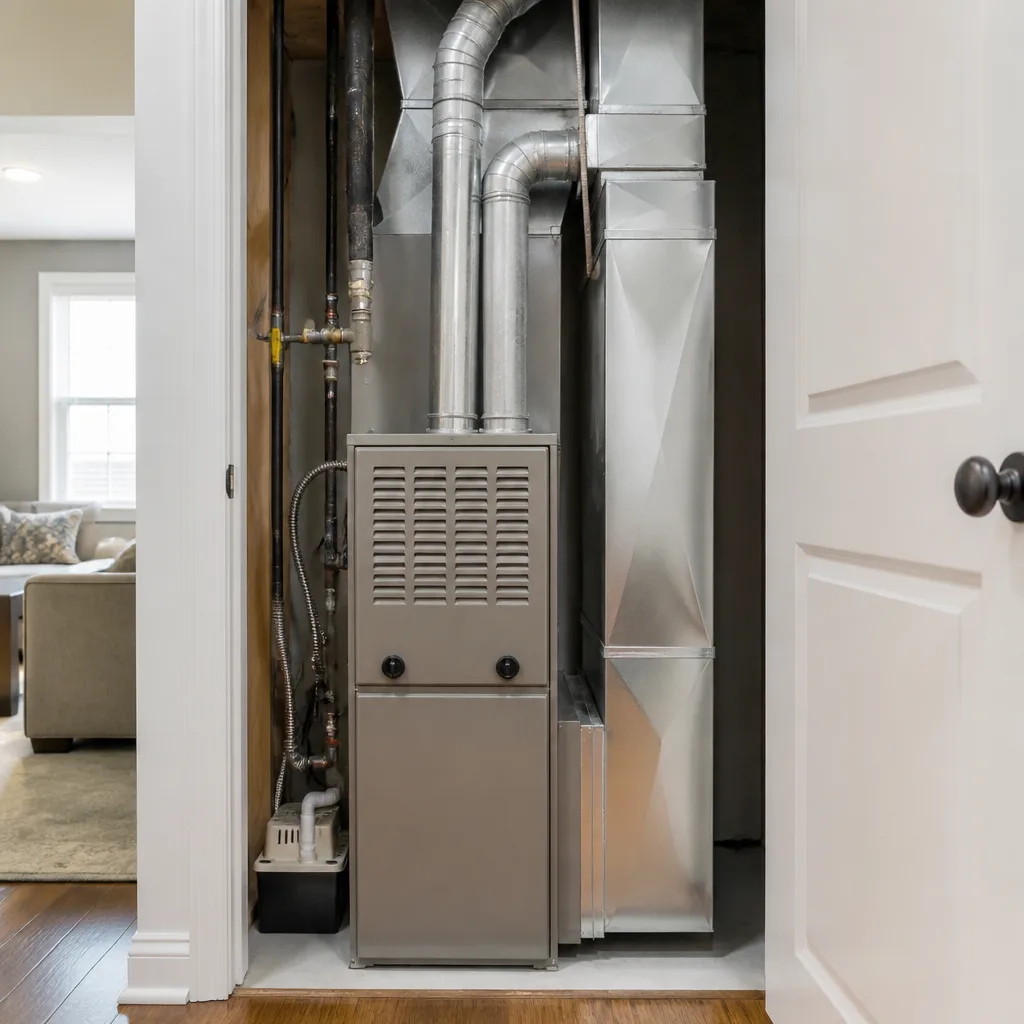
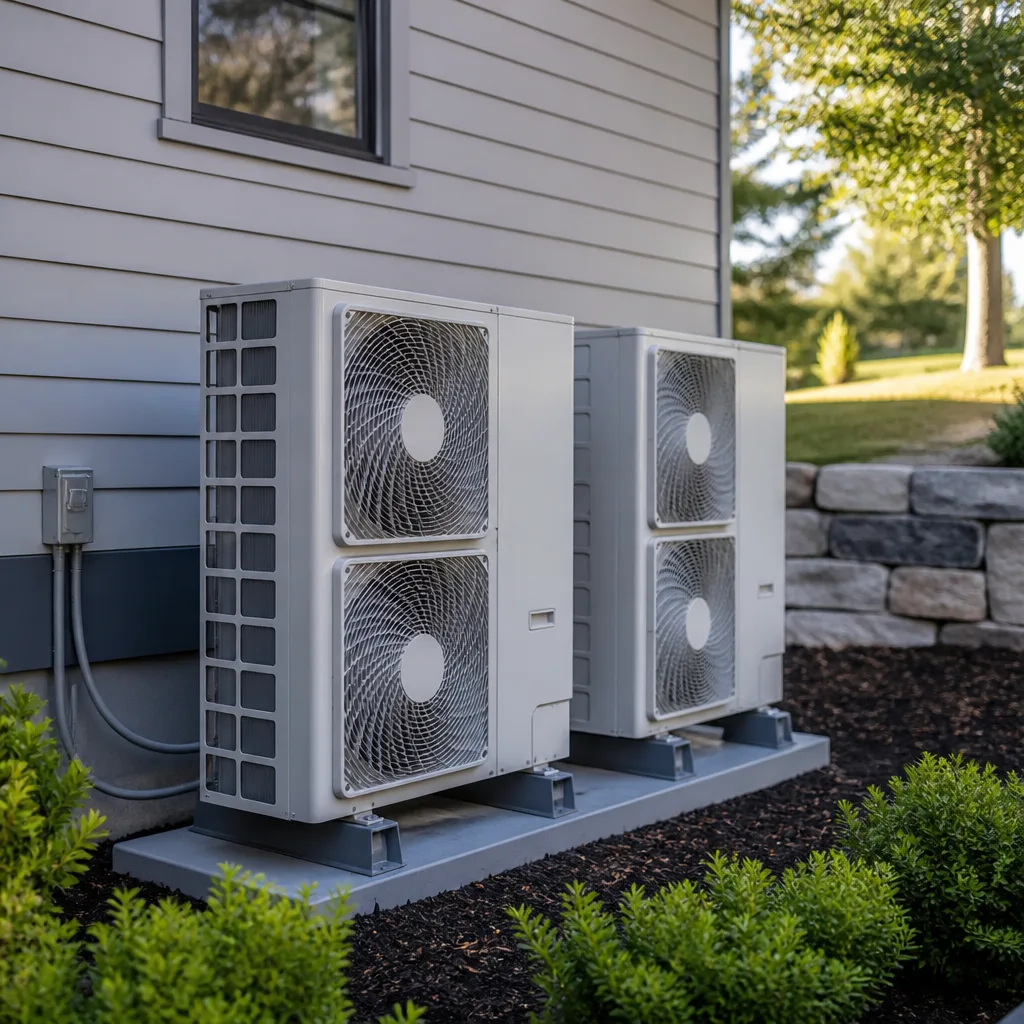
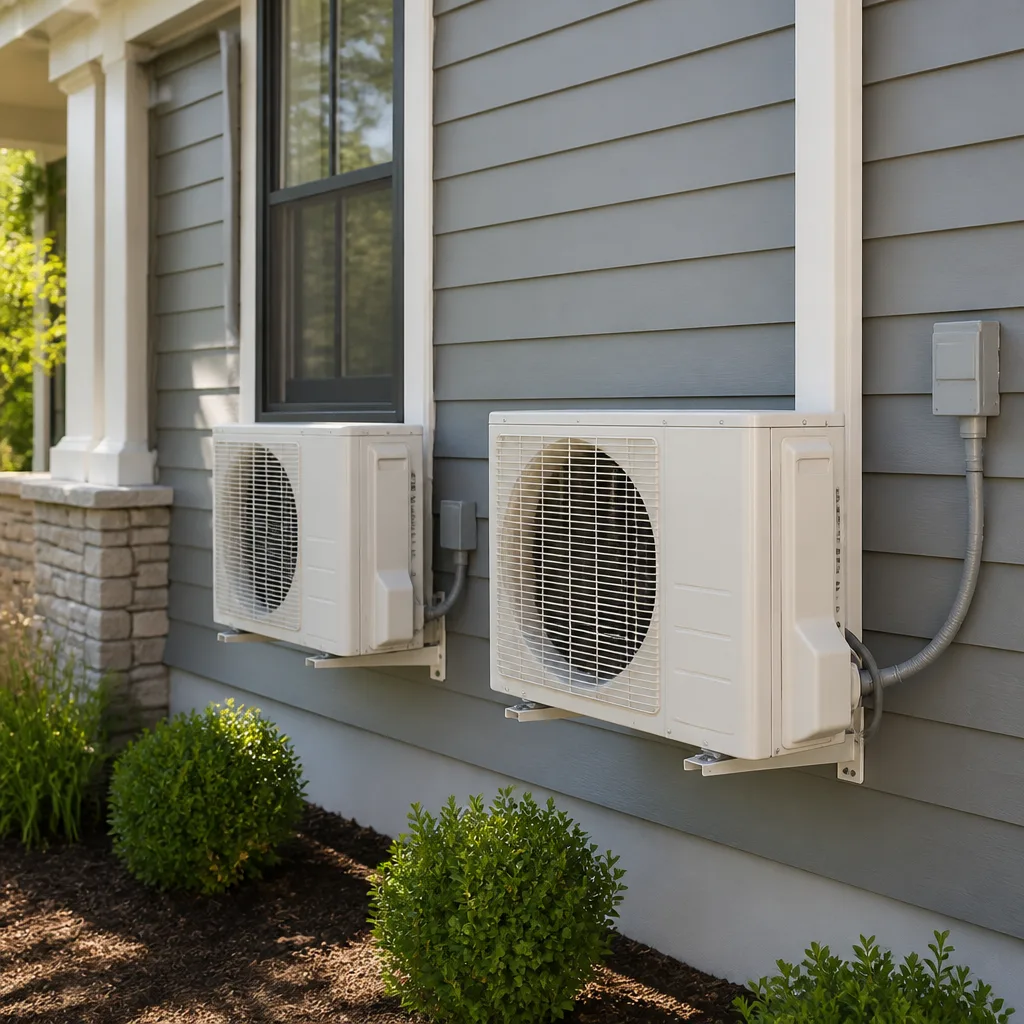
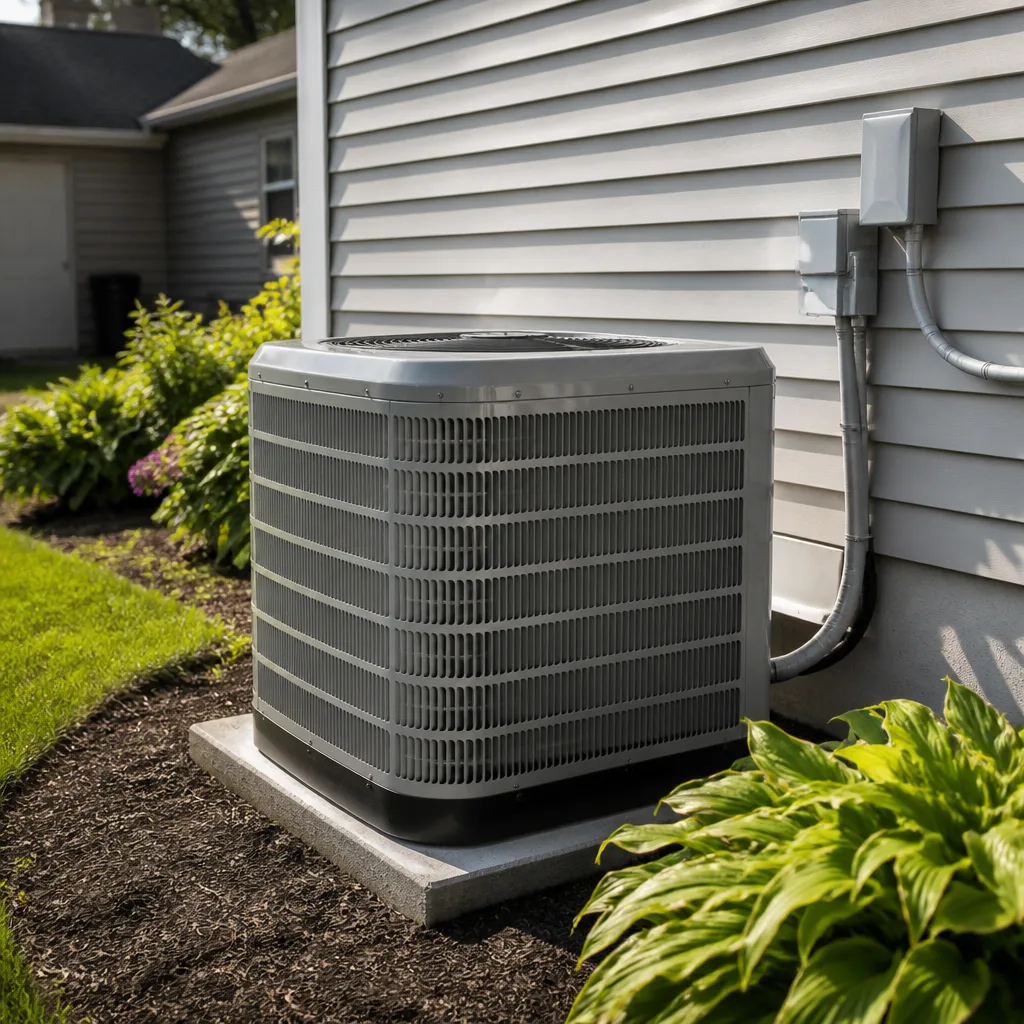
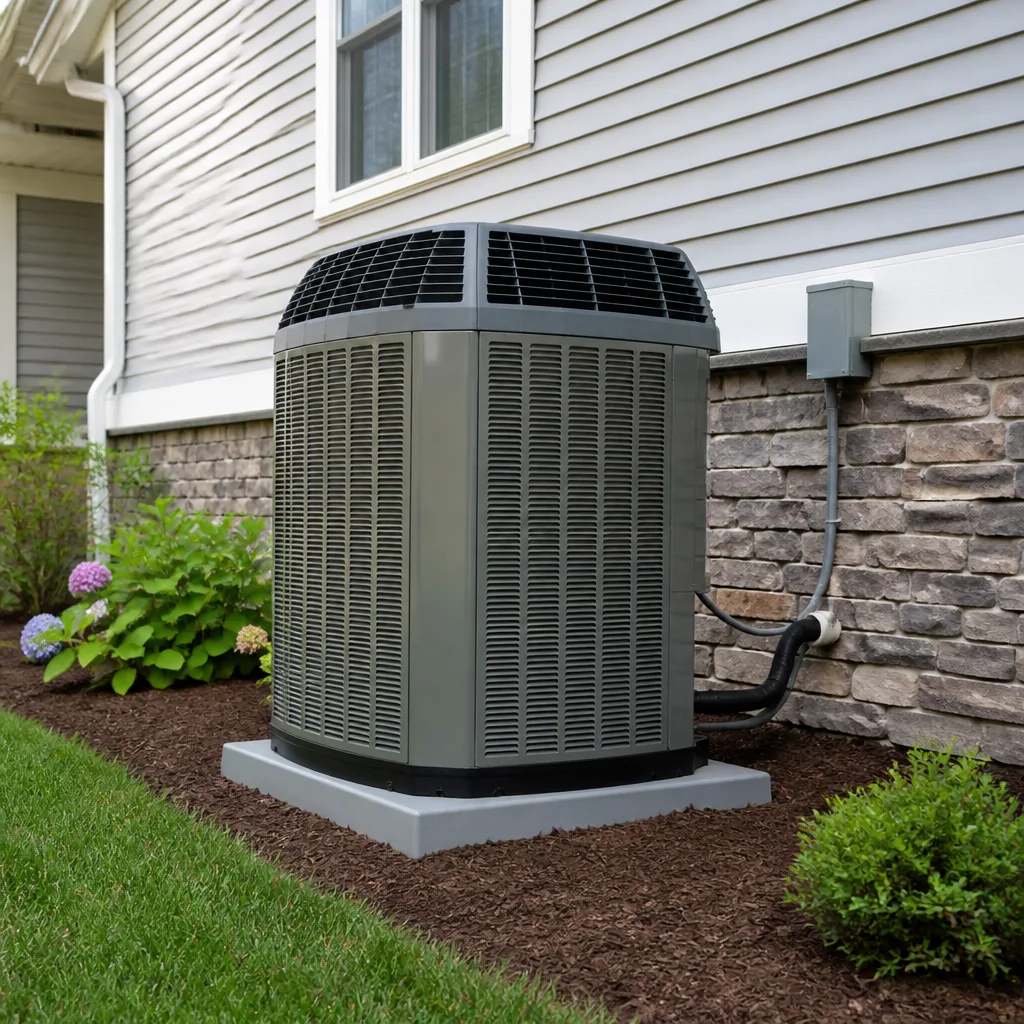
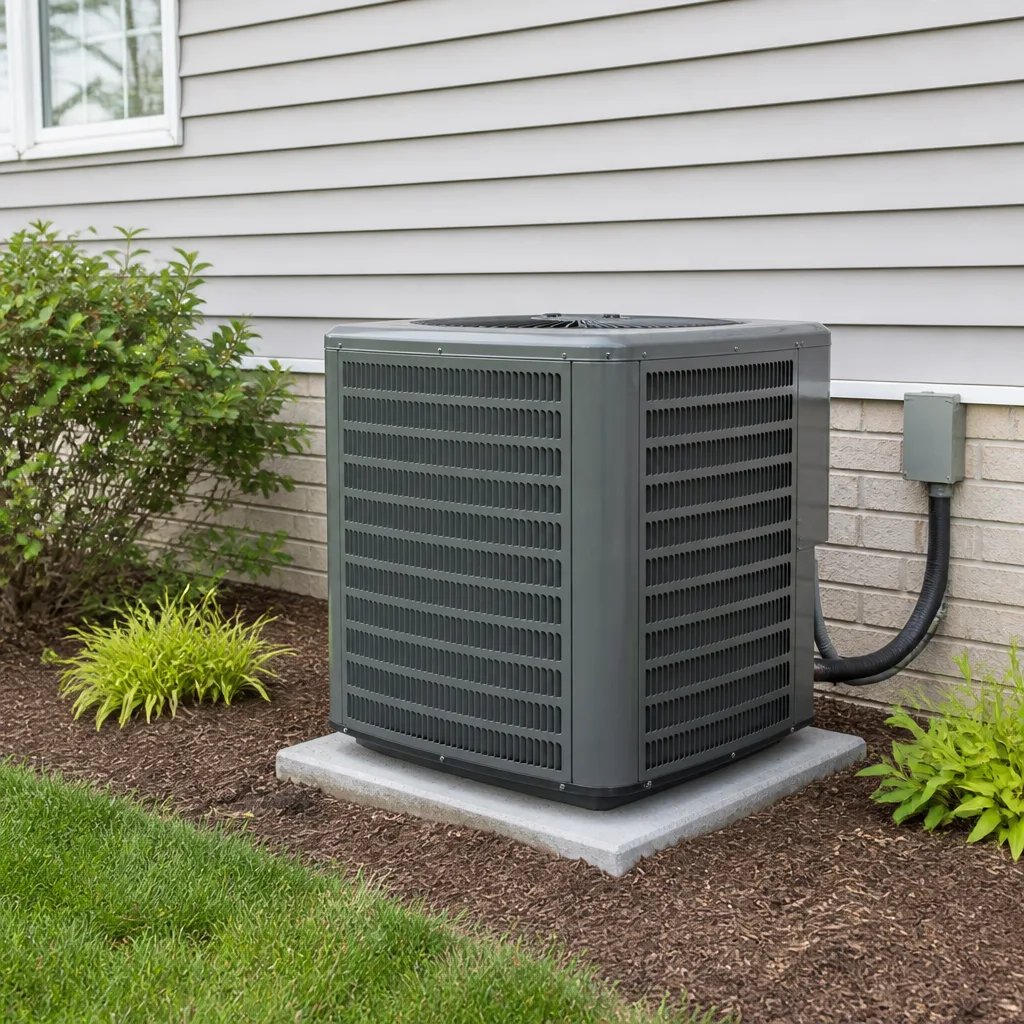
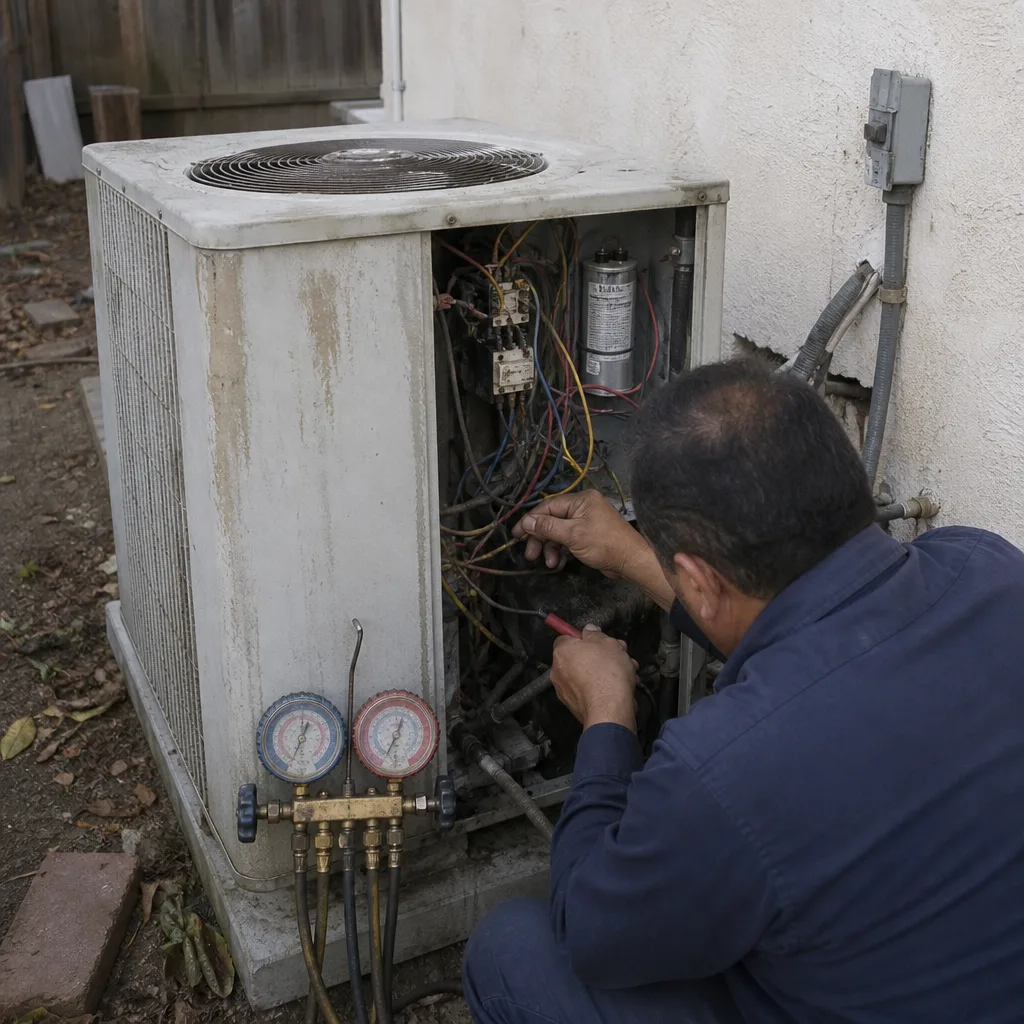 Before
 After
After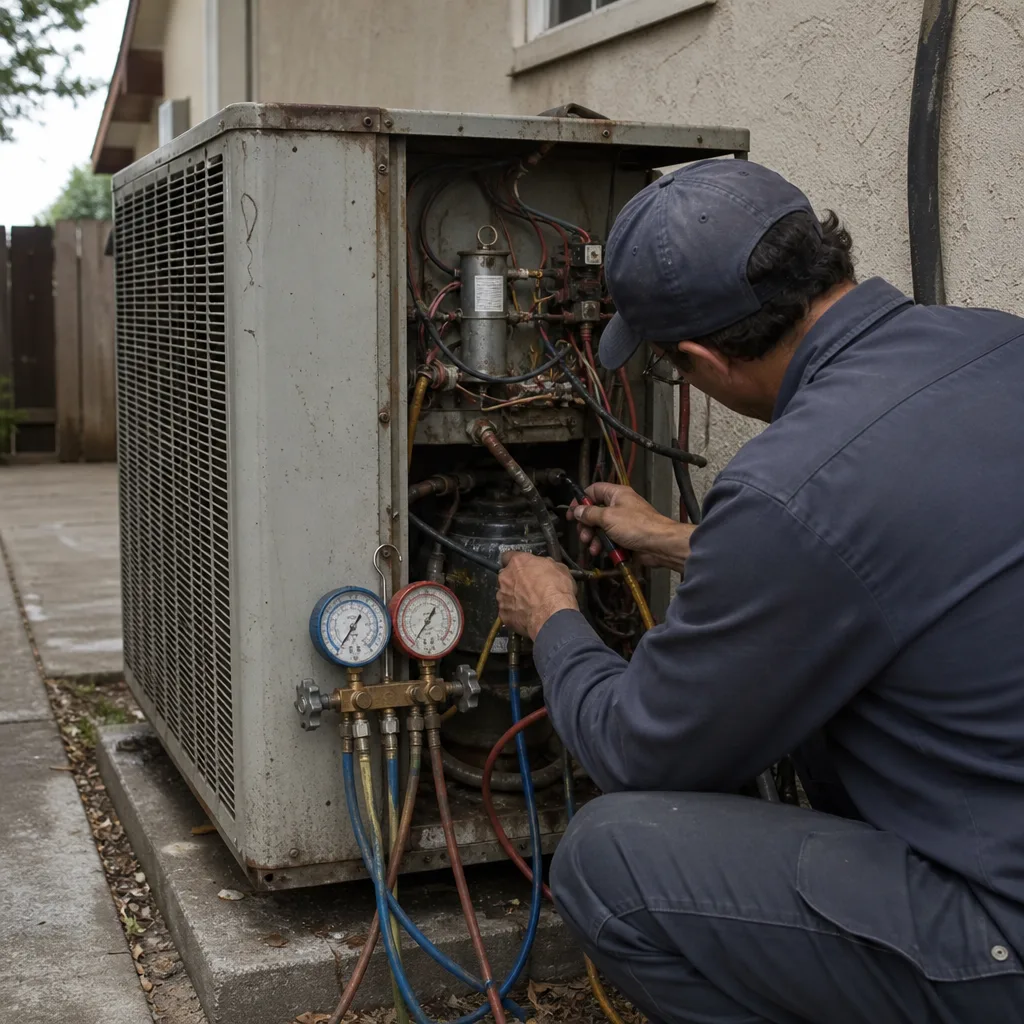 Before
 After
After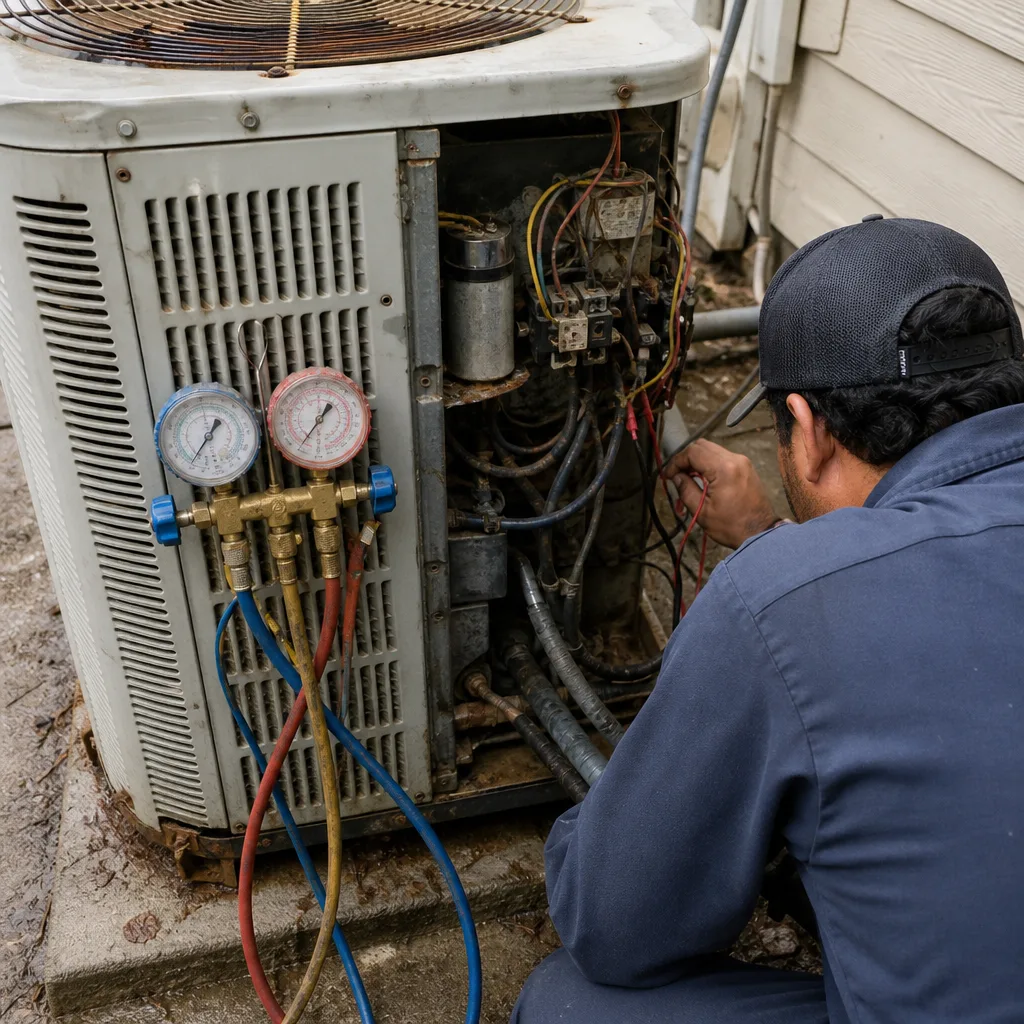 Before
 After
AfterThe Complete AC Repair Guide for Los Angeles Homeowners
A unit running in Woodland Hills logs roughly 400 more operating hours per year than the same model in Chicago, and that extra runtime shows up as accelerated compressor wear, not as a line item on any national repair guide. In Los Angeles, your air conditioner is not a seasonal appliance. It is a year-round machine working against salt air, valley heat, and an electrical grid that punishes weak components. This guide explains what actually fails on LA systems, what AC Repair costs in this market, and how to avoid paying for work you don’t need.
Quick Answer
AC repair in Los Angeles typically runs $185 to $725 depending on the failed part, with capacitor replacements on the low end and compressor replacements on the high end. Most failures in LA follow a predictable pattern tied to geography: coastal units develop evaporator coil growth and electrical corrosion, valley units burn through capacitors and contactors from extended runtime, and inland units strain compressors during July through September heat spikes. For a deeper look at how these systems work together, see The Complete Guide to HVAC in Los Angeles. A written price before work starts is the single strongest consumer protection you can ask for.
Table of Contents
- How LA’s Microclimates Drive Different Failures
- Coastal Moisture and Evaporator Coil Growth
- Valley Heat and the Parts That Fail First
- LA Permits for AC Repair vs. Replacement
- Written Price vs. Verbal Estimate
- What a One-Year Repair Guarantee Actually Covers
- Common Mistakes to Avoid
- When to Call a Professional
How LA’s Microclimates Drive Different Failures
Los Angeles is not one climate. It is at least three, and each one treats your AC system differently. The coastal band from Santa Monica through Venice and into Long Beach sits under a marine layer that pushes humid air across condensing units for hours every morning. The San Fernando Valley, including Woodland Hills, Encino, Sherman Oaks, and Northridge, regularly sees summer temperatures 15 to 25 degrees higher than the coast. Inland zones like Pasadena, Glendale, and the San Gabriel Valley get the heat without the ocean breeze.
Here is what that means for failures:
- Capacitors fail most often in valley and inland zones. Extended runtime in high heat stresses the dielectric material inside the capacitor. A capacitor that lasts eight years in Santa Monica might last four in Woodland Hills.
- Evaporator coils develop biological growth and corrosion fastest in coastal zip codes. The marine layer keeps coils damp for hours after the system cycles off. Damp plus dark plus dust equals mold and bacterial film that reduces airflow and eventually eats pinholes in the coil.
- Compressors fail most often in the deepest inland heat zones. When outdoor temperatures exceed 100 degrees, head pressure on the compressor rises. A system with even mildly low refrigerant runs hotter, and the compressor windings degrade faster. This is why a compressor in Pasadena can fail at year ten while the same model in Mar Vista is still running at year fourteen.
We see these patterns on service calls across Los Angeles. Before we diagnose any system, we ask where the unit sits, how many hours a day it runs, and how close it is to the ocean. The address matters as much as the equipment.
Coastal Moisture and Evaporator Coil Growth
If you live within three miles of the ocean, your evaporator coil is under constant biological attack. The coil sits inside your air handler, dark and damp, collecting whatever the marine layer carries. In Santa Monica, Venice, Playa del Rey, and Marina del Rey, the morning fog deposits salt and moisture onto condenser fins and keeps evaporator coils wet long after the AC cycles off.
Here is the sequence we see on coastal service calls:
- Year one to three: Fine dust and salt accumulate on the evaporator coil. Airflow drops slightly. Most homeowners don’t notice.
- Year four to six: Biological growth appears. The coil develops a musty smell at startup. Cooling capacity drops because the biofilm insulates the coil, keeping it from absorbing heat from the return air.
- Year seven plus: The biofilm hardens and traps moisture against the copper. The coil begins to corrode. Pinhole leaks develop. Refrigerant escapes. At this point, the repair is a coil replacement, which runs $1,200 to $2,800 in Los Angeles depending on the system and whether the coil is under warranty.
The part most guides miss: a coil cleaning at year four can add years of life. It costs $250 to $550 in coastal Los Angeles and involves pulling the coil, treating it with a proper evaporator cleaner, and clearing the condensate line. Skipping this on a coastal unit is the single most expensive maintenance mistake we see.
Corrosion on outdoor condenser fins is the other coastal problem. The salt air eats aluminum fins, especially on units installed close to the beach. We recommend rinsing the condenser coil with fresh water every spring in coastal zones. It takes five minutes and it keeps the fin surface working. If you see white powder or flaking on the fins, that is electrolysis, not dirt, and it needs a technician’s attention. This is exactly the kind of repair we handle at AC Repair in Los Angeles.
Valley Heat and the Parts That Fail First
The San Fernando Valley runs air conditioners harder than any other part of Los Angeles. Woodland Hills, Encino, Tarzana, Northridge, Reseda, and Van Nuys routinely see 100-plus degree days from July through September. A unit in Woodland Hills runs 1,800 to 2,400 hours per year, compared to 1,200 to 1,500 in a coastal zip code. That extra runtime is not neutral. It cycles failure on specific parts.
The first thing to go is usually the capacitor. The capacitor stores and releases the electrical charge that starts the compressor and the fan motor. Heat degrades the dielectric fluid inside the capacitor. When it fails, the system will hum and not start, or the fan will spin more slowly, or the compressor will overheat and trip the thermal overload. The symptom is usually “my AC stopped cooling” or “my AC makes a clicking noise.”
Typical valley repair costs in Los Angeles:
- Capacitor replacement: $185 to $375. It is a small part, and most of the cost is diagnostic time and the service call.
- Contactor replacement: $200 to $400. The contactor is the electrical switch that turns the compressor and fan on. Valley heat plus high amp draw burns the contact points.
- Condenser fan motor: $450 to $800. When the fan motor fails, the compressor can’t reject heat and will trip or overheat. Running a system with a dead fan is asking for a compressor failure.
- Compressor replacement: $1,800 to $3,500. This is the big one. Valley units lose compressors earlier than coastal units because higher head pressure and longer runtime degrade the motor windings, and because a system low on refrigerant runs hotter and dies sooner.
The practical takeaway: if your system is older than eight years and in the valley, a capacitor or contactor failure is normal wear, not a sign of a failing system. If the compressor shows signs of overheating, check refrigerant charge before condemning the compressor. Many compressors are replaced in Los Angeles because the real problem was a low charge that got ignored. We service Goodman, Rheem, York, and Daikin systems across the valley, and factory training on those brands matters when diagnosing a borderline compressor.
LA Permits for AC Repair vs. Replacement
Repairs and replacements are treated differently by Los Angeles building codes. This is one of the most misunderstood parts of AC work, and it costs homeowners money.
Repairs generally do not require a permit. Replacing a capacitor, contactor, fan motor, circuit board, or thermostat is a repair. Changing out a condenser fan, clearing a drain line, recharging refrigerant, and most electrical component work falls here. The City of Los Angeles Department of Building and Safety (LADBS) does not require a permit for part-level repairs on an existing system in most cases. Unincorporated LA County follows a similar standard.
Replacement of the condenser, the evaporator coil, or the entire system generally does require a permit. The City of LA requires an HVAC permit for equipment replacement, and the work must be performed by a contractor with a valid California HVAC license. The permit ensures the replacement meets current energy code, including Title 24 efficiency requirements and proper refrigerant charge verification. A legitimate contractor will pull the permit and schedule the inspection.
What this means for you as a homeowner:
- If a technician wants to “change out” your condenser or coil without a permit, be cautious. Unpermitted mechanical work can be a disclosure problem when selling the house and can void the manufacturer’s warranty.
- If the repair is a part swap, permits are typically not required. A technician who insists on a permit for a capacitor is either confused or padding the bill.
- When you get a written proposal for a system replacement, ask whether the price includes the permit and inspection. At Dalton Heating & Air, every system installation includes the permit, and The Garrison Code requires us to do the job by the book, which means no shortcut on code compliance.
Los Angeles also enforces efficiency standards that affect what replacement equipment you can install. The older your existing unit, the more efficient the replacement must be. A technician who does not mention this is not giving you the full picture.
Written Price vs. Verbal Estimate
This is the difference that separates professional HVAC companies from the rest. A verbal estimate is a number a technician says out loud. A written price is a document that itemizes the diagnosis, the parts, the labor, and the total, signed before any work starts.
Here is why the distinction matters in Los Angeles:
- A verbal estimate leaves room to adjust at the door. The technician sees the job, and the number changes because “the part is more expensive than I thought” or “there is more labor involved.” You have no record of the original quote. Your options are to accept the new price or pay a trip fee and start over.
- A written price locks the number. It is itemized. It is specific. If the technician finds something unexpected, the change must be documented and approved before any additional work. This is not a convenience. It is the only real protection a homeowner has against pricing games.
- California law requires written contracts for home improvement work over $500. The California Contractors State License Board requires a written contract for any home improvement job, including HVAC work, above a $500 threshold. A technician who refuses to write it down is asking you to waive your legal protection.
At Dalton Heating & Air, the price is in writing before any work begins on every job, without exception. If it isn’t written down, it doesn’t exist, and our customers never have to litigate what a technician said versus what he meant. The Garrison Standard has applied this since 2003, and it is the reason our service area homeowners know exactly what a repair will cost before the first tool comes out.
What a One-Year Repair Guarantee Actually Covers
The words “guaranteed” and “warrantied” get thrown around more loosely in HVAC than almost any other trade. The meaningful distinction is between a workmanship guarantee and a parts warranty, and the length of each.
Most contractors in Los Angeles offer a 30-day or 90-day workmanship guarantee buried in the fine print that covers only the specific solder joint or wire nut they installed. If the part fails, that is a manufacturer’s warranty, and the contractor may or may not handle the labor to replace it. If the technician’s work fails on day 91, you are paying again.
A full-year written repair guarantee covers both the part and the workmanship for 365 days. On every repair at Dalton Heating & Air, the guarantee is in writing, not an upgrade, and not a verbal promise. If the repair fails within that year, we return at no charge. It is that simple, and it is every repair, from a capacitor to a full compressor swap.
Here is what to ask any contractor before you approve a repair:
- “What exactly does the guarantee cover? Parts only, or parts and labor?”
- “How long does the guarantee run?” A 30-day clause is not a real protection on a $2,000 repair.
- “If the repair fails, is the return visit free?” Some companies charge a diagnostic fee even when their own work fails.
- “Is the guarantee in writing?” Anything verbal is not a guarantee. It is a statement.
When we reference The Garrison Standard, this is what it means in practice. It is a written price before any work begins, a written guarantee on every repair, and a free return visit if the repair does not hold. Marco Benitez runs Dalton Heating & Air on that code, and no job leaves our board without those terms. If you’re considering a replacement instead of another repair, Heat Pump Installation in Los Angeles may make more sense for your house, but for a straight repair, this is how we work.
Common Mistakes to Avoid
- Ignoring a musty smell from the vents. In coastal Los Angeles, that smell is usually evaporator coil growth. Left alone, it becomes a clogged drain line and a water leak, and then a coil replacement. A $300 coil cleaning beats a $2,000 coil replacement.
- Running the system with a failed condenser fan. If the outdoor fan stops, the compressor keeps running and overheats. Within a few hundred hours, you have destroyed a compressor that might have lasted years. Turn it off and call.
- Adding refrigerant without finding the leak. A system that is low on refrigerant has a leak. Topping it off without locating the leak is a temporary fix that gets more expensive each time. California law limits refrigerant top-offs on systems with known leaks and requires repair in many cases.
- Accepting a verbal estimate for a repair over $500. California law requires a written contract for home improvement work over $500. If a technician refuses to write it down, you have lost your leverage. Demand the written price.
- Replacing a capacitor and calling it a “tune-up.” A capacitor replacement is a repair. A tune-up is a maintenance service. If a company sells you a $49 tune-up and then charges $350 for a capacitor without showing you the failed part, you have paid for two services when you needed one.
- Assuming an old AC is dead because it stopped cooling. A lot of Los Angeles systems get replaced because a capacitor or a contactor failed and the homeowner was told “the compressor is shot.” A second opinion is cheap compared to a $12,000 replacement. Ask to see the failed part and the diagnostic readings.
- Skipping the annual check because the system “works fine.” In Los Angeles, your AC runs year-round. By the time a valley unit shows symptoms, the underlying problem has been developing for months. Annual maintenance finds a weak capacitor before it strands you on a 105-degree day.
When to Call a Professional
Call a professional when the system makes a new noise, runs constantly without reaching set temperature, trips the breaker more than once, or blows warm air on a hot day. Electrical components, refrigerant lines, and the compressor are not DIY territory, and making a mistake with them can cause injury or a much larger failure. A trained technician has the gauges, the meters, and the experience to diagnose the actual problem rather than swapping parts on a guess. If the unit is older than ten years and the repair quote is more than 40% of a replacement cost, you owe yourself a second opinion and a real cost comparison. Our Complete Furnace Repair Guide for Los Angeles Homeowners uses the same framework for heating systems. Dalton Heating & Air offers free estimates in Los Angeles – call (361) 306-9515, and know the price is in writing before any work starts.
Frequently Asked Questions
Most AC repairs in Los Angeles run $185 to $725 depending on the failed part. Capacitor and contactor replacements sit in the $185 to $400 range, condenser fan motors run $450 to $800, and compressor replacements land between $1,800 and $3,500. The exact number depends on your system, the part, and whether the equipment is under warranty. Call (361) 306-9515 for a written quote – estimates from Dalton Heating & Air are free, and the price is in writing before any work begins.
Emergency same-day repair in Los Angeles is something we handle, especially in valley heat waves when a failed capacitor or a dead fan motor leaves a house at 95 degrees indoors. Calls are answered by a live person 24/7, not a voicemail queue. If you have no cooling and need a technician now, call (361) 306-9515 and tell us what the system is doing. We’ll tell you who is coming and what the trip fee is before anyone gets in the truck.
Repair when the system is under ten years old, the failed part is a wear item like a capacitor or contactor, and the repair cost is under 40% of a replacement quote. Replace when the compressor has failed on a unit older than twelve years, the evaporator coil is leaking and the system uses obsolete refrigerant, or repair costs are climbing every season. In Los Angeles, a system that runs year-round wears out faster than in seasonal climates, so age matters more than brand. If replacement is the answer, Furnace Repair in Los Angeles is a separate decision, but if you want to talk heat pumps, we can price both and give you real numbers.
The musty smell comes from biological growth on the evaporator coil, which stays damp for hours in the coastal marine layer. The growth insulates the coil and blocks airflow and eventually leads to corrosion and leaks. A coil cleaning and condensate line flush in a coastal Los Angeles home runs $250 to $550 and is the most effective early intervention you can do. Left untreated, the problem becomes a coil replacement at $1,200 to $2,800.
Most repairs do not require a permit. Replacing a capacitor, contactor, fan motor, circuit board, or thermostat is a repair under LADBS rules. Equipment replacement, on the other hand, generally requires an HVAC permit and must meet Title 24 efficiency standards. Ask any contractor whether the price includes permits for a replacement. The answer tells you a lot about how seriously they take the code.
The Garrison Standard is the operating code that Dalton Heating & Air and every Garrison Partners company has been held to since 2003. It means the price is in writing before any work starts, the repair is guaranteed in writing for a full year, and if the work fails in that time, we come back at no charge. It also means our technicians arrive inside the stated window, do the job by the book, and leave the site clean. Most companies promise one of those things. The Garrison Standard makes all of them non-negotiable.
The Bottom Line
Los Angeles air conditioners fail in predictable patterns tied to geography: coastal units develop coil growth and corrosion, valley units eat capacitors and contactors, and inland compressors wear out early from heat and runtime. Most repairs run $185 to $725, and the difference between a good experience and a bad one comes down to whether the price is in writing and the repair is guaranteed for a full year. At Dalton Heating & Air, those terms are not upgrades. They are the standard, every job, no exceptions, backed by The Garrison Code and the live person who answers your call 24/7. When you need AC repair in Los Angeles, call (361) 306-9515 and get a free, written estimate. You can also visit the Dalton Heating & Air home page to learn more about how we work.
Written by Marco Benitez, Owner at Dalton Heating & Air, serving Los Angeles since 2003. Explore more guides & resources from our team.