
Last updated October 9, 2026
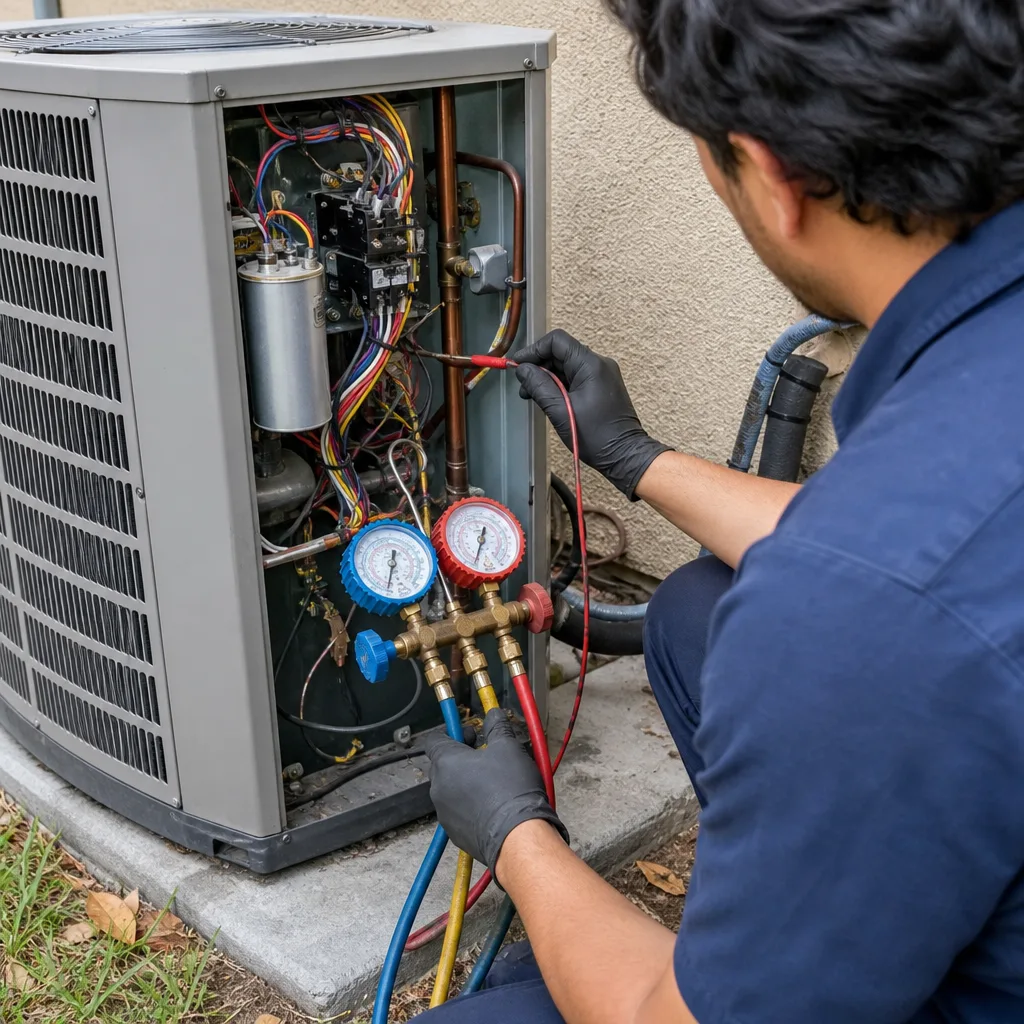
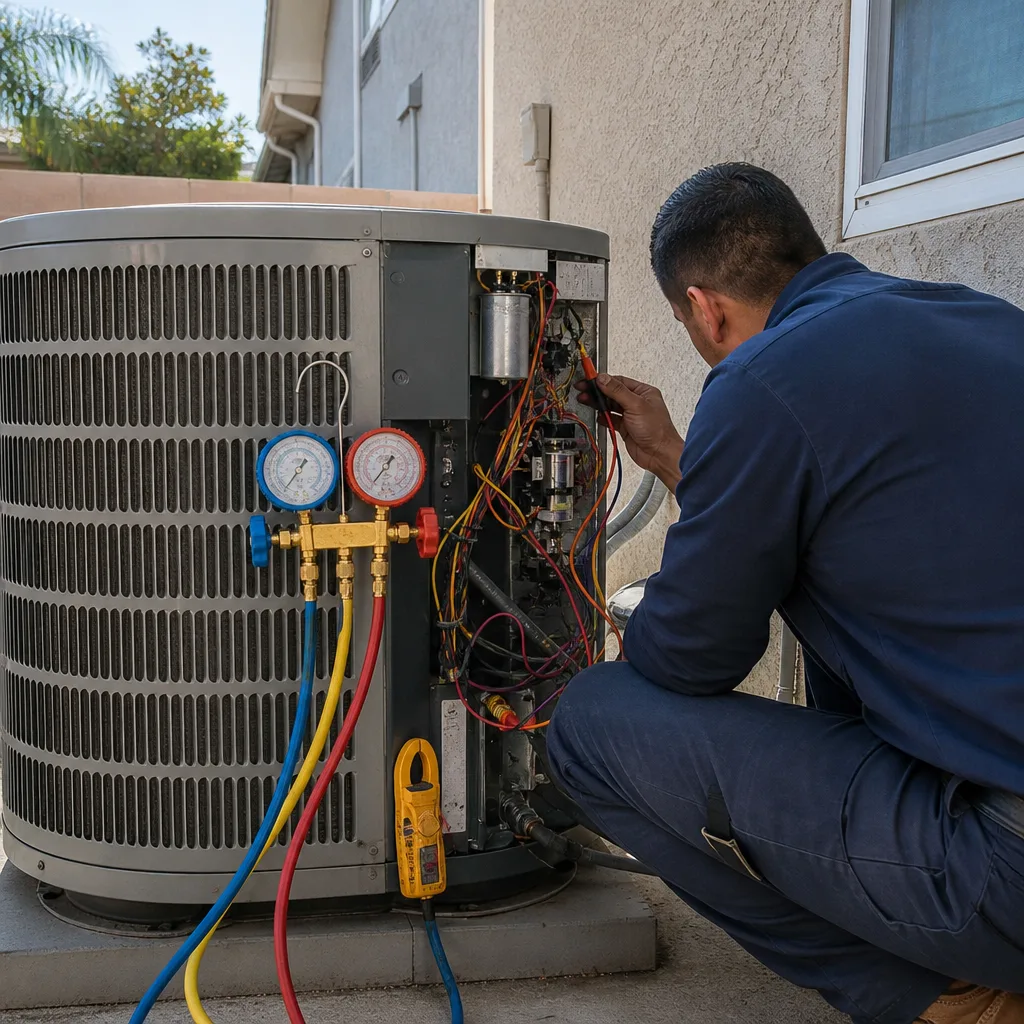
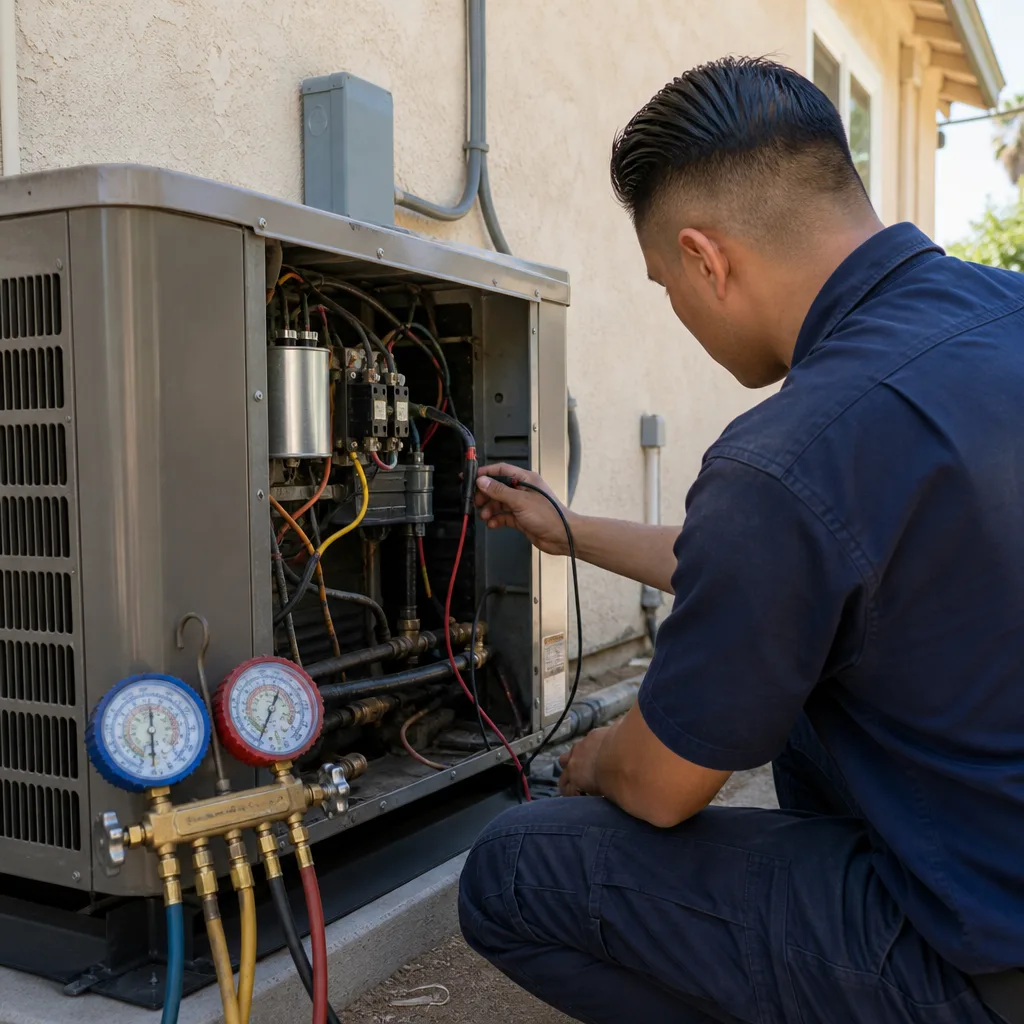
Seasonal tune-up and full diagnostic on your Carrier, Trane, or Goodman system - readings shown to you before any repair is proposed
Diagnosis first, numbers second - you approve the repair price before a single part goes in.
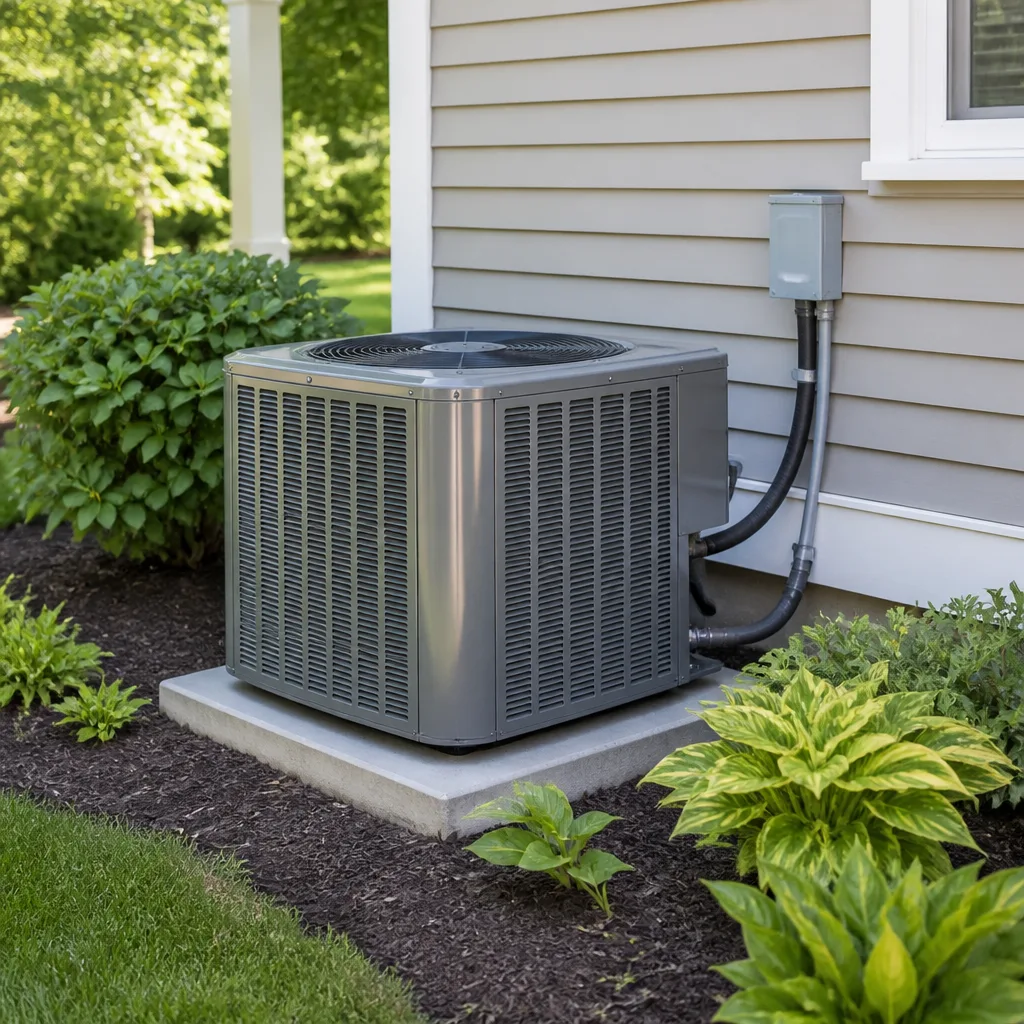
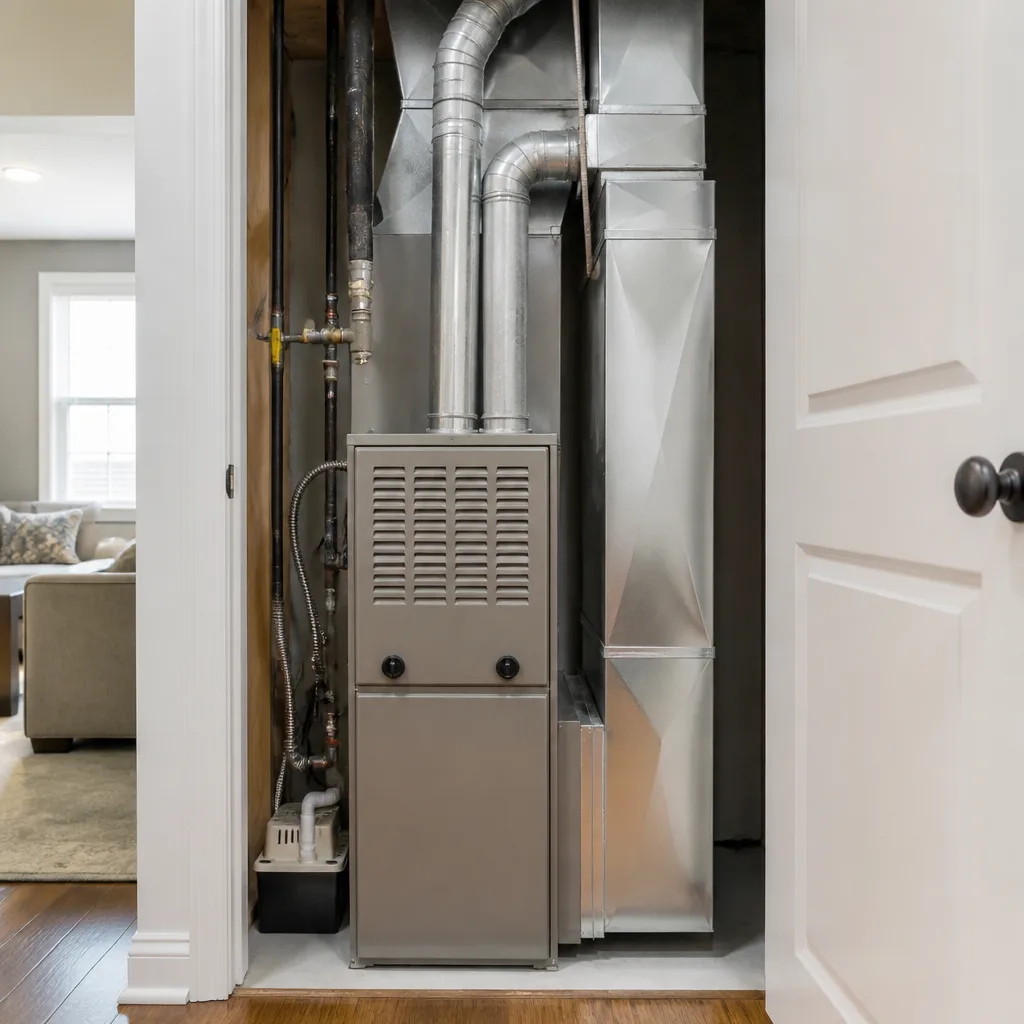
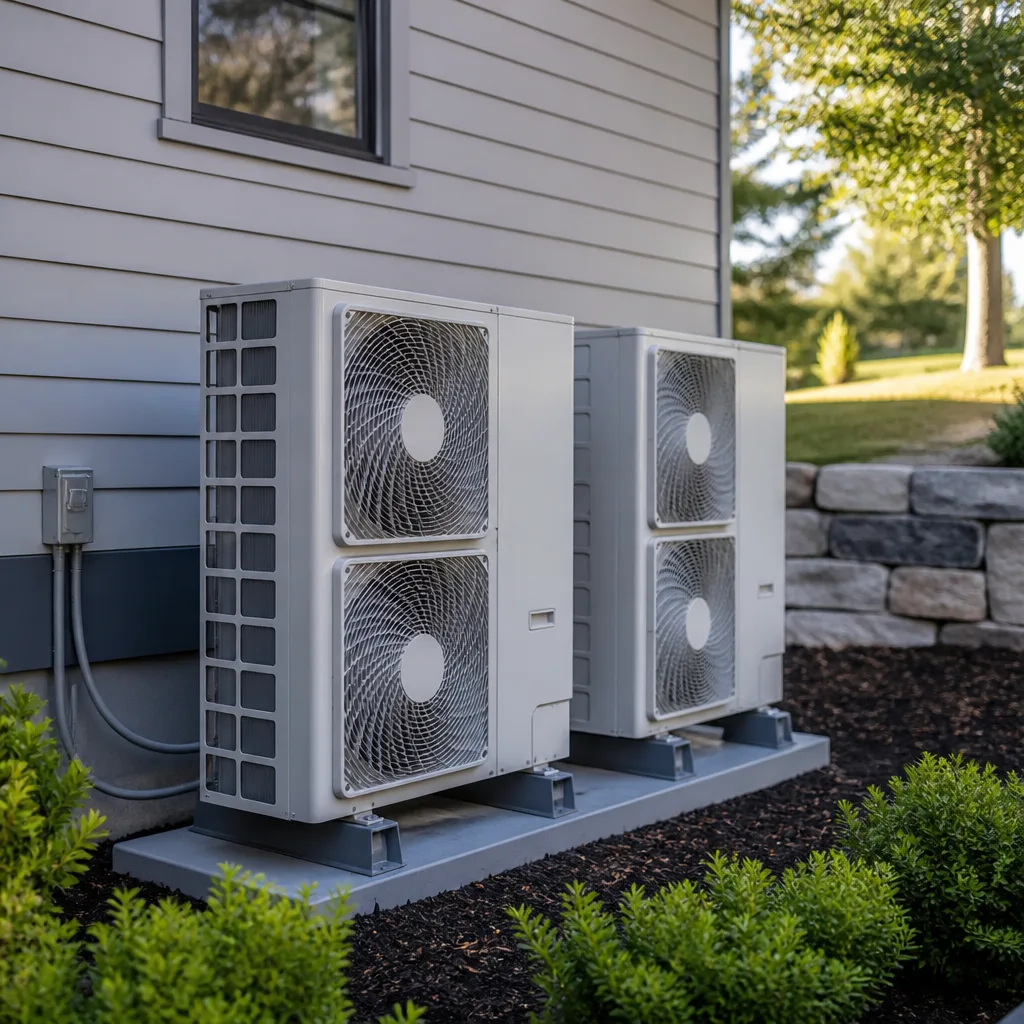
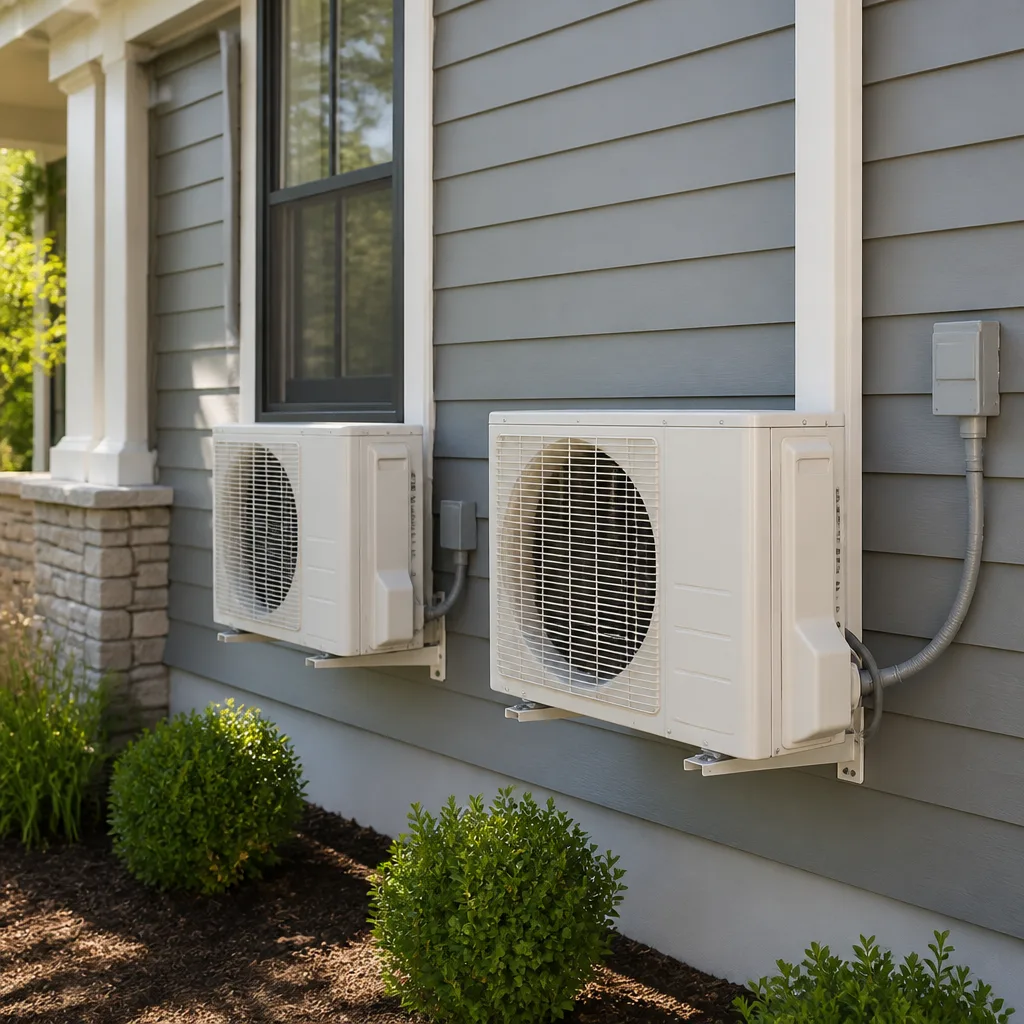
 Before
 After
After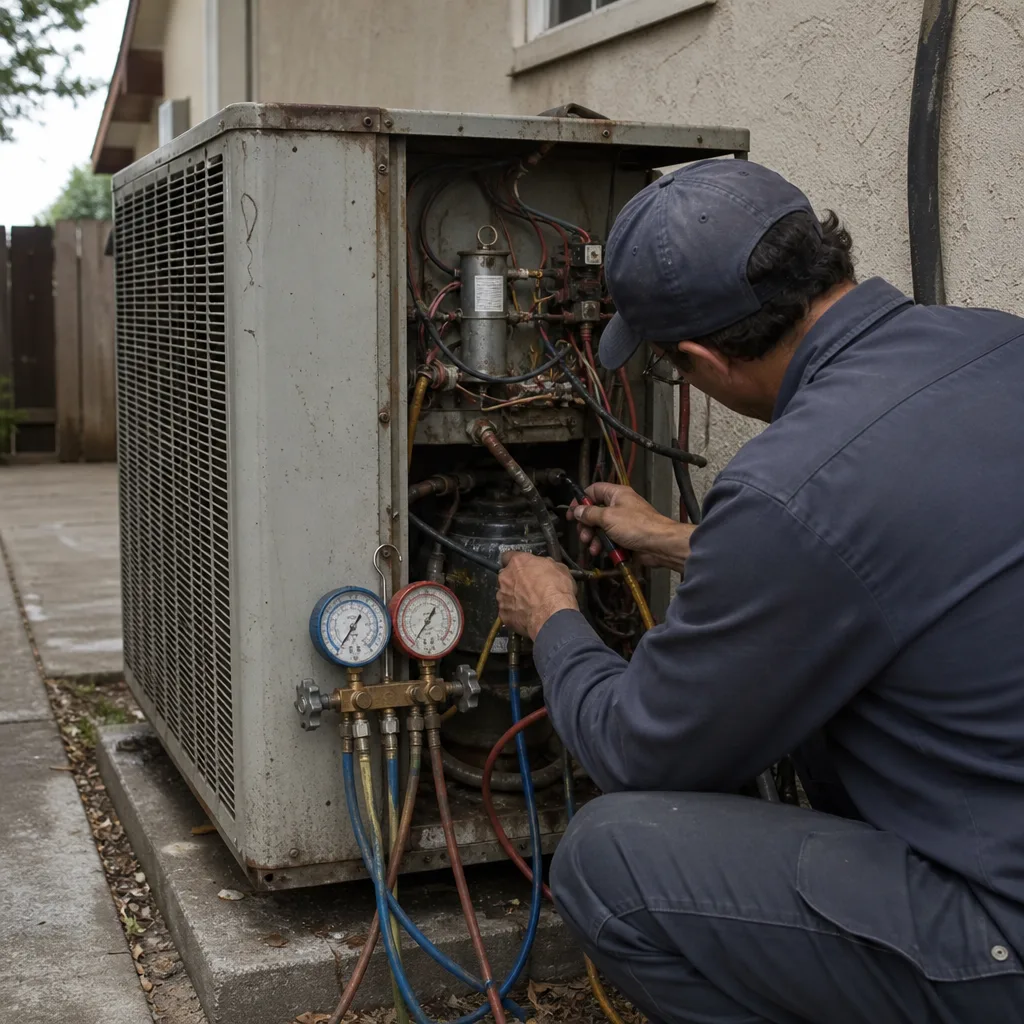 Before
 After
After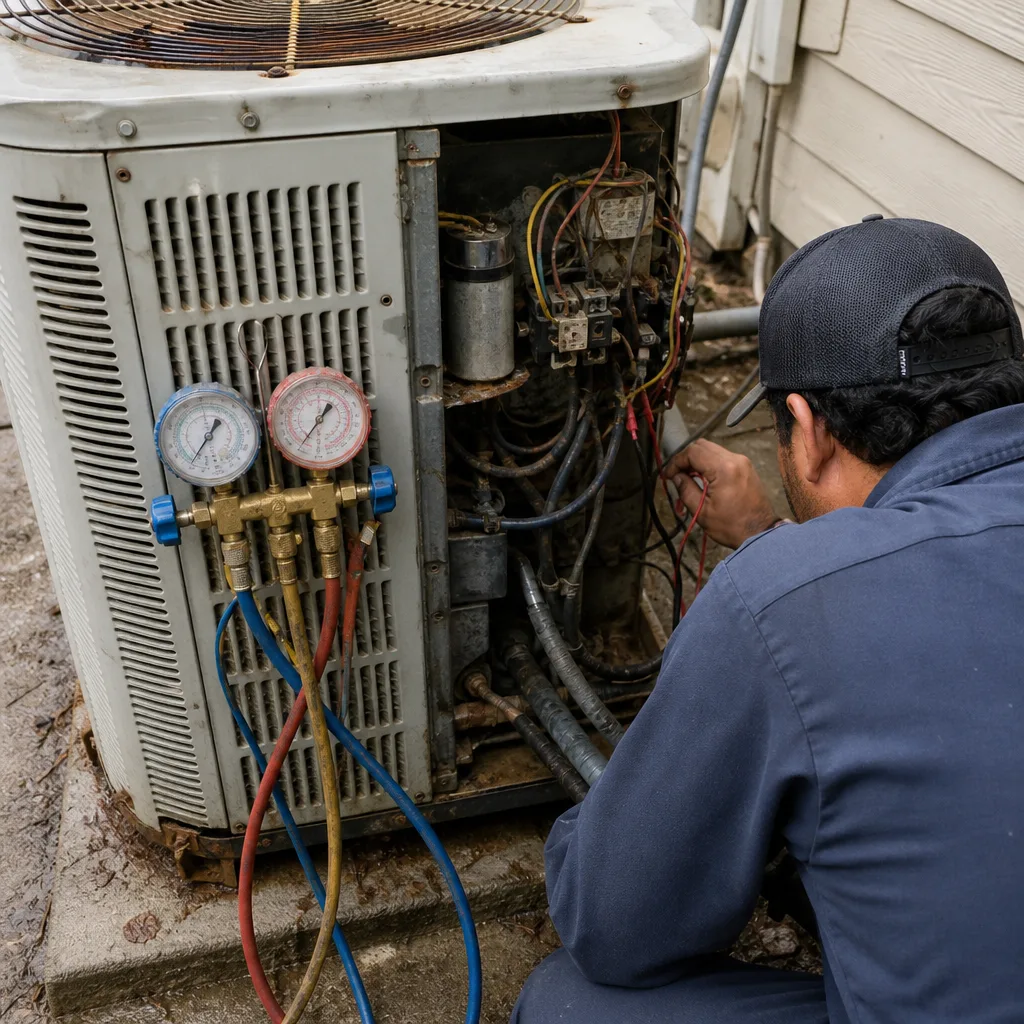 Before
 After
AfterChoosing the Right HVAC Brand: A Buyer’s Guide for Los Angeles
A Carrier unit installed by a contractor without Carrier Factory Authorized Dealer status voids the extended parts warranty before the job is even finished. Brand reputation means nothing if the installer doesn’t hold the certification that activates the warranty you’re paying for. Most Los Angeles homeowners walk into this decision backwards: they pick a brand first, then find an installer. That sequence costs money. This guide reverses it. You’ll learn how to verify installer certification, why parts availability in Los Angeles matters more than brand prestige, what efficiency rating actually pays off in our climate, and how to read a compressor warranty before you sign anything. For The Complete Guide to HVAC in Los Angeles, see our full resource library.
Quick Answer
The best HVAC brand in Los Angeles is the one your installer is factory-certified to service and that has local parts distribution in Southern California. For most LA homes, a 16 – 18 SEER2 unit from Carrier, Trane, Lennox, Bryant, or American Standard installed by a certified dealer outperforms any premium-brand unit installed without proper certification. Verify the installer’s certification status before comparing brand names.
Table of Contents
- Why Installer Certification Matters More Than the Logo
- Parts Availability in Los Angeles: What Happens When Your AC Dies in August
- The Efficiency Sweet Spot for LA’s Climate
- Reading the Compressor Warranty: The Component That Actually Fails
- When a Lesser-Known Brand Is the Better Call
- Brand-by-Brand Reality Check for LA Homeowners
- Common Mistakes to Avoid
- When to Call a Professional
- Frequently Asked Questions
Why Installer Certification Matters More Than the Logo
Here’s the part most contractor websites won’t tell you: every major HVAC manufacturer runs a dealer certification program, and the extended warranty you think you’re getting is conditional on your installer holding that certification. Carrier has Factory Authorized Dealer (FAD) status. Lennox has Premier Dealer. Trane has Comfort Specialist. American Standard has Customer Care Dealer. If the guy installing your unit isn’t in the manufacturer’s database, the 10-year parts warranty on paper shrinks to a 5-year base warranty in reality, and sometimes less.
We see this regularly across Los Angeles. A homeowner buys a Trane unit because they read it’s reliable, but the installing contractor was never a Trane Comfort Specialist. When the compressor fails in year six, Trane’s answer is simple: the extended warranty was never activated. The homeowner is now paying $1,200 out of pocket for a part that should have been covered.
How to Verify a Contractor’s Certification
- Go to the manufacturer’s website. Carrier, Trane, and Lennox each have a dealer locator tool. Type in your Los Angeles zip code.
- Search the contractor’s legal business name. Not the marketing name. Use the name on their license.
- Confirm the certification tier. Factory Authorized Dealer and Comfort Specialist are the top tiers. “Authorized” alone is not the same thing.
- Call the manufacturer’s local distributor. In Southern California, the major distributors know which contractors are actually certified. Ask directly.
- Ask the contractor for their dealer ID number. If they hesitate or can’t produce it, that’s your answer.
Dalton Heating & Air is factory-trained to service nine major residential HVAC brands, including Carrier, Trane, Lennox, and American Standard. That training means our technicians can diagnose a Bryant heat pump or a Rheem furnace without guessing. It also means warranty claims get filed correctly the first time, because we know each manufacturer’s documentation requirements.
Parts Availability in Los Angeles: What Happens When Your AC Dies in August
Los Angeles doesn’t have mild summers. The San Fernando Valley regularly hits 100°F in August, and the inland valleys push higher. When your compressor fails on a Tuesday afternoon in Woodland Hills, the difference between a same-day fix and a five-day wait comes down to one question: does your brand have local distributor stock?
Brands with deep Southern California distribution include Carrier, Bryant, Lennox, Trane, and Goodman. Their parts sit in warehouses in Commerce, City of Industry, and Van Nuys, and a technician can pick up a compressor or control board the same day. Brands like Daikin and Mitsubishi also maintain distribution in the LA market, but their parts coverage is thinner for certain component lines, especially ducted systems. York and Rheem have solid coverage but not as many stocking locations as Carrier or Lennox.
What this means practically: if you buy a less common brand in Los Angeles, you’re accepting that certain repairs in August might take three to five days while parts ship from a regional hub. For a family in Granada Hills with no AC in 105-degree heat, that’s not an inconvenience, that’s a health risk. Ask your contractor where they source parts for the brand they’re recommending, and how long a worst-case compressor replacement takes in peak season. If they can’t answer with a specific warehouse name and a delivery window, keep looking.
In our experience serving Los Angeles since 2003, we’ve learned to keep common failure parts on our trucks for the brands we service most. When we can’t fix it from the truck, we know exactly which distributor counter in the Valley or the City of Industry has the part, and we go get it. That’s part of what The Garrison Standard requires: no homeowner left waiting through a heat wave because a part wasn’t sourced aggressively.
The Efficiency Sweet Spot for LA’s Climate
Every brand pushes its high-SEER2 flagship units, and every contractor earns a higher margin on them. But for Los Angeles, the math on ultra-high efficiency usually doesn’t work. Here’s the reality we walk through with homeowners from Pasadena to Torrance.
Los Angeles has a Mediterranean climate: mild winters, dry summers, and cooling demand concentrated in roughly five months of the year. The coastal areas like Santa Monica and Long Beach run their AC less than homeowners think, while the Valley and the Inland Empire run it constantly from June through October. Your efficiency ceiling depends on which of those you are.
For most Los Angeles applications, a 16 – 18 SEER2 unit is the practical ceiling before diminishing returns set in. Going from a 14 SEER2 to a 17 SEER2 unit might save a Valley homeowner $250 to $400 per year in electricity. Going from 17 SEER2 to 21 SEER2 might save another $80 to $120 per year, while adding $2,000 to $4,000 to the system cost. The payback on that final efficiency jump can stretch past 15 years, which is longer than most systems live.
The exceptions: if you’re in Palm Springs, the Coachella Valley, or the high desert, where summer temperatures routinely pass 110°F and cooling hours are extreme, higher SEER2 ratings pay off faster. If you have solar panels generating excess daytime power, a higher-efficiency unit can also make sense because you’re offsetting more of the draw. But for a typical Los Angeles home, a 16 – 18 SEER2 unit with a variable-speed fan or two-stage compressor is the value play, regardless of brand.
Every major brand builds solid 16 – 18 SEER2 equipment. Bryant, Carrier, American Standard, and Trane all have strong mid-tier lines. The brand matters less than getting the sizing right: a correctly sized 16 SEER2 unit outperforms an oversized 20 SEER2 unit every time, because oversizing causes short cycling, humidity problems, and premature compressor wear.
Reading the Compressor Warranty: The Component That Actually Fails
The compressor is the heart of your air conditioning system. It’s the component that pressurizes the refrigerant and moves heat out of your home. When it fails, the repair cost in Los Angeles typically runs $1,500 to $3,500, depending on the brand and whether you replace the compressor alone or the condensing unit. For a deeper dive, see The Complete AC Repair Guide for Los Angeles Homeowners.
Most manufacturers offer two tiers of coverage: a base warranty and an extended warranty that requires product registration and certified installation. The base compressor warranty on most brands runs five years. The extended compressor warranty runs ten years or twelve years if you register the product within 60 days of installation and your installer is certified. Miss that registration window, and you lose five to seven years of coverage.
Here’s what “limited warranty” exclusions typically contain, and they apply across brands:
- Labor costs are almost never covered. The part is free under warranty; the 4 – 6 hours of labor to replace the compressor is not. Expect $600 to $1,200 in labor, even with a valid warranty.
- Refrigerant is not covered. A compressor replacement requires new refrigerant, which runs $150 to $400 depending on the refrigerant type and system size.
- Installation errors void coverage. If the original installation didn’t follow the manufacturer’s specified procedure, compressors fail early, and the warranty dies. This is why certified installation matters.
- Improper maintenance voids coverage. If you can’t document annual maintenance, some manufacturers will deny a compressor claim. Keep your records.
- Non-OEM parts void coverage. If a previous repair used a non-OEM component that contributed to the compressor failure, the claim is denied.
When we evaluate a compressor warranty for a Los Angeles homeowner, we look at three things: the length of the extended coverage, the registration deadline, and whether the manufacturer requires documented annual maintenance. Trane, American Standard, Carrier, and Lennox all have strong compressor warranty terms when properly registered and installed. The warranty is only as good as the installer who activates it.
When a Lesser-Known Brand Is the Better Call
There are times in Los Angeles when Daikin, Mitsubishi, or Bosch is genuinely the better choice than a Carrier or Trane. It depends on application type and installer expertise, not brand hierarchy.
Ductless mini-split applications. If you’re adding cooling to a garage conversion, an ADU, or a room where ductwork was never installed, Mitsubishi and Daikin dominate this category. Their compressors are quieter, their variable-speed technology is more refined, and their parts network for mini-splits in Los Angeles is excellent. A ducted Carrier system makes no sense for a 400-square-foot ADU in Echo Park. A Mitsubishi wall-mounted unit does.
Historic homes without duct space. Many older Los Angeles homes in areas like Hancock Park or Silver Lake were built before central air. Running ductwork through a 1920s Spanish Revival is expensive and invasive. Ductless systems solve that, and the brands that specialize in ductless outperform the traditional names here.
Extreme efficiency requirements. If you’re chasing a Title 24 compliance project or a zero-net-energy addition, Bosch’s inverter-driven heat pumps deliver SEER2 ratings above 20 at a price point that undercuts the name brands. Daikin’s variable-speed systems are similarly efficient. In these applications, the “lesser-known” brand is the better-engineered choice.
The caveat: the installer’s expertise with that brand is non-negotiable. A Mitsubishi mini-split installed by a contractor who doesn’t carry Mitsubishi Diamond Contractor certification won’t perform to spec, and the warranty won’t hold. The rule never changes: certification first, brand second.
Brand-by-Brand Reality Check for LA Homeowners
We service all nine major residential HVAC brands: Carrier, Trane, Lennox, Goodman, Rheem, York, Daikin, Bryant, and American Standard. Here’s what we actually see in the field across Los Angeles, without manufacturer marketing.
Carrier and Bryant
Same parent company, similar engineering, different tiering. Carrier is the premium line; Bryant is the value line with many of the same internal components. Carrier’s parts availability in Los Angeles is excellent. Bryant’s is nearly as good. Both require FAD certification for extended warranty activation. A Carrier Infinity system with a communicating thermostat is genuinely good equipment. You pay a premium for the badge.
Trane and American Standard
Also the same parent company. Trane positions as the premium rugged brand; American Standard as the premium quiet brand. Their compressors have a strong track record, and their parts distribution in Southern California is solid. Trane Comfort Specialist certification is required for the extended warranty. American Standard has its own certification tier. Both brands price at the top of the market, and in our experience, both earn it with reliability.
Lennox
Lennox builds efficient, well-engineered equipment, but their proprietary components can be a double-edged sword. Their variable-speed systems are excellent, but some Lennox parts are dealer-gated, meaning independent contractors without Premier Dealer status can’t order them directly. That matters in August. If you buy Lennox in Los Angeles, make sure your installer is a Lennox Premier Dealer. Dalton Heating & Air maintains the training and access to service Lennox systems correctly.
The honest summary: Carrier, Trane, Lennox, Bryant, and American Standard all build equipment that can last 15 to 20 years in the Los Angeles climate when properly sized, installed, and maintained. The difference in outcomes comes from the installer’s certification level and the homeowner’s maintenance habits, not from one badge outperforming another.
Common Mistakes to Avoid
- Picking the brand before the installer. In Los Angeles, a certified installer with a strong local reputation is worth more than any brand choice. Flip the order: choose the installer, then choose the brand they’re certified for.
- Skipping the extended warranty registration. Most manufacturers require registration within 60 days of installation. Miss it in the chaos of a Palm Springs heat wave or a busy fall, and you lose five to seven years of parts coverage.
- Buying the highest SEER2 rating available. A 24 SEER2 unit in a Santa Monica condo is wasted money. Match the efficiency to your actual cooling hours, not the brochure.
- Assessing compressor concerns without checking parts stock. Ask your contractor where they source parts for your brand and what the worst-case August lead time is. If they can’t answer, the system they’re proposing will leave you sweating someday.
- Overlooking the labor cost on warranty repairs. The part is covered for ten years; the labor never is. Budget for it, or ask about extended labor warranties.
- Choosing a brand because a neighbor has one. Your neighbor’s home has a different heat load, different ductwork, and a different installer. Their good experience doesn’t transfer to your project.
- Trusting the logo on the truck. A contractor can put a Carrier sticker on the van without holding Carrier FAD certification. Verify on the manufacturer’s own dealer locator.
When to Call a Professional
If you’re replacing a system or installing new equipment in Los Angeles, this is not a DIY project, and it’s not a handyman job. Incorrect refrigerant handling is illegal without EPA certification, and an improperly wired condenser can damage the compressor on startup. If you’re evaluating brands, the right move is to call a certified installer who can assess your home’s specific heat load, duct condition, and electrical panel capacity, then recommend the equipment that fits. Dalton Heating & Air offers free estimates in Los Angeles – call (361) 306-9515 and Marco Benitez or a member of the team will walk you through the options with written pricing before any work begins. For serious repair needs, see our AC Repair in Los Angeles page. If a heat pump is your direction, our Heat Pump Installation in Los Angeles guide covers the specifics. And for furnace work, Furnace Repair in Los Angeles has the details.
Frequently Asked Questions
The best HVAC brand in Los Angeles is the one your installer is factory-certified to install and service, with local parts distribution. Carrier, Trane, Lennox, Bryant, and American Standard all build reliable equipment for our climate when properly installed. Verify the installer’s certification before comparing brands. Call (361) 306-9515 for a free estimate on the right system for your home.
A full system replacement in Los Angeles, including equipment and installation, typically runs $8,000 to $16,000 depending on SEER2 rating, system size, and ductwork condition. Heat pump systems trend toward the lower end of that range, premium variable-speed systems toward the higher end. The written price should be fixed before any work starts. Call (361) 306-9515 for an exact quote on your setup.
For most Los Angeles homes, a 16 – 18 SEER2 unit delivers the best balance of upfront cost and operating savings. Coastal areas with fewer cooling hours can go lower; Valley and inland areas with heavy cooling demand may justify higher. Going above 18 SEER2 rarely pays off unless you’re in the desert or running solar.
Visit the manufacturer’s official website and use its dealer locator tool. Search the contractor’s legal business name, not their marketing name. Top certifications include Carrier Factory Authorized Dealer, Lennox Premier Dealer, and Trane Comfort Specialist. If the contractor doesn’t appear, the extended warranty won’t activate. Our Dalton Heating & Air home page explains how our team meets these standards.
In a Los Angeles heat wave, the difference between a same-day repair and a five-day wait is which brand your system uses and whether its parts sit in a local warehouse. Carrier, Bryant, Lennox, Trane, and Goodman have deep Southern California distribution. Lesser-known brands may require shipping from a regional hub, leaving you without AC during the hottest stretch of the year.
If your system is under 10 years old and the repair cost is under $1,500, repair usually makes sense. If the compressor has failed, the system uses R-22 refrigerant, or the repair approaches 50% of replacement cost, replacement is the better move. A certified technician can assess your specific equipment. Call (361) 306-9515 for an honest assessment with no pressure.
The Bottom Line
The right HVAC brand for your Los Angeles home is the one your installer is certified to install correctly and source parts for locally. Carrier, Trane, Lennox, Bryant, and American Standard all build dependable equipment, but a certified installer with local parts access matters more than the logo. Match efficiency to your climate zone, register the warranty within 60 days, and read the compressor warranty exclusions before signing. Choose the installer first, verify their certification, then pick the brand they stand behind. That sequence saves money and avoids August breakdowns. For heating-specific guidance, see The Complete Furnace Repair Guide for Los Angeles Homeowners.
Written by Marco Benitez, Owner at Dalton Heating & Air, serving Los Angeles since 2003.