
Last updated October 9, 2026
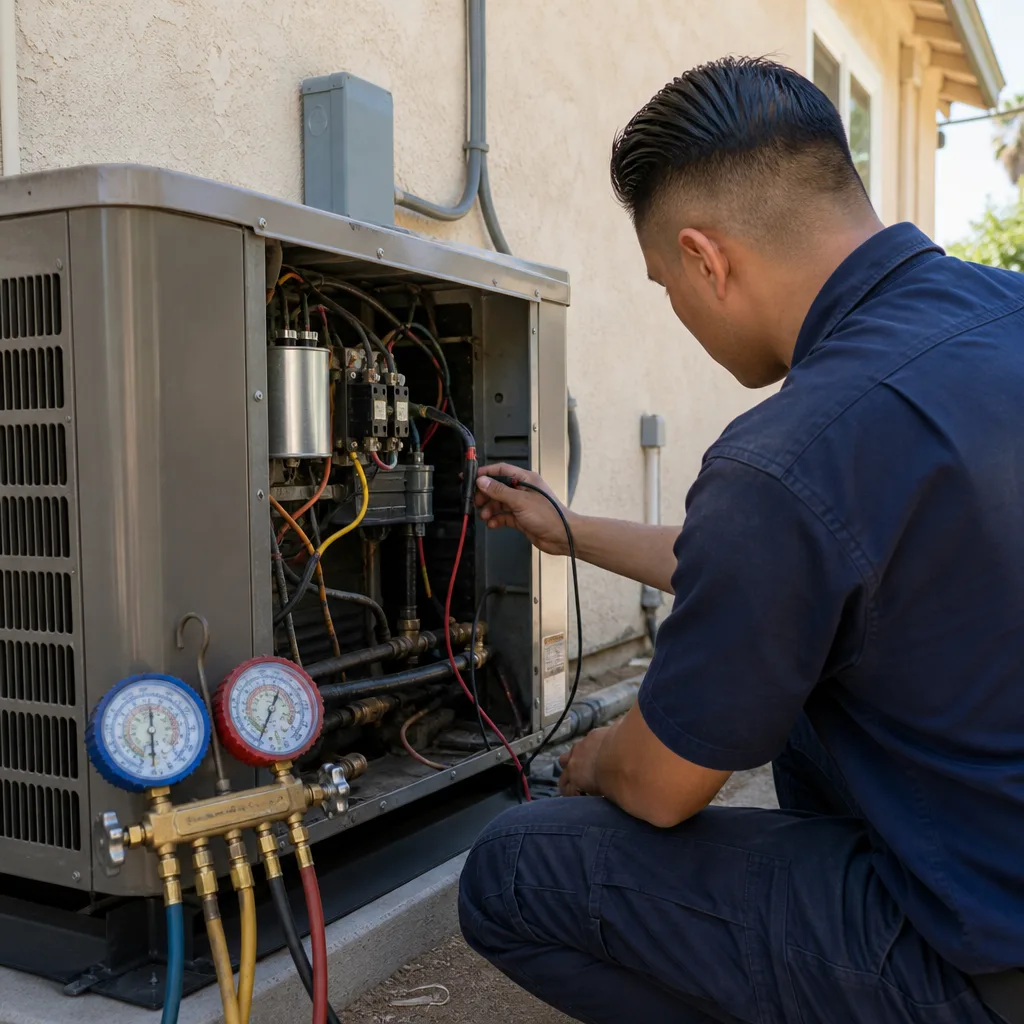
Seasonal tune-up and full diagnostic on your Carrier, Trane, or Goodman system - readings shown to you before any repair is proposed
Diagnosis first, numbers second - you approve the repair price before a single part goes in.
 Before
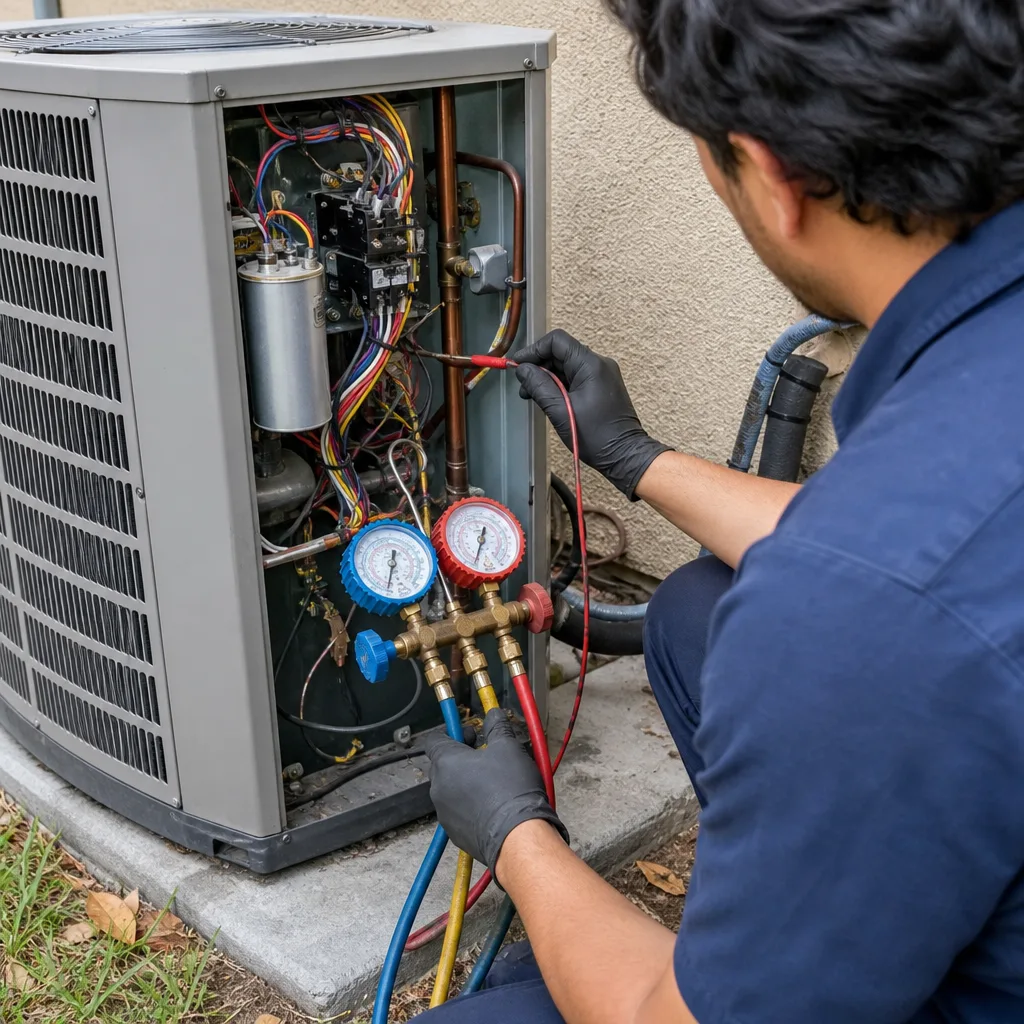 After
After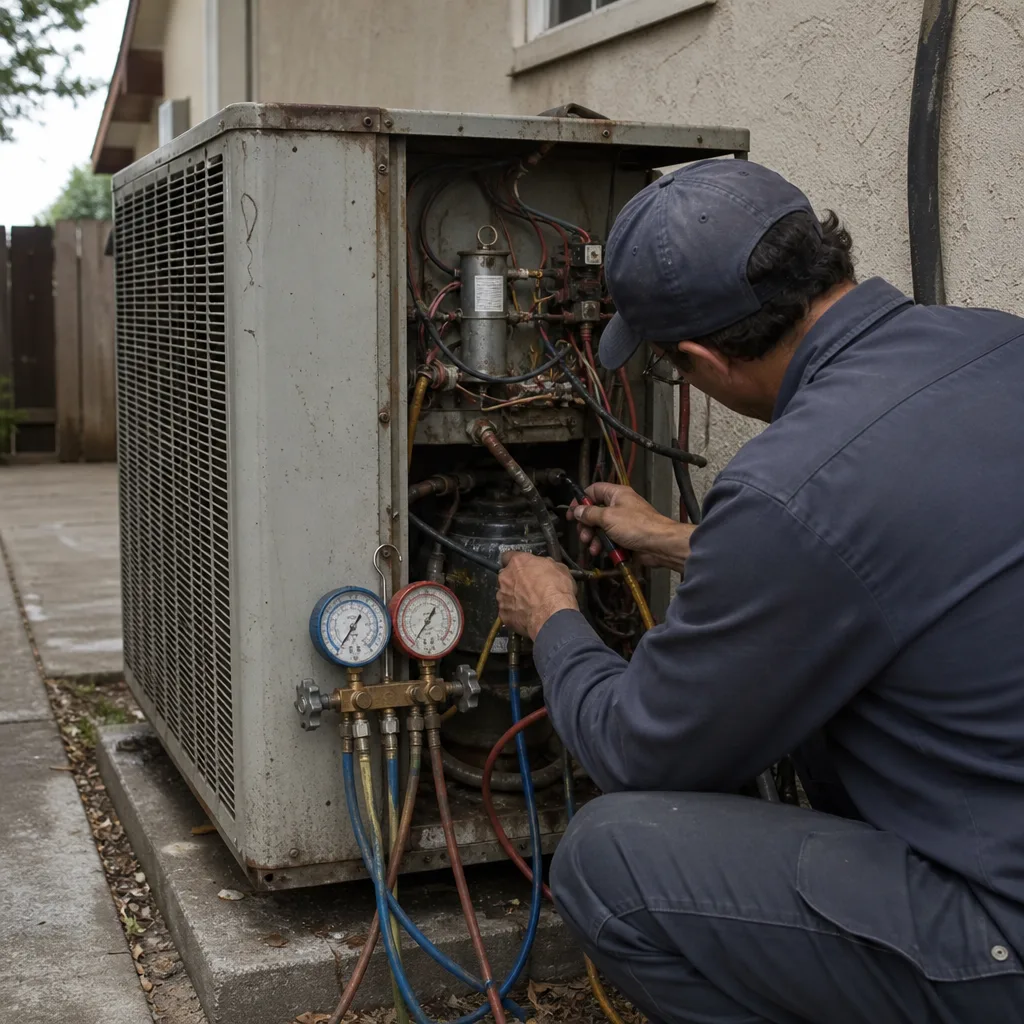 Before
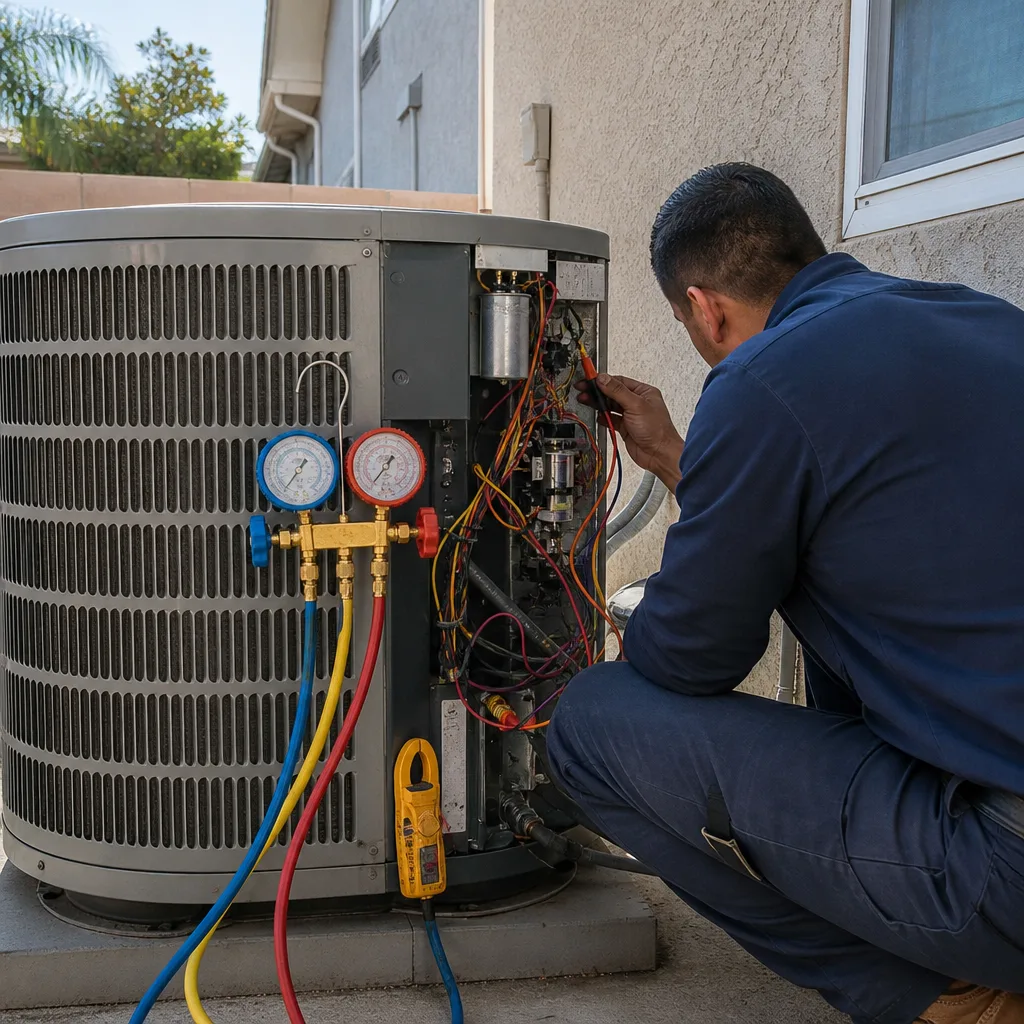 After
After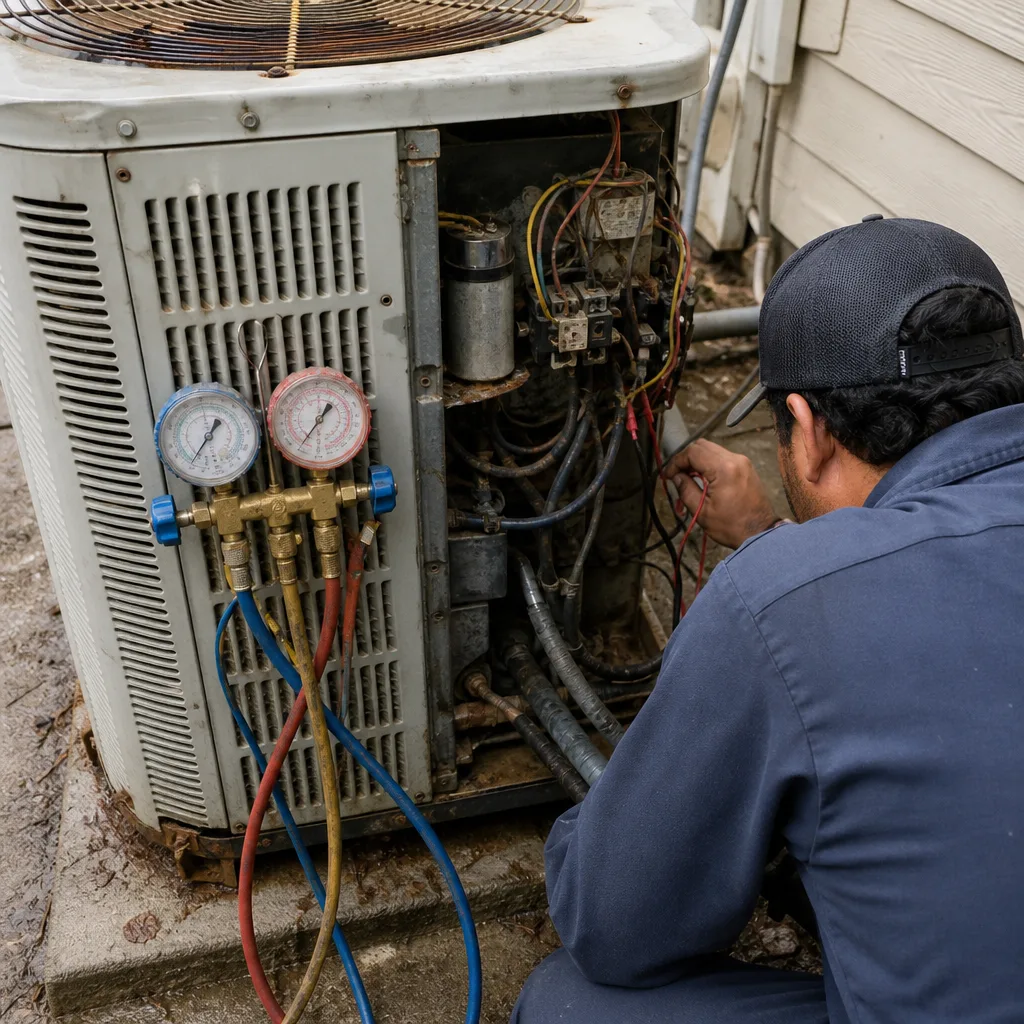 Before
 After
AfterFurnace Repair Warning Signs Every Homeowner Should Know
A furnace that cycles on three times before it stays lit is telling you the flame sensor is failing. Most Los Angeles homeowners notice this for two or three weeks before the unit won’t start at all, but nothing in the house beeps or flashes to flag it. That’s the problem with furnaces: they don’t announce trouble the way a car does. Instead, they send quiet signals weeks ahead of a breakdown, and the cost difference between catching those signals early and waiting for the failure is often $150 versus $1,800. This guide covers the early indicators most articles skip, the ones that show up while your furnace is still technically “working,” and what to do about each one. For professional help, see our Furnace Repair services.
Quick Answer
The earliest furnace repair warning signs are repeated ignition attempts before the burner stays lit, a subtle gas smell that lingers past the first minute of startup, utility bills that creep up 10 to 15 percent without a matching change in weather or usage, and soot or discoloration near the burner compartment. Any one of these means a component is degrading. Catching it now usually means a $150 to $450 repair instead of a full system replacement.
Table of Contents
- Repeated Ignition Attempts Before the Burner Holds
- The Gas Smell Test: Normal vs. Not Normal
- The Utility Bill Increase That No One Looks For
- Heat Exchanger Warning Signs: The One Failure With Health Implications
- The Error Code LED: Your Furnace’s Built-In Diagnostic System
- What an Aging Furnace’s Last Season Looks Like
- LA Furnace Age Benchmarks: What Fails First at 15 Years
- Repair or Replace: When the Math Shifts
Repeated Ignition Attempts Before the Burner Holds
Here’s the scenario we hear most often from Los Angeles homeowners: the furnace kicks on, you hear the whoosh of ignition, it shuts down, then it tries again. Three attempts, maybe four, before the flame finally holds. The house still gets warm, so it’s easy to write off as normal behavior. It is not normal.
That cycling pattern is almost always the flame sensor. The flame sensor is a thin metal rod that sits in the burner flame and confirms that ignition actually happened. If the sensor can’t confirm flame, the control board shuts the gas valve as a safety measure. Over time, the sensor gets coated with silica and carbon, and it stops “seeing” the flame reliably. The furnace responds by attempting ignition repeatedly, which you hear as the on-off-on-off cycle.
What makes this a true early warning sign is the timeline. A dirty flame sensor typically degrades over two to four weeks. During that window, the furnace still heats the home, but every failed ignition attempt adds wear to the igniter and the gas valve. Leave it long enough and the igniter itself fails, which turns a $150 sensor cleaning into a $350 to $450 igniter replacement, and eventually into a furnace that won’t start at all.
What to listen for
- The furnace blower starts, then shuts off after a few seconds
- You hear the click-click-click of the igniter trying repeatedly
- The cycle repeats three or more times before the blower runs continuously
- The pattern is consistent, not occasional
If you’re hearing this, the fix is usually straightforward. A technician removes the sensor, cleans it with a fine abrasive, and tests the ignition cycle. We do this on repair calls across Los Angeles regularly, and in most cases the furnace returns to single-attempt ignition immediately. The key is not waiting until the unit stops firing at all, because by then the igniter has also taken a beating.
If you’d rather not diagnose sounds yourself, that’s exactly what a trained ear is for. Furnace repair in Los Angeles starts with a written diagnosis and a fixed price before any work begins.
The Gas Smell Test: Normal vs. Not Normal
Natural gas is odorized with mercaptan, which gives it that rotten-egg smell. So a faint sulfur note right when the furnace first fires up is actually normal: the gas valve opens before the igniter fully lights, and a trace of unburned gas escapes into the airflow for a second or two. That smell should dissipate within a minute.
The problem is when it doesn’t. A persistent gas smell, or one that returns every time the blower cycles, points to a slow leak at a fitting, a failing gas valve that isn’t sealing completely, or a burner that’s not lighting cleanly on every attempt. None of those fix themselves. All of them get worse.
How to tell the difference
- Note when you smell it. At the first startup of the heating cycle only? That’s within normal range. Throughout the cycle? Not normal.
- Check duration. The smell should be gone within 60 seconds of the burner lighting. If it lingers longer, something is off.
- Check location. A smell near the furnace itself during operation is a mechanical issue. A smell in multiple rooms or near windows and doors during heating season can also indicate a leak in the supply line.
- Trust your nose. If the smell is strong enough that you’re asking yourself if it’s normal, it’s worth a phone call.
One Los Angeles-specific consideration: many homes here have the furnace in a closet, attic, or garage, not a basement. That means gas smells often don’t get noticed as quickly because the furnace is out of the main living space. If your unit is in an enclosed space, check the smell at the furnace itself, not just in the hallway. And if you ever smell gas strongly enough that it’s obvious throughout the home, leave the house and call your gas utility before calling an HVAC company. We’d rather lose a service call than have you risk it.
For the milder, persistent smell scenario, a repair tech will pressure-test the gas line connections and check the valve. Most gas valve and fitting repairs run $200 to $400, which is a far better number than what an unrepaired leak eventually costs.
The Utility Bill Increase That No One Looks For
Most homeowners compare their utility bill to the same month last year and move on. But a furnace losing efficiency shows up in a more subtle way: a 10 to 15 percent increase in gas usage that doesn’t match a corresponding change in weather or thermostat settings. LA’s mild winter climate actually makes this easier to spot, because the swing between warm and cool days is less dramatic than in colder markets. If December was mild and your gas usage still went up, your furnace is working harder than it should.
What causes a furnace to silently burn more gas? Several things, all of which degrade gradually:
- A dirty blower wheel or filter reduces airflow across the heat exchanger, so the furnace runs longer to hit the same set point
- A failing gas valve can deliver an imprecise fuel-air mixture, burning more gas for less heat
- Leaky ductwork, common in older Los Angeles homes with attic ducting, sends heated air into the crawlspace instead of the living room
- A degrading igniter or flame sensor causing repeated failed starts, each of which wastes fuel
The fix here often isn’t one big-ticket item. It’s a cleaning, a calibration, and maybe a minor part. In our experience, a furnace that’s been tuned up properly burns 8 to 12 percent less gas immediately, and the difference shows up on the next bill.
The trap is writing off the increase as rate changes. Gas rates do fluctuate, but the utility bill tells you both rate and usage. Look at therms used, not just dollars owed. If therms are up and the weather wasn’t colder, the furnace is telling you something.
Heat Exchanger Warning Signs: The One Failure With Health Implications
Every furnace has a heat exchanger, the metal chamber that separates the combustion gases from the air that blows through your home. When it’s intact, the two airstreams never mix. When it cracks, which happens over years of heating and cooling cycles as the metal expands and contracts, combustion gases including carbon monoxide can enter the home’s airflow. This is the one furnace failure that isn’t just a comfort or cost problem. It’s a health problem.
The reason heat exchanger cracks sneak up on homeowners is that a furnace with a small crack still heats the house. The crack itself doesn’t make a noise you’d notice. The symptoms are either invisible or so general they get blamed on winter colds and allergies.
Warning signs specific to a cracked heat exchanger
- Soot marks near the burner compartment or on the exterior of the furnace. Soot means incomplete combustion, which points to either a cracked exchanger or a burner that’s running dirty.
- A persistent headache or fatigue pattern that shows up during heating season and improves when you leave the house for a few hours. Low-level carbon monoxide exposure does exactly this, and it’s why the symptoms are so often missed.
- A CO detector that cycles on and off without an obvious source. Modern detectors are sensitive. If it chirps intermittently during heating cycles, do not disable it. Treat it as the furnace’s alarm.
- The flame flickers or changes color when the blower kicks on. With the furnace access panel open, you’d see the burner flame dance or lean when the blower starts. That indicates airflow disruption through a crack. This is a technician’s check, not a DIY one.
The fix for a cracked heat exchanger is replacement. Depending on the age of the furnace and the brand, the cost ranges from $1,200 to $3,500, and at that number, the repair-versus-replace conversation matters. In a Los Angeles furnace that’s 15 years or older, many homeowners choose to put that money toward a new system instead. For newer units, the exchanger replacement is often covered under manufacturer warranty, with labor being the primary cost.
If any of these signs are present, our recommendation is blunt: have the furnace inspected before you run it again. We’d rather tell you it’s clean than read about a silent leak going unnoticed. Dalton Heating & Air home service area covers the greater Los Angeles market, and we treat heat exchanger concerns as priority calls.
The Error Code LED: Your Furnace’s Built-In Diagnostic System
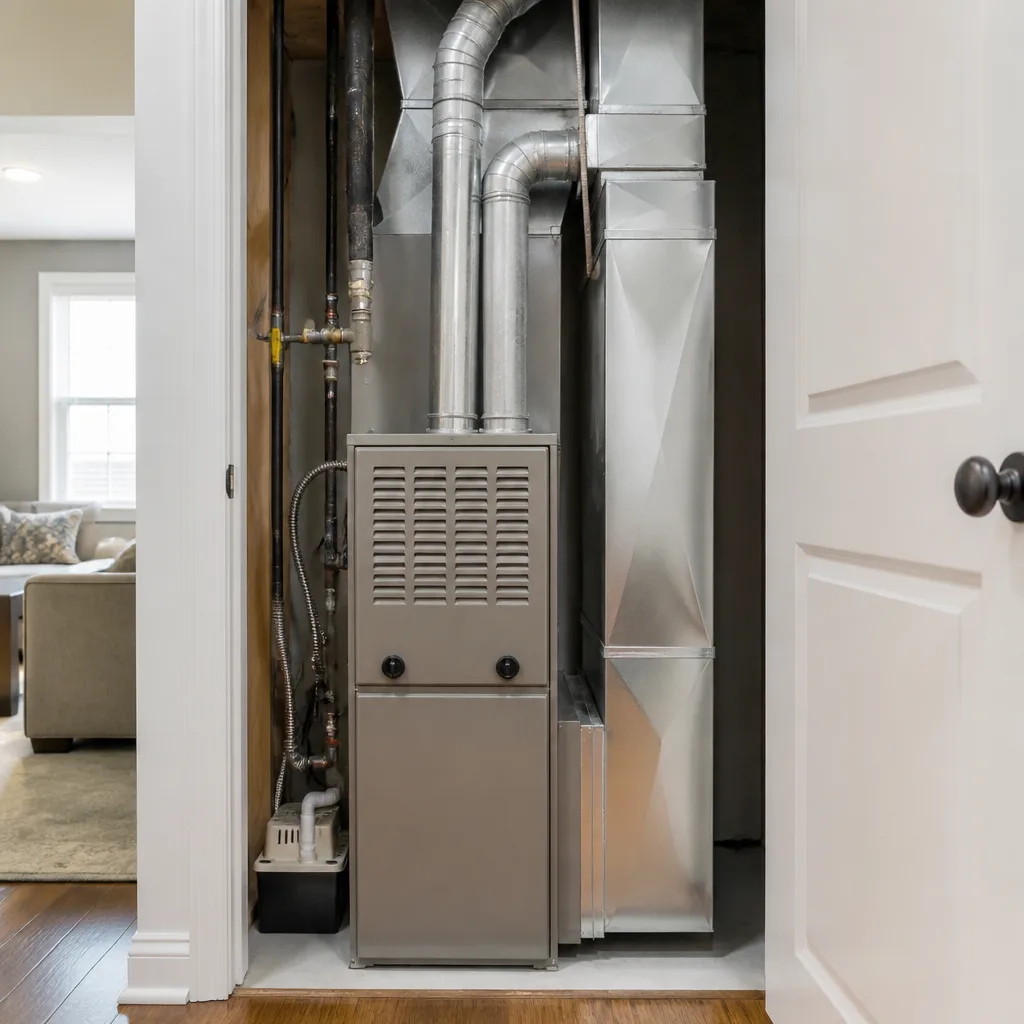
Here’s something most homeowners never learn until a technician points at it: modern furnaces have a diagnostic LED on the control board that flashes error codes the same way a car’s check engine light stores a code. Through a small viewport on the furnace cabinet, usually on the lower panel, a red or green light blinks in specific patterns. Those patterns are the furnace’s way of telling you exactly what’s wrong before it fails completely.
The codes vary by brand. A Goodman furnace uses a different blink pattern than a Rheem or York unit, and the code legend is printed on the inside of the access panel. That legend is the key: it tells you whether the blinking light means “pressure switch stuck open,” “limit circuit fault,” or “flame sensed with no call for heat,” among others.
Why the LED matters before the furnace dies
- It records the first fault. When a component starts failing intermittently, the control board logs it. A pressure switch that sticks once a week still triggers a code, even if the furnace recovers on the next attempt.
- It saves diagnostic time. When a technician arrives with a partially failing furnace, the stored code points directly to the suspect component instead of chasing a symptom that’s not currently presenting.
- It confirms what you’re hearing. If you’ve noticed the repeated ignition attempts, the LED often confirms whether it’s the flame sensor (a “flame failure” code) or the pressure switch (a “pressure switch open” code). Different parts, different cost.
You don’t need to fix anything yourself from the LED. But knowing the code exists, and having it noted when you call for service, gets you a faster and more accurate diagnosis. A Daikin furnace we recently serviced in the Valley was intermittently throwing a limit circuit code. The homeowner had noticed the furnace shutting down early on colder nights but assumed it was normal short-cycling. The code pointed us to a dirty filter and an undersized return, a $120 repair instead of the $600 blower motor replacement the symptom loosely resembled.
If your furnace is showing a code, write down the blink pattern before calling. Count the short blinks and the long pauses. That 30 seconds of observation often cuts the diagnostic time in half.
What an Aging Furnace’s Last Season Looks Like
Furnaces rarely fail without warning. They degrade in a predictable sequence, and homeowners who know the sequence can plan replacement on their terms instead of running the furnace until it quits on a cold night. Here’s what the final season typically looks like, in order:
- More repair calls than before. The furnace that went five years without attention now needs a part every season. This is the first sign that components are reaching end of life.
- Uneven heating between rooms. The blower motor is weakening, and the heat exchanger isn’t transferring heat the way it used to. Some rooms get warm, others stay cool.
- The furnace is louder. Bearings wear, the blower wheel gets noisier, the burner assembly rattles. A louder furnace is a tired furnace.
- Short-cycling becomes more frequent. The furnace starts and stops more often than it used to. The heat exchanger is overheating, or the limit switch is degrading. Either way, the unit is tripping its own safety circuits more frequently.
- Relighting happens more often. The pilot light or igniter needs more attempts. You notice the repeated ignition pattern described earlier.
- The final failure. At this point, the heat exchanger has usually cracked, the blower motor has seized, or the control board has failed. The repair quote lands in the $1,200 to $2,500 range, and the furnace is done.
The point of knowing this sequence is that replacement becomes a choice instead of an emergency. If you’re at step 2 or 3, you have months to gather quotes, evaluate options, and schedule installation around your life rather than around a cold house. If you wait for step 6, you’re paying emergency pricing and living without heat for at least a couple of days in January.
We’ve walked Los Angeles homeowners through this decision many times, and the ones who plan ahead never regret it. The ones who wait for the failure almost always say the same thing: if I’d known, I would have replaced it in the fall.
LA Furnace Age Benchmarks: What Fails First at 15 Years
In Los Angeles, furnaces get a break compared to colder climates. Because our heating season is short, a furnace here typically runs 600 to 900 hours per year, versus 1,500 to 2,500 hours in a Chicago or Minneapolis winter. That means a 15-year-old Los Angeles furnace has roughly the equivalent hours of a 7-year-old furnace in the Midwest. However, age still matters. Components degrade from heat cycling and vibration whether the unit runs a lot or a little, and at 15 years, several parts are statistically at end of life.
At the 15-year mark, here’s what we see fail first in LA furnaces:
- The igniter. Hot surface igniters, used in most furnaces made after 2000, have a typical lifespan of 10 to 15 years. They fail by cracking or burning out, which is why the furnace suddenly won’t light even though everything else is fine.
- The blower motor and run capacitor. If it hasn’t been replaced, the blower motor is running on borrowed time. Capacitors are typically a 5 to 8 year part. By 15 years, a furnace is often on its second or third capacitor and nearing the end of its first blower motor.
- The control board. Circuit boards age. Solder joints crack, relays stick, and eventually the board stops responding. A replacement board for a 15-year-old furnace can be hard to source, and the cost is often $500 to $900 installed.
- The heat exchanger. This is the big one. Most heat exchangers carry a 20-year manufacturer warranty, which tells you the manufacturer expects most to last about that long. But warranties are pro-rated, and labor is not covered. At 15 years, a cracked heat exchanger is the signal that the furnace’s useful life is measured in months, not years.
If your furnace is 15 or older and you’re repairing any of the above, the math question becomes: does this repair buy you five more years, or is it a down payment on a furnace that’s about to fail a different part next month? We help homeowners answer that question honestly, because our furnace repair in Los Angeles work is priced in writing before we touch anything, which means you can compare the repair number against a replacement quote without pressure.
Repair or Replace: When the Math Shifts
The common rule of thumb, which we find holds up in practice, is this: multiply the repair cost by the furnace’s age. If that number exceeds the cost of a new system, replace it. It’s a crude formula, but it captures the right idea. Spending $1,800 to fix a 20-year-old furnace means you’ve spent $36,000 of “effective age cost” on a system that’s already at the end of its design life.
The more practical version of the math looks like this for a typical Los Angeles single-family home:
- Repair under $300 on a furnace under 12 years old: fix it. The system has years left.
- Repair between $300 and $1,000 on a furnace between 12 and 18 years old: fix it if the part is isolated (igniter, sensor, capacitor), but start budgeting for replacement within the next two to three seasons.
- Repair over $1,000 on a furnace over 15 years old: get a replacement quote. Put the two numbers side by side.
- Any heat exchanger replacement on a furnace over 15 years old: this is usually the exit ramp. The exchanger is the core of the furnace, and replacing it in an older unit often doesn’t make financial sense.
What shifts the math in Los Angeles specifically is the mild climate. Because the furnace isn’t the primary comfort system the way it is in colder markets, many homeowners wait longer to address a weakening unit. The downside is that the failure still comes, just during the few weeks of the year when you genuinely need heat. For a planned replacement, heat pump installation in Los Angeles is increasingly the direction homeowners go, since a heat pump covers both heating and cooling in a single system and plays well with the LA climate. It’s worth evaluating alongside a like-for-like furnace replacement.
Common Mistakes to Avoid
- Ignoring the repeated ignition cycle. It’s easy to write off as “the furnace is just being slow.” It’s the flame sensor burning out, and every week you wait, the igniter takes more damage. Fix it early for $150, or ignore it and pay $400 later.
- Disabling a chirping CO detector. A CO detector that cycles on and off during heating season is often reading low-level carbon monoxide from a cracked heat exchanger. Removing the battery is removing the only alarm you have.
- Not replacing the filter during heating season. In Los Angeles, furnaces share the home with pets, open windows in the fall, and dust from dry landscaping. A clogged filter is the most common cause of limit switch trips and short-cycling we see.
- Assuming a newer furnace can’t fail. Even 8-year-old furnaces develop problems. The difference is that newer units have better diagnostic LEDs. Use them.
- Waiting until the coldest week to call. January in LA is when repair demand peaks. Scheduling a pre-season check in October or November means you get the appointment time you want, not the one that’s left.
- Comparing repair quotes by phone call rather than written line item. A verbal estimate isn’t an estimate. Get it in writing, and make sure it includes the part, the labor, and the warranty terms.
- Patching an old furnace indefinitely. Three repairs in two seasons is the furnace telling you it’s finished. At some point, the honest math says replace.
When to Call a Professional
Call a professional when you notice any of the early signals covered here: repeated ignition attempts, a persistent gas smell, soot near the burner, a cycling CO detector, or a utility bill that’s up 10 to 15 percent without explanation. For a full maintenance timeline, see our Heat Pump Installation Maintenance Schedule: What to Do and When. These are all pre-failure conditions. A trained technician can diagnose and usually resolve them for a few hundred dollars. What you’re avoiding by calling early is the emergency call at 2 a.m. in January when the furnace won’t start at all and every HVAC company in Los Angeles is backed up three days. The repair is also cheaper before the part fully fails, because you’re replacing a degraded sensor rather than a destroyed one.
Dalton Heating & Air offers free estimates in Los Angeles. Call (361) 306-9515 and we’ll send a technician who arrives inside the stated window, puts the repair price in writing before any work begins, and guarantees the repair in writing for a full year.
Frequently Asked Questions
The most reliable pre-failure signs are repeated ignition attempts before the burner holds, a gas smell that persists past the first minute of operation, and a utility bill increase of 10 to 15 percent without a colder winter. Any one of these means a component is degrading and the furnace is heading toward a no-heat failure. Call (361) 306-9515 for a diagnostic visit before it fails completely.
A failing furnace often makes a repeated click-ignite-shutdown cycle at startup, or a louder-than-usual rattling or humming during operation. The repeated ignition attempt sound is the most specific warning: it means the flame sensor is dirty and the furnace is having trouble confirming ignition. That’s a repair we handle routinely in Los Angeles, typically for $150 to $250.
A faint gas smell for the first 30 to 60 seconds after the burner lights is normal and comes from the brief moment between the gas valve opening and full ignition. A gas smell that lingers, or that you notice throughout the heating cycle, is not normal and indicates a leak at a fitting or a failing gas valve. If the smell is strong or present throughout the home, leave and call your gas utility immediately.
Most furnace repairs in Los Angeles run between $150 and $450 depending on the part. A flame sensor cleaning is usually at the low end, a gas valve replacement at the high end, and a heat exchanger replacement runs $1,200 to $3,500. Every repair from Dalton Heating & Air includes a written price before work begins and a written one-year guarantee, so the number you’re quoted is the number you pay.
At 15 years, repair a furnace if the part is isolated and under $300. If the repair is over $1,000 or involves the heat exchanger, replacement is usually the better financial decision. In Los Angeles, many homeowners also consider a heat pump at this point, which handles both heating and cooling. Get a written repair quote and a replacement quote side by side before deciding.
Check the thermostat is set to heat and the temperature is set above the room temperature. Check the furnace filter and replace it if it’s visibly dirty. Check the furnace access panel is seated correctly, since many furnaces won’t run if the panel’s safety switch isn’t engaged. If the unit has a diagnostic LED, note the blink pattern. Then call (361) 306-9515 with what you found and we’ll take it from there.
The Bottom Line
Furnaces telegraph their failures. The repeated ignition attempt, the lingering gas smell, the unexplained uptick in gas usage, the soot near the burner, the error code LED blinking through the viewport: all of these appear weeks ahead of a full breakdown. The homeowner who reads the signals gets a $150 to $450 repair on a Tuesday afternoon. For more guides & resources on keeping your system running, visit our blog. The homeowner who ignores them gets a $1,800 emergency replacement on the coldest night of the year. In Los Angeles, where furnaces get less annual use but still age, knowing what an older unit’s final season looks like gives you the power to plan replacement on your terms. If any of the signs here sound familiar, get a diagnosis before winter does the deciding for you.
Written by Marco Benitez, Owner at Dalton Heating & Air, serving Los Angeles since 2003.