
Last updated October 9, 2026
Seasonal tune-up and full diagnostic on your Carrier, Trane, or Goodman system - readings shown to you before any repair is proposed
Diagnosis first, numbers second - you approve the repair price before a single part goes in.
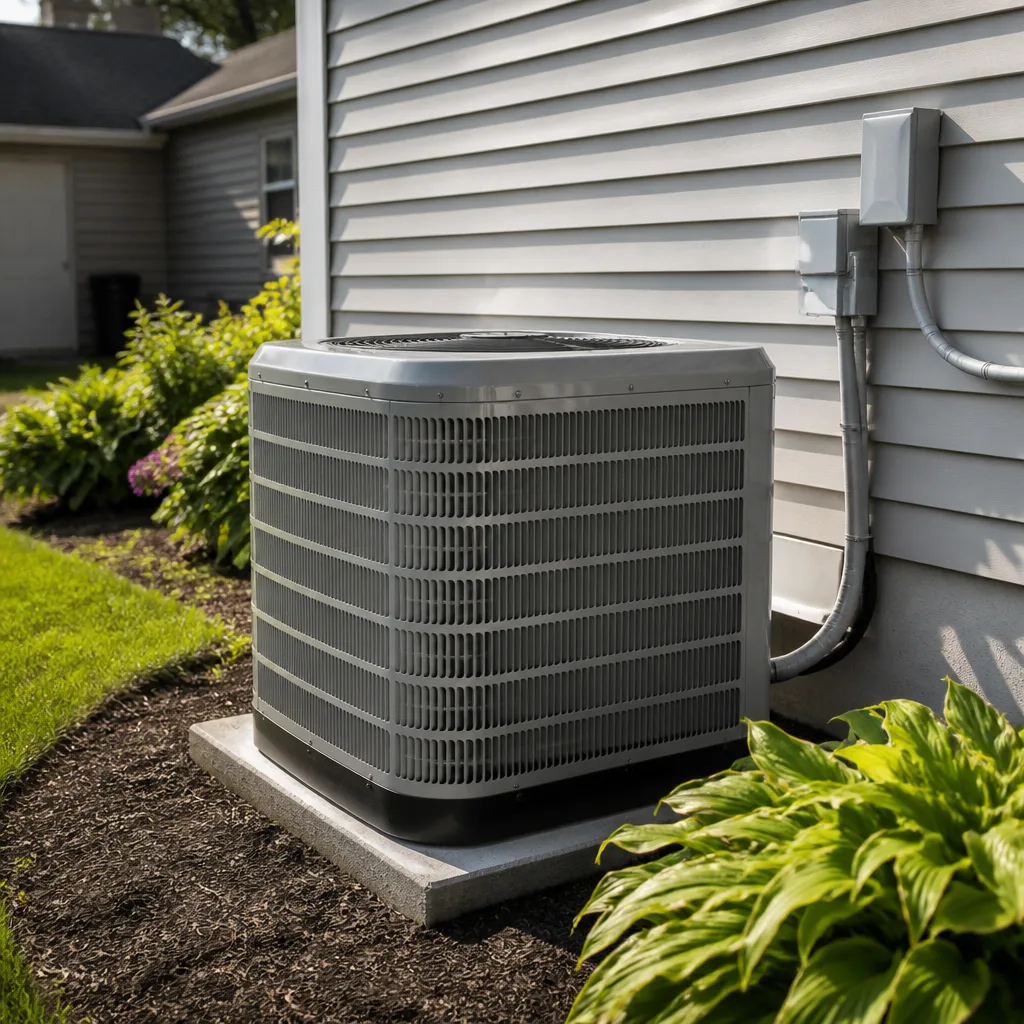
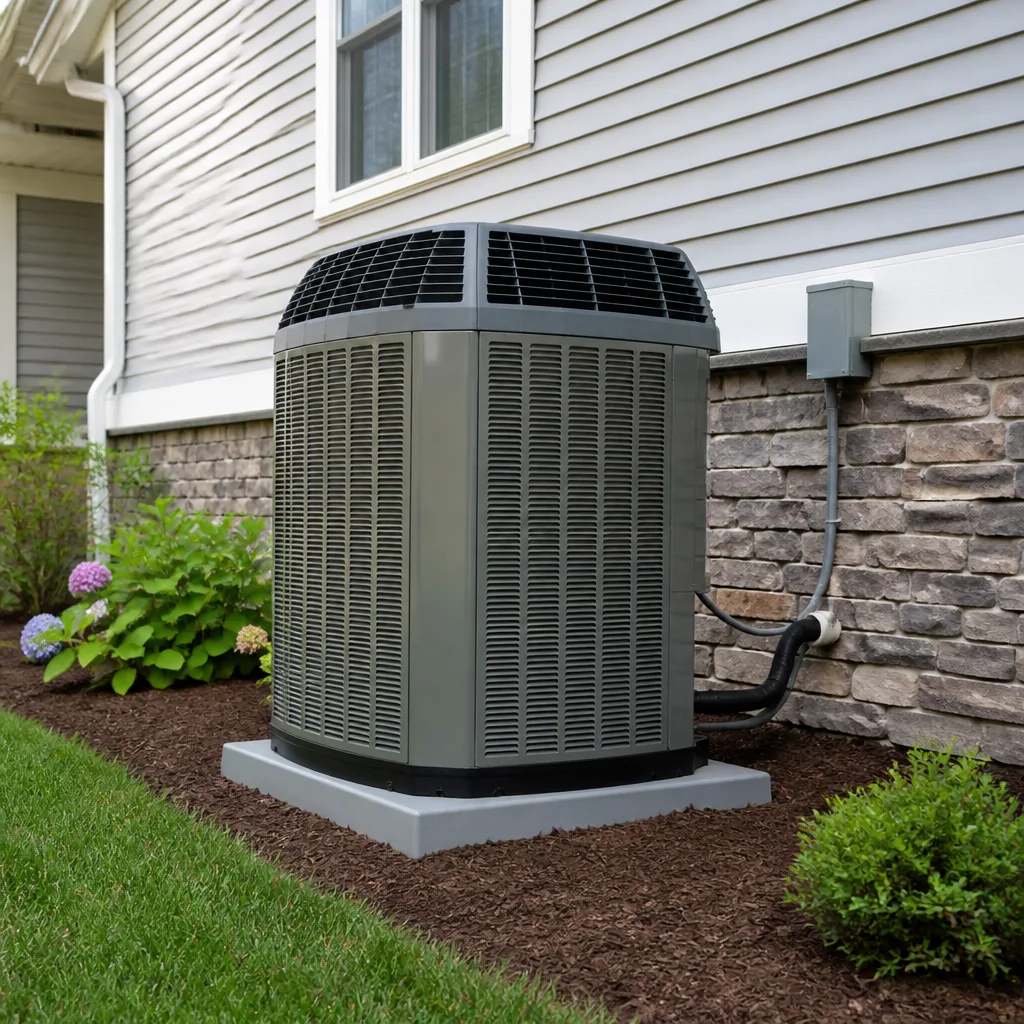
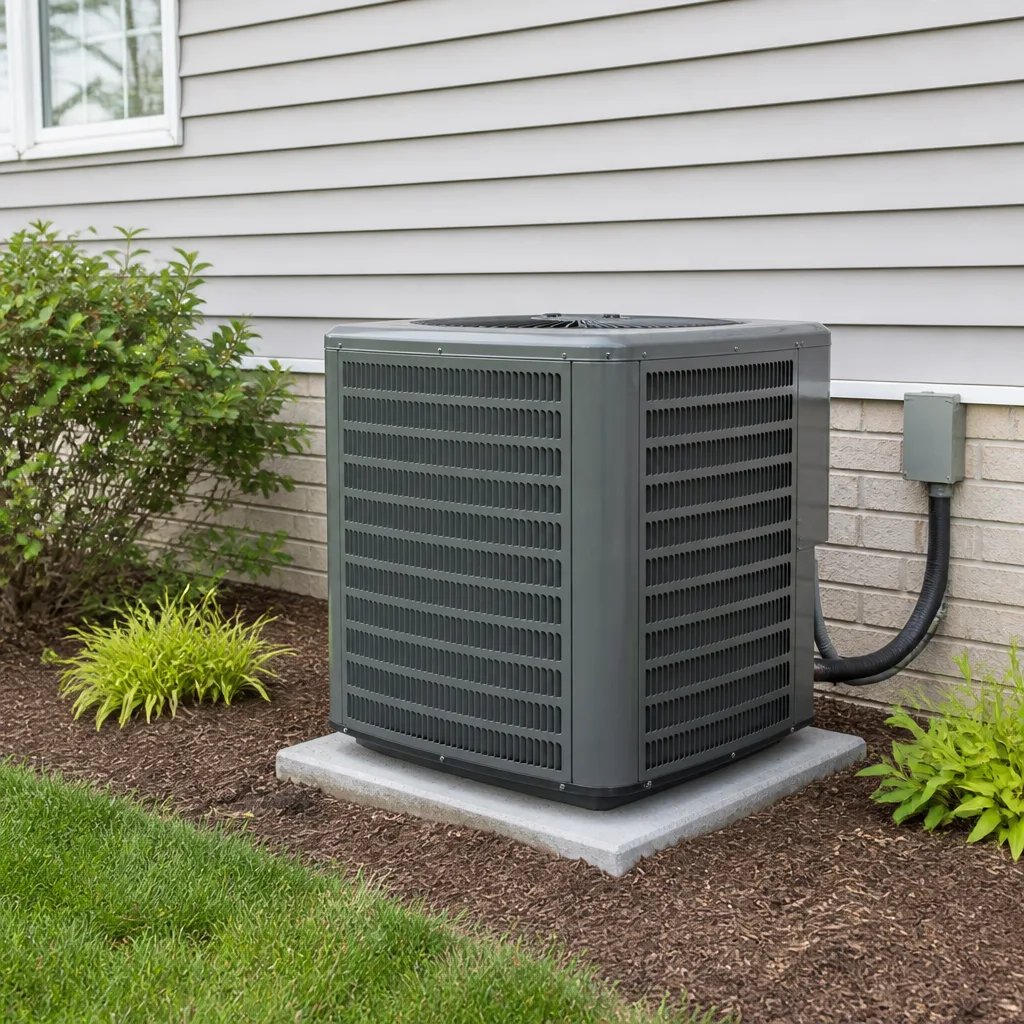
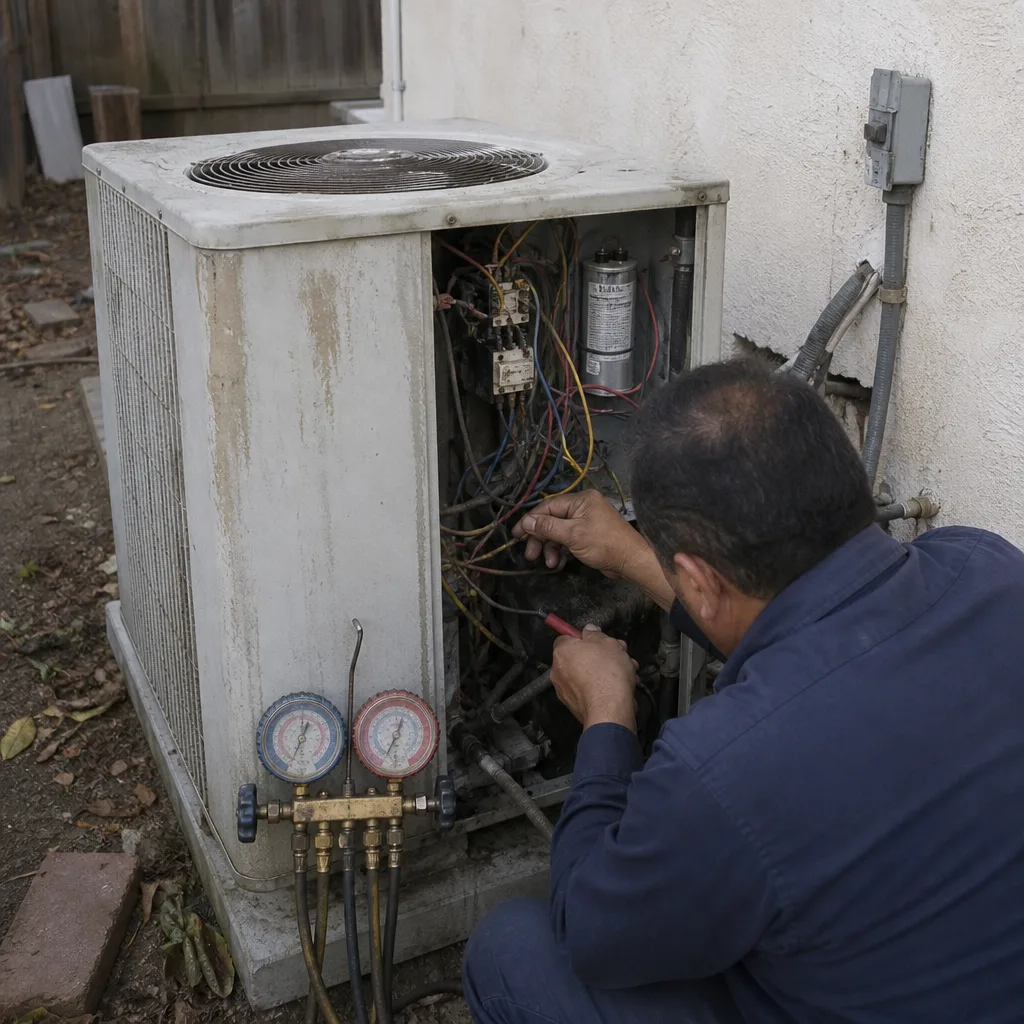 Before
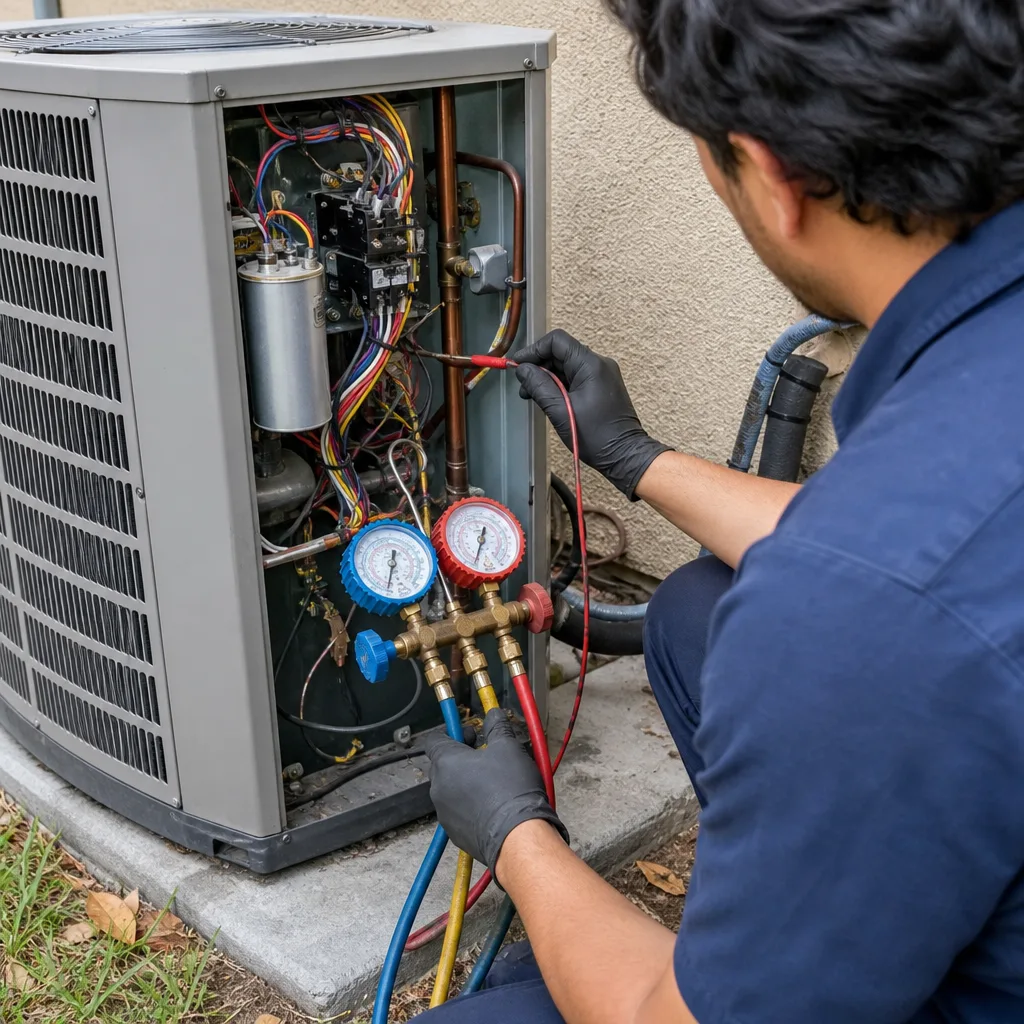 After
After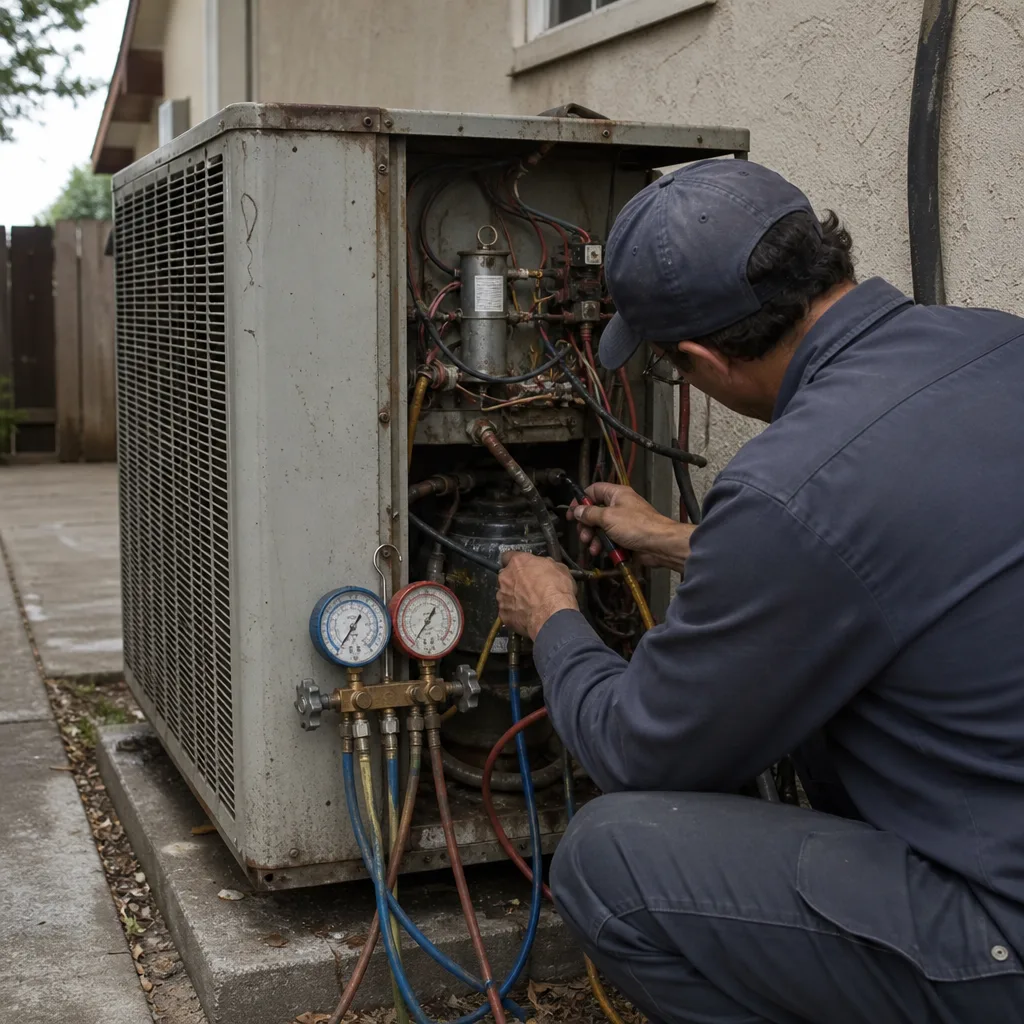 Before
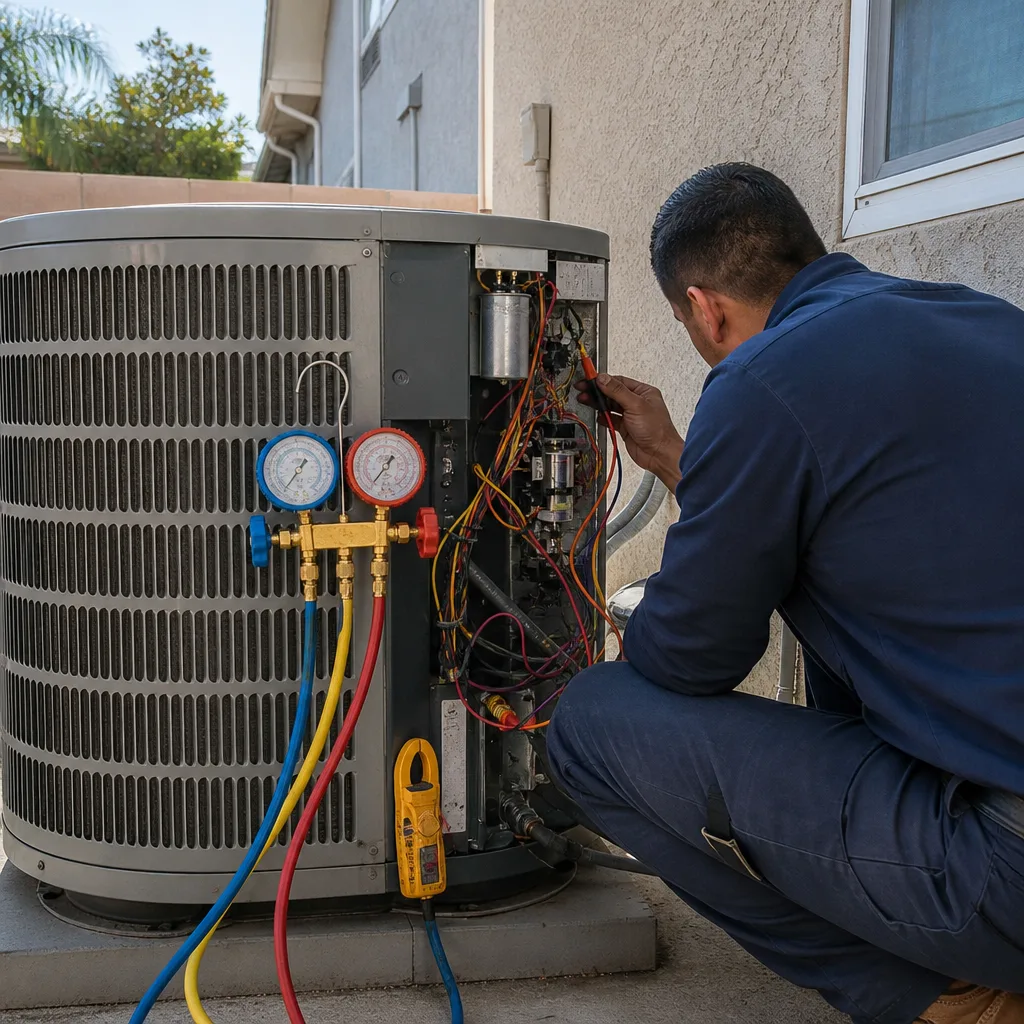 After
After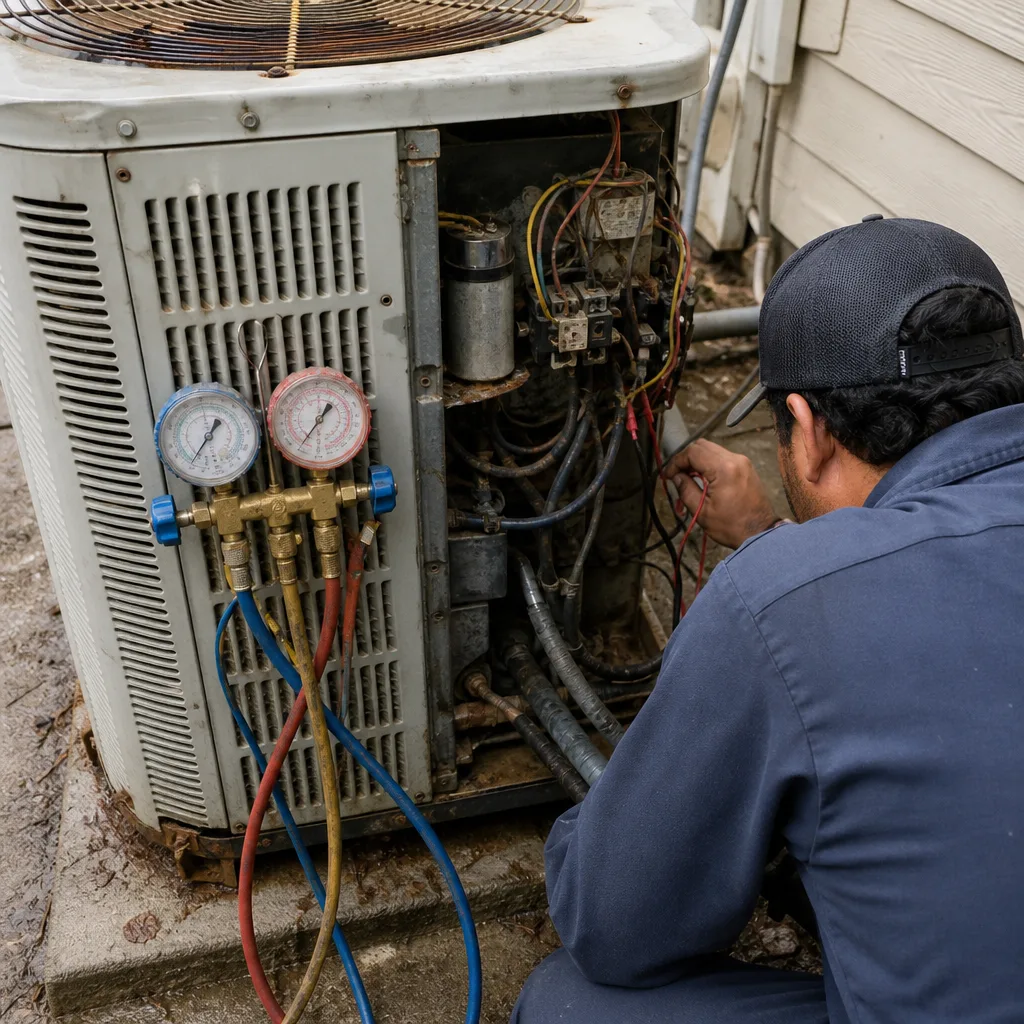 Before
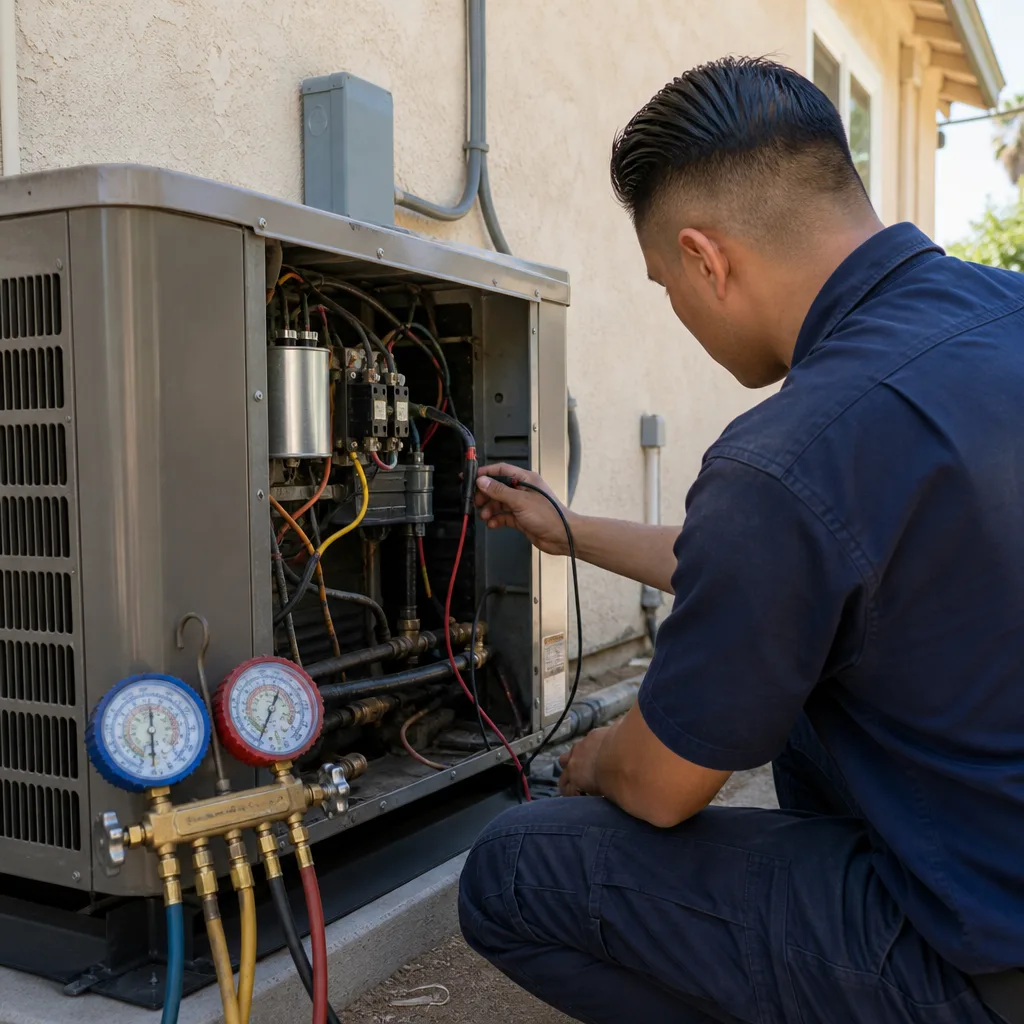 After
AfterDIY vs Professional Heat Pump Installation: What’s Safe to Do Yourself
Here’s the part nobody tells you when you watch that heat pump installation video at 11 PM: you can do everything right, follow every torque spec, pull a clean vacuum, and still end up with a $9,000 paperweight the first time something fails. Most major heat pump manufacturers, including Carrier, Trane, and Lennox, write their equipment warranties so that installation by a licensed contractor is a condition of coverage. Not a suggestion. A condition. In Los Angeles, where Title 24 energy code adds a mandatory third-party verification step most homeowners have never heard of, the gap between what’s technically possible and what’s actually protected is wider than in almost any other city. This guide maps exactly where that boundary falls, what you can safely do yourself, and what you should never touch-complementing our Heat Pump Installation services with what every homeowner should know.
Quick Answer
Safe DIY work on a heat pump installation is limited to site preparation: clearing the pad area, running electrical conduit if you hold an owner-builder permit for your own single-family home, and all post-installation filter and coil maintenance. Everything else, including refrigerant line connections, the 240V circuit wiring, and the startup sequence, requires a California C-20 HVAC license. Doing that work yourself is not just a code violation; it voids most equipment warranties before the unit ever runs.
Table of Contents
- The Warranty Condition Most Homeowners Miss
- California License Requirements: C-20, C-10, and the Permit You Need
- Title 24 and the HERS Test: Why DIY Installations Can’t Pass
- What’s Actually Safe to Do Yourself
- What You Should Never Touch: Refrigerant, Wiring, and Load Calculations
- The Real Cost Comparison: DIY vs Professional Installation in Los Angeles
- How to Evaluate a Professional Installation Quote Line by Line
- Common Mistakes to Avoid
- When to Call a Professional
- Frequently Asked Questions
- The Bottom Line
The Warranty Condition Most Homeowners Miss
Every major heat pump manufacturer, including American Standard, Carrier, Trane, and Lennox, includes language in their warranty documents that homeowners routinely skip. The typical clause reads something close to this: the compressor and parts warranty applies only when the unit is installed by a licensed HVAC contractor according to the manufacturer’s installation manual and all local codes. If you install it yourself, and the compressor fails 14 months later, the manufacturer will deny the claim. And they’ll deny it with a paper trail, because the serial number was never registered by a licensed contractor with a valid license number on the form.
We see this play out in Los Angeles more than any other market, partly because homeowners here are cost-conscious given what utility rates and housing costs have done over the past decade, and partly because the mild climate fools people into thinking a heat pump is a simple appliance swap. It isn’t. A heat pump installation involves four interconnected trades: electrical, refrigeration, sheet metal or ductwork, and often structural work for the outdoor pad and wall penetrations. When an unlicensed installer does the work, the homeowner becomes the general contractor by default, and the warranty becomes the manufacturer verifying whether the installation met spec-a dilemma we explore in DIY vs Professional HVAC: The Los Angeles Homeowner’s Decision Guide. It usually doesn’t.
Before you start any heat pump project, pull up the warranty document for the specific model you’re considering. Search for the words “licensed” and “authorized.” You’ll find them. That language is the first thing a warranty adjuster checks when a claim comes in. Carrier, Trane, Lennox, and American Standard all enforce it. If you want the full equipment warranty, professional installation is not an upsell; it’s a precondition.
California License Requirements: C-20, C-10, and the Permit You Need
California’s licensing structure for heat pump installation is straightforward but most homeowners never learn it until a permit gets flagged. HVAC work, which includes installing, altering, or repairing heating and cooling systems, requires a C-20 Warm-Air Heating, Ventilating and Air-Conditioning Contractor license. Electrical work on the branch circuit that feeds the heat pump, which almost every installation requires because heat pumps need a dedicated 240V circuit, requires a C-10 Electrical Contractor license.
Here’s the detail that trips people up: a single heat pump installation in Los Angeles usually triggers both licenses on the same permit. The contractor wiring the disconnect and running conduit from the panel is doing C-10 electrical work. The contractor brazing the refrigerant lines, setting the outdoor unit, and commissioning the system is doing C-20 HVAC work. A licensed C-20 contractor can pull the permit as the prime contractor and bring in a C-10 electrician for the circuit work, and that’s how professional companies in Los Angeles structure it. They carry or subcontract both licenses. When a homeowner tries to do the whole job, they are performing work that requires two separate contractor classifications, and any inspector who notices will red-tag the installation.
There is one narrow exception: the owner-builder permit. California law allows a homeowner to pull a building permit for their own single-family residence and do the work themselves, provided they live in the home and aren’t doing it for resale or rent. But the owner-builder path does not exempt you from the code requirements. You still have to meet every Title 24 standard, and in Los Angeles, that includes the HERS verification we cover next. Most owner-builder heat pump installations stall at exactly that step.
Title 24 and the HERS Test: Why DIY Installations Can’t Pass
California’s Title 24 Building Energy Efficiency Standards require that every new or replacement heat pump installation in Los Angeles undergo verification by a certified HERS rater. HERS stands for Home Energy Rating System, and the rater is an independent third party who comes to the home after installation and verifies two things: that the airflow across the indoor coil matches what the equipment needs, and that the refrigerant charge is correct within a narrow tolerance. If either measurement is off, the installation fails verification.
This is the brick wall for DIY installations. A HERS rater does not perform the fix; they only measure and verify. They connect their instruments, run the system, and compare readings against the manufacturer’s spec. If the airflow is 20% low because the ductwork wasn’t altered correctly, or the refrigerant charge is off because the installer didn’t pull a proper vacuum or weigh in the charge, the rater records a failure. The homeowner then has to hire a licensed C-20 contractor anyway to correct the work and schedule a re-test, which costs more than doing it professionally the first time. The test itself costs several hundred dollars, and it cannot be performed by a homeowner on their own system. The rater must be independent.
Los Angeles is in Climate Zone 9 or 6 depending on the exact address, and the Title 24 requirements differ between zones, but the HERS verification requirement applies to every residential heat pump installation in the state. There is no DIY bypass. A heat pump without a passing HERS verification will not get final sign-off on the permit, which means the installation is not legal, not insurable, and not warrantied. Our Heat Pump Installation in Los Angeles page walks through the full permit and verification sequence if you want to see the exact order of operations.
What’s Actually Safe to Do Yourself
So where does the safe DIY boundary actually fall? Site preparation and post-installation maintenance. That’s it. Those are the areas where a homeowner can save real money without creating liability or voiding a warranty.
Safe DIY Task #1: Site Preparation and Clearance
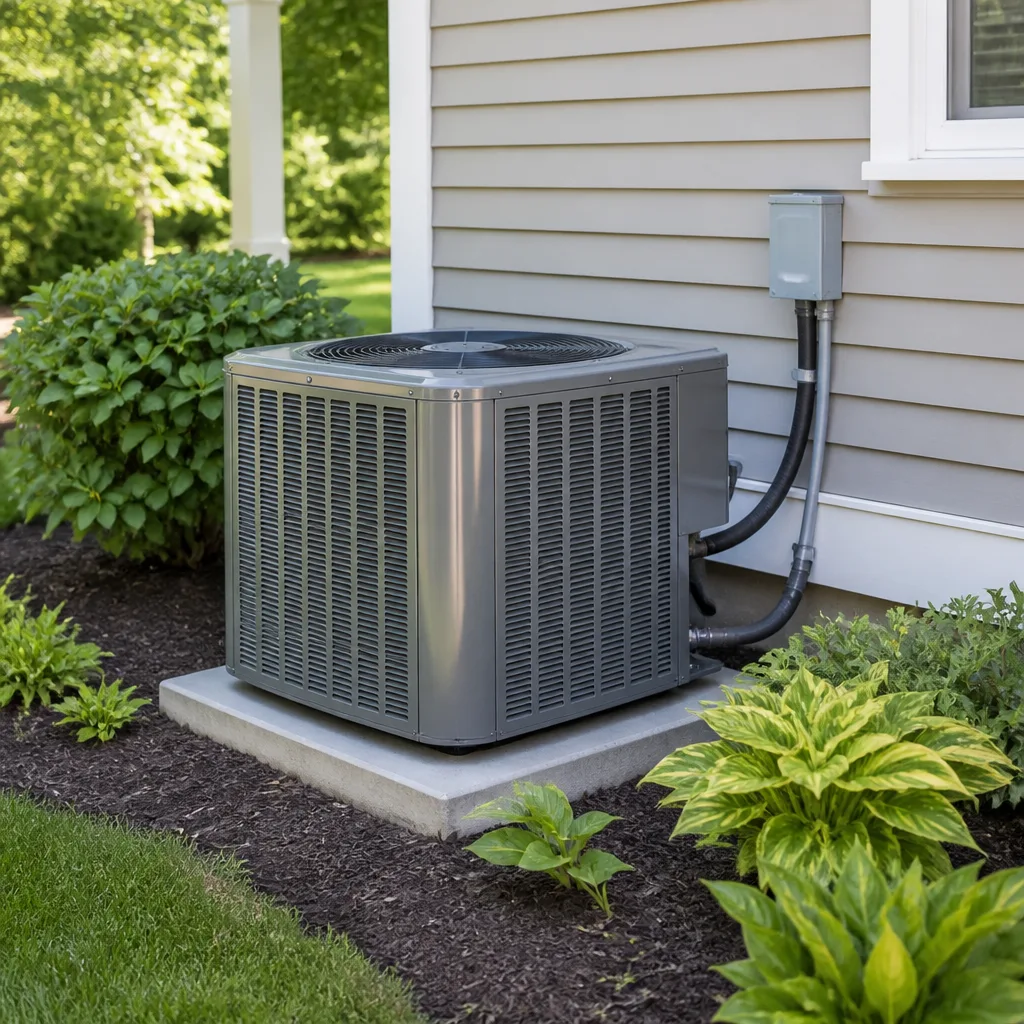
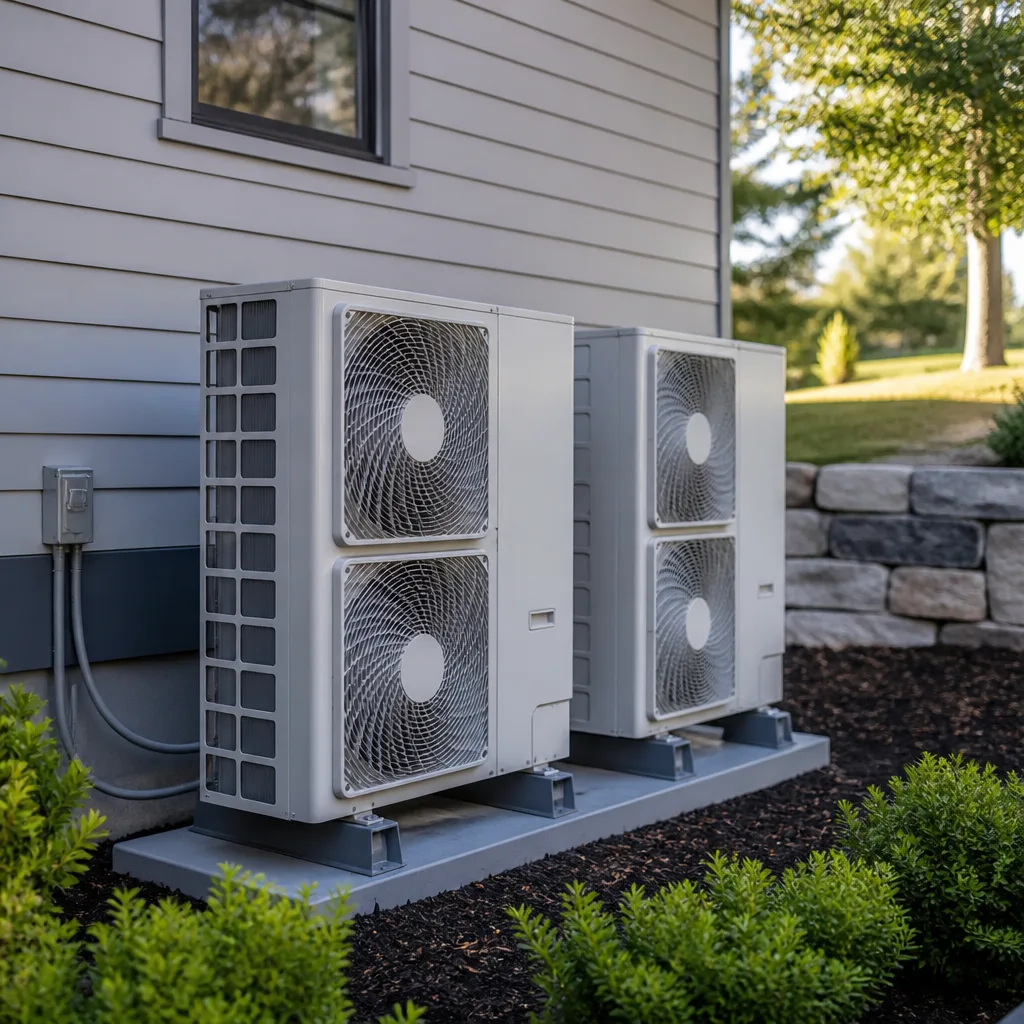
The outdoor unit needs a level pad or stand, clear airflow on all sides, and enough room for a technician to access the service panel. In Los Angeles, where many homes have tight side yards and stucco walls, the most common preparation work is clearing planting beds, relocating sprinkler lines, and removing overgrown vegetation. You can also pour a concrete pad or set a prefabricated composite pad, provided you check the setback requirements in the installation manual. Local neighborhoods like Sherman Oaks and Studio City, with their mature landscaping and narrow setbacks, often require more clearing than homeowners expect. None of this work touches the equipment, so it’s safe for a homeowner at any skill level.
Safe DIY Task #2: Conduit and Line Set Chase, With an Owner-Builder Permit
If you hold an owner-builder permit for your own home, you can install the conduit and line set chase that runs from the electrical panel to the outdoor unit and from the outdoor unit to the indoor air handler. The key word is chase: the enclosure or pathway that protects the lines, not the lines themselves. You pull the conduit, mount the brackets, and leave pull strings in place. A licensed electrician then runs the actual conductors and makes the terminations. A licensed HVAC technician then runs the copper refrigerant lines inside the chase. You save labor hours on the grunt work without touching the safety-critical connections.
Safe DIY Task #3: Duct Sealing at Accessible Joints
If the heat pump ties into existing ductwork in an attic or crawlspace, you can seal accessible duct joints with mastic or UL-listed foil tape before the new air handler goes in. Leaky ducts are the single biggest efficiency loss in Los Angeles homes, and sealing them yourself is unglamorous but real work a homeowner can do. Leave the transitions and plenums, the sheet metal boxes that adapt the new air handler to the old ductwork, to the contractor. But the straight runs and accessible elbows? Yours.
Safe DIY Task #4: Filter Installation and Ongoing Maintenance
Every bit of post-installation maintenance is safe DIY work. Keep spare filters on hand, change them on schedule, clean the outdoor coil gently with a garden hose, and keep the area around the unit free of debris. In Los Angeles, where wildfire season sends ash through the air every fall, filter changes matter more than almost anywhere. A clean filter is the cheapest efficiency upgrade you can make. The owner’s manual from American Standard, Carrier, or Trane will have the exact filter size and change interval for your unit. Follow it, or see our Furnace Repair Maintenance Schedule: What to Do and When for seasonal timing that applies to heat pumps too.
What You Should Never Touch: Refrigerant, Wiring, and Load Calculations
Here’s the list that matters. These are the tasks that cross the line from unwise to genuinely dangerous.
- Refrigerant line connections and charging. Modern heat pumps use R-410A or R-32 refrigerant, both of which operate at pressures that can exceed 400 psi. A bad braze joint or an under-torqued flare fitting leaks, and a leak is a slow system death. Worse, the gauges, vacuum pump, and recovery equipment needed to do this safely cost more than the labor you’re trying to save. Refrigerant handling also requires EPA Section 608 certification. If you don’t have it, you’re handling a regulated substance illegally.
- The 240V circuit and disconnect. A heat pump pulls serious amperage at startup. The circuit needs the right wire gauge, the right breaker, the right disconnect, and proper grounding. Getting any of these wrong creates a fire risk inside your walls. This is C-10 electrical work for a reason. An electrical inspection failure is the fastest way to lose your heat pump permit.
- The load calculation, also called a Manual J. Heat pump sizing is not a guess. The unit has to match the home’s heating and cooling load, which is calculated from square footage, window area, insulation levels, orientation, and local climate data. An oversized heat pump short-cycles, which kills compressors. An undersized one runs constantly and never satisfies the thermostat. In Los Angeles, where summer afternoons routinely hit 100 degrees in the San Fernando Valley while coastal areas stay in the 70s, the right size varies block by block. This is one area where cutting corners costs more than doing it right.
- The startup and commissioning sequence. Turning the unit on for the first time involves setting the airflow, verifying the refrigerant subcooling or superheat, checking the defrost cycle, and confirming the thermostat controls the reversing valve correctly. A heat pump runs in two modes, and both modes have to be verified. Skip this step and the unit will run, badly, for a while, and then fail early.
The Real Cost Comparison: DIY vs Professional Installation in Los Angeles
Let’s talk dollars, because that’s the real reason people consider DIY. Here’s the line-item picture for a typical 3-ton heat pump replacement in Los Angeles as of 2025.
| Line Item | DIY Attempt | Professional Installation |
|---|---|---|
| Equipment (3-ton heat pump and air handler) | $4,500 – $7,000 | $4,500 – $7,000 (same equipment, contractor pricing often lower) |
| Permit and HERS verification | $500 – $900 (if you can get the permit) | $500 – $900 (included in quote) |
| Tools you’ll buy but never use again | $800 – $1,500 (vacuum pump, gauges, flaring kit, nitrogen tank) | $0 |
| Labor | Your time, 3 – 5 full days | $2,500 – $5,000 depending on scope |
| Correction work when the inspection fails | $1,000 – $3,000 typical | $0 (contractor fixes their own work) |
| Warranty after 1 year | Void | Full manufacturer warranty, up to 10 years on the compressor |
The DIY math only works if you ignore the correction work, the tool purchases, and the warranty value. In our experience in Los Angeles, homeowners who attempt a full DIY heat pump installation end up paying 20 – 40% more than a professional quote once the correction work and re-testing are added in. The savings show up only if nothing goes wrong, and something always goes wrong on a first heat pump installation. If you want an exact number for your home, our Dalton Heating & Air home page has our contact information, and we’ll give you a written price before any work starts.
How to Evaluate a Professional Installation Quote Line by Line
If you’ve decided to hire a licensed contractor, which this guide recommends for everything except the safe DIY tasks above, the next skill is knowing how to read a quote. Most homeowners look at the bottom line. That’s the wrong place to start. Here’s what to look for, line by line, before you sign.
- The equipment spec line. The quote should list the exact outdoor unit model number, the air handler model number, the SEER2 rating, and the capacity in tons. If it says “3-ton heat pump” without a model number, the contractor is leaving themselves room to substitute whatever is in the warehouse. Demand the model numbers in writing. A Trane or Lennox model number tells you exactly what you’re getting. A vague line doesn’t.
- The permit line. The quote should include the permit fee and a line for HERS verification. If there’s no permit line, the contractor is offering an unpermitted installation, which is illegal in Los Angeles and will bite you when you sell the house. Walk away from any quote without a permit line.
- The electrical line. Look for a line that covers the 240V circuit, disconnect, and whip. If the quote assumes the existing circuit is adequate without an electrician looking at it, that’s a red flag. The panel and wire gauge have to be verified before the unit is set.
- The refrigerant charge verification step. The quote should state that the contractor will pull a vacuum below 500 microns, hold it, and then charge the system to manufacturer spec with verification by gauge or by subcooling. Generic language like “charge system” without the verification step means the installer is going to guess. Guessed charges are the leading cause of early compressor failure.
- The written guarantee language. Look for the exact words of the workmanship guarantee. At Furnace Repair in Los Angeles and across our heat pump work, we write the guarantee directly on the invoice, and it covers the full year. A verbal promise is not a guarantee. If the quote doesn’t include written guarantee language, ask where it is. If the answer is anything other than “it’s on the quote,” that’s your answer.
Common Mistakes to Avoid
- Watching a YouTube installation and assuming it’s a complete guide. Most heat pump installation videos are filmed in jurisdictions with no HERS verification and no Title 24. In Los Angeles, the process has extra steps those videos never show, and skipping them fails the permit.
- Buying the equipment before checking the warranty conditions. You can buy a Carrier, Trane, or Lennox heat pump online and have it shipped to your driveway. The warranty will not be valid unless a licensed contractor installs it and registers it. Read the warranty before you buy, not after.
- Reusing old line sets without flushing them. A new R-410A or R-32 system cannot share old refrigerant lines that held R-22 without a proper flush. The oils are incompatible, and skipping the flush is a textbook way to destroy a new compressor. This is one of the most common shortcut errors we see in Los Angeles homes.
- Sizing by the old unit’s tonnage. The old unit may have been oversized, or the home’s insulation and windows may have changed. A Manual J load calculation is the only correct way to size a heat pump. Copying the old nameplate is a guess.
- Skipping the HERS verification to save $600. The HERS test is mandatory under California code, and a failed verification means no final permit sign-off. Skipping it saves nothing. It creates a legal and warranty problem that costs more than the test.
- Not running a dedicated circuit. A heat pump on a shared branch circuit will trip breakers and may overload the wiring. The 240V circuit must be dedicated and correctly sized. This is a C-10 job for a reason.
- Doing the whole job yourself, then calling a contractor to “just sign off.” No legitimate C-20 contractor will take liability for someone else’s unpermitted work. When homeowners in Los Angeles call us after a DIY attempt has failed, we have to document what exists and quote the correction work. The “just sign off” call is the most expensive phone call a DIY installer can make.
When to Call a Professional
The honest answer is: for everything except site clearing, conduit chase work under an owner-builder permit, duct sealing at accessible joints, and ongoing filter changes. The moment refrigerant, electrical connections, or permit sign-off enters the picture, call a licensed contractor. If your equipment warranty matters to you, which it should on a $5,000 – $10,000 system, the installation must be done by a licensed C-20. If you want the job done on schedule, with a written price and a written guarantee, that’s exactly the standard we hold. Dalton Heating & Air offers free estimates in Los Angeles, and the price is in writing before any work starts. Call (361) 306-9515 and ask for the heat pump estimate, or visit our AC Repair in Los Angeles page if you’re troubleshooting an existing system first. We service all major residential brands including Carrier, Trane, Lennox, and American Standard.
Frequently Asked Questions
You can only install your own heat pump in California if you hold an owner-builder permit for your own single-family home and complete all the work to code, including the mandatory Title 24 HERS verification, which requires a third-party rater. Most DIY installations fail verification because the airflow or refrigerant charge is off, and the homeowner ends up hiring a C-20 contractor anyway. A licensed contractor handles the permit, the HERS test, and the warranty registration together.
Yes, in almost every case. Major manufacturers like Carrier, Trane, Lennox, and American Standard write their warranties so that installation by a licensed contractor is a condition of coverage. If the unit fails and the serial number was never registered by a licensed contractor, the claim is denied. The warranty language is in the owner’s manual, and manufacturers enforce it.
Heat pump installation in Los Angeles requires a C-20 Warm-Air Heating, Ventilating and Air-Conditioning Contractor license for the HVAC work, and a C-10 Electrical Contractor license for the 240V circuit, unless the C-20 contractor subcontracts the electrical work. Both licenses are typically present on the same permit. Ask your contractor for both license numbers and verify them on the CSLB website before signing.
A typical 3-ton heat pump replacement in Los Angeles runs $7,000 – $12,000 all-in, including equipment, permit, HERS verification, electrical work, and labor. Larger systems or installations with duct modifications run higher. The DIY-attempt route usually ends up within 20 – 40% of that once tool purchases, correction work, and re-testing are added, and the warranty is still void. For an exact quote, call (361) 306-9515 for a written estimate.
The HERS test is a mandatory Title 24 verification where an independent third-party rater checks that airflow and refrigerant charge match the manufacturer’s spec. It applies to every residential heat pump installation in California, including Los Angeles, and a DIY installation cannot self-verify. If the test fails, the permit cannot close, and the installation is legally incomplete.
Replace it if the compressor has failed, the unit is over 12 years old, or the system uses R-22 refrigerant that’s no longer manufactured and is becoming prohibitively expensive to recharge. Repair it if the failure is a capacitor, contactor, or fan motor and the unit is under a decade old. For an honest recommendation on your specific unit, call Furnace Repair in Los Angeles or our heat pump team, and we’ll give you the straight answer.
The Bottom Line
DIY heat pump installation is not a money-saving hack; it’s a liability trade, and in Los Angeles, the trade is worse than almost anywhere because of Title 24 HERS verification and dual C-20/C-10 licensing requirements. The safe DIY work is site prep, accessible duct sealing, and ongoing filter and coil maintenance. Everything else risks your warranty, your permit, your home’s electrical safety, and your compressor’s lifespan. A licensed contractor with written pricing and a written guarantee is the only path that keeps the manufacturer’s warranty intact and the job legal. For more guides & resources on protecting your HVAC investment, explore our blog. If you want the full picture for your home, Dalton Heating & Air gives free, written estimates in Los Angeles. Call (361) 306-9515, and you’ll know exactly what the job costs before you decide anything.
Written by Marco Benitez, Owner at Dalton Heating & Air, serving Los Angeles since 2003.