
Last updated October 9, 2026
Seasonal tune-up and full diagnostic on your Carrier, Trane, or Goodman system - readings shown to you before any repair is proposed
Diagnosis first, numbers second - you approve the repair price before a single part goes in.
 Before
 After
After Before
 After
After Before
 After
AfterDIY vs Professional AC Repair: What’s Safe to Do Yourself
Most homeowners in Los Angeles don’t realize that the real dividing line between DIY and professional AC work isn’t skill. It’s law. Touching refrigerant without an EPA Section 608 certification is a federal violation carrying fines up to $44,539 per day. That’s not a liability disclaimer buried in a manual. It’s a statute with named penalties, and it exists because refrigerant mishandling damages the ozone layer and puts you in contact with chemicals that can cause frostbite burns in seconds. This guide draws the line based on consequences, not difficulty. By the end, you’ll know the five tasks you can safely handle yourself, the ones that void your warranty even when they go right, and how to evaluate any repair video before you pick up a screwdriver.
Quick Answer
Safe DIY AC work is limited to non-refrigerant, non-electrical tasks: replacing the air filter, cleaning the outdoor coil with approved spray, flushing the condensate drain line, checking thermostat settings, and resetting a tripped breaker. Anything involving refrigerant, capacitors, wiring, compressors, or gas lines legally or contractually requires a licensed professional. In Los Angeles, where summer temperatures routinely push systems past 100°F, a wrong DIY repair can leave you with a dead unit during a heat wave and a voided manufacturer warranty-exactly why our AC Repair services are structured around licensed, warranty-protecting work.
Table of Contents
- The Legal Bright Line: Refrigerant and EPA Section 608
- Five Tasks Any Homeowner Can Safely Do
- Why Electrical Repairs Void Most Manufacturer Warranties
- Los Angeles Climate Reality: What Our Heat Does to Systems
- How to Evaluate a YouTube Repair Video for Actual Accuracy
- DIY vs Professional: A Real Cost Comparison
- The Written Price and Written Guarantee Standard: What to Demand
- Common Mistakes to Avoid
- When to Call a Professional
- Frequently Asked Questions
- The Bottom Line
The Legal Bright Line: Refrigerant and EPA Section 608
Federal law is unambiguous on this point. Under Section 608 of the Clean Air Act, anyone handling refrigerant in a system like a residential air conditioner must hold an EPA Section 608 certification. That includes adding refrigerant, removing it, recovering it, or even connecting a gauge set to check pressure. The fines for violating this law are not symbolic. They run up to $44,539 per day, per violation. The EPA has pursued enforcement against homeowners and unlicensed handymen alike.
Here’s what most people miss: the law doesn’t care whether you meant well. It doesn’t matter that you watched three videos and bought a gauge set from an auto parts store. If you crack open the service valve on a system that holds R-410A or R-32 and you aren’t certified, you’re in violation. In Los Angeles, where older homes in neighborhoods like West Adams and Van Nuys still run R-22 systems, the stakes are higher. R-22 has been phased out of production in the United States since 2020. What remains on the market is reclaimed, limited, and expensive. An unlicensed attempt to “top off” an R-22 system can damage the compressor, release regulated refrigerant into the atmosphere, and leave you with a repair bill that exceeds the cost of replacing the system.
Beyond the law, there’s the physical risk. Refrigerant escaping under pressure can cause frostbite burns on contact. A pinhole leak you didn’t see can spray liquid refrigerant into your eyes. We’ve responded to calls where a homeowner’s “quick top-off” turned into a frozen coil, a damaged compressor, and $2,000 in avoidable repair work. The rule is simple: if the task involves refrigerant, the job belongs to a certified technician. Period.
Five Tasks Any Homeowner Can Safely Do
Here’s the good news. There’s a meaningful list of maintenance work you can do yourself that keeps your system running between professional tune-ups. These tasks don’t touch refrigerant, don’t involve electrical components, and won’t void your equipment warranty.
1. Replacing the Air Filter
This is the single highest-impact task you can do. A clogged filter forces your system to work harder, increases energy use by anywhere from 5% to 15%, and shortens equipment life. In Los Angeles, where wildfire smoke and dust blow through neighborhoods across the San Fernando Valley and the westside, filters load up faster than the standard 90-day recommendation. Check yours monthly during summer and fire season. Replace it with the same size and MERV rating listed on the existing filter or your system’s spec sheet.
2. Cleaning the Outdoor Coil with Approved Spray
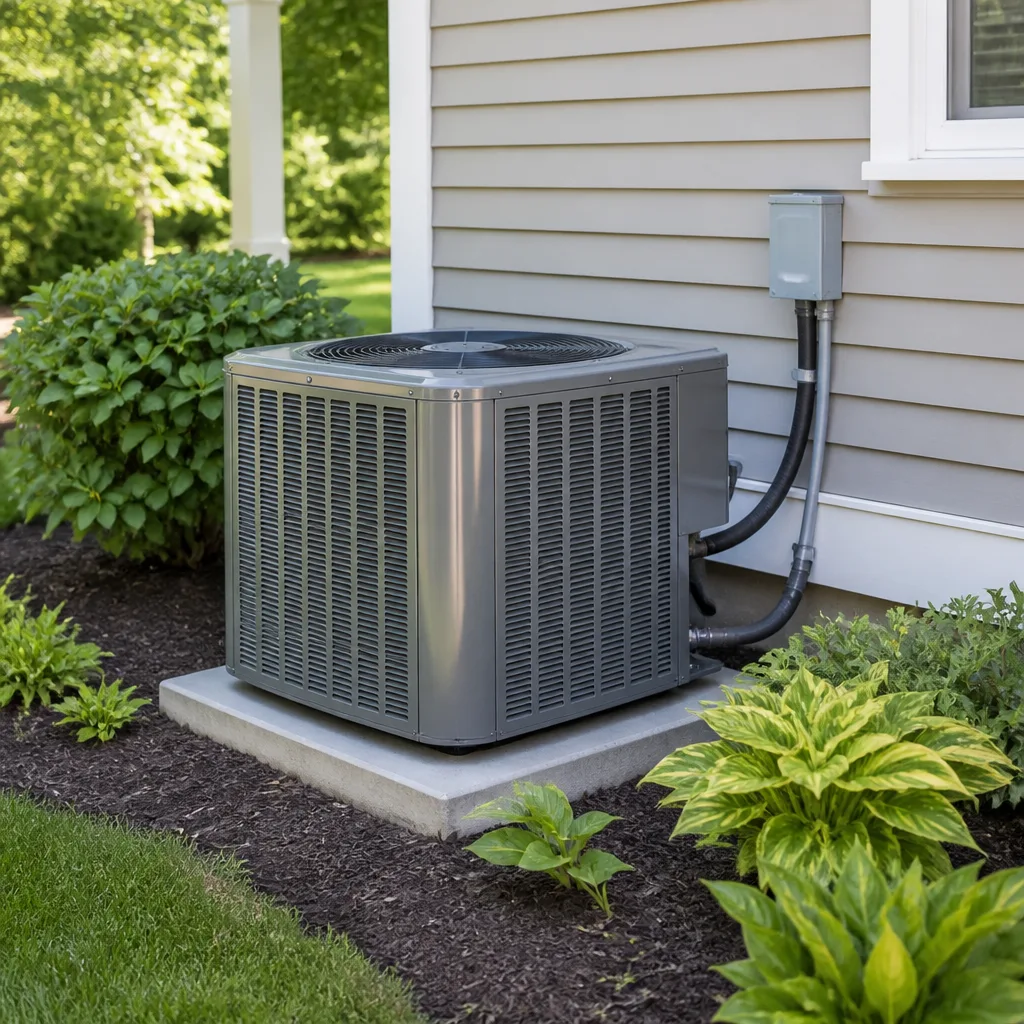
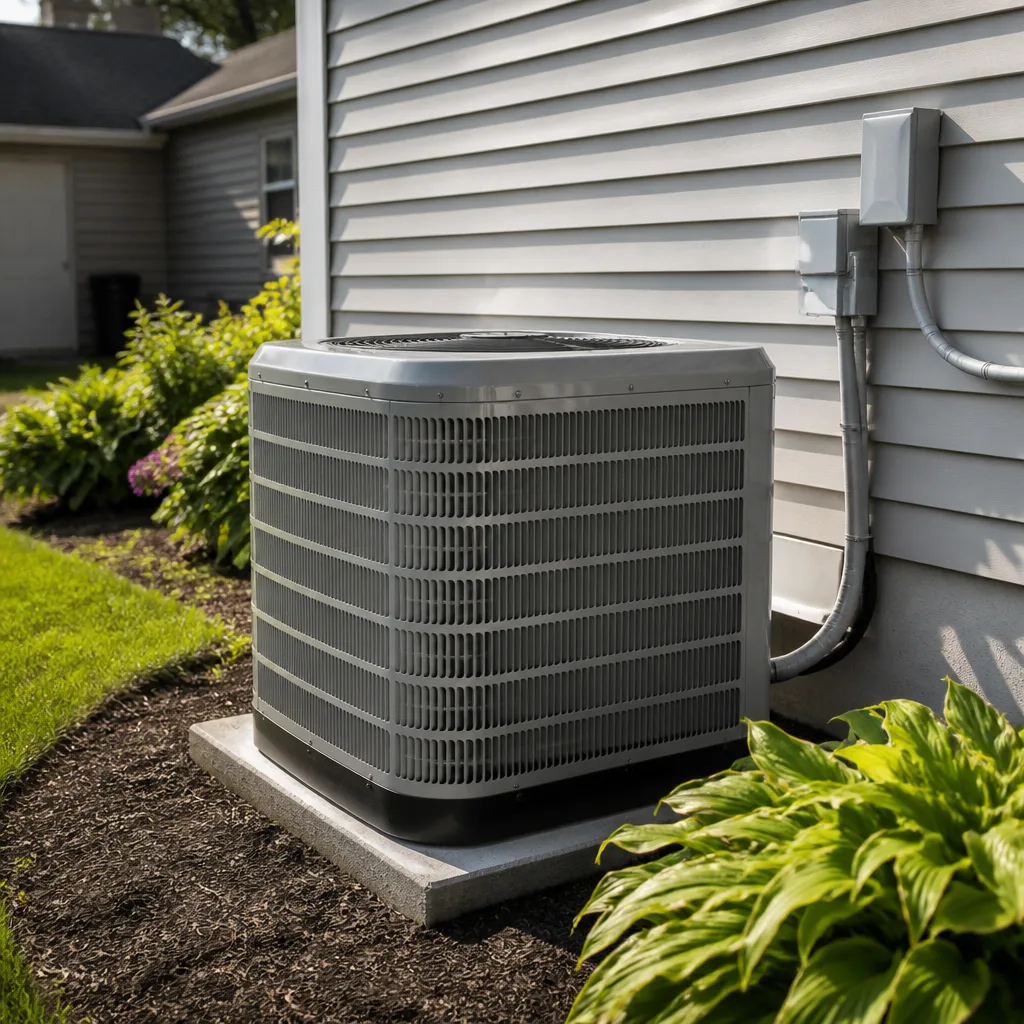
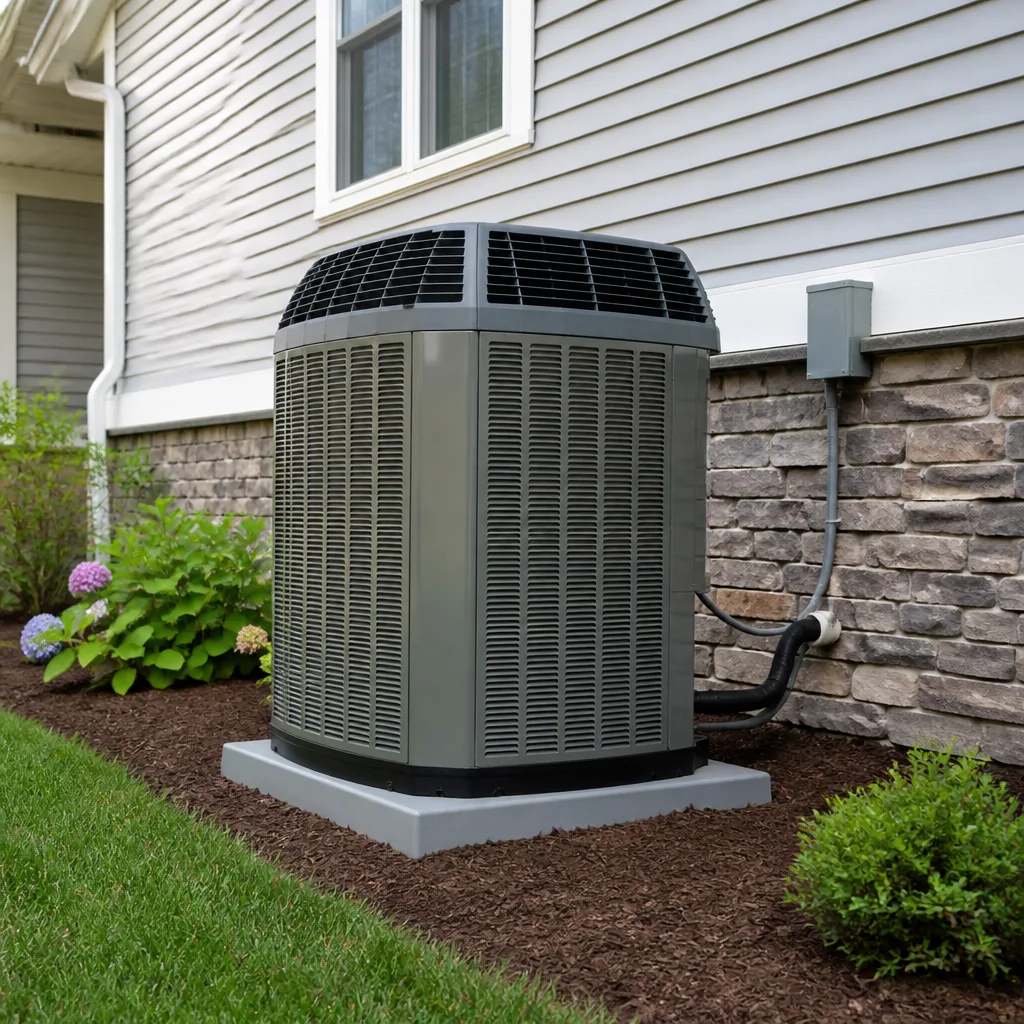
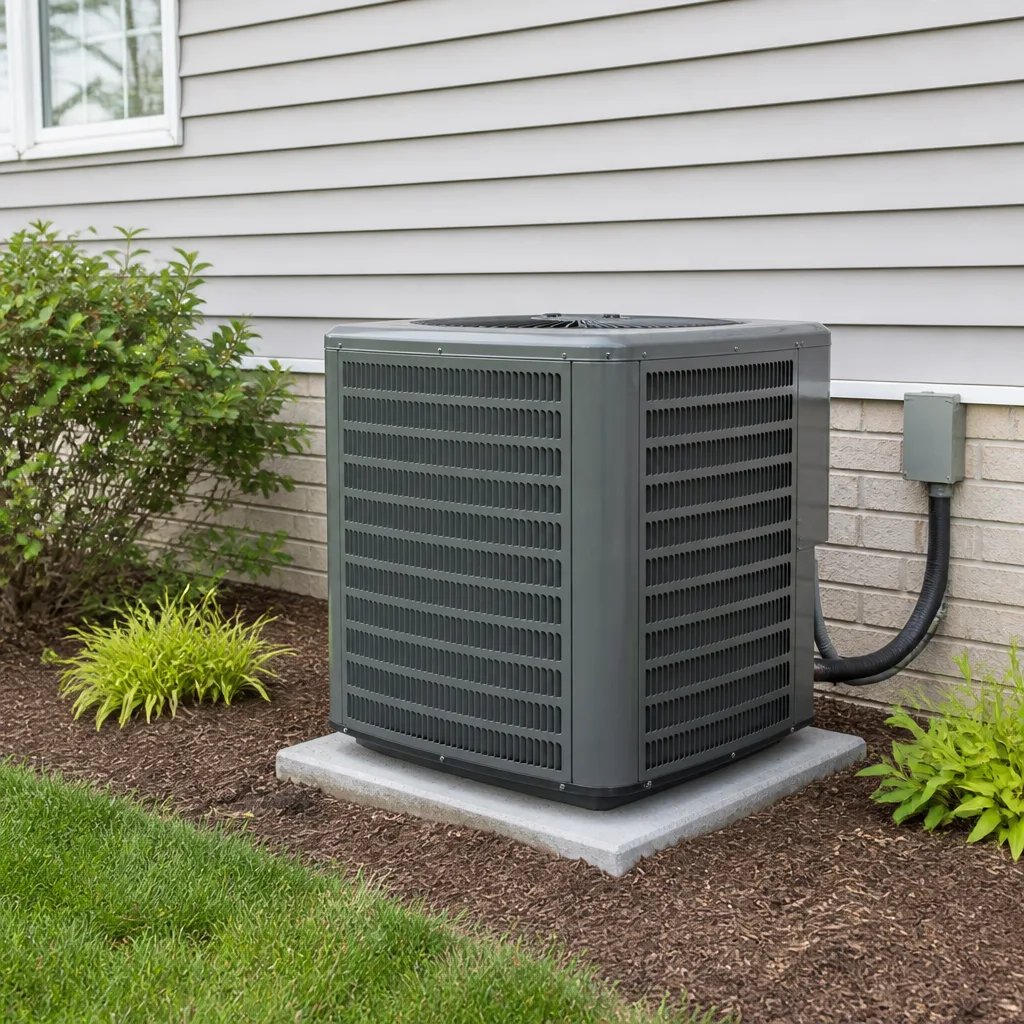
The condenser coil outside your home, the aluminum-finned unit that sits in the backyard or on a side pad, collects dust, grass clippings, and leaves. You can buy an approved coil cleaner at any hardware store. The key is using a product designed for HVAC coils, not a pressure washer. Pressure washing folds the fins flat and reduces airflow permanently. Spray the cleaner on, let it sit per the label, and rinse gently with a garden hose. Do this twice a year in Los Angeles, more often if you live near construction or brush areas.
3. Flushing the Condensate Drain Line
Your system produces gallons of condensation every day during a Los Angeles summer. That water drains through a PVC line, often into a bathroom sink or outside. Algae growth clogs that line and triggers a float switch that shuts the system down. Pour a cup of white vinegar into the drain line once a month during cooling season. If the line is completely blocked and the float switch has killed your system, that’s the time to call a professional, since the blockage may require compressed air or a wet-dry vac to clear safely.
4. Calibrating and Checking the Thermostat
Before you assume your AC is failing, verify the thermostat is set correctly, the batteries are fresh if it uses them, and the temperature reading matches an accurate thermometer placed nearby. A thermostat that reads 74 but is actually sitting at 71 or 77 will cycle your system incorrectly. If you have a programmable or smart thermostat, check the schedule. A Los Angeles home empty during work hours doesn’t need to hold 72 degrees all day, and a misconfigured schedule can both waste energy and make you think the system isn’t cooling.
5. Resetting a Tripped Breaker
During a heat wave in places like Woodland Hills or Pasadena, where compressors run nearly constantly, your AC may trip its circuit breaker. Finding the breaker labeled “AC” or “condenser” in your panel, flipping it fully to OFF, then back to ON is a safe reset. If the breaker trips again within hours, stop. That’s a short or an overload drawing too much current, and continuing to reset it is how electrical fires start. One reset is maintenance. Two is a problem that needs a licensed diagnosis.
Why Electrical Repairs Void Most Manufacturer Warranties
Here’s a truth most YouTube tutorials won’t tell you. Replacing a capacitor, a contactor, or a control board looks straightforward. Two or three wires, a few screws, a $15 part from an online supplier. What the video doesn’t mention is the warranty language from Trane, Lennox, Goodman, and Rheem. Those manufacturers require repairs to be performed by a licensed HVAC contractor for the equipment warranty to remain valid. A homeowner who replaces a capacitor and then loses a compressor six months later has zero warranty coverage. That compressor replacement typically costs $1,800 to $3,400 in Los Angeles. The $15 capacitor “savings” just became the most expensive part on the unit.
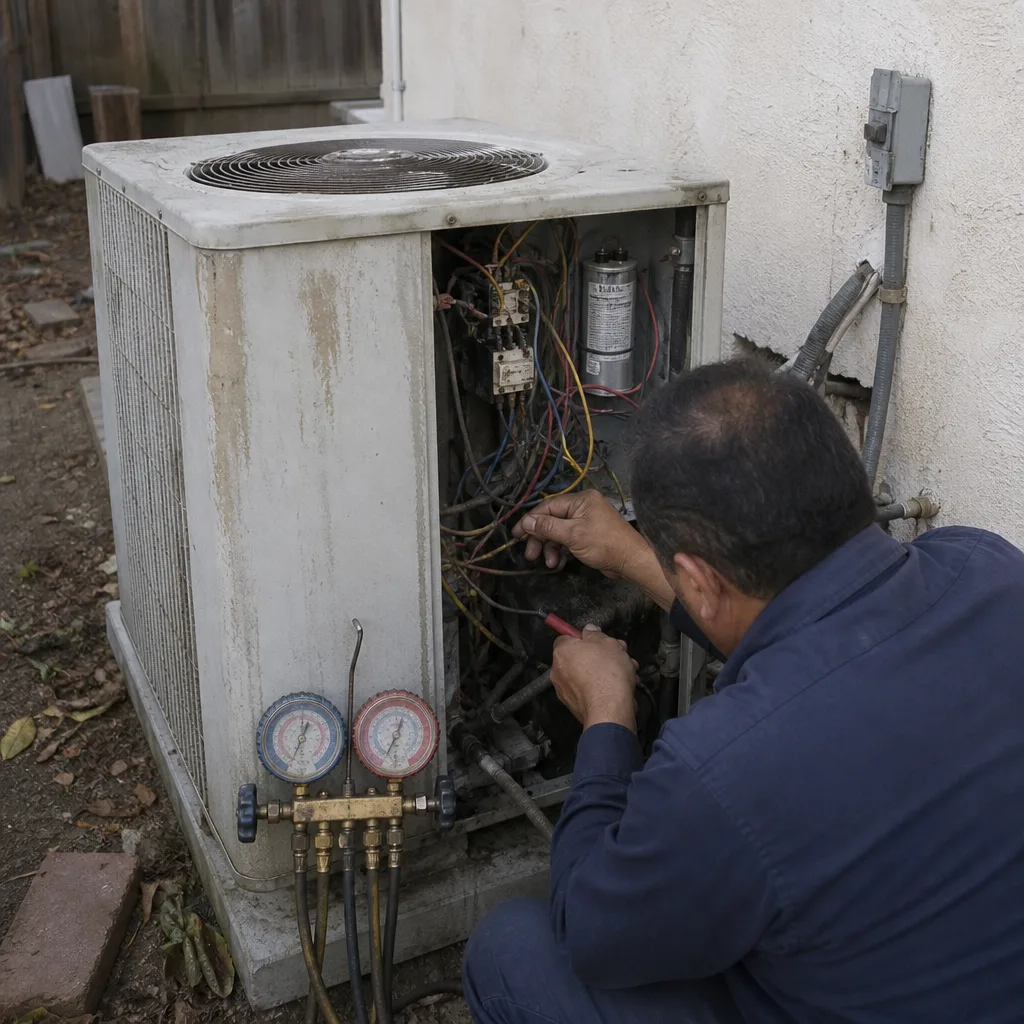
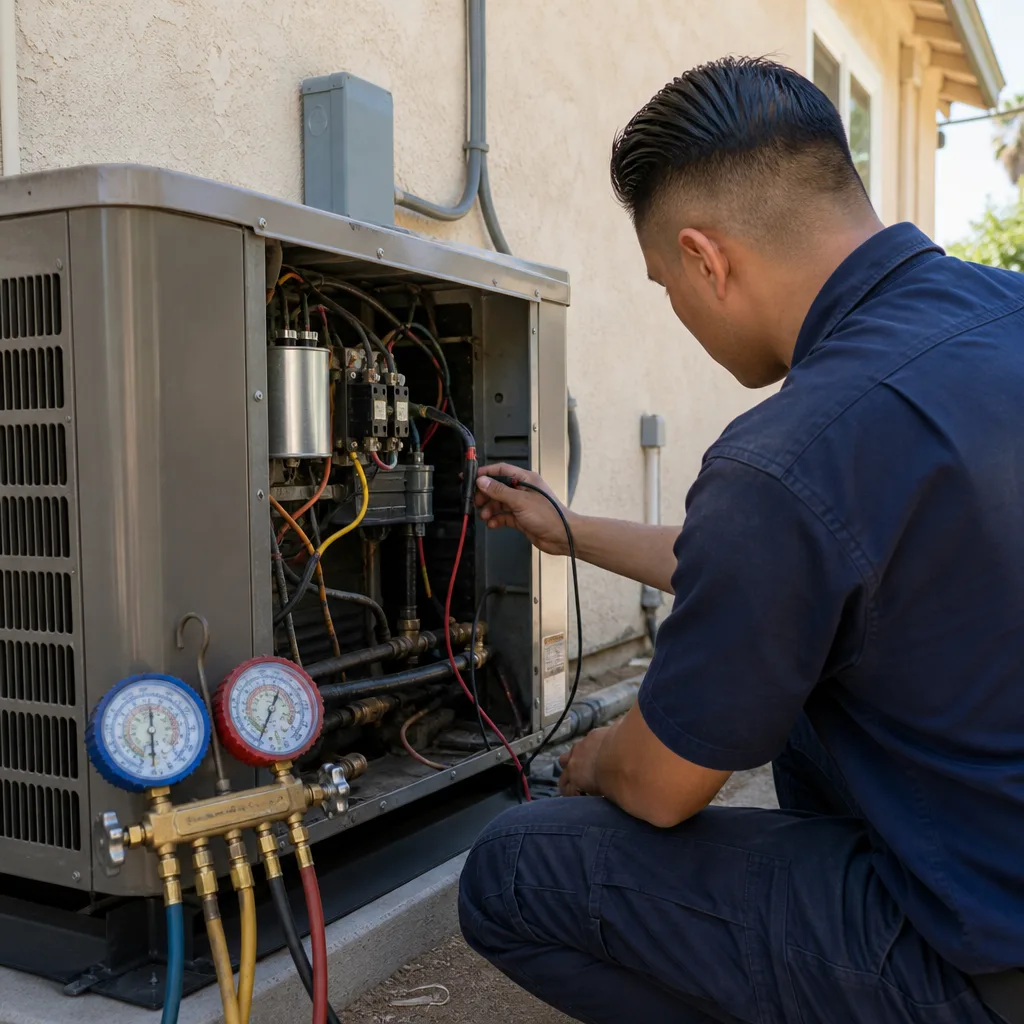
Electrical work on an AC also carries a lethal hazard. The capacitor in your outdoor unit stores a charge even after the power is off. Touch the wrong terminal and that stored voltage will discharge through you. It can stop your heart. Contactors and control boards sit in a live circuit that must be discharged and verified with a multimeter before any hand touches metal. A licensed technician carries tools, training, and liability coverage. An unlicensed repair by a homeowner or a handyman also creates a code compliance issue if it causes damage. Your homeowner’s insurance may deny a claim tied to unpermitted electrical work.
We have seen this happen in Los Angeles more than once. A homeowner swaps a capacitor using a tutorial, the compressor fails two months later, and the manufacturer denies the claim because the prior repair wasn’t performed by a licensed contractor. The homeowner then pays full price for a compressor or replaces the entire system years earlier than necessary. The lesson isn’t that you’re incapable of learning the repair. It’s that the contract you signed when the system was installed made that repair a licensed professional’s job.
Los Angeles Climate Reality: What Our Heat Does to Systems
Los Angeles isn’t one climate. It’s several. A system in Santa Monica operates in a marine layer for much of the year. A system in Northridge or Chatsworth endures triple-digit days with single-digit humidity and punishing direct sun. A system in Boyle Heights contends with urban heat-island effect that keeps nighttime temperatures elevated. What these conditions share is sustained load. Your AC doesn’t run for a few hours on a hot afternoon here. During a September heat wave, it cycles for 12 to 16 hours a day, sometimes more.
That sustained load is why capacitor failures dominate the Los Angeles repair season. A capacitor is the electrical component that gives the compressor and fan motor the starting jolt they need. Heat and constant cycling wear them out. The same pattern shows up in contactors, the relay switches that route power to the compressor. These are wear items, and in this climate, they wear faster than national averages suggest.
What this means for the DIY question is practical. The failures Los Angeles homeowners are most likely to encounter are electrical component failures and refrigerant charge issues. Both categories sit inside the professional-only zone. The DIY tasks that are actually safe in Los Angeles are the maintenance items covered above: filter changes, coil cleaning, drain flushing, thermostat checks, and breaker resets. Those five tasks, done consistently, will reduce how often you face the electrical failures you can’t legally or safely repair yourself.
How to Evaluate a YouTube Repair Video for Actual Accuracy
There are excellent repair videos online, and there are videos that will get you hurt or cost you thousands. Here’s a practical framework for separating the two.
- Does the video show the power being disconnected and verified? A legitimate repair video starts at the breaker panel or disconnect box and shows the creator verifying with a multimeter that no voltage remains at the unit. If the video skips this step or waves at it casually, close it. That creator has already skipped the step that keeps you alive.
- Does the video address refrigerant handling legally? Any video that shows adding refrigerant without referencing EPA Section 608 certification is teaching a federal violation. A reputable video either shows a certified technician doing the work or explicitly tells viewers not to attempt refrigerant tasks.
- Does the video match your exact system? A video for a Goodman condensing unit is not a video for a Rheem heat pump. Wire colors differ, capacitor ratings differ, board layouts differ. If the video’s equipment doesn’t match your make and model, it’s a general overview, not a repair guide.
- Does the video mention the warranty consequences? A video that shows an electrical repair without noting that manufacturer warranties require licensed work is omitting the most expensive fact about the job. That omission tells you the creator isn’t thinking about your long-term cost.
- Are the comments full of people asking follow-up questions the video doesn’t answer? That’s a sign the video skipped something. A complete video generates comments like “worked on my unit, thanks.” An incomplete one generates a thread of confused questions.
Use these five checks consistently and you’ll avoid most of the dangerous advice out there. For more guides & resources on safe home maintenance, visit our blog. For anything that fails the test, call a licensed professional. We answer the phone 24/7 at Dalton Heating & Air, and our service area covers the entire Los Angeles basin.
DIY vs Professional: A Real Cost Comparison
Here’s an honest look at what DIY attempts actually cost in the Los Angeles market versus what professional repair costs. The numbers assume the homeowner already owns basic tools and buys parts from a local supplier or online.
| Task | DIY Cost | Professional Cost in Los Angeles | Risk if DIY Goes Wrong |
|---|---|---|---|
| Filter replacement | $15 – $40 | $50 – $90 (included in tune-up) | Minimal if correct size |
| Coil cleaning | $20 – $35 for spray | $90 – $150 | Folded fins from pressure washing |
| Condensate line flush | $5 – $10 for vinegar | $75 – $120 | Overflow and water damage if missed |
| Capacitor replacement | $15 – $60 for part | $150 – $300 installed | Voided warranty, shock injury, compressor damage |
| Refrigerant top-off | $40 – $120 for refrigerant (illegal without EPA 608) | $150 – $450 for leak check and charge | Federal fines up to $44,539/day, frostbite, system damage |
| Compressor replacement | $600 – $1,200 for part alone | $1,800 – $3,400 installed with warranty | No manufacturer warranty, no workmanship coverage, code violation exposure |
The pattern is consistent. The DIY projects that are legal and safe are also the ones with modest savings and minimal downside. The projects with real cost savings are the ones that carry legal, physical, or warranty risk. In Los Angeles, where a failed system in August means days of indoor temperatures above 90 degrees, that risk isn’t theoretical. It’s a health and safety calculation, especially for households with elderly residents, young children, or anyone with a respiratory condition.
The Written Price and Written Guarantee Standard: What to Demand
When you do call a professional, you need a way to separate an honest quote from a low-ball number that inflates on arrival. The answer is simple: demand both a written price and a written guarantee before any work starts. If a company will not put the price in writing before touching your system, you’re betting against a well-documented pattern of bait-and-switch pricing. In Los Angeles, where the HVAC market includes thousands of contractors of wildly varying quality, this is not an optional courtesy. It’s the minimum standard.
Dalton Heating & Air works under The Garrison Standard, which has governed every job since 2003. The price is in writing before work begins. The repair is guaranteed in writing for a full year. If the repair fails during that period, we return at no charge. That’s the 365-Day Done Right Promise, and it’s included with every service call, not sold as an upgrade. The Garrison Code governs how our technicians operate: arrive inside the stated window, price in writing before starting, do the job by the book, leave the site clean, and stand behind the work for a full year.
Here’s what to ask any company before scheduling a Los Angeles AC repair:
- Will you provide a written price before work begins, or only after diagnosis?
- Does the repair come with a written guarantee, and for how long?
- If the repair fails during the guarantee period, do you return at no charge?
- Are your technicians background-checked and uniformed?
- Do you service my equipment brand: Trane, Lennox, Goodman, Rheem, or another major manufacturer?
If a contractor can’t answer these questions clearly, find one who can. We serve homes across the Los Angeles area, and every call is answered by a live person, 24/7, at (361) 306-9515.
Common Mistakes to Avoid
- Adding refrigerant without EPA Section 608 certification. This is a federal violation with fines up to $44,539 per day. It’s also physically dangerous. Refrigerant under pressure causes frostbite burns on contact.
- Replacing electrical parts before checking the warranty. A capacitor or contactor swap voids your Trane, Lennox, Goodman, or Rheem warranty if performed by an unlicensed person. You’re trading a $15 part for a $3,400 compressor claim.
- Pressure washing the outdoor coil. High pressure folds the aluminum fins flat and permanently reduces airflow. Use an approved coil cleaner and a garden hose instead.
- Resetting a breaker repeatedly. One reset after a heat-wave trip is maintenance. Two resets is an electrical fault. Each reset without diagnosis increases fire risk.
- Trusting a repair video that skips the safety steps. If the video doesn’t show power disconnection and verification, the creator already made the first dangerous mistake. Don’t make it your own.
- Ignoring the condensate drain until water appears. By the time the float switch trips or water stains appear on the ceiling, you’ve already had a blockage for weeks. Monthly vinegar flushes prevent this.
- Treating all Los Angeles neighborhoods as the same climate. A system in Santa Monica and a system in Chatsworth have different wear patterns. Keep your maintenance schedule tied to your microclimate, not a generic national calendar.
When to Call a Professional
Call a professional if you have a refrigerant leak, a repeated breaker trip, a non-starting compressor, a capacitor or contactor failure, ice on the evaporator coil, any burning smell from the air handler, or a system that runs constantly without reaching set temperature. These are all conditions that point to electrical, refrigerant, or airflow problems beyond the safe DIY zone. Waiting on a refrigerant leak in Los Angeles heat means the compressor runs harder as the charge drops, which shortens its life. The sooner a certified technician diagnoses the problem, the lower the final repair bill tends to run. Dalton Heating & Air offers free estimates in Los Angeles. Call (361) 306-9515 and a live person answers, 24/7, not a voicemail queue.
Frequently Asked Questions
No. Federal law under EPA Section 608 requires a valid Section 608 certification to handle refrigerant, and the fines for violations run up to $44,539 per day. This applies to all residential AC refrigerant, including R-410A and R-22.
Most AC repairs in the Los Angeles market run $150 to $450 depending on the part. Capacitor and contactor replacement typically falls on the lower end, while compressor replacement runs $1,800 to $3,400 installed. Ask for a written price before any work begins. Call (361) 306-9515 for a free estimate.
Yes, in most cases. Major manufacturers including Trane, Lennox, Goodman, and Rheem require repairs to be performed by a licensed contractor for the equipment warranty to remain valid. A $15 DIY capacitor can cost you a $3,400 compressor replacement later.
You can replace the air filter, clean the outdoor coil with approved spray and a garden hose, flush the condensate line with vinegar, check thermostat settings and batteries, and reset a tripped breaker once. These tasks don’t touch refrigerant or electrical components and won’t void your warranty.
Schedule a professional tune-up twice a year: once in spring before cooling season begins and once in fall before heating season. During heat waves and fire season, check and replace your filter monthly. Homes in hotter valleys like Chatsworth or Northridge benefit from closer monitoring than coastal neighborhoods.
Yes. The two most common Los Angeles failures, capacitor wear and refrigerant leaks, both develop slowly and typically show no obvious symptoms until the system stops cooling. Annual maintenance catches these issues before a heat wave turns a $200 repair into a $3,000 emergency.
The Bottom Line
The DIY-versus-professional question resolves to a simple test: does the task involve refrigerant, electricity, or your equipment warranty? If the answer is yes to any of the three, call a licensed Los Angeles HVAC contractor. If the answer is no, you have five genuinely useful maintenance tasks you can perform yourself: filter changes, coil cleaning, drain flushing, thermostat checks, and a single breaker reset. Do those consistently and you’ll extend equipment life, cut energy costs, and catch problems early. For everything else, demand a written price, a written guarantee, and a technician who follows The Garrison Standard. That’s how you keep a Los Angeles home cool without gambling on a YouTube tutorial. For service from our team, see Dalton Heating & Air home, AC Repair in Los Angeles, Heat Pump Installation in Los Angeles, or Furnace Repair in Los Angeles.
Written by Marco Benitez, Owner at Dalton Heating & Air, serving Los Angeles since 2003.