
Last updated October 9, 2026
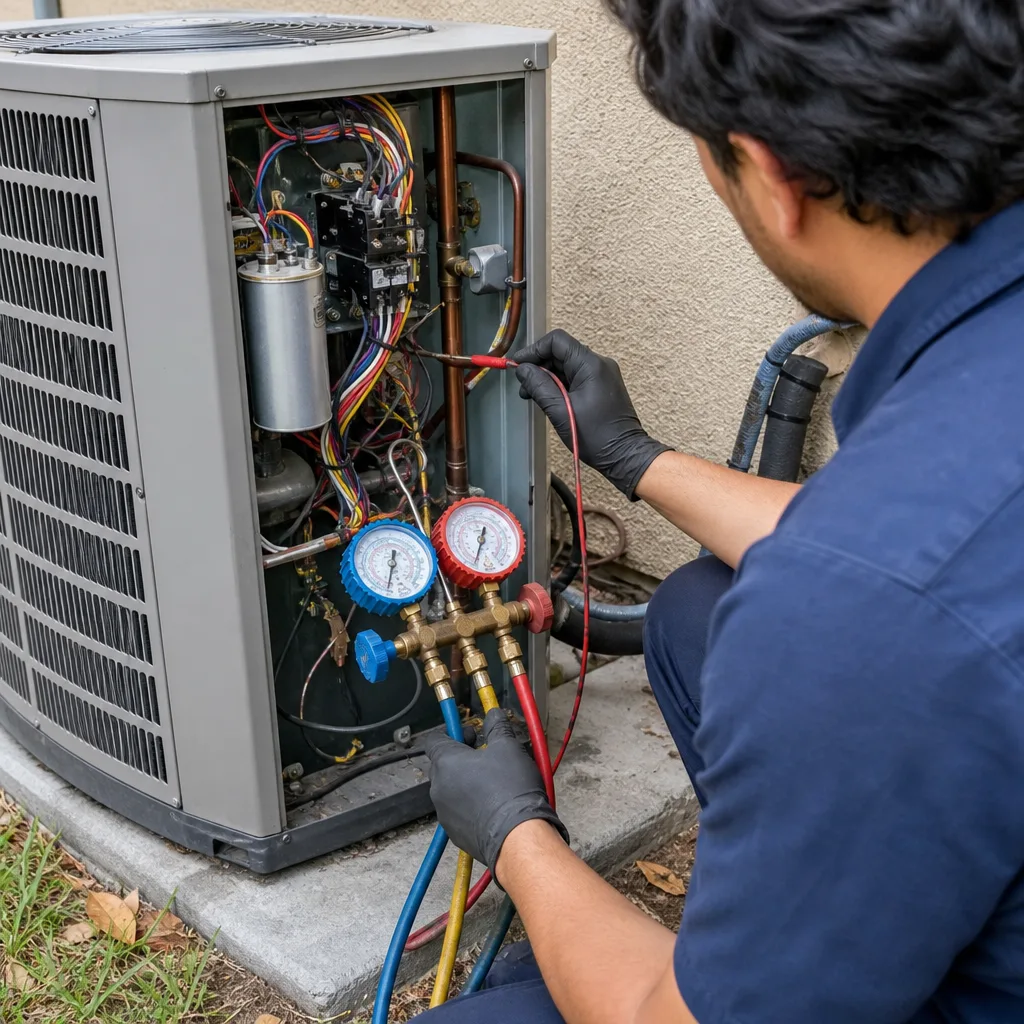
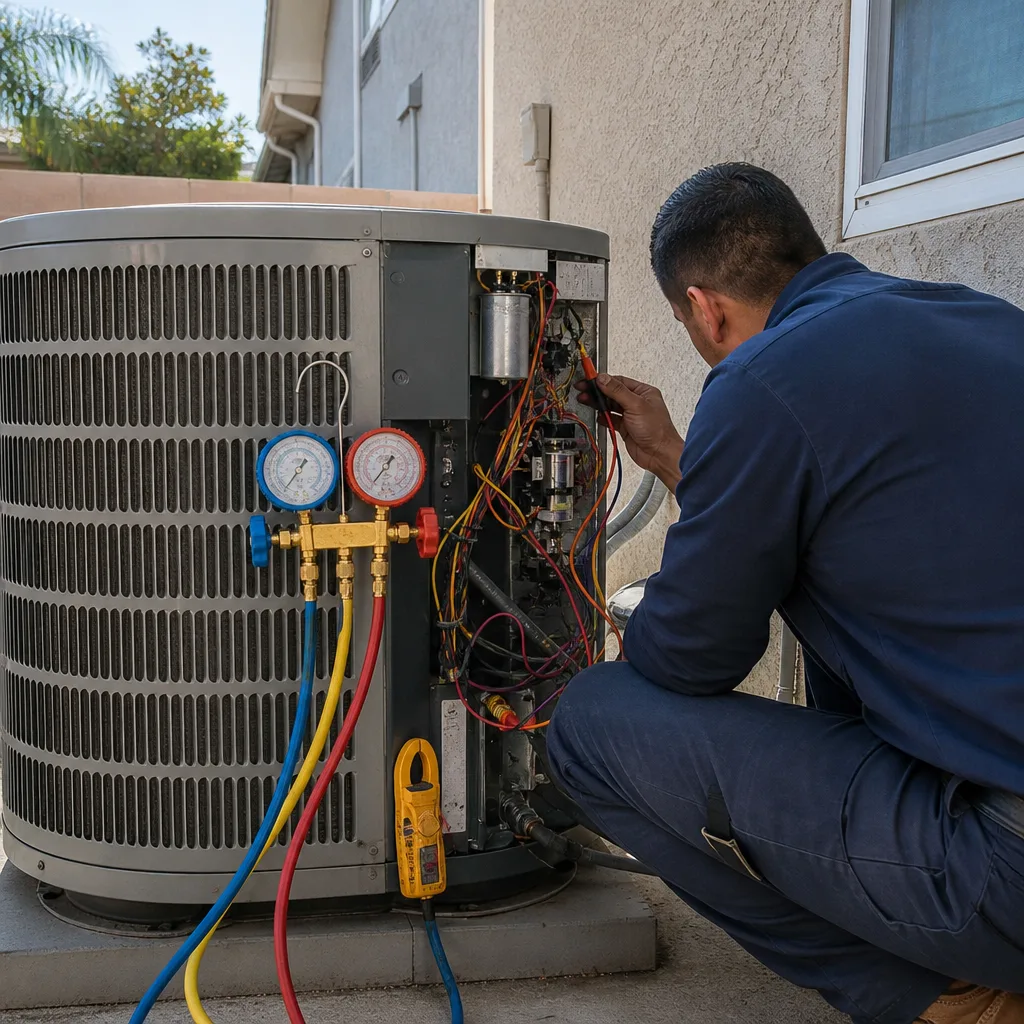
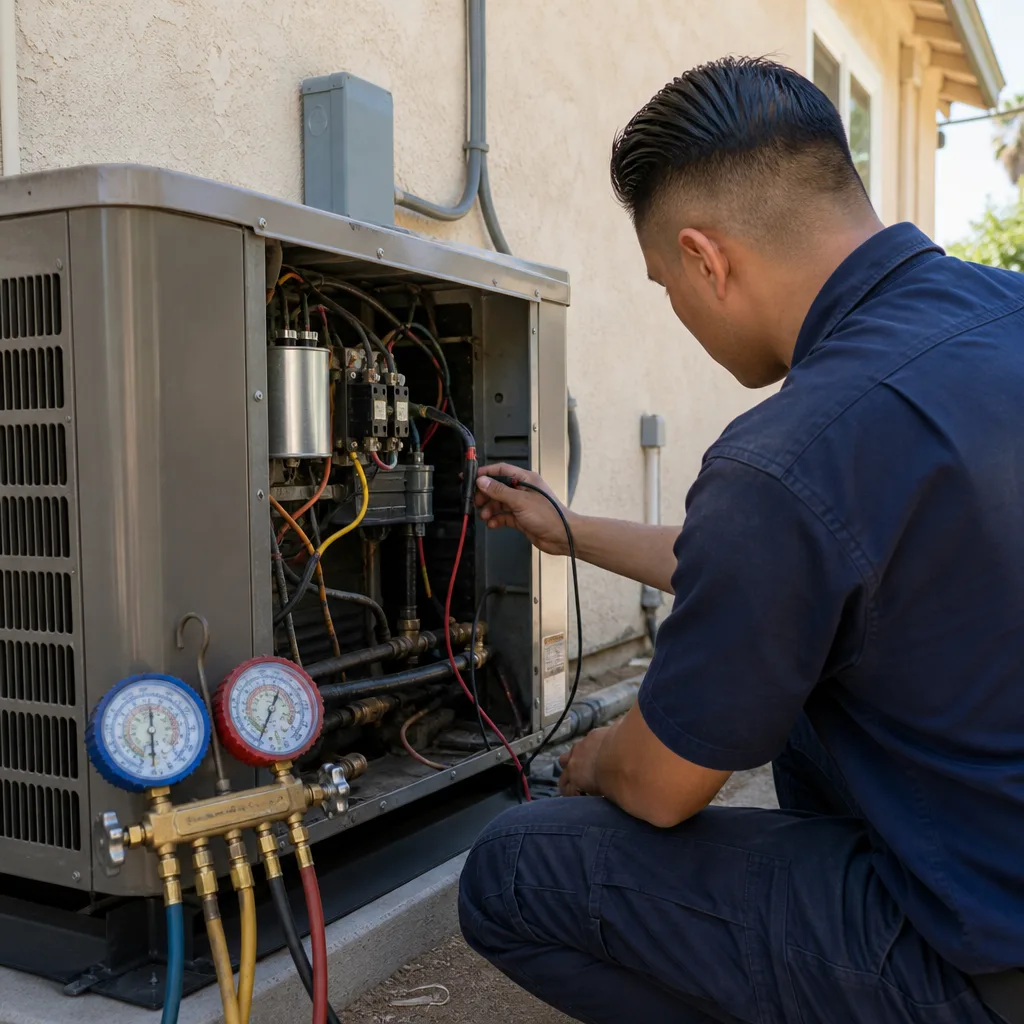
Seasonal tune-up and full diagnostic on your Carrier, Trane, or Goodman system - readings shown to you before any repair is proposed
Diagnosis first, numbers second - you approve the repair price before a single part goes in.
 Before
 After
After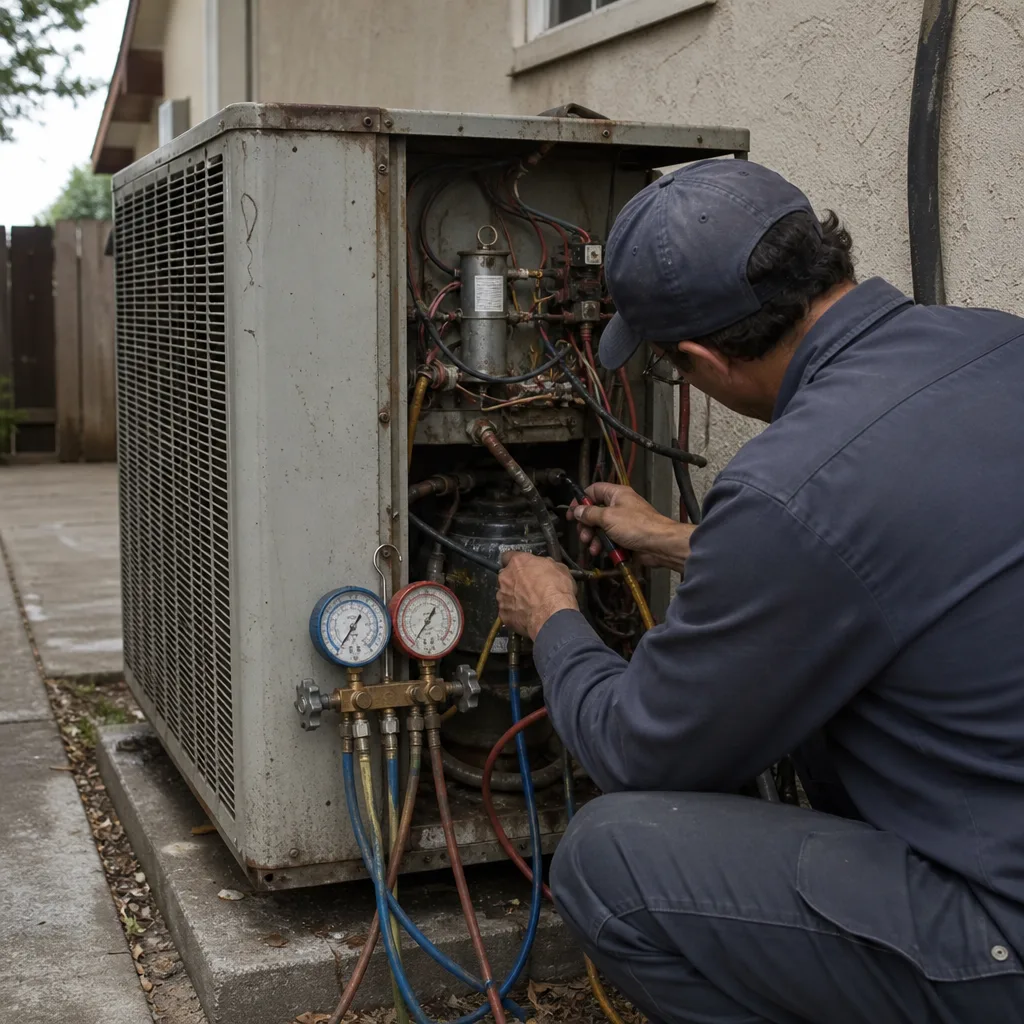 Before
 After
After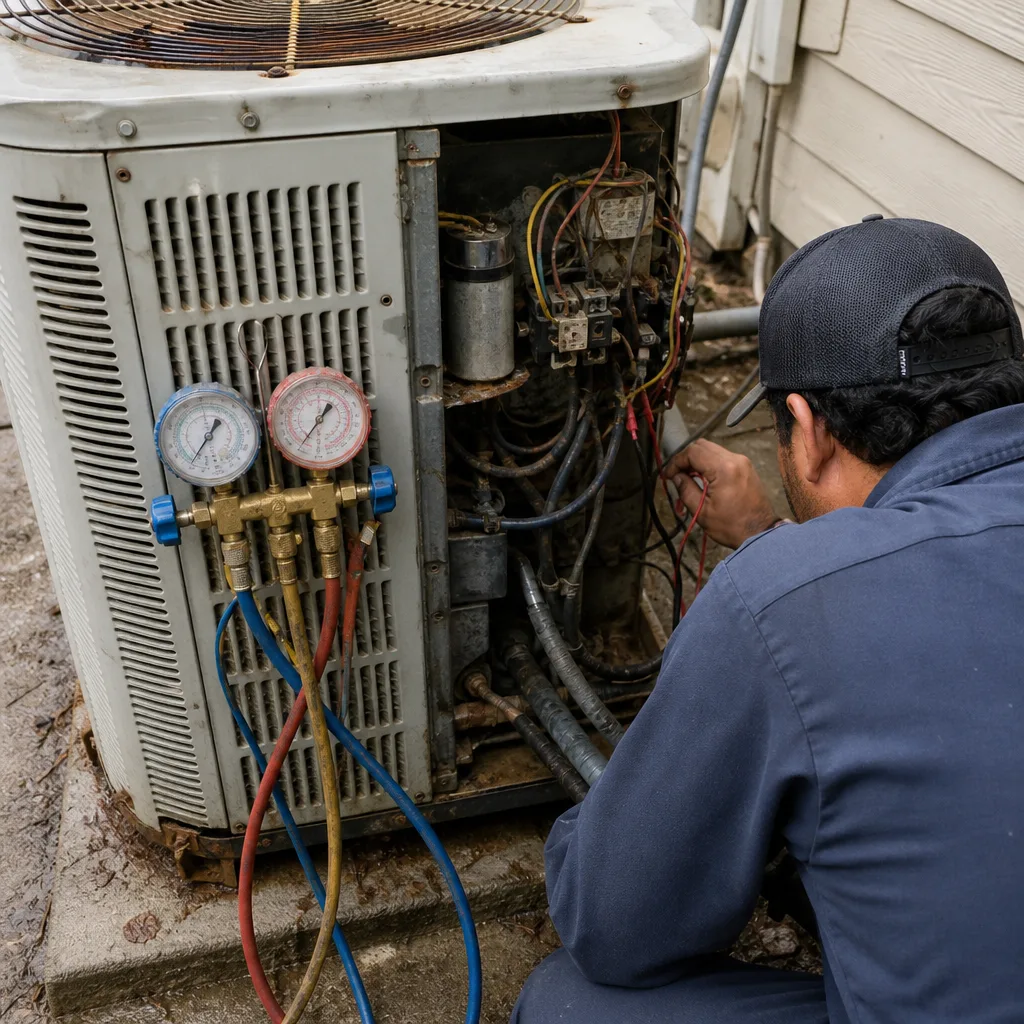 Before
 After
AfterDIY vs Professional HVAC: The Los Angeles Homeowner’s Decision Guide
Section 608 of the Clean Air Act makes it a federal crime for anyone without EPA certification to purchase or handle refrigerant. That single sentence eliminates roughly a third of the DIY HVAC advice circulating on YouTube and home forums. Yet in Los Angeles, where summer temperatures routinely push past 95°F and HVAC systems run harder than almost anywhere in the country, homeowners keep asking where the line actually sits. This guide draws that line in plain English. You’ll learn which tasks California law explicitly permits you to do yourself, which ones void manufacturer warranties the moment you touch them, and which ones can get you fined or dropped by your insurance carrier. No fear-mongering, no gatekeeping. Just the facts a Los Angeles homeowner needs before opening the panel.
Quick Answer
Most HVAC maintenance in Los Angeles is legal for homeowners to perform themselves, including filter changes, condensate drain clearing, thermostat battery replacement, and register cleaning. But refrigerant work, gas line modifications, and any repair touching the sealed system require EPA Section 608 certification or a California C-20 license, and doing them yourself can void your equipment warranty and create insurance liability. The smart play is to handle the safe maintenance tasks yourself and call a licensed contractor for everything that touches refrigerant, gas, or high-voltage electrical; our Furnace Repair Warning Signs Every Homeowner Should Know can help you spot when that call is urgent.
Table of Contents
- The Legal Map: What You Can and Cannot Do in California
- DIY Tasks That Are Actually Worth Your Time in Los Angeles
- The Warranty Clause Most Homeowners Miss
- How DIY Electrical Work Affects Your California Homeowner’s Insurance
- When a DIY First Look Helps (and When It Destroys Evidence)
- What DIY Actually Costs in Los Angeles: The Real Numbers
- Common Mistakes to Avoid
- When to Call a Professional
- Frequently Asked Questions
The Legal Map: What You Can and Cannot Do in California
California separates HVAC work into two categories under state law: work that requires a C-20 warm-air heating, ventilating, and air-conditioning contractor license, and work any homeowner can perform on their own residence. The California Contractors State License Board draws the line at any job that exceeds $500 in combined labor and materials when performed by a hired contractor. For homeowners working on their own property, the license requirement does not apply, but federal law still controls refrigerant handling.
Here is the specific breakdown for a Los Angeles homeowner:
- Legal without any license or certification: air filter replacement, condensate drain clearing, thermostat battery replacement, register and vent cleaning, outdoor condenser coil debris removal, and basic visual inspection.
- Requires EPA Section 608 certification: any work that involves adding, removing, or recovering refrigerant. This includes topping off a system that is low on charge, repairing a refrigerant leak, or recovering refrigerant before replacing a component. Without the certification, purchasing refrigerant is a federal crime.
- Requires a C-20 license: installation or replacement of a furnace, air conditioner, heat pump, or ductwork by a contractor. A homeowner may technically perform this work on their own home, but doing so without a permit violates many Los Angeles city building codes, and any equipment manufacturer will void the warranty on the spot.
- Gas line work: modifying, extending, or repairing gas supply lines serving a furnace requires a plumbing or mechanical permit in Los Angeles and is not legal DIY work under most city interpretations. We have watched homeowners in the Valley try to flex-line their own furnace connections and end up with gas leaks that required an emergency visit from the utility company.
Los Angeles County also enforces its own mechanical code requirements. The city of Los Angeles requires a permit for any HVAC equipment replacement, and that permit must be pulled by a licensed contractor or the homeowner acting as owner-builder. If you sell the home within a year of doing unpermitted work, the liability transfers to you in a way that most disclosure forms now explicitly ask about.
DIY Tasks That Are Actually Worth Your Time in Los Angeles
Some maintenance tasks are so simple, so inexpensive, and so universally recommended that paying someone else to do them makes little sense. These five jobs are the ones we tell every Los Angeles homeowner to handle themselves, and you can find more guides & resources on our blog. Each one takes less than 30 minutes, requires no special tools beyond what most households already own, and delivers measurable results in this climate.
1. Air filter replacement. This is the highest-impact DIY task you can perform, and in Los Angeles it matters more than in most places. Wildfire season, Santa Ana winds, and the constant dust of the LA basin load up filters faster than the 90-day replacement interval most manufacturers print on the packaging. In neighborhoods near the 405 or the 10, we see filters clogged solid in six weeks during fire season. Check your filter monthly, replace it when you cannot see light through it. A pleated MERV 8 filter works for most systems. MERV 13 or higher creates too much static pressure for older blowers and will cause your system to work harder, not better.
2. Condensate drain clearing. Your AC pulls moisture out of the air, and that water has to go somewhere. In Los Angeles humidity, a clogged drain line backs water into the drain pan, which then overflows into your ceiling or wall cavity. The fix: find the PVC drain line near your indoor unit, remove the cap, and pour one cup of white vinegar down the line once a month during cooling season. Flush it with water after 30 minutes. If the line is already clogged, a wet-dry vacuum applied to the exterior drain outlet for 30 seconds usually clears it. No chemicals needed.
3. Thermostat battery replacement. Systems that run on batteries will display a low-battery warning or simply stop responding. Before assuming your AC is dead, check the thermostat. Pop the faceplate off, swap in fresh AA or AAA batteries, and see if the system responds. This is the single most common “no-cooling” call we get that turns out to be a $4 fix the homeowner could have done in 60 seconds.
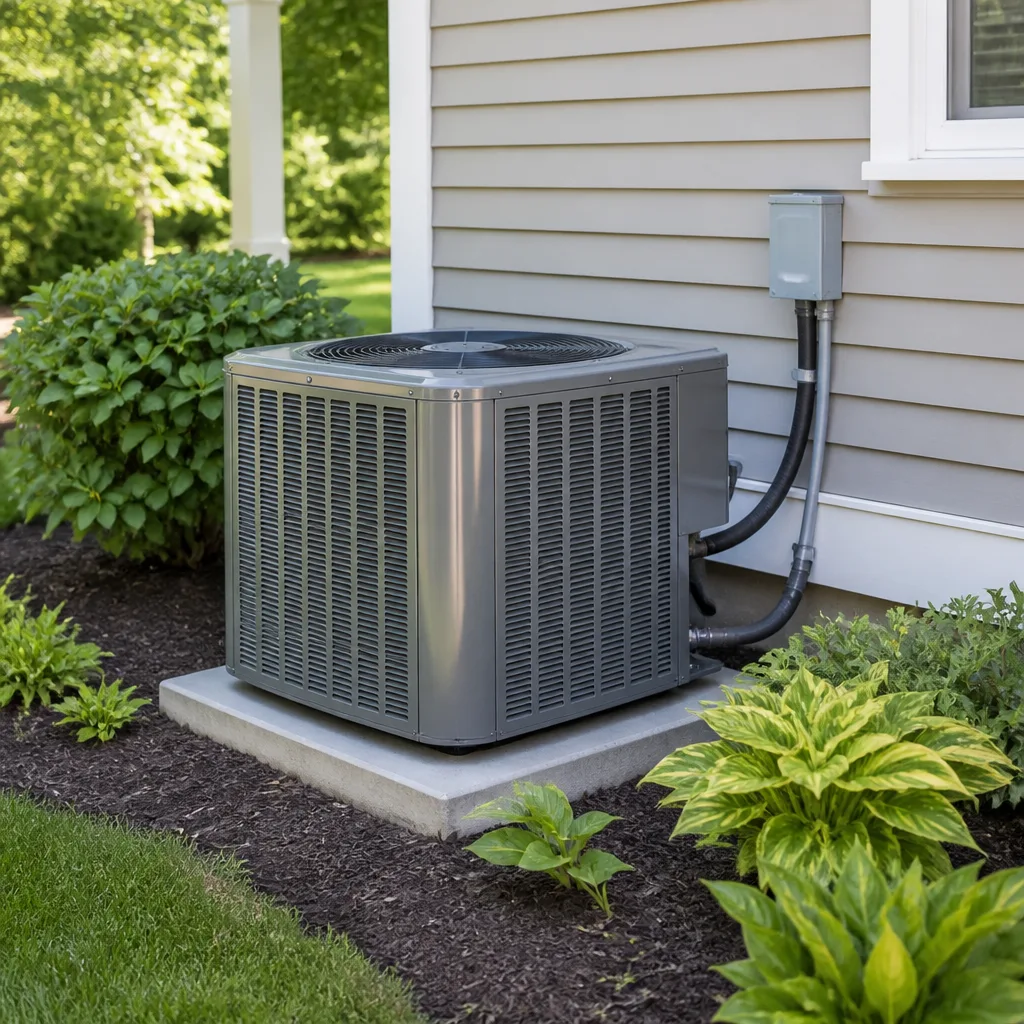
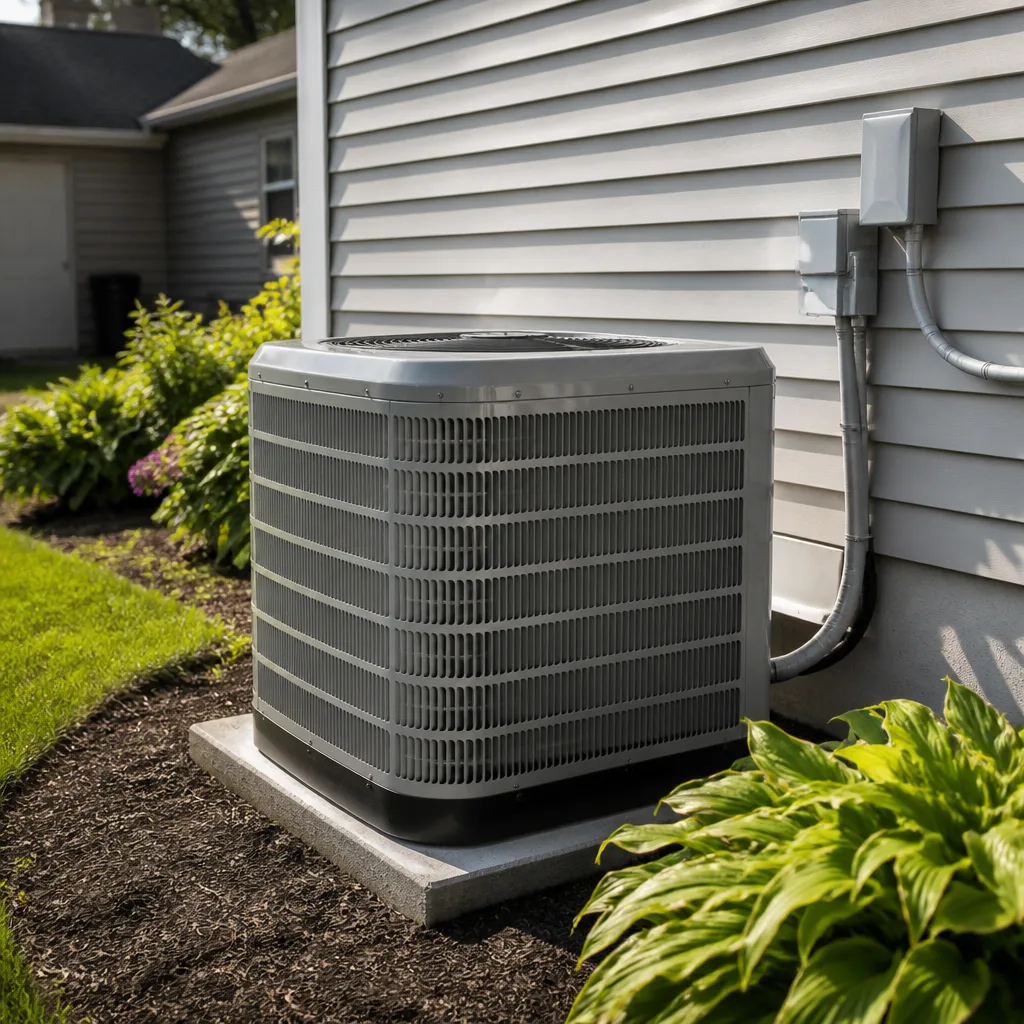
4. Outdoor condenser coil cleaning. The outdoor unit sits in Los Angeles dust, pollen, and the particulates that settle out of the marine layer. When the coils get coated, the system loses capacity and runs hotter. Turn off the breaker at the disconnect box, then use a garden hose with a spray nozzle on the gentle setting to rinse the coil fins from the inside out. Never use a pressure washer. Never use coil cleaner chemicals without flushing them completely. And never bend the fins with anything stiffer than a soft brush. Do this twice a year, before summer and after fire season.
5. Register and vent cleaning. Supply registers collect hair, dust, and pet dander. Remove them with a screwdriver, vacuum both sides, and wipe down the opening with a damp cloth. While you are at it, make sure no furniture, rugs, or curtains are blocking return air grilles. Restricted airflow is the second most common cause of avoidable service calls we see in Los Angeles homes.
The Warranty Clause Most Homeowners Miss
Most residential HVAC equipment sold in the last decade carries a 10-year parts warranty when registered within 60 to 90 days of installation. A 10-year parts warranty on a compressor is worth real money, often between $800 and $2,400 in avoided parts costs on a single repair. But buried in the fine print of every major manufacturer’s warranty terms, including Carrier, Daikin, Bryant, and American Standard, is a clause that voids the warranty if the sealed system is opened by anyone other than a licensed contractor.
Here is what that means in practice:
- Adding refrigerant without a license voids the warranty on the compressor, evaporator coil, and metering device. The manufacturer will not pay for parts, and the labor is on you regardless.
- Replacing a component yourself, even a simple one like a capacitor or contactor, technically violates most warranty terms if the installation deviates from manufacturer specifications. Some brands are stricter than others. Carrier and Bryant have tightened warranty claim review in recent years and now request proof of installation by a licensed contractor for major component failures.
- Using non-OEM replacement parts gives the manufacturer a defensible reason to deny a claim, even if the aftermarket part did not cause the failure.
The financial math is straightforward. A DIY repair that saves you $180 on labor could cost you thousands if it voids the warranty on a compressor that fails 14 months later. In Los Angeles, where systems run 2,000-plus hours per year and compressors fail more often than in milder climates, that warranty protection matters more than it would in San Diego or San Francisco. We tell our customers to treat the warranty as an asset worth protecting, not a document to ignore.
How DIY Electrical Work Affects Your California Homeowner’s Insurance
California homeowner’s insurance policies typically exclude coverage for damage caused by unpermitted or improperly performed electrical work. That exclusion is not buried in obscure fine print. It is a standard clause in most policies issued in this state, and it has received more attention from carriers since the wildfire seasons of 2018, 2020, and 2025 when insurers began scrutinizing electrical claims more aggressively.
Here is what that means for DIY HVAC work:
- If you rewire a furnace control board yourself and the connection faults, causing a fire, your insurer may deny the structural damage claim on the grounds that the work was not performed by a licensed contractor.
- If you install a heat pump yourself and the resulting electrical connection causes damage to your panel or wiring, the same exclusion may apply.
- Insurance adjusters in California are trained to look for signs of unpermitted work after a claim. A furnace installed without a city permit is discoverable through city records, and it is a common denial trigger.
The pattern we see in Los Angeles is consistent: homeowners who handle the safe maintenance tasks themselves never have issues with their carriers. Homeowners who attempt electrical modifications or full equipment swaps sometimes get away with it for years. Then something fails, a claim gets filed, and the exclusion hits. The risk is not the day-to-day operation of the equipment. It is the tail risk of a claim denial on top of whatever damage occurred. For most people, that is an unacceptable asymmetry.
When a DIY First Look Helps (and When It Destroys Evidence)
There is a middle ground between calling a technician for every minor issue and attempting repairs you are not qualified to make. That middle ground is the diagnostic first look: a series of quick checks any homeowner can perform before making the phone call. Done correctly, it can save you a service charge for something trivial. Done incorrectly, it can erase the evidence a technician needs to find the actual fault.
Useful checks you can do before calling:
- Check the thermostat. Is it set to cool? Is the fan set to Auto? Is the display lit? Dead batteries are the most common false alarm, and the fix takes one minute.
- Check the breaker at the panel. A tripped breaker often indicates an underlying electrical issue, but if it resets and holds, you may have just experienced a transient surge. The disconnect box near your outdoor unit has its own breaker or pull-out handle. Confirm both are on.
- Check the condensate overflow switch. If the drain line clogs, the safety switch cuts power to the system. Clearing the drain restores operation without a service call.
- Listen. A clicking sound at the outdoor unit but no compressor start is a classic capacitor symptom. Note the sound when you call. It helps the technician come prepared.
Checks that can make things worse:
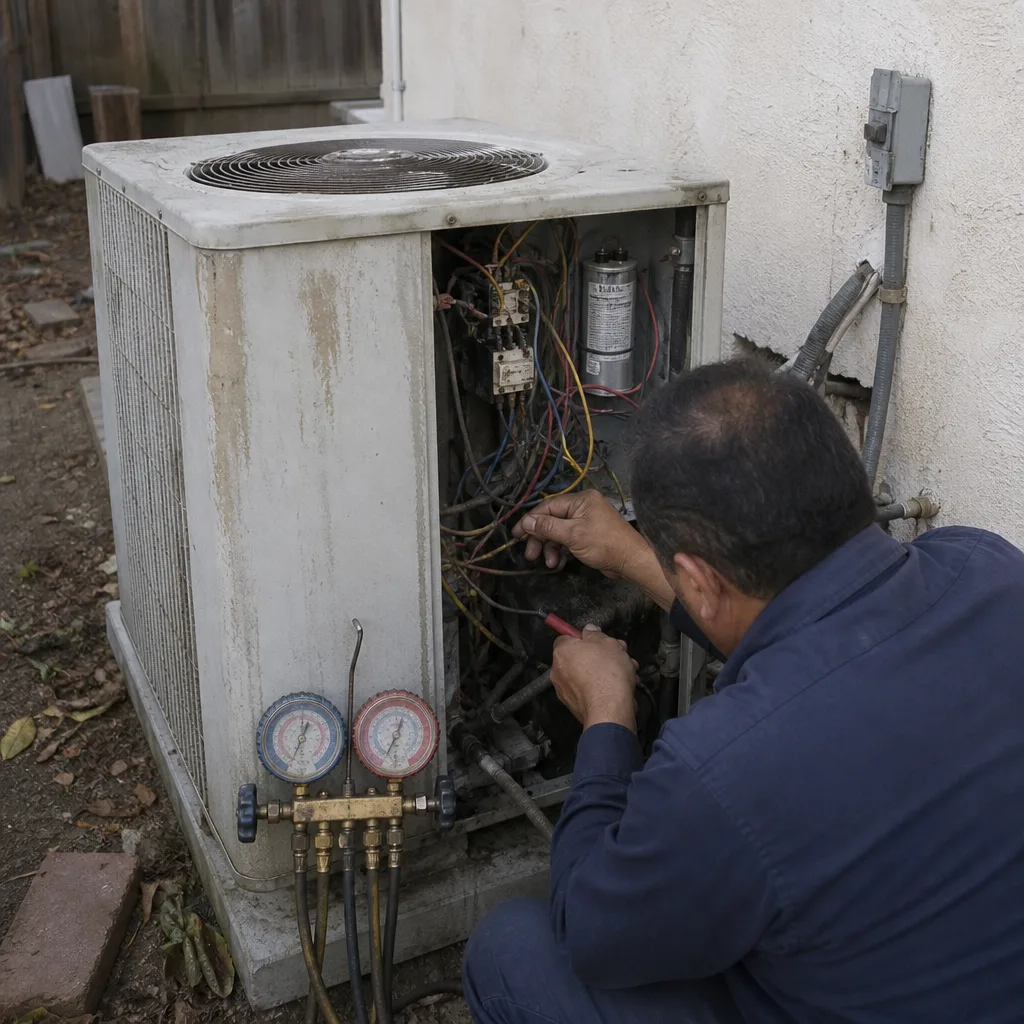
- Opening the refrigerant service valves or connecting gauges without certification. You cannot legally purchase refrigerant, and connecting a gauge manifold to a system you are not certified to service contaminates the charge and can introduce air into the lines.
- Poking wires or bypassing safety switches to force the system to run. Safety switches exist for a reason. Bypassing one to get cooling for one more night can damage the compressor and create a fire hazard.
- Attempting to diagnose a refrigerant leak by feel or sound. Refrigerant leaks are often invisible and inaudible. A technician uses electronic leak detectors and UV dye. Your best diagnostic contribution is noting when the system stopped cooling and whether it has been gradually losing capacity over weeks or failed suddenly overnight.
The general rule: if the check involves reading a display, flipping a switch, or listening, do it. If it involves opening a sealed system, connecting hoses, or touching high-voltage wiring, stop and call a professional. The diagnostic evidence on a failed compressor or a leaking coil is worth preserving, not erasing.
What DIY Actually Costs in Los Angeles: The Real Numbers
DIY HVAC guides rarely talk honestly about sunk costs. They present the parts cost as if tools, time, and mistakes are free. Here is what the actual numbers look like for Los Angeles homeowners in the current market.
| Repair or Task | DIY Parts Cost | Professional Cost in Los Angeles | Realistic DIY Outcome |
|---|---|---|---|
| Air filter replacement | $8 – $25 per filter | $80 – $180 (service visit) | Do it yourself. No reason not to. |
| Condensate drain clearing | $0 – $10 (vinegar or shop vac) | $150 – $300 | Do it yourself monthly. Worth it. |
| Thermostat battery | $4 – $9 | $120 – $200 | Do it yourself. Takes one minute. |
| Capacitor replacement | $25 – $60 for the part | $180 – $380 installed | Technically possible, but the high-voltage risk and the fact that the system will not run without the correct microfarad rating makes this a judgment call. |
| Contacted replacement | $20 – $55 | $220 – $400 | Same voltage concerns. Also, the contactor is not always the root cause. A burned contactor often indicates a failing compressor. |
| Refrigerant top-off | Illegal without EPA 608 | $150 – $350 per pound plus leak search | Not a legal DIY option. The system also has a leak that must be found or you will refill it annually. |
| Condenser fan motor | $80 – $250 | $450 – $900 | Doable if you are comfortable with wiring, but incorrect rotation or improper blade alignment shortens motor life. |
These numbers reflect what we see on service calls across Los Angeles, from the Westside to the San Gabriel Valley. Parts prices vary by brand. Daikin and American Standard parts tend to run on the higher end. Goodman and Rheem are usually more affordable. The labor ranges reflect the higher cost of doing business in Los Angeles compared to the rest of California, and they assume a licensed, insured contractor who stands behind the work.
The hidden DIY cost is diagnostic error. A homeowner replaces a $50 capacitor with the best intentions, only to discover the real problem was a failing compressor drawing excessive current. The capacitor was a symptom. Now the system is down, the compressor is dead, and the homeowner is out $50 for a part that was not the actual failure. That scenario plays out weekly in this city. The professional cost includes diagnostic time, which is the most undervalued part of the service call.
Common Mistakes to Avoid
- Using a pressure washer on the outdoor coil. The fins bend easily, and a bent coil loses airflow across the entire condenser. A garden hose on gentle setting is all you need. We replace coils in Los Angeles every summer because someone borrowed a pressure washer for “deep cleaning.”
- Closing vents in unused rooms to save energy. This increases static pressure in the ductwork, which makes the blower work harder and can shorten its life. It does not redirect airflow the way people assume. The return air still tries to pull from those rooms regardless.
- Buying the biggest air filter you can find and forcing it in. A MERV 13 filter in a system designed for MERV 8 restricts airflow enough to freeze the indoor coil in some Los Angeles homes. Match the filter to the system design, not the marketing on the package.
- Attempting a refrigerant charge with a YouTube video as your only training. Section 608 penalties include fines up to $37,500 per day per violation. That is not a scare tactic. It is the federal statute, and enforcement has increased in the last five years.
- Skipping the permit on an equipment replacement. Los Angeles city code requires a permit for HVAC equipment replacement. Selling a home with unpermitted work creates disclosure issues that can cost thousands at closing.
- Dismissing a tripped breaker as a one-off without investigating. A breaker that trips once and holds may be a transient event. A breaker that trips repeatedly is telling you something about the compressor or the wiring. Repeatedly resetting it can cause a fire.
- Letting a small refrigerant leak go because the system “still cools fine.” A system with a slow leak will gradually lose capacity and run longer cycles. That means higher SMUD or LADWP bills every month, plus eventual compressor failure when the system runs with insufficient refrigerant.
When to Call a Professional
Call a licensed contractor when the issue involves refrigerant, gas, high-voltage wiring, or a compressor. These four areas cover most of the serious failures an HVAC system can experience. If your system is making a sound you have never heard before, that is also a call trigger. Compressors rarely fail quietly, and the earlier a technician catches a failing component, the cheaper the fix. Dalton Heating & Air offers free estimates in Los Angeles, and every service call includes a written price before any work begins. Call (361) 306-9515 if you are uncertain whether your issue is DIY-safe. A quick phone conversation costs nothing and can save you from an expensive mistake.
Frequently Asked Questions
There is no state law prohibiting a homeowner from replacing a capacitor on their own system, but the work involves high-voltage electrical components that retain a charge even after the power is disconnected. If you are comfortable discharging the capacitor safely and matching the exact microfarad rating, it is legal. If you are uncertain, the professional diagnosis is cheaper than a hospital visit or a fried control board.
No. Federal law under Section 608 of the Clean Air Act requires EPA certification for anyone who handles refrigerant, and that certification is required to legally purchase refrigerant in the first place. Los Angeles homeowners cannot buy refrigerant without the license, and attempting to add it through any other channel is a federal violation.
It depends on the repair and the manufacturer. Replacements of filters, thermostats, and drain clearing do not affect warranty status. Any work on the sealed system, including refrigerant handling or component replacement inside the refrigerant loop, will void the warranty on most brands, including Carrier, Daikin, Bryant, and American Standard. If your equipment is still under the 10-year parts coverage, it is worth protecting by using a licensed contractor for anything that touches the sealed system.
Most repairs in Los Angeles run between $150 and $450 for common issues like capacitors, contactors, and drain clearing. More involved repairs, including condenser fan motors, blower motors, and control boards, typically range from $450 to $900. Compressor replacement can run $1,800 to $3,500 depending on the brand and system size. For a precise quote on your specific system, call Dalton Heating & Air at (361) 306-9515 for a free estimate. We provide a written price before any work starts, every time.
Check your filter monthly and replace it when it looks loaded with dust, which in Los Angeles typically means every 30 to 60 days during wildfire season and every 60 to 90 days the rest of the year. Homes near freeways, in dusty neighborhoods, or with pets will need more frequent changes. A clogged filter is the single most common cause of avoidable HVAC failures we see in this city.
The most common mistake is bypassing a safety switch to force the system to run. Condensate overflow switches and high-pressure cutouts exist to protect the equipment. When a homeowner jumps the switch because the AC keeps shutting off, the underlying problem gets worse and the repair ends up costing more. The safety switch was doing its job. The correct move is to find out why it tripped, not to disable it.
The Bottom Line
The DIY-versus-professional decision in HVAC is not about skill. It is about law, warranty, insurance, and liability. Filters, drains, thermostats, and registers are yours to handle, and they are worth doing well. Refrigerant, gas, high-voltage, and sealed-system work belongs to the licensed contractor who carries the warranty and the insurance if something goes wrong. Dalton Heating & Air has been serving Los Angeles homeowners since 2003 under The Garrison Standard, which means a written price before any work starts and a written guarantee on every repair. For AC repair in Los Angeles, heat pump installation in Los Angeles, or furnace repair in Los Angeles, call (361) 306-9515 for a free estimate. You will know the price before we start, and you will know who is showing up before we arrive.
Written by Marco Benitez, Owner at Dalton Heating & Air, serving Los Angeles since 2003.