
Last updated October 9, 2026
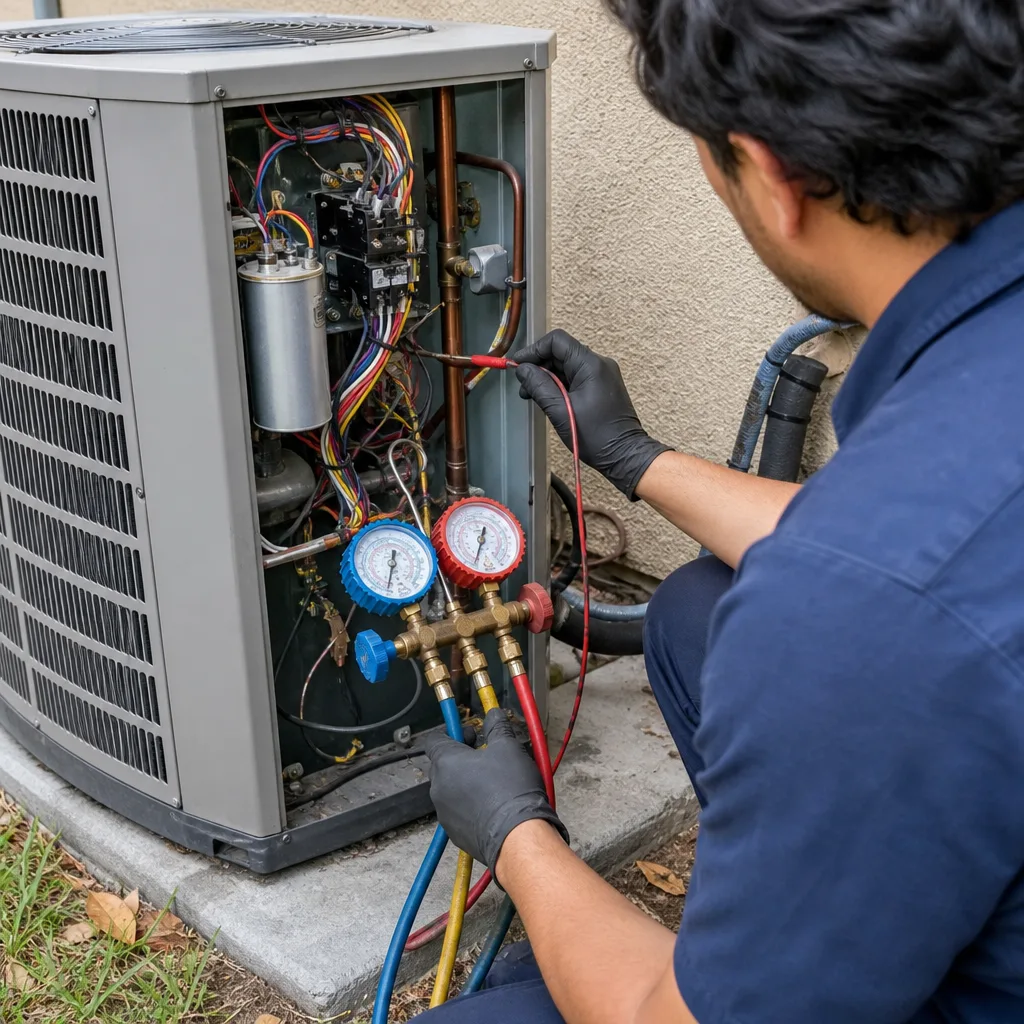
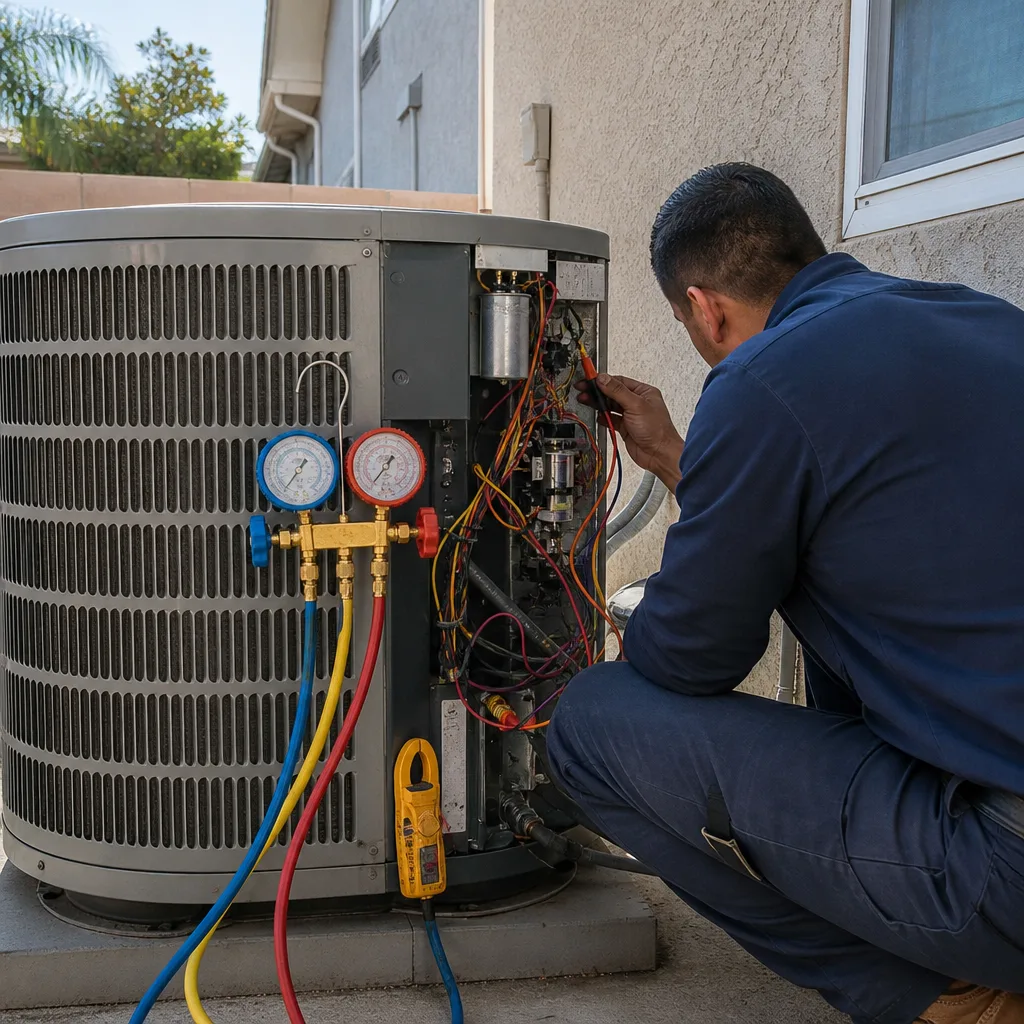
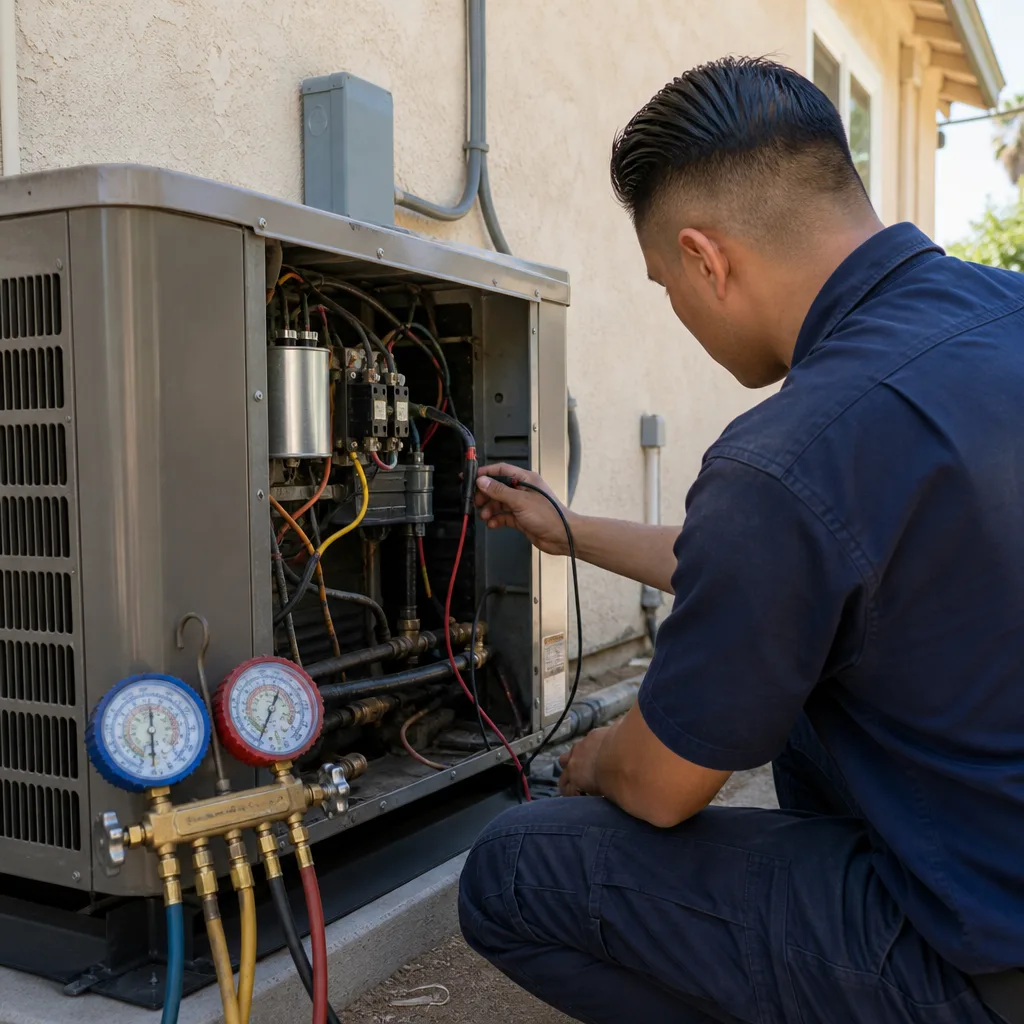
Seasonal tune-up and full diagnostic on your Carrier, Trane, or Goodman system - readings shown to you before any repair is proposed
Diagnosis first, numbers second - you approve the repair price before a single part goes in.
 Before
 After
After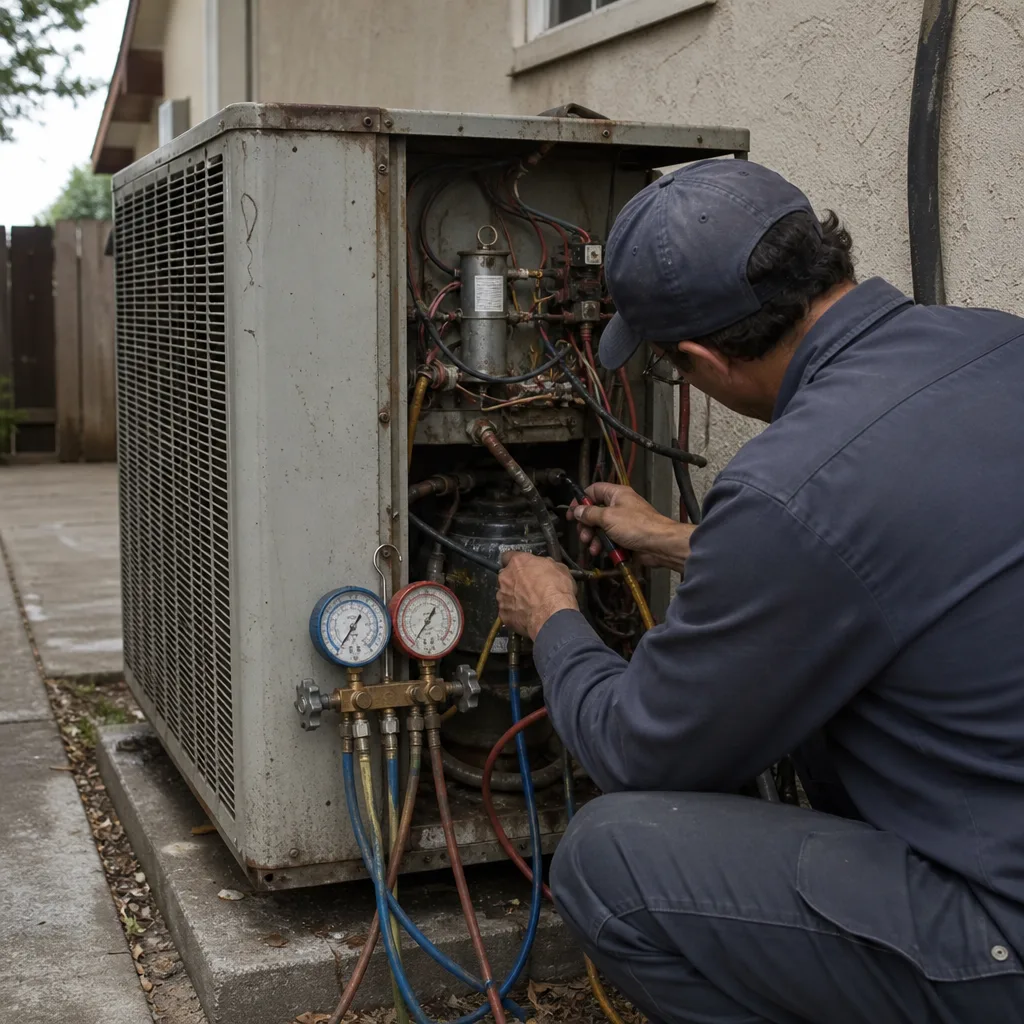 Before
 After
After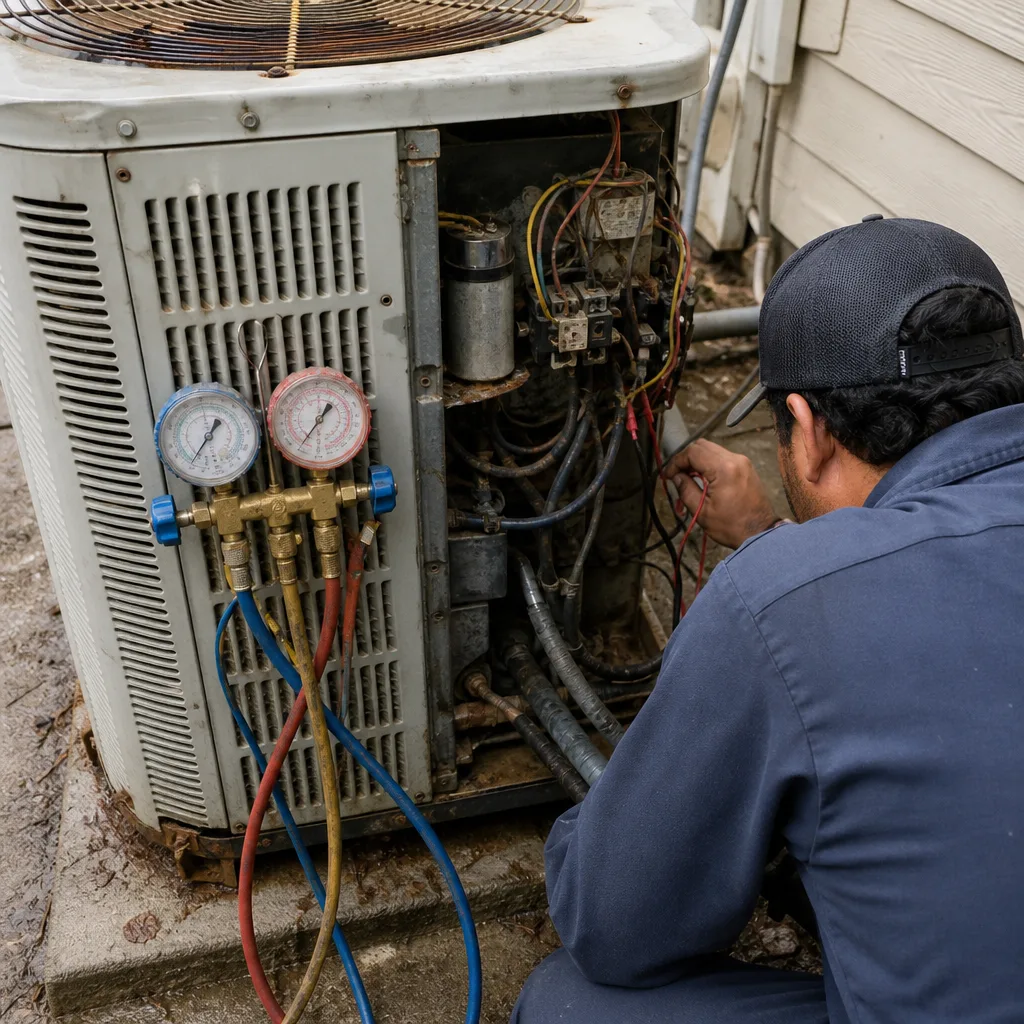 Before
 After
AfterSeasonal HVAC Care for Los Angeles: Year-Round Homeowner’s Guide
The standard “spring and fall tune-up” schedule assumes your system takes a real break in winter. In the San Fernando Valley, cooling systems often run in February during Santa Ana conditions. Treating an LA system like it’s had an off-season means missing problems that built up year-round. This guide gives you a realistic Los Angeles maintenance calendar, a wildfire smoke protocol, and the specific checks that matter for our climate. For more guides & resources, visit our blog.
Quick Answer
Seasonal HVAC care in Los Angeles means scheduling your main cooling checkup in February or March before the first heat wave, swapping filters more often during wildfire smoke season, and doing a heating system startup test in December. You don’t need four tune-ups a year here. You need two well-timed cooling checks, one heating confirmation, and a filter strategy that flexes with air quality.
Table of Contents
- The Real Los Angeles HVAC Calendar
- Your Microclimate Changes Your Schedule
- Wildfire Smoke Season Protocol
- The Heating Startup Check LA Homeowners Forget
- Using Your Electric Bill as a Performance Benchmark
- The 15-Minute Monthly Checklist
- Common Mistakes to Avoid
- When to Call a Professional
- Frequently Asked Questions
The Real Los Angeles HVAC Calendar
Los Angeles doesn’t have four distinct HVAC seasons. We have one long cooling season that can stretch from March through November, two short transition windows, and a heating season that’s sporadic at best. Here’s the calendar that actually matches how systems run in this climate:
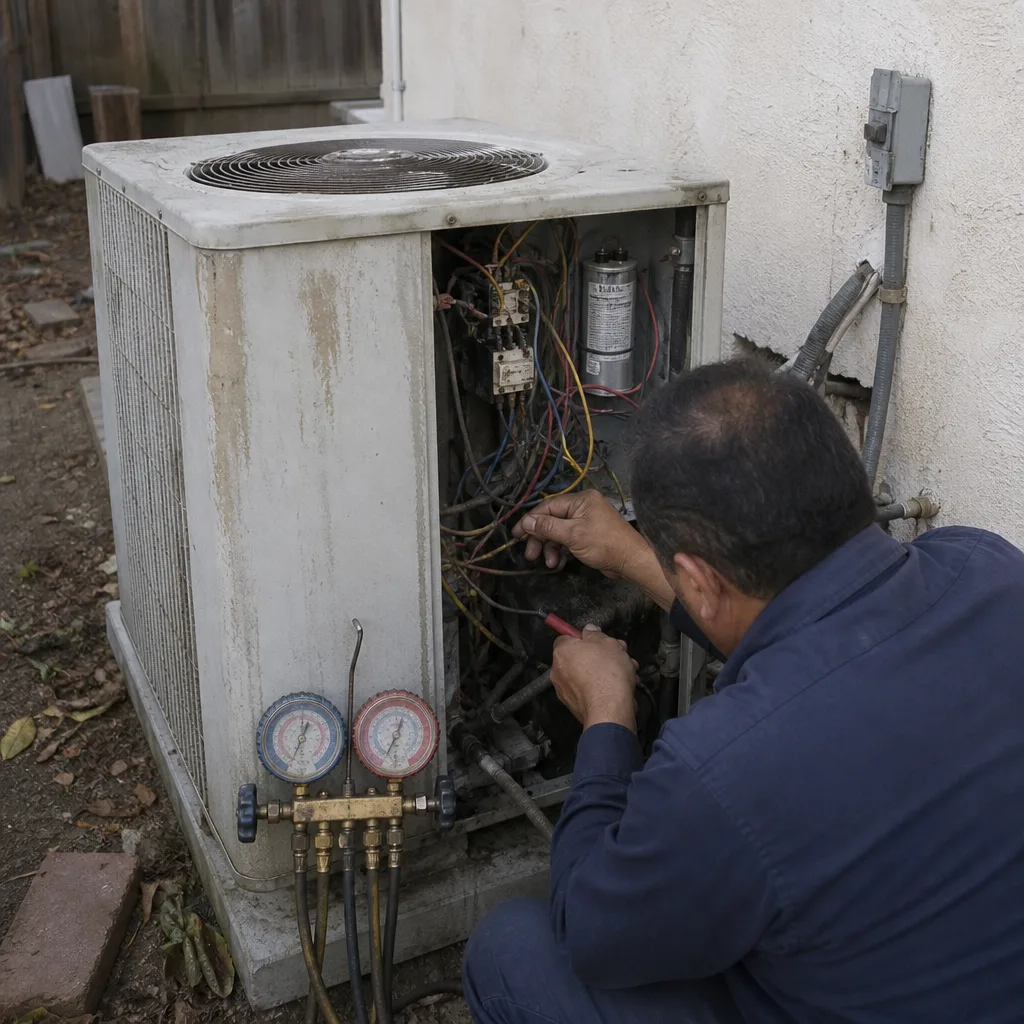
February: Pre-heat-season check. This is the most important service of the year, and most LA homeowners skip it. By mid-February, we’re weeks away from the first 85-degree day in the Valley. A system that sat partially idle over the mild winter may have developed issues that won’t show until it’s under full load. We check refrigerant levels, capacitor health, condenser coil condition, and electrical connections now so your first hot day isn’t your first breakdown. Follow our AC Repair Maintenance Checklist for Los Angeles Homeowners for a complete pre-season review.
May: Pre-peak-load verification. This is not a duplicate of the February visit. This is a shorter check focused on what’s changed: filter condition, drain line flow, thermostat calibration, and system performance under real heat. May is also when you should verify that your system can hold a 20-degree temperature differential between intake and supply air. If it can’t, something’s off.
October: Post-smoke-season filter audit. After a summer of wildfire smoke, your filter and evaporator coil have been working harder than they ever should. October is a lung health reset: inspect the filter housing for bypass gaps, check the blower wheel for particulate buildup, and clean the condensate line. If you ran MERV-13 filters during smoke events, switch back to your normal filter grade once AQI stabilizes so you’re not over-restricting airflow all winter.
December: Heating system confirmation. LA furnaces sit unused for months at a time. The first cold snap is not when you want to discover a cracked heat exchanger. More on this below.
Your Microclimate Changes Your Schedule
Los Angeles spans several climate zones, and the maintenance timing that works for a westside homeowner is wrong for someone in Woodland Hills or Sylmar. Here’s how to adjust:
Valley homeowners (San Fernando Valley, Woodland Hills, Northridge, Van Nuys, Reseda): Your cooling season starts earlier and runs harder. Move the February check to late January or early February. Valley systems routinely log 2,000+ runtime hours per year, which is double what a coastal system sees. That means capacitors wear out faster, refrigerant leaks develop sooner, and condenser coils collect more dust and pollen. Consider twice-yearly coil cleaning instead of once.
Westside and coastal homeowners (Santa Monica, Venice, Playa del Rey, Mar Vista): Salt air is your enemy. Condenser coil corrosion is a real problem within a few miles of the ocean. Your maintenance should include an annual coil inspection specifically looking for fin degradation and rust. Coastal systems also run less, which sounds good but means oil in the compressor can settle when the system sits idle for weeks. Running the system for 20 minutes every few weeks during mild weather keeps the compressor lubricated.
Inland and foothill homeowners (Pasadena, Glendale, La Cañada, Altadena): You sit between the valley heat and the coastal fog, which means your system cycles more erratically. Humidity swings are wider here, so drain line maintenance matters more. Algae growth in condensate lines is a top service call in these neighborhoods.
South Bay and Long Beach area: You deal with both marine air and refinery-adjacent particulates. Filters load up faster than you expect, even without wildfire season. Check monthly, not quarterly.
Wildfire Smoke Season Protocol
Wildfire smoke is the only variable in Los Angeles HVAC care that can override your entire maintenance plan without warning. Here’s what to do when AQI climbs past 100:
Step 1: Upgrade your filter immediately. During AQI events above 100, install a MERV-11 or MERV-13 filter. A standard fiberglass or low-MERV pleated filter is not designed to capture smoke particulates, which are 0.4 to 0.7 microns. Those particles pass right through and recirculate through your home.
Step 2: Check the filter every two weeks. Smoke loads a filter far faster than normal household dust. A filter that normally lasts 90 days can be saturated in two weeks during a bad smoke event. Run your fingers across the filter surface: if it feels caked or you can see a gray film, replace it regardless of schedule.
Step 3: Understand the evaporator coil risk. When a filter is saturated, two things happen. First, airflow drops, which reduces cooling capacity and increases energy use. Second, smoke particulates bypass the filter around the edges and deposit directly on the evaporator coil. That coating reduces the coil’s ability to transfer heat, which means longer runtimes, higher bills, and eventually a system that can’t reach setpoint. Coil cleaning after a heavy smoke season is not optional in LA; we’ve pulled coils out of Valley homes that looked like they had a felt blanket on them.
Step 4: Consider running the fan cyclically. During smoke events, set your thermostat fan to “on” or “circulate” for a few hours a day so the system is actively filtering air even when the AC isn’t calling for cooling. This is a temporary measure; running the blower continuously during normal conditions wastes electricity and adds wear.
After the smoke clears and AQI returns below 50, replace the loaded filter with a clean one, and schedule a coil inspection if you ran high-MERV filtration for more than a few weeks. The switch back matters: a MERV-13 filter creates more static pressure than a MERV-8, and running it year-round can strain the blower motor on systems not designed for it.
The Heating Startup Check LA Homeowners Forget
In most of the country, heating systems get a fall tune-up. In Los Angeles, furnaces often go from April to November without running once. That long idle period creates specific risks. Here’s what should happen before the first cold night:
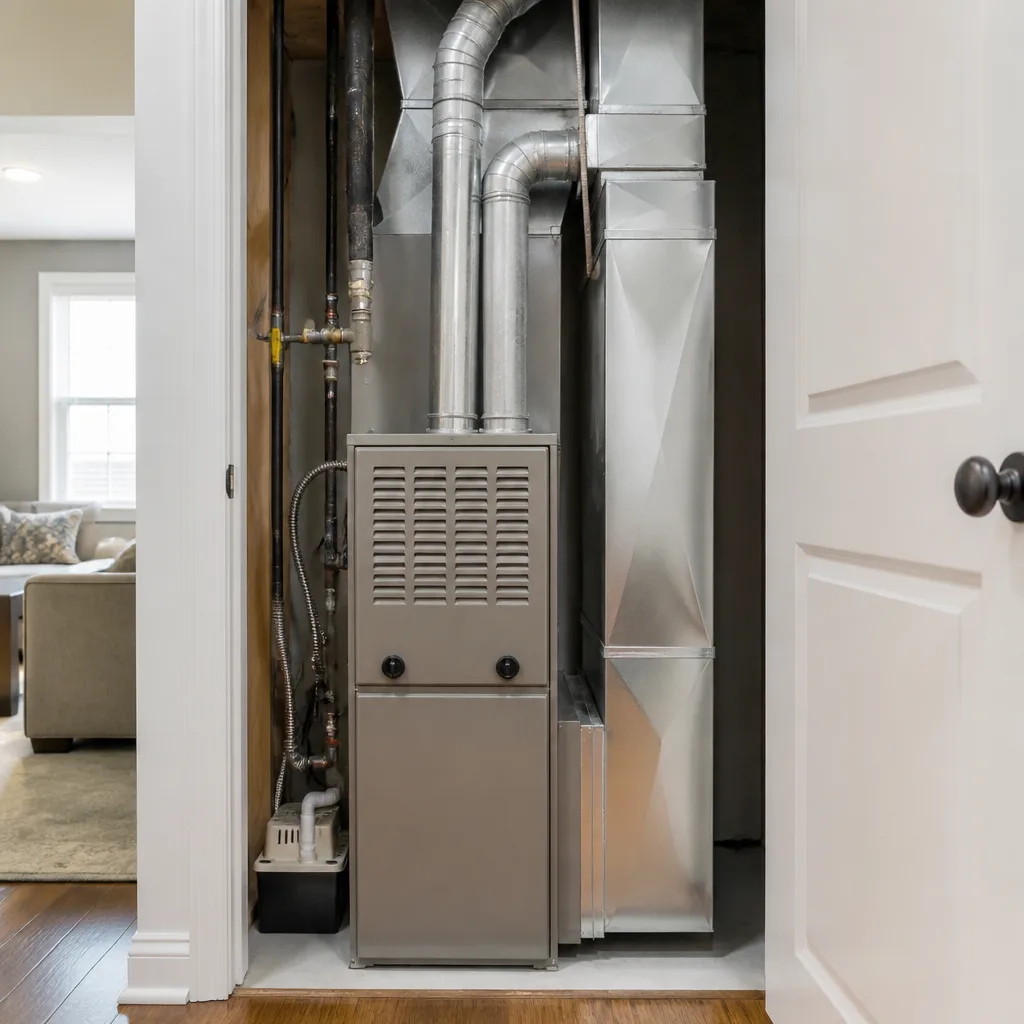
Heat exchanger inspection. A cracked heat exchanger can leak carbon monoxide into the home. This is the single most important heating safety check, and it’s the one that gets skipped the most because the furnace “worked fine last winter.” Cracks develop slowly, and an LA furnace that cycles 30 days a year still ages, still expands and contracts, and still develops stress fractures. No DIY workaround here; this requires a trained technician with a combustion analyzer.
Igniter or pilot verification. Gas furnaces use either a hot surface igniter or a standing pilot. Igniters are ceramic and brittle; sitting idle doesn’t hurt them, but the first cold start is when weak igniters crack. If your furnace makes the whoosh of gas but no flame, that’s the igniter. Call before the first cold snap, not during it. Our furnace repair response times in Los Angeles spike by 300% the week of the first cold front.
Venting check. Birds, rodents, and debris can block the flue over a long idle period. A blocked flue means combustion gases back up into the home. The check takes five minutes and involves looking at the vent termination and confirming draft.
Test run. Turn the thermostat to heat and set the temperature a few degrees above room temp. If you smell a dusty burning odor for the first few minutes, that’s normal; it’s accumulated dust burning off the heat exchanger. If the odor persists or you smell gas, shut it down and call a technician.
Using Your Electric Bill as a Performance Benchmark
Your electric bill is the best early warning system for HVAC decline, but only if you know your baseline. Here’s how to read it:
First, establish what your system costs to run in a normal month. Take your average August bill and your average April bill. The difference is roughly your cooling cost. For most single-family homes in Los Angeles, cooling accounts for 40-60% of summer electric usage.
A 15-20% unexplained increase in that cooling cost, with no change in thermostat settings, outdoor temperature, or household occupancy, means your system is working harder than it should. The usual suspects:
- Low refrigerant charge: The system runs longer to achieve the same temperature drop. This is the most common cause of gradual efficiency loss.
- Dirty condenser coils: The outdoor unit can’t reject heat effectively, so the compressor runs hotter and longer.
- Worn capacitor: A weakening capacitor causes the compressor to start inefficiently, drawing more power each cycle.
- Duct leakage: Conditioned air escapes into the attic or crawlspace. Duct leakage in LA homes is common, especially in older construction where duct tape has dried and peeled.
Track your usage month over month. If you see a sudden spike that doesn’t align with weather, don’t wait for a breakdown. The fix now is cheaper than the emergency replacement later. Our AC repair service in Los Angeles routinely finds low refrigerant or a dead capacitor on systems where the homeowner noticed a bill increase two months before the system quit.
The 15-Minute Monthly Checklist
You don’t need to be an HVAC technician to catch most problems early. Here’s a monthly checklist that takes about 15 minutes and catches the issues that turn into $500 repairs. See our AC Repair Maintenance Schedule: What to Do and When for the full year:
- Hold your hand over a supply vent. Air should blow with consistent, steady force. Weak airflow means a clogged filter, a failing blower motor, or a collapsed duct.
- Check the air filter. Pull it out, hold it up to a light. If you can’t see light through it, replace it. In LA, check monthly from April through October. In smoke season, check every two weeks.
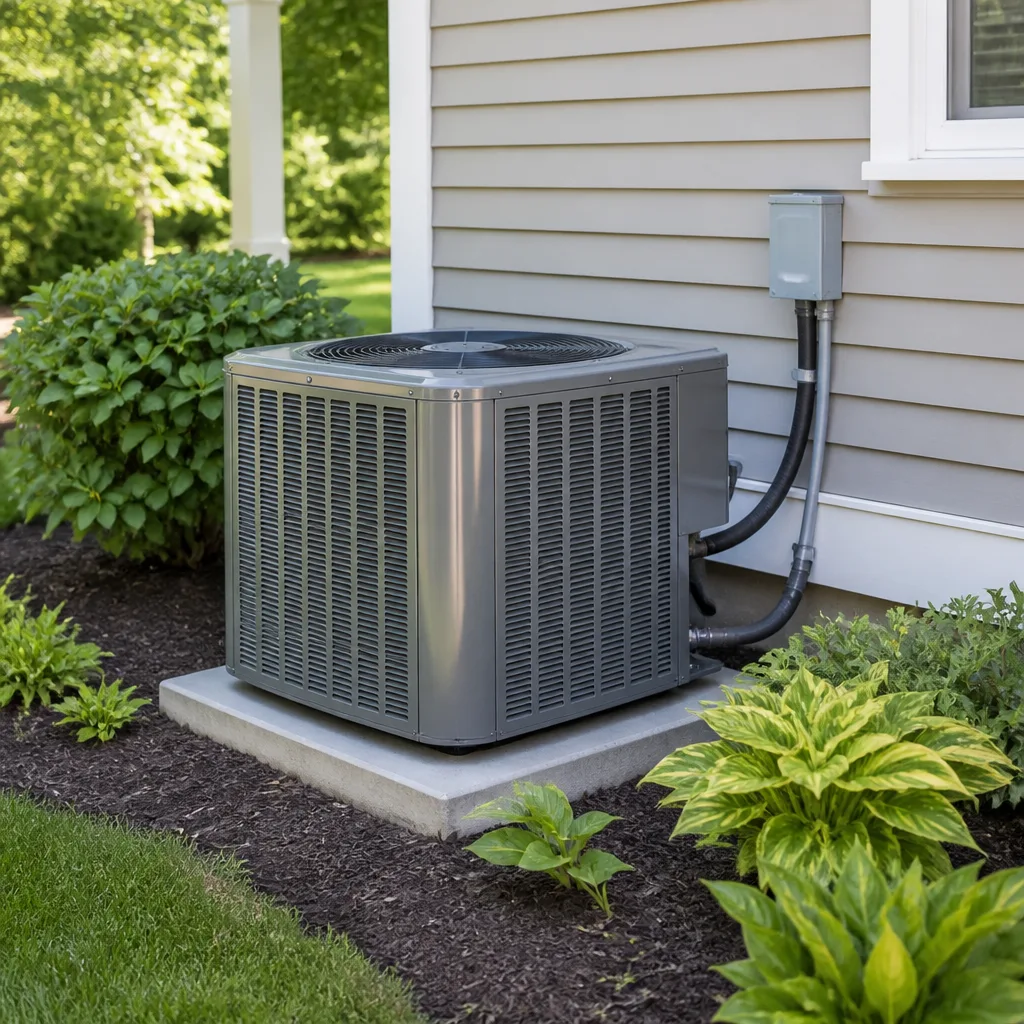
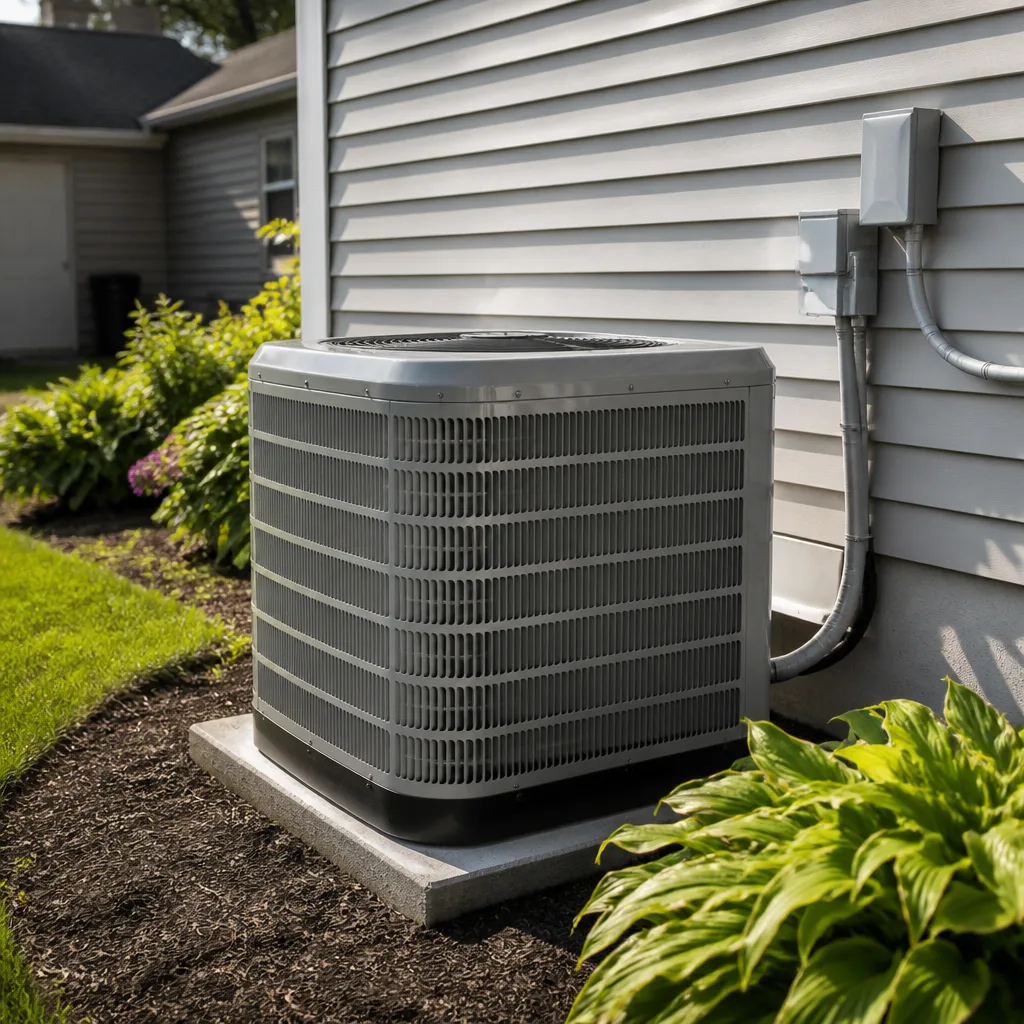
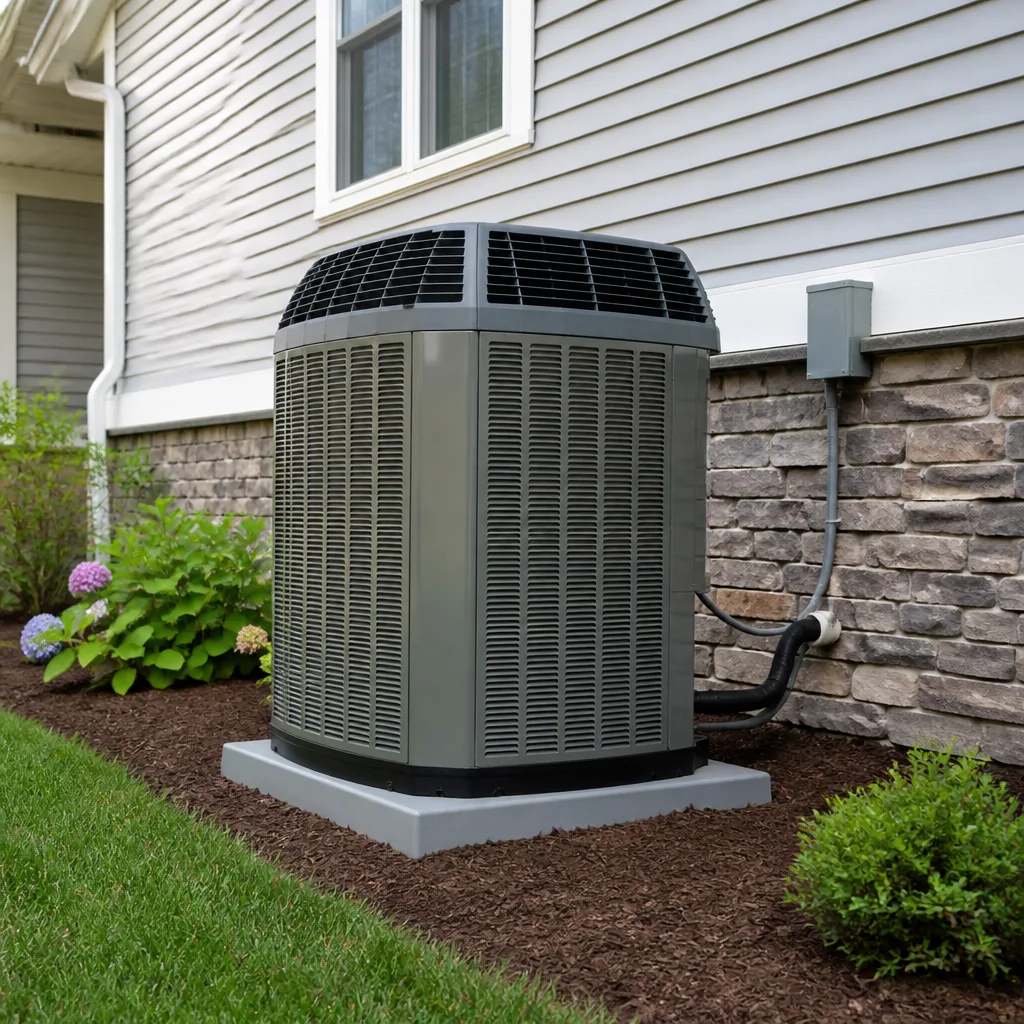
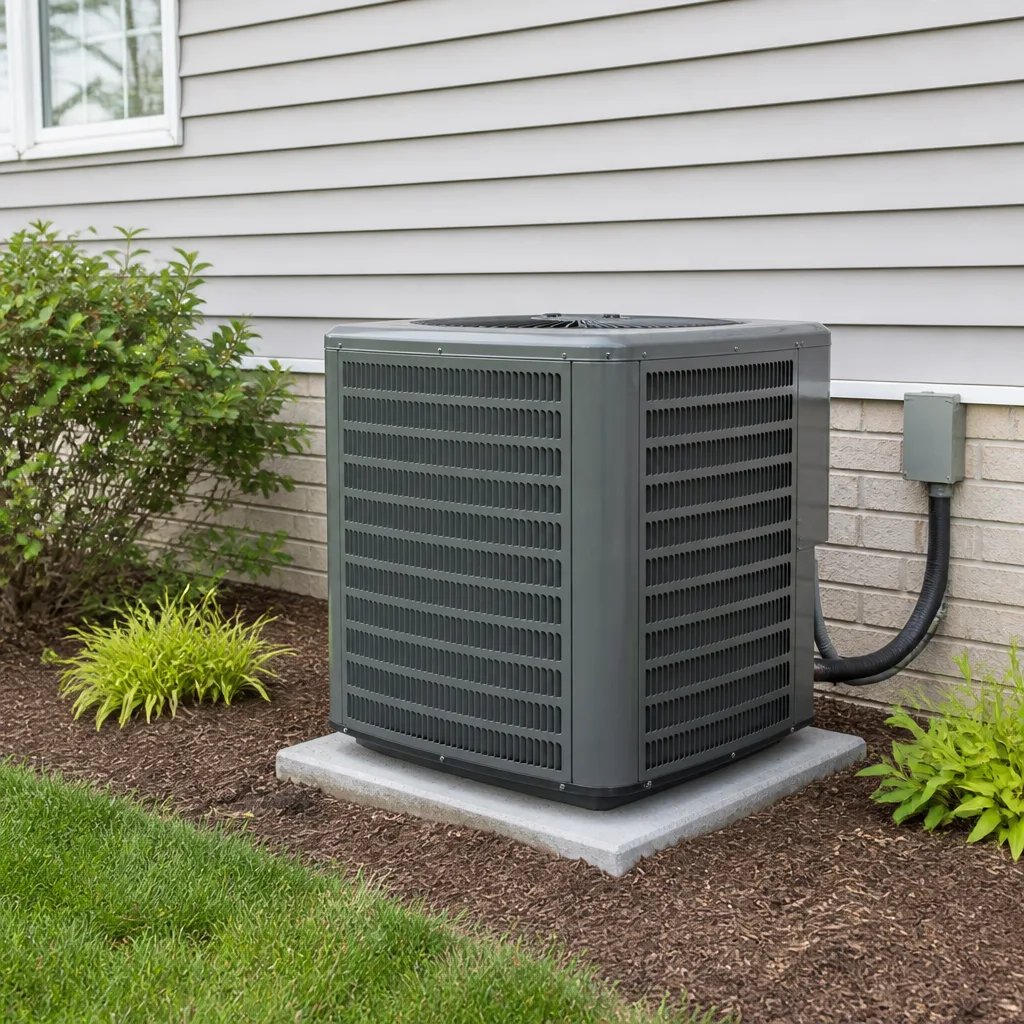
- Look at the outdoor unit. Clear away leaves, grass clippings, and debris. Make sure there are at least 18 inches of clear space on all sides. LA yards grow fast; ivy and bougainvillea will swallow a condenser in a month.
- Listen to the system startup. A loud hum, a click followed by nothing, or a bang on startup are all early warning signs. Normal startup is a smooth rise in sound, not a jolt.
- Pour a cup of water down the condensate drain line. If the water pools instead of draining, you have a clog forming. A clogged drain line is the most common cause of water damage in LA attics.
- Check the thermostat. Compare the displayed temperature to a separate thermometer in the same room. A drift of more than 2 degrees means the thermostat needs recalibration or replacement.
Common Mistakes to Avoid
- Closing vents in unused rooms. This increases static pressure in the duct system and forces the blower to work harder. Modern variable-speed systems were designed with all vents open. Closing them doesn’t save money; it shortens blower motor life.
- Setting the thermostat to 68 degrees to “cool the house faster.” Your AC removes heat at a fixed rate. Setting it lower doesn’t make it work faster; it makes it run longer until it hits an unnecessarily cold setpoint. Set the temperature you actually want.
- Ignoring the first hot day. Systems that survived the previous summer often fail on the first genuinely hot day of the next season. If your AC makes a new sound, runs longer than it used to, or doesn’t hit setpoint on the first 90-degree day in the Valley, call. Waiting means the issue compounds.
- Running the system during smoke season with a saturated filter. A loaded filter isn’t protecting your house; it’s starving your system of air. Replace it, period.
- Forgetting the heating system entirely. A furnace that sits idle for 8 months can develop a cracked heat exchanger without any symptoms until you fire it up on a 45-degree January night. The time to check it is before you need it.
- Skipping annual service because the system “seems fine.” Refrigerant leaks, weak capacitors, and dirty coils don’t announce themselves. They show up as a dead system on the worst day. We service Lennox, Goodman, Rheem, and York systems across Los Angeles, and the most expensive repairs are always the ones that were ignored the longest.
- Using the wrong filter for your system. High-MERV filters aren’t universally better. A dense filter on a system not designed for it can reduce airflow enough to cause evaporator coil freezing in summer. Match the filter to what your system’s blower can handle.
When to Call a Professional
Some maintenance is DIY; some is dangerous. Call a licensed technician if you notice any of these: the system runs but the air isn’t cold (low refrigerant or a failing compressor), you hear a loud buzzing or humming from the outdoor unit (capacitor or contactor failure), there’s water around the indoor unit (drain line clog or a cracked drain pan), the furnace smells like gas or the burner flame is yellow instead of blue (combustion problem requiring immediate attention), or the system short-cycles, turning on and off every few minutes. If you’re unsure, Dalton Heating & Air offers free estimates in Los Angeles. Call (361) 306-9515 and we’ll send a background-checked, uniformed technician who will put the price in writing before any work starts.
Frequently Asked Questions
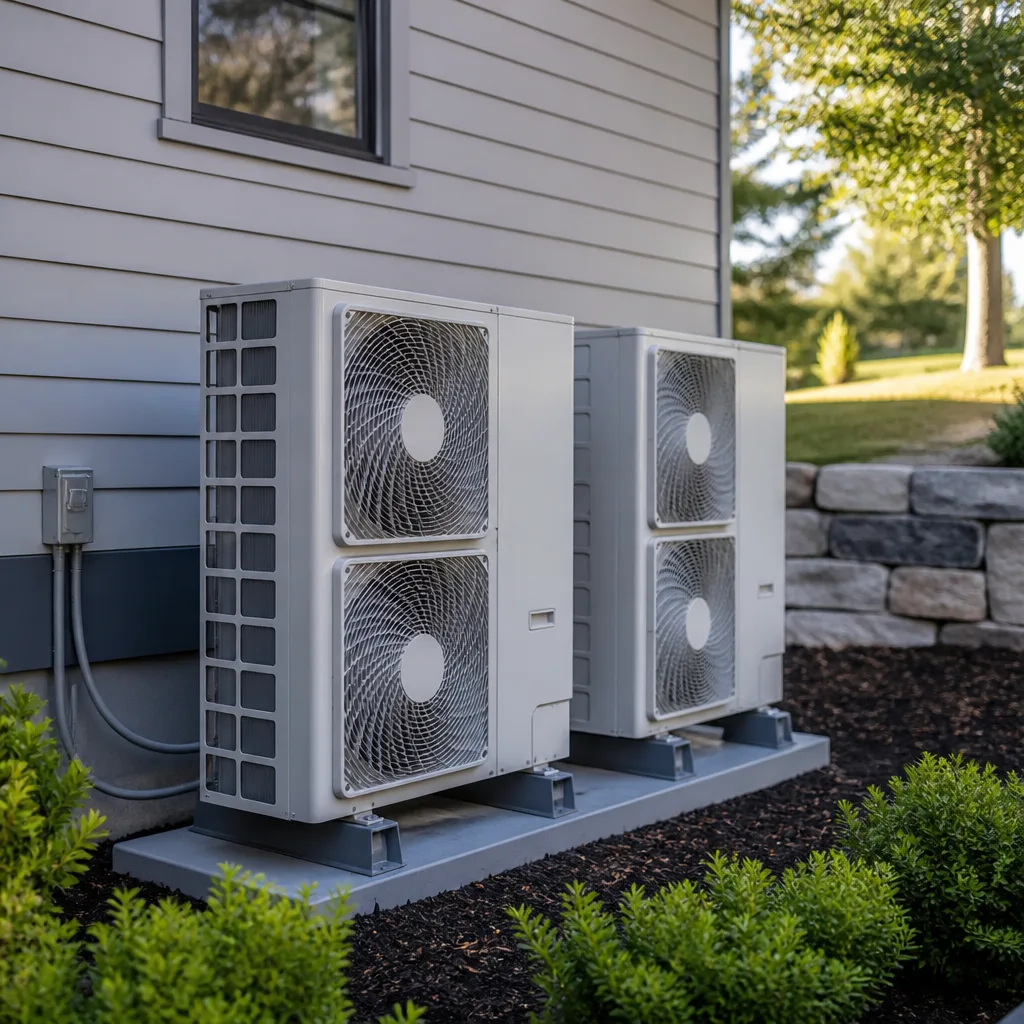
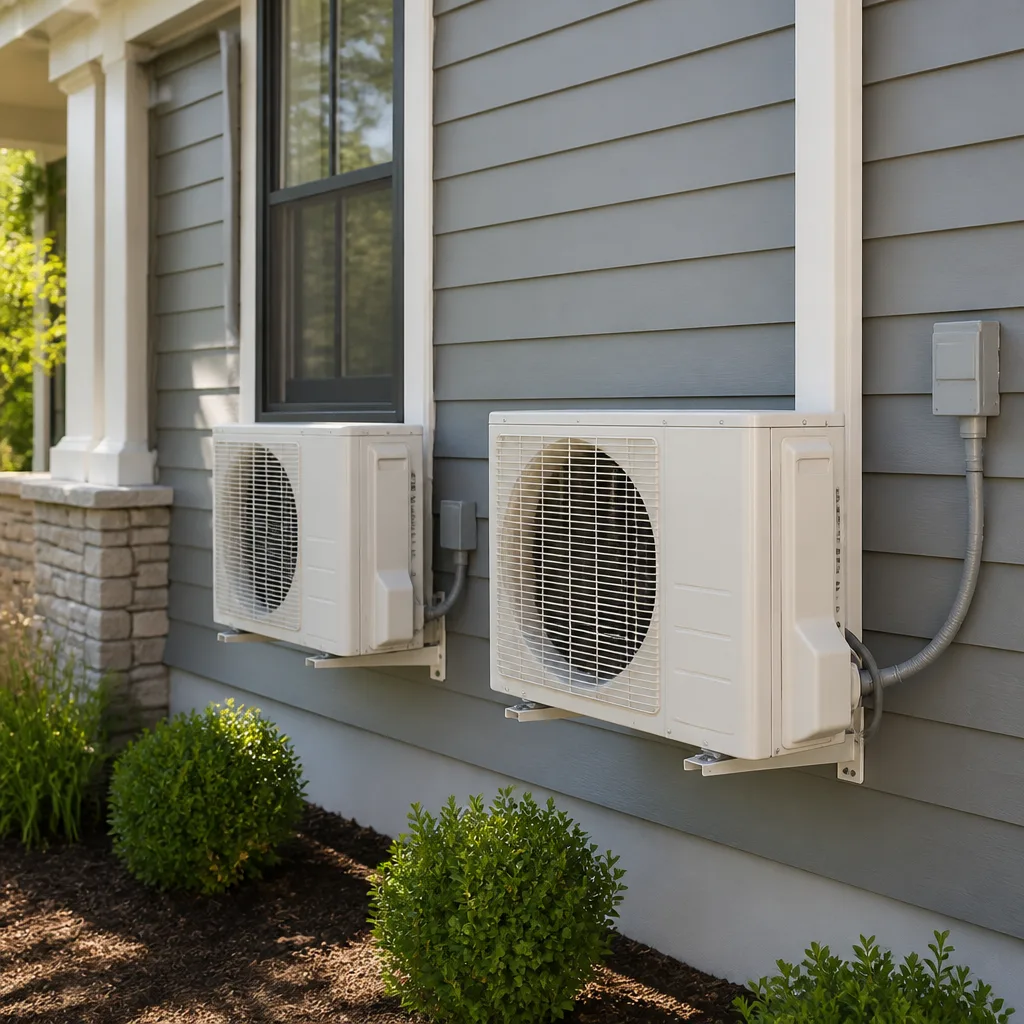
Once a year at minimum, ideally in February or March before the first heat wave. If you live in the San Fernando Valley or another high-heat microclimate, twice a year (February and May) catches the wear that a Valley-length cooling season puts on capacitors, coils, and refrigerant lines. If you want a yearly service, our heat pump installation service in Los Angeles includes maintenance guidance for the specific equipment we install.
MERV-11 or MERV-13 during AQI events above 100. MERV-13 captures most smoke particulates, which range from 0.4 to 0.7 microns. Check the filter every two weeks during smoke season, since it will load up far faster than during normal conditions. After AQI stabilizes below 50, switch back to your normal filter to avoid over-restricting airflow.
No, and here’s why: the long idle period is exactly what creates the risk. Heat exchangers crack slowly over time, idle or not. When you fire up a furnace after 8 months of sitting, a pre-existing crack starts leaking carbon monoxide into your home exactly when you’re running it. The check is cheap; carbon monoxide poisoning isn’t.
The classic symptom is a system that hums but doesn’t start, or a compressor that clicks and then shuts off. Sometimes the outdoor unit starts if you gently push the fan blade with a stick, which confirms the capacitor is too weak to start the motor on its own. Don’t try to replace a capacitor yourself; they hold an electrical charge even when power is off. Call (361) 306-9515 and we’ll replace it in one visit. Our furnace repair service in Los Angeles also handles capacitor failures on heating systems.
A 15-20% unexplained increase means your system is running longer to produce the same cooling. The most common causes in Los Angeles are low refrigerant charge, dirty condenser coils, or a failing capacitor. The system still works, so you don’t think to call. But every month you wait, the underlying problem gets worse and the eventual repair costs more. Our AC Repair Troubleshooting: Common Problems and How to Fix Them can help you spot these issues early.
Calling only when something breaks costs more in the long run, and breakdowns always seem to happen on the first 95-degree day. A once-yearly check in February catches small problems before they become emergency repairs. Write it on a calendar in January and call to schedule before the spring rush hits. We start getting booked out two to three weeks in advance by mid-March.
The Bottom Line
Los Angeles HVAC care doesn’t follow the national template. Skip the four-season tune-up model. Instead, put your money into a thorough cooling check in February, a lighter verification in May, and a heating startup test in December. Pay attention to your electric bill as a running diagnostic. During smoke season, treat your filter as a disposable resource, not a quarterly chore. And when something does go wrong, call a company that puts the price in writing and stands behind the work for a full year. Dalton Heating & Air has been serving Los Angeles since 2003 under The Garrison Standard: we arrive inside the window, price the job before we start, do the work by the book, leave the site clean, and guarantee every repair in writing for 365 days. Call (361) 306-9515 for a free estimate.
Written by Marco Benitez, Owner at Dalton Heating & Air, serving Los Angeles since 2003.