
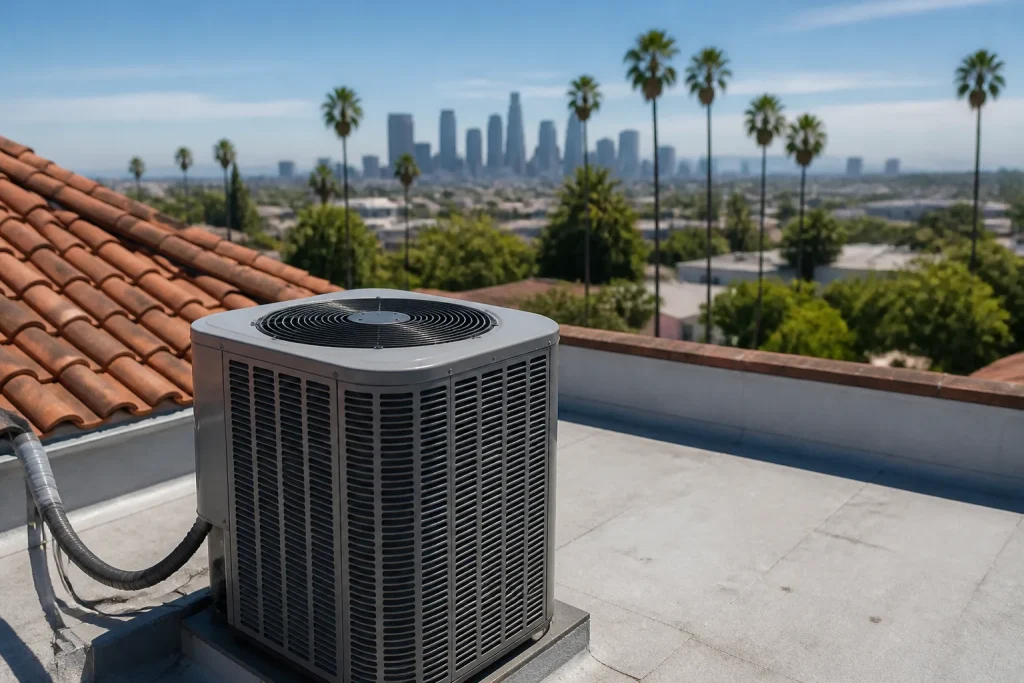
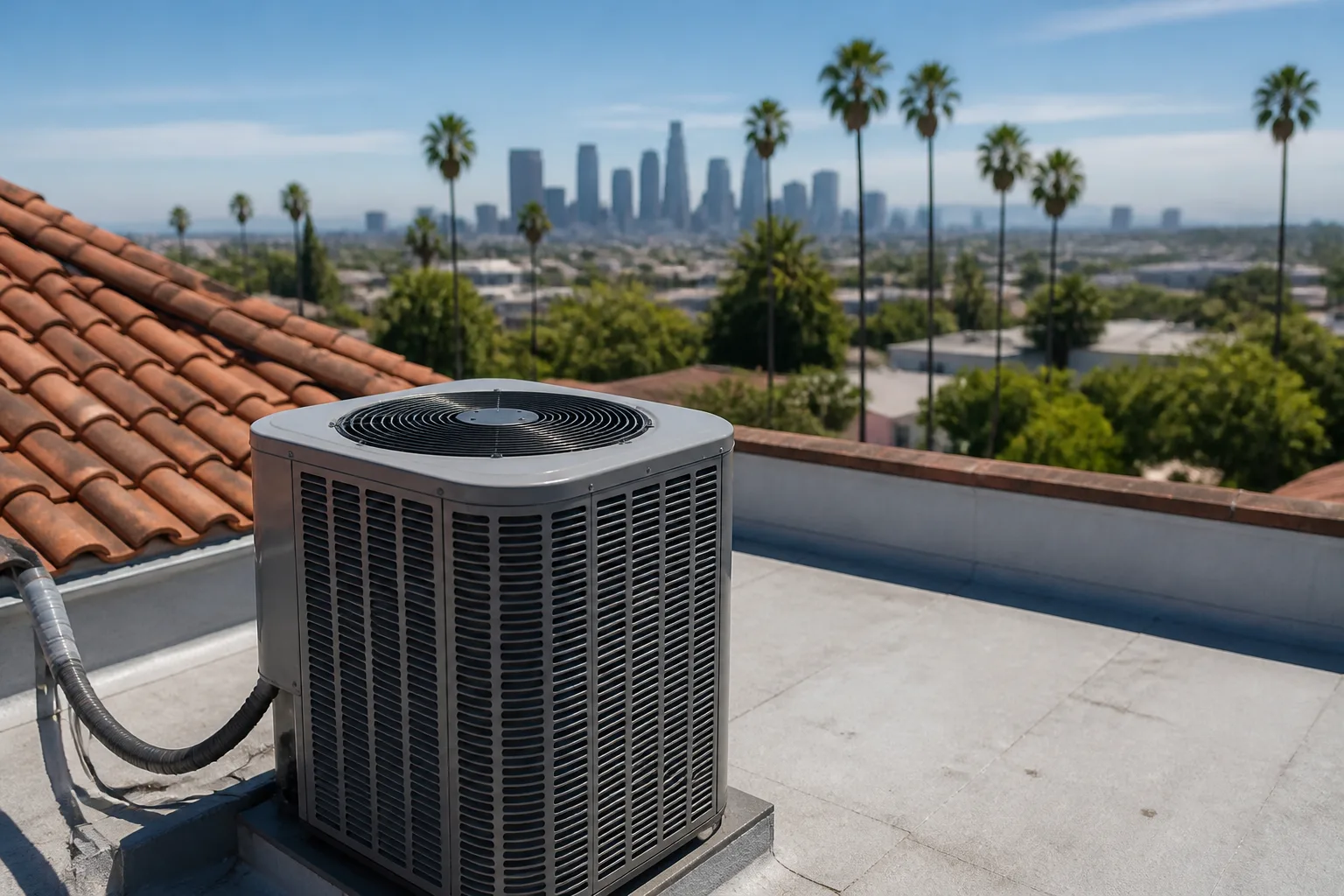
Bryant AC Repair in Los Angeles: A Homeowner’s Guide
Bryant AC repair in Los Angeles typically runs $180 – $540 depending on the part, and the single most expensive mistake we see is a tech treating a Bryant Evolution unit like a standard single-stage system. Bryant and Carrier share a parent company and many mechanical components, but the Evolution line runs on a proprietary communicating protocol. Put a non-communicating part in that loop and the system limps along in degraded mode without ever throwing a clear fault code.
If you’d rather sidestep the detective work, call us at (361) 306-9515. We’ll diagnose it right the first time and put the repair price in writing before any work starts.
Why Bryant Evolution Units Are Different From Every Other AC on Your Block
Most air conditioners are simple. The thermostat sends a 24-volt signal, the contactor closes, the condenser fires up. On and off, like a light switch. Bryant’s Evolution series, sold under the Connex name on newer models, replaces that binary signal with a four-wire digital data line. The thermostat, the indoor air handler, and the outdoor condenser talk to each other constantly, sharing temperatures, pressures, fault history, and blower-speed adjustments in real time.
That communicating loop is the entire reason an Evolution system runs at variable capacity instead of clunking between full-on and full-off. It’s also why a repair that works fine on a Legacy-series Bryant can quietly wreck an Evolution unit.
Here’s what that mismatch looks like in practice. A technician diagnoses a failed control board in an Evolution air handler, swaps in a generic or Carrier cross-referenced board, and the system starts and cools. Looks fixed. But that board doesn’t speak the full Evolution protocol. The outdoor unit drops into a default fallback mode, the thermostat loses half its diagnostic functions, and the homeowner pays top dollar for a system now running at a fraction of its rated efficiency. No fault code. No red flag. Just higher LADWP bills in the middle of a Los Angeles summer and a system that wears itself out faster.
Which Bryant Parts Are Actually Interchangeable With Carrier
Bryant and Carrier are both brands under United Technologies, now part of Carrier Global. On the Legacy and single-stage lines, a lot of mechanical work is genuinely shared. Capacitors, contactors, fan motors, pressure switches, and compressor contactors often carry the same part number stamped on both brands. A tech who tells you a Carrier capacitor is “basically the same” as your Bryant capacitor is probably right.
The line is drawn at the Evolution and Infinity platforms. Bryant’s Evolution Connex and Carrier’s Infinity share architecture, but each uses model-specific firmware and board revisions. Mixing them is like putting a Trane control board in a Lennox air handler because “they’re both 24-volt.” The physical connector might fit. The system logic will not.
Before authorizing any board-level repair, ask one question: “Are you installing a Bryant part number or a cross-referenced equivalent?” If the answer is the latter, require the exact replacement part number and verify it against Bryant’s published compatibility list for your specific air handler and outdoor unit model. A platform-experienced tech will rattle off the correct answer without blinking. A generalist will start hedging.
Your Bryant Thermostat Already Tells You What’s Wrong, If You Know Where to Look
One thing most Los Angeles homeowners don’t realize is that the Evolution Connex thermostat is a service tool in its own right. It stores every fault the system has logged, often with date and time stamps, for as long as the unit has had power. When we roll up to a Bryant repair call, the first thing we ask the homeowner to do is show us that log.
Here’s how to pull it yourself, right now:
- From the home screen on your Connex thermostat, press Menu
- Scroll to Service, then select Fault History
- Write down every code and the date it appeared. Don’t clear it. Clearing the log erases evidence
- If your thermostat shows a repeating fault like Code 31 (high-pressure trip) or Code 84 (loss of communication), that tells us something specific before we even put a gauge on the unit
In Los Angeles, where AC runs hard from June through October, compressors stack up hours fast. A stored high-pressure trip in August on a home in Sherman Oaks might mean a dirty condenser coil and nothing more. The same code on a cool October night in Pacific Palisades can point to a failing outdoor fan motor or a metering device issue. The log narrows the diagnosis and saves you the cost of exploratory guesswork.
If your tech doesn’t ask about the fault log, or worse, clears it without reading it, that’s a signal you’ve got the wrong person on the job.
What Bryant’s 10-Year Parts Warranty Actually Covers (and How to Check Yours)
Bryant provides a 10-year parts warranty on most current equipment, but there’s a catch most homeowners in Los Angeles find out about for the first time while standing over a dead compressor. The full 10-year term applies only if the original installation was registered by the installing contractor within 60 days of startup. If the registration never happened, the warranty reverts to a base 5-year term, and anything beyond that is out of pocket.
Here’s how to check your registration status:
- Find your unit’s serial number. Outdoor units have it on a data plate on the side of the cabinet. Indoor units typically have it on a plate near the evaporator coil
- Go to Bryant’s website and use the Warranty Lookup tool, or call Bryant customer support with the serial number ready
- If the unit was installed but never registered, check the installation date. Registered after the 60-day window won’t restore the full 10 years in most cases
What does this mean for your current repair cost? If your compressor failed at year 7 on an unregistered unit, you’re paying for the part. Several thousand dollars. If it’s registered, the part is covered and you’re paying labor, refrigerant, and associated materials. That’s the difference between a $400 repair and a $4,000 one.
We’ve also seen unregistered systems in Los Angeles homes purchased from a previous owner, where the seller’s contractor never completed the paperwork. If you inherited a Bryant with unknown registration status, check it before the next August heat wave, not during it.
The Refrigerant Leak Repair That Single-Stage Techs Get Wrong on Bryant Two-Stage Units
Bryant two-stage and Evolution variable-speed units don’t charge the same way a bare-bones single-stage condenser does. The refrigerant charge on a communicating system depends on the blower running at a specific speed and the system holding a specific operating mode while the tech weighs or adjusts the charge. Some of those procedures can only be entered through the thermostat’s service menu.
The failure mode we see most often in Los Angeles goes like this. A tech finds a small leak on a Bryant two-stage condenser on a spring day when it’s 68 degrees out. Low ambient. Low heat load. The tech tops off the charge using the same method they’d use on a generic single-stage unit, gets the pressures “close enough,” and leaves. The system works fine for a few weeks. Then a cool May night rolls in, the outdoor temperature drops into the 50s, and the evaporator coil ices up because the system is overcharged for low-ambient operation.
The correct procedure on Bryant two-stage and Evolution units involves putting the system into a defined charging mode through the thermostat, which locks the compressor and blower at known speeds, then charging to the subcooling target listed on the outdoor unit data plate. If the tech can’t explain how they’re entering charging mode on your specific unit, they’re guessing.
If you’re scheduling a leak repair or refrigerant top-off, ask this: “How do you set the system into charging mode for this Bryant?” The right tech names the procedure. The wrong one changes the subject.
How to Vet a Bryant Technician in Los Angeles Before They Touch Your Unit
Most “Bryant AC repair” calls in Los Angeles go to general HVAC companies. Nothing wrong with that, as long as the tech has Bryant platform experience. The problem is you won’t know until they’re already in your attic.
Here’s the single technical question that separates the platform-experienced techs from the generalists:
“On a Bryant variable-speed air handler with an Evolution Connex thermostat, what happens to the indoor blower if the communicating data line to the thermostat drops?”
The correct answer: the air handler enters a default fallback mode, runs the blower at a fixed speed or shuts down depending on configuration, and logs a communication fault on the system. The point of the question isn’t the answer itself. It’s whether the tech can answer it immediately and explain it in plain English. A Bryant-experienced tech has seen this exact failure. A generalist strings together an answer about “the fan just runs at whatever speed it’s set to,” which tells you everything you need to know.
Other things to check before scheduling:
- Ask if the tech is factory-trained on Bryant’s Evolution and Legacy platforms, not just “familiar with all brands”
- Ask if they’ll show you the manufacturer fault history from the thermostat during the visit. A pro will. A rushed tech will tell you it doesn’t matter
- Ask what the written price policy is. If the price can change after the tech opens the unit, that’s a red flag
- Ask if they install genuine Bryant part numbers or cross-referenced equivalents, and how they verify compatibility on communicating systems
Dalton Heating & Air is factory-trained to service nine major residential brands, including Bryant, Carrier, Trane, Lennox, Goodman, Rheem, York, Daikin, and American Standard. Every repair gets a written price before work begins, a written guarantee covering the full year, and a free return visit if the repair fails within that period. That’s a Garrison Standard, not a sales pitch.
When to Call a Pro
Some things are worth trying yourself. A Bryant Evolution repair is not one of them. The moment you’re dealing with a communicating system, refrigerant, or a control board, the cost of a wrong guess exceeds the cost of a proper diagnosis.
Call a pro when you see any of these:
- Repeating fault codes on your Connex thermostat
- The system cooling but running far longer than it used to for the same setpoint
- Ice on the indoor coil or the larger insulated refrigerant line
- Any repair involving refrigerant, control boards, or the communicating loop
- A compressor that hums but doesn’t start
We pulled one out of a garage over in Eagle Rock last week where the homeowner had replaced his own thermostat with a generic Nest. It worked for a week, then the Evolution air handler stopped communicating entirely and the blower defaulted to full speed. The fix required restoring the Connex thermostat, reprogramming the equipment list, and clearing the fault memory. His DIY savings lasted exactly eight days.
Related services in Los Angeles: AC Repair in Los Angeles, Heat Pump Installation in Los Angeles, Furnace Repair in Los Angeles, and our Dalton Heating & Air home page for the full scope.
The Bottom Line
Bryant makes good equipment, and the Evolution line is genuinely more comfortable and more efficient than a basic single-stage system. But that sophistication comes with a specific repair discipline. The tech working on your Bryant needs to understand the communicating protocol, check the fault history before touching anything, use Bryant-approved part numbers on Evolution equipment, and know how to charge a two-stage unit properly on a cool Los Angeles evening.
Take ten minutes to check your warranty registration and pull your thermostat fault log before you schedule a repair. Those two steps alone can save you hundreds, even thousands, on the diagnosis.
If you’re in Los Angeles and want this kind of rigor without having to grill a stranger at your front door, Dalton Heating & Air offers free estimates. Call (361) 306-9515. We’ll show up inside the stated window, give you a written price before any work begins, and back every repair with a full-year written guarantee.
Frequently Asked Questions
Most Bryant AC repairs in Los Angeles run $180 – $540, depending on the part. Capacitors, contactors, and fan motors sit at the lower end. Control boards and compressor-related work push into the $700 – $1,200 range when you factor labor and refrigerant. Evolution communicating-system parts typically cost more than Legacy-line equivalents. Call (361) 306-9515 for an exact written quote, free of charge.
They can try, and many do. The risk is that a tech without Bryant platform training will treat the Evolution communicating loop like a standard 24-volt system, install a cross-referenced part that doesn’t speak the protocol, and leave the system running degraded without an obvious fault. For Evolution and Connex units, insist on a technician who is factory-trained on Bryant platforms and who installs genuine Bryant part numbers on the communicating components.
Look up your serial number using Bryant’s warranty lookup tool or call Bryant customer support directly. A 10-year parts warranty applies only if the original installation was registered within 60 days of startup. If the registration never happened, the coverage reverts to a base 5-year term. Check this before you need the warranty, not after a compressor fails in a Los Angeles heat wave.
As a rule of thumb, if the repair cost exceeds 30 – 40% of what a new system would cost, and the unit is over 12 years old, replacement usually makes more sense. A failed compressor on an 8-year-old registered Bryant is usually worth fixing. A failed compressor on a 15-year-old unregistered unit is usually a signal to plan for a new system. We’ll give you a straight answer either way, with written pricing on both options.
Written by Marco Benitez, Owner at Dalton Heating & Air, serving Los Angeles since 2003.
Need HVAC Help?
Call Dalton Heating & Air - licensed & insured, here with fast after-hours help in Los Angeles.
(361) 306-9515