
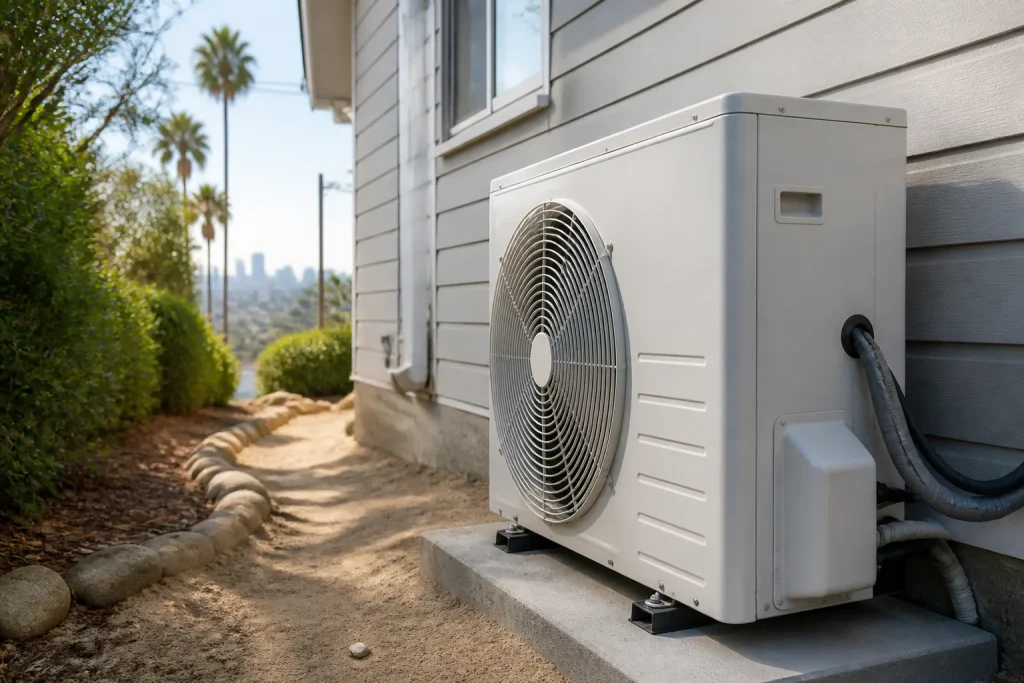
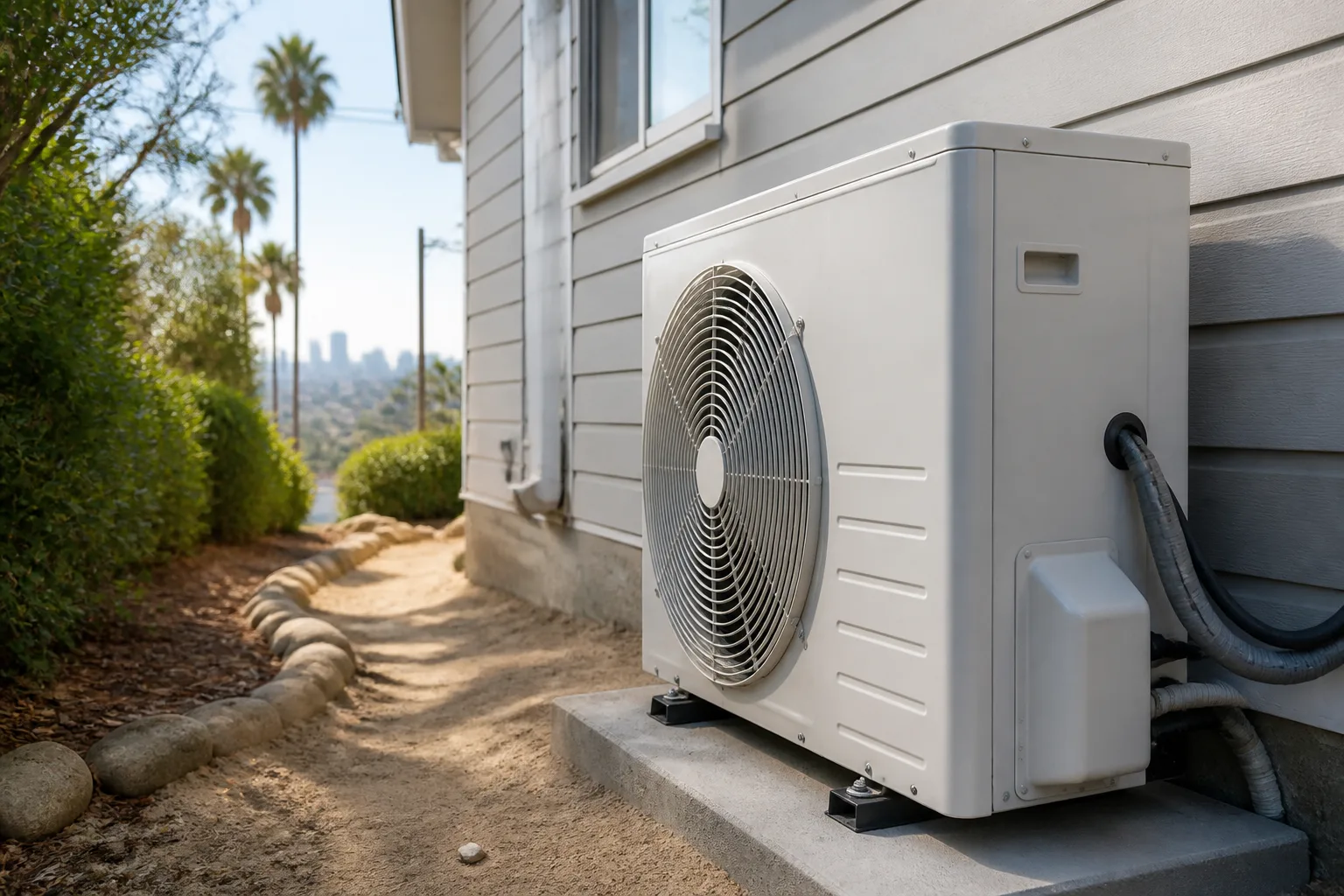
5 Mistakes to Avoid With Heat Pump Installation
A heat pump sized by square footage alone, instead of a full Manual J load calculation, is the single most common reason Los Angeles homeowners call us for a replacement within six years of a brand-new install. The second most common reason is a mismatch between the indoor and outdoor units that quietly costs 15% efficiency from day one. If you’re planning a heat pump installation in Los Angeles, avoid these five mistakes and the system will run quietly and efficiently for 15 years or more. If you’d rather skip the research and get a written price, call (361) 306-9515.
Key Takeaways
- Manual J load calculation is non-negotiable in Los Angeles; square-footage rules of thumb oversize heat pumps and cause short-cycling.
- Linesets longer than 50 feet need a refrigerant charge adjustment, or efficiency and compressor life drop.
- Permits and HERS testing in LA County aren’t optional; skipping them can block a future home sale.
- Check the AHRI matched-system certificate before you sign; mismatched coils lose up to 15% rated efficiency immediately.
- Disconnect box placement, wire size, and dedicated circuit amperage are common code violations from low-bid contractors.
Mistake #1: Skipping the Manual J Load Calculation
A Manual J load calculation measures how much heating and cooling your specific home actually needs. It accounts for window area, insulation levels, ceiling height, which direction the house faces, how much shade you get, and how many people live there. A rule of thumb like “one ton per 500 square feet” skips all of that. In Los Angeles, that shortcut causes outsized problems.
Our climate has narrow temperature swings in the shoulder seasons. April through June and September through November stay in the 60s and 70s, which puts an oversized heat pump in its lowest output range for hours every day. The compressor turns on, reaches set temperature fast, shuts off, then starts again fifteen minutes later. That’s short-cycling, and it’s harder on a compressor than running flat-out in August. We’ve pulled six-year-old compressors out of oversized systems that looked ten years older inside.
An oversized system also skips the dehumidification pass. A heat pump removes humidity by running air across the cold coil for several minutes at a time. When the system satisfies the thermostat in three minutes, the coil never runs long enough to pull moisture out. The result is a cool, clammy house that never feels quite right.
In hotter markets like Phoenix, an oversized unit gets bailed out by extreme heat: it runs longer because it has to. In Los Angeles, a mild April afternoon is not going to save a unit that’s half a ton too big. The cold coil stays too warm to dehumidify, the compressor cycles too often, and the warranty paperwork starts gathering dust while the repair calls stack up.
When we quote a heat pump installation in Los Angeles, the first thing we do is run a Manual J. We’ve never installed a system off a square-footage guess, and we’re not about to start. If you’re collecting bids and a contractor gives you a price before walking the house room by room, treat that number as a rough draft. A real load calculation takes an hour or more.
Mistake #2: Ignoring the Lineset Length
The lineset is the pair of copper pipes that carries refrigerant between the outdoor unit and the indoor coil. Most heat pumps ship from the factory charged for a lineset of about 25 to 35 feet. When the indoor and outdoor units sit farther apart than that, the system needs additional refrigerant added on site. Skipping that adjustment is easy to do, and it costs you every single month.
In Los Angeles, long linesets show up in specific houses. Split-level homes in the hills, ranch-style houses with the equipment pad at the back fence, and any layout where the air handler lives in a garage or attic at the opposite end of the house from the condenser. We’ve measured linesets over 50 feet in plenty of homes in the Valley and on the Westside. The manufacturer’s installation manual specifies the correction: a certain number of ounces per additional foot of lineset beyond the factory charge. A technician who doesn’t weigh in the extra refrigerant leaves the system undercharged.
An undercharged heat pump runs a colder evaporator coil than it was designed for. Efficiency drops, cooling capacity drops, and the compressor has to work harder to do the same job. Over years, that extra work adds up to a shorter compressor life. It’s a mistake that doesn’t show up on installation day. The system blows cold, the homeowner is happy, and the problem hides until the utility bills stay stubbornly high and the compressor fails early.
The fix is straightforward: the installing technician measures the lineset length during the install walkthrough, checks the manufacturer’s charging chart, and adds refrigerant by weight, not by guess. If you’re getting quotes for a heat pump in Los Angeles, ask each contractor how they handle linesets longer than the factory charge. A confident answer with specific numbers is a good sign. A blank look is not.
Mistake #3: Skipping the Permit and HERS Inspection
Heat pump installations in Los Angeles County require a building permit and, in most cities, a HERS (Home Energy Rating System) verification. That’s not a suggestion. It’s how the county confirms the work was done to current energy code. Some low-bid contractors will offer to “save you the hassle” by skipping the permit. That savings turns into a liability the next time you sell the house.
Here’s what the permit and HERS process confirms: the refrigerant charge is correct, the airflow is set properly, and the system meets California Title 24 energy requirements. The HERS rater is an independent third party who measures the installed system against what the permit specified. When you skip that step, there’s no independent record that the system was installed correctly.
We hear about this from real estate agents in Los Angeles regularly. A buyer makes an offer, the home inspection flags the heat pump as unpermitted work, and the seller has to either pull a retroactive permit (which means opening walls or paying penalties) or knock money off the sale price. A heat pump that was installed five years ago without a permit becomes today’s $4,000 negotiating chip against the seller.
The permit also protects you from a specific Los Angeles problem: non-compliant refrigerant charge levels. The old rule of thumb was “beer can cold” on the suction line. That doesn’t work on modern high-efficiency systems, and the HERS verification catches it. A system that passes HERS has a documented refrigerant charge within the manufacturer’s spec. That’s worth the permit fee by itself.
When Dalton Heating & Air installs a heat pump in Los Angeles, the permit is part of the written price. We schedule the inspection, we’re there for it, and the paperwork is filed before we leave the job. Not because it’s fun; because it’s the difference between a system that’s legal and a system that’s a problem waiting for resale day.
Mistake #4: Not Checking the AHRI Matched-System Certificate
Every heat pump has an AHRI (Air-Conditioning, Heating, and Refrigeration Institute) certificate number that confirms the indoor coil and outdoor unit were tested together as a matched pair. When the two halves come from different product lines or different efficiency tiers, the system doesn’t deliver its rated SEER2 or HSPF2. In plain English: you paid for a 16 SEER2 unit, but you’re running a 13 SEER2 system.
The efficiency loss is real, and it’s measured. A mismatched indoor and outdoor coil loses up to 15% of rated efficiency immediately. That’s not a gradual decline; it’s day one. The compressor works against a coil that’s the wrong size or the wrong metering device, and the system never reaches the performance printed on the box.
This mistake happens most with low-bid installers who stock one indoor unit and pair it with whatever outdoor unit is on the truck. They sell you a Carrier outdoor unit and match it with a generic indoor coil that fits the cabinet but was never tested with that condenser. The system will heat and cool. It will also run less efficiently and stress the compressor in ways the warranty doesn’t like.
Before you sign a contract, ask for the AHRI certificate number. It’s an eight-digit code you can look up on the AHRI directory in about thirty seconds. The certificate lists the specific indoor and outdoor model numbers and the tested efficiency rating. If a contractor can’t produce it, they’re either installing mismatched equipment or they don’t know what they’re installing. Neither one is acceptable when the equipment costs $12,000 to $20,000 installed.
We’ve installed American Standard, Carrier, Trane, and Lennox heat pumps in Los Angeles, and the AHRI certificate is part of every proposal we write. You should know exactly what efficiency you’re paying for before the first panel comes off the truck. If you’re comparing heat pump quotes, make the AHRI number a condition of the sale. It takes a minute to verify and protects you for the life of the system.
Mistake #5: Undersizing the Disconnect Box and Circuit
Every heat pump needs a dedicated electrical circuit with a disconnect box near the outdoor unit. The disconnect is the small metal box that lets a technician cut power to the condenser for service. The circuit is the breaker in your main panel, the wire that runs from the panel to the disconnect, and the disconnect itself. All three have to match the heat pump’s nameplate amperage, and all three are subject to inspection.
Here’s where low-bid contractors in Los Angeles create problems. They reuse the old air conditioner’s circuit because it’s already there. The old circuit was sized for a 30-amp AC unit, but the new heat pump pulls 40 or 50 amps at full load. The wire is undersized, the breaker is undersized, and the disconnect is undersized. The system might run fine for years, because heat pumps rarely pull their full rated load in Los Angeles weather. Then you sell the house, the buyer’s inspector opens the panel, and the undersized circuit becomes a flagged code violation.
Another one we see: the disconnect box is installed too close to the unit or too low to the ground. The NEC (National Electrical Code) requires specific clearances around the disconnect, and many LA County cities enforce those clearances during the permit inspection. A contractor who places the disconnect in the wrong spot creates a correction order, which means schedule a re-inspection, which means the job isn’t closed out.
The fix is part of a proper heat pump installation. The installer checks the nameplate on the outdoor unit, confirms the minimum circuit ampacity and maximum overcurrent protection, runs the correct wire gauge, and installs a properly rated disconnect with the correct clearance. That’s not an upgrade; that’s code.
If you’re getting quotes for a heat pump in Los Angeles, ask whether the existing electrical service is adequate for the equipment being proposed. A contractor who says “we’ll reuse the old circuit” without checking the nameplate data is setting you up for a resale headache. A contractor who pulls a permit has to get this right before the inspection happens. That’s one more reason the permit isn’t a hassle: it’s the backstop that catches the corners other people cut.
When to Call a Pro
You shouldn’t pull a permit, run a Manual J, verify an AHRI certificate, or adjust a refrigerant charge yourself. Those are jobs for a licensed contractor with the right tools and training. But you can check a few things before you commit to an installer: confirm the Manual J was done, ask for the AHRI certificate number, and make sure the permit is in the written price. If a contractor resists any of those three, you’ve just identified a mistake before it happens.
We pulled a heat pump out of a garage over in West Adams last month that was installed by a handyman friend of the previous owner. No permit, no AHRI match, no charging chart. The compressor was gone in four years, and the homeowner paid us to make it right. That’s the expensive way to learn these five mistakes. The cheap way is to read this and ask the right questions up front.
If you’re in Los Angeles and looking for related help, see our pages on AC repair in Los Angeles and furnace repair in Los Angeles. Both services come with the same written price and written guarantee we put on every heat pump install.
The Bottom Line
Heat pump installation mistakes are almost all made before the install crew arrives. Skipping the Manual J, ignoring lineset length, bypassing the permit, mismatching the equipment, and undersizing the electrical circuit are decision-level errors, not execution errors. They come from working with a contractor who prices by the ton instead of by the load calculation, and they cost you either in efficiency, compressor life, or resale value.
The good news: every one of these mistakes is visible before you sign a contract. Ask for the Manual J. Ask for the AHRI certificate. Ask how the lineset gets charged. Ask what amperage the nameplate requires. Ask for the permit in writing. A contractor who can answer those five questions on the spot is a contractor you can trust to do the job right.
If you’re in Los Angeles and need help with a heat pump installation, Dalton Heating & Air offers written prices and free estimates. Call (361) 306-9515 and we’ll walk you through the load calculation, the AHRI match, and the permit process before you spend a dollar. That’s how you avoid all five mistakes at once.
Frequently Asked Questions
Most heat pump installations in Los Angeles run between $12,000 and $20,000 depending on system size, efficiency rating, and the complexity of the existing ductwork and electrical service. The range is wide because every home is different; that’s why the Manual J load calculation matters. Call (361) 306-9515 for an exact quote, and the price will be in writing before any work starts.
Yes, heat pump installations in LA County require a building permit and, in most cities, a HERS verification. Skipping the permit creates a problem at resale and can void your equipment warranty. A reputable contractor includes the permit in the written price.
The only way to know is with a Manual J load calculation that measures your home’s exact heating and cooling loads. Square-footage rules of thumb oversize systems in Los Angeles and cause short-cycling, poor dehumidification, and premature compressor failure. Don’t accept a size recommendation without a Manual J.
Sometimes, but only if the lineset is the correct size for the new system and you’re not changing refrigerant types. The installer must also check the lineset length and adjust the refrigerant charge if it’s longer than the factory charge. If not handled correctly, the system loses efficiency and the compressor works harder from day one.
Written by Marco Benitez, Owner at Dalton Heating & Air, serving Los Angeles since 2003.
Need HVAC Help?
Call Dalton Heating & Air - licensed & insured, here with fast after-hours help in Los Angeles.
(361) 306-9515