
Last updated October 9, 2026
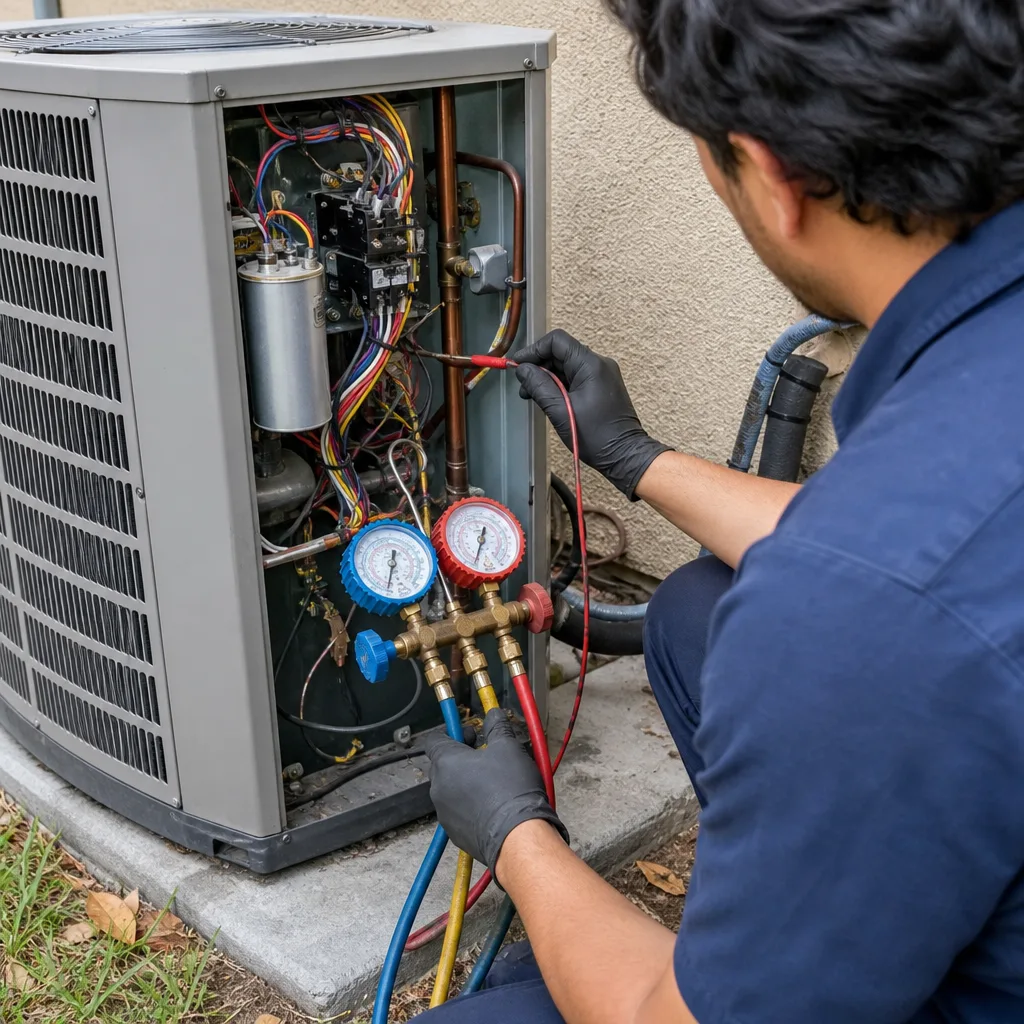
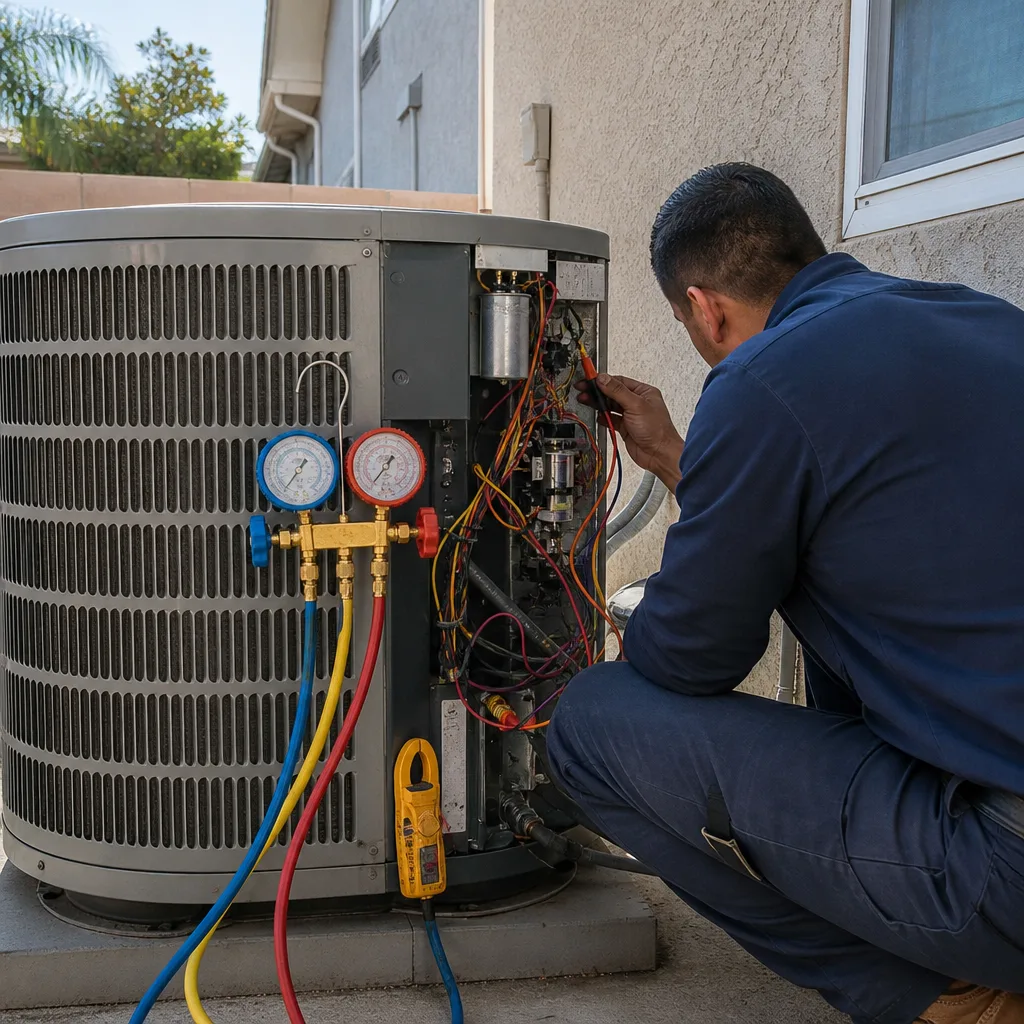
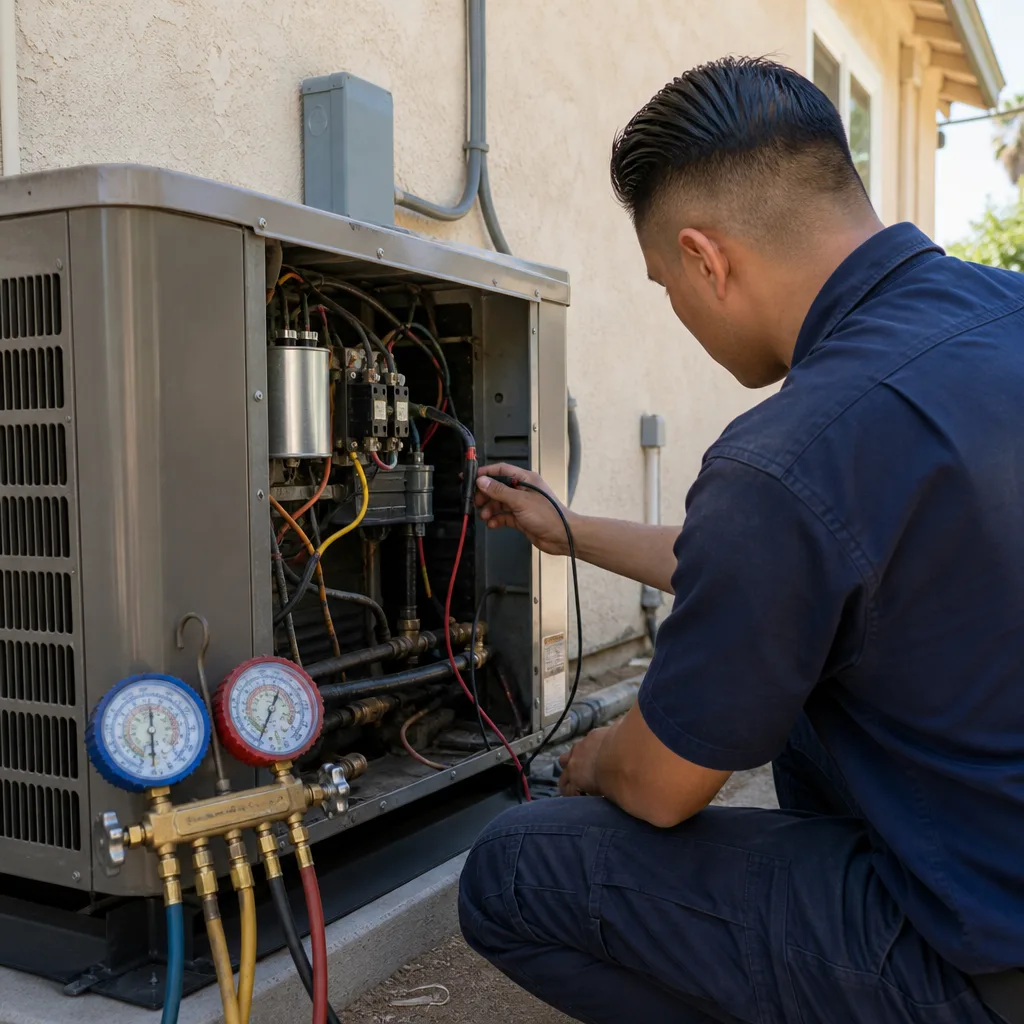
Seasonal tune-up and full diagnostic on your Carrier, Trane, or Goodman system - readings shown to you before any repair is proposed
Diagnosis first, numbers second - you approve the repair price before a single part goes in.
 Before
 After
After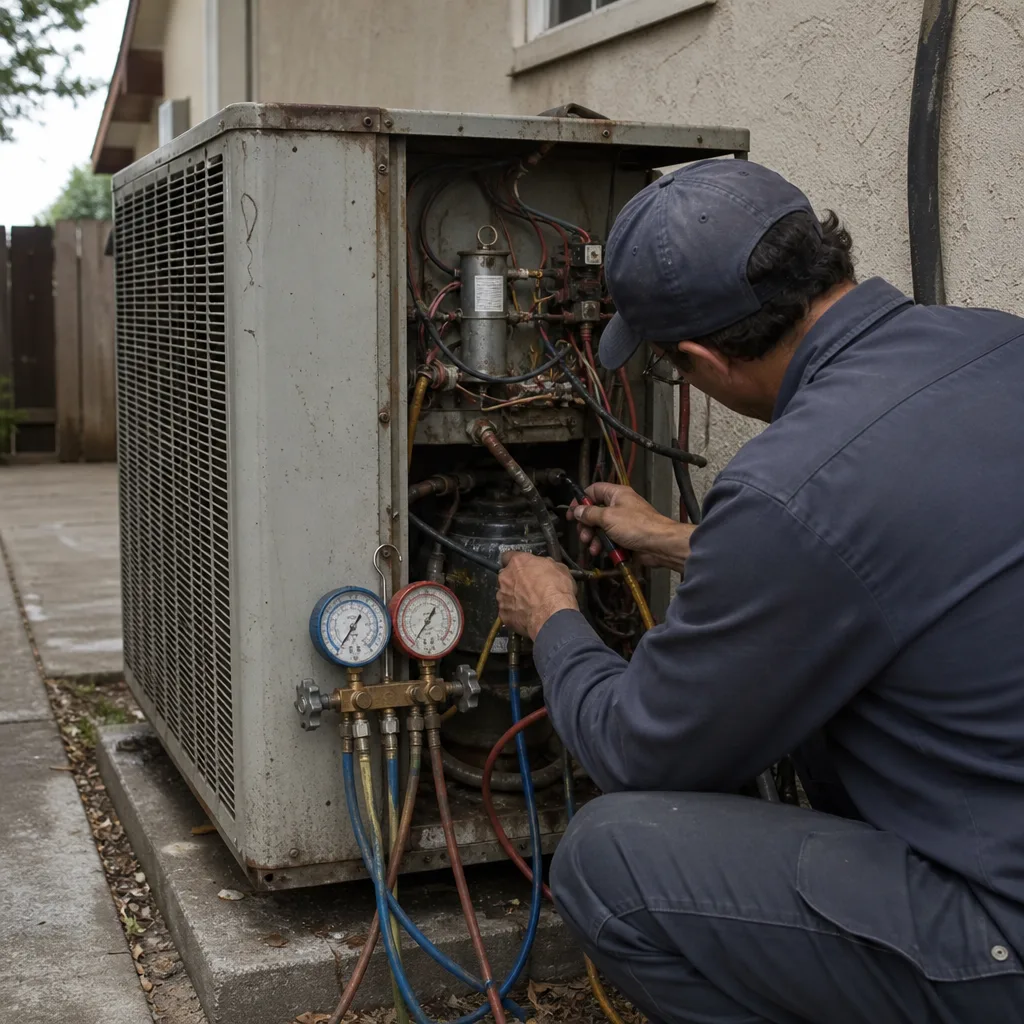 Before
 After
After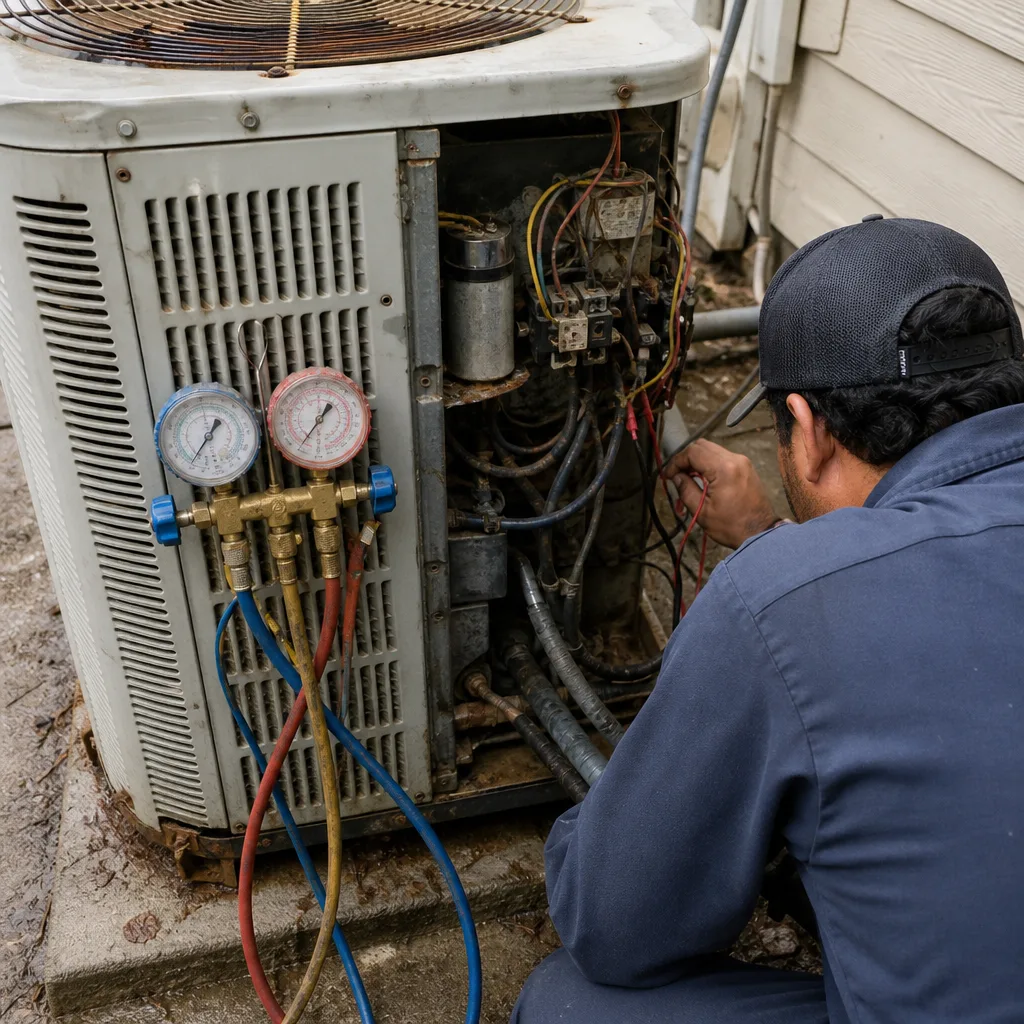 Before
 After
AfterThe Complete Furnace Repair Guide for Los Angeles Homeowners
Most furnace repair advice is written for Minneapolis or Chicago, where a dead furnace in January is a pipe-freezing emergency. Los Angeles is different. Our furnaces sit idle for eight months, then get asked to work in December. That pattern creates a specific set of failures you won’t read about in a generic HVAC blog. This guide covers what actually breaks on LA furnaces, what our Furnace Repair services cost, what a tune-up should include, and which repairs trigger a permit. If you own a home in Los Angeles with a gas furnace, this is the only guide written for the way your equipment actually lives.
Quick Answer
Furnace repair in Los Angeles typically costs $150 – $450 for common fixes like igniter replacement or flame sensor cleaning, while a heat exchanger replacement runs $900 – $1,800 and often signals it’s time to replace the whole unit, as explained in The Complete Guide to HVAC in Los Angeles. Most LA furnace failures happen in the first cold snap of fall, caused by months of sitting rather than overuse. The repair that can’t wait is a cracked heat exchanger, because it can leak carbon monoxide into your home.
Table of Contents
- Why LA Furnaces Fail Differently
- The 5 Most Common Furnace Repairs in Los Angeles (With Real Costs)
- The Heat Exchanger Problem: The Repair You Can’t Defer
- Permits and Inspections: What Los Angeles Actually Requires
- What a Furnace Tune-Up Should Actually Include
- Repair or Replace: How to Decide in LA’s Climate
- How to Choose a Furnace Repair Company in Los Angeles
- Common Mistakes to Avoid
- When to Call a Professional
- Frequently Asked Questions
Why LA Furnaces Fail Differently
In Chicago, a furnace runs 2,000 hours a year and wears out from friction. In Los Angeles, a furnace runs under 400 hours annually and fails from sitting still. We see this pattern every fall across the city, from Sherman Oaks to Pasadena: a homeowner flips the thermostat to heat in late October, the unit tries to fire, and something trips. The sequence is predictable because the failure mode is predictable.
Here’s what sitting does to a furnace:
- Igniters corrode. The hot surface igniter is made of silicon carbide or silicon nitride. Coastal air in Santa Monica and the South Bay carries salt moisture that slowly eats at the component during the off-season. When the furnace finally calls for heat, the igniter cracks under thermal stress and the gas never lights.
- Pilot assemblies gum up. Older furnaces with standing pilots accumulate dust and oxidation in the pilot orifice during eight idle months. The flame gets weak, the thermocouple doesn’t register enough heat, and the gas valve shuts off as a safety response.
- Flame sensors get coated. The flame sensor confirms the burner actually ignited. Sitting allows a thin layer of silicon oxide to form on the rod. When the furnace fires, the sensor can’t detect the flame and the board shuts the system down after a few seconds. This is the single most common no-heat call we run in Los Angeles.
- Inducer motors seize from lack of movement. The inducer motor spins before ignition to vent exhaust gases. Bearings that sat for months without lubrication can stick. The motor hums, draws high amps, and either trips the breaker or the control board refuses to start the sequence.
- Thermal cycling cracks heat exchangers. Los Angeles has big daily temperature swings in fall and winter. A furnace that cycles on at 55 degrees and off at 68 degrees repeatedly expands and contracts the metal heat exchanger. Over years, this thermal cycling causes hairline cracks. That’s a safety issue, covered in depth below.
The point: when your LA furnace won’t start in November, it’s almost never because you “wore it out.” It’s because components degraded while the unit slept. A good furnace technician in Los Angeles knows to look for sitting-related failures first, before recommending expensive replacements.
The 5 Most Common Furnace Repairs in Los Angeles (With Real Costs)
Here’s what we actually replace on LA furnaces, in order of frequency. These are the prices you should expect to see in Los Angeles, including labor, as of 2025:
| Repair | Part Cost | Labor | Total Range |
|---|---|---|---|
| Flame sensor cleaning | $0 – $15 (sensor is rarely replaced) | 30 – 45 min | $120 – $220 |
| Hot surface igniter replacement | $40 – $90 | 45 – 60 min | $180 – $340 |
| Inducer motor replacement | $200 – $450 | 1.5 – 2 hrs | $450 – $800 |
| Control board replacement | $180 – $400 | 45 – 60 min | $350 – $650 |
| Heat exchanger replacement | $500 – $1,000 | 4 – 6 hrs (involves disassembly) | $900 – $1,800 |
A note on these numbers: they assume a standard single-stage gas furnace, 80% AFUE, under 15 years old. If you have a high-efficiency condensing furnace (90%+ AFUE), the inducer motor and control board costs can be 25 – 40% higher. If your furnace is in a crawl space or attic with tight access, labor increases.
We put pricing in writing before any work begins. No exceptions. The price you approve is the price you pay, whether the repair takes 45 minutes or two hours.
The Heat Exchanger Problem: The Repair You Can’t Defer
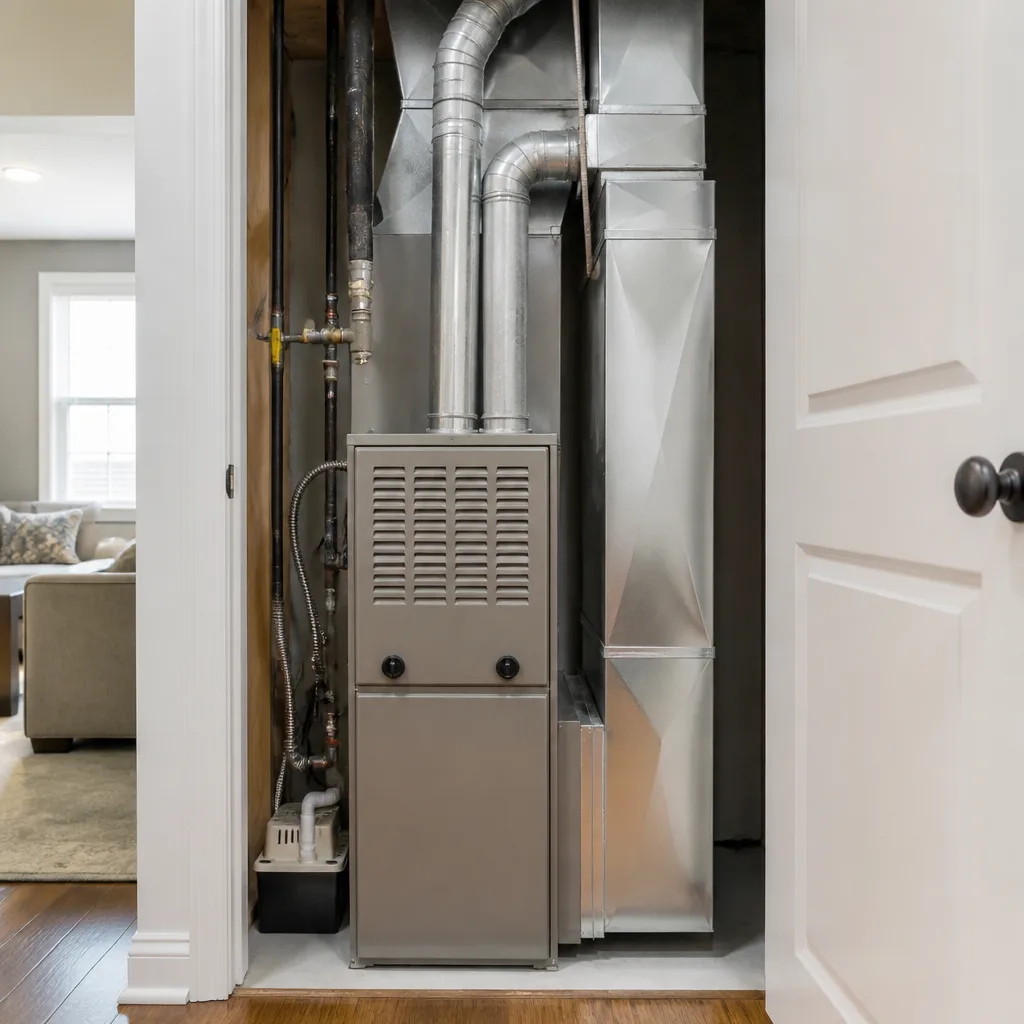
A heat exchanger is the metal chamber that separates the furnace’s burning gas from the air that blows into your home. Combustion gases go through one side; your household air passes over the other side and picks up heat. The two air streams never mix, as long as the metal is intact.
When the heat exchanger develops a crack, combustion gases, including carbon monoxide, can enter the air stream that comes out of your vents. That’s a health risk, not a comfort issue. In Los Angeles, where windows stay closed during winter heating cycles, CO buildup happens faster than people expect.
Here’s what a proper diagnosis looks like:
- Not just a visual check. A technician who looks at the heat exchanger from outside and says “looks okay” has not done the job. Most cracks are hairline and invisible from the exterior. We use an inspection camera to see inside the chamber walls and a combustion analyzer to test for excess CO in the flue gases during operation.
- Combustion analyzer readings. An analyzer that shows CO readings above normal range during operation, combined with flame distortion when the blower kicks on, is the standard confirmation method. The flame will flicker or change color as the blower pressurizes the chamber through a crack.
- The verdict matters. If the heat exchanger is cracked, you have two choices: replace the heat exchanger alone, or replace the furnace. On a furnace under 10 years old, a heat exchanger replacement at $900 – $1,800 makes sense. On a furnace over 15 years old, you’re spending close to half the cost of a new system on a unit with other aging components. We’ll tell you plainly which one we’d do in our own house.
A cracked heat exchanger is not a “schedule it for spring” repair. You should stop using the furnace until it’s fixed or replaced. Carbon monoxide is odorless and colorless, and the stakes are simply too high to run the system anyway.
Permits and Inspections: What Los Angeles Actually Requires
Los Angeles has specific rules about which furnace repairs require a permit from the Los Angeles Department of Building and Safety (LADBS). Here’s the practical breakdown, based on current LADBS enforcement in Los Angeles:
- No permit needed: Replacing an igniter, flame sensor, control board, inducer motor, gas valve, pressure switch, or limit switch. These are classified as repairs to existing equipment. The furnace is not being relocated, altered in capacity, or replaced.
- Permit required: Full furnace replacement. Swapping out the entire unit triggers a mechanical permit with LADBS. The permit covers the installation, requires a post-installation inspection, and becomes part of the home’s building record. A heat exchanger replacement, while it involves disassembly, is generally handled as a repair, not a replacement, but if your unit is under warranty, the manufacturer may require a licensed contractor to perform the work.
- What about a heat exchanger? Heat exchanger replacement does not require a mechanical permit in Los Angeles, because the furnace shell and major components are not being changed. It is considered a component repair. However, it must be performed by a contractor qualified under the California Mechanical Code.
If a company tells you a permit is needed for a simple igniter swap, they’re padding the bill. If a company says no permit is needed for a full furnace replacement, they’re cutting a corner that will surface when you sell the home or file an insurance claim. We handle the permit paperwork on every full replacement we do in Los Angeles. On repairs that don’t need one, we don’t invent one.
What a Furnace Tune-Up Should Actually Include
There are two types of “tune-ups” sold in Los Angeles. One is a real service with measurable results. The other is a $49 door-opener that exists to sell you a replacement furnace. Here’s how to tell them apart.
A legitimate furnace tune-up includes these items, in this order:
- Inspect the heat exchanger with a camera, looking for cracks and rust, because this is the life-safety component.
- Test the flame sensor with a multimeter and clean it with fine steel wool or a dollar bill (it works) until the reading is in spec.
- Check the igniter for visible damage and test its resistance against manufacturer spec.
- Verify manifold gas pressure with a manometer at the gas valve. Wrong pressure means incomplete combustion, which means CO production.
- Test the high-limit and rollout switches to confirm they trip at the correct temperature.
- Inspect the inducer motor and venting for blockages, corrosion, and proper draft.
- Measure temperature rise across the furnace, to confirm the blower is moving the right CFM.
A vague once-over, where a technician spends 20 minutes looking at the unit and hands you a green checkmark on a form with no numbers, is not a tune-up. It’s a sales call. Ask for the specific readings: gas pressure, temperature rise, flame sensor microamps, CO readings at startup. A real technician will have these written down. If they can’t produce them, they didn’t do the work.
Our tune-ups include a written report of every measurement. The technician who does the work is not paid on what they sell. If a repair is recommended, it’s because the numbers say so, not because there’s a commission on the line.
Repair or Replace: How to Decide in LA’s Climate
In a cold climate, the repair-versus-replace calculation is simple: a dead furnace in January is an emergency, and the answer is usually “replace it now.” In Los Angeles, you have time. That changes the math.
Here’s the decision framework we use with customers:
- Furnace under 8 years old: Almost always repair. For a top-tier brand like Trane or Carrier, a furnace at this age is at about 40% of its service life, assuming it has been maintained. Putting $400 into a control board makes sense.
- Furnace between 8 and 15 years old: It depends on the repair. For a $200 flame sensor or igniter, repair without a second thought. For a $1,000+ heat exchanger, run the numbers. You’re halfway to a new system.
- Furnace over 15 years old: We lean toward replacement, especially if the repair estimate exceeds $800. A furnace this age has an inducer motor, gas valve, and blower motor that are all roughly the same age. When one fails, the others are statistically next. For LA homeowners planning to stay in the house 5+ years, replacement locks in 10+ years of reliable starts every fall.
One LA-specific factor: because your furnace runs so few hours per year, a well-maintained unit can last well past 20 years of age in Los Angeles, where the ambient conditions are mild and the equipment isn’t fighting a cold climate. For heat pump alternatives, see The Complete Heat Pump Installation Guide for Los Angeles Homeowners. A Trane or American Standard furnace in Los Angeles can age more gracefully than the same unit in Chicago. That extra lifespan can tip the “repair” decision in your favor here in ways it wouldn’t in a colder market.
How to Choose a Furnace Repair Company in Los Angeles
Los Angeles has hundreds of HVAC contractors. Most garage-based operations don’t have to meet any standard beyond a license and an insurance policy. Here’s what separates a disciplined operation from a roll of the dice:
- Written price before work begins. If a company won’t put the number in writing before they start turning wrenches, that’s a red flag. In Los Angeles, bait-and-switch pricing is the most common furnace repair complaint. The price quote is only as good as the paper it’s written on.
- Written guarantee on the repair. A 30-day verbal “we’ll make it right” is not a guarantee. Ask for the guarantee in writing, including what happens if the same component fails again. Dalton Heating & Air includes a written guarantee on every repair. If the work doesn’t hold for a full year, we return at no charge. That’s part of The Garrison Standard, the operating code we’ve held since 2003.
- Background-checked, uniformed technicians. You’re letting a stranger into your house. Companies that run background checks and put their techs in uniforms have made an investment in accountability. Companies that send whoever’s available in whatever they drove don’t have a standard to defend.
- Factory training on your brand. A technician trained on Lennox equipment should not be learning the wiring diagram on your Trane the morning of the call. We’re factory-trained on Carrier, Trane, Lennox, and American Standard, among others. That matters when the repair comes down to a specific voltage reading on a specific board.
- Live phone support. At Dalton Heating & Air, a real person answers the phone 24 hours a day, 7 days a week. No voicemail queue, no “we’ll call you back within one business day.” When your furnace quits on a cold December night in Los Angeles, you talk to a person, not an answering machine.
None of these standards guarantee a perfect outcome. But they shift the odds heavily in your favor. The Garrison Code governs how we’ve operated since 2003: arrive inside the stated window, price in writing before starting, do the job by the book, leave the site clean, and stand behind the work for a full year. You can hold us to each of those terms. We expect you to.
Common Mistakes to Avoid
- Ignoring the first failed ignition of the season. If your furnace tries to start, fails, and then works on the second attempt, that’s a warning light, not a glitch. It usually means the flame sensor is marginal or the igniter is weakening. The next failure will be the permanent one, and it will happen on the coldest night of the year.
- Running the furnace with a known cracked heat exchanger. We cannot state this strongly enough. If a technician has diagnosed a crack, shut the furnace off until it’s repaired or replaced. Carbon monoxide poisoning in Los Angeles happens in exactly this scenario, and it happens more often than the news reports.
- Buying a “tune-up” with no measurements. A tune-up without written readings is an inspection, not a service. You are paying for data. If there’s no data, there was no service.
- Replacing a 20-year-old furnace’s control board without considering the bigger picture. A $500 board on a furnace that old is a down payment on a cascade of future failures. Run the replacement numbers first.
- Hiring a contractor who won’t put the repair price in writing. In Los Angeles, this is the single most reliable predictor of a bad outcome. Get it in writing or get a different contractor.
- Skipping the permit on a full replacement. When you sell your house, an unpermitted furnace replacement becomes a title headache. In Los Angeles, buyers and inspectors look for the LADBS permit record. Do it right the first time.
- Believing a furnace that sits for 8 months doesn’t need maintenance. Sitting still is harder on a furnace than running in a cold climate. A yearly pre-season inspection in October catches 90% of the failures that will happen in December.
When to Call a Professional
Call a furnace technician when you smell gas near the furnace, when the unit fails to ignite more than once, when you hear banging or rumbling inside the cabinet, when your CO detector goes off, or when the blower runs constantly without producing heat. These are not DIY situations. Gas furnaces involve pressurized natural gas, live electrical components, and combustion gases. The downside of getting it wrong is a house fire or carbon monoxide poisoning. Dalton Heating & Air offers free estimates in Los Angeles. Call (361) 306-9515 and a real person will answer, day or night.
Frequently Asked Questions
Most furnace repairs in Los Angeles run $150 – $450, with igniter replacement and flame sensor cleaning at the low end and control board or inducer motor replacement at the high end. A heat exchanger replacement runs $900 – $1,800, which is when the repair-versus-replace calculation becomes serious. Call (361) 306-9515 for a written quote on your specific unit. Estimates are free.
The failure-seems-seasonal pattern happens because parts that sat for months are being asked to work for the first time. Igniters crack from the sudden thermal stress, inducer motor bearings that dried out in the off-season seize, and flame sensors covered in a season’s worth of oxidation can’t confirm ignition. It’s not the cold causing the problem; it’s the dormancy. A pre-season inspection in October catches this before the first cold snap does.
Yes. A full furnace replacement in Los Angeles requires a mechanical permit from LADBS and a post-installation inspection. Component repairs like igniter, flame sensor, or control board replacement do not require a permit. We handle the permit paperwork on every replacement we do.
Repair if your furnace is under 10 years old and the repair is under $800, replace if your furnace is over 15 and the repair is over $800. In between, it depends on the brand, condition, and your plans for the house. LA’s mild climate extends furnace life, so a well-maintained 12-year-old unit may have several years left in it. We’ll give you the numbers for both paths and tell you what we’d do in our own home.
A dirty flame sensor is the most common no-heat call we run in Los Angeles. The fix is simple: remove the sensor, clean it with fine steel wool, reinstall, and verify the microamp reading. Most flame sensor cleanings cost $120 – $220 and take under an hour. The second most common is a cracked igniter, which costs $180 – $340 to replace.
In most cases, yes. We stock igniters, flame sensors, control boards, and other common parts for Carrier, Trane, Lennox, and American Standard furnaces on our trucks, so repairs can often be completed on the first visit. Rare or brand-specific parts may require a next-day follow-up. Call (361) 306-9515 to schedule a repair. A live person answers 24/7.
The Bottom Line
Furnace repair in Los Angeles follows its own rules, and the biggest rule is this: sitting still causes as many failures as running does. The fix for most LA furnace problems is simple and cheap, as long as you catch it before the first cold snap of fall. Get a pre-season inspection every October. Get every repair price in writing. And if the heat exchanger cracks, shut the furnace down until it’s fixed or replaced, no exceptions. Dalton Heating & Air has served Los Angeles under The Garrison Standard since 2003, with written pricing, written guarantees, and a free return visit if a repair doesn’t hold for a full year. Call (361) 306-9515 for a free estimate.
Written by Marco Benitez, Owner at Dalton Heating & Air, serving Los Angeles since 2003.