
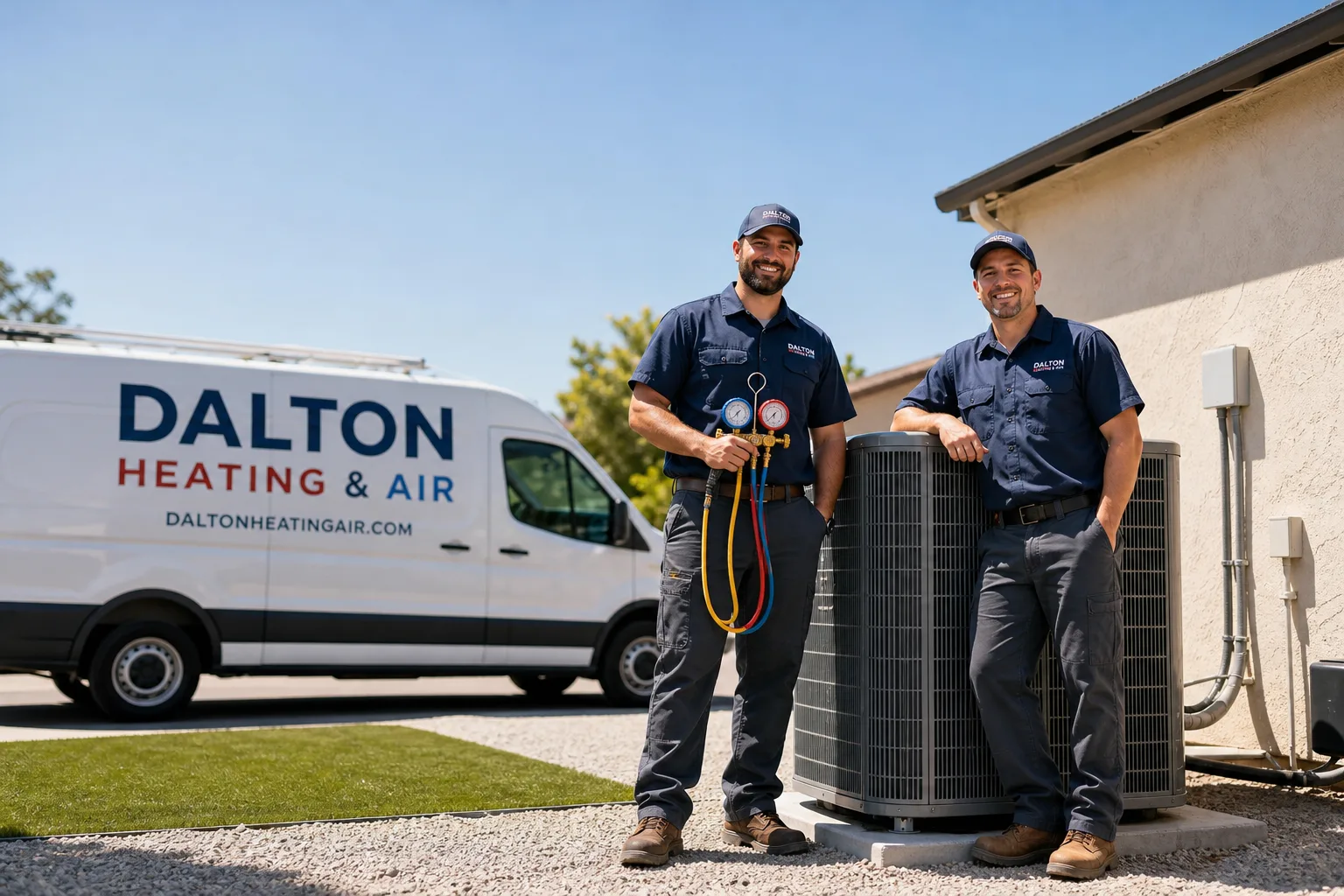
Seasonal tune-up and full diagnostic on your Carrier, Trane, or Goodman system - readings shown to you before any repair is proposed
Diagnosis first, numbers second - you approve the repair price before a single part goes in.
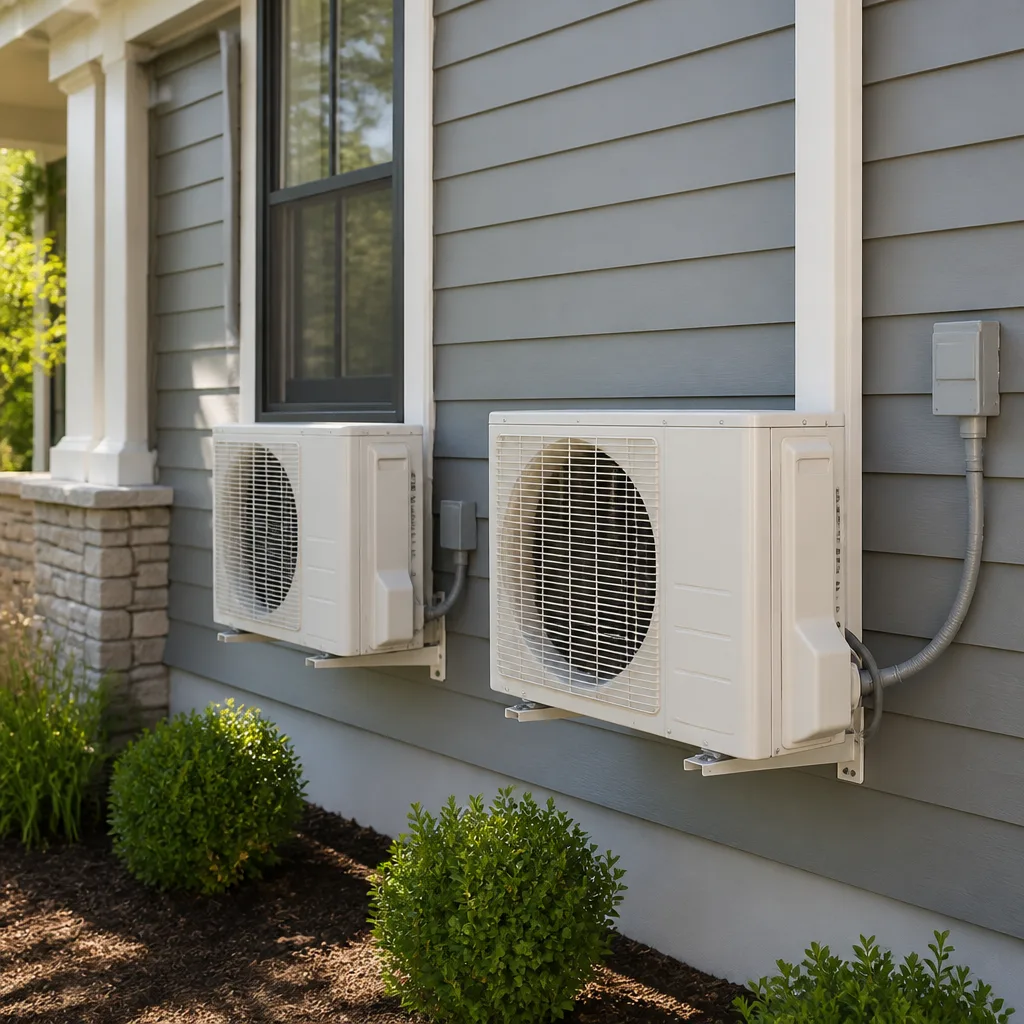
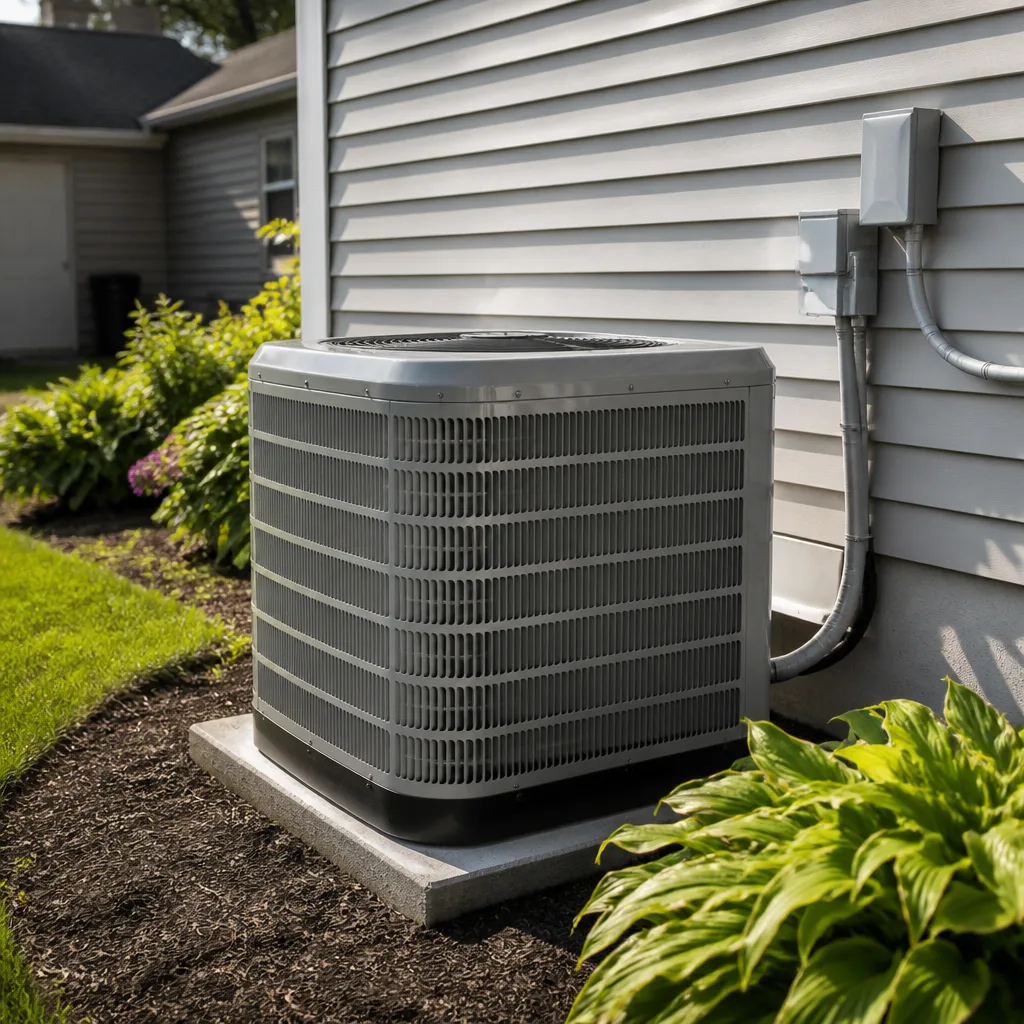
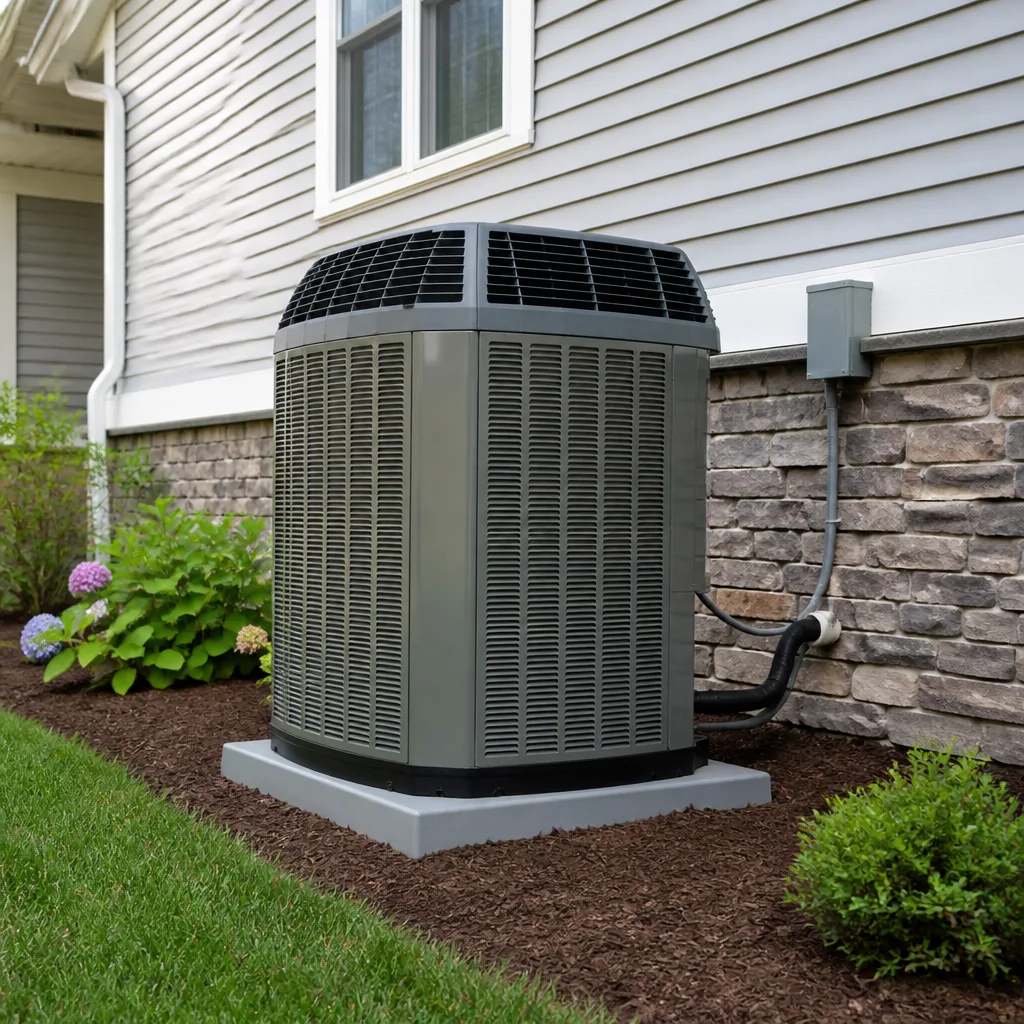
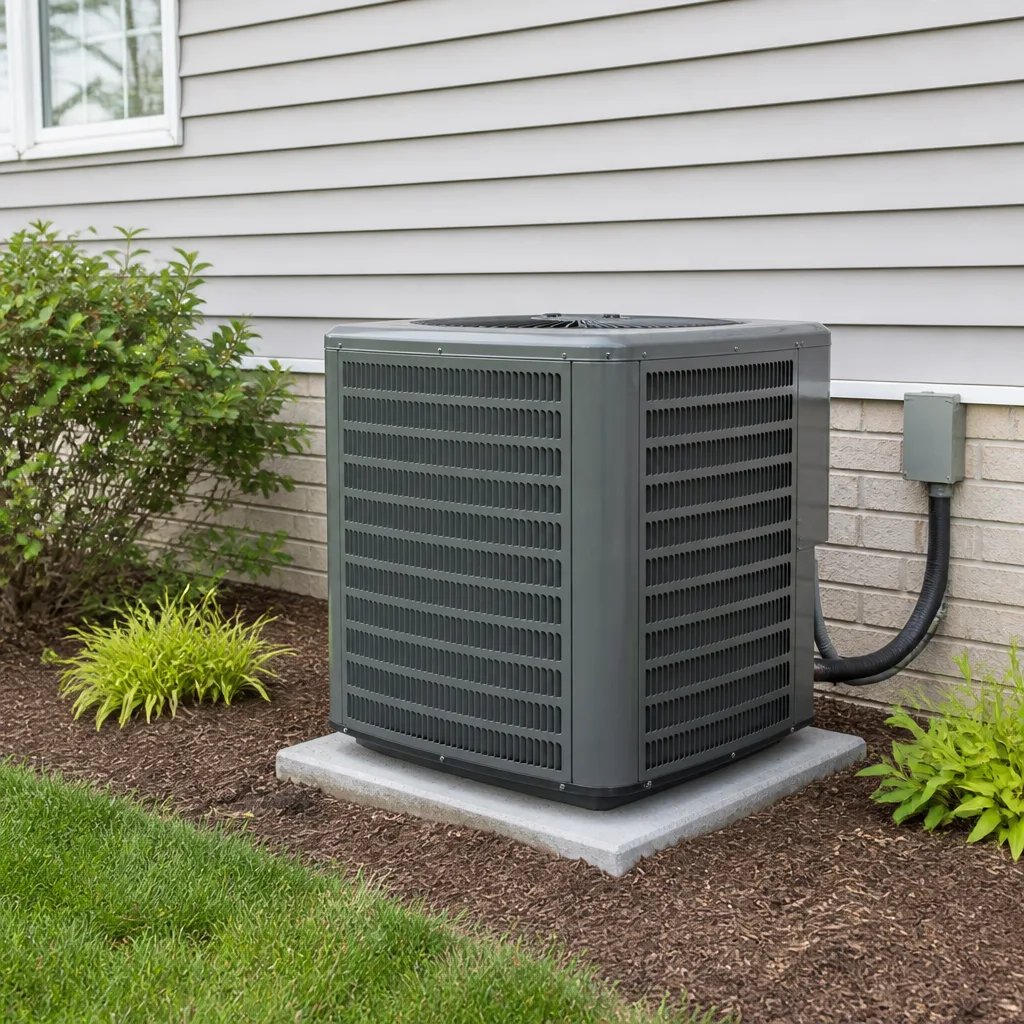
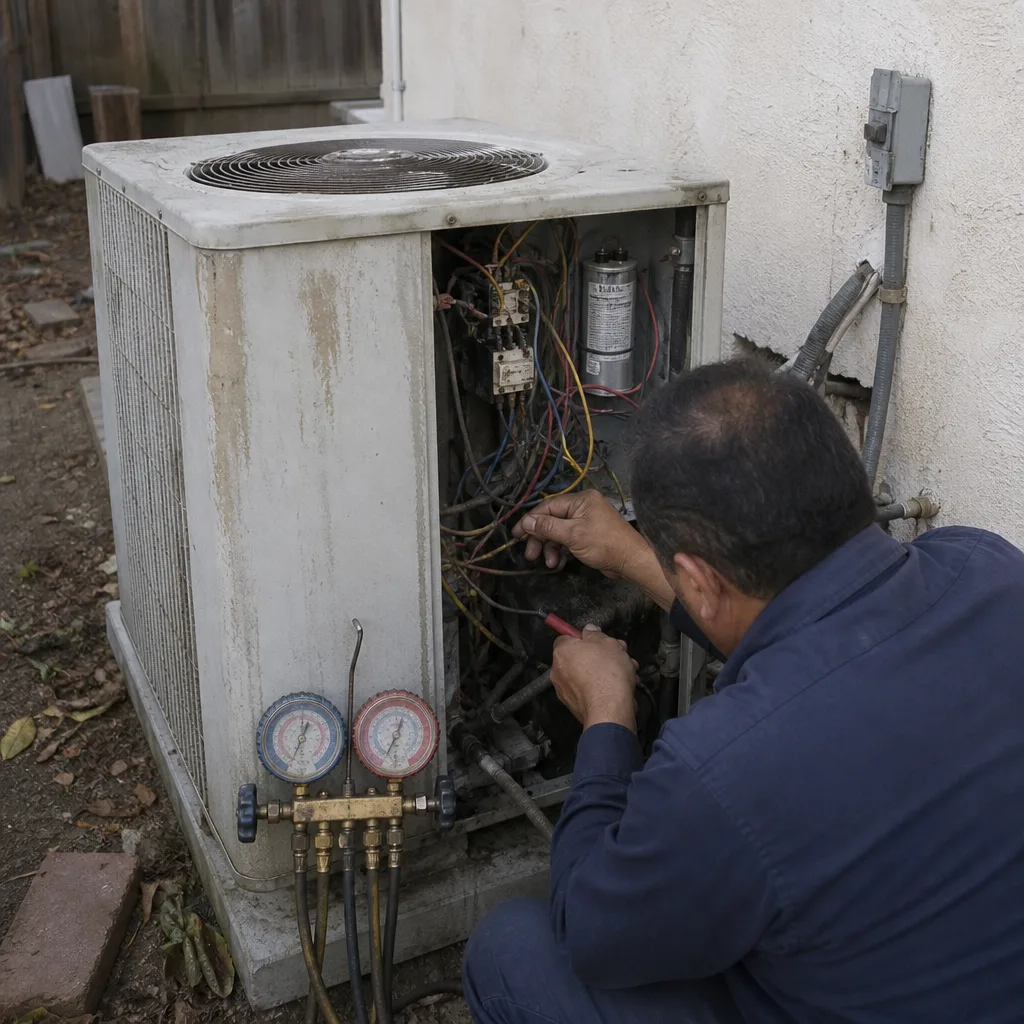 Before
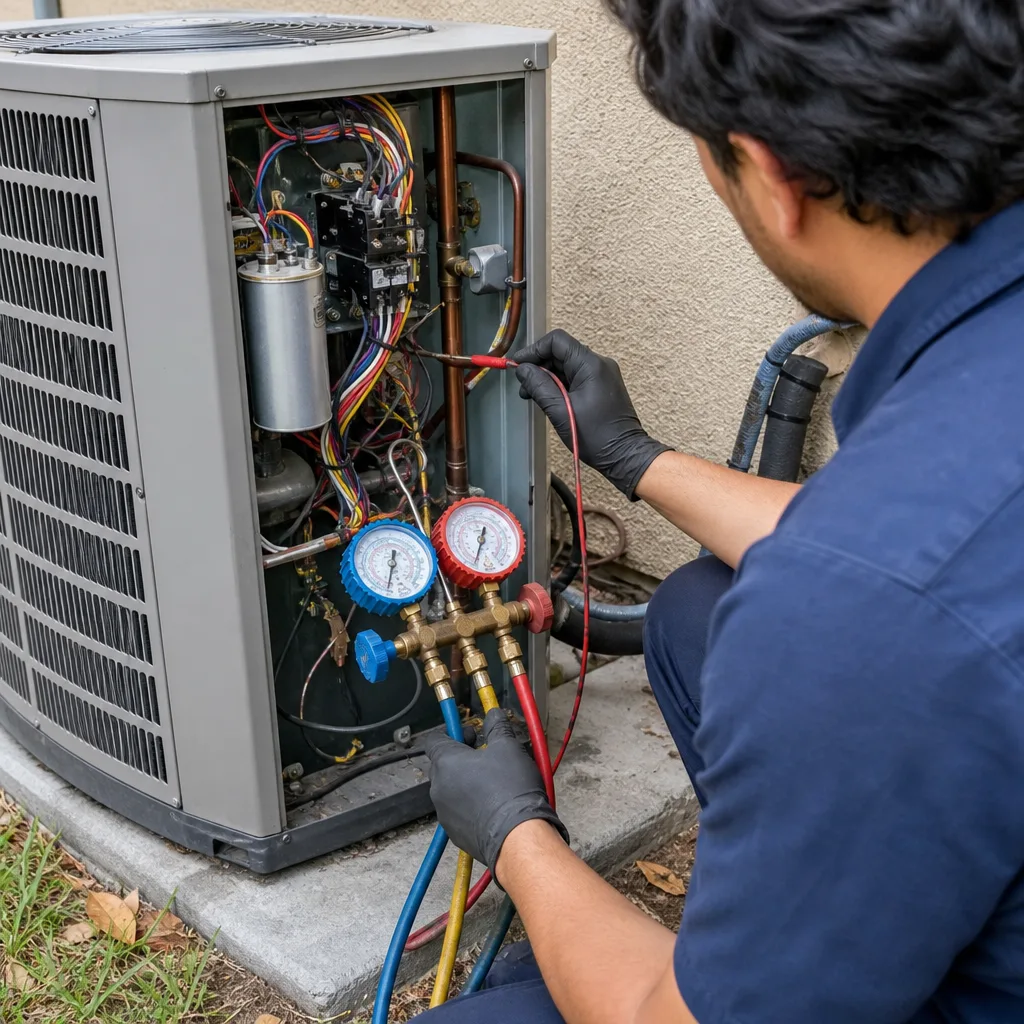 After
After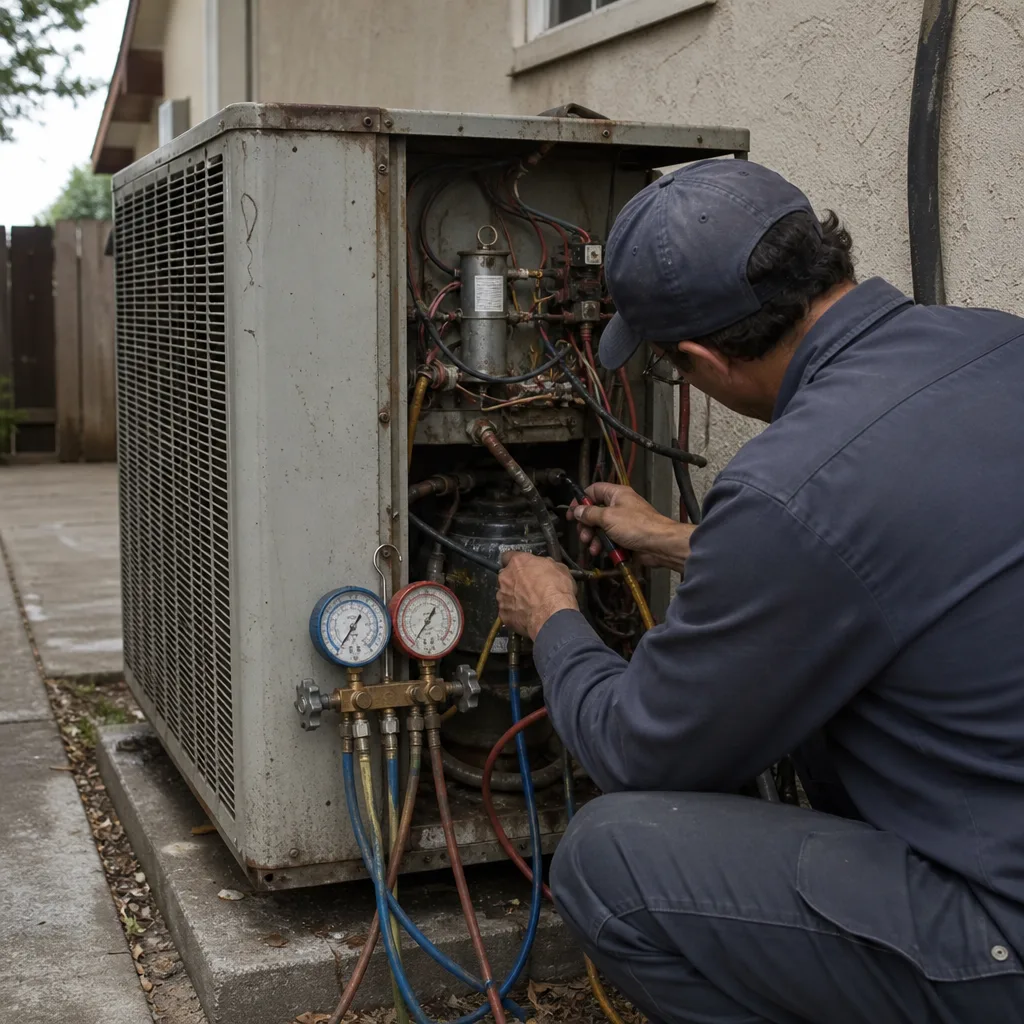 Before
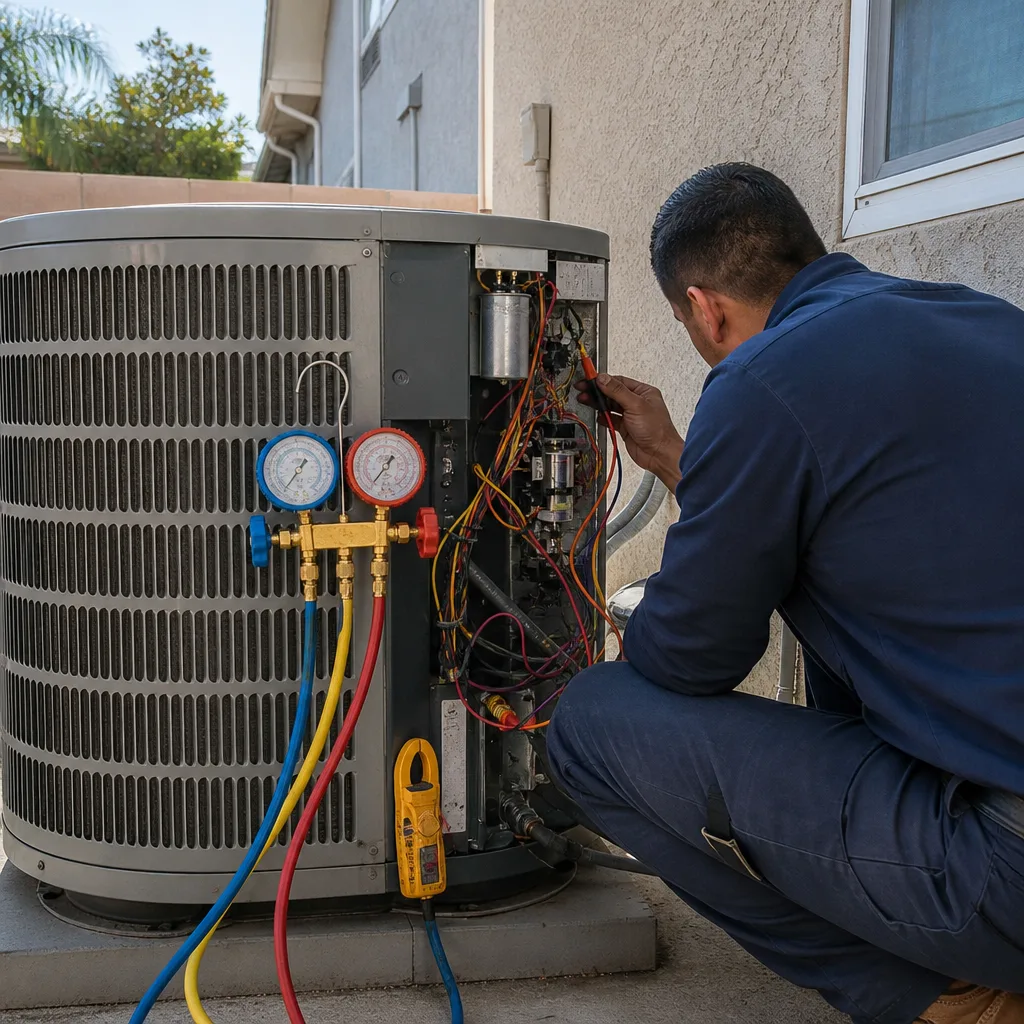 After
After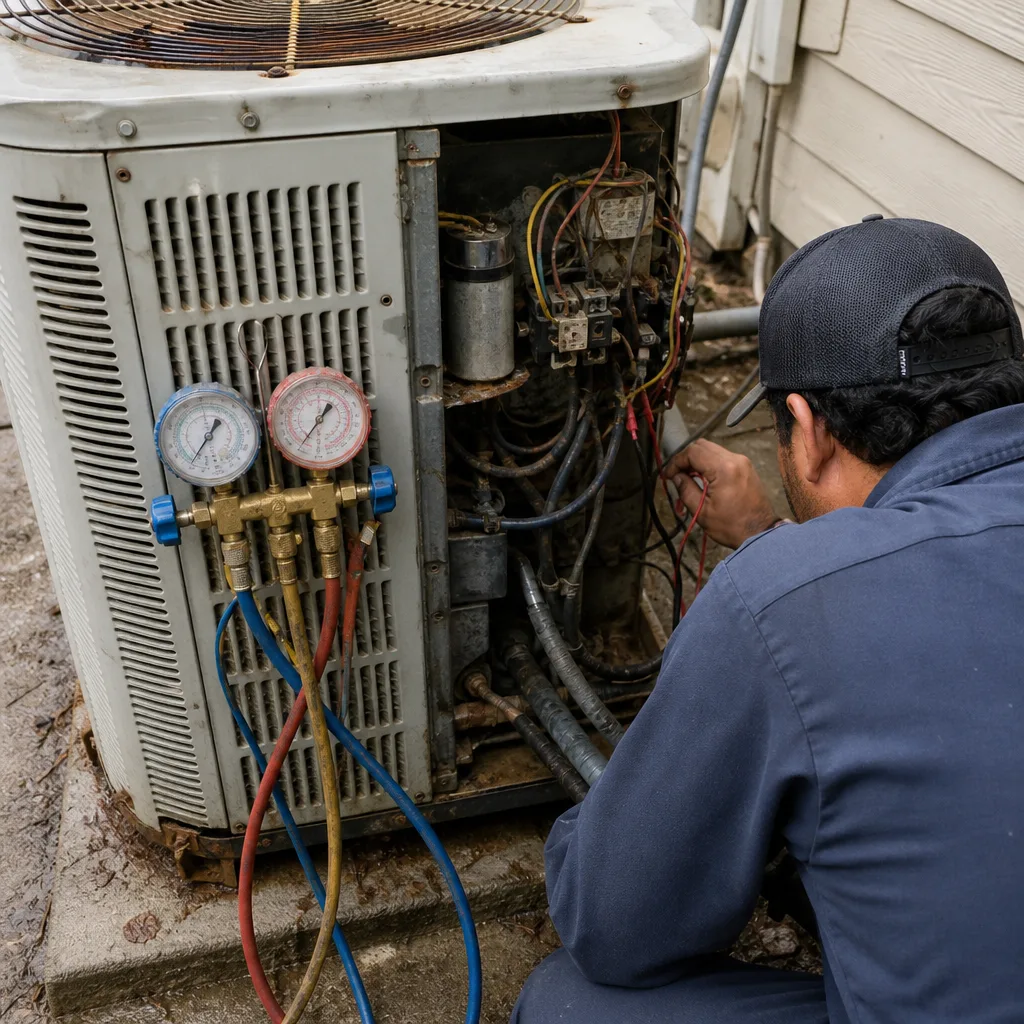 Before
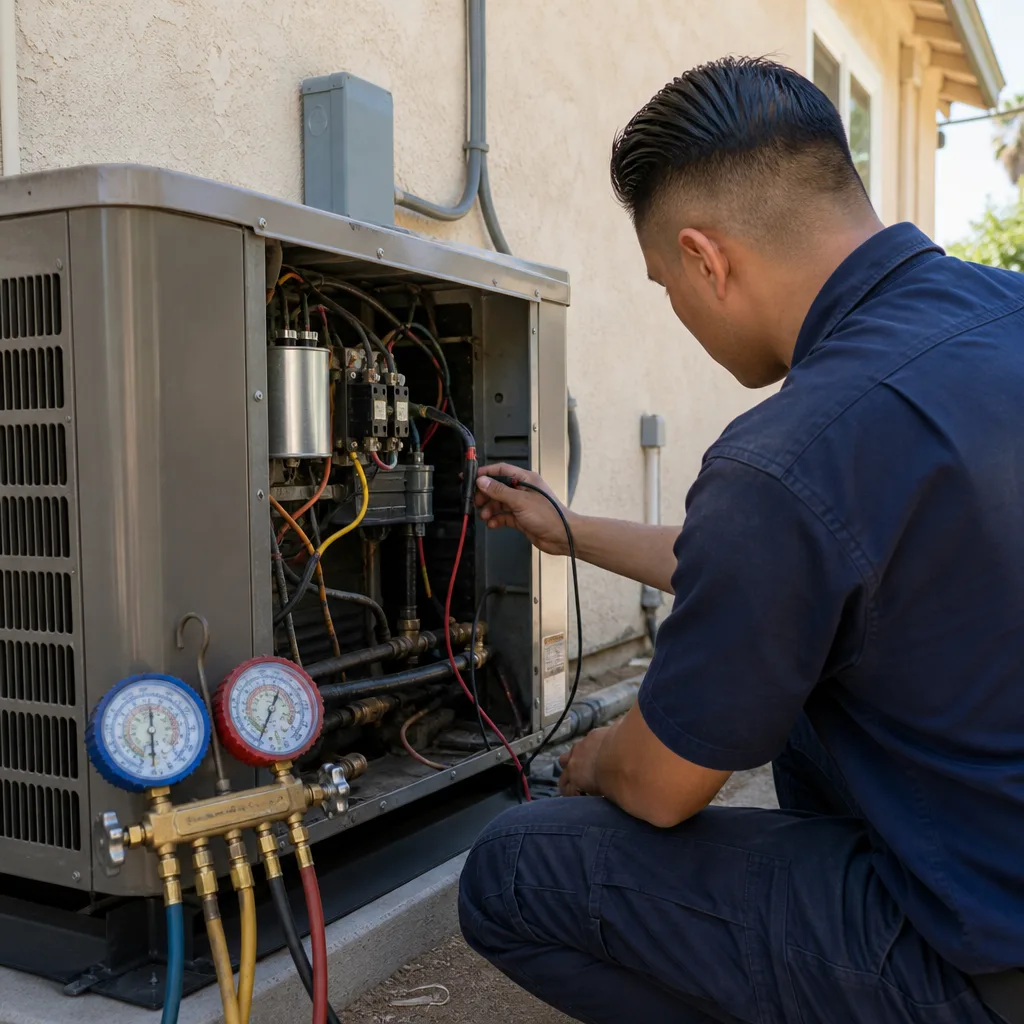 After
AfterWater Leaking Around the Furnace
Water on the floor near your furnace almost always means one thing: your condensate drain system has failed, overflowed, or backed up. It can also mean a humidifier line is leaking or, in some cases, a cracked heat exchanger is allowing condensation to escape where it shouldn’t. Either way, this is not a situation to run the system through.
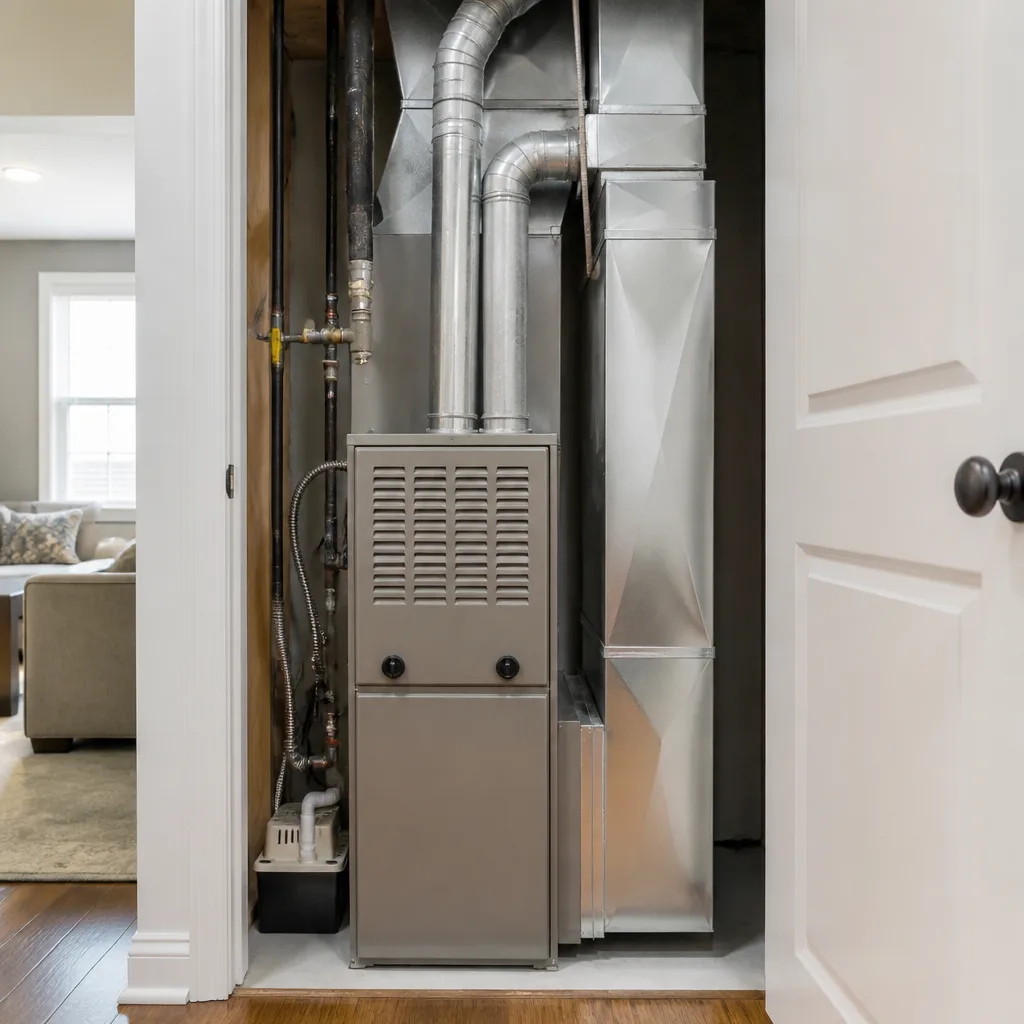
Modern high-efficiency furnaces – anything rated 90% AFUE or above, meaning 90 cents of every fuel dollar becomes heat – produce condensate as a normal byproduct of combustion. That water has to go somewhere, and a network of plastic drain lines, a condensate trap, and sometimes a small pump moves it out of the unit. When any part of that path clogs, cracks, or fails, the water has nowhere to go except the floor. Older furnaces don’t produce condensate the same way, so if you have a standard-efficiency unit and water is pooling around it, the source is almost certainly a humidifier, a plumbing line running nearby, or something more serious inside the heat exchanger itself.
Why It Happens
Clogged or cracked condensate drain line
The condensate drain line is a narrow PVC pipe – think of it as the furnace’s drainpipe – that carries acidic water from the unit to a floor drain or utility sink. Algae, dust, and mineral scale build up inside it over a heating season. When it clogs, the water backs up into the drain pan below the air handler and spills over the edge. You can often tell this is the cause because the puddle is directly under the unit, the water has a faintly sour smell, and the overflow pan is visibly full or damp. A crack in the line produces a trail of drips along the pipe’s path rather than a single pool at the base.
Failed or frozen condensate pump
Some installations can’t drain by gravity, so they use a small condensate pump – a device about the size of a shoebox – to push the water upward to a drain. The pump has a float switch that triggers it when the reservoir fills. When the pump motor burns out or the float switch sticks, the reservoir overflows and water ends up on the floor. You can tell this is the likely cause if the pump is making no sound at all during a heating cycle, or if it’s running but the reservoir is still spilling over. The reservoir itself is usually visible as a white plastic box sitting beside or below the air handler.
Humidifier line leak
Whole-house humidifiers attach directly to the furnace or air handler and run a small supply line from the home’s water supply. The saddle valve – the small fitting that taps into the water line – and the soaker pad housing inside the humidifier are both common failure points. A crack in the housing or a loose saddle valve connection drips water steadily whether the furnace is running or not. If the puddle is forming even when the heat has been off for hours and the water supply is still on, the humidifier line is worth checking first.
Cracked heat exchanger
This is the least common cause and the most serious. The heat exchanger is a sealed metal chamber inside the furnace where combustion gases are kept separate from the air that heats your home. A crack can allow condensation to migrate out of the combustion side. If you’re seeing water and also noticing a faint sulfur or metallic smell, yellow or flickering burner flames, or your carbon monoxide detector has tripped recently, stop using the furnace immediately and call for service. A cracked heat exchanger is a carbon monoxide risk. Do not try to inspect it yourself – this component handles combustion gases and requires a trained technician with the right tools to evaluate safely.
What to Do Right Now
- Turn the furnace off at the thermostat. Switch it to “off” rather than just lowering the set point. Running the system while water is pooling can damage the blower motor and the control board.
- Take three or four clear photos before you clean anything up. Photograph where the water is sitting, which direction it’s spreading, and the base of the unit. A technician can often narrow down the cause before they even open a panel.
- Do not use a shop vac or towels to dry the area inside the furnace cabinet. If water has reached electrical components or the control board, disturbing it before a technician inspects it can complicate the diagnosis.
- Check the condensate pump reservoir if you can see it. If it’s visibly full and not draining, that confirms the pump or its float switch is involved. You don’t need to open or disassemble anything – just note what you see for the technician.
- If you smell gas, sulfur, or something burnt, or if your CO detector has activated, leave the house and call 911 first. Then call us at (361) 306-9515. A carbon monoxide risk or gas leak is an emergency that goes beyond an HVAC service call.
How We Fix It
When your local Dalton Heating & Air technician arrives, the first step is a full visual inspection: drain pan, condensate lines, pump, humidifier connections, and the area around the heat exchanger. Nothing gets touched until you have the price in writing – that’s not a policy we bend on. It’s part of The Garrison Standard, and it applies to every job, every time.
Most condensate drain clogs clear in under an hour. The technician flushes the line, checks the trap for scale buildup, and tests the pump’s float switch if one is installed. If the pump motor has failed, the unit is swapped out and tested before the technician leaves. A leaking humidifier line is resealed or the saddle valve is replaced. If the inspection points toward the heat exchanger, that diagnosis is documented in writing and you’ll be walked through your options before any further work begins. The repair most likely routes to our furnace repair service. The written guarantee on every repair is included – not an add-on – and the work is covered for a full year under the 365-Day Done Right Promise. If it fails within that year, we come back at no charge.
Frequently Asked Questions
In most cases it’s a mechanical problem – a clogged drain or a failed pump – and the immediate danger is water damage to the surrounding area and stress on the furnace’s electrical components. The situation that changes that calculus is a cracked heat exchanger, which can allow carbon monoxide to enter your living space. If you have any of the warning signs described above – CO detector activation, unusual smell, yellow burner flame – treat it as an emergency. Call (361) 306-9515 right now and stop using the furnace until a technician clears it.
Don’t let it sit. Water sitting under or inside a furnace damages the control board and blower motor, and a control board replacement costs significantly more than clearing a drain line. Beyond the equipment risk, pooling water near ductwork and insulation creates conditions for mold growth fairly quickly. If you can’t get same-day service, at minimum turn the furnace off at the thermostat until someone can look at it. Call (361) 306-9515 and your local Dalton team will let you know when they can get to you.
Your local Dalton Heating & Air team handles furnace repair calls and our phones are answered by a live person around the clock – not a voicemail queue. Call (361) 306-9515 any time and we’ll tell you exactly when we can be there. We give you a window and we show up inside it – that’s the first point of The Garrison Code.
The honest answer is: it depends on what’s actually causing the leak, and we won’t know for certain until the technician inspects the unit. What we can promise is that you’ll have the price in writing before any work starts – on every job, without exception. There are no estimates that grow at the door. Call (361) 306-9515 and we’ll schedule a visit; the written price comes first, then the work.
Get It Fixed
Call (361) 306-9515 any time – a real person answers 24 hours a day, 7 days a week. Your local Dalton Heating & Air team will give you a firm arrival window, put the price in writing before anything starts, and back the repair for a full year under the 365-Day Done Right Promise.
Written by Marco Benitez, Owner and Lead HVAC Technician at Dalton Heating & Air, a Garrison Partners company serving homeowners since 2003.
What Our Customers Say
"Honest, direct people. Told me what the furnace needed and nothing more, and the bill matched."
- Eliza S."Coil cleaning and a refrigerant check before summer. AC has never been this cold."
- Marty D."Good communication, tidy, and disciplined work. Taped off the floor and wiped the unit down."
- Karen J.