
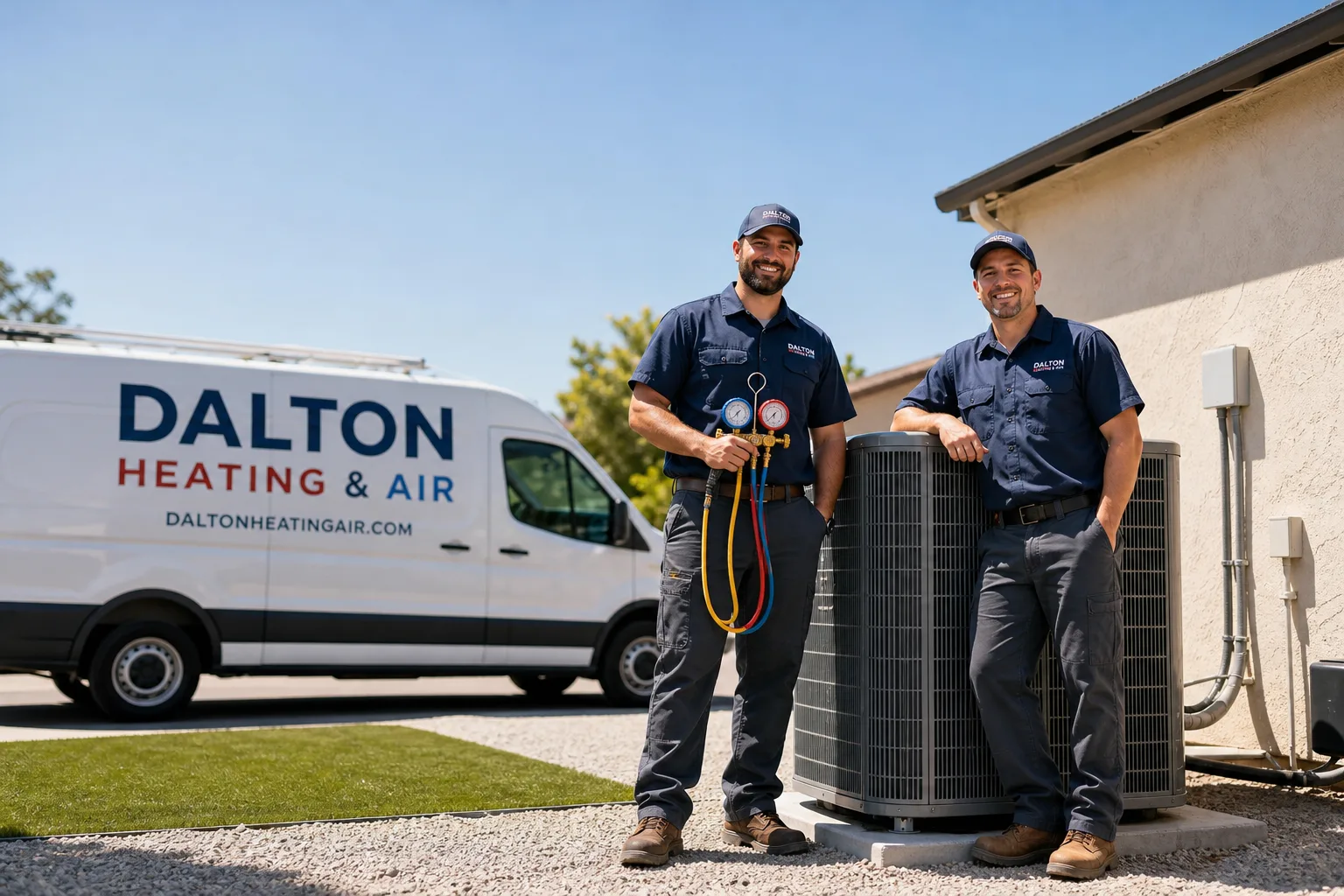
Seasonal tune-up and full diagnostic on your Carrier, Trane, or Goodman system - readings shown to you before any repair is proposed
Diagnosis first, numbers second - you approve the repair price before a single part goes in.
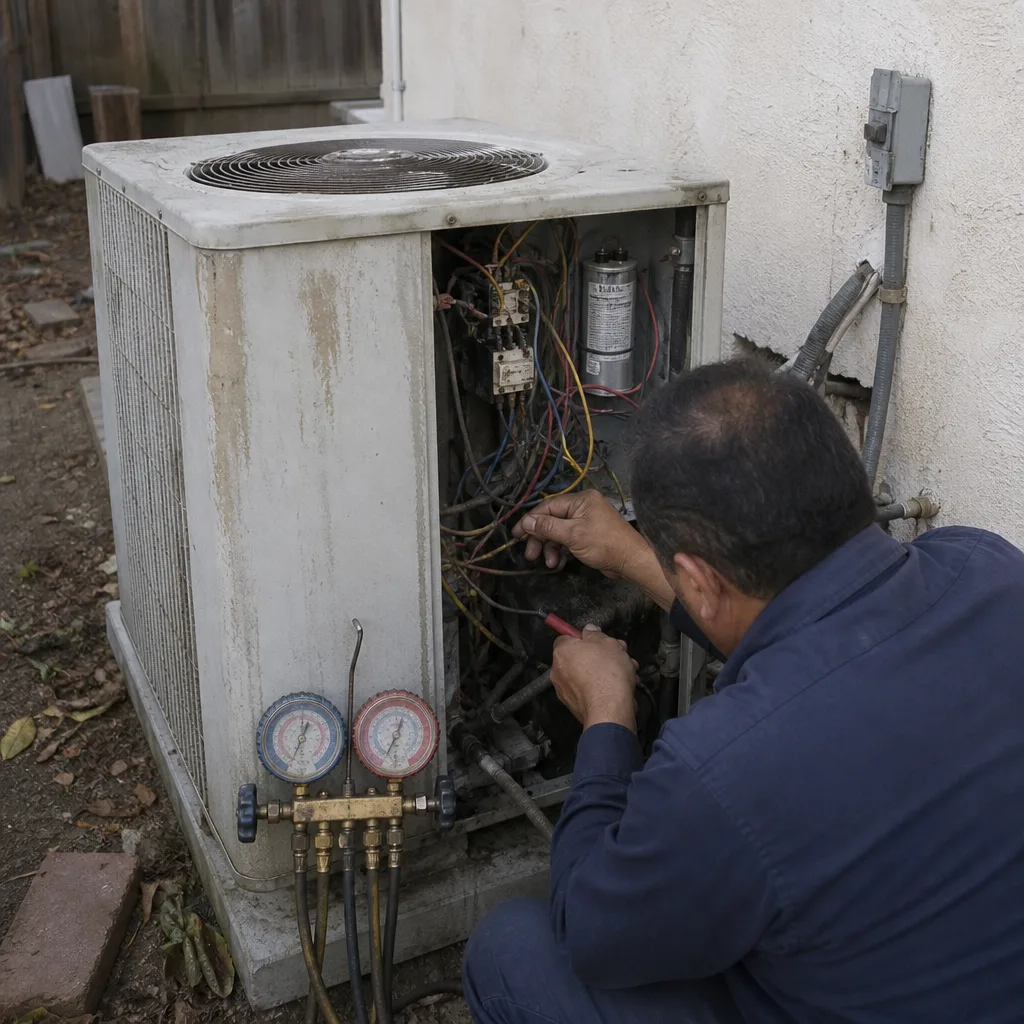 Before
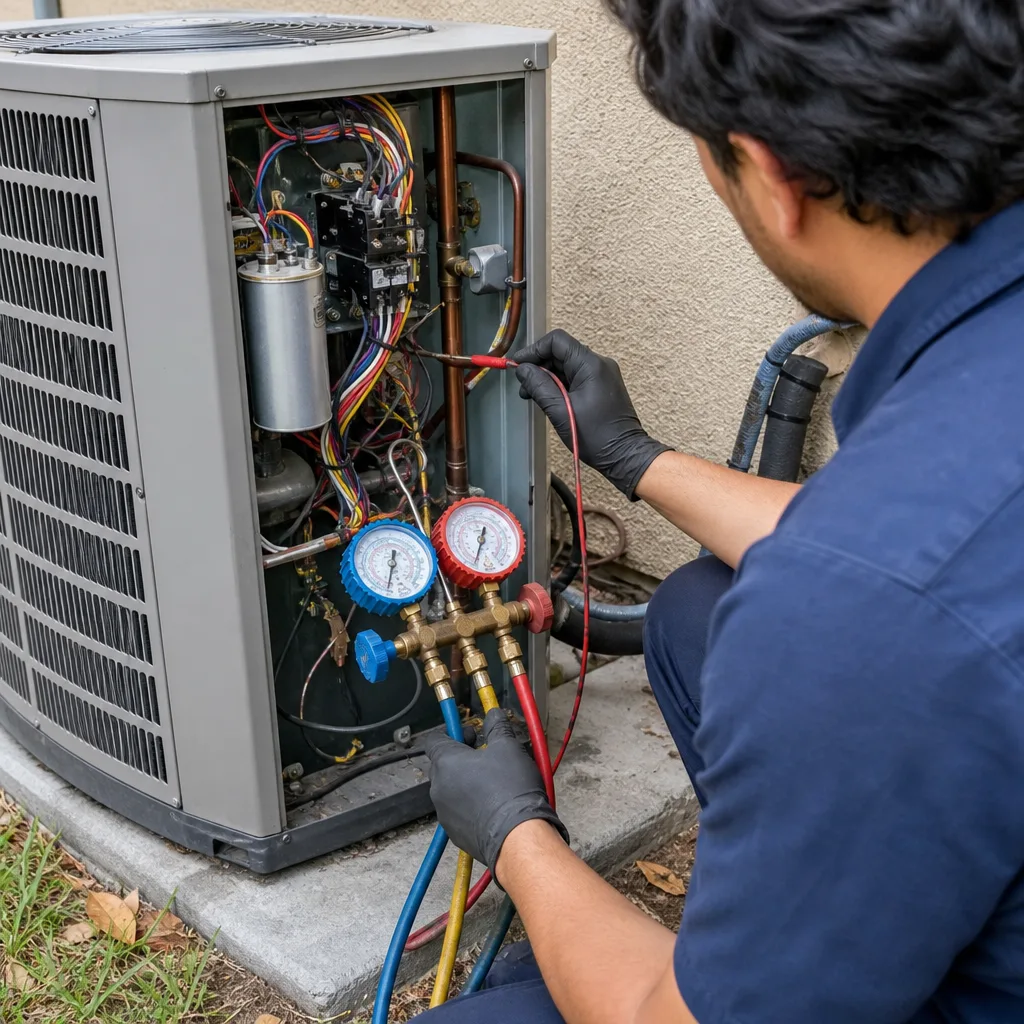 After
After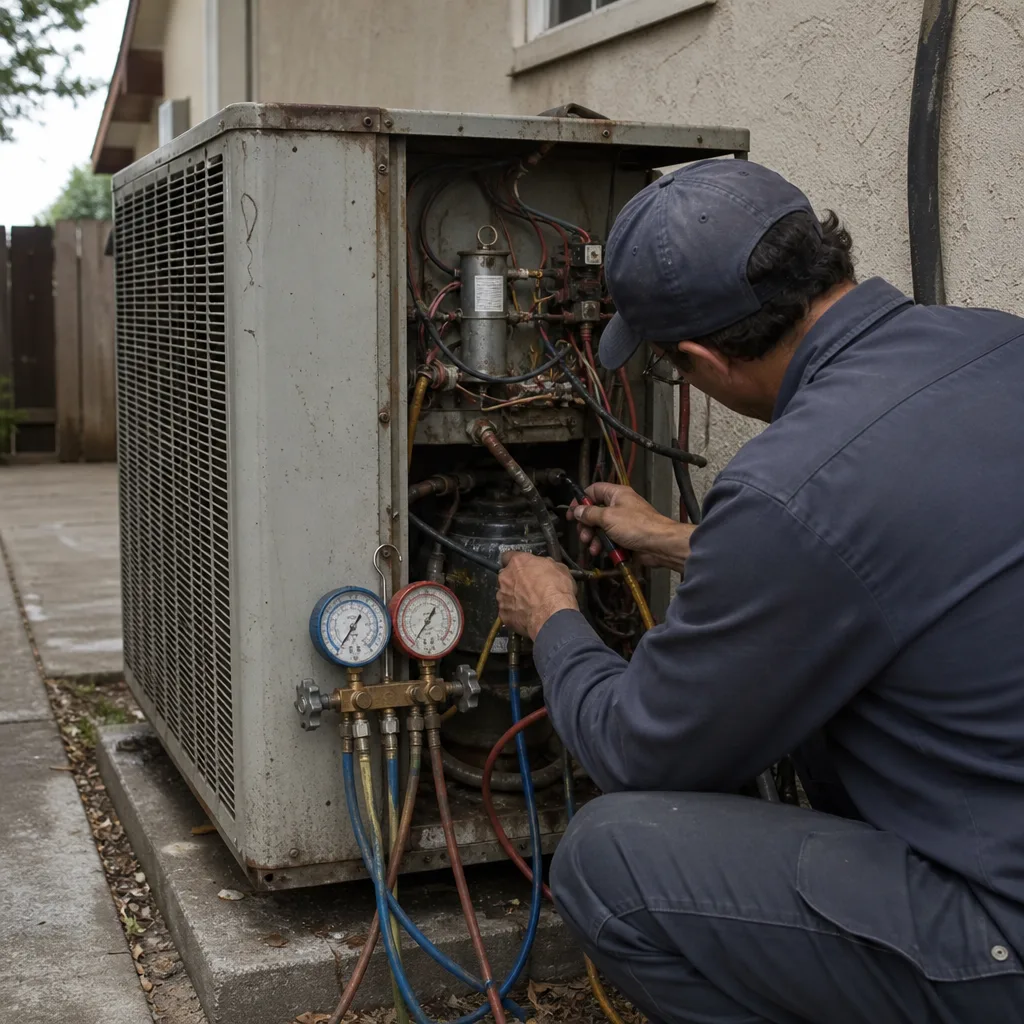 Before
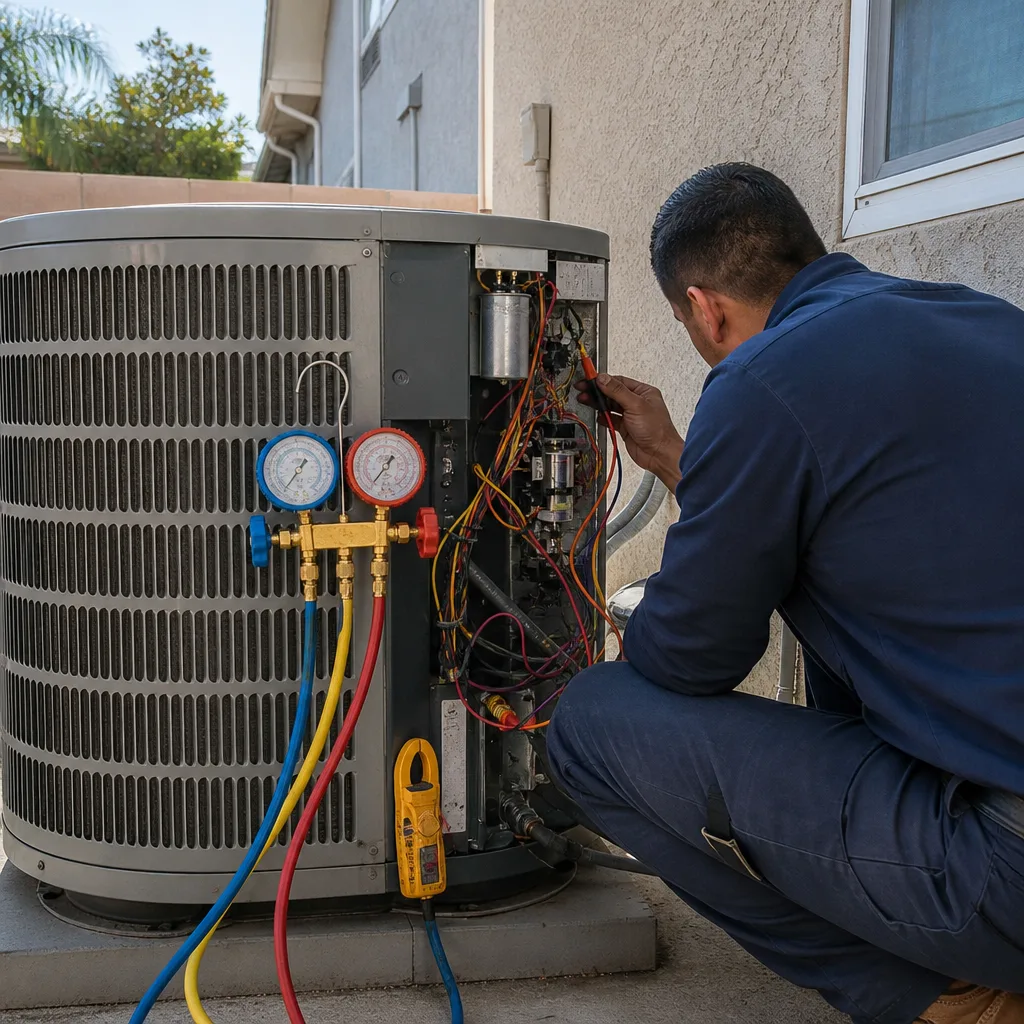 After
After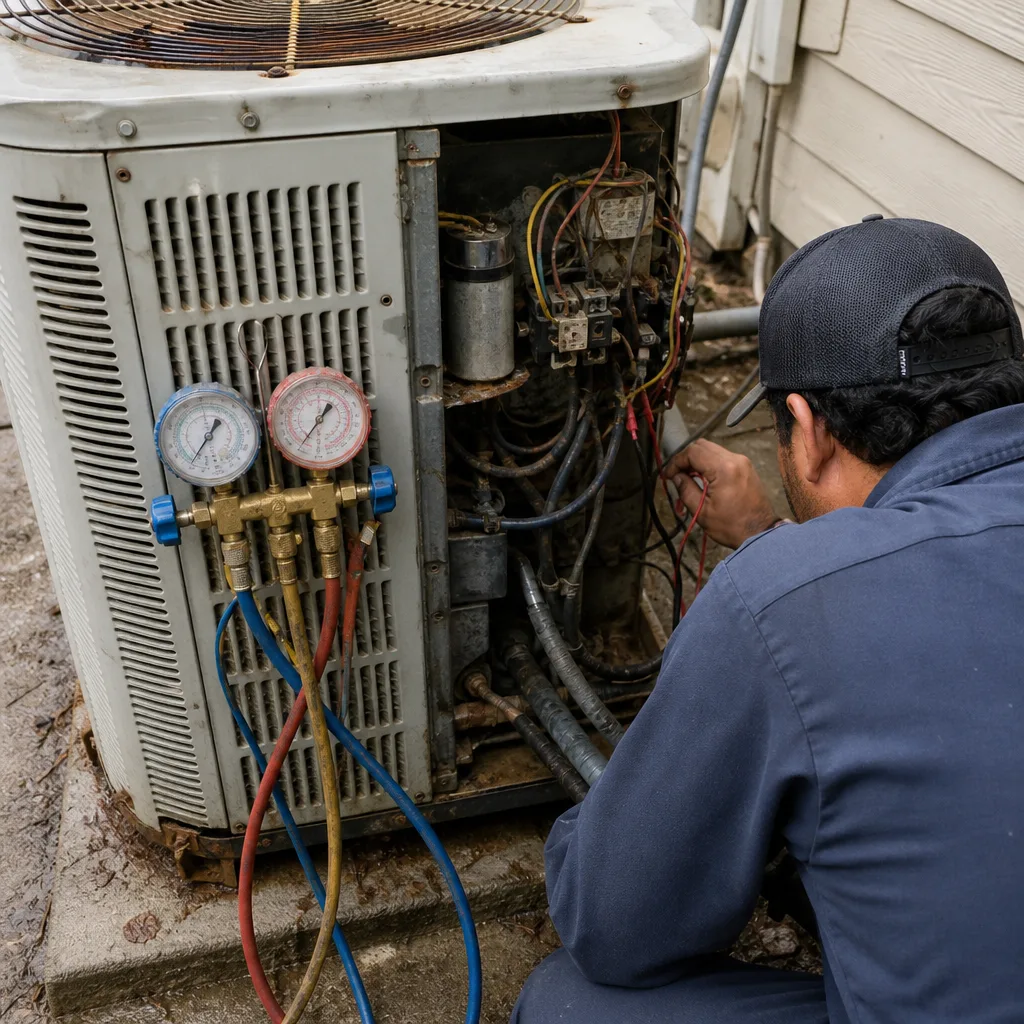 Before
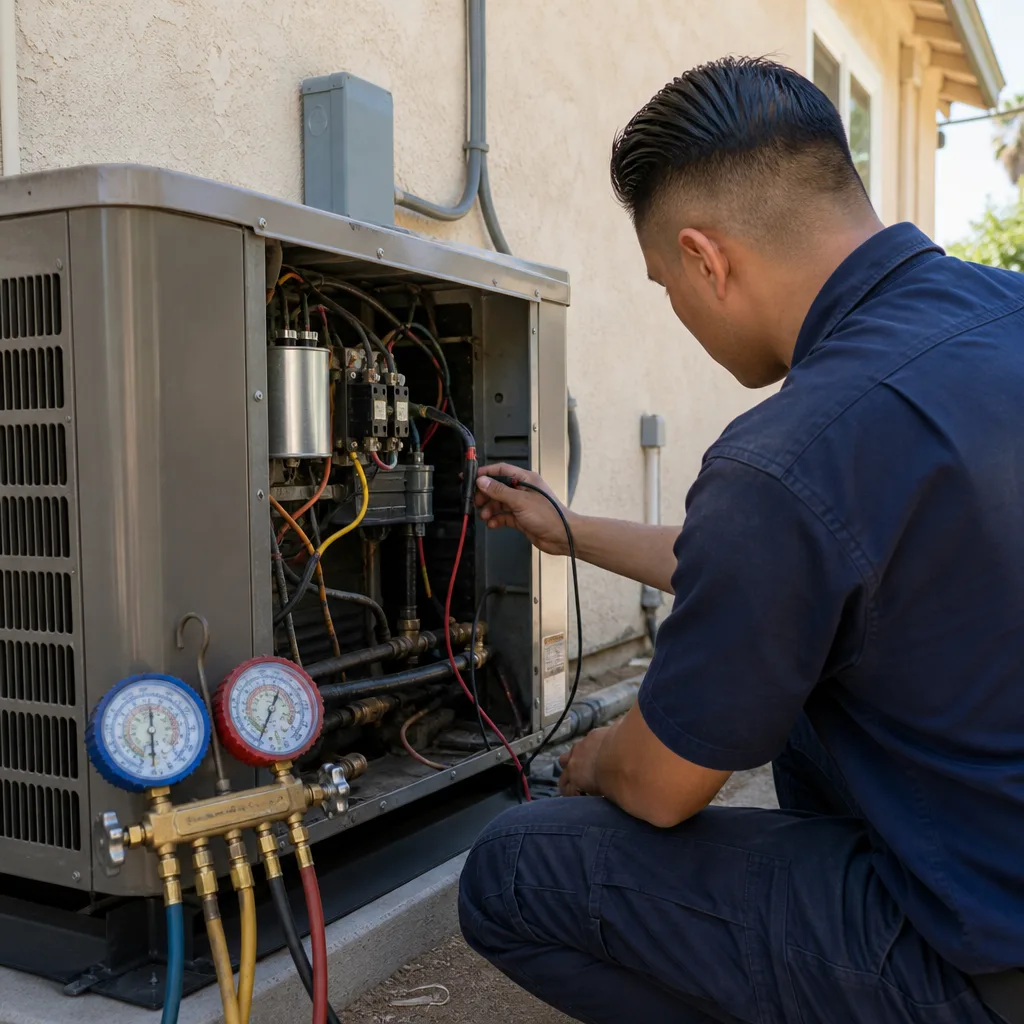 After
AfterThermostat Not Responding
A thermostat that won’t respond is almost always caused by one of four things: dead batteries, a tripped circuit breaker, a wiring fault at the thermostat itself, or a control board problem deeper in the system. In most cases, the fix is same-day. The part that matters is figuring out which one you’re dealing with before guessing at a solution.
When a thermostat goes dark or stops taking input, the heating or cooling system behind it usually stops too. That means no airflow, no temperature control, and – depending on the season – a house that gets uncomfortable fast. The good news is that the thermostat is the first place a trained technician looks, and most of the causes are straightforward to diagnose once someone is in front of the equipment.
Why It Happens
Dead or Weak Batteries
This is the most common cause, and it’s easy to overlook. Most digital and programmable thermostats run on AA or AAA batteries, and when those batteries drop below a certain voltage the screen goes blank or the buttons stop registering. If your thermostat has a small battery icon on the display, or if the screen is dim rather than completely dark, batteries are the first thing to check.
A Tripped Circuit Breaker
Your HVAC system – including the thermostat’s 24-volt control circuit – runs through your home’s electrical panel. A tripped breaker cuts power to the whole system, not just the thermostat. If the thermostat screen is completely blank and you hear nothing at all from the air handler or furnace, go to the panel and look for a breaker that has moved to the middle position or is clearly off. A breaker that trips repeatedly is telling you something else is wrong, so don’t keep resetting it without finding out why.
A Wiring Fault at the Thermostat
The low-voltage wiring that connects your thermostat to the furnace or air handler – the bundle of thin colored wires behind the thermostat body – can loosen over time, especially if the thermostat was recently swapped out or bumped. A loose or corroded wire on the R terminal (the 24-volt power wire) will kill the display entirely. You can pull the thermostat off the wall plate to look at the wires, but stop there. Do not probe, reroute, or splice any wiring yourself – low-voltage doesn’t mean no-risk, and an accidental short can damage the control board, which is a much more expensive problem.
A Failed Control Board or Blown Low-Voltage Fuse
Inside your furnace or air handler there is a control board – a circuit board that manages the signals between your thermostat and every component in the system. Many boards have a small 3-amp or 5-amp fuse that protects the control circuit. When that fuse blows, usually because of a wiring short, the thermostat loses power entirely even though the rest of the house’s electricity is fine. This one requires a technician. Control board diagnosis involves live voltage testing and should not be attempted without proper tools and training.
What to Do Right Now
- Check and replace the batteries first. Pop the thermostat off its wall plate – most snap off with light upward pressure – swap in fresh batteries of the correct size, and wait 30 seconds before pressing anything. If the screen comes back, you’re likely done.
- Check your circuit breaker panel. Look for the breaker labeled “HVAC,” “furnace,” “air handler,” or “AC.” If it’s tripped, flip it fully off and then back on once. If it trips again within a few minutes, stop and call – a breaker that keeps tripping is protecting you from something.
- Look at the thermostat’s wiring connections – but don’t touch them. Pull the thermostat body off the wall plate and visually inspect whether any wires have pulled loose from their terminals. Photograph what you see. This information is useful to the technician and takes 30 seconds to document.
- Do not keep pressing buttons or force-resetting the system repeatedly. If the system comes on briefly and then shuts off, or makes an unusual noise, that’s a diagnostic signal. Running it through repeated restarts can mask what a technician needs to see.
- If you smell burning, hear a buzzing from the panel, or see any discoloration on the thermostat or wiring, stop and call immediately. Those are signs of an electrical fault that needs a professional, not a DIY fix.
How We Fix It
When your local Dalton Heating & Air technician arrives, the first thing they do is a full control-circuit check: thermostat power, wiring continuity, fuse condition on the control board, and board function. This isn’t a guess-and-swap approach – it’s a systematic read of the system from the thermostat back to the equipment.
Most thermostat calls resolve as either a wiring repair, a thermostat replacement, or a control board fuse replacement. All three are handled on the same visit in the large majority of cases. If the control board itself has failed, the technician will confirm that with a meter reading before recommending a replacement – not before.
Before anything is touched, you get a written price. That’s The Garrison Standard on every Dalton job, and it doesn’t change based on what’s found mid-repair. The work is then covered by a written guarantee for a full year. If the repair doesn’t hold in that time, we come back at no charge – that’s the 365-Day Done Right Promise, and it applies to this job the same as every other. Most thermostat diagnoses and repairs take one to two hours on-site.
The service that resolves this is AC Repair or Furnace Repair, depending on the season and which system the thermostat controls.
Frequently Asked Questions
A blank thermostat is not dangerous on its own, but it means your heating or cooling system is not running, which can become a health issue quickly in extreme heat or cold. If it’s the middle of summer or a hard freeze and the system is completely off, don’t wait. Call (361) 306-9515 and your local Dalton team will get someone out to you.
Our phones are answered by a live person 24 hours a day, 7 days a week – not a voicemail queue, not a callback window. Call (361) 306-9515 and we’ll tell you exactly when someone can be there. Your local Dalton Heating & Air team handles thermostat and control-circuit calls as priority service calls because a system that won’t run at all is not a wait-and-see situation.
Replacing a basic thermostat is a straightforward job on paper, but if the root cause is a wiring fault or a blown board fuse, a new thermostat won’t fix anything. The new thermostat will go blank for the same reason the old one did. A technician needs to find the cause first – otherwise you’ve spent money on hardware and still have a broken system.
The honest answer is that it depends on what’s actually wrong – a loose wire costs far less to fix than a failed control board. What we can tell you is that your local Dalton Heating & Air technician will diagnose the system, write down the exact price for the repair, and hand it to you before a single part is touched. The estimate is free. Call (361) 306-9515 to set up the visit.
Get It Fixed
Call (361) 306-9515 right now – a real person picks up, any hour of the day. Your local Dalton Heating & Air team will schedule the visit, arrive inside the window we give you, and hand you a written price before anything starts. The work is backed by the 365-Day Done Right Promise.
Written by Marco Benitez, Owner & Lead HVAC Technician at Dalton Heating & Air, a Garrison Partners company serving homeowners since 2003.
What Our Customers Say
"Installed a heat pump to replace an old oil furnace. Three clear quotes and the install crew was tidy."
- Cheryl B."Tech arrived in uniform right on time. AC wasn't cooling, found a failed capacitor, and replaced it in twenty minutes. The owner is a veteran and the company runs like it."
- Frank O."Blower motor died on the coldest night. They had the part on the truck and had us warm again the same day."
- Sandy G.