
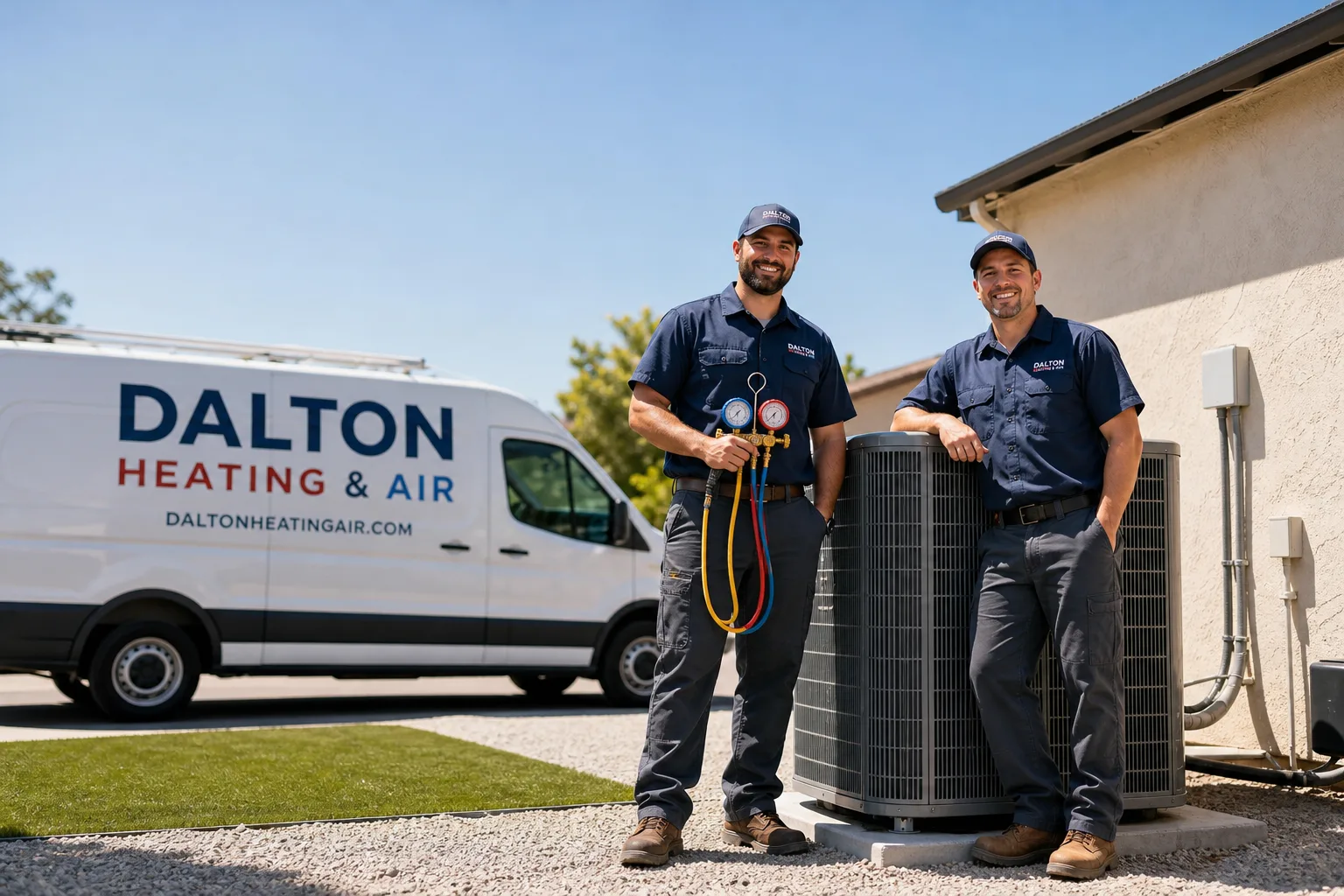
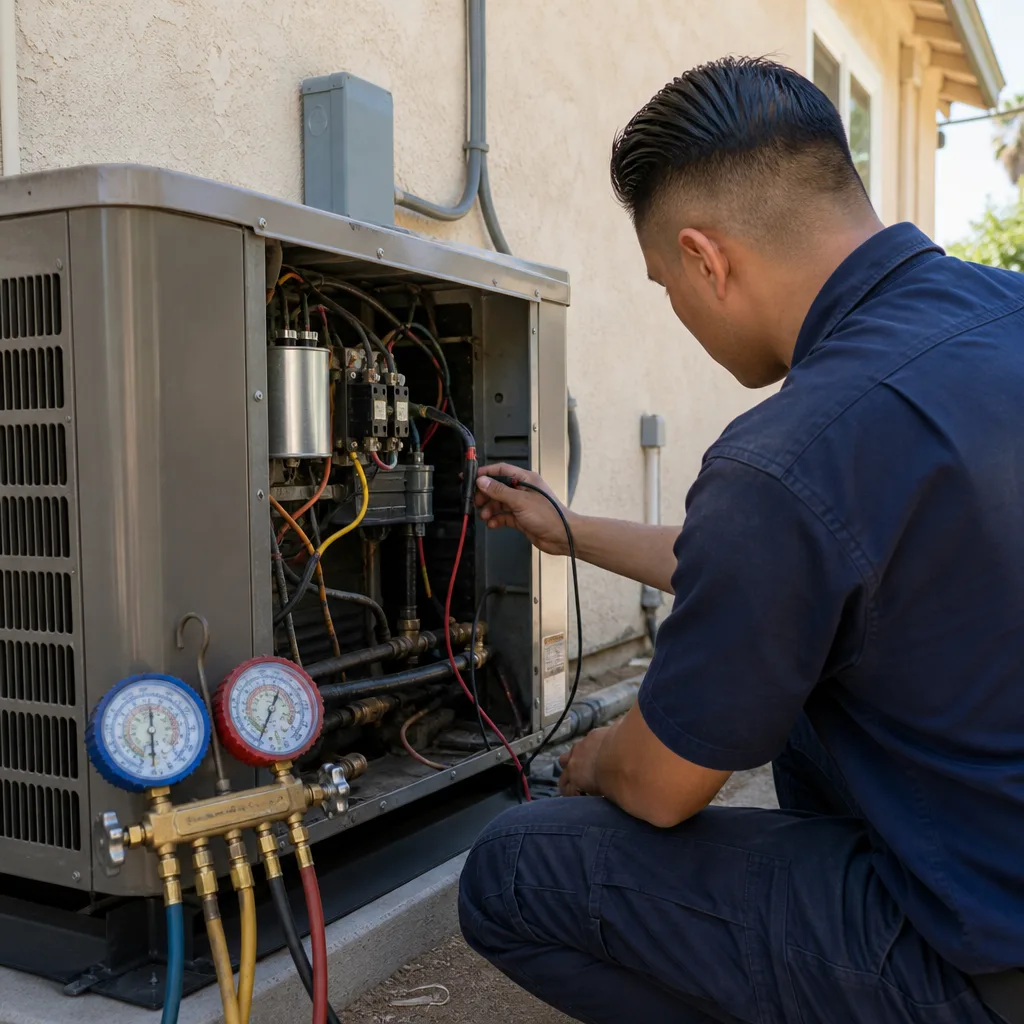
Seasonal tune-up and full diagnostic on your Carrier, Trane, or Goodman system - readings shown to you before any repair is proposed
Diagnosis first, numbers second - you approve the repair price before a single part goes in.
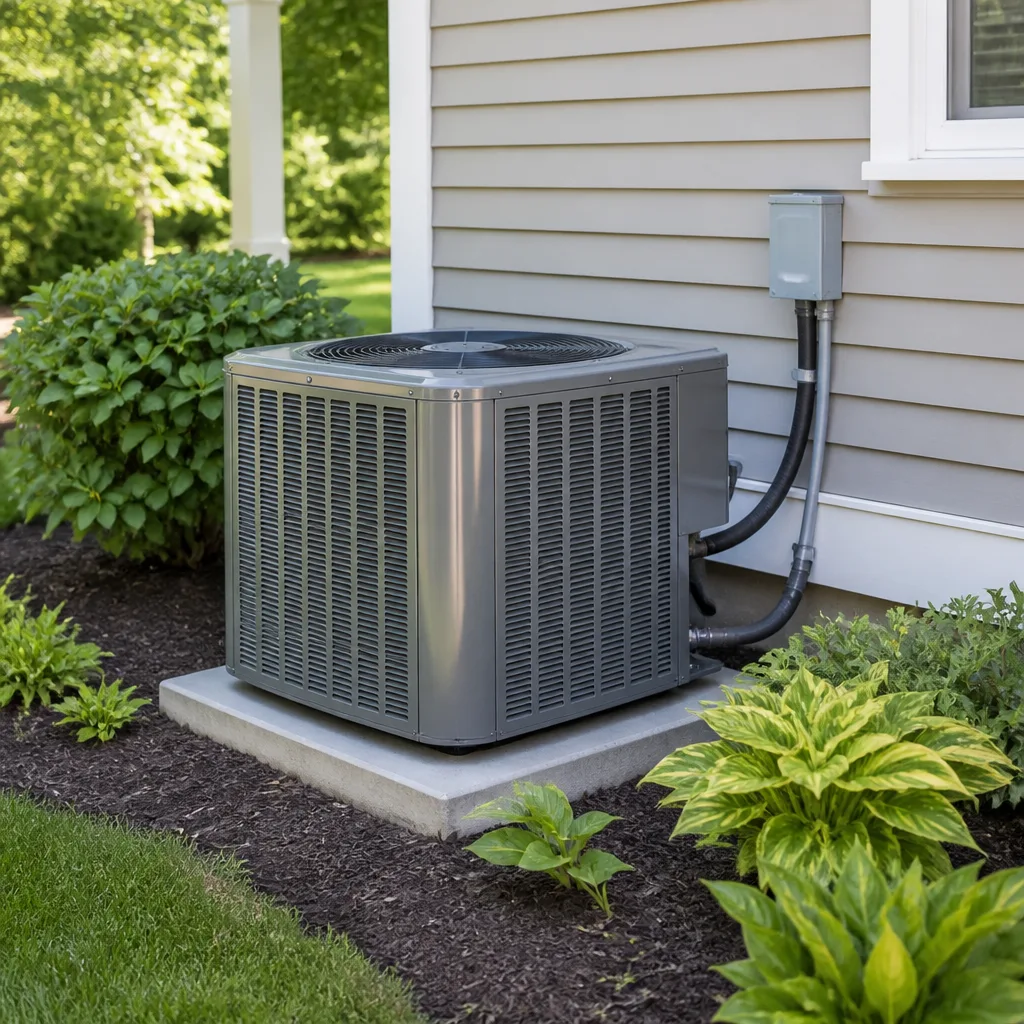
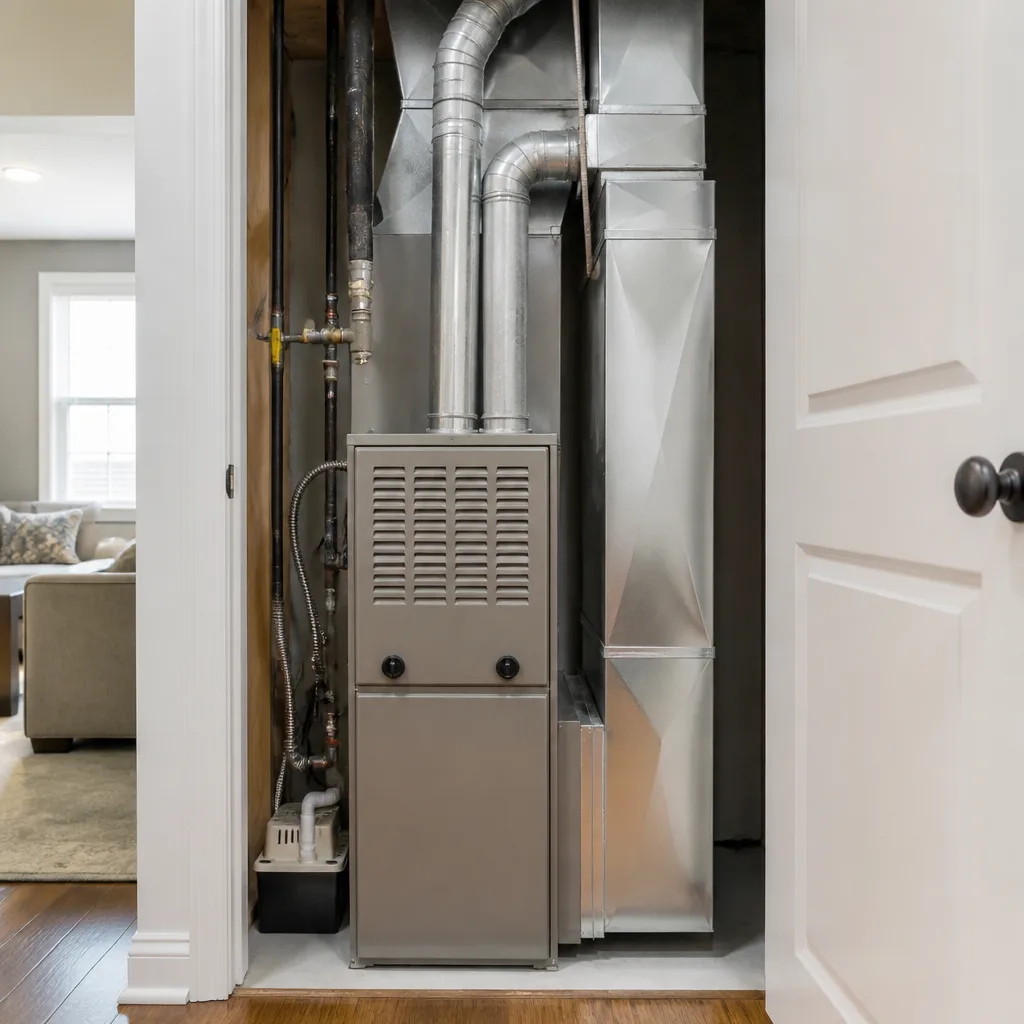
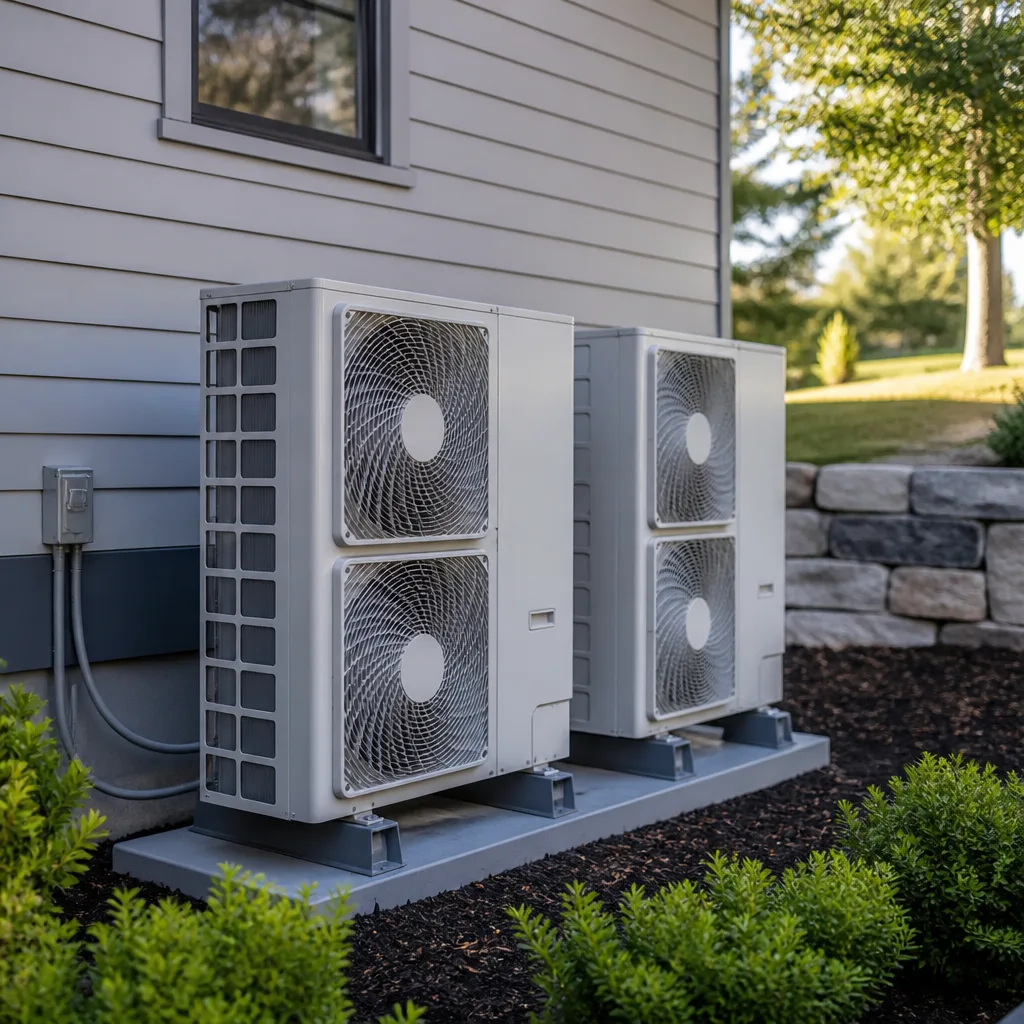
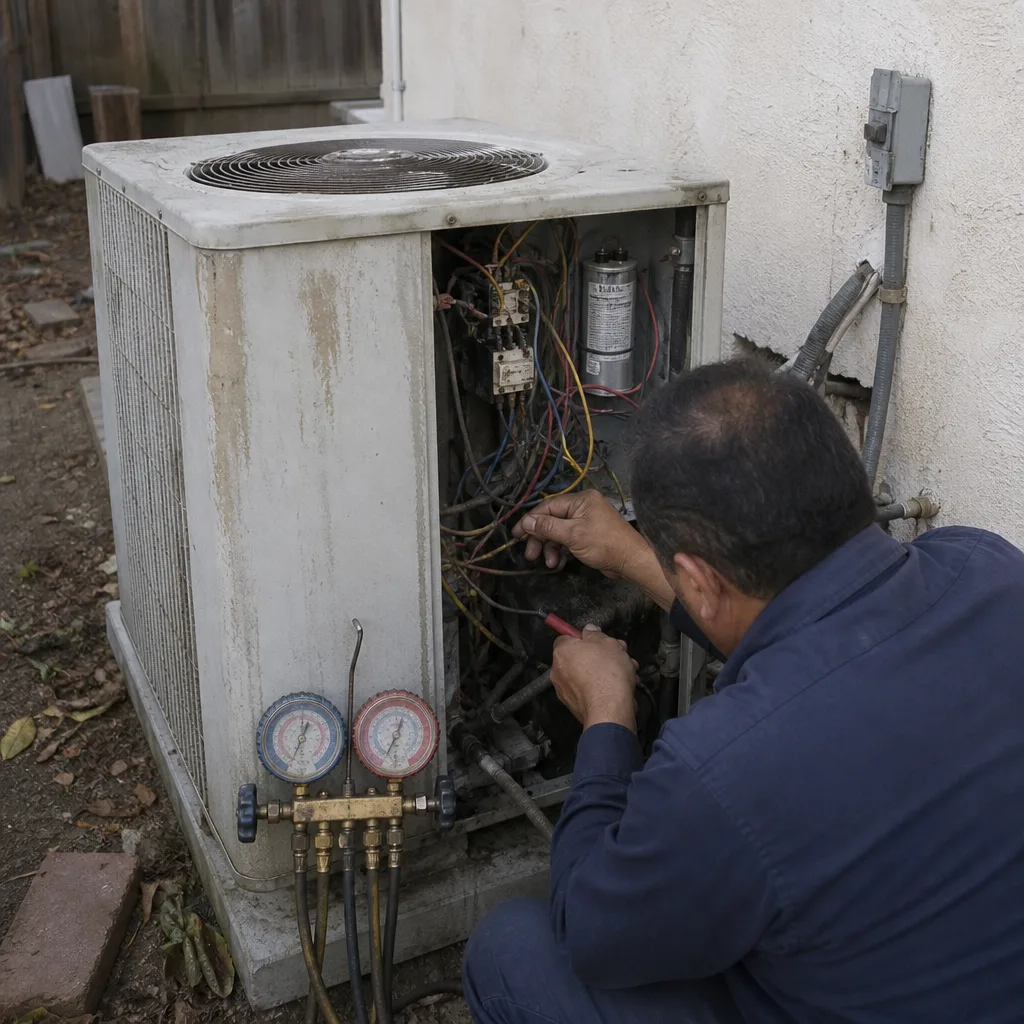 Before
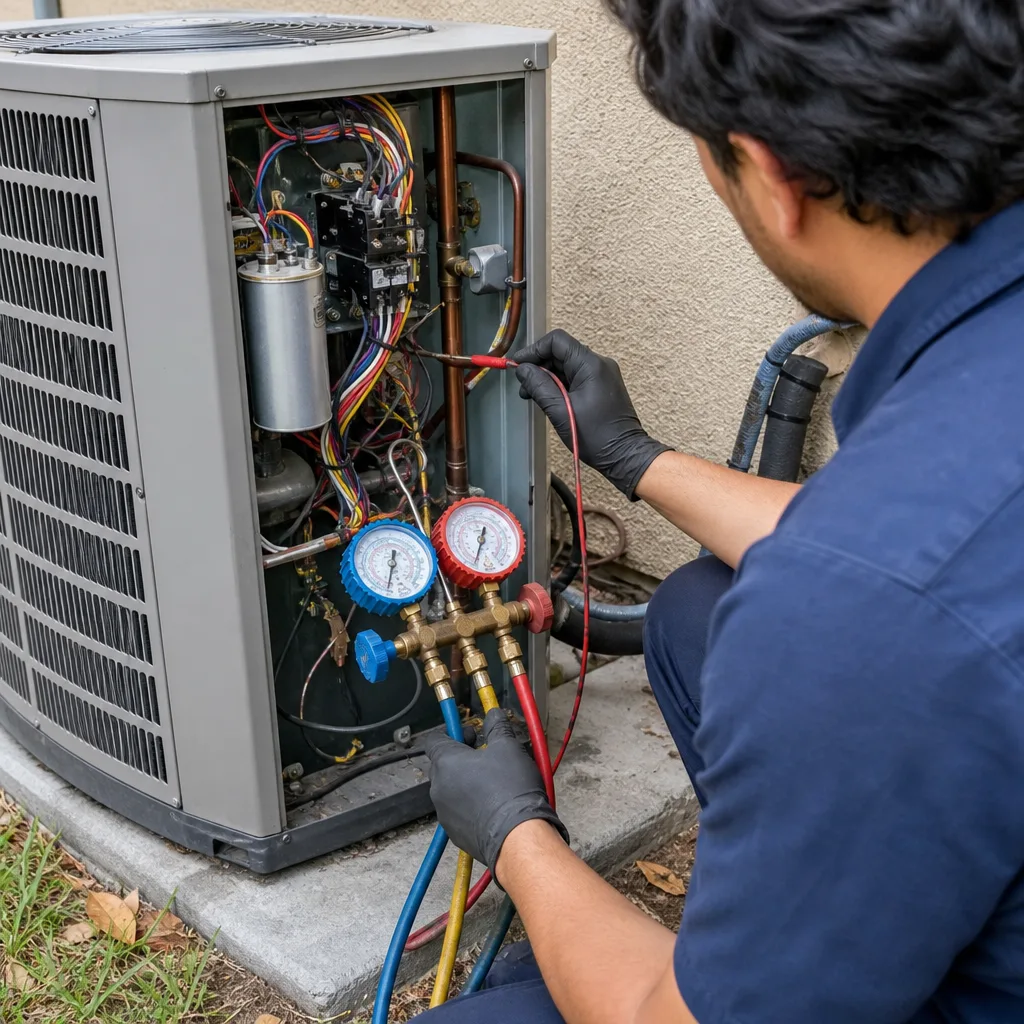 After
After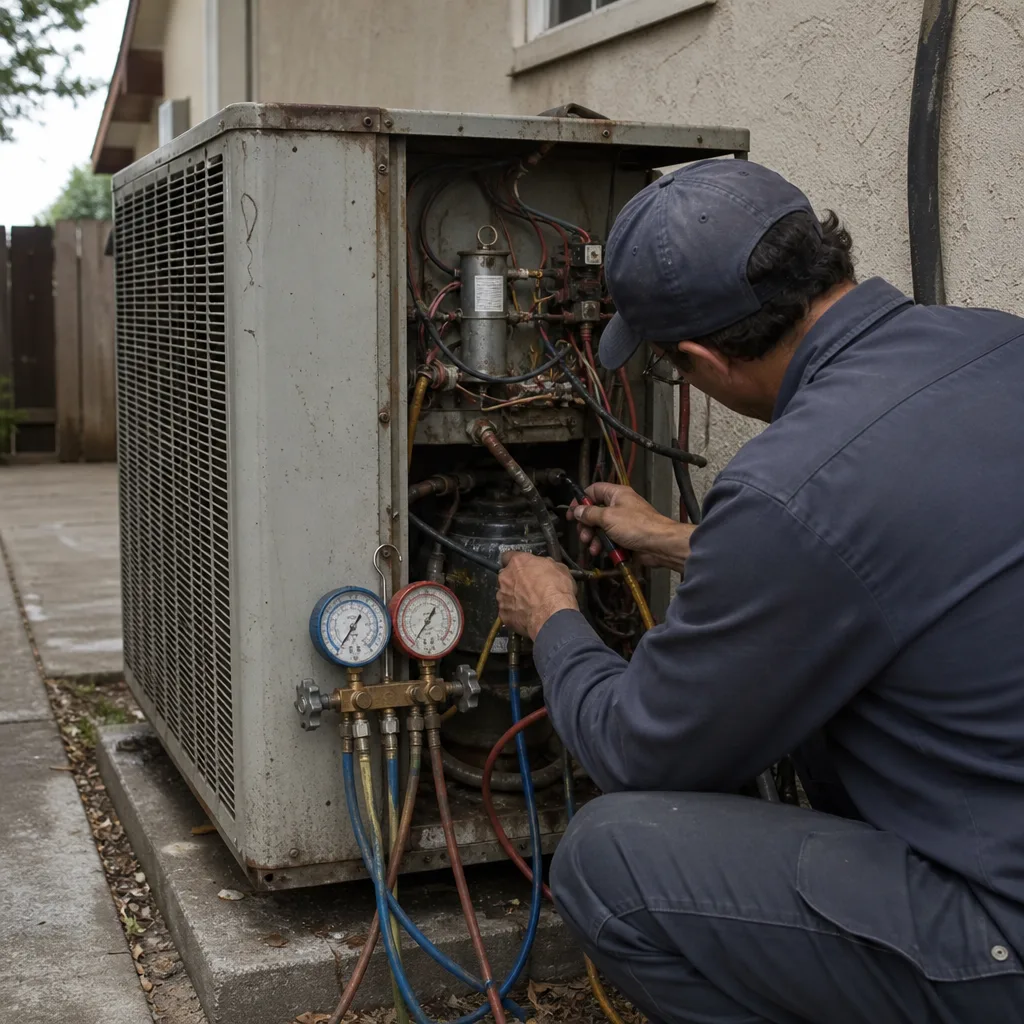 Before
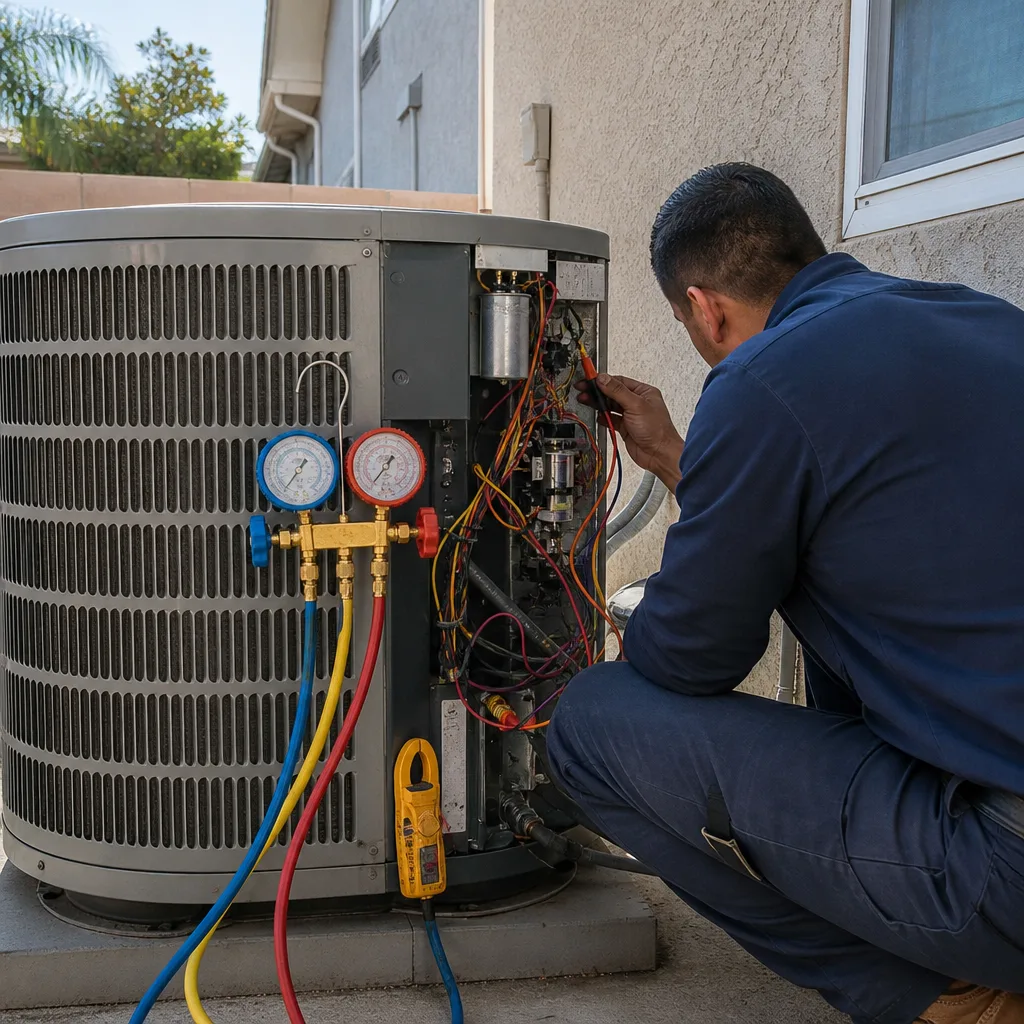 After
After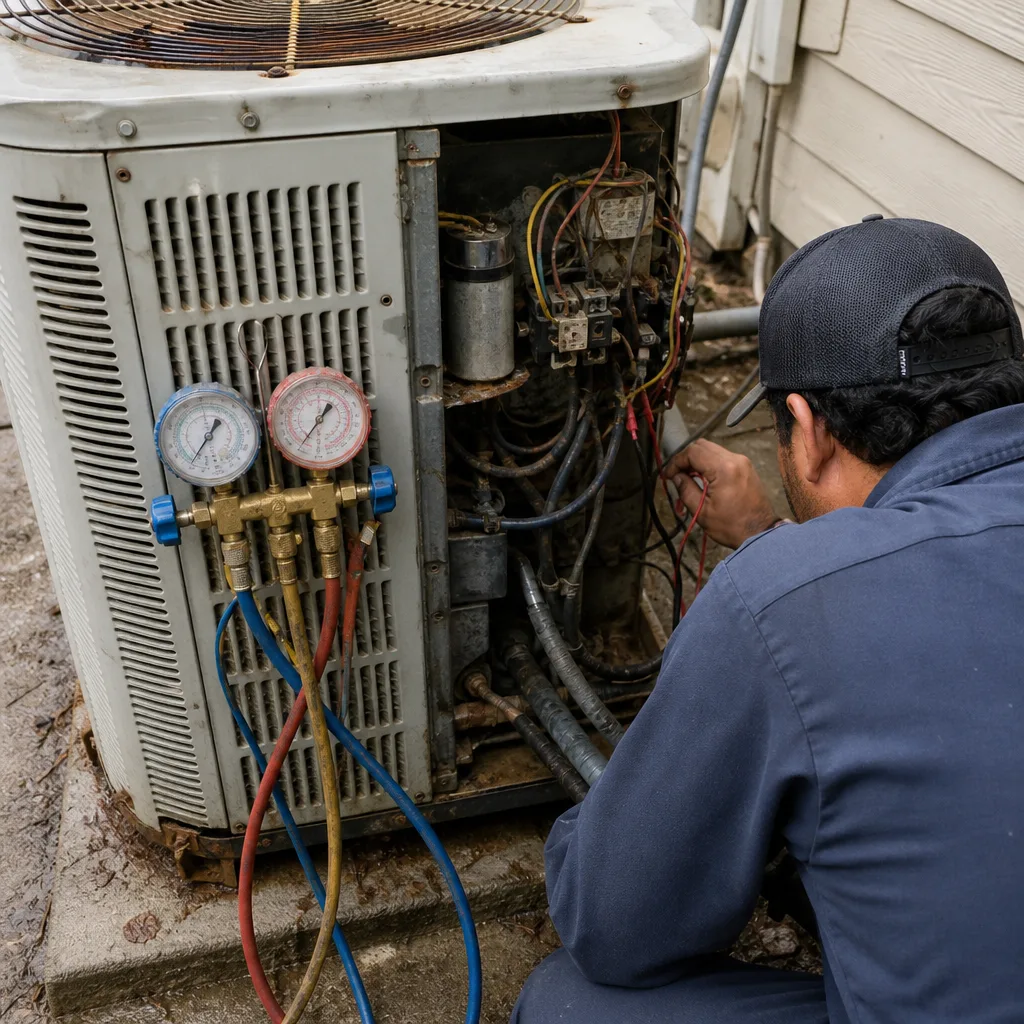 Before
 After
AfterFurnace Won’t Turn On
When your furnace won’t turn on, the most common causes are a tripped circuit breaker, a dirty or clogged air filter, a faulty ignitor, or a thermostat that has lost its connection to the unit. Most of these can be confirmed in under five minutes with nothing more than a look and a listen. In some cases the fix is simple; in others, a technician needs to complete the repair safely.
A furnace that won’t start isn’t always a dead furnace. The system has several safety controls built in – called limit switches and pressure switches – that will shut the unit down if something looks wrong to the system’s own sensors. That’s actually a feature, not a flaw. It means the furnace stopped itself before something worse happened. The job right now is to figure out which safety tripped, why it tripped, and whether it’s something you can clear yourself or something that needs a trained eye and a gas-rated hand on the part.
Why It Happens
The Circuit Breaker Tripped or the Power Switch Is Off
Furnaces run on electricity even if they burn gas – the blower motor, the ignitor, and the control board all need power. A tripped breaker at the panel, or a wall switch near the furnace that got bumped to the off position, will make the unit go completely silent. If you press the power button and nothing happens – no click, no hum, no display light – check the panel first and look for a switch on the wall near the unit that resembles a light switch.
A Dirty Filter Has Choked Airflow
When airflow through the system drops far enough, the heat exchanger – the metal chamber that transfers heat from the burner to the air in your home – gets too hot and the furnace shuts itself off through a component called the high-limit switch. If you pull the filter out and it looks like a grey felt mat, that’s your answer. Filters should be checked monthly during heating season. A clogged filter is one of the most common furnace no-starts we see, and it’s entirely avoidable.
The Ignitor Has Failed
Modern furnaces use a hot-surface ignitor – a small ceramic element, roughly the size and shape of a guitar pick, that glows bright orange to light the burners. When it fails, you’ll often hear the furnace try to start: the blower hums, the gas valve opens, but nothing lights, and then the system shuts down and tries again two or three times before locking out. If you hear that cycle – hum, pause, click, hum, pause, click – and never get heat, the ignitor is the first thing a technician checks. This is not a DIY repair; the ignitor carries line voltage and sits directly in the burner compartment.
The Thermostat Has Lost Communication With the Furnace
A thermostat that’s set correctly but not actually sending a signal to the furnace is a surprisingly common culprit. Dead batteries in a battery-powered thermostat will do it. A wiring connection that loosened at the thermostat or at the furnace control board will do it too. If the thermostat display is blank or flickering, start there. If the display looks normal but nothing happens when you raise the setpoint, the problem may be in the low-voltage wiring that connects the two units – thin color-coded wires typically running through your walls.
What to Do Right Now
- Check the circuit breaker panel. Find the breaker labeled “furnace,” “air handler,” or “HVAC.” If it’s in the middle position or clearly tripped, flip it fully off and then back on once. If it trips again immediately, stop and call – a breaker that won’t hold is telling you something, and it needs an electrical diagnosis before the furnace runs again.
- Check the furnace power switch. Many furnaces have a standard wall switch mounted on or near the unit. It’s easy to bump. If it’s off, flip it on and wait about 30 seconds for the system to cycle through its startup sequence.
- Pull the air filter and look at it. If it’s visibly clogged, replace it with a new filter of the same size – the size is printed on the filter’s cardboard frame. After replacing it, reset any fault codes by turning the thermostat off, waiting 60 seconds, and turning it back on.
- Replace the thermostat batteries if it uses them. AA or AAA batteries are usually the culprit when a display goes dark. A fresh set takes two minutes and costs almost nothing.
- Do not attempt to access the burner compartment, the gas valve, the heat exchanger, or any wiring inside the unit. Those components carry combustion gas, high voltage, or both. If the steps above don’t restore operation, photograph what you’re seeing – error codes on the control board display, the filter condition, anything unusual – and call your local Dalton Heating & Air team. That information helps the technician arrive prepared.
How We Fix It
When your local Dalton Heating & Air technician arrives, the first thing they do is a full fault read on the control board. Most modern furnaces store a blink code – a pattern of indicator light flashes – that points directly to what the unit’s own sensors flagged. That code, combined with a visual inspection of the ignitor, the flame sensor, the heat exchanger, and the pressure switch, usually tells the whole story within the first 20 minutes.
Before any part is touched or any repair is started, you get a written price. That’s how every Dalton job works – it’s part of The Garrison Standard, and it doesn’t change job to job. The price goes on paper before the wrench turns, and the work is covered by a written guarantee for a full year. If the repair doesn’t hold within that period, we come back and make it right at no charge. Most no-start furnace repairs are completed in a single visit of one to two hours. This falls under our furnace repair service.
Frequently Asked Questions
It depends on the temperature in your home and who’s in it. If the outside temperature is dropping hard and you have young children, elderly family members, or anyone with a medical condition in the house, don’t wait – call now. A home that reaches unsafe temperatures overnight is a health risk, not just a comfort issue. Call (361) 306-9515 and a live person will answer, any hour.
Often it’s not immediately dangerous – the furnace shut itself off because a safety control told it to. But a failed ignitor or a faulty gas valve that’s stuck open is not something to probe without training. If you smell gas at any point, leave the house, don’t flip any switches, and call your gas utility from outside. For any other no-start condition, call (361) 306-9515 so a technician can confirm what’s actually going on before you run the system.
In most cases, yes. Your local Dalton Heating & Air team takes furnace calls as priority service calls, and live dispatchers are staffed around the clock. Call (361) 306-9515 – a real person answers every time, 24 hours a day, and they’ll give you an arrival window, not a vague “sometime today.”
Yes, without exception. The technician diagnoses the problem first, then puts the full price in writing before touching anything. You approve the price, or you don’t – either way, the diagnostic visit tells you exactly what you’re dealing with. That written price policy is non-negotiable at every Dalton location; it’s part of The Garrison Standard that each independently owned Dalton shop agrees to before opening.
Get It Fixed
Call (361) 306-9515 – a live person answers day or night, no voicemail, no callback queue. Your local Dalton Heating & Air team will give you an arrival window, a written price before any work starts, and a full year of coverage on every repair. Comfort you can count on, every season.
Written by Marco Benitez, Owner and Lead HVAC Technician at Dalton Heating & Air, a Garrison Partners company in service since 2003.
What Our Customers Say
"Tech arrived in uniform right on time. AC wasn't cooling, found a failed capacitor, and replaced it in twenty minutes. The owner is a veteran and the company runs like it."
- Frank O."Blower motor died on the coldest night. They had the part on the truck and had us warm again the same day."
- Sandy G."Changed the filter size and added a better filter rack. Simple and useful advice."
- Rhonda C.