
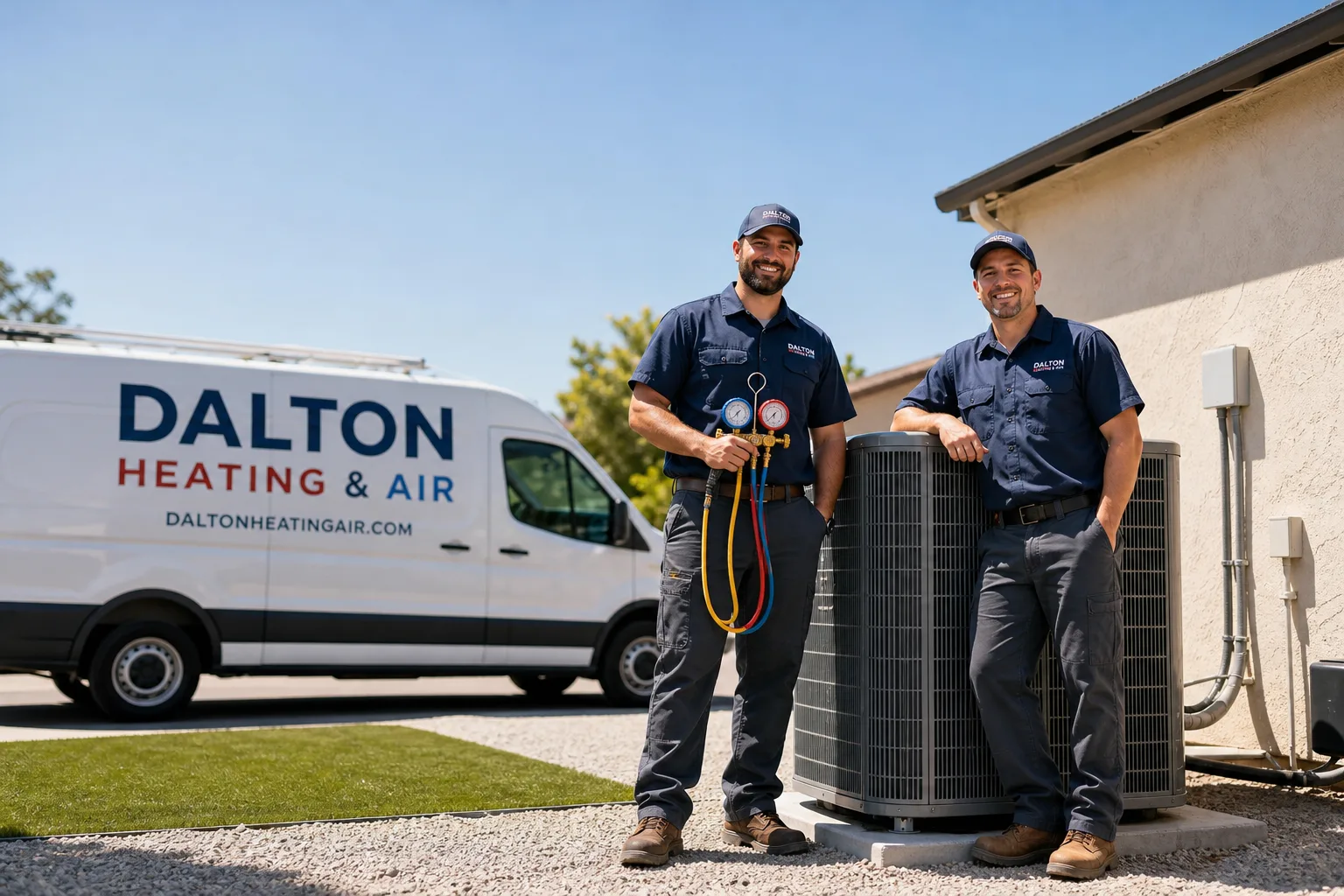
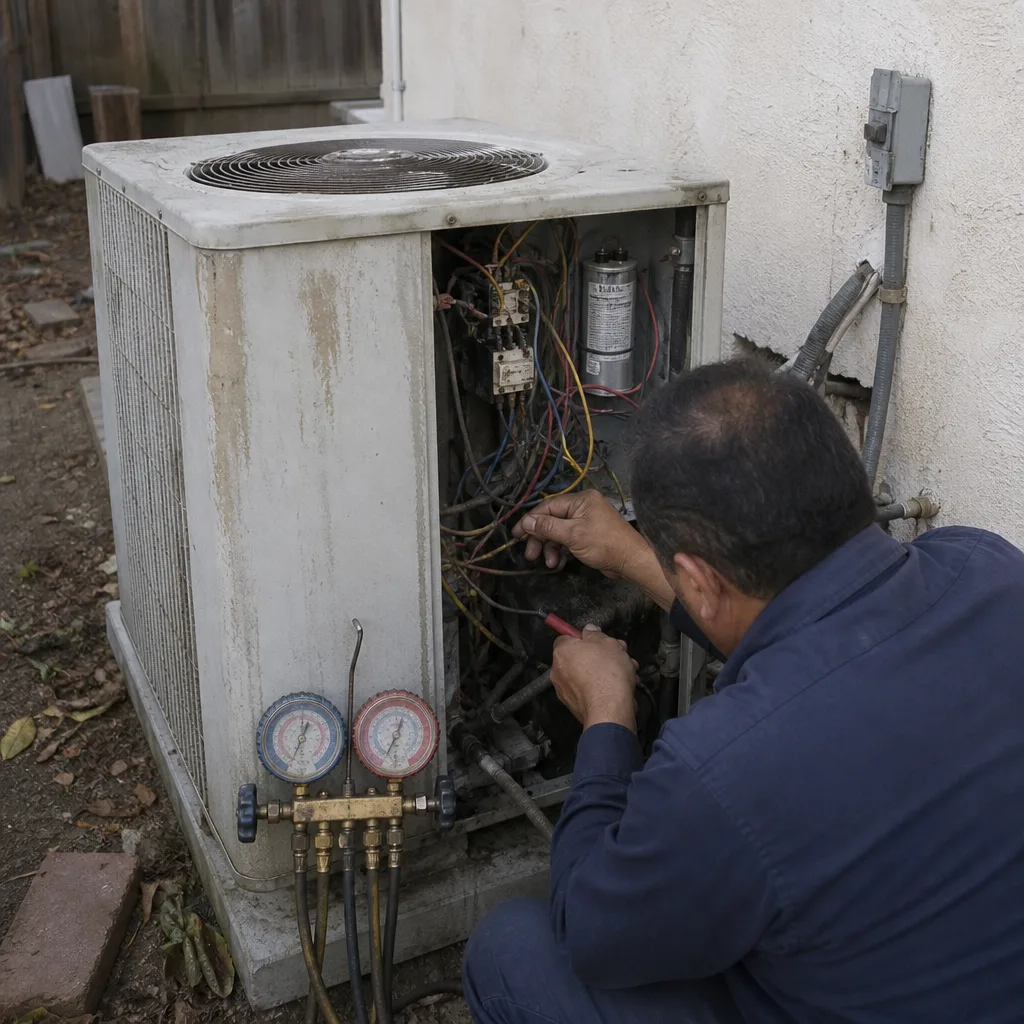
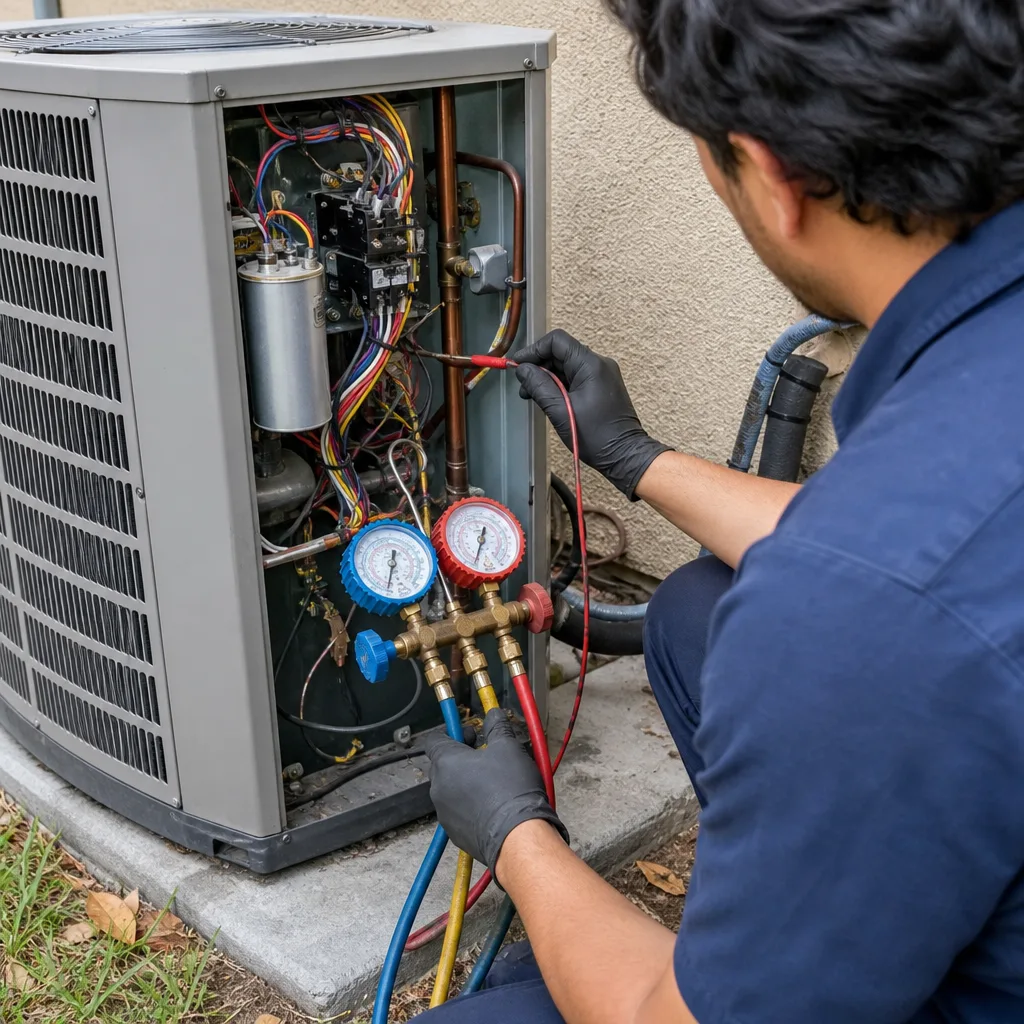
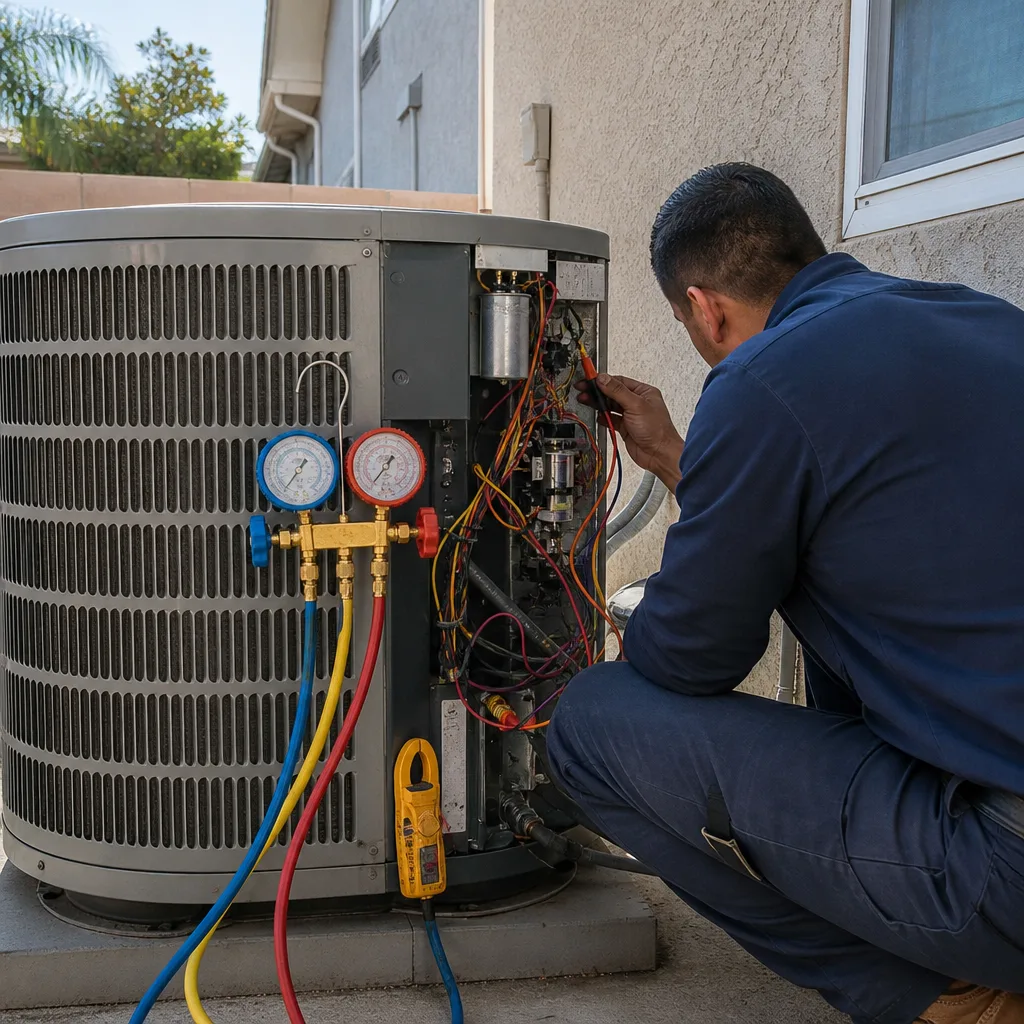
Seasonal tune-up and full diagnostic on your Carrier, Trane, or Goodman system - readings shown to you before any repair is proposed
Diagnosis first, numbers second - you approve the repair price before a single part goes in.
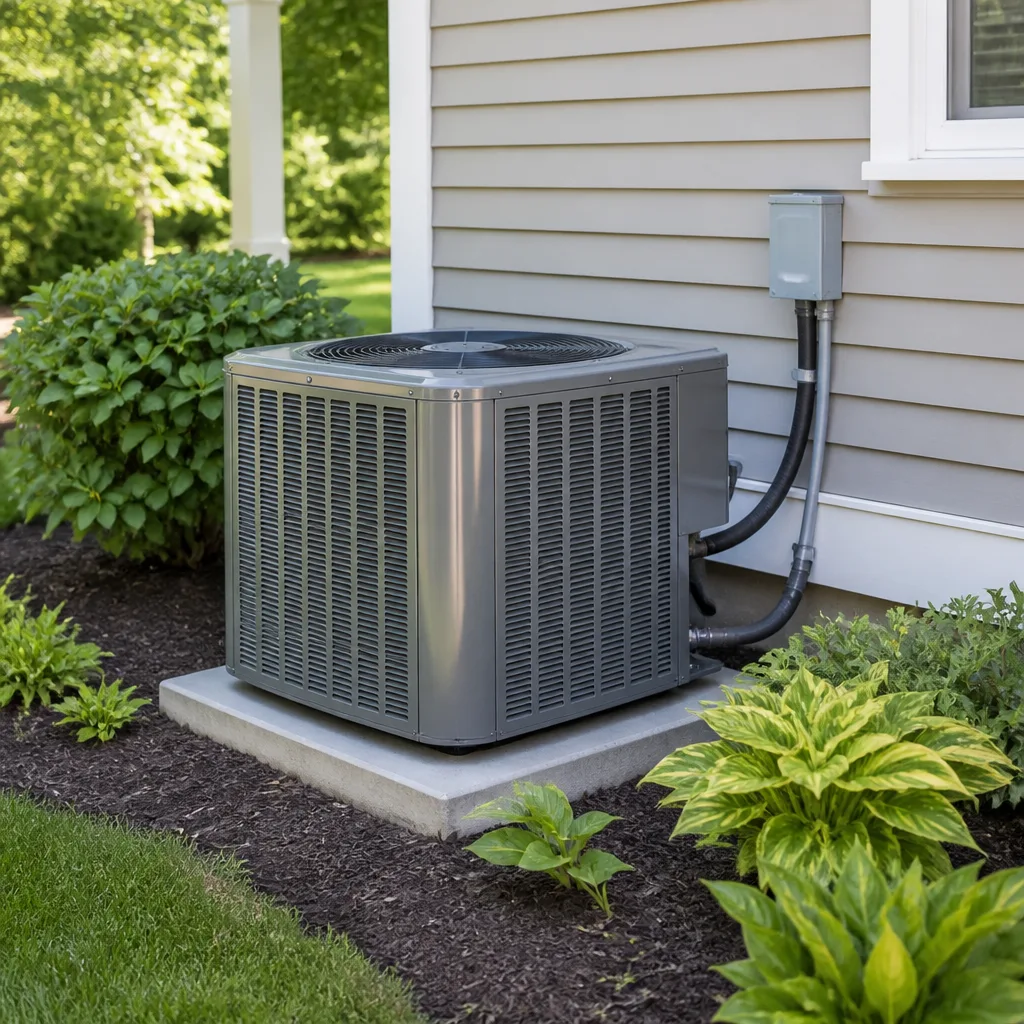
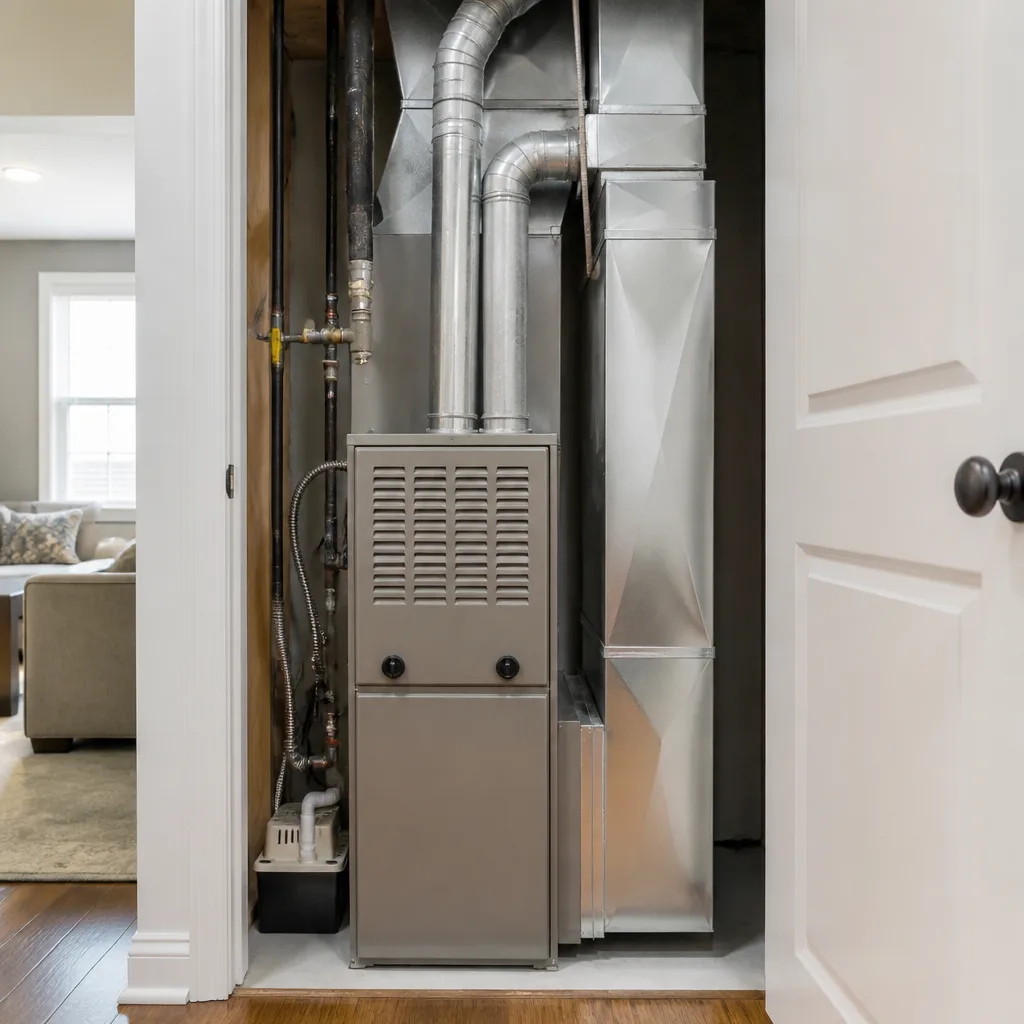
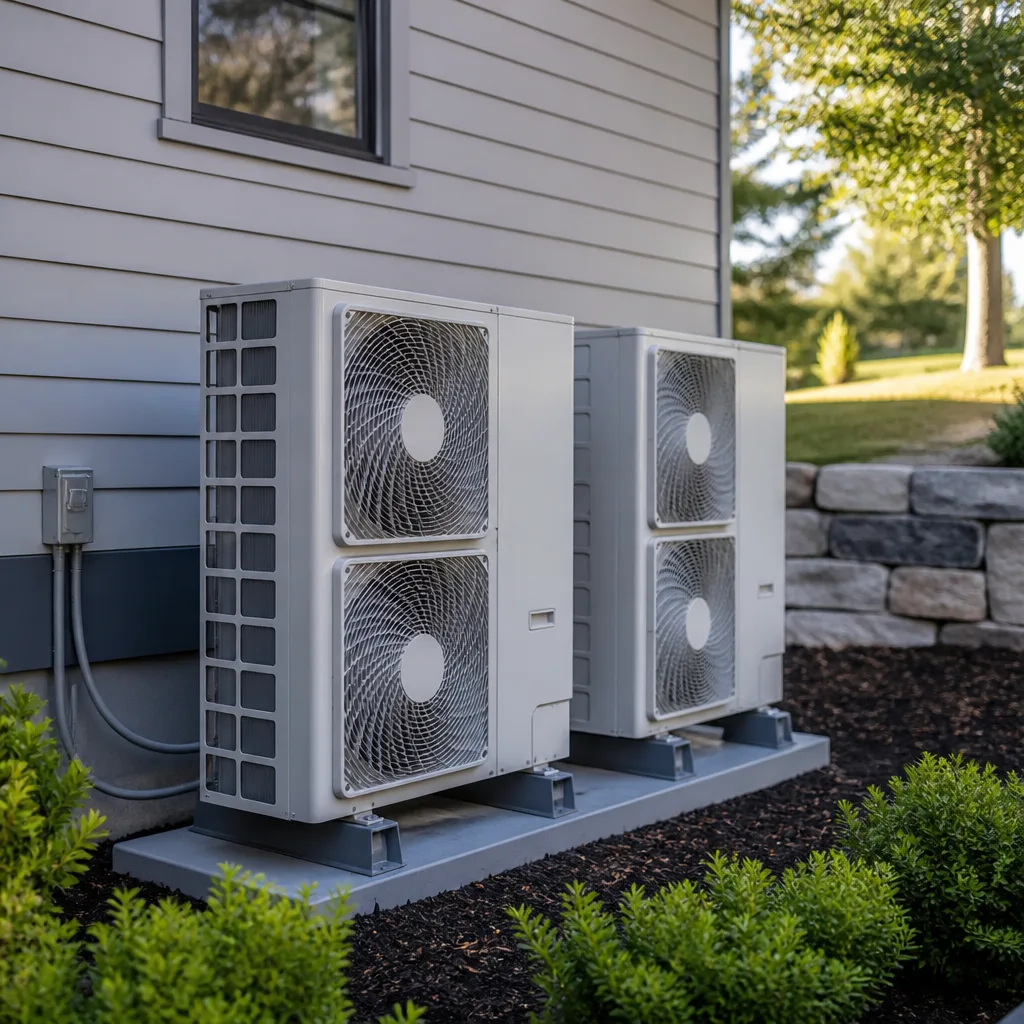
 Before
 After
After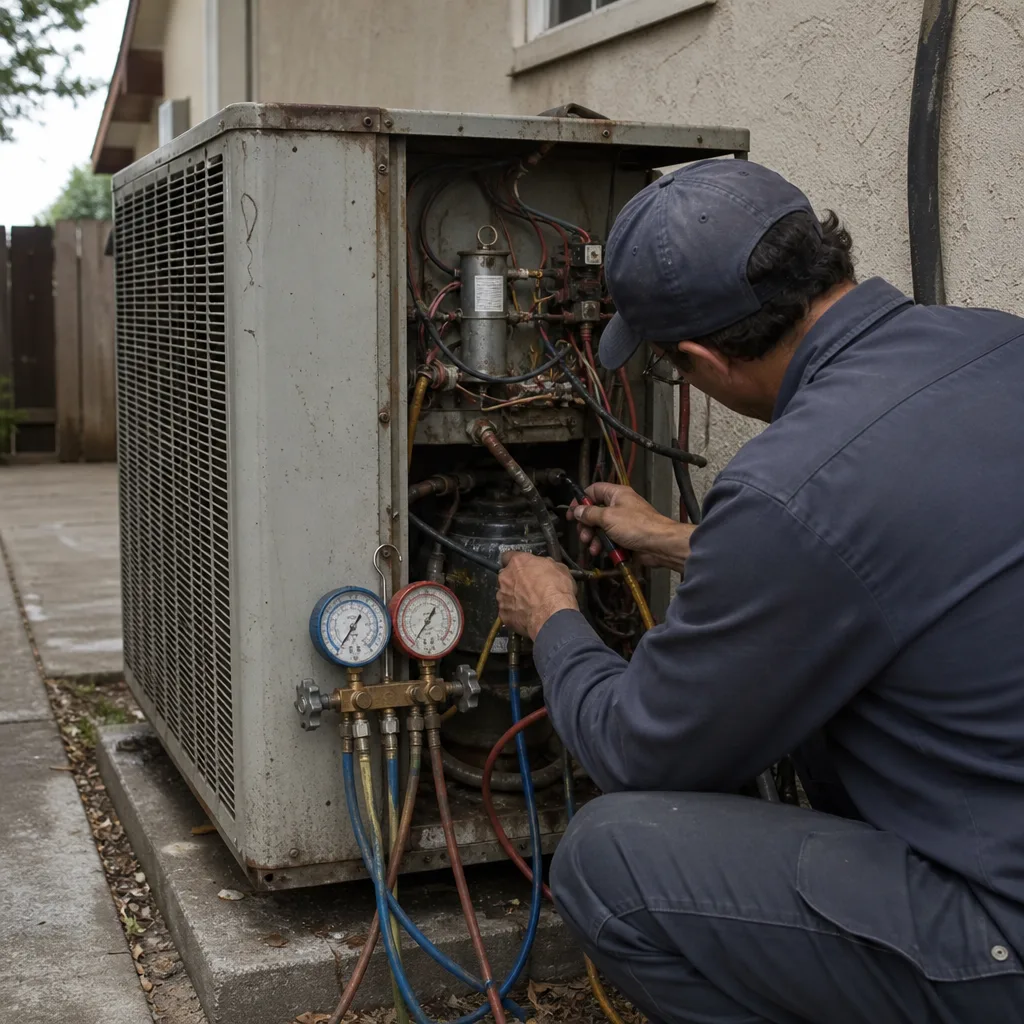 Before
 After
After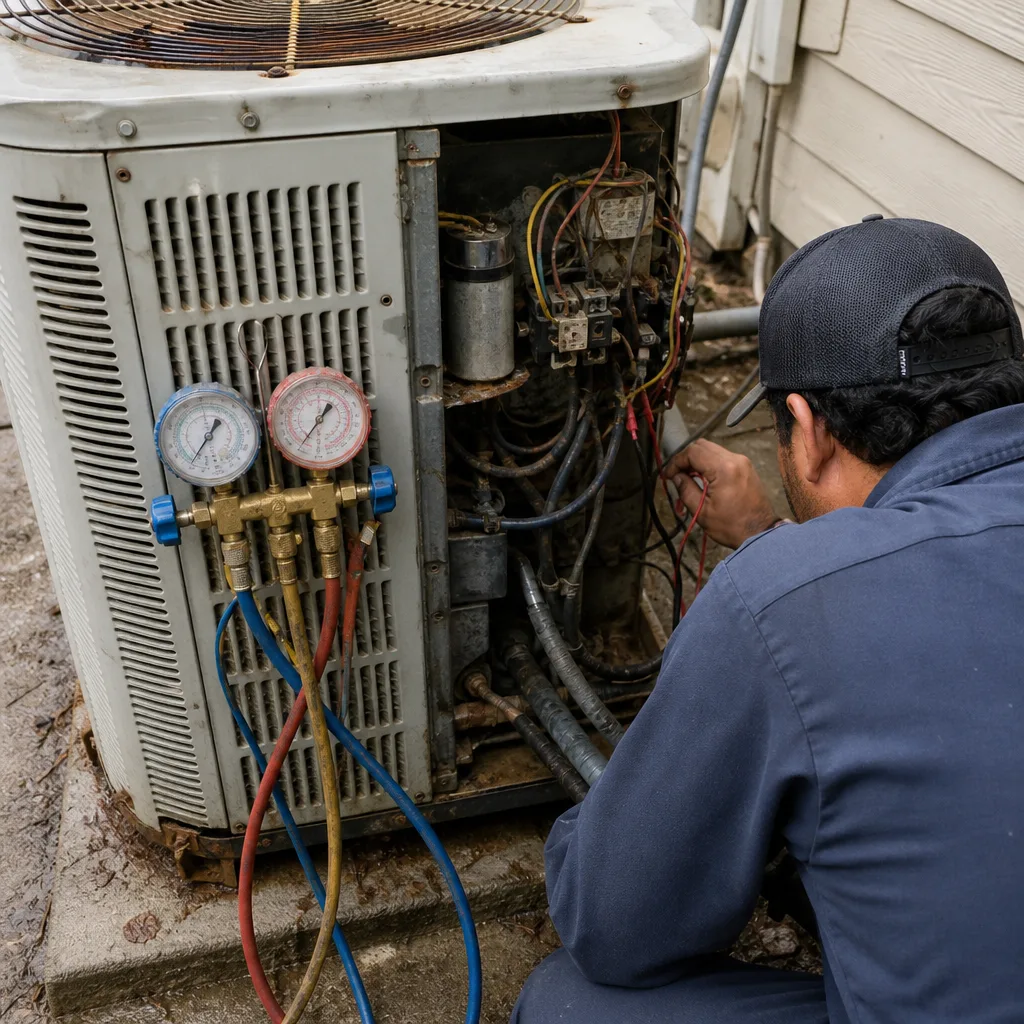 Before
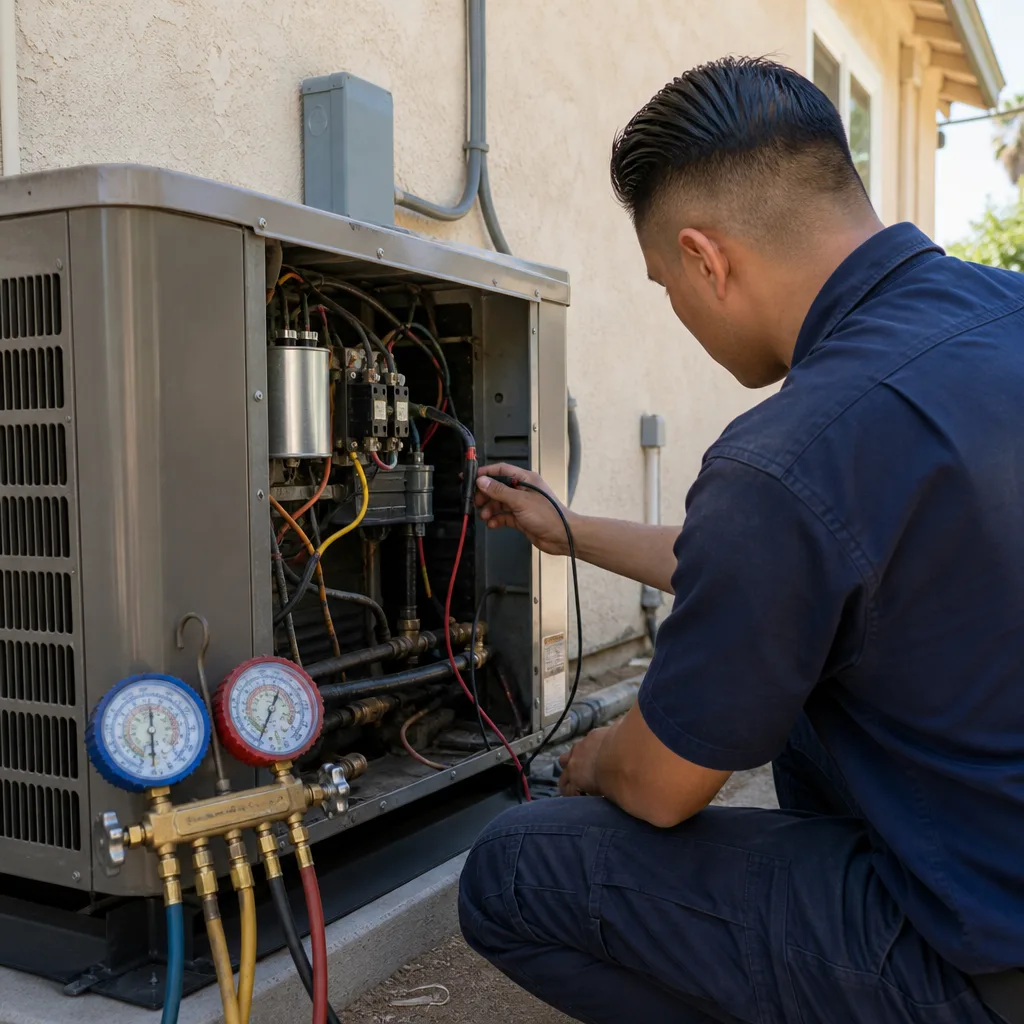 After
AfterFast, Reliable Furnace Repair Across Spring
Furnace repair in Spring, TX typically runs $150 – $700, and most no-heat calls we handle are resolved same day. A furnace that won’t light, trips its high limit, or cycles on and off isn’t something to wait out through a chilly Texas night. Spring’s heating season may be short, but when the temperature drops into the 30s, a dead furnace stops being an inconvenience pretty fast. Dalton Heating & Air has crews serving Spring neighborhoods daily, with written pricing before any work starts and a full-year written guarantee on every repair. Call (361) 306-9515 and you’ll get a live person, not a voicemail queue.
Why Dalton Heating & Air Is Spring’s Preferred Furnace Repair Company
Spring homeowners call us for one reason more than any other: they’re tired of technicians who show up late, quote one number over the phone, and hand them a different invoice at the door. We’re a Garrison Partners company, held to The Garrison Standard since 2003, and the rules on every job are non-negotiable. Arrive inside the stated window. Put the price in writing before touching anything. Do the repair by the code and the manufacturer spec. Leave the site clean. Stand behind the work for a full year.
Marco Benitez, who leads Dalton Heating & Air, maintains those standards on every Spring dispatch. Our techs are background-checked, uniformed, and factory-trained on Trane, Lennox, Goodman, Rheem, and five other major brands. You’ll know who’s coming before they pull up to your driveway. And our 365-Day Done Right Promise means exactly what it says: if the repair doesn’t hold, we come back and make it right, no charge.
Our Furnace Repair team works across Spring every day, so response time to neighborhoods like Klein, Cypresswood, and the Rayford Road area isn’t based on a regional office three counties away. Dispatch and scheduling are coordinated from the brand’s Houston office, but the crews are local and the parts we need are stocked locally. That’s why we can hit same-day service on most Spring calls.
Emergency Furnace Repair in Spring
Emergency Furnace Repair in Spring usually means a furnace that’s dead on the first genuinely cold night of the season, and the homeowner who’s been running space heaters since 9 p.m. In our experience across Spring, these calls cluster right around late November and early December, when systems that have been dormant since February get asked to fire up and run all night. Capacitors that sat idle for months fail on that first cold snap. Blower motors do the same. It’s not that Spring furnaces wear out from overuse. It’s that they’re asked to jump from zero to full load after months of sitting still, and the weak components give out right then.
Emergency no-heat repairs in Spring run the same $150 – $700 range as standard repairs, because the parts and labor are the same. We don’t charge overtime rates for after-hours calls. The price is written before we start, and it doesn’t change if the job runs past midnight.
No-Heat Diagnostics That Start With the Real Problem
Most no-heat calls have one of three root causes: ignition failure, airflow restriction, or gas valve trouble. We diagnose in that order, testing rather than guessing. On a no-heat call in Spring, the first thing our tech checks is whether the inducer motor is pulling draft and whether the ignitor is actually glowing. From there it’s gas pressure, flame sensor signal, and static pressure. We don’t hand you a verdict until the readings are in front of us.
Furnace Tripping Its High Limit
Furnaces that light and then shut off after ten or fifteen minutes are almost always tripping the high-limit switch, and that’s rarely a simple control failure. In Spring homes, we often find the real culprit is restricted airflow: a dirty evaporator coil, a blower motor pulling high amps, or oversized equipment short-cycling against ductwork that was never right for the load. The repair that fixes it isn’t swapping a board. It’s cleaning or replacing the restriction and setting blower speed to match the home’s measured static pressure.
Furnace Maintenance in Spring
Furnace Maintenance in Spring is the most misunderstood service in this climate, because homeowners reasonably ask why they should tune a furnace that runs only 30 – 40 days a year. The answer is that short, mild heating seasons are exactly what makes maintenance matter here. A furnace that sits idle from March through November collects dust, loses capacitor health, and dries out its blower motor bearings. Ask it to fire on the first 35-degree night and it has to perform cold, with none of the gradual conditioning that a Minnesota furnace gets every October. A tune-up catches those dormant-season failures before the first cold snap, not after.
Our flat-rate tune-up in Spring runs $80 – $200. That includes a combustion analysis, heat exchanger inspection, gas pressure check, ignitor and flame sensor testing, blower motor amp draw, and a written report of what we found. The techs aren’t paid on what they sell, so if the tune-up comes back clean, that’s what the report says. If it finds a weak capacitor or a dirty flame sensor, you’ll see that in writing too, with a price to fix it before it strands you.
Heat Exchanger Inspection Without the Sales Pitch
A cracked heat exchanger is the most serious failure a furnace can have, and it’s also the most over-diagnosed. We inspect every Spring furnace heat exchanger with a camera and combustion analyzer, not a visual glance and a recommendation to replace the whole system. If the heat exchanger is genuinely compromised, we’ll tell you plainly and stop running the unit, because the carbon monoxide risk is real. If it isn’t cracked, you get a clean report and a furnace that keeps running. That’s the difference between a repair diagnosis and a sales script.
Ignitor and Gas Valve Checks
Furnaces that won’t light at all in Spring homes are usually either a failed hot surface ignitor or a gas valve that’s lost its signal. Both are testable on the spot. Ignitors crack and fail with age; gas valves fail less often and cost more when they do. We check them both on every tune-up and on every no-heat diagnostic, so you’re not paying for a gas valve when the ignitor was the whole story.
Trusted Brands We Service in Spring
Dalton Heating & Air services all nine major residential HVAC brands, and we keep local Spring parts inventory for the units we see most often in the area: Trane, Lennox, Goodman, and Rheem. That stocking matters more in Spring than in colder markets, because a March warm spell means hundreds of furnaces in this area are wearing the same failure patterns at the same time. When a cold front rolls through and every no-heat call lands on the same week, local parts mean we’re not waiting on a distributor three days out. We’re also factory-trained on Carrier, York, Daikin, Bryant, and American Standard, so the brand on your furnace isn’t an excuse for slow service.
Common Furnace Repair Problems We See in Spring Homes
- Dormant-system failures on the first cold snap. Spring’s mild winters mean furnaces sit idle for months, then get asked to run all night. Capacitors, blower motors, and ignitors are the pieces that give out on that first hard run.
- Heat exchanger fatigue from temperature-swing cycling rather than hard freeze. Spring furnaces rarely die from cold damage. They die from short cycles and repeated expansion-contraction that stresses the heat exchanger even on units that run only 30 – 40 days a year.
- Oversized equipment on newer slab-and-frame builds. When a furnace is installed without a load calculation, it short-cycles, spikes static pressure, and accelerates heat exchanger wear. That’s a common story in Spring subdivisions built in the last two decades.
- Shoulder-season humidity quietly adding run hours. Spring’s high outdoor humidity pushes homeowners to run the blower or heat pump for dehumidification even when the furnace isn’t heating, which adds run hours to a system the calendar says is off. It also means our diagnostics account for blower and coil wear that has nothing to do with heating season.
Pricing for Furnace Repair in Spring, TX
Furnace repair in Spring runs $150 – $700 for most jobs. A failed ignitor or flame sensor is typically $150 – $300 installed. A blower motor replacement usually lands between $400 and $700. A gas valve runs $350 – $600 depending on the unit. What drives the spread is the part, not the markup. If you’ve been quoted above $700 for a single-component repair in Spring, call us before you sign anything. We’ll put a written price in front of you before any work starts, and we won’t change it at the door. Estimates are free. Call (361) 306-9515.
| Service | Typical Price Range in Spring |
|---|---|
| Furnace Repair | $150 – $700 |
| AC Repair | $150 – $650 |
| Tune-Up | $80 – $200 |
| AC Installation | $3,500 – $7,500 |
What Spring’s Climate Actually Does to a Furnace
Spring’s furnaces don’t die from hard freeze damage. They die from short, mild winters that keep equipment cycling through large temperature swings, so heat exchanger fatigue shows up in units that run only 30 – 40 days a year. That’s the pattern we see across Spring’s neighborhoods, and it changes the repair-versus-replace conversation in a way that surprises homeowners. A furnace in Minneapolis runs hard for five straight months and wears out gradually. A furnace in Spring sits dormant for eight months, then gets hammered by rapid thermal cycling when the season finally turns. The heat exchanger, which expands and contracts with every cycle, takes the most stress. That’s why a 12-year-old Spring furnace can show the same heat exchanger fatigue as a 25-year-old furnace in a cold-climate city.
We got a no-heat call off Rayford Road last January: a 2009 Carrier 80% single-stage that would light, run ten minutes, then trip on high limit. Our tech found a restricted evaporator coil fouling static pressure and a blower motor pulling high amps against it. Two other quotes had already told the homeowner the heat exchanger was failing and the whole system needed replacement. We cleaned the coil, replaced the blower motor, set blower speed to match the home’s measured static pressure, and the furnace has run clean through two heating seasons since. That’s what a real diagnostic is supposed to do.
We Also Serve Cities Near Spring
Beyond Spring, Dalton Heating & Air covers Furnace Repair in Spring plus regular service to Humble, Tomball, Splendora, and the north Houston corridor. If you’re just outside Spring and the furnace goes down on a cold night, call (361) 306-9515. We’ll tell you straight whether we can get a truck to you the same day.
Serving Spring, TX - Our Local Coverage Area
We’re based in the Spring area and know this community well. Use the map below to see our service coverage - if you’re nearby, we can almost certainly help.
FAQs About Furnace Repair in Spring
In Spring, the honest answer leans toward replace more often than it would in a cold-climate city. A 15-year-old furnace here has logged only a fraction of the run hours of a 15-year-old furnace in Minnesota, but the temperature-swing cycling has stressed the heat exchanger just as much, if not more. Spending $700 on a repair buys you a working furnace, but you’re still holding a heat exchanger with 15 years of fatigue on it. When the replacement cost runs $3,500 – $7,500 and your current unit is 15 years old with a major component failing, the math on continuing to patch gets thin. We’ll give you a written repair price and a written replacement price for the same system, and let you decide on the numbers, not a sales pitch. Call (361) 306-9515.
A load calculation measures the home’s actual heating and cooling load in BTUs based on square footage, window area, insulation, air leakage, and orientation, instead of guessing from the old unit’s size. In Spring, where many newer slab-and-frame homes were built with oversized equipment, a load calculation often shows the existing furnace is 20 – 40% larger than the house needs. That oversizing is why the unit short-cycles, spikes static pressure, and wears out heat exchangers early. A proper calculation changes the replacement quote by right-sizing the equipment, which drops cost and extends service life. If a contractor in Spring won’t show you a load calculation on a replacement quote, that’s a flag.
SEER2 is the current efficiency rating standard for cooling equipment, and when a furnace heat is paired with an AC condenser or heat pump, the system’s cooling efficiency is measured the same way. On a furnace repair estimate in Spring, SEER2 usually appears when the repair involves the blower or coil, because upgraded components can shift the system’s efficiency rating. If you’re also considering Spring Heat Pump Installation, SEER2 becomes even more relevant since heat pump systems are rated the same way. The practical impact in Spring’s humid climate is cooling cost: a higher SEER2 system pulls less power during July and August when the AC runs constantly. It doesn’t affect the furnace’s heating efficiency, which is measured by AFUE instead. If you’re repairing rather than replacing, SEER2 only matters if the repair touches the condenser or coil. For replacement, it’s a direct monthly bill number. Call us for exact numbers on your system.
The first thing to check is the thermostat’s heat setting and the condensate line, but if those are clear, the most common culprit in Spring is a failed hot surface ignitor or a weak capacitor on the inducer or blower motor. Systems that ran AC all summer can still fail on heat, because the furnace-specific components, ignitor, flame sensor, gas valve, and heat exchanger, haven’t been touched since spring. The capacitor that starts the blower motor runs during cooling season too, but it fails under the heat-cycle load when it’s weak. Call us at (361) 306-9515 and we’ll diagnose it on-site with test equipment, not a guess.
Yes, and it matters more here than in places with long hard winters. A Spring furnace’s tune-up catches the dormancy failures: weak capacitors, dry blower bearings, a dirty flame sensor, gas pressure that’s drifted out of spec. Those don’t show up during the eight months the system sits off. They show up on the first cold night, and by then you’re in the emergency queue instead of running a scheduled maintenance call. The $80 – $200 tune-up is less expensive than a $150 – $700 emergency repair, and it gives you a written report on the heat exchanger condition before you’re relying on that heat exchanger for a cold snap. Call (361) 306-9515 to schedule before the season turns.
Written by Marco Benitez, Owner at Dalton Heating & Air, serving Spring and surrounding communities under The Garrison Standard since 2003.