
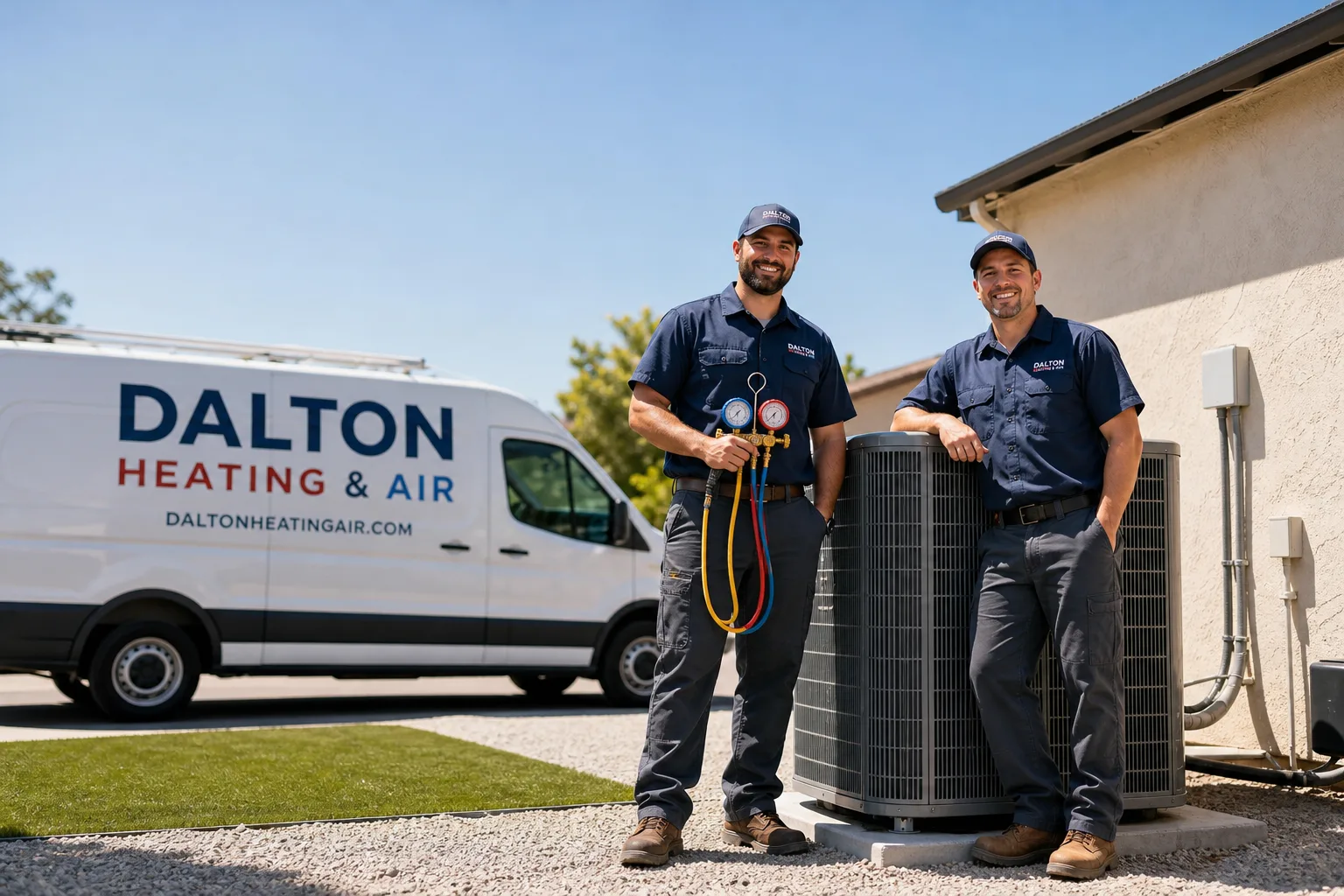
Seasonal tune-up and full diagnostic on your Carrier, Trane, or Goodman system - readings shown to you before any repair is proposed
Diagnosis first, numbers second - you approve the repair price before a single part goes in.
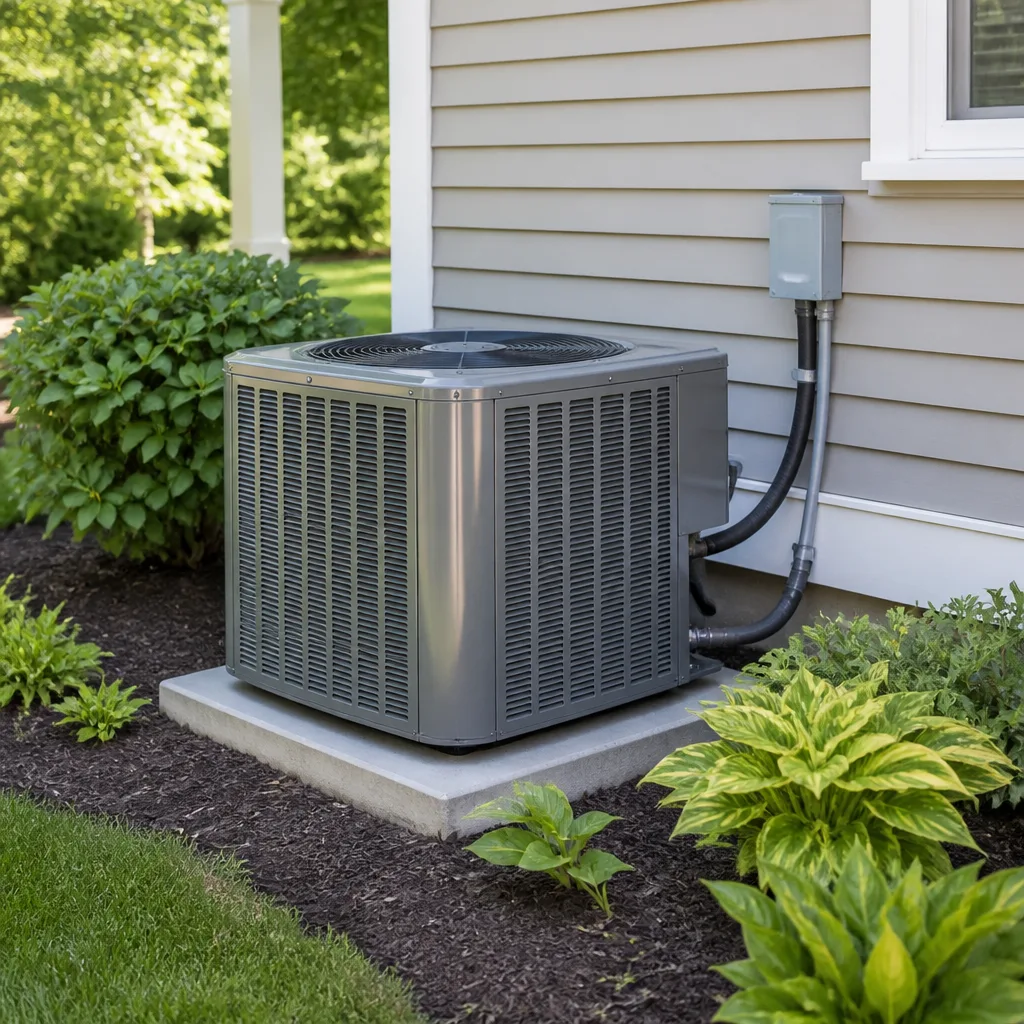
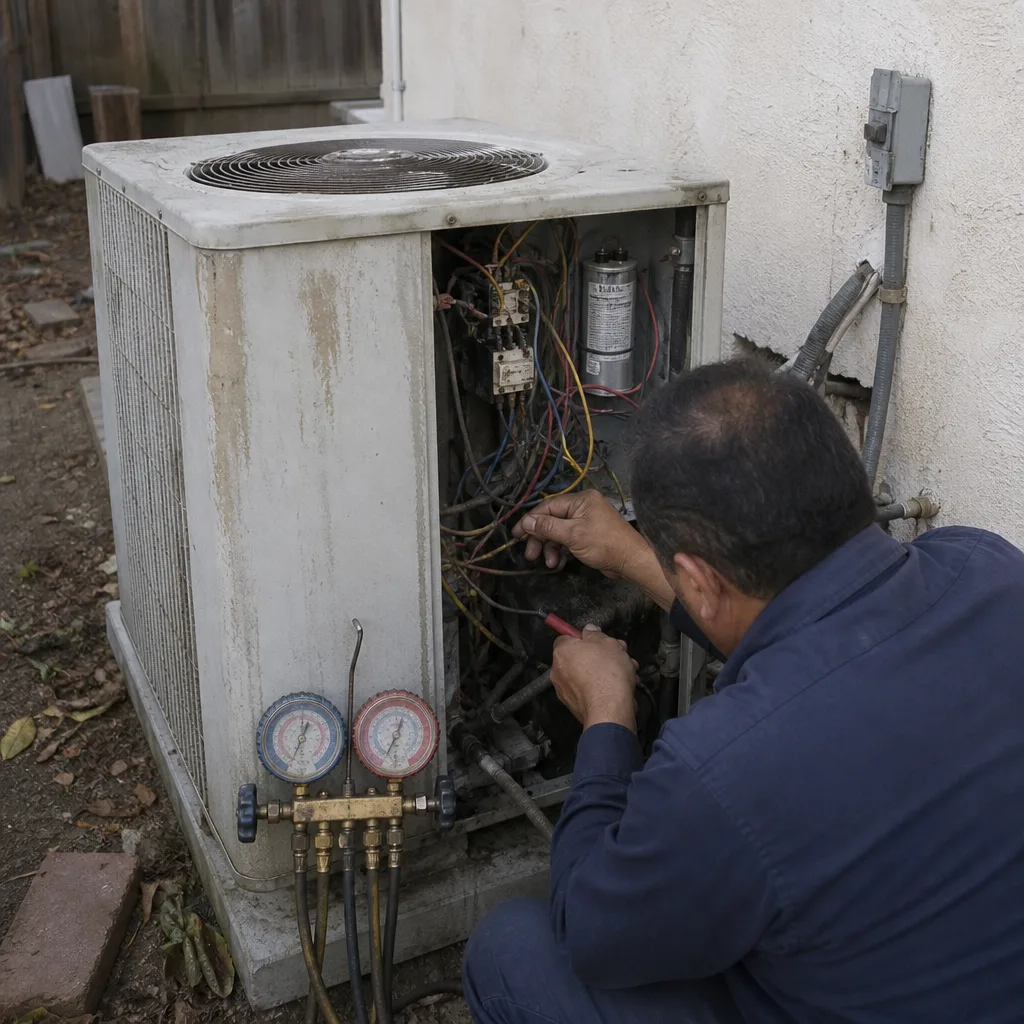 Before
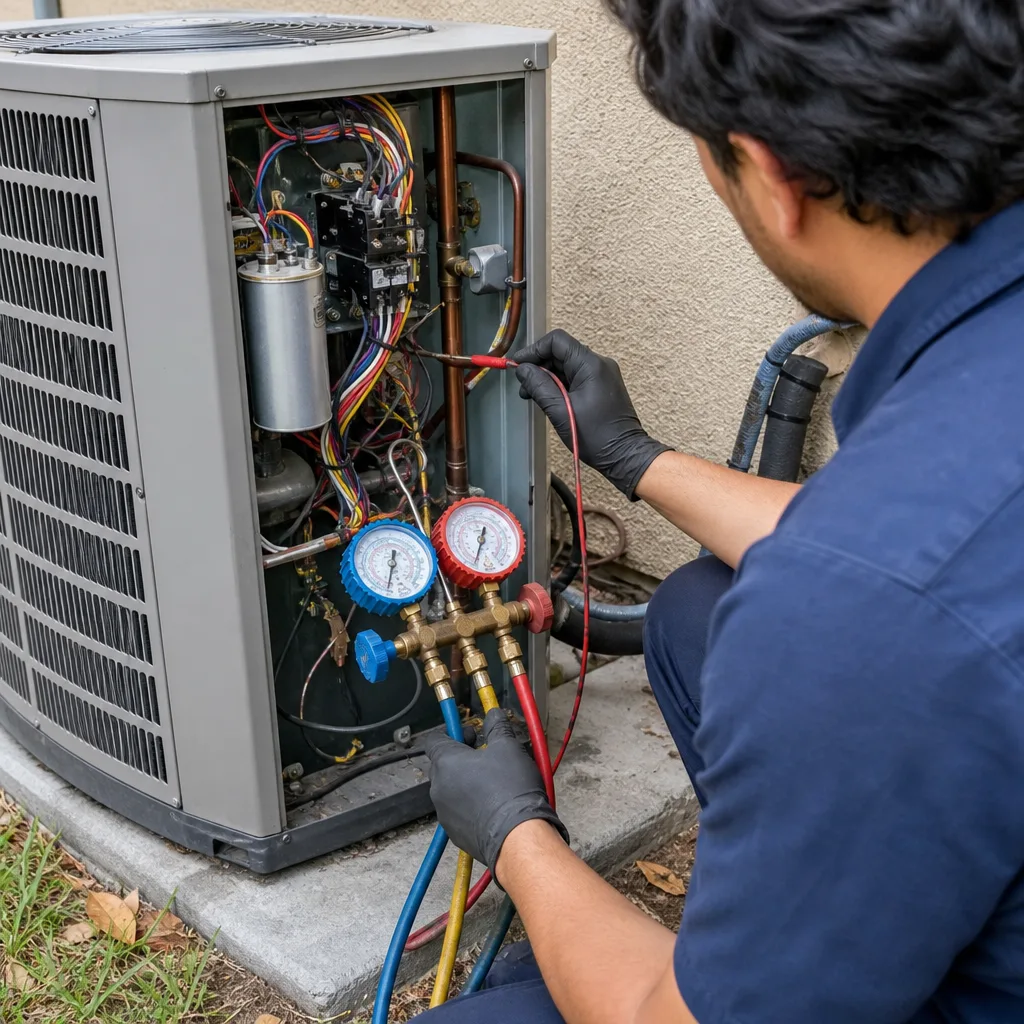 After
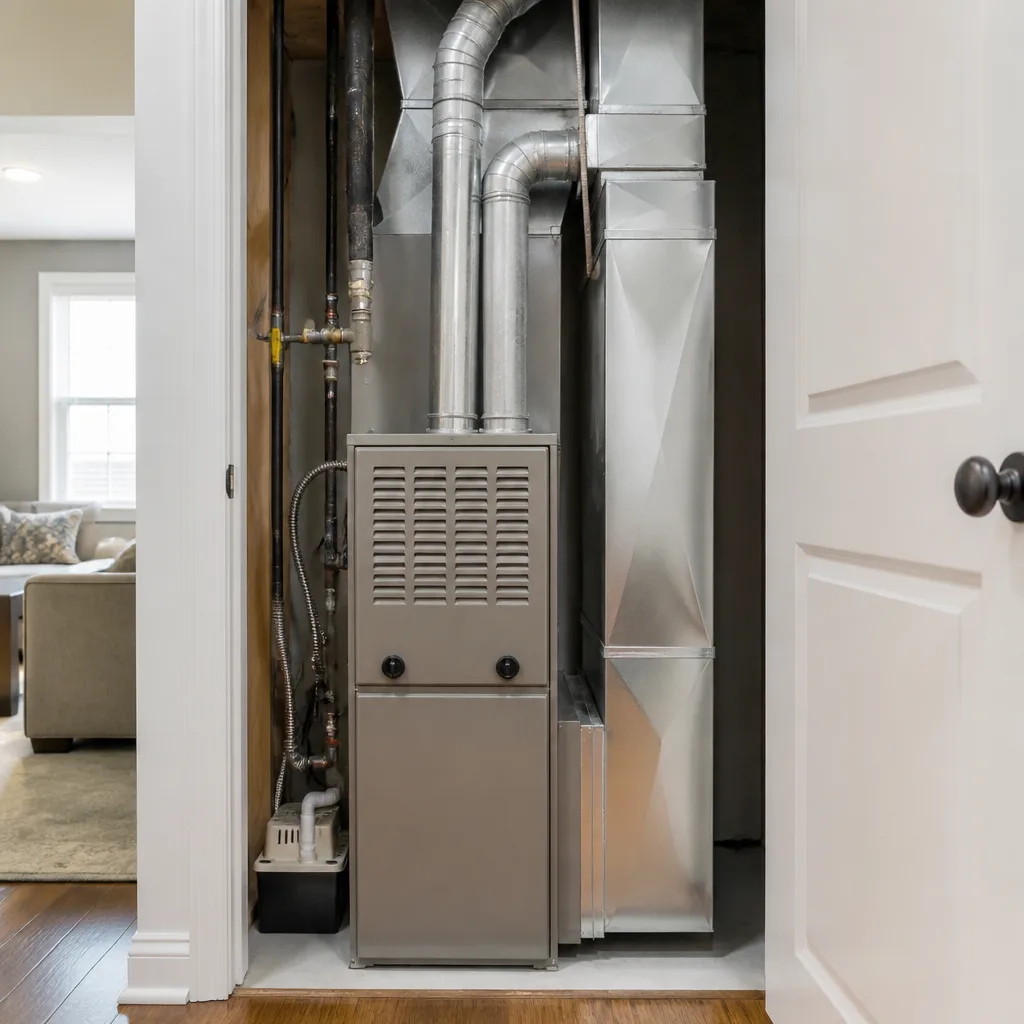
After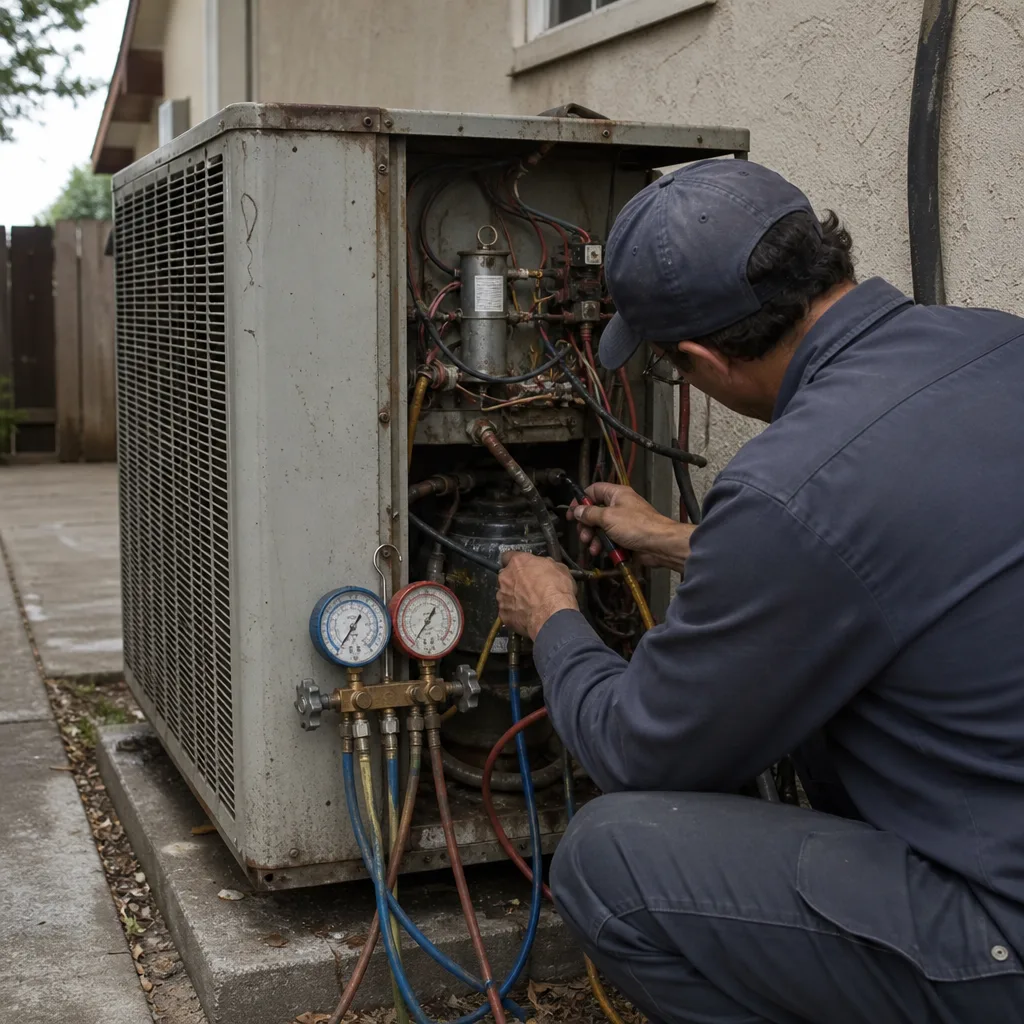 Before
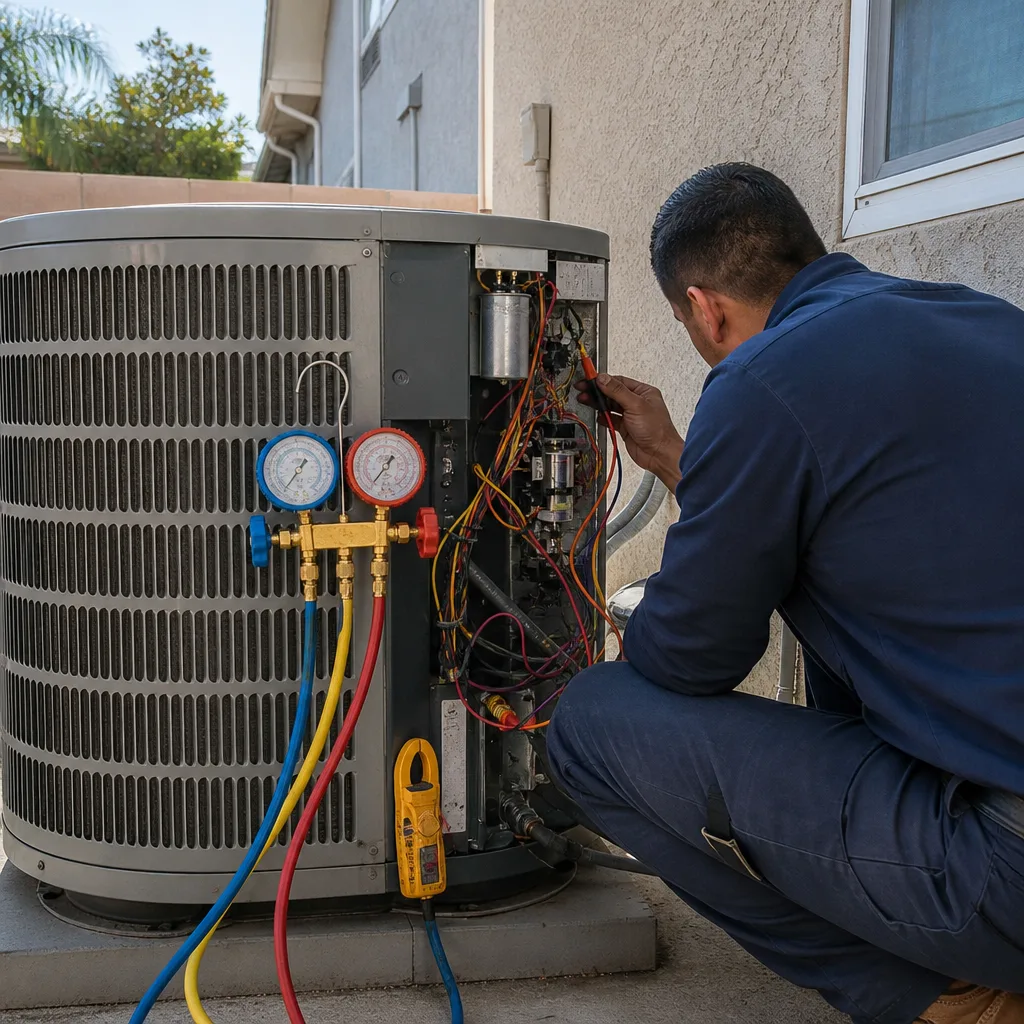 After
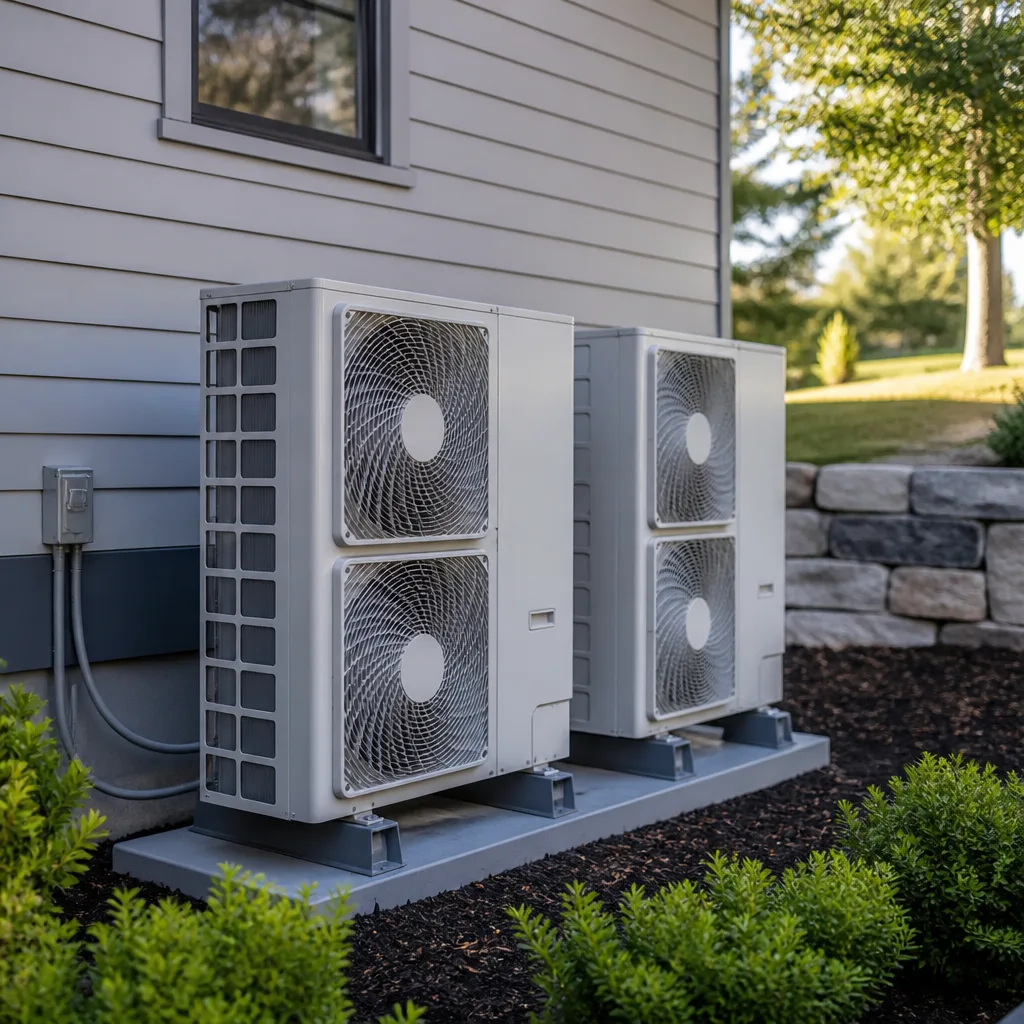
After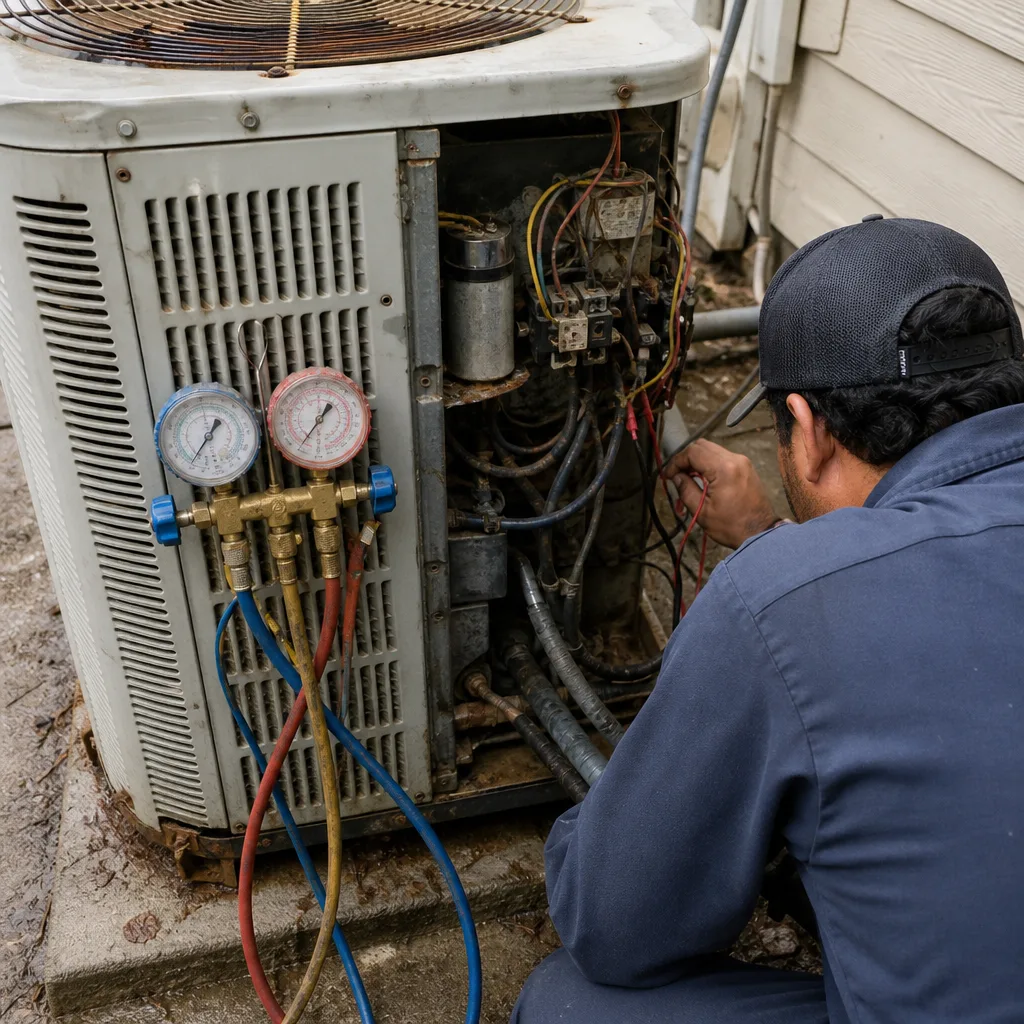 Before
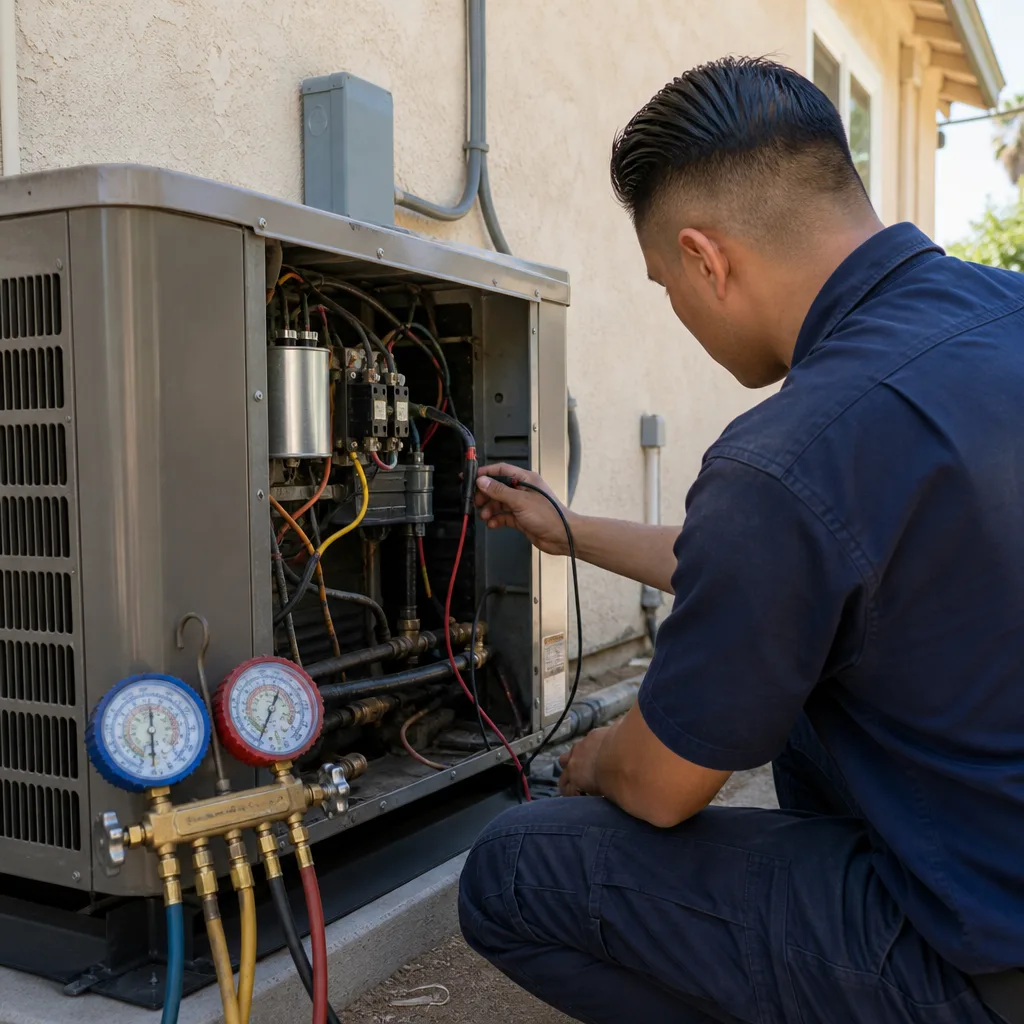 After
AfterFast, Reliable Furnace Repair Across Running Springs
When your furnace quits during a Running Springs winter night, you don’t have time for a callback window. Most furnace repairs in Running Springs run $150 – $700 depending on the failed part, and a trained technician can usually diagnose the problem the same day you call. We answer the phone with a live person around the clock, and our crews know what mountain-grade heating systems deal with up here: heavy snow loads, thin air, and run times that valley furnaces never see. Call (361) 306-9515 and you’ll get a straight answer, a written price before any work starts, and a repair that’s guaranteed in writing for a full year.
Running Springs sits at roughly 5,700 feet in the San Bernardino Mountains. Winter design temperatures drop into the low 20s and snow piles up for weeks at a time. Your furnace isn’t a convenience up here, it’s the thing standing between your family and a frozen pipe at three in the morning. That’s why we schedule for this kind of weather and why our Furnace Repair team stocks the parts Running Springs homes actually need: ignitors, flame sensors, gas valves, blower motors, and heat exchanger components for the brands most common in the area.
Key Takeaways:
- Furnace repair in Running Springs typically costs $150 – $700 depending on the failed component
- We answer calls with a live person 24/7, including during snowstorms and cold snaps
- Every repair includes a written price before work begins and a written guarantee for a full year
- We service Carrier, Trane, Lennox, Goodman, Rheem, and four other major brands
Why Dalton Heating & Air Is Running Springs’s Preferred Furnace Repair Company
Homeowners in Running Springs have been through the wringer with contractors who promise a dispatch window and then go silent. We built Dalton Heating & Air in 2003 around a different set of rules, what we call The Garrison Standard. It means the price goes in writing before any work starts. It means the repair carries a written guarantee for a full year. And it means if the repair fails inside that year, we return at no charge. Not a pro-rated credit. Not a diagnostic fee. We come back and make it right.
Every technician who shows up at a Running Springs home is background-checked, uniformed, and factory-trained on nine major brands: Carrier, Trane, Lennox, Goodman, Rheem, York, Daikin, Bryant, and American Standard. You know who’s coming before they arrive. That’s a Garrison Code requirement, same as arriving inside the stated window, doing the job by the book, and leaving the site clean. Marco Benitez runs our operation, and he holds every tech to that code on every call in Running Springs.
Dispatch and scheduling are coordinated from our Los Angeles office, but the crews serving Running Springs work this mountain full time. They know the roads up 330 and 18. They know which cabins near Snow Valley have original 1970s ductwork. And they know that a furnace failure at 5,700 feet with snow on the roof isn’t a “we’ll get there Thursday” situation. It’s a now situation.
Gas Furnace Repair in Running Springs
Gas Furnace Repair in Running Springs is the most common heating call we take from October through April, and it usually starts with either a furnace that won’t ignite, a furnace that lights and then shuts off minutes later, or a blower that runs constantly without producing enough heat. At this altitude, the furnace has to pull combustion air from thinner, colder air than a valley unit, which puts real stress on the gas valve, the ignitor, and the heat exchanger. A gas furnace repair in Running Springs typically runs $150 – $700 depending on what failed, with ignitors and flame sensors on the lower end and gas valves or blower motors on the upper end.
Ignitor and Flame Sensor Failure
The ignitor is the part that glows hot enough to light the gas, and the flame sensor proves the flame actually lit so the gas valve stays open. When either one fails, the furnace cycles on and off without producing real heat. Running Springs sees more of these failures in late fall, when dry, windy conditions pull dust and debris into intake vents before the first snow covers everything. An ignitor or flame sensor replacement is one of the more affordable furnace repairs, usually on the lower end of that $150 – $700 range.
Gas Valve and High-Limit Issues
A gas valve that won’t open, or opens and then slams shut, is a bigger job because the valve itself is an expensive component and incorrect installation creates a safety hazard. The high-limit switch is a different problem: it’s the safety that shuts the burners off when the furnace overheats. On a Running Springs furnace, a high-limit trip often points to an airflow problem, bad duct sizing, a failing blower motor, or a heat exchanger that’s near the end of its life. That’s a diagnostic call, not a parts-swap, and it’s exactly the kind of thing we flag early.
Furnace Tune Up in Running Springs
A Furnace Tune Up in Running Springs is the most direct way to avoid a no-heat emergency in January, because furnaces at 5,700 feet accumulate wear faster than the same unit would in the flatlands. The blower motor pulls thinner air, the burners run longer each cycle, and the heat exchanger cycles through more thermal expansion and contraction in a single mountain winter than a Redlands furnace sees in three years. A tune-up in Running Springs runs $80 – $200 and covers exactly the items that fail most up here: burner condition, flame sensor cleaning, ignitor resistance, gas pressure, static pressure, and heat exchanger inspection.
Static Pressure and Airflow Testing
At elevation, thinner air changes how a furnace moves heat through your ducts, and the test that catches this is a static pressure reading. If static pressure runs above the manufacturer’s rated level, the blower works harder, the heat exchanger runs hotter, and the system ages faster. Our tune-up includes that measurement, and if the numbers are off, you’ll get a plain-language explanation of what it means and what fixes are available.
Heat Exchanger Inspection
Every furnace tune-up we perform in Running Springs includes a heat exchanger inspection, because a cracked heat exchanger is not a performance problem, it’s a carbon monoxide risk. Mountain furnaces that short-cycle through long winters are more prone to heat exchanger cracks, and we treat any sign of one as a stop-the-job safety issue. If the heat exchanger has failed, we’ll show you what we found and give you repair versus replacement options with real numbers.
Trusted Brands We Service in Running Springs
Running Springs homes run a mix of brands, from Trane units installed in newer builds off Hilltop Boulevard to old Lennox and Goodman furnaces in cabins that date back to the 1960s and 70s. We’re factory-trained on all of them, including Rheem, Carrier, Bryant, York, Daikin, and American Standard, and our techs carry the ignition components, flame sensors, and blower motor capacitors that fail most often in mountain conditions. That means fewer return trips and fewer nights waiting on a part. When you call for furnace repair in Running Springs, you’re getting a tech who has worked on your specific brand, not a generalist learning on your time.
Common Furnace Repair Problems We See in Running Springs Homes
- High-limit trips from undersized ductwork or a weak blower motor. At altitude, thin air starves the heat exchanger, and a blower that can’t move enough cubic feet per minute triggers the high-limit switch. We see this constantly in older Running Springs cabins where the ductwork was sized for a smaller furnace or never updated after a remodel.
- Cracked heat exchangers from years of short-cycling during long mountain winters. A furnace that fires for four minutes, shuts off, then fires again, puts repeated thermal stress on the heat exchanger metal. This is a safety issue, and we flag it immediately any time we find it.
- Ignition and flame-sensor failures from dust pulled in during dry, windy fall months. Before the snow arrives, Running Springs gets weeks of dry wind that fill combustion intakes with dust and pine duff. Ignitors and flame sensors are the first parts to suffer, and they’re also the most common early-winter repair we make.
- Blower motors failing from continuous runtime. Running Springs furnaces run more total hours per winter than valley units, and blower motors have a finite lifespan. A failing blower motor often shows up as weak airflow, unusual noise, or a furnace that short-cycles on high limit.
Pricing for Furnace Repair in Running Springs, CA
| Service | Price Range |
|---|---|
| Gas Furnace Repair | $150 – $700 |
| Furnace Tune Up | $80 – $200 |
A gas furnace repair in Running Springs runs $150 – $700 depending on the failed part. An ignitor replacement sits at the lower end. A gas valve, blower motor, or heat exchanger replacement lands at the upper end. A tune-up runs $80 – $200 and catches most of the problems that later turn into a $700 repair call. We give you a written price before any work begins, every single time, no exceptions. Call (361) 306-9515 and we’ll get a tech to your Running Springs home with the right parts and a straight answer.
We Also Serve Cities Near Running Springs
Our service area extends beyond Running Springs to the surrounding mountain and foothill communities. We regularly run furnace repair calls to Lake Arrowhead, Highland, Mentone, and Crestline. If your furnace is down in any of those areas, the same written pricing, same-year guarantee, and same live-answer phone support apply. Call (361) 306-9515 and we’ll route a tech your way.
Serving Running Springs, CA - Our Local Coverage Area
We’re based in the Running Springs area and know this community well. Use the map below to see our service coverage - if you’re nearby, we can almost certainly help.
FAQs About Furnace Repair in Running Springs
No, it’s not normal, and at 5,700 feet it usually points to an airflow problem rather than a furnace size problem. Thin air reduces the blower’s ability to move heat away from the heat exchanger, so the high-limit switch trips, the burners shut off, and the cycle repeats. Common causes are undersized ductwork, a failing blower motor, or static pressure above the manufacturer’s rated level. Call (361) 306-9515 and we’ll measure it, not guess at it.
The short version: if the heat exchanger is cracked, replace it; if the repair cost exceeds 40 to 50 percent of a new unit, replace it; if the furnace is over 15 years old and this is the second or third repair in two winters, replace it. The altitude factor matters here, because a Running Springs furnace that was correctly sized for a valley application is already working too hard, and a replacement with a proper load calculation will typically run more efficiently and cost less to operate. We’ll walk you through repair versus replacement with real numbers, and we’ll do a load calculation before recommending any new unit.
SEER2 is the updated efficiency rating for heat pumps and cooling equipment, and while it applies mostly to the cooling side, it matters for Running Springs homes that run a heat pump for heating, too. A higher SEER2 rating means lower electricity consumption for the same amount of delivered heat or cooling. At mountain electric rates, the difference between a 14 SEER2 and a 17 SEER2 heat pump shows up as real money on the bill, especially during shoulder-season months when the system runs in heat mode without snow on the ground.
Yes. We service and repair both gas furnaces and heat pumps across Running Springs, including systems that pair a gas furnace with a heat pump for dual-fuel operation. Running Springs homes use both: gas furnaces are common in older cabins with propane tanks, and heat pumps are increasingly common in newer construction and full-time residences. Both systems have altitude-specific failure modes, and our techs are trained on the nine major brands for both.
We answer calls with a live person 24/7, including during snowstorms, and we dispatch Running Springs calls as emergencies when there’s no heat in the house. Chaining up on the 330 or 18 takes time, but we stage winter stock in the area so a tech can get to a Running Springs home with the most common repair parts already in the truck. Call (361) 306-9515 and the person who answers will tell you straight when we can be there.
Written by Marco Benitez, Owner at Dalton Heating & Air, providing furnace repair to Running Springs homeowners at 5,700 feet where the heat has to work.