
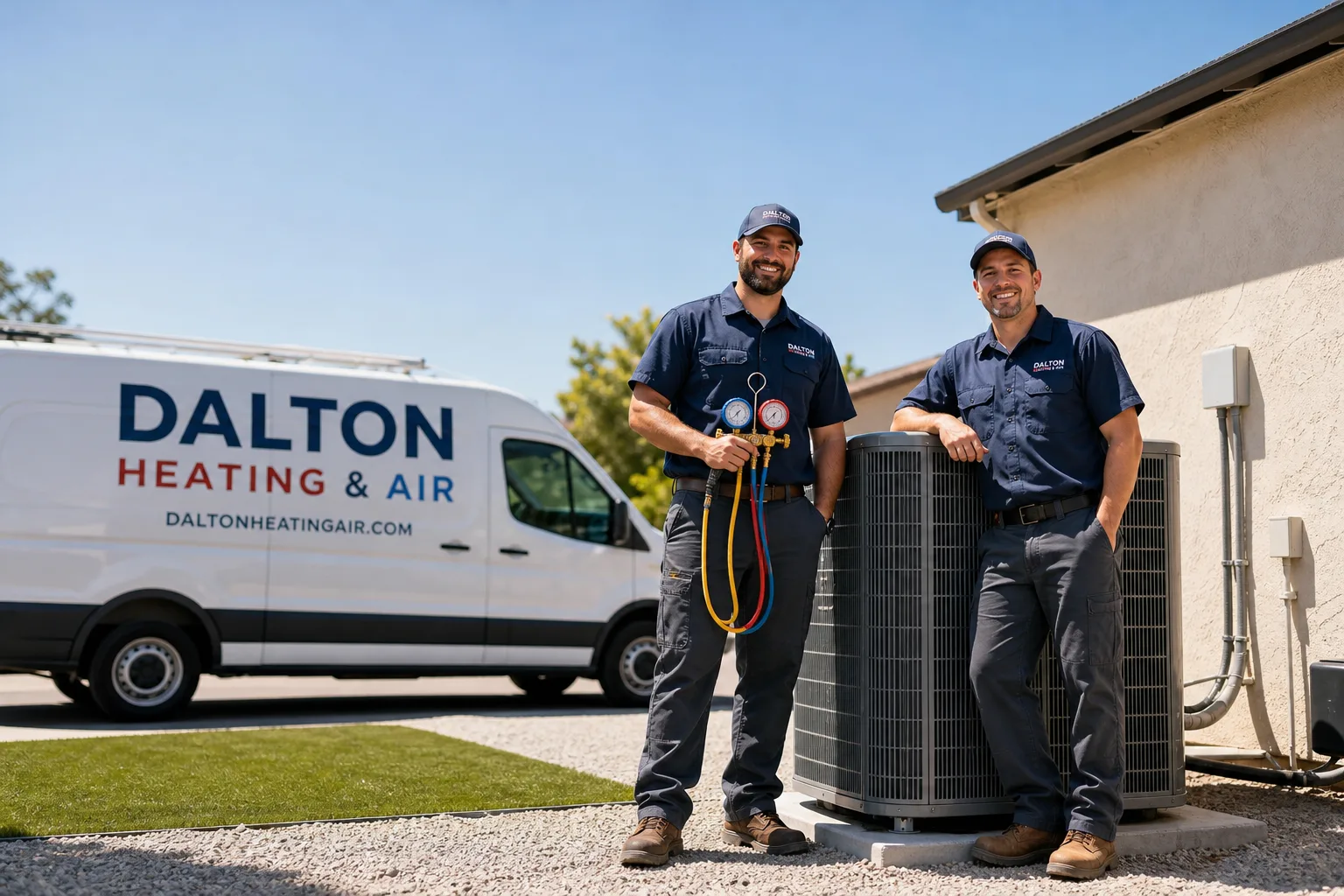
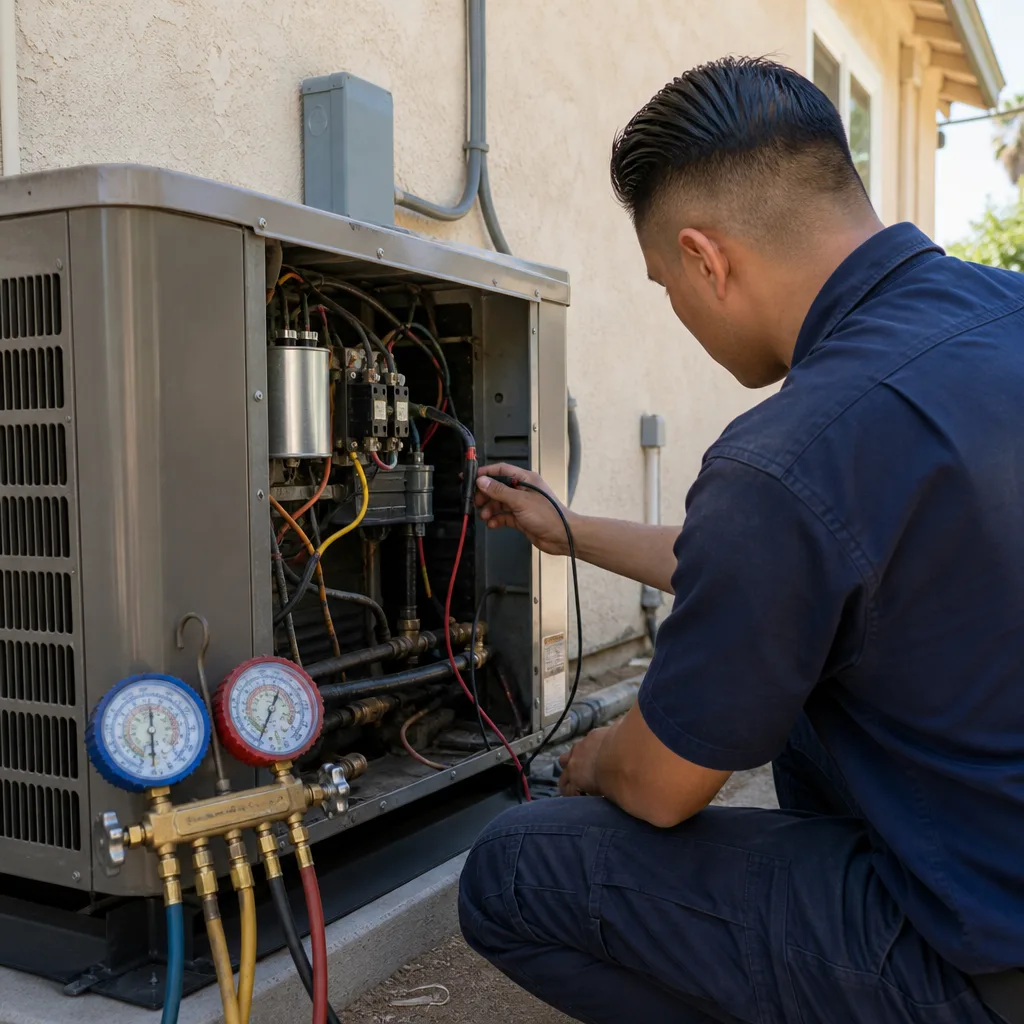
Seasonal tune-up and full diagnostic on your Carrier, Trane, or Goodman system - readings shown to you before any repair is proposed
Diagnosis first, numbers second - you approve the repair price before a single part goes in.
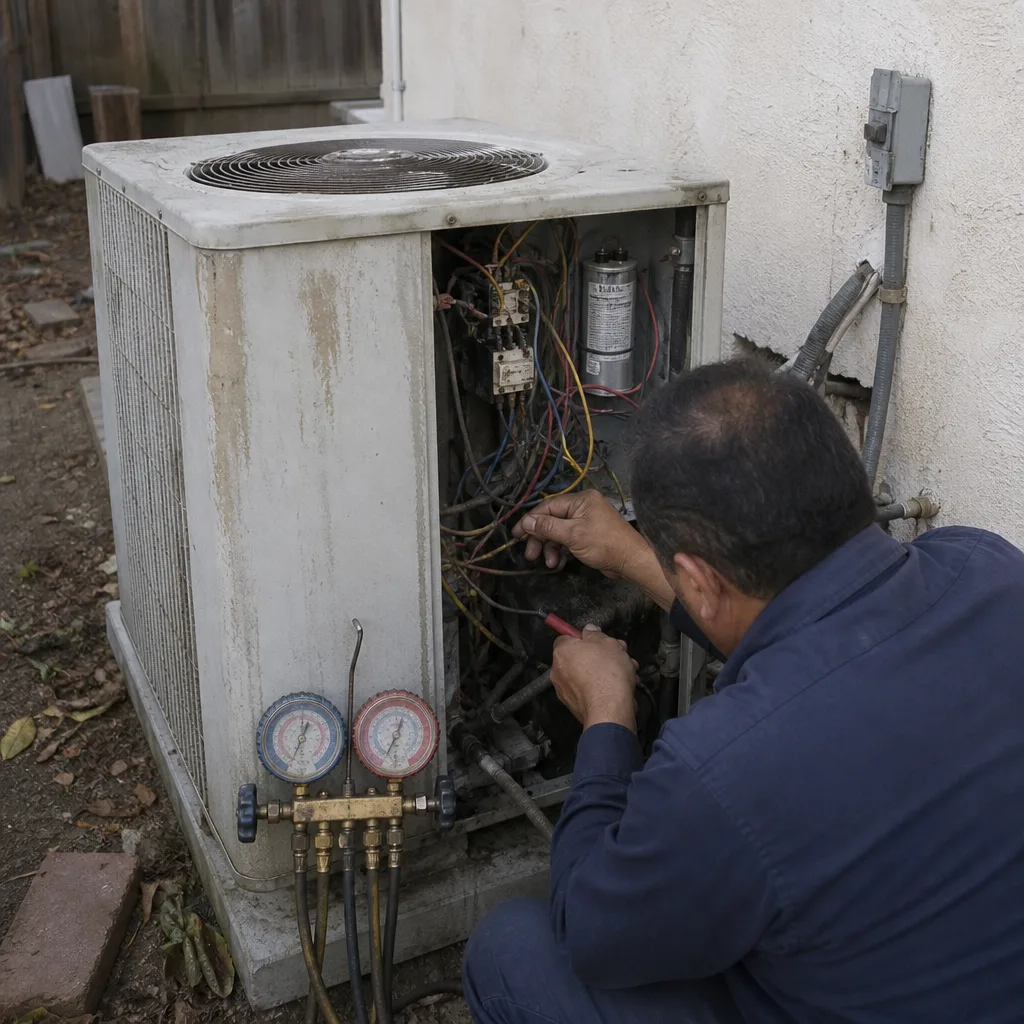 Before
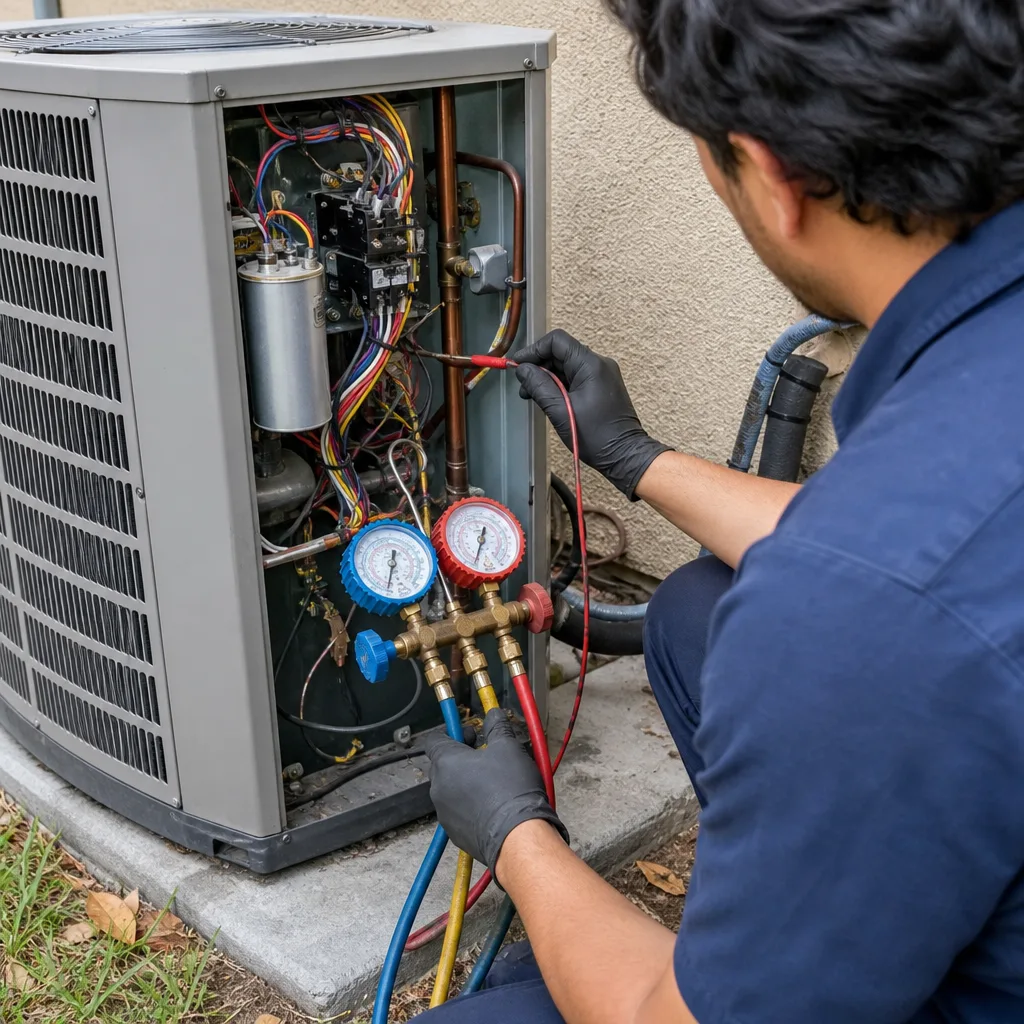 After
After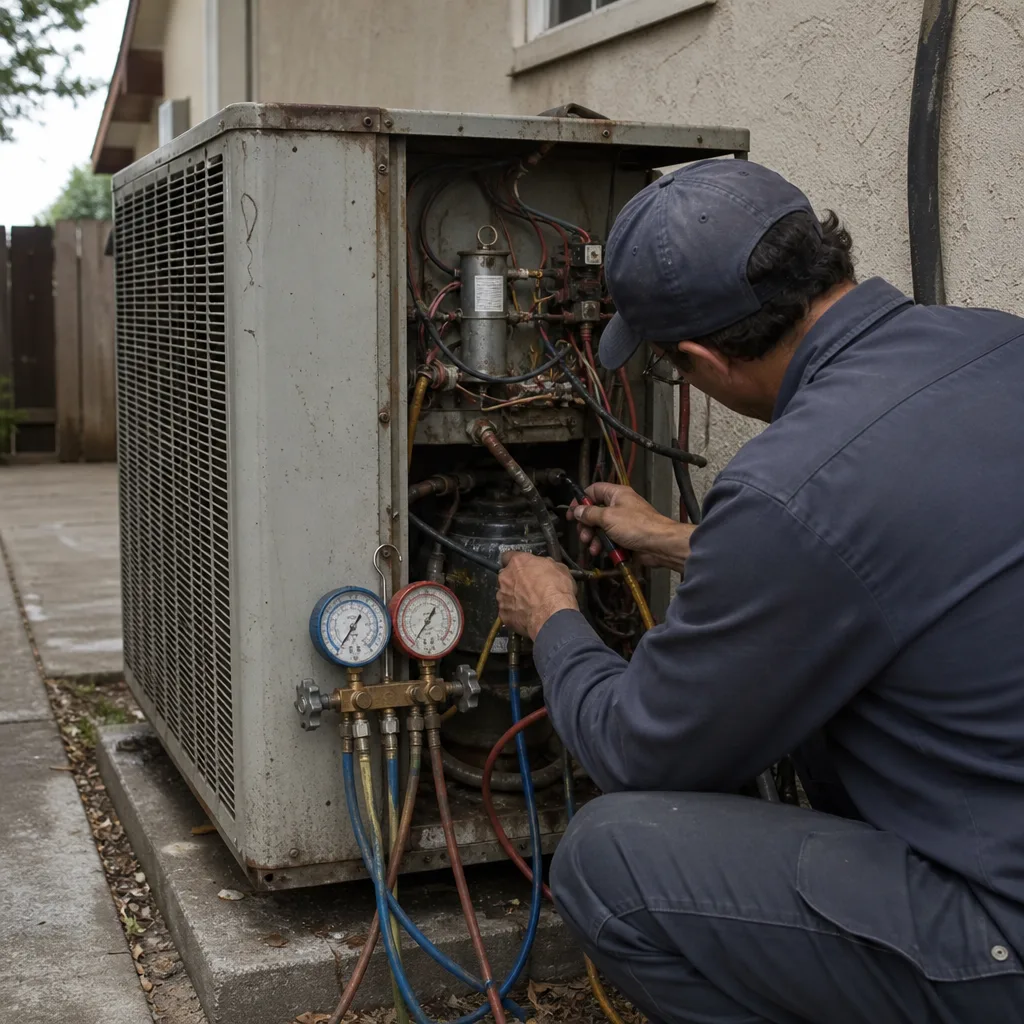 Before
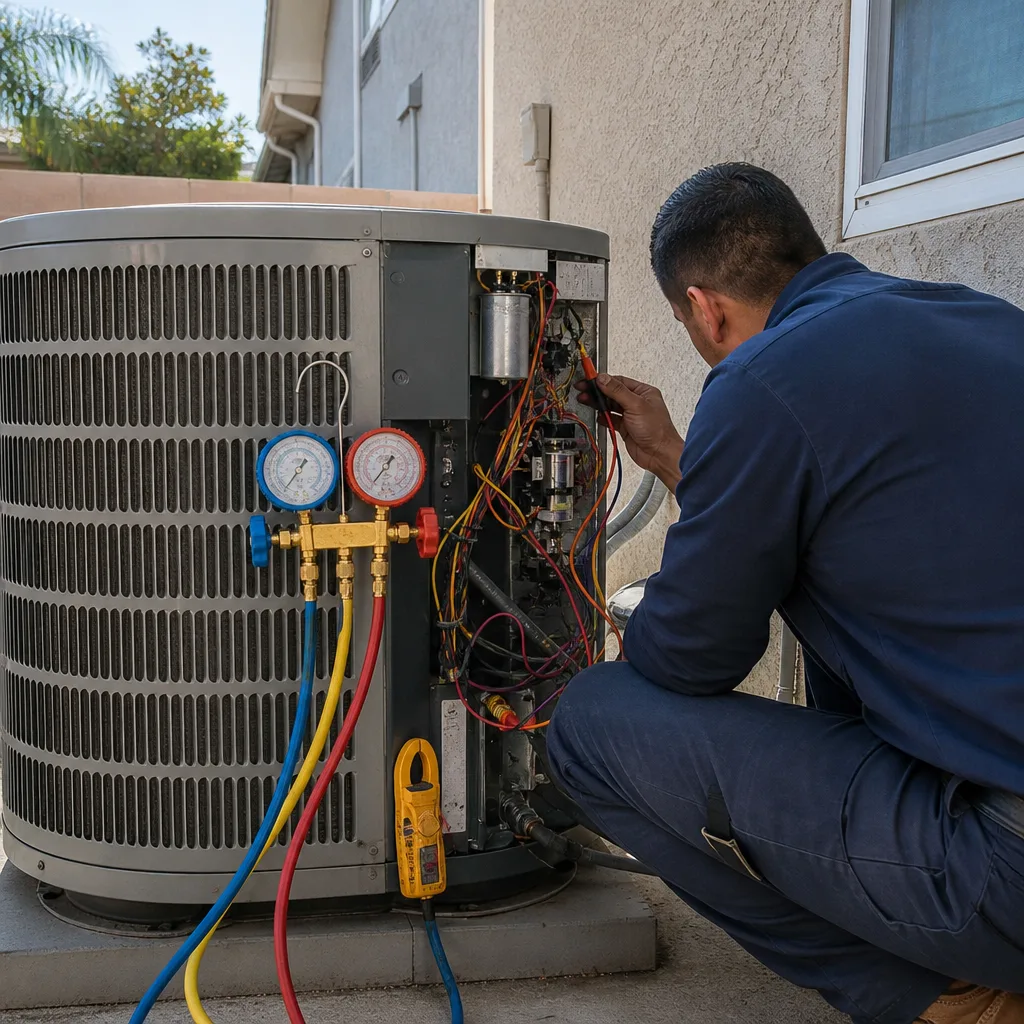 After
After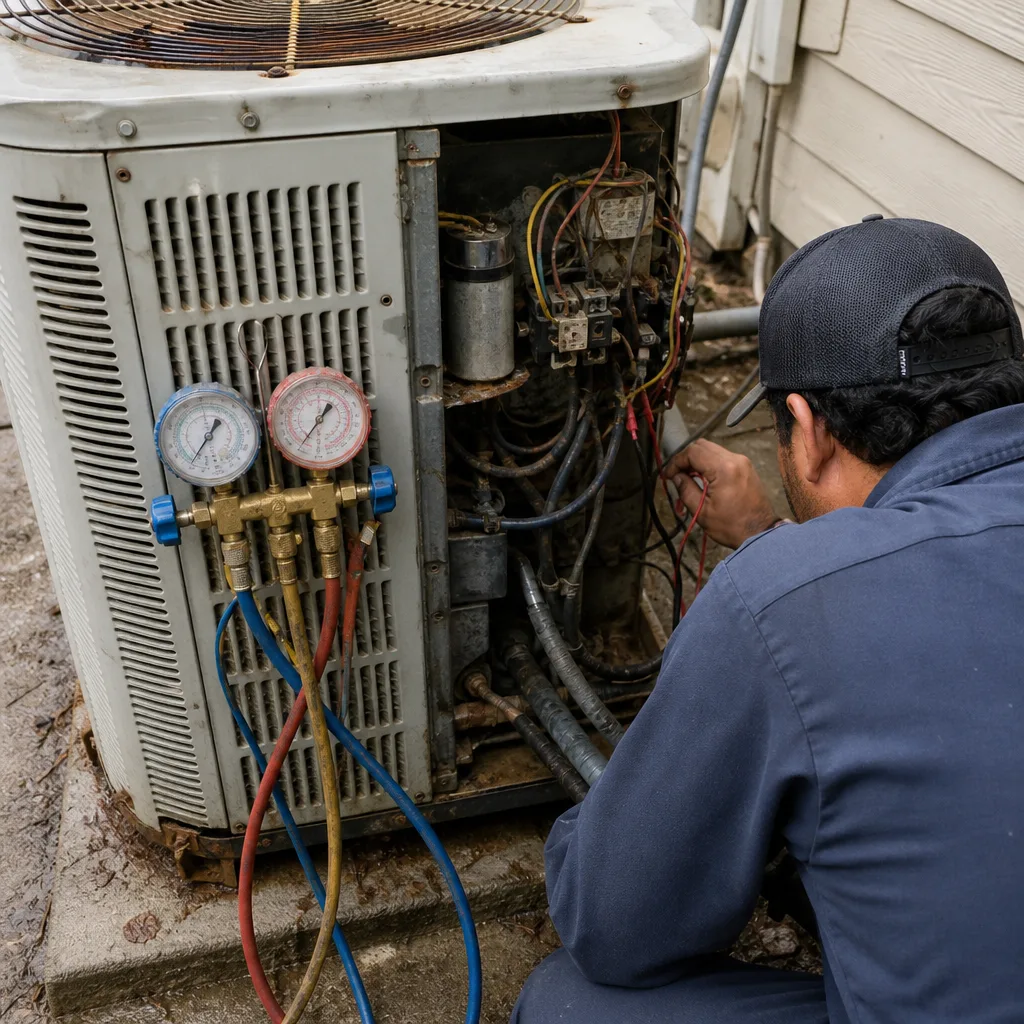 Before
 After
AfterFast, Reliable Furnace Repair Across Louisville
Furnace repair in Louisville, TN typically runs $150 – $700 depending on the part and what’s failed, and our techs reach most Louisville neighborhoods the same day you call. Expect a written price before any work starts, a full-year written guarantee on the repair, and a uniformed, background-checked technician who arrives inside the stated window. If your heat is down tonight or the furnace is short-cycling every morning, call (361) 306-9515 and a live person answers, 24/7.
We know this town’s heating quirks cold. Louisville sits in a Tennessee Valley valley-floor pocket where winter nights dip below freezing but daytime temps often climb back into the 50s, so your furnace isn’t running long, steady cycles like a furnace up north. It’s starting and stopping. And that stop-start pattern, combined with the damp air that settles in these valleys, creates a specific set of failures we’ll get into below. The short version: what breaks here isn’t always what breaks in Knoxville or Nashville, and a repair shop that just swaps parts without asking why the part failed will leave you calling again in February.
Why Dalton Heating & Air Is Louisville’s Preferred Furnace Repair Company
Dalton Heating & Air is a Garrison Partners company, in operation since 2003, and every tech who rolls into Louisville carries The Garrison Standard on the job. That means a live person answers the phone around the clock, the price goes in writing before the first tool comes off the truck, and the repair is guaranteed in writing for a full year. If the work doesn’t hold, we return at no charge. No fine print, no upgrade pitch to get the guarantee.
Techs dispatched to Louisville carry parts for nine major furnace brands: Carrier, Trane, Lennox, Goodman, Rheem, York, Daikin, Bryant, and American Standard. Not every shop does. Many carry one or two brands and make you wait a week for anything else. Our trucks roll fully stocked because the valley doesn’t care what brand you own when the temperature drops to 28 degrees at 3 a.m.
Marco Benitez leads the team, and he holds every tech to The Garrison Code: arrive inside the window, price in writing before starting, do the job by the book, leave the site clean, stand behind the work for a full year. No exceptions, no “well, this job was different.” Homeowners in Louisville call us because they’ve been burned by no-shows and price shifts at the door. We don’t do either.
Heating Repair in Louisville
Heating repair in Louisville means fixing whatever has stopped producing heat: a dead ignitor, a gas valve that won’t open, a blower motor that’s seized, a control board that’s lost its mind. The job starts with a diagnostic. We find the failure, show you what we found, and put the repair price in writing before turning a wrench. Most heating repair in Louisville runs $150 – $700, and if the furnace is still producing some heat, it’s almost always a single part that failed, not a system that needs replacing.
Ignitor and Flame Sensor Replacement
A hot-surface ignitor glows bright orange to light the gas. When it cracks, the furnace tries to start, the gas valve opens, and nothing lights. You’ll hear the inducer motor run, then the system locks out for safety. In Louisville’s damp valley air, flame sensors also build up a silica film faster than drier climates, which causes the furnace to light and then shut off after a few seconds. Both are straightforward fixes, usually well under $200 with the diagnostic included.
Blower Motor and Capacitor Work
If the furnace fires but no warm air moves, the blower motor or its capacitor has failed. High humidity through spring and fall cakes dust onto the blower wheel, which raises static pressure and burns out capacitors early. We see this constantly in Louisville homes where the filter hasn’t been changed since last winter. A capacitor is a cheap fix, usually under $150. A full blower motor replacement lands in the $300 – $600 range depending on the motor type.
Boiler Repair in Louisville
Boiler repair in Louisville covers the hydronic heating systems found in many older homes along the river corridor and in the established neighborhoods south of Topside Road. A boiler that’s making banging noises, leaking from the pressure relief valve, or leaving cold spots in the baseboards needs attention before the cold snap hits. Boiler repair in Louisville runs $150 – $700, same as furnace work, though the parts are often more specialized and take slightly longer to source if it’s an older unit.
Pressure and Expansion Tank Issues
A boiler pressure that climbs into the 30 psi range and then dumps water out the relief valve usually points to a failed expansion tank, not a failed boiler. The tank’s internal bladder goes bad, the system can’t absorb thermal expansion, and the relief valve does its job by bleeding off water. In Louisville’s hard-water conditions, we also see mineral buildup at the fill valve that causes the system to overfill. Replacing an expansion tank typically runs $200 – $400 with labor.
Circulator Pump and Zone Valve Failure
When one part of the house is toasty and another is cold, the circulator pump or a zone valve has usually failed. Here’s the trade term, plain: the circulator pump moves heated water through the pipes, and zone valves are the gates that open and close for each area of the house. A seized pump or a stuck valve means heat never reaches that loop. Repairs here run $250 – $500 depending on whether it’s a pump swap, a valve replacement, or both.
Trusted Brands We Service in Louisville
Our techs are factory-trained to service nine major furnace brands, and we stock repair parts for Goodman, Rheem, York, and Daikin on the truck when dispatched to Louisville. Goodmans are everywhere in this area, which makes sense, they’re popular with builders. Rheem and York show up a lot in newer construction around the Maryville side of the county. If your furnace is a Carrier or a Trane, we service those too, and we carry common parts locally. Not every repair shop in Louisville can say that. We can.
Common Furnace Repair Problems We See in Louisville Homes
- Short-cycling from oversized equipment: Many Louisville homes have furnaces sized to square footage rather than a real load calculation. The unit satisfies the thermostat too fast, the heat exchanger never reaches even temperature, and cracks form early. This is the single most common reason for premature furnace replacement in this area.
- Dirty-wet spring and fall coil issues: Pollen, red clay dust, and the valley’s high humidity cake the evaporator coil and filter. Static pressure climbs, blower motors and capacitors fail before heating season even starts. A $30 filter swap in October can prevent a $500 blower motor repair in January.
- Heat-pump/furnace changeover lockouts: Louisville hovers near the heat-pump balance point for weeks in spring and fall. A miscalibrated thermostat or a bad defrost board forces the gas furnace to run as backup far more than it should, which masks a failing heat pump and inflates the gas bill. We diagnose the whole system, not just the furnace.
- Cracked heat exchangers in 15-year-old units: The damp valley air and constant cycling take a toll. Out on a call near Topside Road, our tech found a 15-year-old Goodman furnace with a cracked heat exchanger that had been masked by a failing blower motor running at high static pressure. The homeowner had been resetting the breaker all week. We pulled the heat exchanger with a camera, quoted the honest repair-versus-replace math, and installed a new Carrier 96% two-stage with a matched load calculation before we left. The homeowner was back to heat that same afternoon.
Pricing for Furnace Repair in Louisville, TN
Furnace repair in Louisville runs $150 – $700 start to finish, diagnostic included. A bad ignitor or flame sensor is at the low end. A gas valve or blower motor lands mid-range. A heat exchanger replacement pushes toward the top, assuming replacement is still the honest call and not a full system swap. Here’s the line-item breakdown:
| Service | Typical Cost in Louisville |
|---|---|
| Furnace repair (diagnostic + common part) | $150 – $700 |
| Heating repair (same visit) | $150 – $700 |
| Boiler repair | $150 – $700 |
| Seasonal tune-up | $80 – $200 |
| AC repair | $150 – $650 |
| AC installation (if replacement is the honest call) | $3500 – $7500 |
Every quote comes in writing before work begins. The price doesn’t move at the door. The repair is guaranteed in writing for a full year, and if it fails in that time, we return at no charge. That’s not an upgrade, it’s the only way we sell. Estimates are free. Call (361) 306-9515 and a live person picks up.
We Also Serve Cities Near Louisville
Our Louisville crew covers the valley floor and the ridges around it. If you’re in Alcoa, Maryville, Powell, or Seymour, we’ll dispatch a tech from the same team, with the same written pricing and the same full-year guarantee. Same live answer on the phone, same window for arrival. The Furnace Repair team handles calls across the whole service area.
Serving Louisville, TN - Our Local Coverage Area
We’re based in the Louisville area and know this community well. Use the map below to see our service coverage - if you’re nearby, we can almost certainly help.
FAQs About Furnace Repair in Louisville
It’s usually a $150 – $300 fix, not a replacement. A furnace that trips a breaker in Louisville is almost always a failing blower motor capacitor, a blower motor seized from dust and humidity, or a short in the wiring from red clay dust accumulation. The valley’s damp air makes dust stick to electrical connections, and that’s a repair, not a replacement. Call (361) 306-9515 for a diagnostic and a written quote.
Because the thermostat or the defrost board is making a changeover decision based on the wrong input, and Louisville’s valley-floor temperature swings near the balance point for weeks at a time in the spring and fall. The balance point is the outdoor temperature where a heat pump can no longer pull enough heat from the outside air and the system switches to gas backup. When that switch happens dozens of times a day because of a miscalibrated thermostat, the gas furnace runs far more than it should while a failing heat pump gets ignored.
You need the load calculation, and here’s why: many Louisville homes have furnaces that were sized by square footage, not by a proper Manual J calculation, and that’s exactly why short-cycling and early heat-exchanger cracks are so common here. Matching the tonnage of an oversized furnace just installs a newer oversized furnace. Marco Benitez and the team size every replacement to the actual heat loss of your house, not the nameplate on the old unit.
SEER2 is the new federal efficiency test that measures a system under more realistic duct pressure than the old SEER rating did. The same unit rated 16 SEER under the old standard rates about 15.3 SEER2 under the new one, and a 15% change in efficiency moves your cooling bill about 10 – 15% at the same thermostat setting. On a system paired with a gas furnace in Louisville, the efficiency of the cooling side matters most in the long, humid summer, not the short winter.
Yes. Our techs are factory-trained on Carrier, Trane, Lennox, Goodman, Rheem, York, Daikin, Bryant, and American Standard, and we stock common repair parts on the truck when we dispatch to Louisville. That means most repairs happen in one visit, not two. For a specific part availability question or to schedule a diagnostic, call (361) 306-9515 and we’ll tell you straight what we have and what needs ordering.
When your furnace quits or starts acting up in Louisville, don’t guess and don’t wait. Call (361) 306-9515. A live person answers. You’ll get a straight diagnostic, a written price, and a repair guaranteed in writing for a full year. That’s the deal.
Written by Marco Benitez, Owner at Dalton Heating & Air, serving Louisville, TN and the surrounding valley communities.