
Seasonal tune-up and full diagnostic on your Carrier, Trane, or Goodman system - readings shown to you before any repair is proposed
Diagnosis first, numbers second - you approve the repair price before a single part goes in.
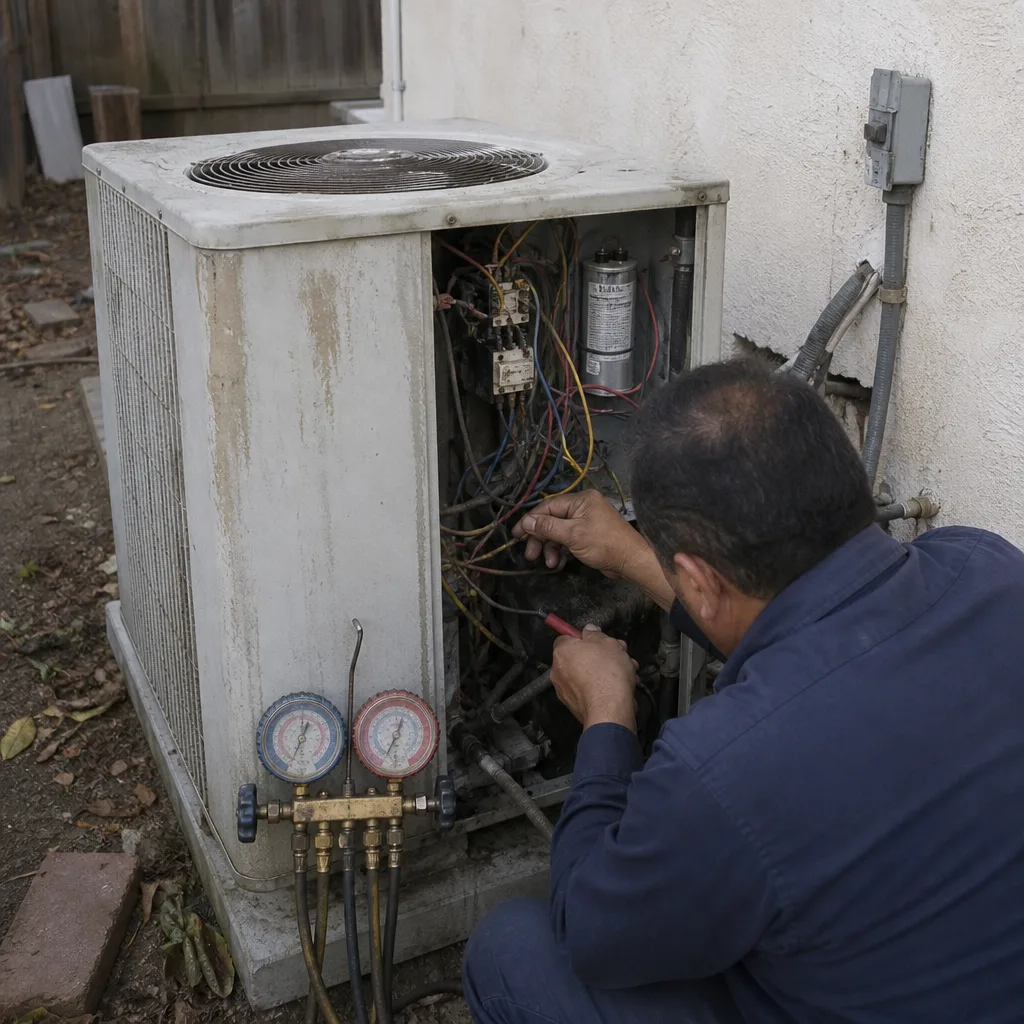 Before
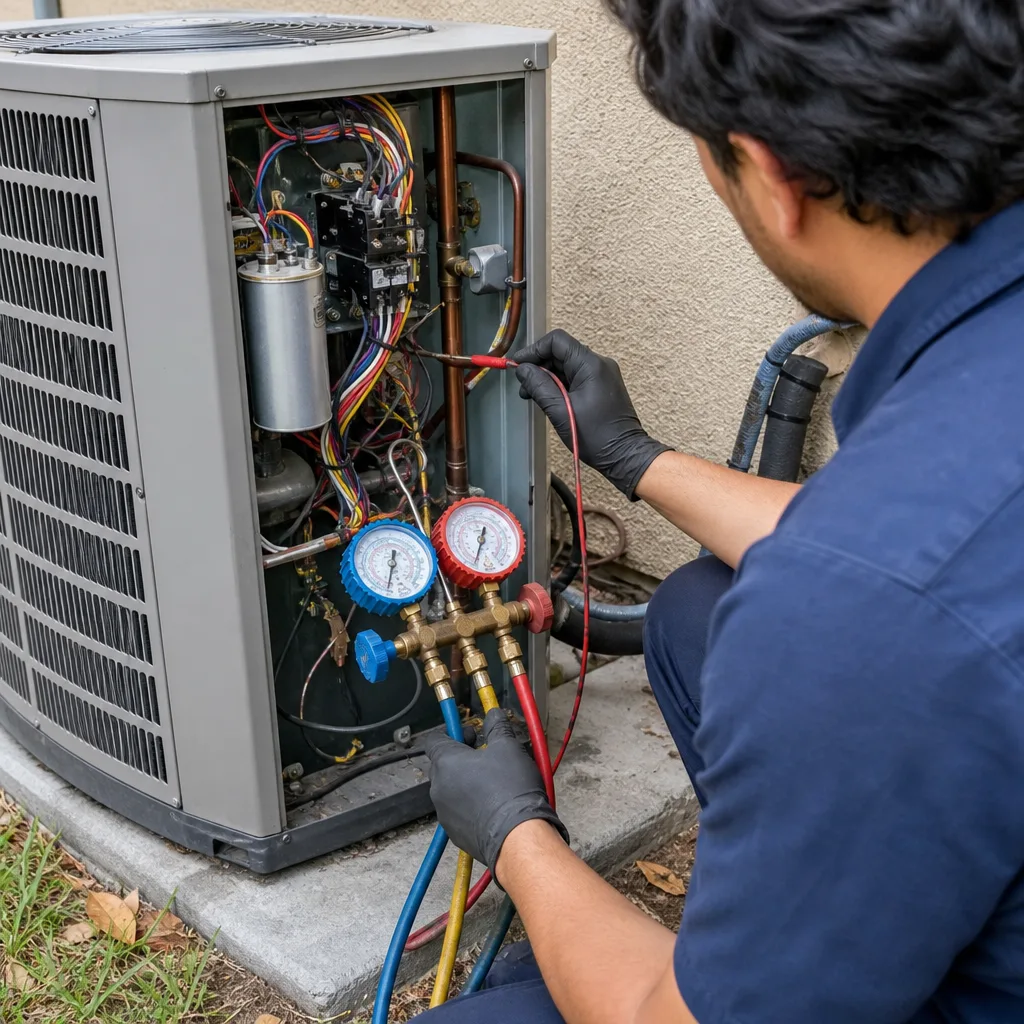 After
After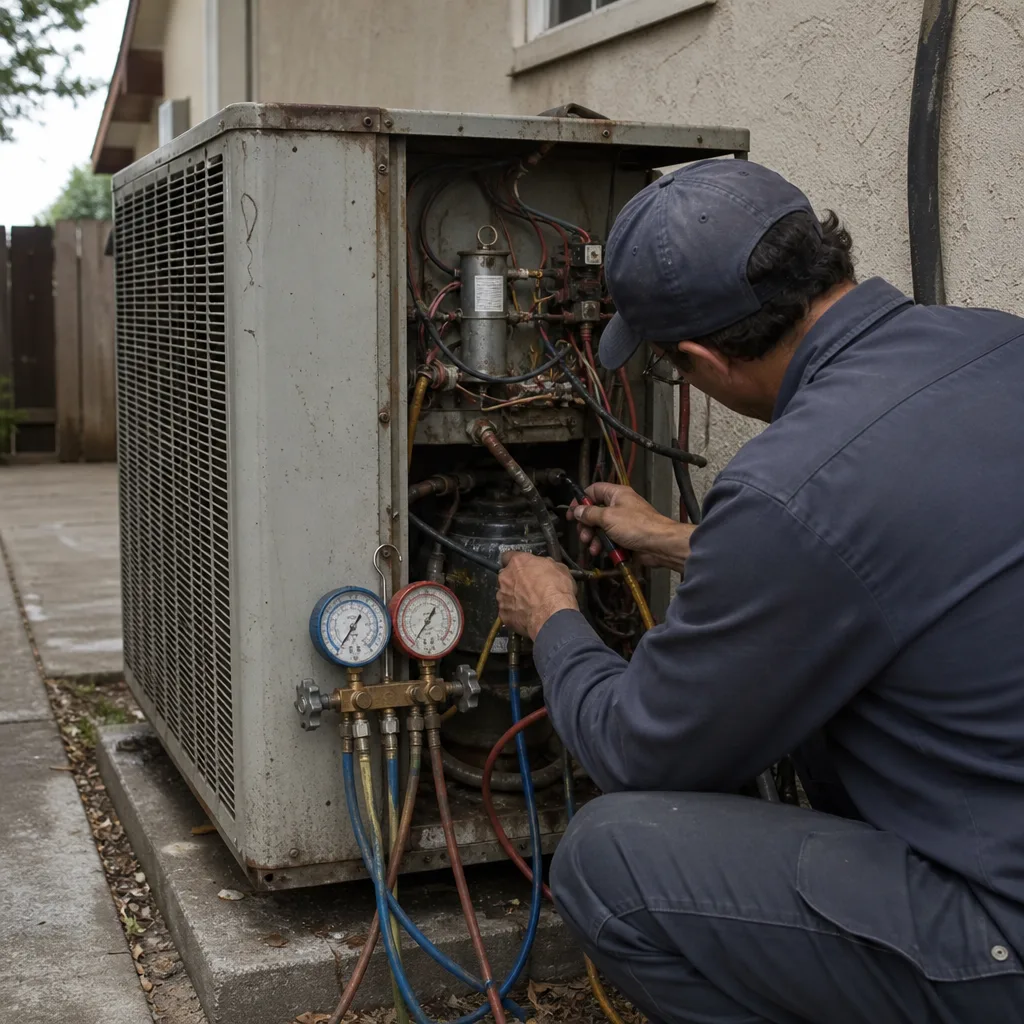 Before
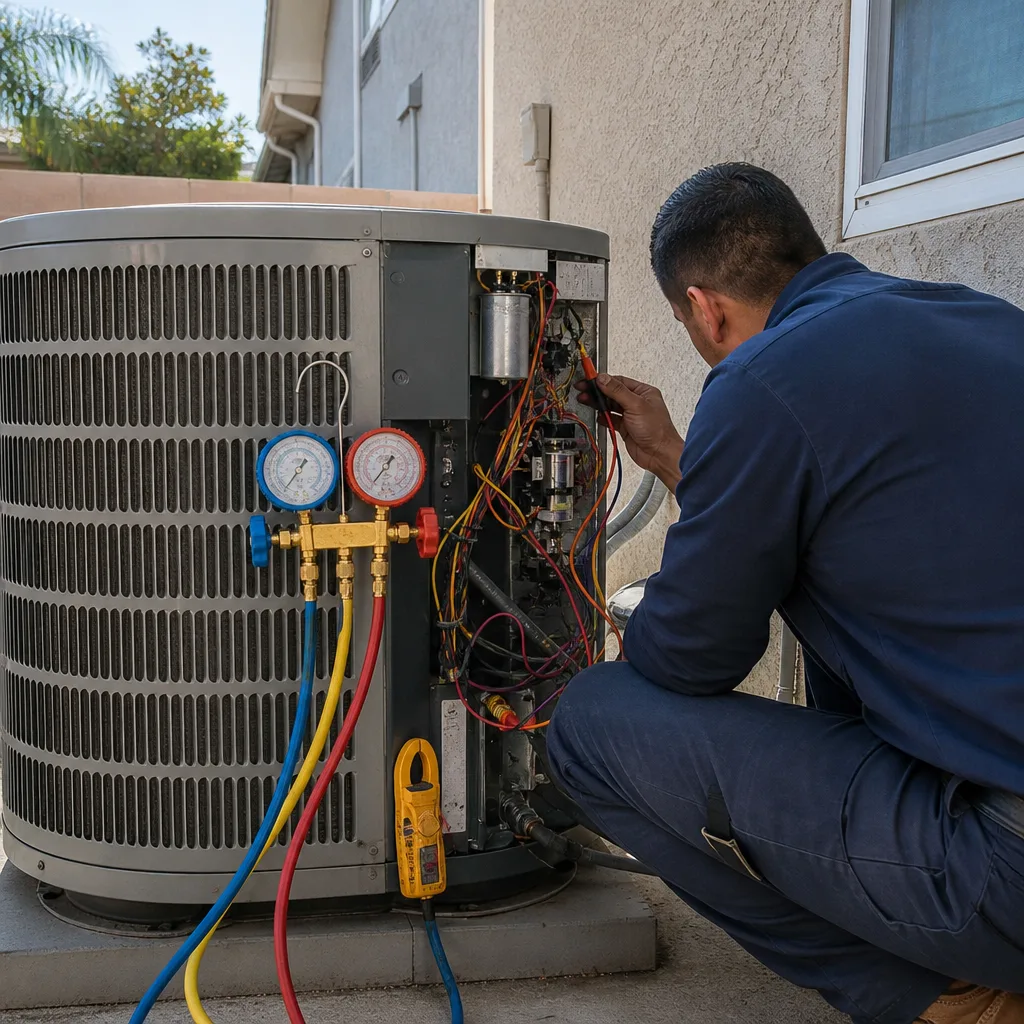 After
After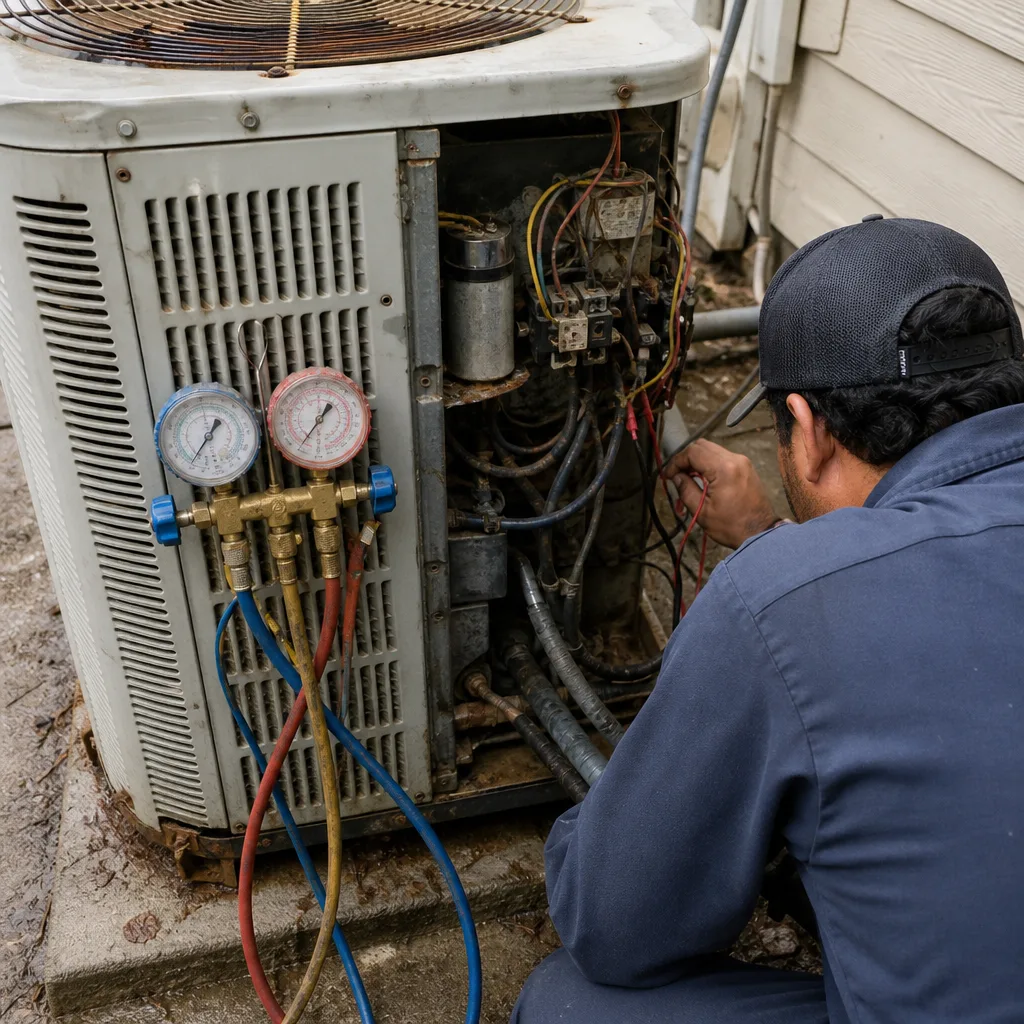 Before
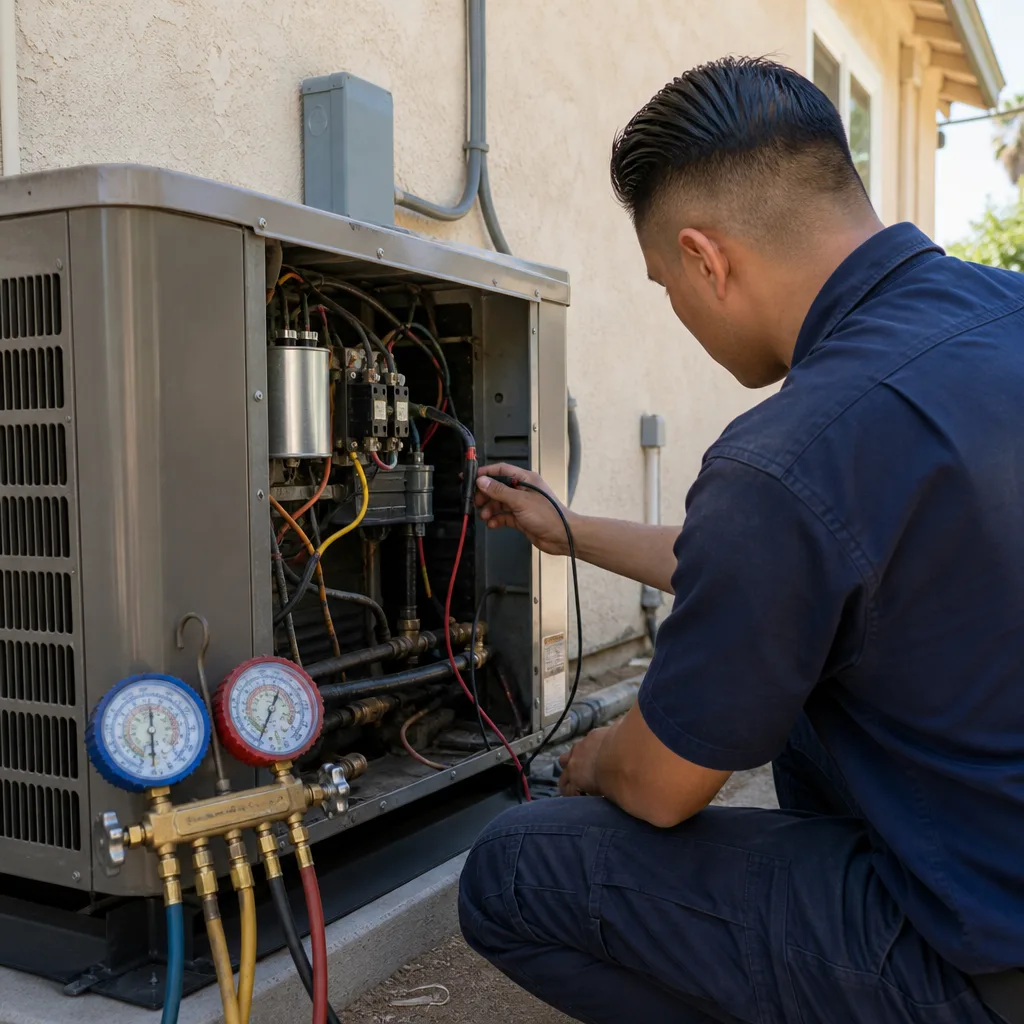 After
AfterFrozen A/C Coil
A frozen A/C coil almost always means your system has either lost airflow or is low on refrigerant – and in both cases, the unit needs to be shut off now. Running a frozen coil doesn’t speed up cooling; it strains the compressor, and a failed compressor is a far more expensive repair than whatever caused the freeze in the first place.
Here’s what’s happening inside the unit: the evaporator coil (the set of copper or aluminum tubes inside your air handler that absorbs heat from your home’s air) depends on a steady stream of warm air moving across it. When that flow drops, or when refrigerant charge falls below the right level, the coil surface temperature drops below 32 degrees and moisture in the air freezes solid on it. Ice builds up, airflow drops further, and the problem compounds itself fast. You’ll see ice on the coil itself, on the refrigerant lines running to the outdoor unit, or both. Sometimes you’ll notice water pooling near the air handler as it starts to thaw. Any of these signs means the system needs attention today, not next week.
Why It Happens
Restricted Airflow From a Clogged Filter
This is the most common cause, and it costs nothing to check. Pull your air filter out right now. If it’s gray, packed with dust, or you can’t see light through it when you hold it up, that filter is choking the system. A clogged filter drops the volume of warm air crossing the coil, and the coil temperature falls until moisture freezes on it. If you can’t remember the last time you changed the filter, this is almost certainly your culprit.
Low Refrigerant Charge
Refrigerant (the chemical that circulates through your coil and carries heat out of your home) works at pressures calibrated for a specific charge level. When the charge drops – almost always because of a leak somewhere in the line set or coil – the pressure in the evaporator falls and the coil gets too cold. You can’t see refrigerant leaving a system; the leak is typically a slow drip from a worn fitting or a pinhole in the coil itself. What you can sometimes see: ice on the copper lines outside the house, or a system that runs constantly but barely cools. Refrigerant work requires an EPA-certified technician and is not a homeowner repair.
Blocked or Closed Supply Vents
If several room vents are shut or an object is pushed against a return-air grille, the result is the same as a clogged filter: the coil doesn’t get enough warm air. Walk through the house and make sure every vent is open and unobstructed. Furniture pushed up against a return grille is a surprisingly common freeze trigger, especially in rooms that were rearranged recently.
A Failing Blower Motor or Fan
The blower motor is the fan inside your air handler that actually pulls air across the coil. When the motor starts to fail – bearings wearing out, a capacitor going weak – the fan slows down or runs intermittently. You might hear a low hum without much airflow from the vents, or notice that the air handler sounds like it’s working harder than usual. A slow blower starves the coil of airflow in exactly the same way a blocked filter does, and the fix is a component repair rather than a filter swap.
What to Do Right Now
- Turn the system off at the thermostat. Switch from “Cool” to “Off” – not “Fan Only.” You need the compressor to stop running. Continuing to run a frozen coil puts real stress on the compressor, which is the most expensive single component in the system.
- Switch the fan to “On” at the thermostat. Once the compressor is off, running the fan alone blows warm air across the coil and speeds up the thaw. This is safe and actually helpful.
- Check and replace the air filter. Pull the filter, look at it, and swap it for a new one if it’s visibly dirty. This takes five minutes and if a clogged filter was the cause, you’ve already addressed it.
- Check all supply and return vents. Walk every room. Open any closed vents. Move furniture away from return-air grilles. These are large rectangular grilles, usually on a wall or floor, that pull air back into the system.
- Photograph the ice and the air handler before it thaws. A photo showing where the ice has built up – on the coil itself, on the line set, on the indoor unit – gives the technician useful information before they even open the cabinet. It takes 30 seconds and saves diagnostic time.
Do not attempt to chip or melt the ice manually with a heat source. Do not open the refrigerant lines or touch electrical components inside the air handler. If you see water pooling near the unit, lay down towels and call – water and electrical components near each other are a hazard worth taking seriously.
How We Fix It
When your local Dalton Heating & Air technician arrives, the first step is a full system inspection before any repair begins. That means checking static pressure (the resistance to airflow in your duct system), measuring the refrigerant charge with gauges, and testing the blower motor and capacitor. Before anything is touched, you get a written price for the recommended repair – that’s not an option, it’s how every Dalton job works under The Garrison Standard.
If the freeze was caused by low refrigerant, the technician locates the leak, repairs it, and recharges the system to the manufacturer’s spec. If a blower component has failed, that part is replaced and the system is tested at operating conditions before the technician leaves. Most coil-freeze diagnoses and same-day repairs are completed in two to four hours, depending on the root cause. The repair is covered by a written guarantee for a full year. If the repair doesn’t hold in that time, we come back at no charge – that’s the 365-Day Done Right Promise, and it applies to every AC repair we do. This falls squarely under our AC Repair service.
Frequently Asked Questions
The ice will thaw on its own, but the underlying problem won’t. If low refrigerant or a failing blower caused the freeze, the system will freeze again within hours of being turned back on. Letting it thaw is a useful first step, but it isn’t a repair. Turn it off, let it thaw completely, and call for a diagnostic before running it again.
Running a frozen coil is genuinely hard on the compressor, and compressor failure is one of the more expensive outcomes in HVAC repair. Beyond that, a thawing coil can overflow the condensate drain and cause water damage to the area around the air handler. A few hours to let it thaw is fine; leaving it running in a frozen state or ignoring it for days is not. Call (361) 306-9515 to get a technician out before the problem compounds.
Your local Dalton Heating & Air team handles AC repair calls and can often schedule same-day service. Calls are answered by a live person 24 hours a day, 7 days a week – no voicemail queue. Call (361) 306-9515 right now and a real person will pick up and get you scheduled.
The cost depends on the root cause – a filter replacement is very different from a refrigerant leak repair or a blower motor replacement, and we won’t know which it is until the system is inspected. What we can tell you is that you’ll have a written price in hand before any work starts, every time, without exception. Call (361) 306-9515 to book a diagnostic visit and get your written estimate at no obligation.
Get It Fixed
Call (361) 306-9515 right now – a live person answers 24/7, no voicemail. Your local Dalton Heating & Air team will schedule your visit, arrive inside the window we give you, and put the price in writing before touching anything. The 365-Day Done Right Promise is included.
Written by Marco Benitez, Owner & Lead HVAC Technician, Dalton Heating & Air – a Garrison Partners company in operation since 2003.
What Our Customers Say
"Coil cleaning and a refrigerant check before summer. AC has never been this cold."
- Marty D."Good communication, tidy, and disciplined work. Taped off the floor and wiped the unit down."
- Karen J."Installed a heat pump to replace an old oil furnace. Three clear quotes and the install crew was tidy."
- Cheryl B.