
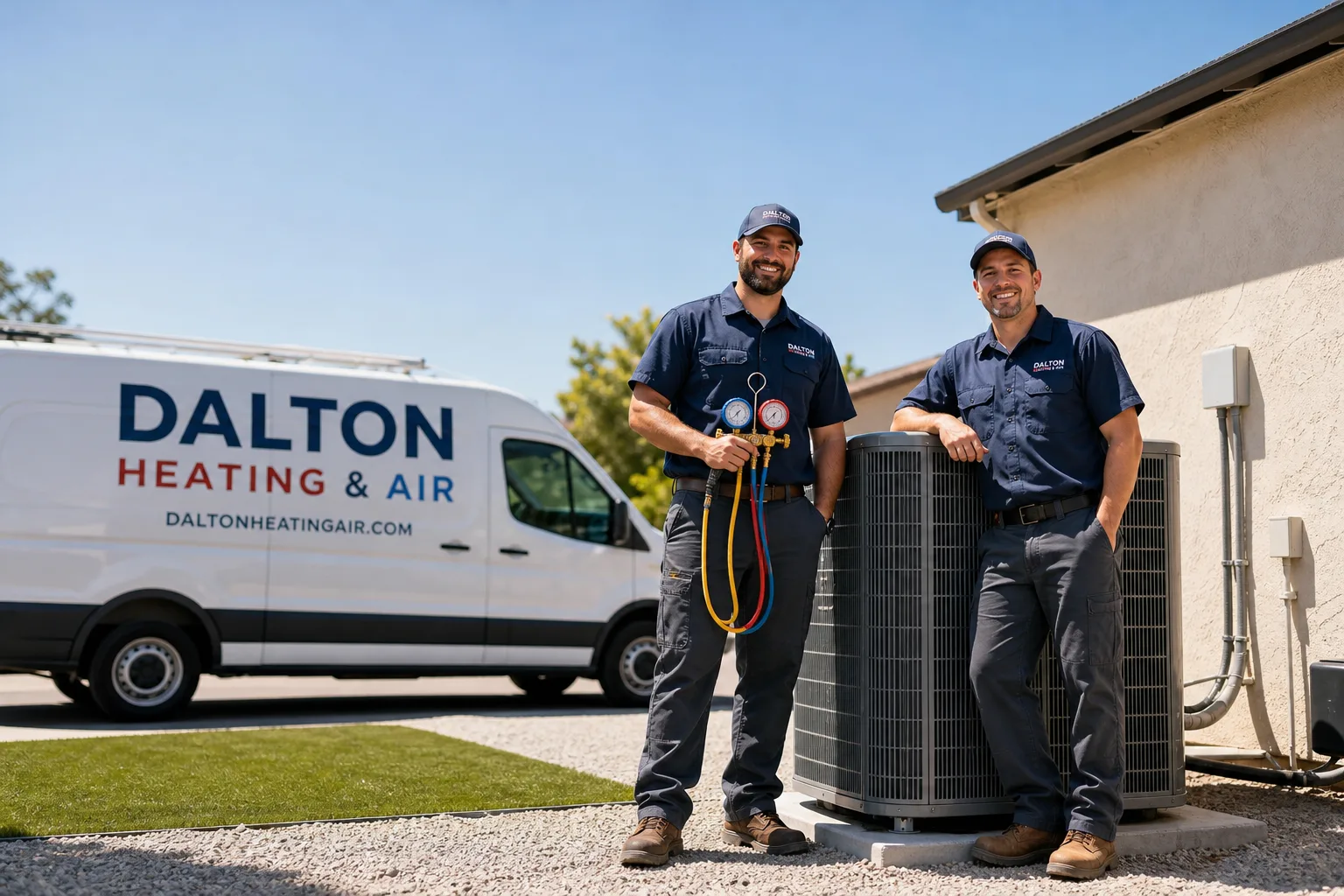
Seasonal tune-up and full diagnostic on your Carrier, Trane, or Goodman system - readings shown to you before any repair is proposed
Diagnosis first, numbers second - you approve the repair price before a single part goes in.
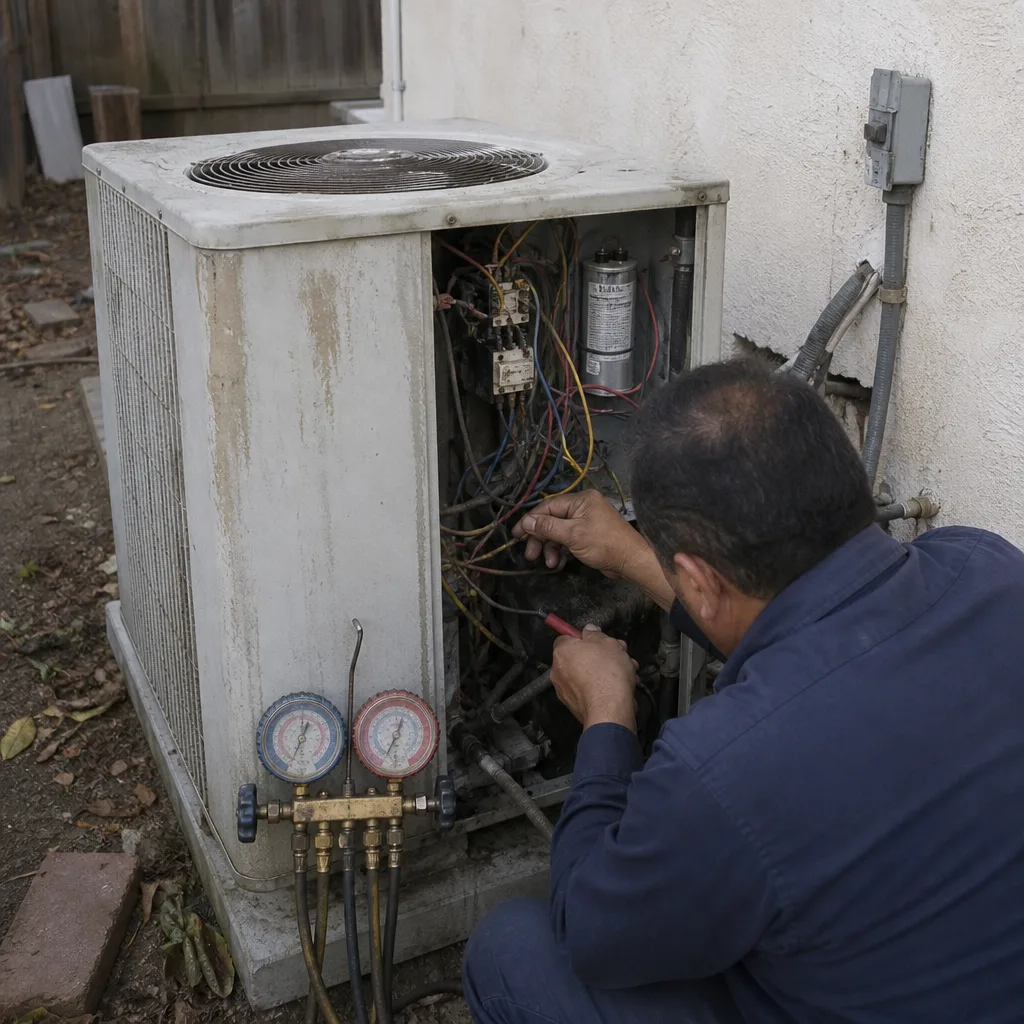 Before
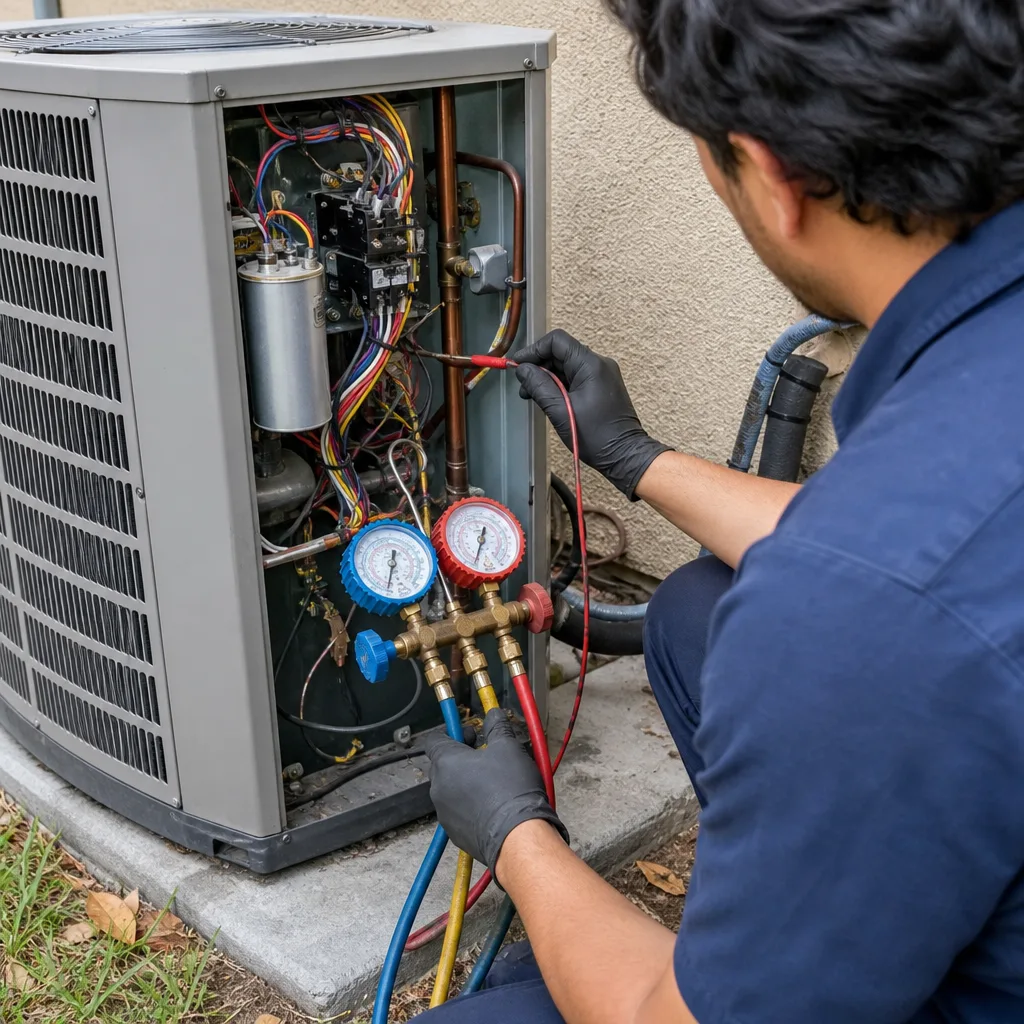 After
After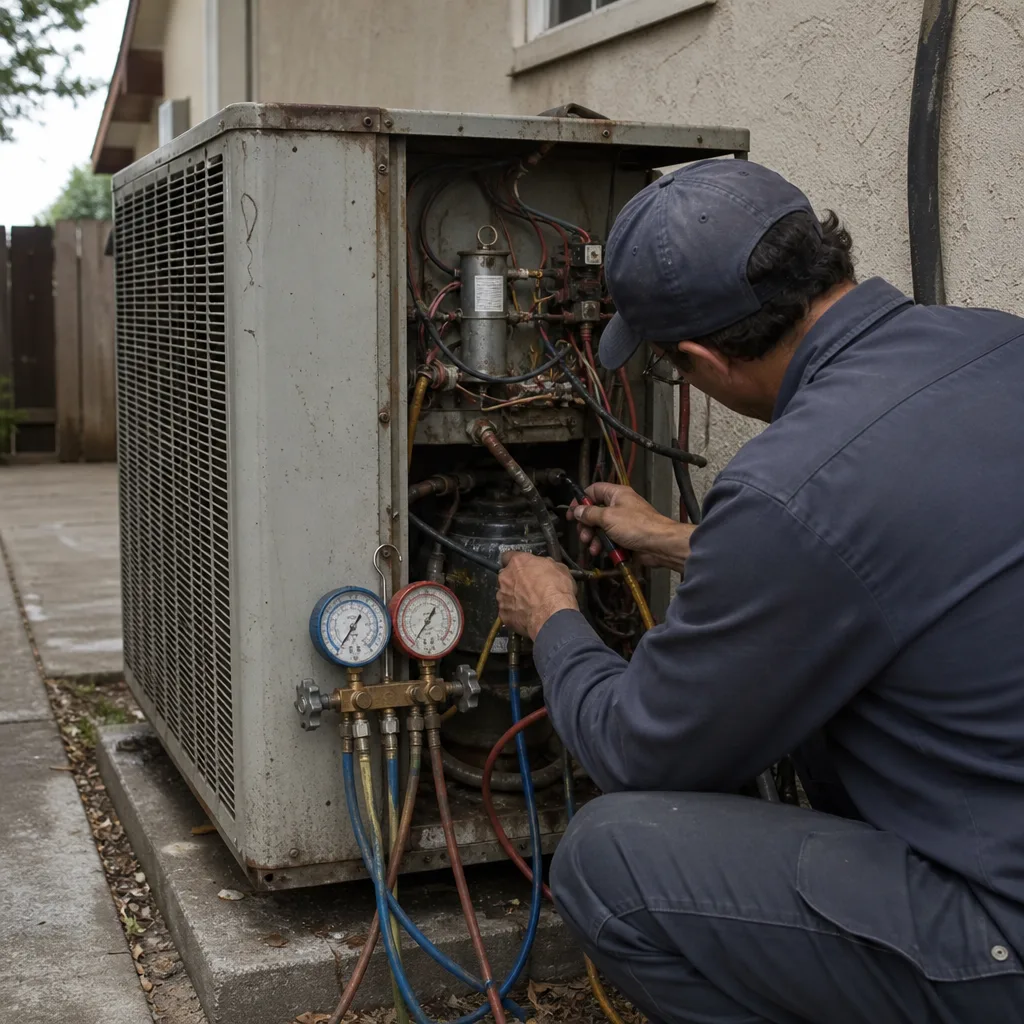 Before
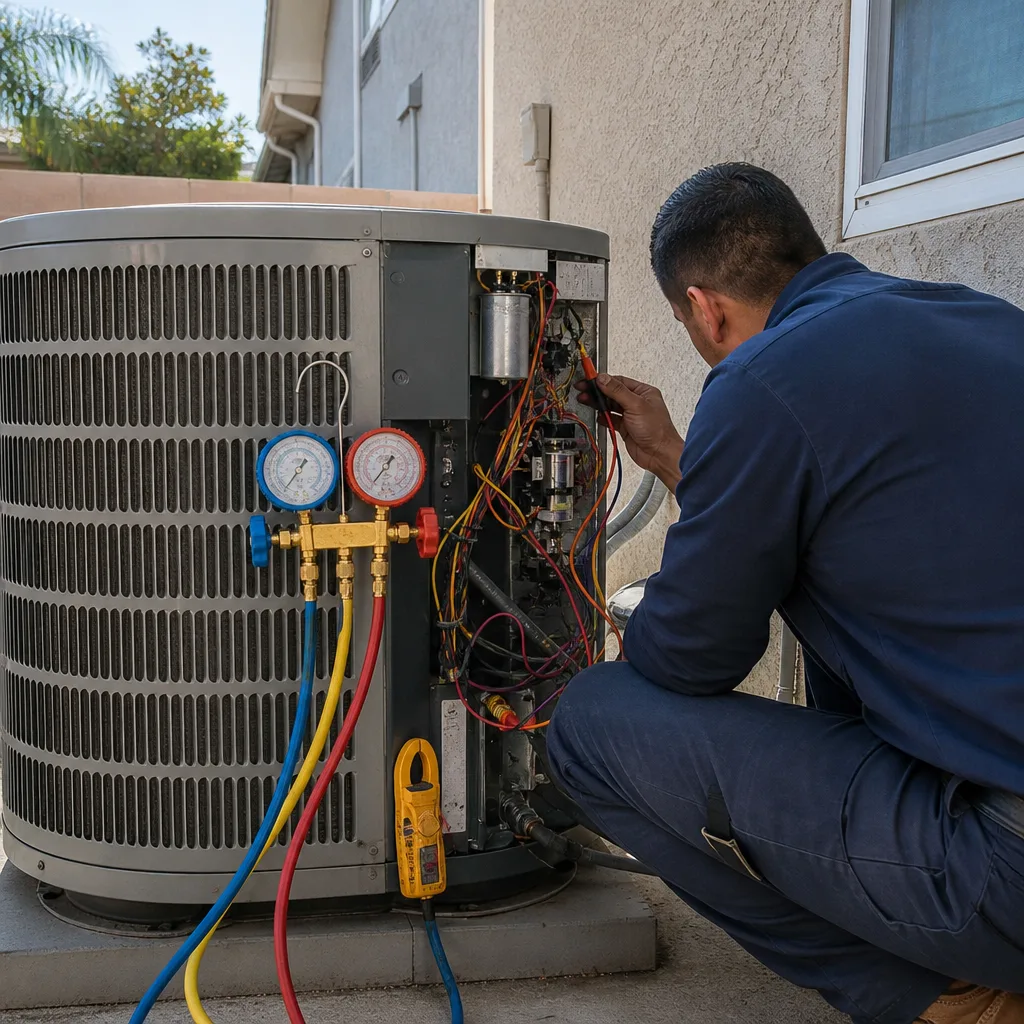 After
After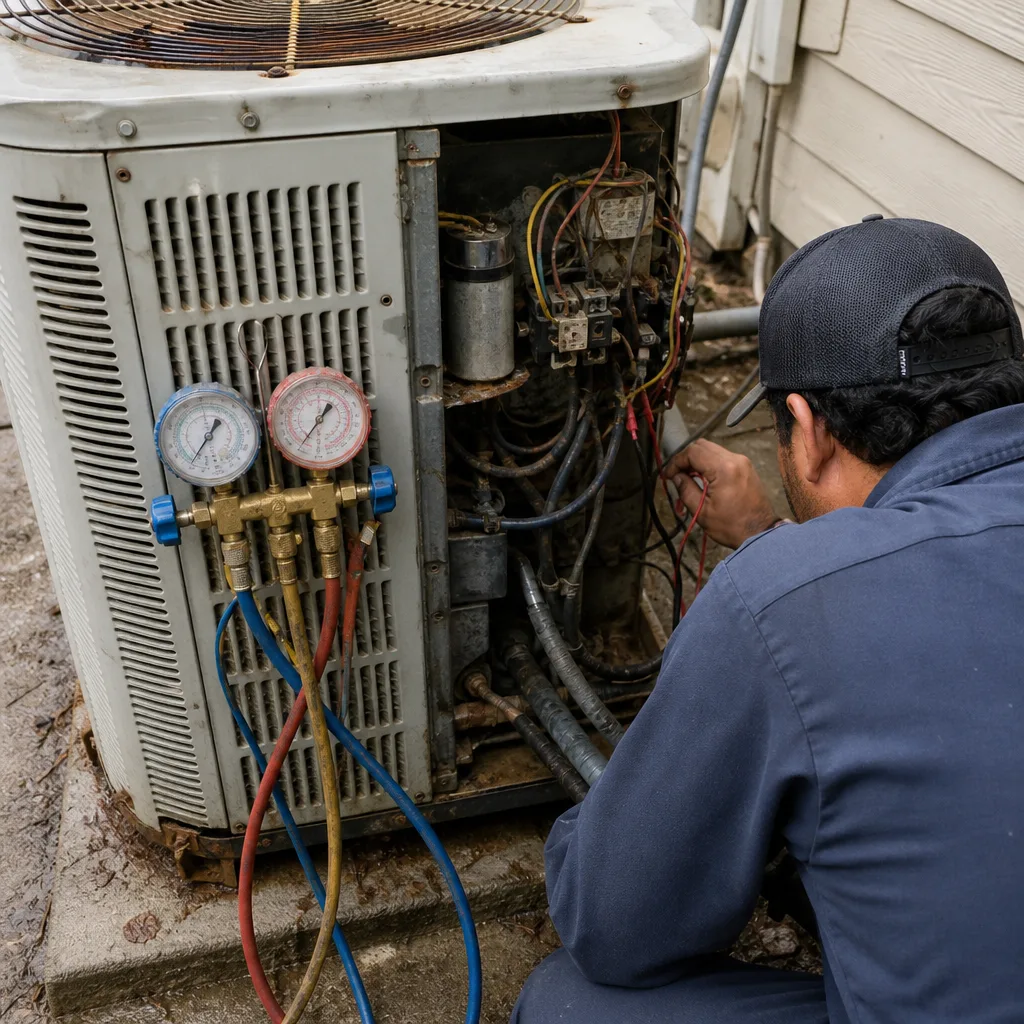 Before
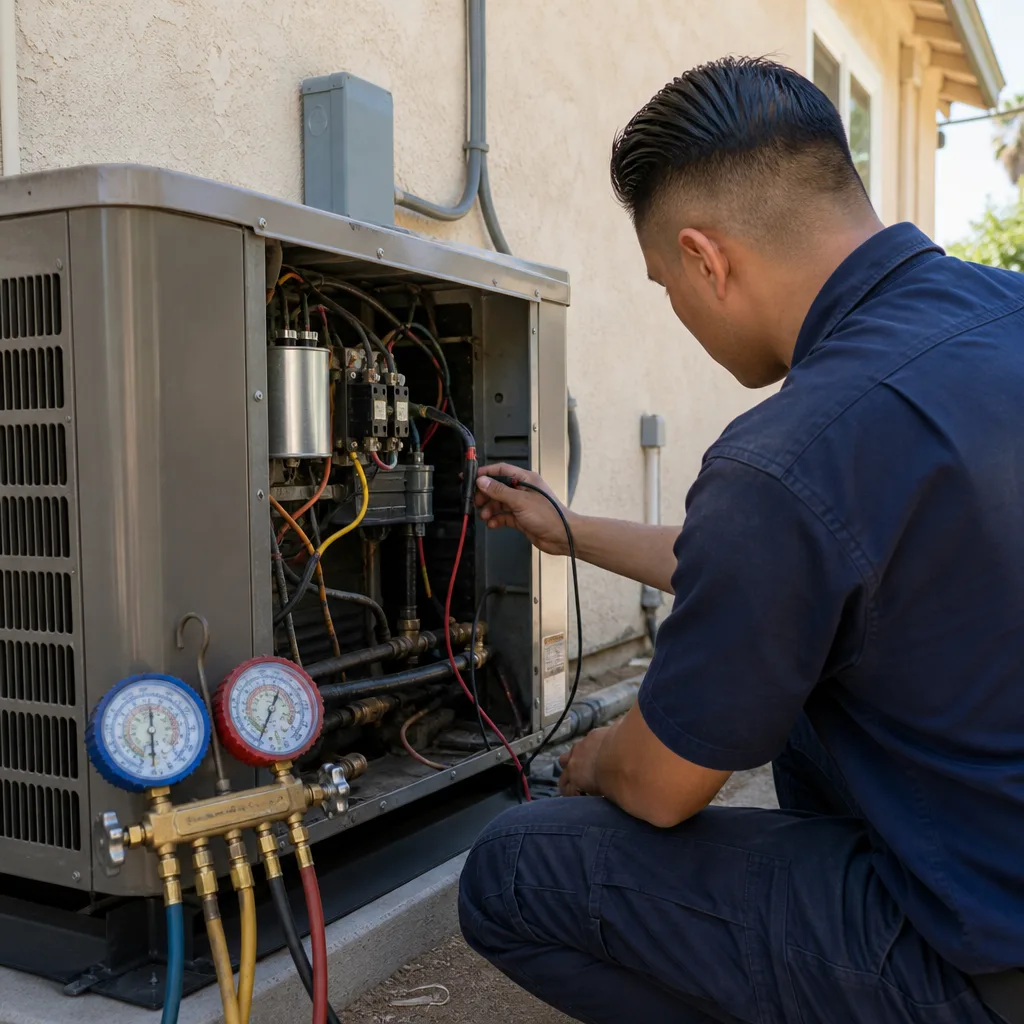 After
AfterBurning Smell When the Heat Comes On
A burning smell when your heat first turns on is almost always one of four things: dust burning off the heat exchanger after a long off-season, an overheating blower motor, a clogged air filter choking airflow, or – in the worst case – a cracked heat exchanger venting combustion gases into your living space. The first three are common and fixable. The fourth is a safety issue that needs a technician the same day.
Most of the time, the smell clears in five to ten minutes and does not come back. That’s dust. If it lingers, gets stronger, smells like burning plastic or something electrical, or if anyone in the house develops a headache or feels off, turn the system off and call. Your nose is telling you something real – don’t talk yourself out of it.
Why It Happens
1. Dust Burning Off the Heat Exchanger
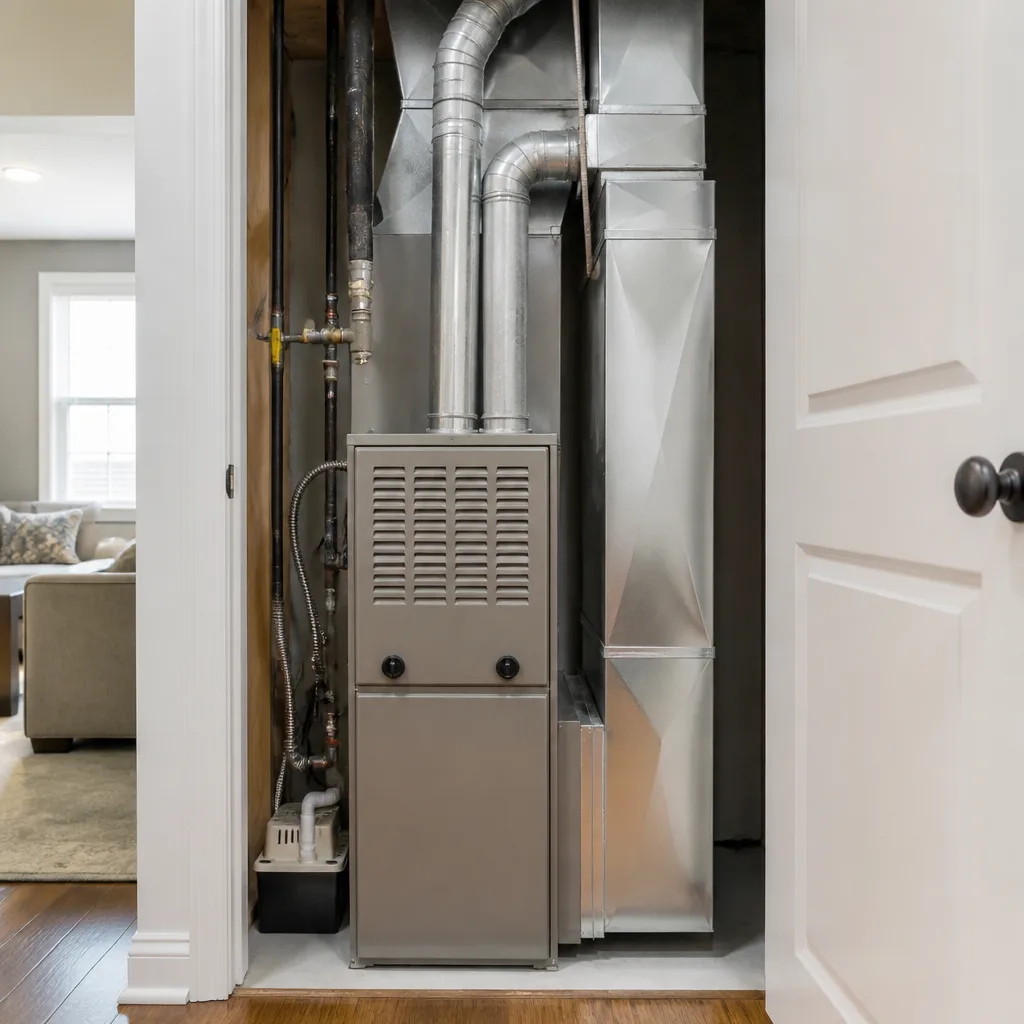
The heat exchanger is the metal component inside your furnace that gets hot enough to warm the air moving through your ducts. After months of sitting idle, it collects a thin layer of household dust. When the heat kicks on for the first time in the fall or after a long break, that dust burns off. The smell is faintly musty or slightly acrid, it fades within a few minutes, and it does not repeat on the second or third cycle. If that matches what you’re experiencing, it’s normal. If the smell comes back every time the heat runs, it’s something else.
2. A Clogged or Dirty Air Filter
A filter that’s been in place too long restricts airflow through the system. When air can’t move freely, heat builds up inside the furnace cabinet instead of flowing out through the ducts. That trapped heat can scorch dust on internal components and produce a burning smell that doesn’t go away. Pull the filter out and hold it up to a light source. If you can’t see light through it, it needs to come out now. Replacing a filter takes two minutes and costs almost nothing – but leaving a blocked one in place can overheat the heat exchanger and turn a cheap fix into an expensive one.
3. An Overheating Blower Motor
The blower motor is the fan that pushes heated air through your duct system. When it starts to fail, the motor draws more current than it should, generates excess heat, and produces a sharp smell that’s closer to burning rubber or hot electrical components than simple dust. You might also notice the airflow from your vents feels weaker than usual, or the furnace shuts itself off before the house reaches the set temperature – that’s the high-limit switch doing its job and cutting power before something worse happens. A motor running hot is not something to wait on.
4. A Cracked Heat Exchanger
This is the one that warrants immediate action. The heat exchanger separates combustion gases – carbon monoxide included – from the air your family breathes. A crack lets those gases mix into your living space. The smell is sometimes described as a faint formaldehyde or chemical odor, or occasionally nothing at all, which is the dangerous part. Carbon monoxide is odorless. Signs that point toward this cause: the smell gets worse the longer the heat runs, household members feel headaches or slight nausea while the system is running, or a carbon monoxide detector has alarmed. If any of those fit, turn the furnace off at the thermostat, open windows, and call us. Do not attempt to inspect the heat exchanger yourself – it is inside the furnace cabinet, it involves combustion components, and getting it wrong puts people at risk.
What to Do Right Now
- Check your carbon monoxide detectors. If any detector is alarming, get everyone out of the house and call 911 before you call us. Don’t go back in until emergency services say it’s clear.
- Pull the air filter and look at it. Hold it up to a window or a light. If it’s gray, matted, or you can’t see through it, swap it for a new one. Note the size printed on the frame – you’ll want to tell the technician what’s in there.
- Smell the air at your vents. Put your hand near a supply vent while the heat is running. Is the airflow strong or weak? Does the smell get stronger when you get close to the vent, or is it coming from near the furnace unit itself? That location detail helps the technician narrow down the cause before they open anything.
- Take a photo of your furnace. Model number, brand name, and the condition of anything visible – a quick snapshot on your phone takes ten seconds and saves time on the call. The brand is usually printed on a label on the front panel.
- If the smell is chemical, electrical, or getting worse – turn the system off. Use the thermostat, not the breaker. Then call (361) 306-9515. Don’t leave the system running while you wait to see if it gets better. A technician can diagnose it safely; a guess from a distance cannot.
How We Fix It
When your local Dalton Heating & Air technician arrives, the first thing they do is a structured walkthrough: thermostat settings, filter condition, visible furnace components, and a combustion safety check before anything else gets touched. If a carbon monoxide risk is present, that gets addressed before any repair conversation happens.
From there, the diagnosis follows the smell. A blower motor that’s overheating gets tested under load. A heat exchanger gets a visual and pressure inspection. Duct connections near the furnace cabinet get checked for blockages or breaches that could cause recirculation. Marco Benitez, Owner and Lead HVAC Technician at Dalton Heating & Air, has walked through this exact sequence on jobs where the homeowner was sure it was just dust – and found a cracked heat exchanger that had been quietly venting for months. The inspection is not a formality.
Once the cause is identified, you get a written price before any work starts – that is non-negotiable under The Garrison Standard, on every job, without exception. Most single-cause repairs are completed the same visit. More involved work on furnace components may require a follow-up, but you’ll know exactly what’s involved and what it costs before anything is ordered. The repair is backed by a written guarantee and our 365-Day Done Right Promise: if it’s not done right, we make it right.
Frequently Asked Questions
It depends on the smell. A faint, dusty odor that disappears within a few minutes of the first heat cycle of the season is almost always harmless – dust burning off the heat exchanger. A smell that lingers, smells chemical or electrical, or is accompanied by weak airflow, headaches, or a carbon monoxide alarm is not something to wait on. Turn the system off and call (361) 306-9515. The cost of a same-day service call is not worth comparing against the risk of combustion gas exposure.
Call (361) 306-9515 and a live person will answer – not a voicemail queue, not a callback window. Your local Dalton Heating & Air team will give you an arrival window and commit to it. Showing up inside the window we gave you is one of the five points in The Garrison Code – it is not a maybe.
Yes, and it matters. A plastic or rubber smell points toward an electrical component under stress – most likely the blower motor or its wiring. Dust smells faintly ashy or musty and clears fast. Plastic or rubber smells are sharper, they don’t clear, and they typically get stronger as the motor heats up further. Turn the system off at the thermostat and call (361) 306-9515. Running a motor that’s already overheating can cause it to fail completely, which turns a motor repair into a larger job.
There’s no honest answer to that before a technician has looked at your specific system and identified the actual cause – and anyone who quotes you a price by phone without seeing the unit is guessing. What we can tell you is that the price will be in writing before any work begins, every time, on every job. That’s not a special offer; it’s how every Dalton Heating & Air job works under The Garrison Standard. Call (361) 306-9515 to schedule a visit and get your written estimate.
Get It Fixed
Call (361) 306-9515 – a real person answers 24 hours a day, 7 days a week. Your local Dalton Heating & Air team will arrive inside the window we give you, put the diagnosis and price in writing before any work starts, and back the repair for a full year. No surprises. No guesswork. Just the job done right.
Written by Marco Benitez, Owner and Lead HVAC Technician at Dalton Heating & Air, a Garrison Partners company in operation since 2003.
What Our Customers Say
"Tech arrived in uniform right on time. AC wasn't cooling, found a failed capacitor, and replaced it in twenty minutes. The owner is a veteran and the company runs like it."
- Frank O."Blower motor died on the coldest night. They had the part on the truck and had us warm again the same day."
- Sandy G."Changed the filter size and added a better filter rack. Simple and useful advice."
- Rhonda C.