
Seasonal tune-up and full diagnostic on your Carrier, Trane, or Goodman system - readings shown to you before any repair is proposed
Diagnosis first, numbers second - you approve the repair price before a single part goes in.
 Before
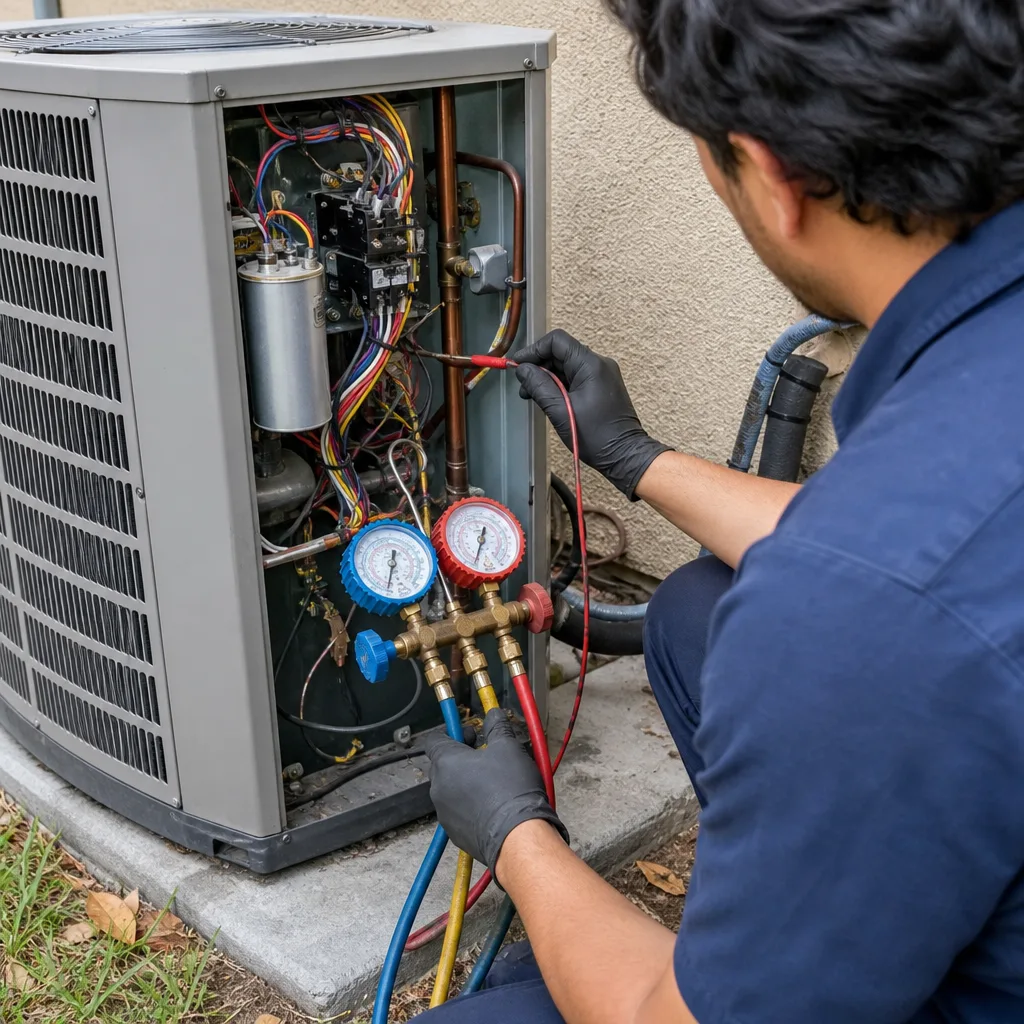 After
After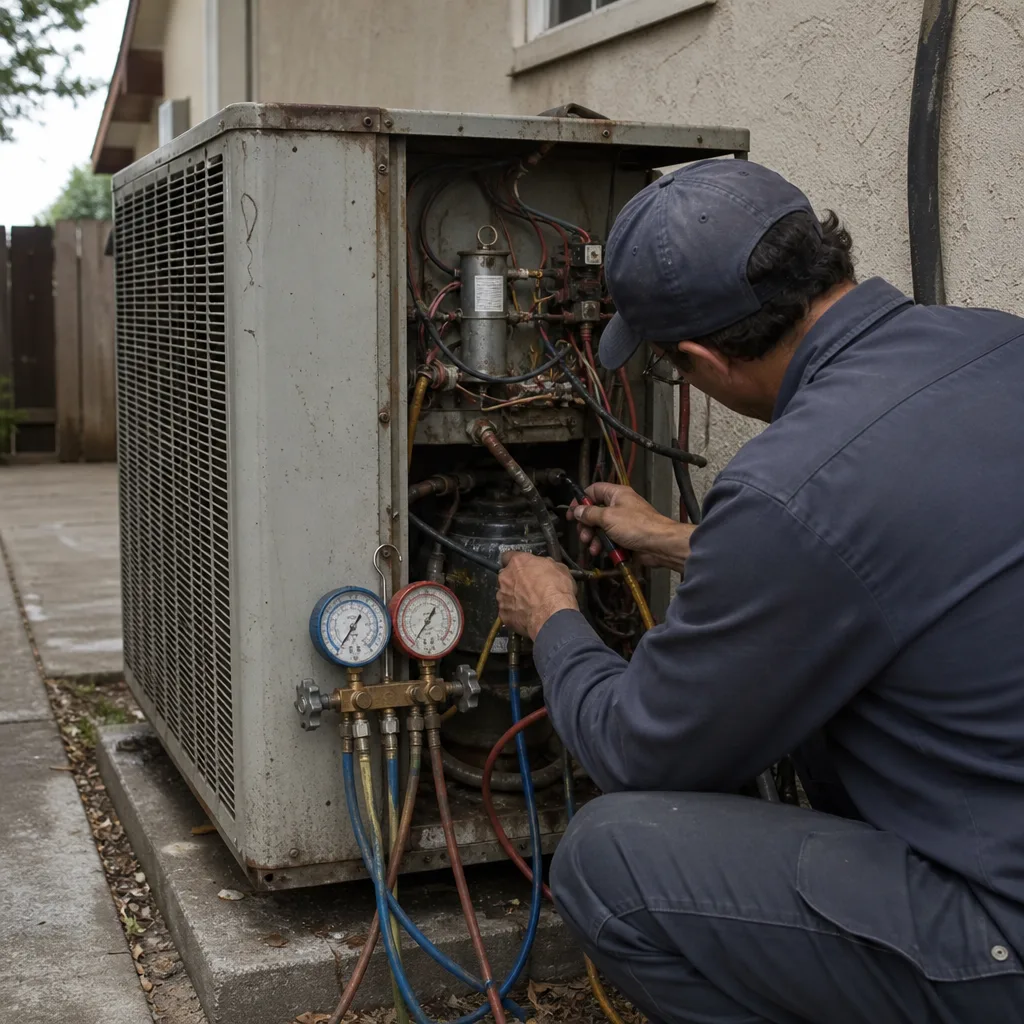 Before
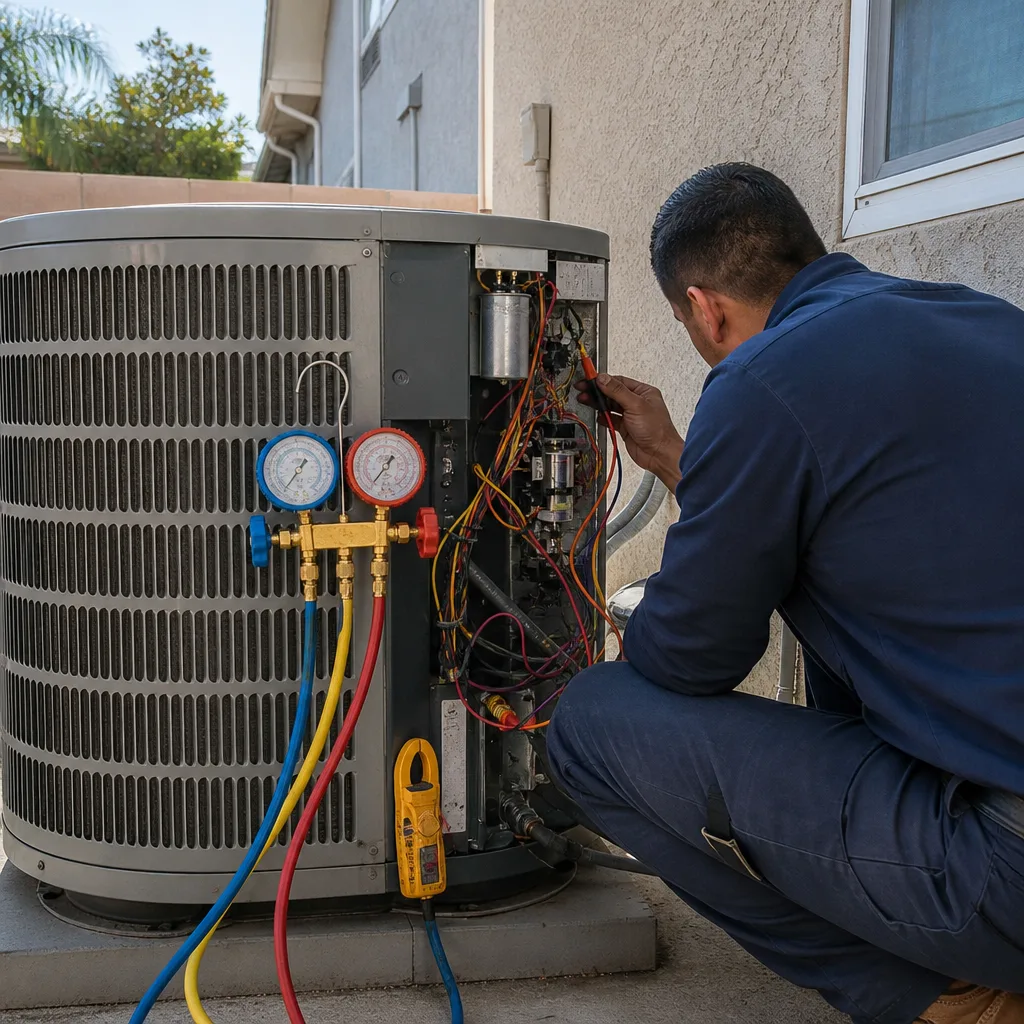 After
After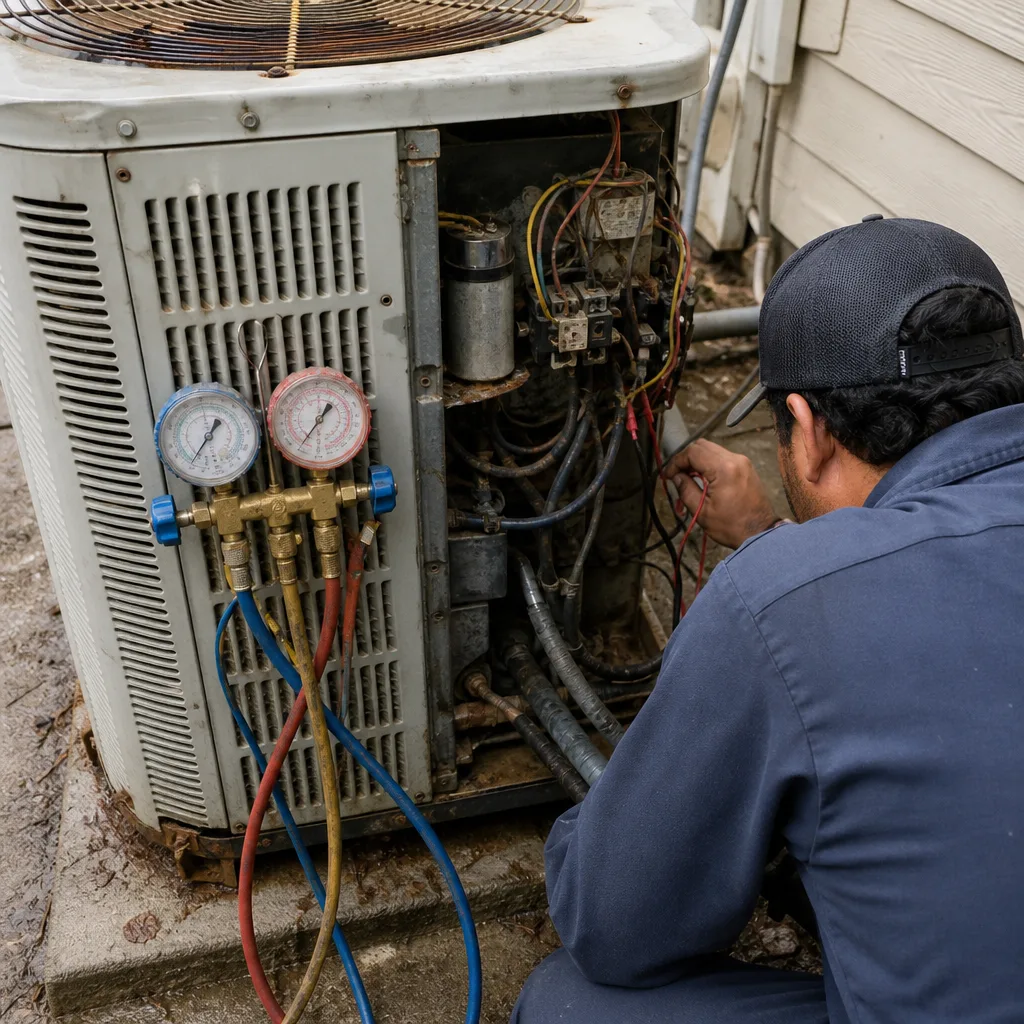 Before
 After
AfterGoodman Capacitor Replacement: The Los Angeles Owner’s Guide
Goodman capacitor replacement in Los Angeles typically runs $175 – $395 installed, and we stock capacitors for most Goodman units on our trucks, which means the swap is usually done in under an hour on the first visit. A capacitor is the electrical part that gives your compressor and fan motor the starting jolt they need to spin up, and when it goes, your system either won’t start, hums without kicking on, or the fan runs while the compressor doesn’t. Most Los Angeles homeowners discover the problem the same way: the thermostat is set, the indoor blower is pushing air, but the air coming out of the vents is warm, or the outdoor unit is making a low buzzing sound and then tripping a breaker.
If that’s what you’re hearing, it’s worth a call before you keep cycling the system. Running a Goodman unit on a failed capacitor stresses the compressor and fan motor, and that turns a $175 part swap into a much bigger repair.
Which Goodman Models This Applies To
Goodman uses round and oval run capacitors across nearly every residential condenser and heat pump line they’ve built in the last 25 years, from the entry-level GSX13 and GSX14 air conditioners up through the GSXC16, GSXC18, and variable-speed comfort series. The two most common capacitor configurations we pull out of Goodman units in the Los Angeles area are the dual-run 35/5 µF (microfarad) and 40/5 µF, which means one can that feeds both the compressor and the outdoor fan motor. Some larger units use a 45/5 µF or 50/5 µF, and older Goodman and Janitrol systems sometimes run the compressor and fan off two separate single capacitors instead of one dual-run can.
The gotcha to know: the capacitor’s microfarad rating is printed right on the side of the can, but the physical shape matters too. Goodman and Janitrol condensing units built before roughly 2005 were often wired for oval capacitors, while the newer stuff takes a round can. The round one fits in the oval slot fine, but the oval won’t fit the round bracket.
When we replace a Goodman capacitor, we use factory-spec OEM or a same-spec American-made replacement like Titan HD or AmRad, not the no-name imports that show up rattling around online. The cheaper cans run looser on their tolerance and fail early in the kind of heat we get in the San Fernando Valley, where an attic or condenser compartment sits above 130 degrees for hours a day. We’re an independent service company, not affiliated with Goodman, but we work on their equipment constantly and we stock the parts that match their spec sheets.
Signs Your Goodman Capacitor Replacement Is Failing
- The outdoor unit hums but the fan doesn’t spin. You’re hearing the compressor or fan motor trying to start, but the capacitor can’t provide the kick. The unit may sit there humming until the thermal overload shuts it down.
- The condenser fan runs, but the compressor doesn’t. On a dual-run capacitor, the fan side can still be strong while the compressor side has degraded. You get airflow but the air isn’t cold.
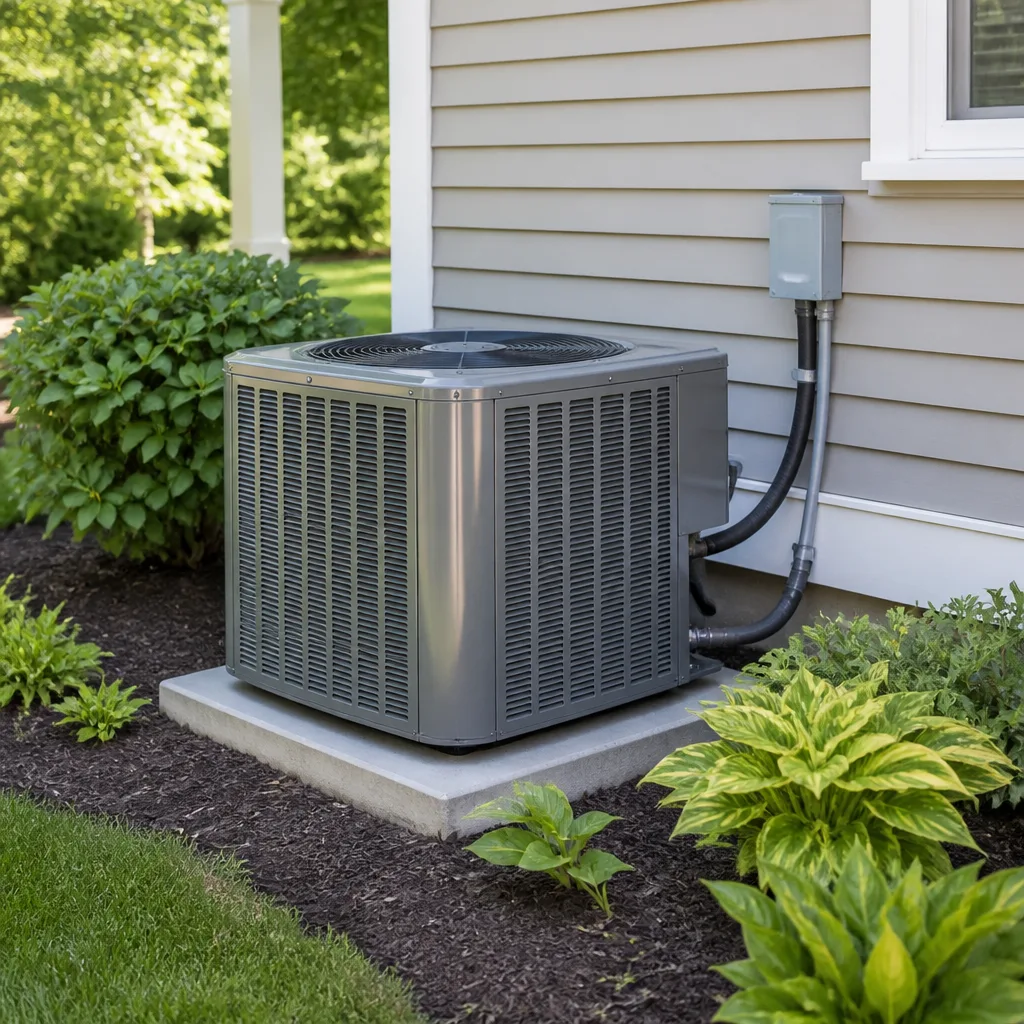
- The top of the capacitor is swollen, domed, or leaking oil. A bulged can is the classic visual tell. The dielectric fluid inside breaks down in heat, builds pressure, and the top pops upward. If you can safely see the capacitor, a dome instead of a flat top means it’s done.
- The system hard-starts and dims your lights. When the capacitor is weak, the compressor pulls more current at startup, which you’ll notice as a brief flicker in the house when the system kicks on.
- The breaker trips when the AC calls for cooling. A totally failed capacitor that’s shorted internally can throw the breaker immediately. Don’t keep resetting it, since repeated attempts can damage the compressor windings.
What fails first on a Goodman capacitor in this climate is the internal dielectric, and it fails for a predictable reason: heat. Los Angeles summer temperatures are one factor, but so is the heat the capacitor produces on its own every time the compressor starts. After eight to twelve years of high-heat operation, the can loses its ability to hold a charge, and that’s usually when we get called.
Replacement Cost & What’s Included
Goodman capacitor replacement in Los Angeles usually lands between $175 and $395 installed, depending on whether the system uses a single dual-run capacitor or two separate capacitors, and whether the part is a standard 370-volt can or a 440-volt one. The part itself is not expensive, typically $15 to $60 at supply-house pricing for a quality replacement, but the real value is in what the service call includes.
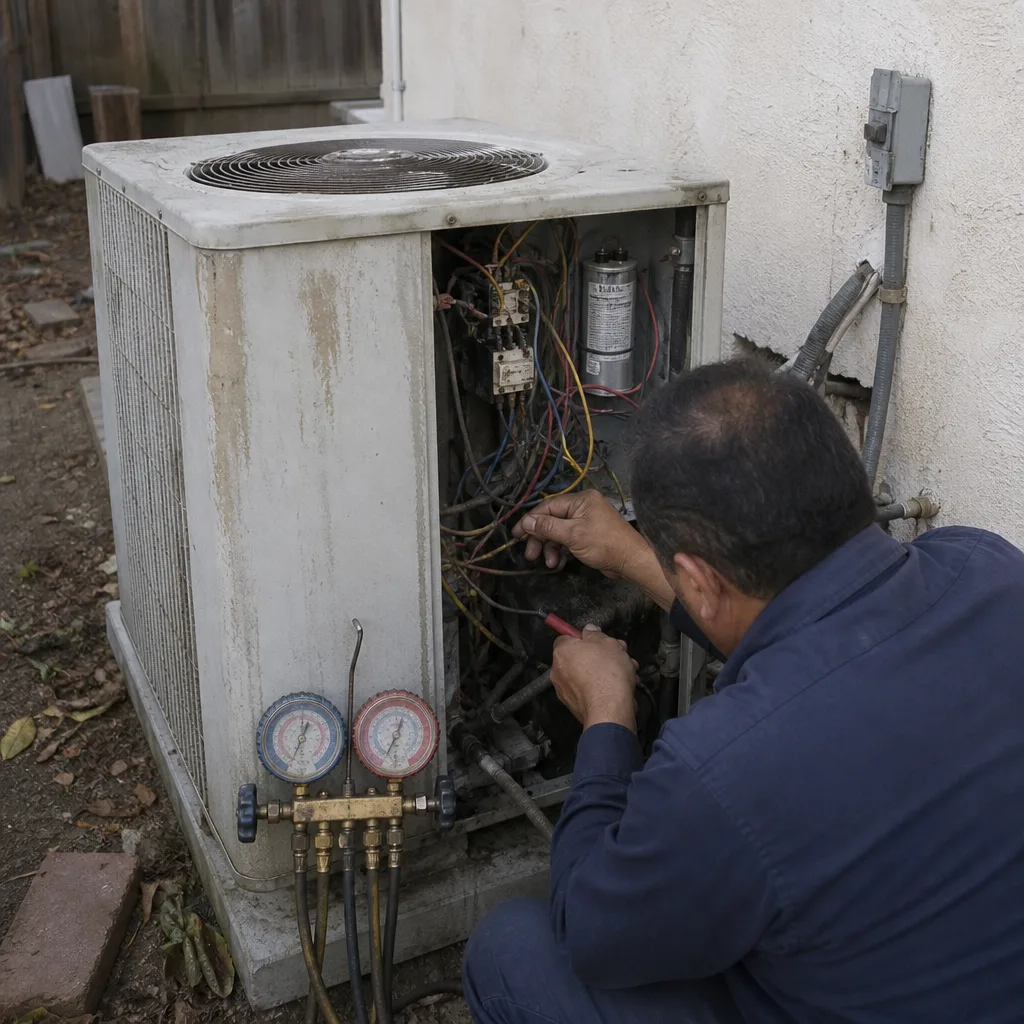
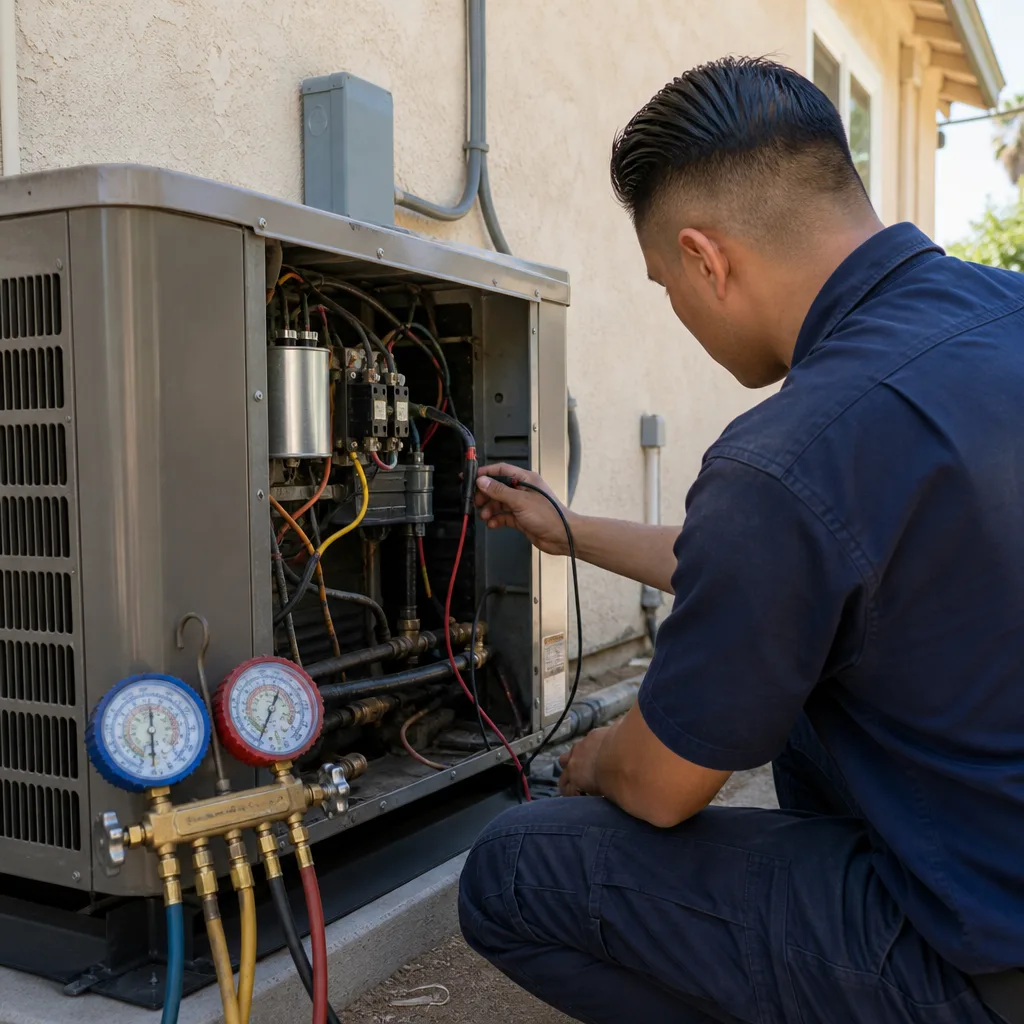
When our technician comes out, they verify the capacitor is actually the problem before replacing anything. They test the old can under load, check the contactor and wiring for any other damage, install the correct spec part, and test the full startup sequence. The repair is guaranteed in writing for a full year, and if the work doesn’t hold, we return at no charge. That’s The Garrison Standard, and it applies to every Goodman capacitor swap we do in the Los Angeles area.
DIY or Call Us?
There’s a version of this job an owner can do safely, and a version they shouldn’t try. A capacitor holds a lethal electrical charge even after the power is off, and it can discharge across two terminals or into a hand if it’s handled wrong. If you’re not confident working with a multimeter and discharging high-voltage components, the honest recommendation is to call a trained professional.
What you can do safely is narrow down the cause: check that the breaker hasn’t tripped, confirm the thermostat is calling for cooling, and look at the outdoor unit to see if the fan is spinning and whether the system is humming. You don’t need to open the electrical panel to do that. If you see a swollen capacitor or hear the hum, that’s the moment to stop and call us at (361) 306-9515. We’ll have someone out to your Los Angeles neighborhood with the right part and the right test gear.
FAQs
A Goodman capacitor typically lasts 8 to 12 years in the Los Angeles climate, though units in places like Woodland Hills or Granada Hills that see repeated 100-degree summers can lose a capacitor a couple years sooner. The lifespan is driven mostly by heat exposure and how often the system cycles.
No, a capacitor is a sealed, disposable electrical component, and once the dielectric inside breaks down, the can has to be swapped for a new one. The good news is it’s one of the fastest and least expensive AC repairs we do.
The actual capacitor swap on a Goodman system usually takes 30 to 60 minutes once our technician is on site and has confirmed the diagnosis. Testing the old part, checking the contactor, and doing a full startup verification is what takes the rest of the visit, but most calls are done inside an hour and a half.
Yes, our trucks carry the common Goodman and Janitrol capacitor sizes, including 35/5, 40/5, 45/5, and 50/5 µF in both round and oval form factors. We also carry single-run capacitors for older units that run the compressor and fan separately. If you call (361) 306-9515, we can confirm what’s on the truck before the technician heads your way.
Written by Marco Benitez, Owner & Lead HVAC Technician, Dalton Heating & Air at Dalton Heating & Air, serving Los Angeles and nearby areas.