
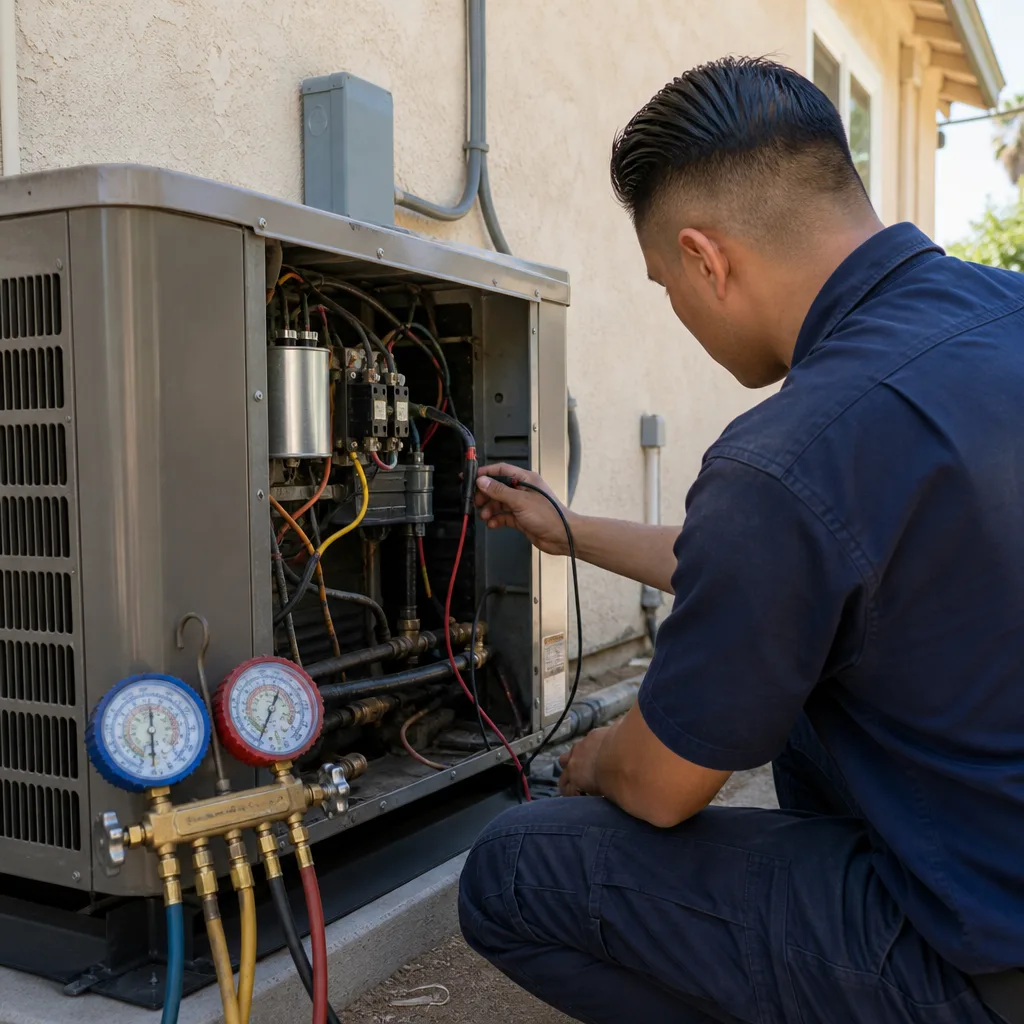
Seasonal tune-up and full diagnostic on your Carrier, Trane, or Goodman system - readings shown to you before any repair is proposed
Diagnosis first, numbers second - you approve the repair price before a single part goes in.
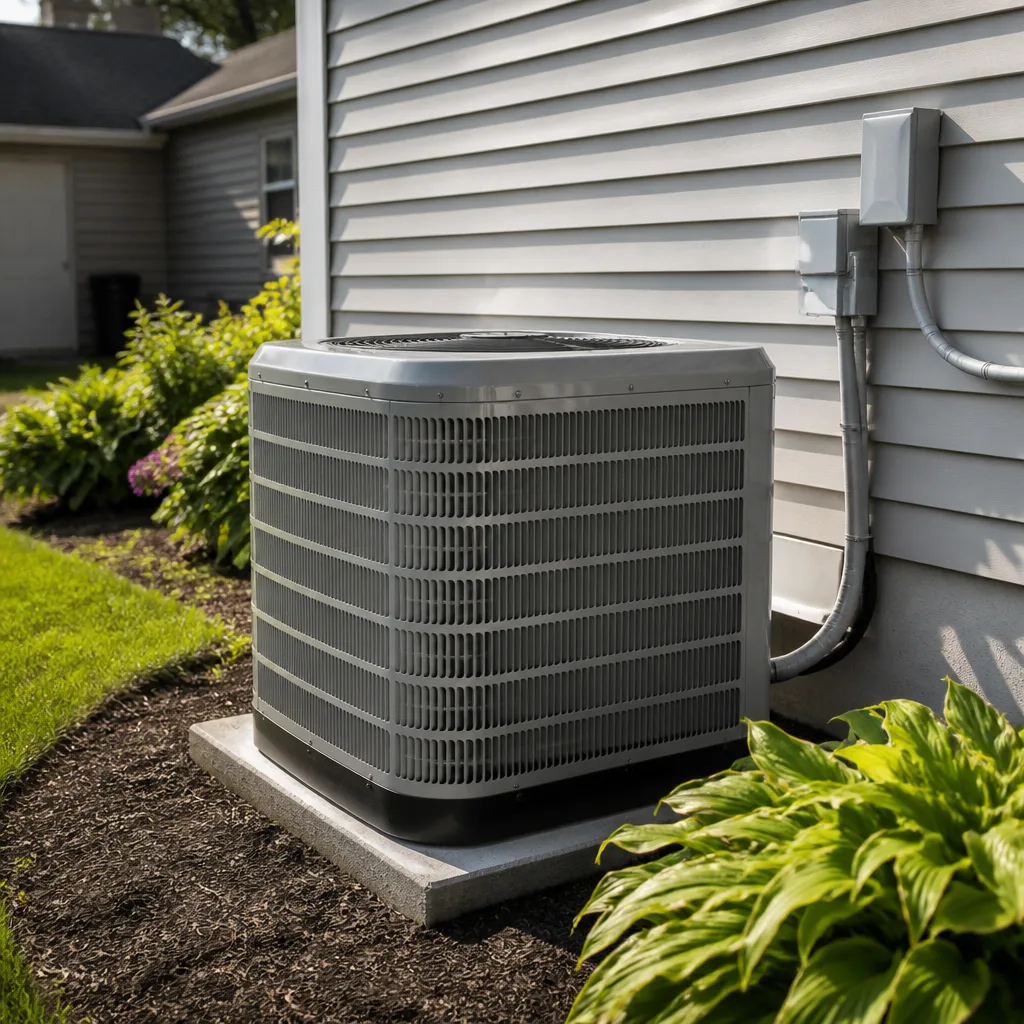
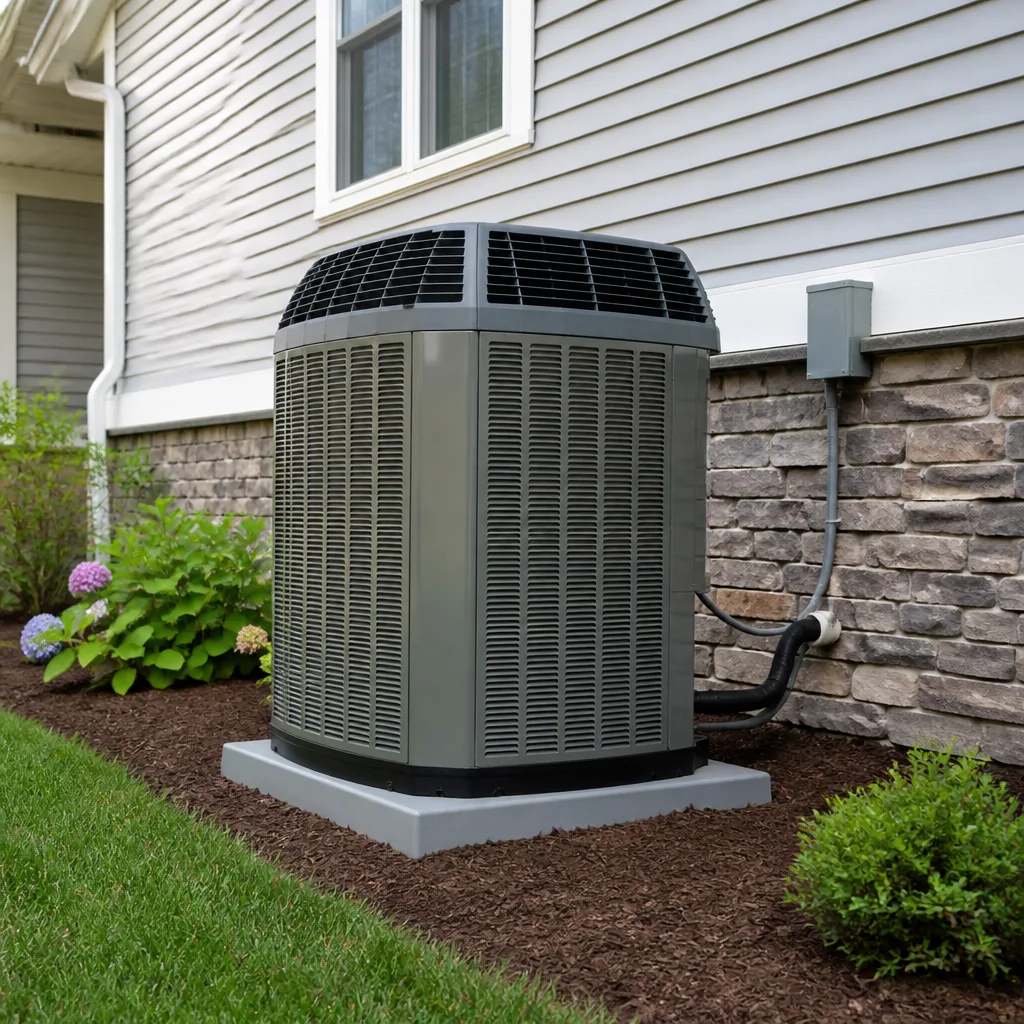
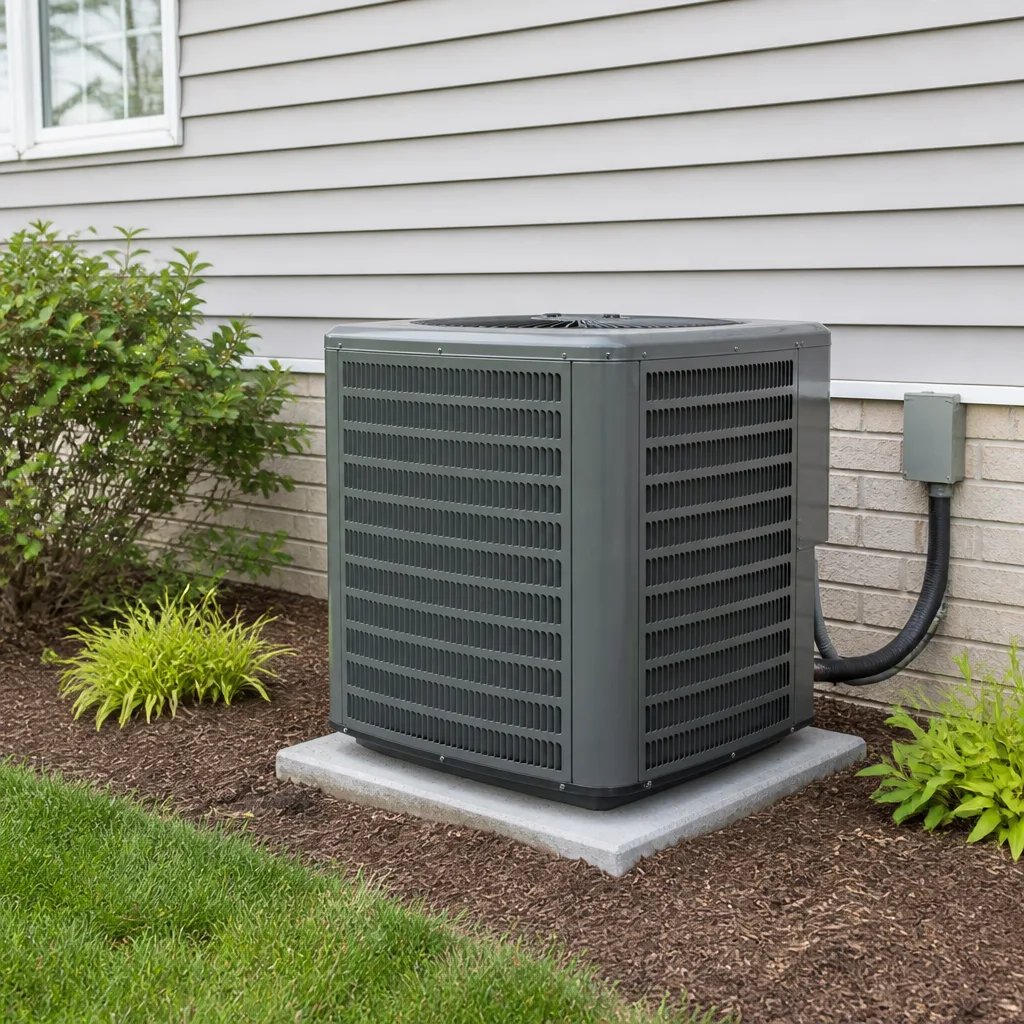
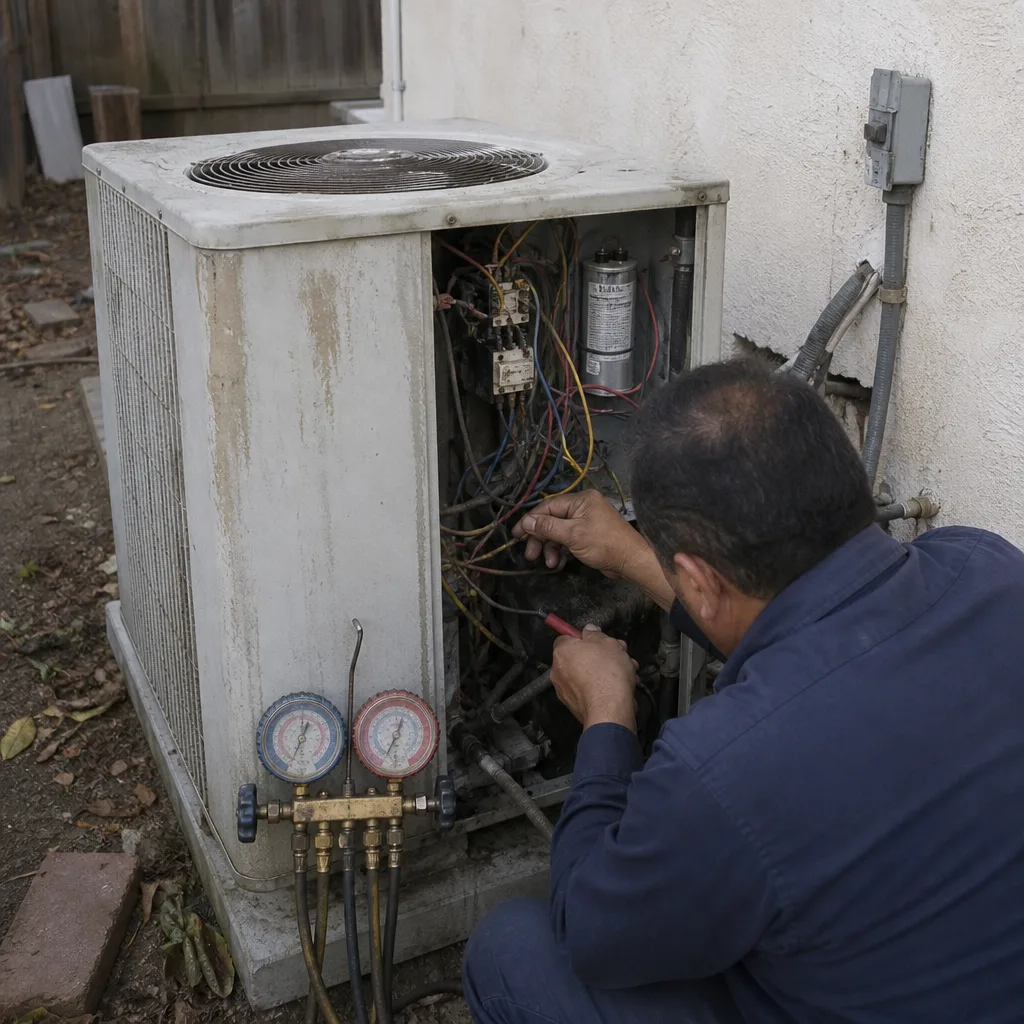 Before
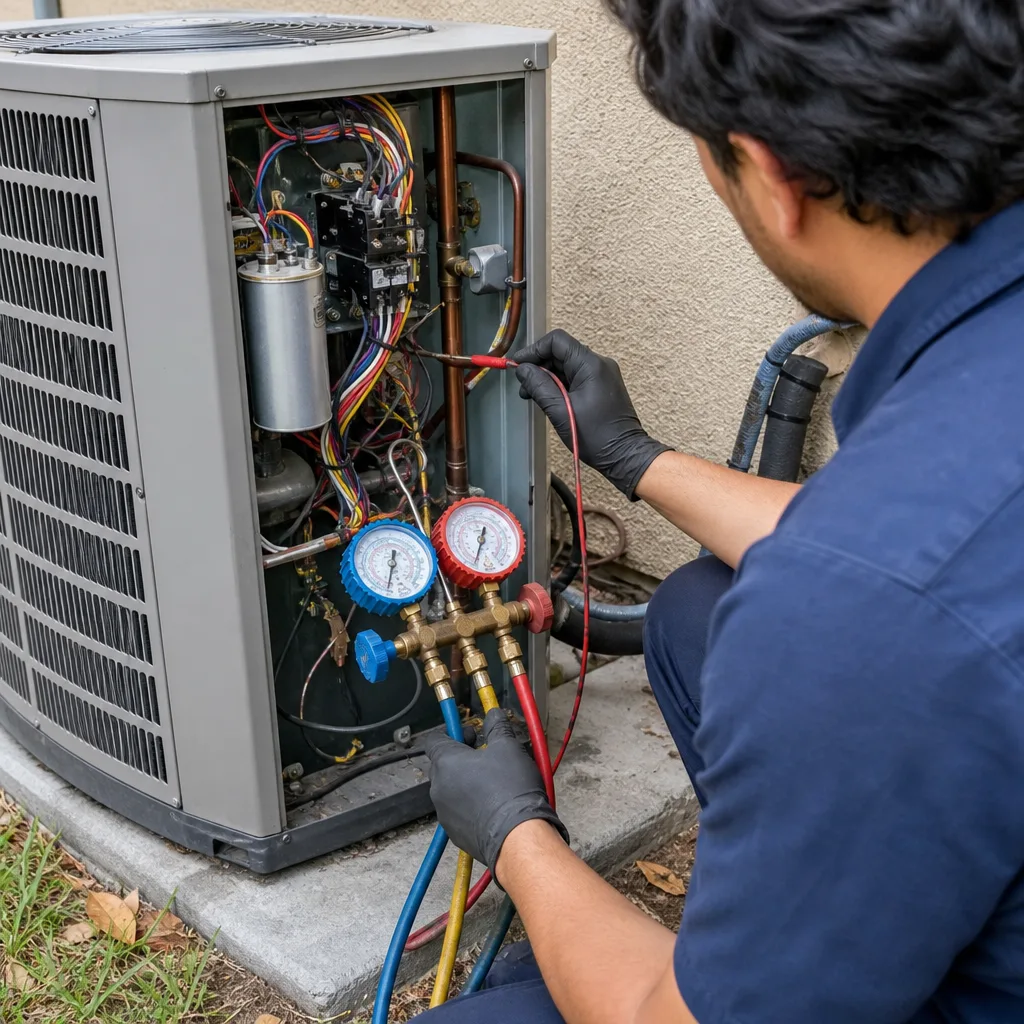 After
After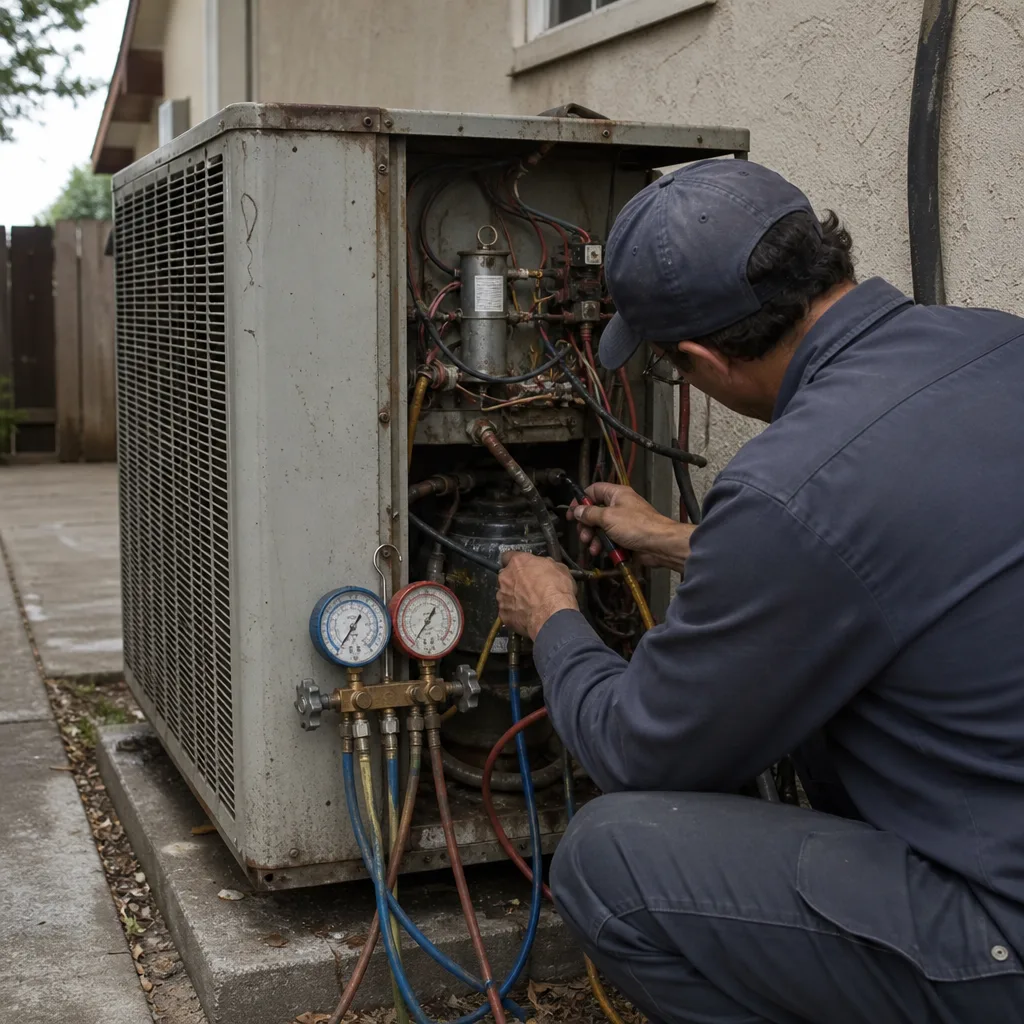 Before
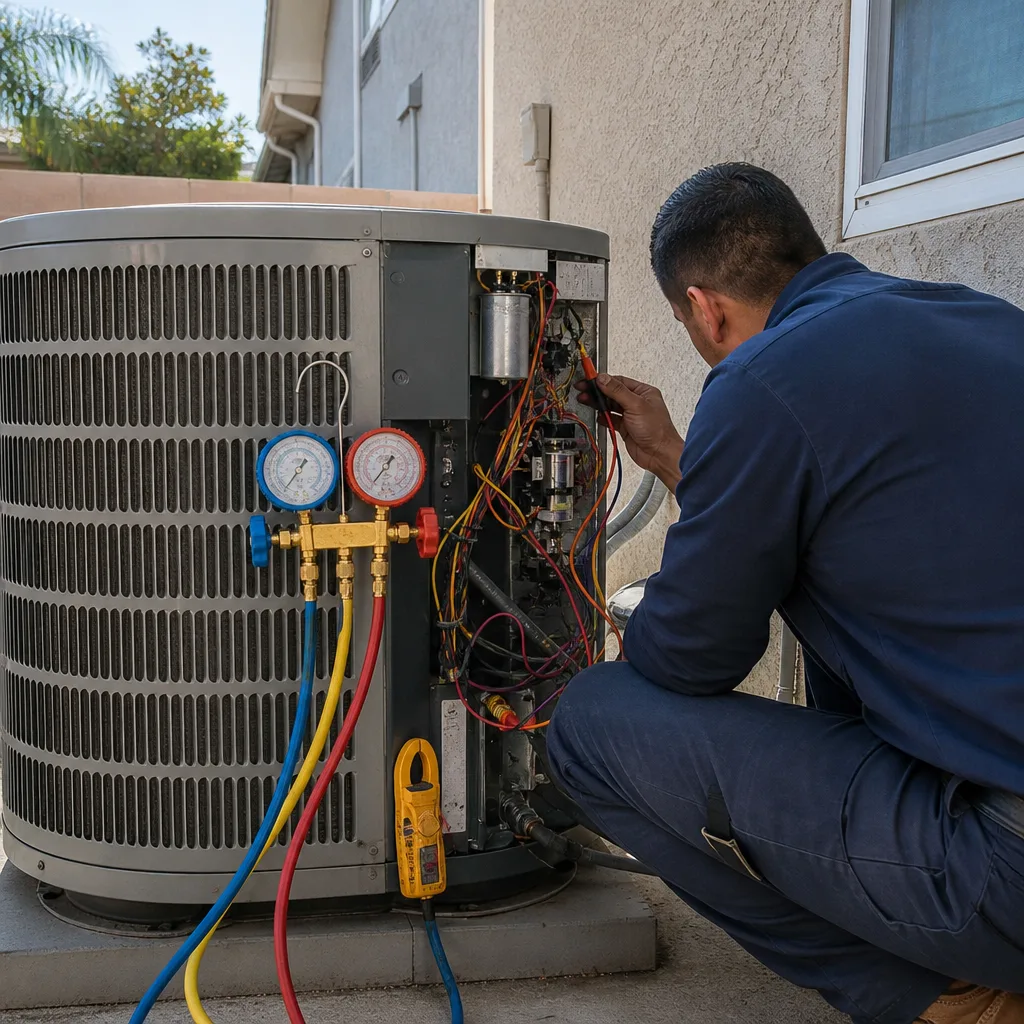 After
After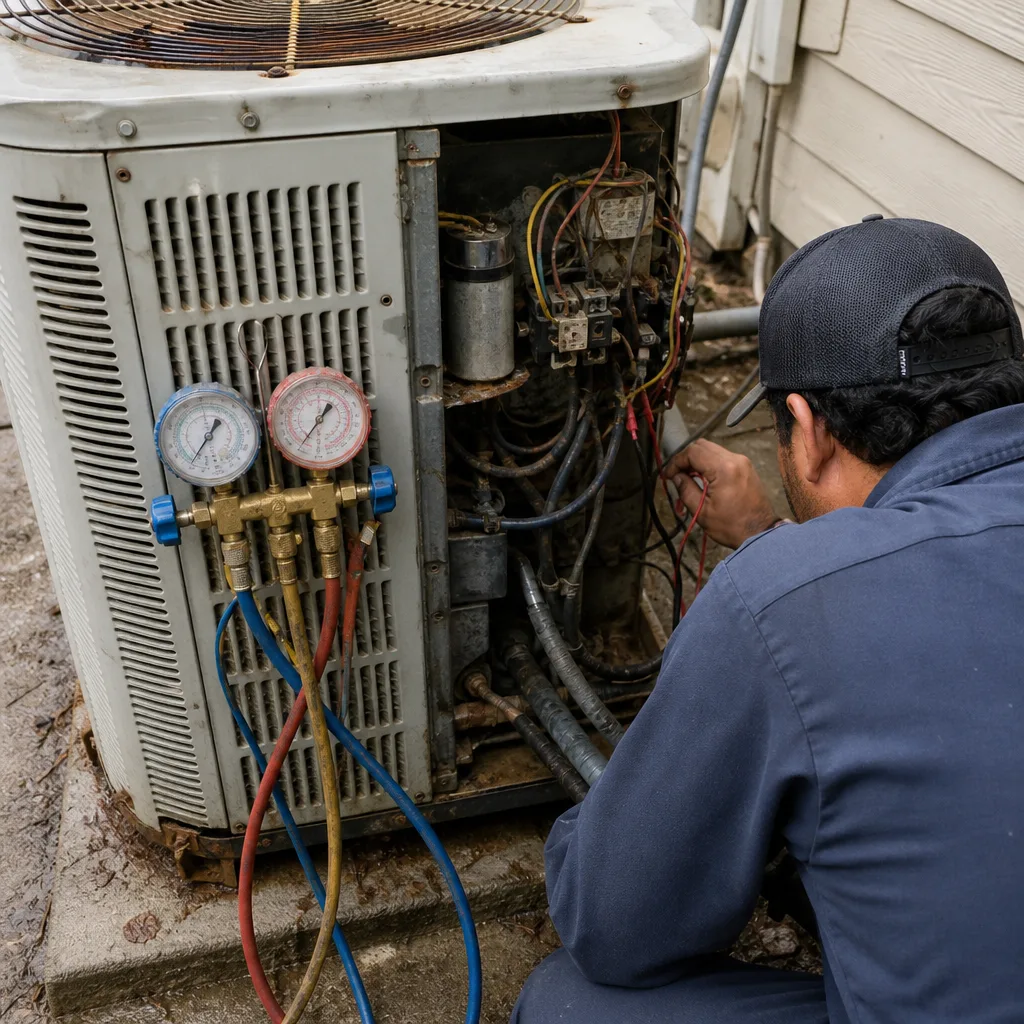 Before
 After
AfterDaikin Heat Pump Service: The Los Angeles Owner’s Guide
Daikin heat pump service in Los Angeles typically runs $175 to $765 installed, depending on whether we’re replacing a capacitor, reversing valve, defrost control board, or compressor contactor. We stock common Daikin-compatible parts on our trucks, so most repairs happen in a single visit. You’ll usually know something’s wrong when the outdoor unit runs constantly but the house won’t hold temperature, or the system trips its breaker on a hot afternoon in the Valley.
Here’s what we see most often across Los Angeles: a Daikin unit that ran fine all winter suddenly can’t cool in June. The compressor hums, the fan spins, but the air from the vents feels lukewarm. That’s almost always a failed run capacitor or a stuck reversing valve, not a dead system. Both are replaceable parts, not a reason to swap the whole unit. Our first job on every call is to figure out which part failed and whether the Daikin-specific replacement makes sense, or if a quality aftermarket equivalent does the job at a lower installed price.
Which Daikin Models This Applies To
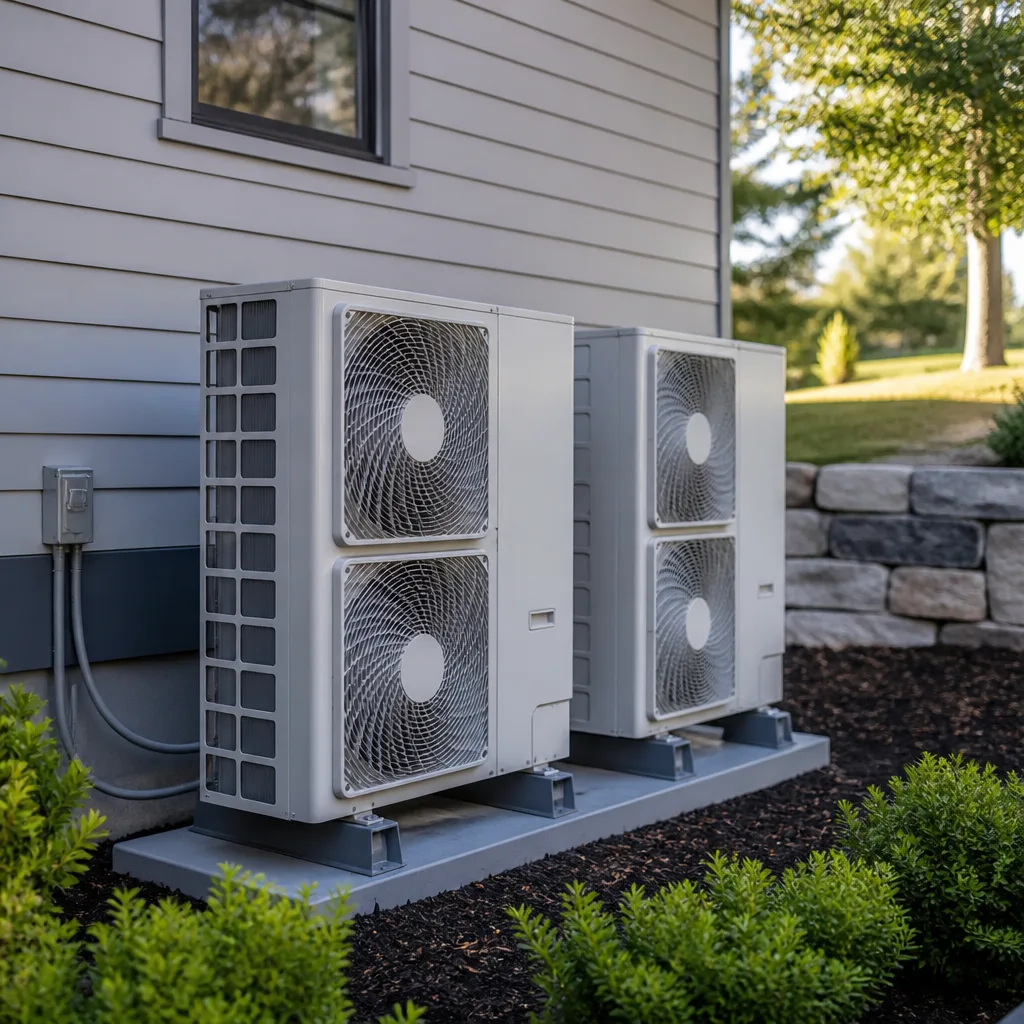
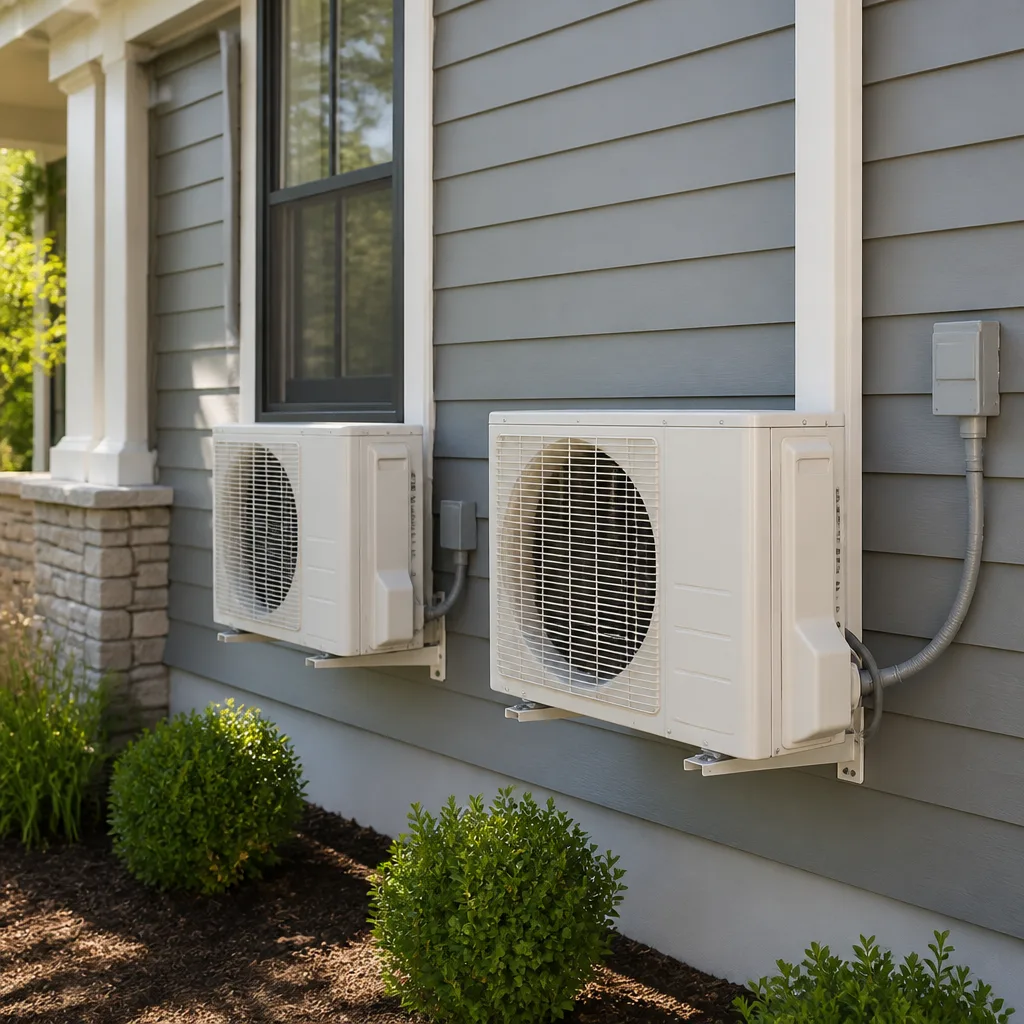
We service Daikin heat pumps across all the residential lines we regularly see in Los Angeles: the FIT series (inverter-driven, compact side-discharge units common in newer homes and ADUs), the DZ series (standard split heat pumps), the VRV and multi-zone systems in condos and townhomes, and the older R-410A units still running strong in neighborhoods from Sherman Oaks to Long Beach. Each series uses different control boards, sensors, and compressor drive components, so matching the part to the exact model number matters more on a Daikin than on many other brands.
Daikin is an independent manufacturer, and Dalton Heating & Air is an independent service provider. We stock and install OEM Daikin parts when they’re available, and we also carry proven aftermarket equivalents for common failure points like capacitors, contactors, and pressure switches. Here’s the compatibility gotcha we tell every Daikin owner: the model number on your outdoor unit’s data plate is the one that counts. The indoor air handler badge can show a different number entirely, and ordering off that badge gets you the wrong board or sensor. We check both plates before we quote, and we photograph both so there’s no confusion when the part arrives.
Signs Your Daikin Heat Pump Service Is Failing
- Outdoor unit runs, but no real heat or cooling at the vents. The compressor is likely running but the reversing valve isn’t shifting, or the system is low on refrigerant. On a Daikin, a stuck valve is a serviceable part replacement, not a full compressor job.
- Breaker trips when the heat pump kicks on. This is usually a failing compressor contactor or a grounded capacitor pulling too much current on startup. A tripping breaker on a hot Los Angeles afternoon is a real warning sign, not something to reset and ignore.
- The outdoor fan spins but the compressor never starts. A failed run capacitor is the most common cause. You may hear a low hum for a few seconds and then a click as the thermal overload opens. Replacing the capacitor usually gets the system cooling again the same day.
- Ice forms on the outdoor coil in either heating or cooling season. On a Daikin heat pump, this typically points to a failed defrost control board or a refrigerant restriction. Left alone, ice buildup strains the compressor and shortens its life.
- The system runs without shutting off and never reaches the thermostat setting. This often means the unit has lost refrigerant due to a slow leak in a coil or a fitting. It can also be a failing thermistor, which is the sensor Daikin uses to tell the board what the coil temperature is. The thermistor is cheap. The leak is not.
Replacement Cost & What’s Included
In Los Angeles, most Daikin heat pump repairs fall between $175 and $765 installed. That range covers the part, the labor, and the diagnostic time. A run capacitor replacement typically lands at the low end. A defrost control board or reversing valve runs higher because the parts themselves cost more and the valve job requires recovering refrigerant, brazing, and recharging the system.
What drives the spread is simple: the part cost, how long the swap takes, and whether the system needs refrigerant handling. Here’s what that looks like in practice:
- Run capacitor replacement: $175 – $325 installed
- Contactor replacement: $175 – $300 installed
- Defrost control board replacement: $300 – $520 installed
- Thermistor or sensor replacement: $200 – $400 installed
- Reversing valve replacement: $500 – $765 installed, including refrigerant recovery and recharge
Every quote is in writing before we start. The price you see is the price you pay. And every repair is guaranteed in writing for a full year under our 365-Day Done Right Promise. If the same part fails in that window, we return at no charge.
DIY or Call Us?
There are two things you can safely check, and neither requires opening the cabinet. First, confirm the thermostat is set correctly and the batteries aren’t dead. Second, check the breaker. If the breaker is tripped, reset it once. If it trips again, stop there. A heat pump that repeatedly trips a breaker has an electrical fault that needs a trained hand, because we’re dealing with line voltage that can kill.
Beyond those checks, Daikin heat pumps are not DIY machines. The control boards are sensitive to static and incorrect wiring. The capacitors hold a charge even when the power is off. Refrigerant work, which many heat pump repairs involve, legally requires EPA certification and the right recovery equipment. You asked me once for honest advice, so here it is: the parts that fail on a Daikin are inexpensive compared to the cost of getting the diagnosis wrong. Call (361) 306-9515, tell us what the system is doing and what the house feels like, and we’ll get someone out who knows Daikin parts cold.
FAQs
Most Daikin heat pumps in Los Angeles last 12 to 18 years with basic maintenance. Coastal and inland climate makes a difference: units near the beach deal with salt air corrosion, while Valley units run more cooling hours per year and wear through capacitors faster.
No, almost never. Capacitors, contactors, boards, sensors, and valves are sealed components. When one fails, the fix is a replacement part matched to the model on the outdoor data plate. You don’t rebuild a Daikin run capacitor any more than you rebuild a flat tire. Call (361) 306-9515 and we’ll quote the replacement price in writing before touching anything.
Most single-part replacements take 45 minutes to 2 hours on site. A reversing valve is the exception: that’s a 3 to 4 hour job because it involves recovering refrigerant, brazing the new valve in, pulling a vacuum, and recharging to the spec on the data plate.
We stock the common failure parts for Daikin systems: run capacitors, contactors, defrost boards, thermistors, and pressure switches. Specialty items like reversing valves or proprietary inverter boards are usually available same day or next day from our local Los Angeles suppliers.
Written by Marco Benitez, Owner & Lead HVAC Technician, Dalton Heating & Air at Dalton Heating & Air, serving Los Angeles and nearby areas.