
Seasonal tune-up and full diagnostic on your Carrier, Trane, or Goodman system - readings shown to you before any repair is proposed
Diagnosis first, numbers second - you approve the repair price before a single part goes in.
 Before
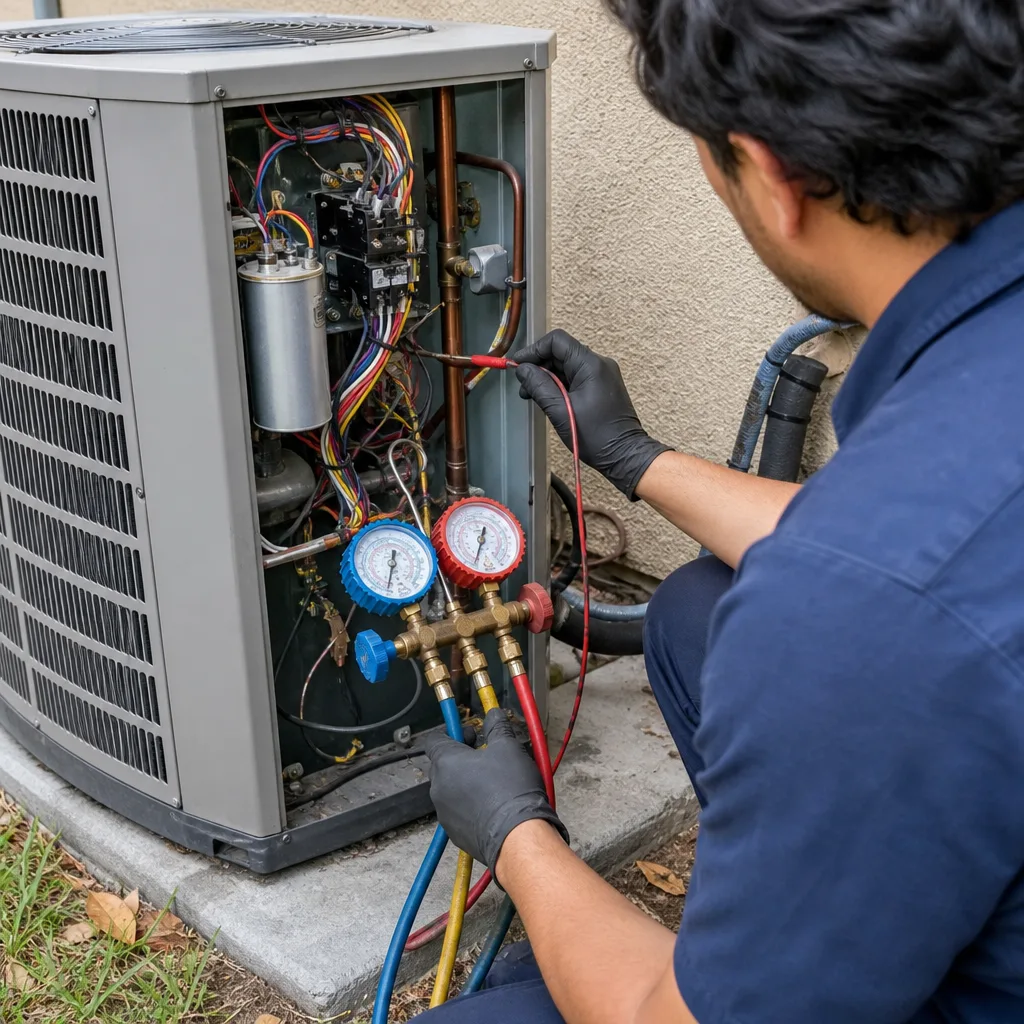 After
After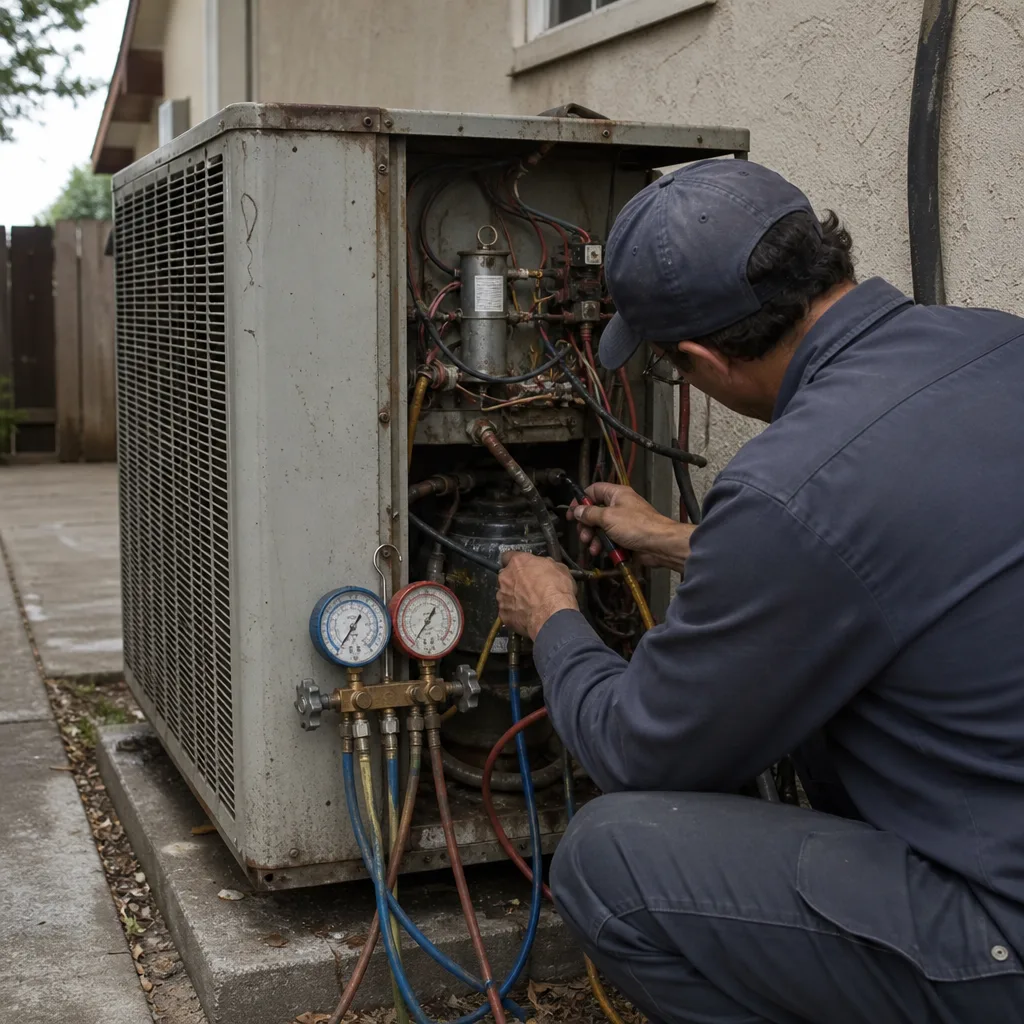 Before
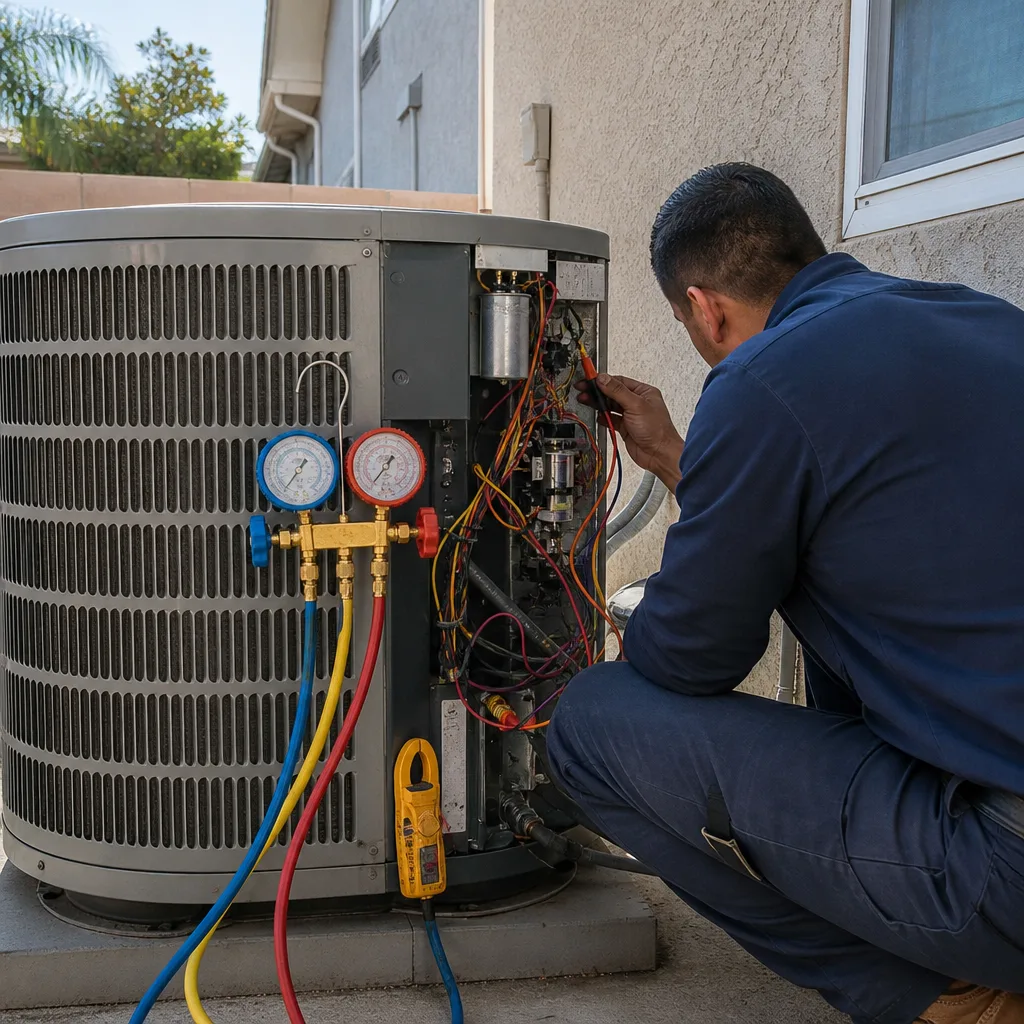 After
After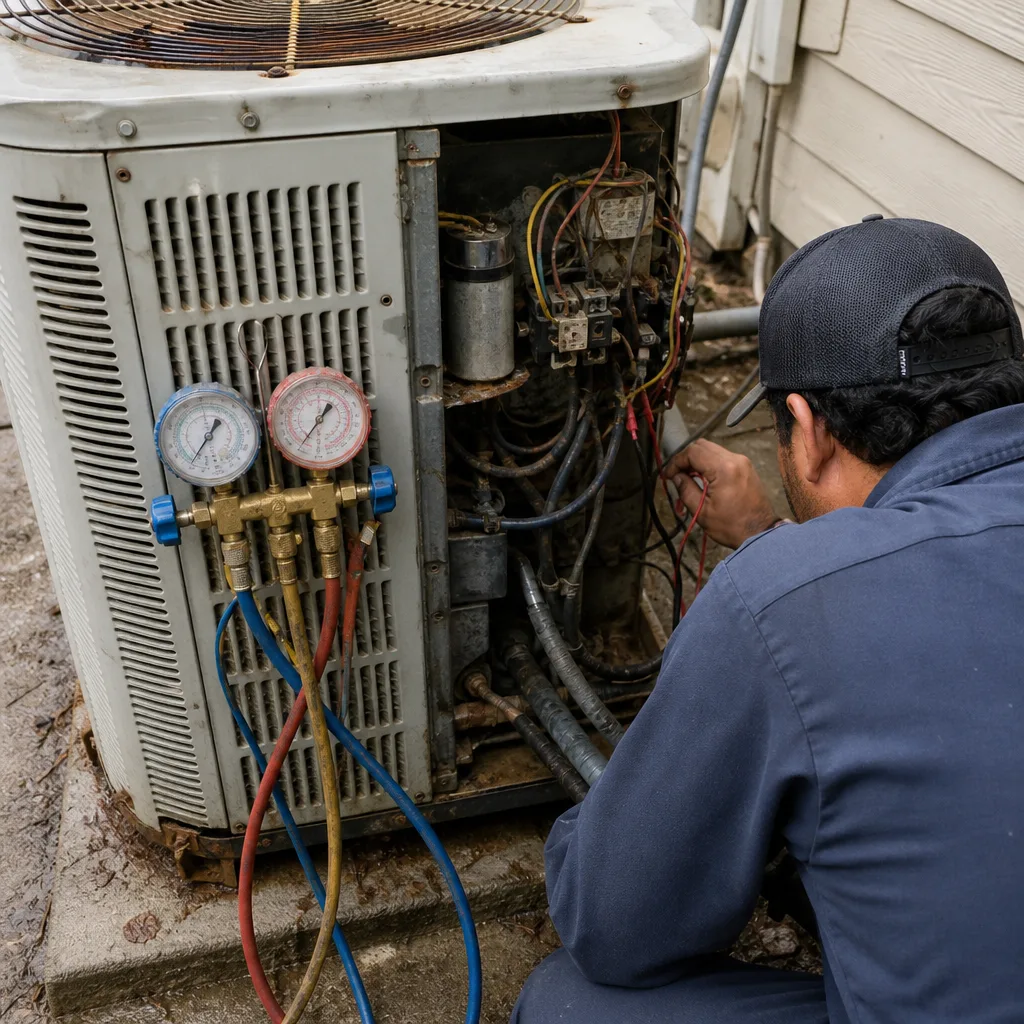 Before
 After
AfterCarrier Capacitor Replacement: The Los Angeles Owner’s Guide
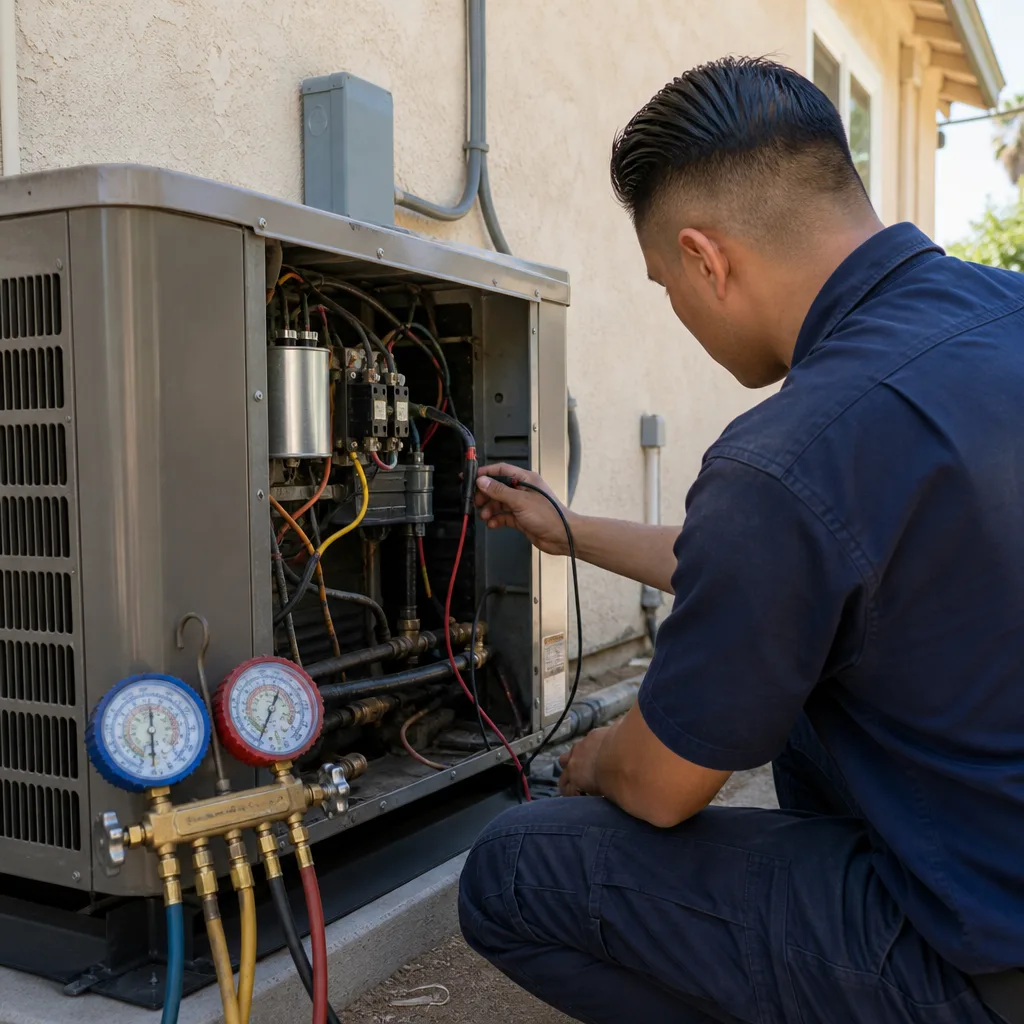
We stock Carrier-compatible capacitors on our trucks and can replace yours same-day in Los Angeles. Installed cost runs $175 – $385 depending on the capacitor type (single vs. dual-run) and your specific Carrier model. Most owners discover the problem the same way: the AC kicks on, the fan doesn’t spin, you hear a faint hum from the condenser, and the house starts warming up by mid-afternoon.
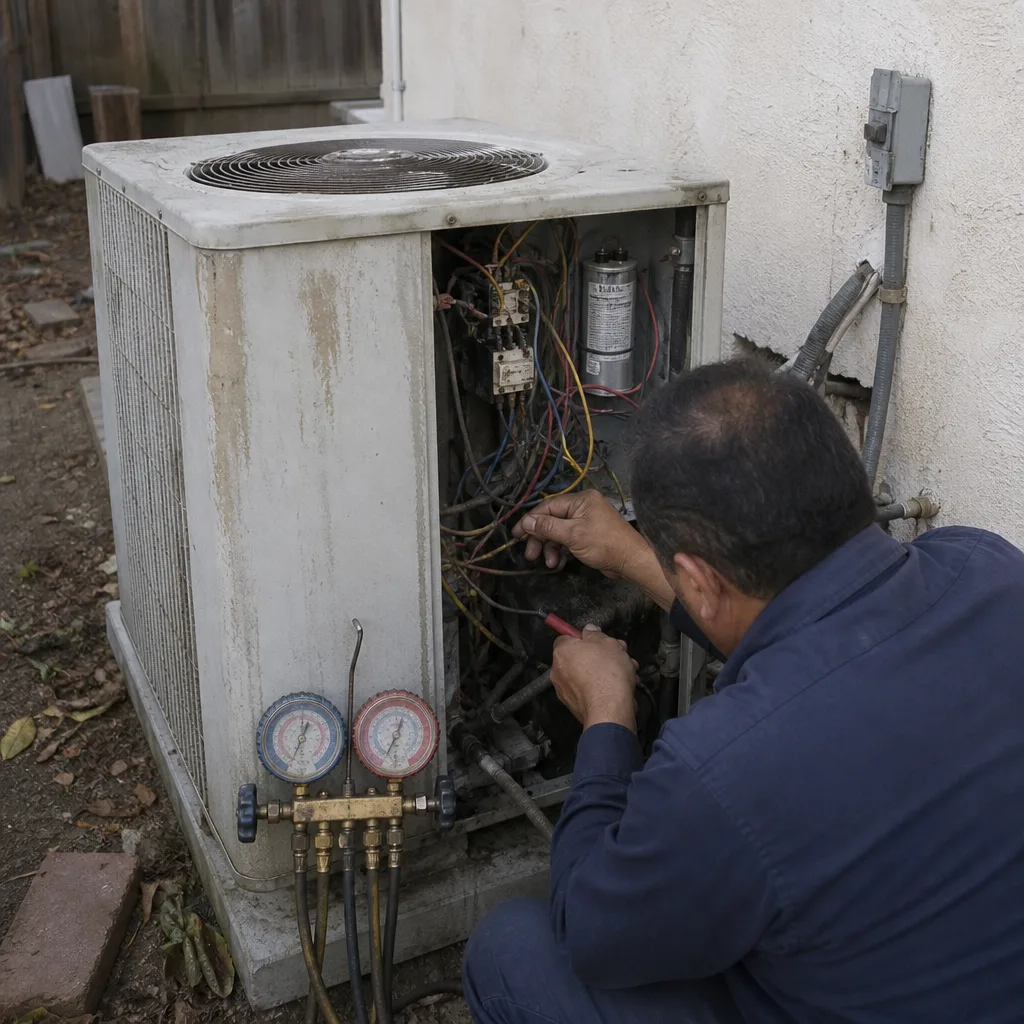
A capacitor is the electrical component that stores and releases the jolt of voltage your compressor and fan motor need to start turning. When it fails, the motor just sits there and hums. It’s the single most common no-cool failure we see in LA, especially after a stretch of 90-degree days when units are cycling constantly. The good news: it’s a fast, affordable fix when you call before the compressor overheats from being locked up.
Which Carrier Models This Applies To
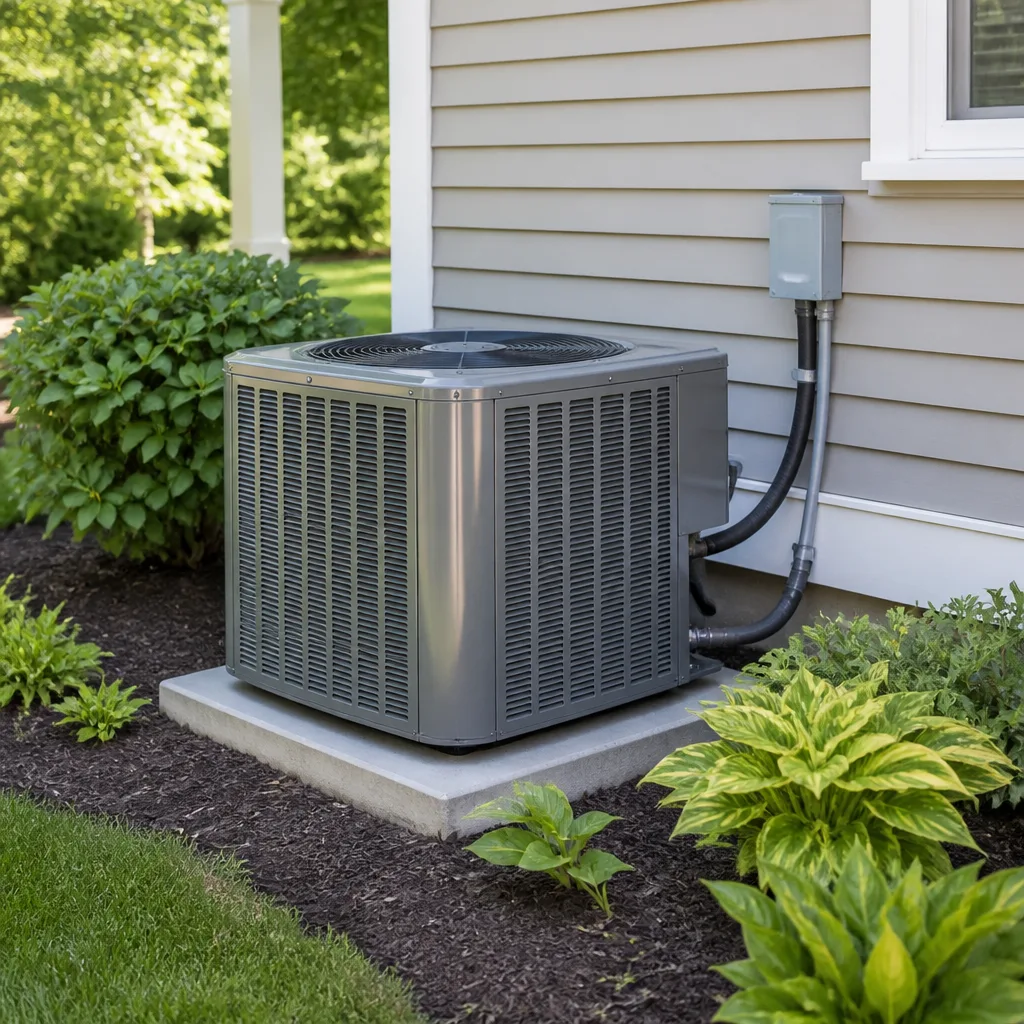
This applies to nearly every residential Carrier condenser and air handler built in the last two decades, including the Comfort, Performance, and Infinity series. The most common units we see needing capacitor replacement in Los Angeles are the Carrier 24ABC6, 24ACC6, 24ANB1, and the older 38CKC and 38BRC lines, plus the Comfort series air handlers like the FX4D and FV4C.
The compatibility gotcha is in the listing label. Carrier units use either a single-run capacitor (drives just the fan or just the compressor) or a dual-run capacitor (one cylinder driving both). Dual-run types are labeled with two ratings, like 45/5 µF (microfarads), meaning 45 µF for the compressor and 5 µF for the fan. Installing a 40/5 when your Carrier needs a 45/5 will start the system but run the compressor under amperage strain, which shortens its life. You cannot just match the shape.
On the OEM vs. aftermarket decision: Carrier’s own capacitors are made to spec, but they’re often twice the price of a quality aftermarket equivalent from AmRad, Titan HD, or Mars. For a part that’s effectively a consumable with a 5 – 10 year lifespan, we install the aftermarket brand rated for the exact µF and voltage your Carrier calls for, unless you specifically request OEM. We don’t mark the aftermarket up as if it were OEM, and we show you the part before it goes in.
Dalton Heating & Air is an independent service provider, not affiliated with Carrier. We stock parts compatible with Carrier, Trane, and Lennox systems because those three dominate the LA replacement market.
Signs Your Carrier Capacitor Replacement Is Failing
- Condenser hums but the fan doesn’t spin. This is the classic tripped-capacitor symptom. Voltage reaches the motor, but without the capacitor’s starting jolt the motor can’t overcome inertia. The hum you hear is the motor stalled on the winding.
- The fan spins slowly or starts with a push. A weak capacitor still passes some current, but not enough for full-rated torque. If you see the fan blades turning at half speed, the capacitor is in the last stage before it quits entirely.
- AC shuts off on hot afternoons, restarts hours later. Thermal expansion on a marginal capacitor changes its internal resistance. It’ll read borderline at 8 AM, then cut out at 3 PM when the condenser is hot-soaked and the system is at peak load.
- Bulging or leaking at the top of the cylinder. A capacitor’s top should be flat. When the dielectric fluid inside overheats, the case swells at the seam or vents out the pressure plug. Physical deformation is a failed part, no meter needed.
- Intermittent compressor start, especially after a brownout. DWP power dips are common in older neighborhoods like Echo Park and Boyle Heights, and a weak capacitor will fail to start the compressor on the first attempt after voltage sags. You’ll hear a click, then a 30-second pause, then another click, as the start circuit retries.
Replacement Cost & What’s Included
In Los Angeles, a Carrier capacitor replacement from us runs $175 – $385 installed, with most jobs landing around $225. You’re paying for the part (which retails $35 – $90 for a quality non-OEM), the service call diagnostic, the labor, and the written guarantee.
What moves the price: single-run capacitors are cheaper than dual-run units. Higher voltage ratings (440V vs 370V) cost a bit more. If your Carrier system has a start capacitor in addition to the run capacitor, which Infinity series units often do, expect to be at the upper end of that range since both components typically get replaced together.
Every capacitor replacement from Dalton Heating & Air includes the written price before work begins, the old part shown to you at the unit, and the repair guaranteed in writing for a full year under our 365-Day Done Right Promise. If the new capacitor fails inside that window, we return and replace it at no charge. That’s the Garrison Standard, applied to every job we run in Los Angeles.
DIY or Call Us?
Here’s the honest split. What you can safely do: check the thermostat is set to cool, check the breaker hasn’t tripped, and confirm the outdoor unit is humming. That tells you the capacitor is likely the culprit, and it’s useful info when you call.
What you should not do: open the condenser access panel and probe the capacitor yourself. Capacitors store a charge even after the power is off, and discharging one improperly can give you a serious shock. It’s also not a part where you can casually swap in a “close enough” rating, as explained above. A wrong-microfarad capacitor will run your compressor hot and quietly take years off its life.
Marco Benitez has been replacing Carrier capacitors across Los Angeles for over twenty years, since his days coming up through the electrical lab at Los Angeles Trade-Technical College. We carry the most common Carrier ratings on the truck, so the fix usually happens in a single visit. Call us at (361) 306-9515 and tell us what the system is doing and what the house feels like, that’s usually enough to know where to start.
FAQs
Expect 5 – 10 years in Los Angeles, where summer heat and continuous run cycles stress the dielectric fluid inside the capacitor. Units near the coast in Torrance or Redondo Beach can see slightly longer life because ambient temperatures don’t spike as high, while desert-adjacent areas like the San Fernando Valley are harder on the part. A capacitor that fails before year 5 usually signals voltage fluctuations from the utility or an undersized part from a previous repair.
No. A capacitor is a sealed cylinder; the failure is internal dielectric breakdown, and there’s no serviceable component inside. Once it’s weak or deformed, the part gets recycled and a new one goes in. Any tech offering to “repair” a capacitor by cleaning it or adding fluid doesn’t understand the component. Replacement is the only repair.
The actual swap takes 20 – 30 minutes for a run capacitor, including discharging the old part safely, verifying the new part’s microfarad rating with a meter, and testing the system through a full start cycle. Figure 45 – 60 minutes for the full service call when you include the diagnostic check and a once-over of the contactor and wiring, which we do on every capacitor call because a weak capacitor often stresses those components too.
We stock the most common Carrier-compatible ratings on our trucks: 35/5, 40/5, 45/5, 50/5, and 60/5 µF dual-run capacitors in both 370V and 440V, plus single-run fan capacitors from 5 to 15 µF. If your Carrier needs an uncommon spec, we source it same-day from our Los Angeles supply houses. Call (361) 306-9515 with your model number and we’ll confirm before we roll.
Written by Marco Benitez, Owner & Lead HVAC Technician, Dalton Heating & Air at Dalton Heating & Air, serving Los Angeles and nearby areas.