
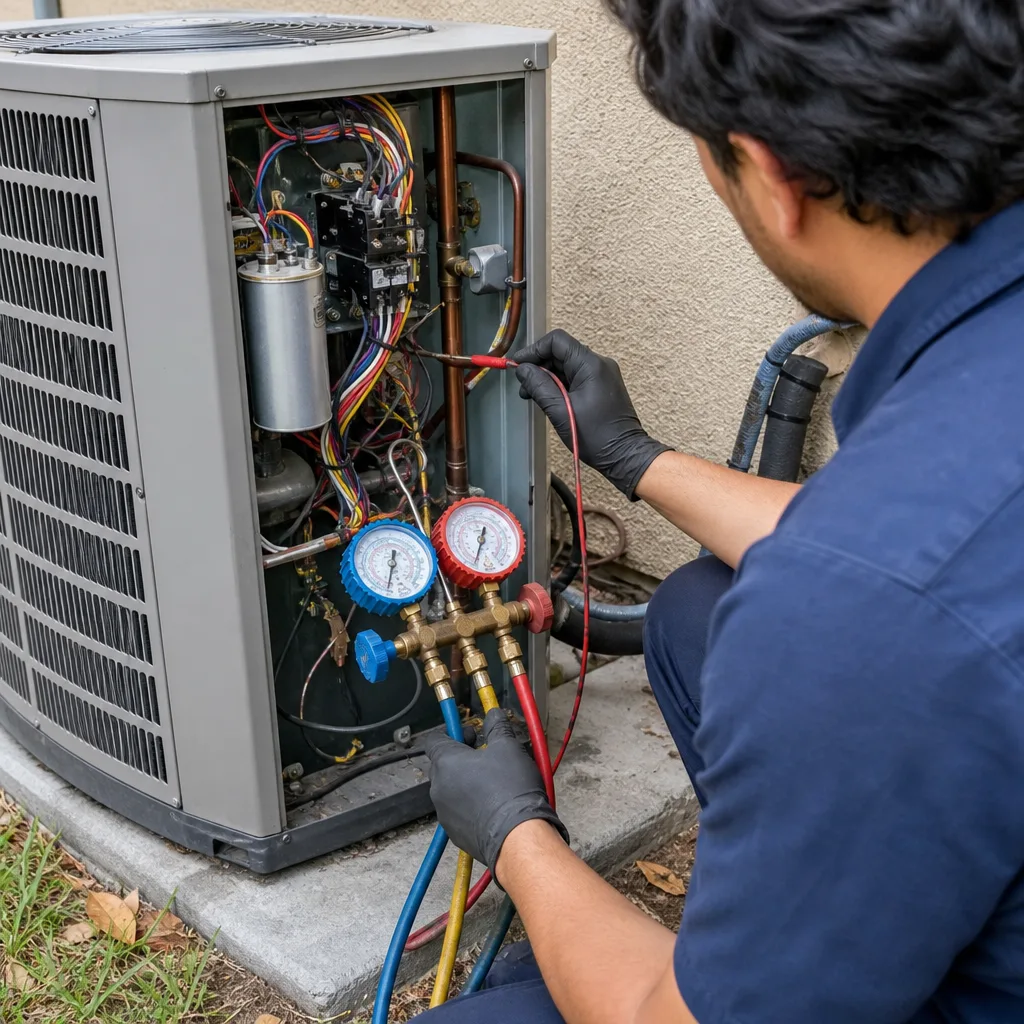
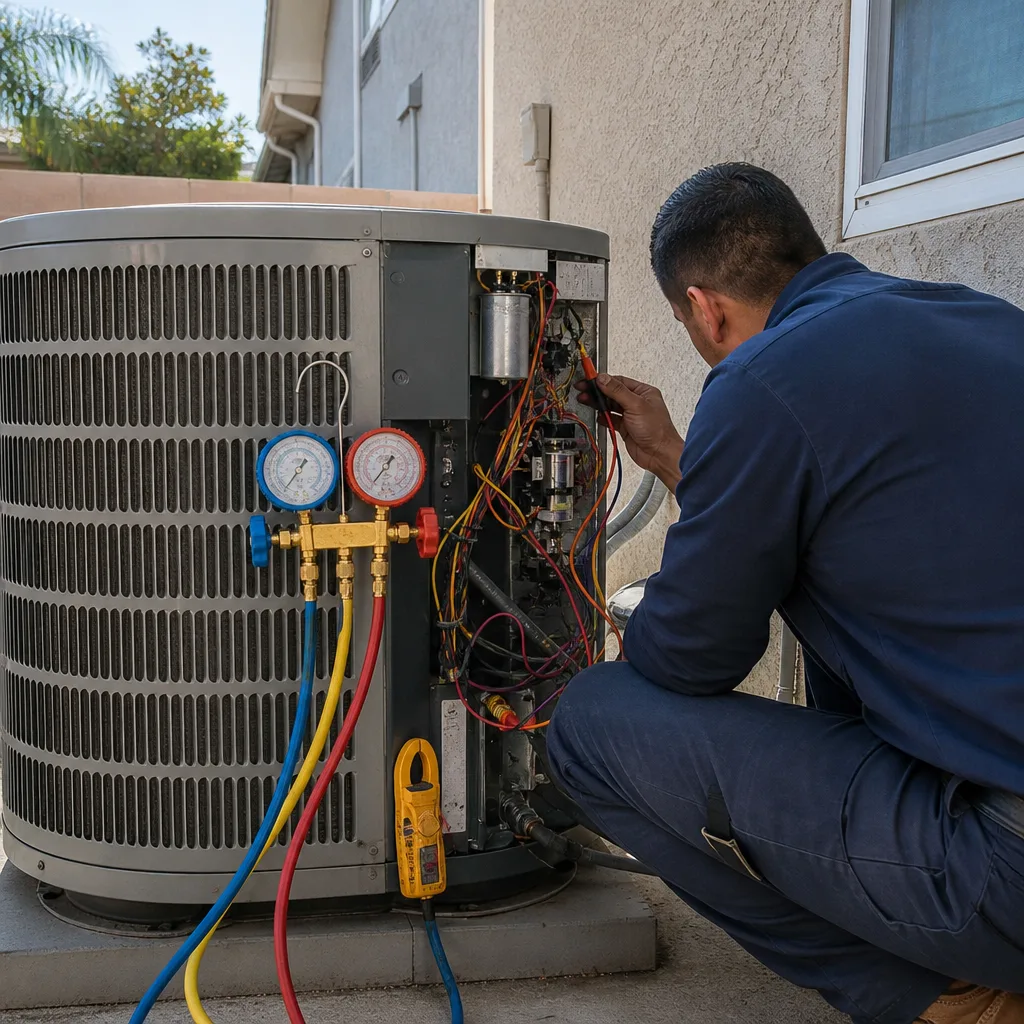
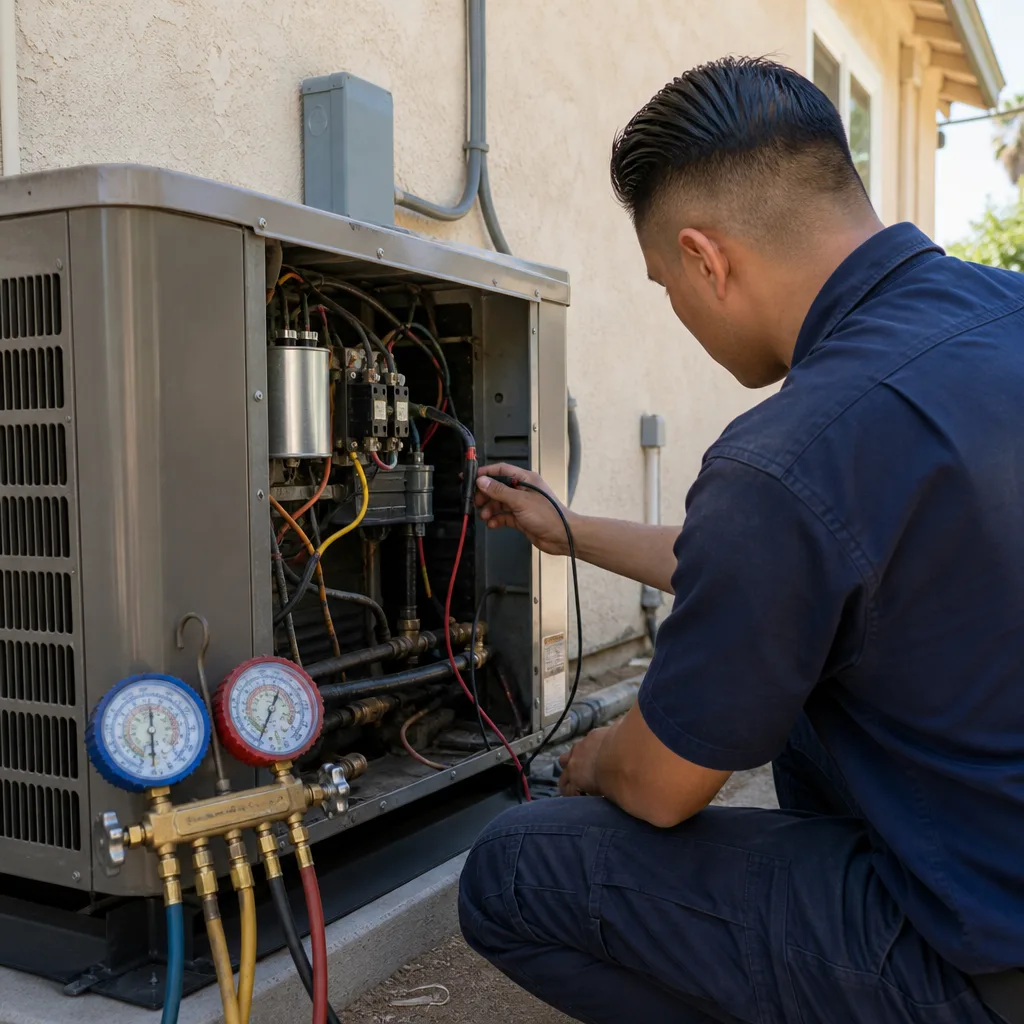
Seasonal tune-up and full diagnostic on your Carrier, Trane, or Goodman system - readings shown to you before any repair is proposed
Diagnosis first, numbers second - you approve the repair price before a single part goes in.
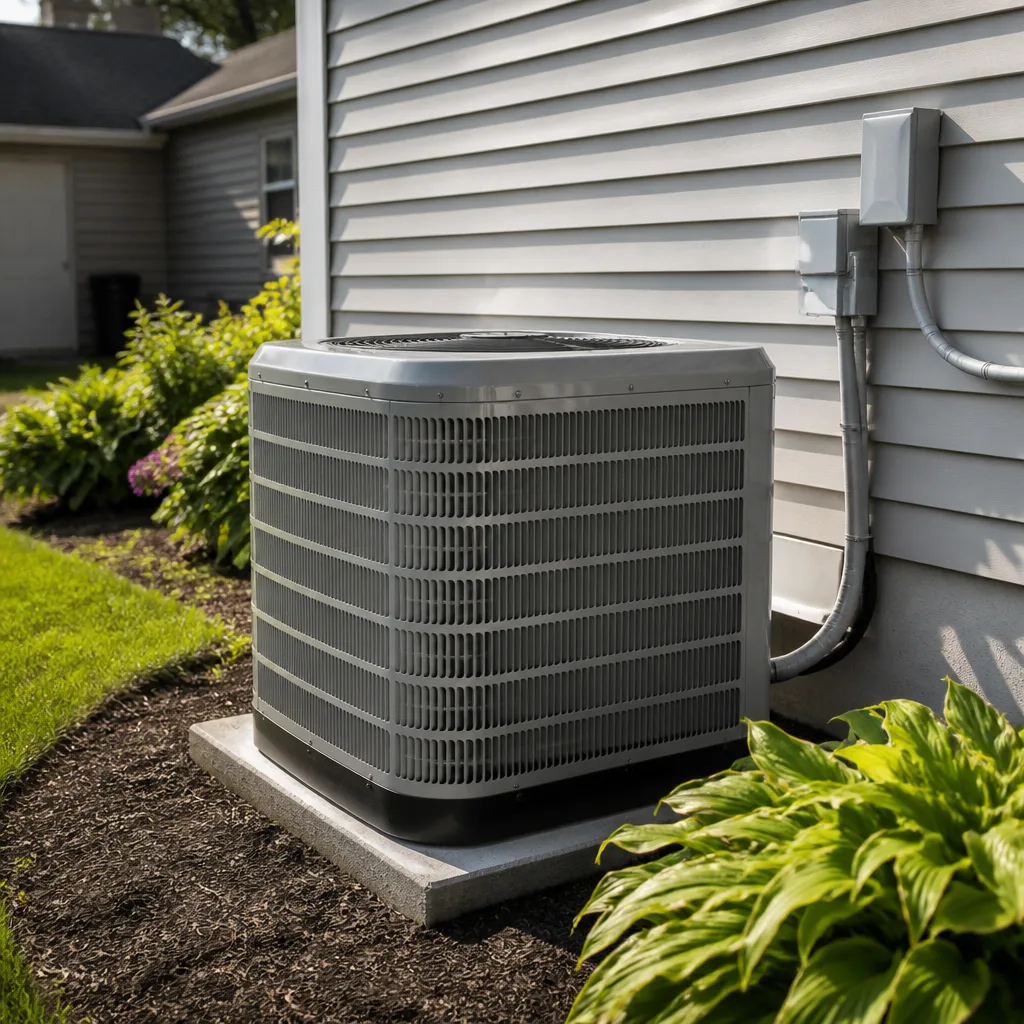
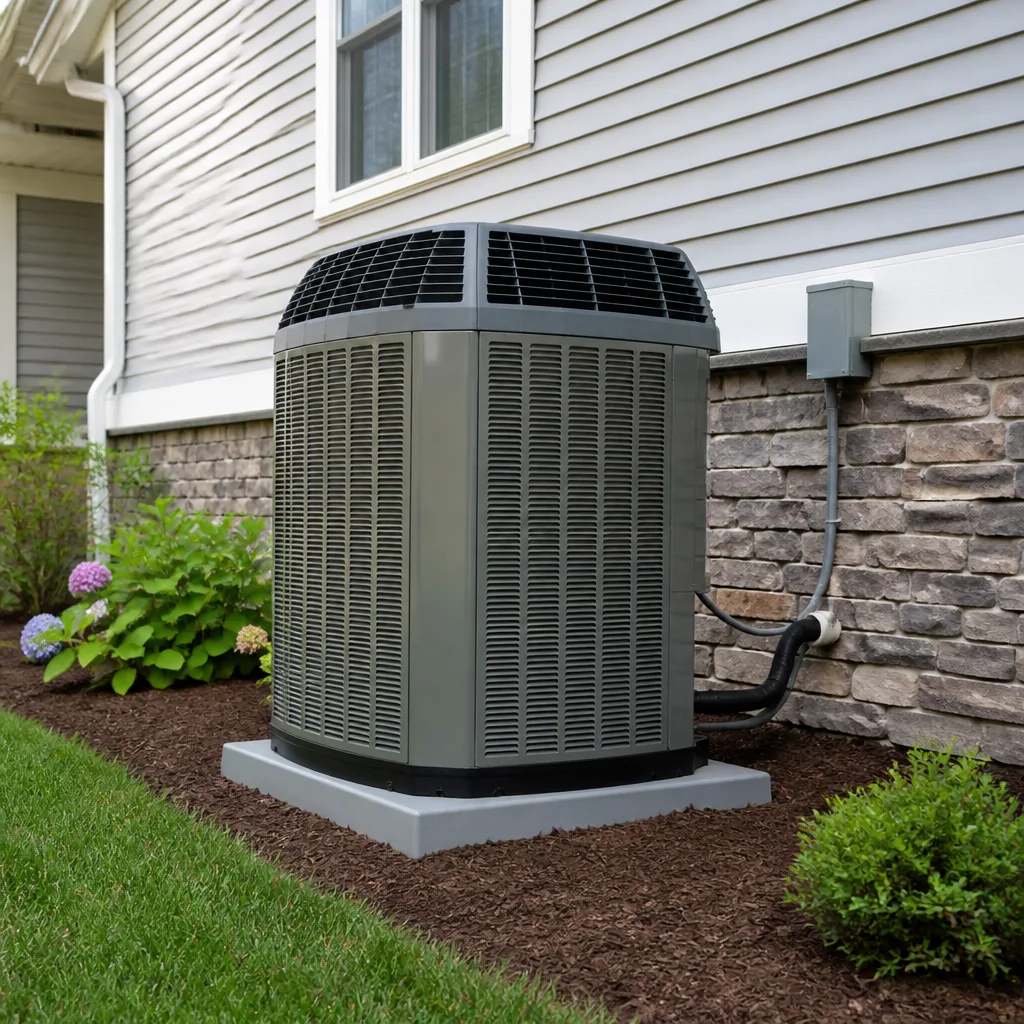
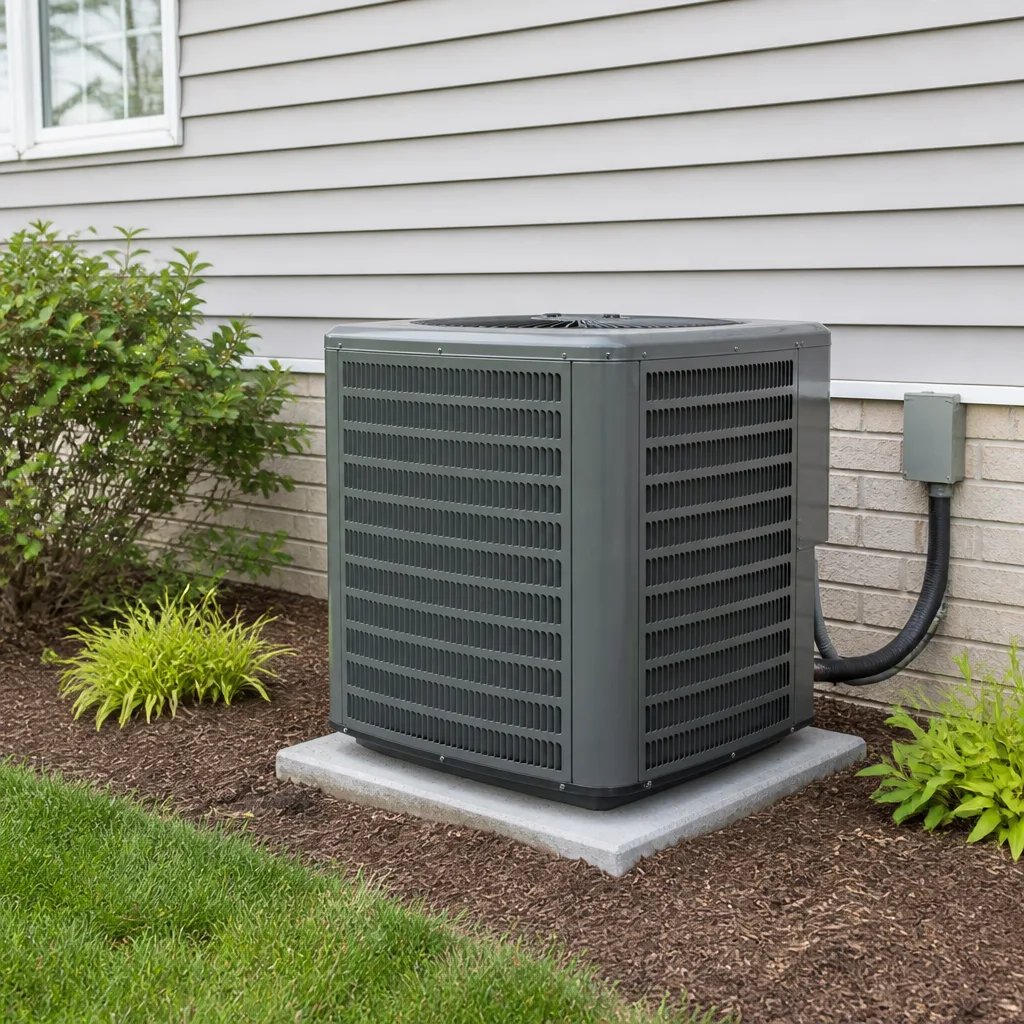
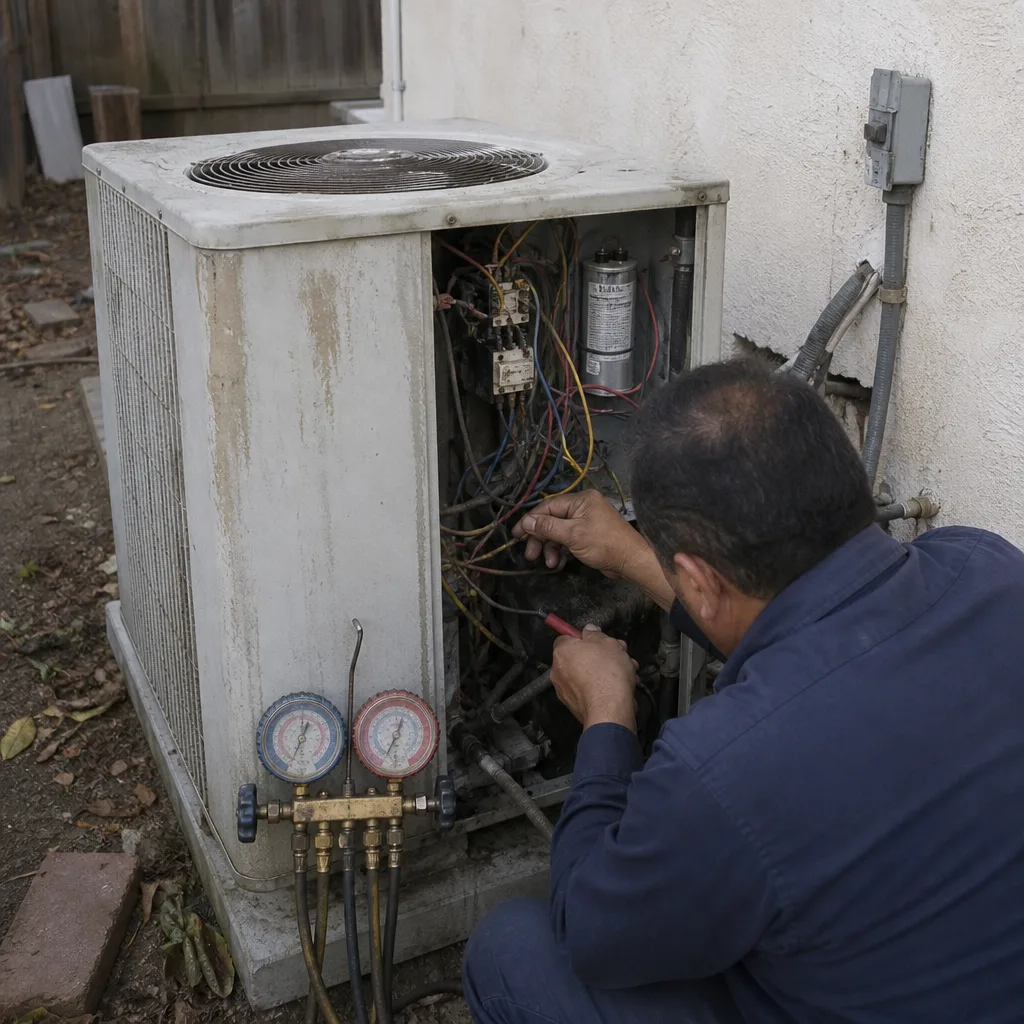 Before
 After
After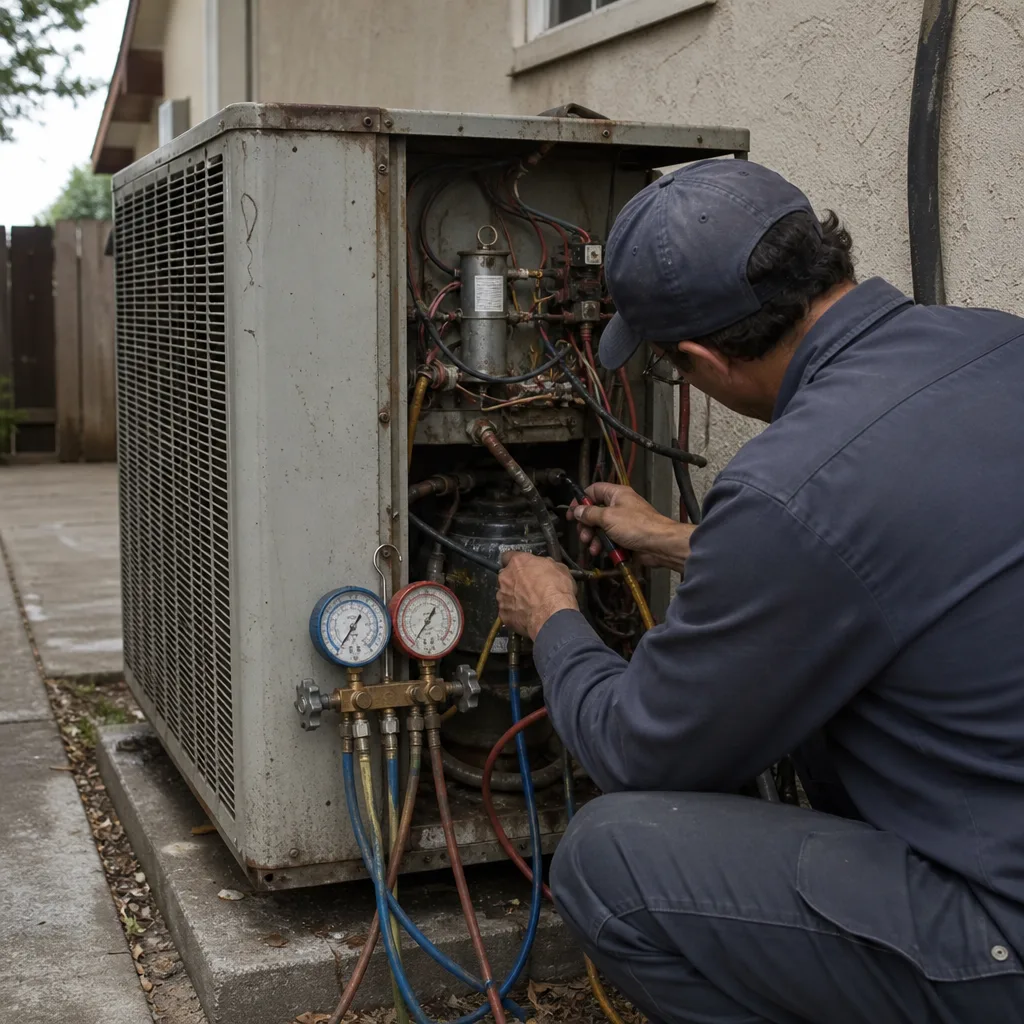 Before
 After
After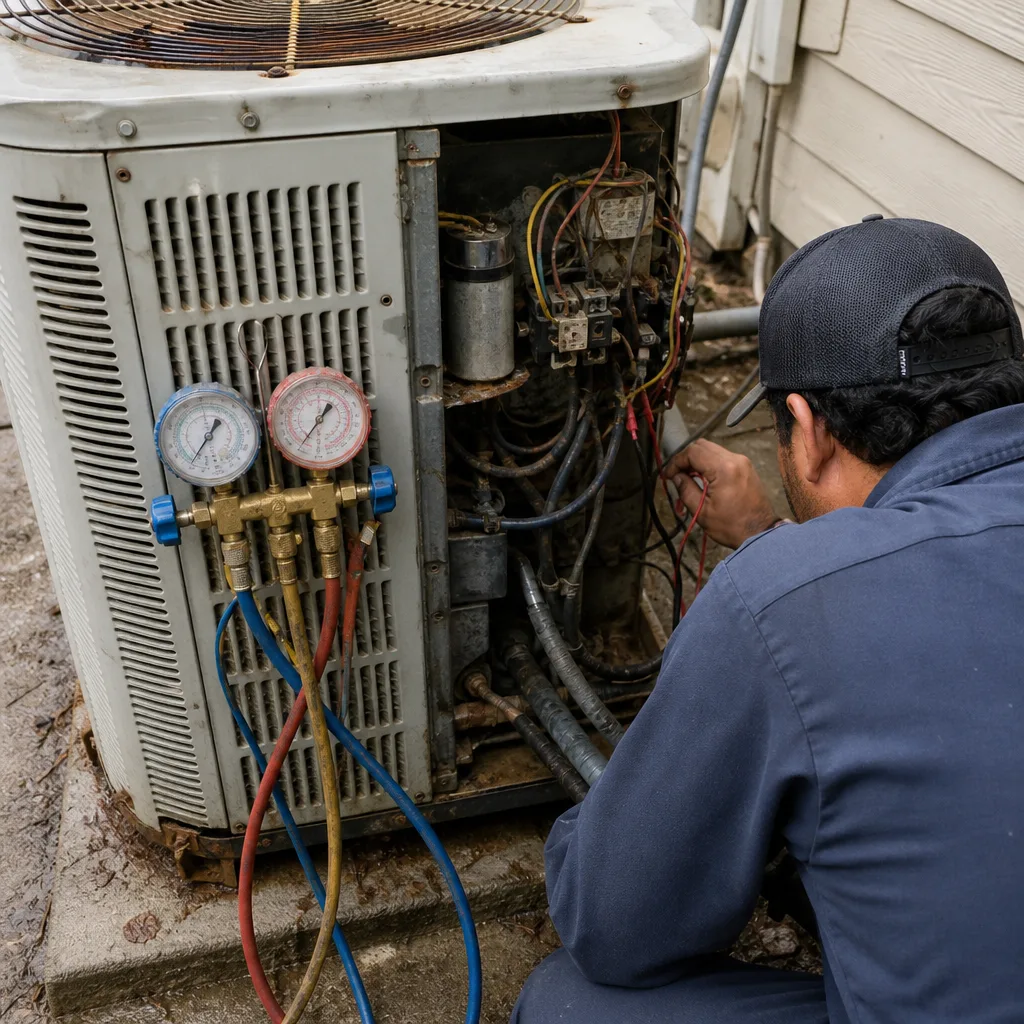 Before
 After
AfterYork Mini-Split Installation: The Los Angeles Owner’s Guide
A York mini-split installation in Los Angeles typically runs $4,130 – $8,850 depending on system size, number of indoor heads, and whether your existing line set and electrical can be reused. We stock York-compatible installation components and can usually schedule your replacement within 48 hours.
Most Los Angeles homeowners figure out they need installation work when the indoor unit stops cooling, the outdoor condenser starts making a grinding noise, or ice forms on the lines even though the thermostat says everything’s fine. By the time you’re searching for “York mini-split installation,” the unit has usually told you something’s wrong. The question is whether the part that failed is worth replacing on its own, or whether the system’s age and condition make a full installation the smarter call.
Which York Models This Applies To
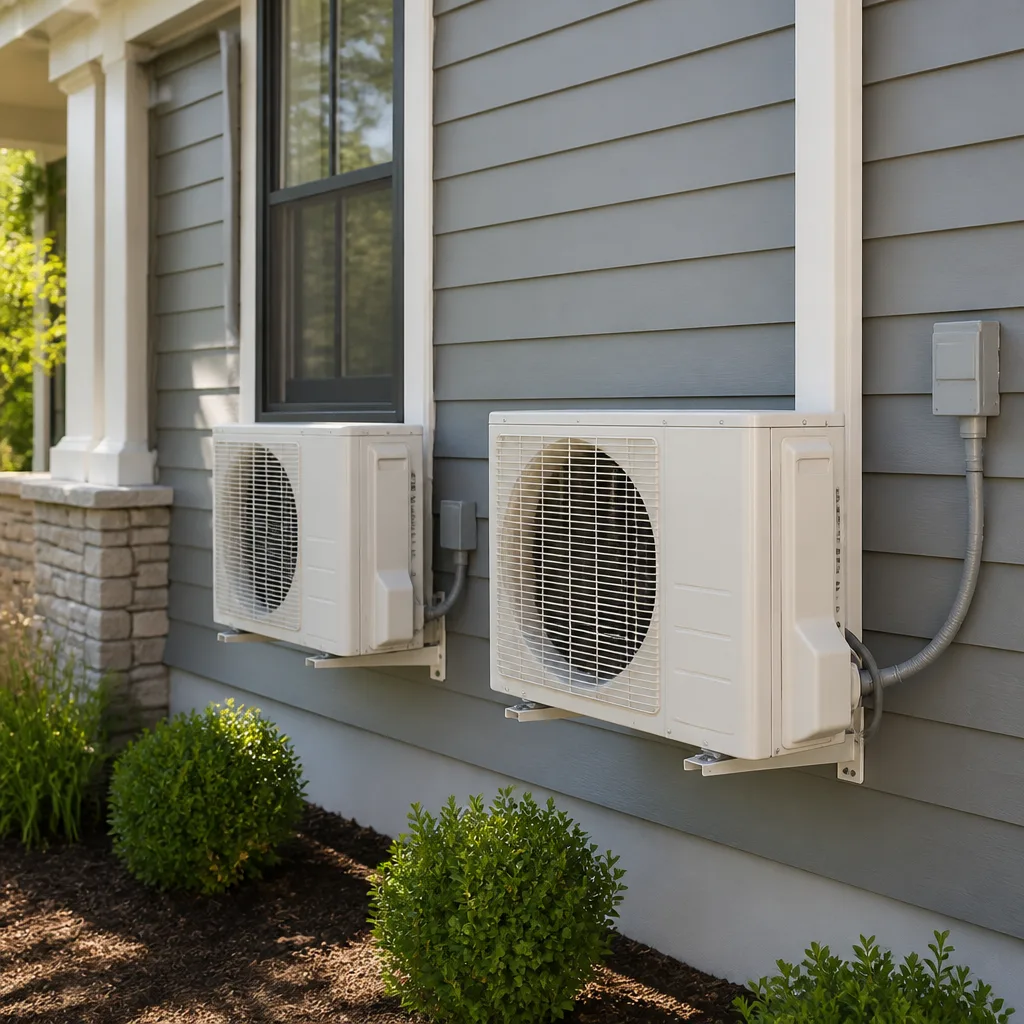
York’s mini-split line breaks into three families we see regularly across Los Angeles: the YVWC/YVWH wall-mounted series (9,000 to 36,000 BTU, common in condos and older homes with no ductwork), the YVWC ceiling cassette series (12,000 to 48,000 BTU, used in additions and garage conversions), and the YCD/YFD ducted mini-split series (up to 60,000 BTU, installed in attics where homeowners want hidden equipment).
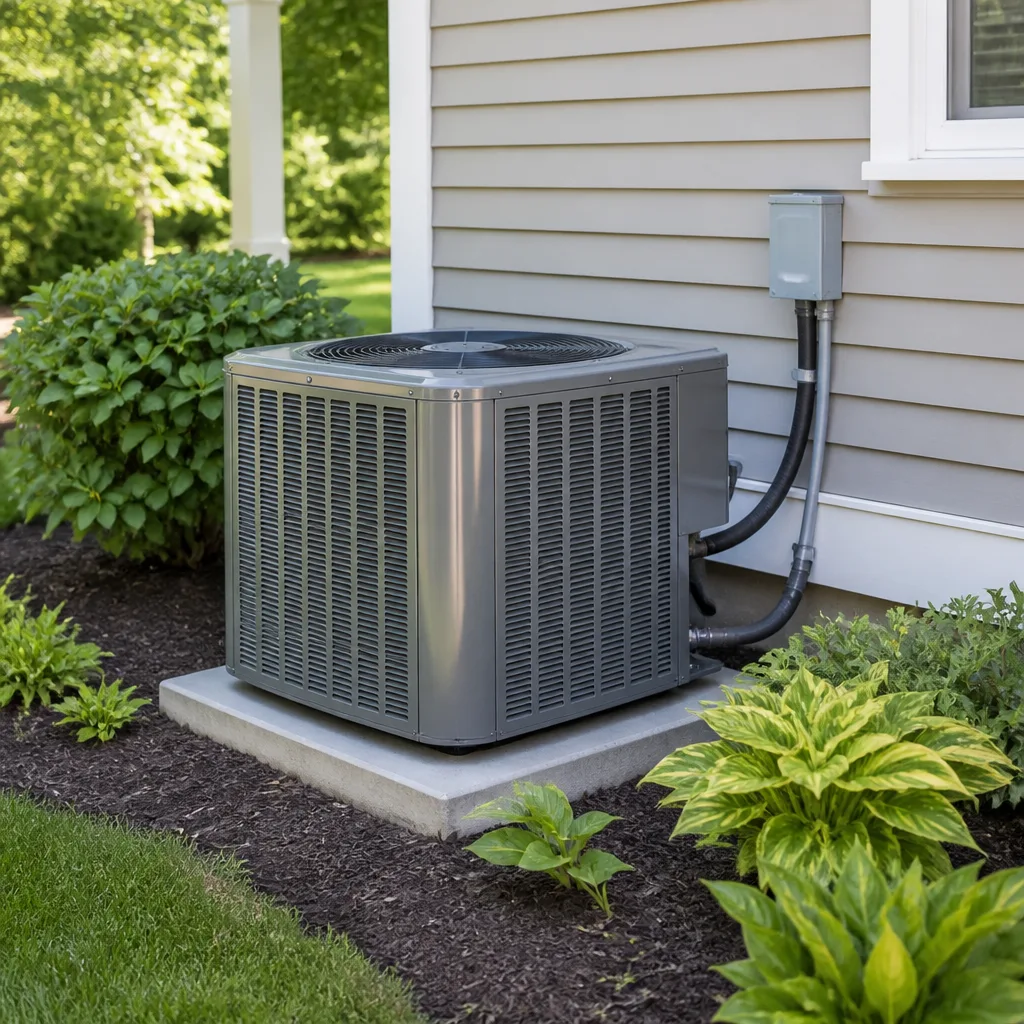
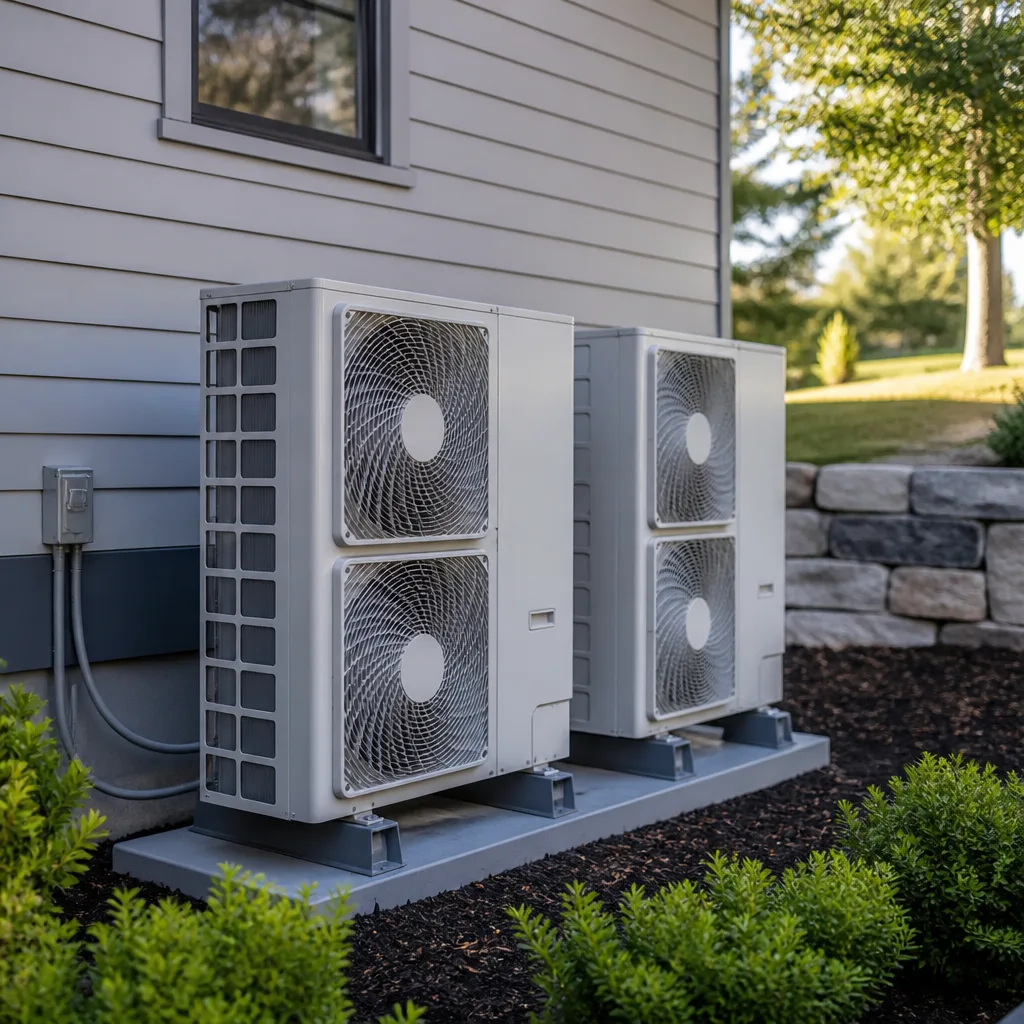
The fastest way to confirm your unit is to check the rating plate on the outdoor condenser. It lists the model number, the refrigerant type (most newer York mini-splits run R-410A, while 2024 and later models may use R-32), and the factory charge. If the plate is sun-faded or damaged, the indoor head will have a secondary label behind the front cover, usually near the filter housing.
One York-specific gotcha: the older LS and LX legacy series (often 10 – 15 years old by now) use a proprietary communication chip between the indoor and outdoor boards. If one board fails, a generic aftermarket board will not talk to the York factory board on the other side. You either replace both boards as a matched pair, or the entire unit gets replaced. We carry new York OEM boards on the truck for the current YVWC/YVWH line, and we can source legacy boards within three business days when a customer wants to keep an older system running a little longer.
Signs Your York Mini-Split Installation Is Failing
- The indoor unit runs but blows lukewarm air. This usually means low refrigerant or a failing compressor in the outdoor unit. On York systems, we often trace this back to a slow leak at the flare fitting where the line set connects to the indoor head – a common failure point on units installed in Los Angeles’s coastal fog zones, where salt air accelerates corrosion at the brass flare nuts.
- Ice builds up on the line set or the indoor coil. Ice on the suction line means the system is starving for refrigerant or the indoor blower isn’t moving enough air across the coil. A dirty blower wheel or a failed indoor fan motor can both cause this. If you see ice, shut the system off at the breaker – running it frozen risks slugging the compressor with liquid refrigerant, and that’s a fast way to destroy a York compressor.
- The outdoor condenser short-cycles on and off every few minutes. On York units, this often points to a failing run capacitor, a restricted filter dryer, or a board that’s misreading a sensor. Short-cycling is hard on the compressor and will shorten its life dramatically if left alone.
- Water drips from the indoor head or stains the wall below it. The condensate drain line gets clogged with algae and dust – common in Los Angeles because our systems run in cooling mode ten months a year. A blocked drain triggers the float switch, which shuts the unit down to protect the electronics. If water is actually running down the wall, the pan inside the head has probably rusted through or cracked.
- The system cools some rooms and not others. On multi-zone York systems, each indoor head has its own electronic expansion valve (EEV). When a single zone fails, the culprit is usually that head’s EEV, its thermostat sensor, or a low refrigerant charge specific to that branch line. Multi-zone troubleshooting is where Marco Benitez has spent years untangling this exact problem – a single head dead while the rest run fine means the issue is almost always at the indoor unit, not the outdoor condenser.
Replacement Cost & What’s Included
In Los Angeles, a complete York mini-split installation runs $4,130 – $8,850. The spread comes down to a few variables: the number of indoor heads, the length of the line set run, whether we’re reusing an existing wall sleeve or cutting a new one, and whether the existing condenser pad and electrical disconnect can be reused.
When the job is a component-level replacement – a failed indoor board, a seized blower motor, a replacement EEV – you’re looking at $175 – $765 for most York-specific repairs, parts and labor together. That matches the repair pricing we quote across all nine brands we service.
Every installation includes the same terms, whether it’s a single-zone swap or a full four-head system: the price is in writing before any work starts, the new equipment carries the manufacturer’s warranty plus our 365-Day Done Right Promise in writing, and if the installation fails within that year, we return at no charge. That’s The Garrison Standard, and it’s been how we’ve operated since 2003.
| York Mini-Split Installation – Los Angeles Pricing | Typical Range |
|---|---|
| Single-zone replacement (12,000 – 18,000 BTU) | $4,130 – $5,200 |
| Dual-zone system (two indoor heads) | $5,600 – $7,100 |
| Tri-zone or four-zone system | $7,200 – $8,850 |
| Component repair (board, motor, EEV, capacitor) | $175 – $765 |
DIY or Call Us?
There’s a safe version of DIY here, and then there’s a line you should not cross. You can clean the washable filters, clear the condensate drain with a wet-dry vac on the exterior stub, check that the outdoor unit isn’t buried in leaves or dog hair, and verify the breaker hasn’t tripped. Those checks don’t void your warranty and they sometimes solve the problem.
What you should not touch: anything involving the refrigerant circuit. A York mini-split holds refrigerant under pressure, and the flare fittings that connect the line set to the indoor and outdoor units need a torque wrench set to the manufacturer’s spec plus a nitrogen pressure test and a deep vacuum pulled before the system is charged. If a flare is under-torqued, it leaks. If it’s over-torqued, it cracks. Either failure puts you back where you started with a system that won’t cool and a blown charge. Electrical work on the outdoor unit is the same story – 240 volts at the disconnect, and a loose connection will arc and take the board with it. This is not a YouTube repair.
If the system is making noise, icing up, or running without cooling, call us at (361) 306-9515. We’ll tell you honestly whether it’s a $175 repair or a full replacement, and the price will be in writing before we touch anything.
FAQs
A properly installed York mini-split in Los Angeles typically lasts 12 – 15 years, with the compressor being the first major component to go. Coastal homes near El Segundo, Playa del Rey, and San Pedro tend to see shorter lifespans – 10 – 12 years – because salt air corrodes the condenser coil fins and the flare fittings faster than inland neighborhoods like Pasadena or Sherman Oaks. Regular coil cleaning and annual leak checks at the flare connections are the two highest-value maintenance items we perform on York systems around the LA Basin.
Yes, if the failure is isolated to a single component – a capacitor, a fan motor, a control board, an EEV, or a thermistor – and the rest of the system is under ten years old. Once a York mini-split is past year 10 or 12 and the compressor fails, replacement is usually the smarter math, because a new compressor plus labor runs close to 60 – 70% of a full new installation, and you’d still have an old coil and old electronics. We’ll tell you which camp your unit falls in before you spend a dollar.
A single-zone swap in Los Angeles takes one day, usually 4 – 6 hours from our arrival to the final test run. A multi-zone system with two to four indoor heads is a two-day job when we’re running new line sets and condensate drains through walls. The bottleneck on many LA jobs is the electrical – if your panel doesn’t have a free 240-volt breaker slot, we coordinate with a licensed electrician to add a subpanel or a dedicated circuit, and that adds a day on the front end.
We stock the most common York failure parts on the truck: run capacitors, control boards for the current YVWC/YVWH line, fan motors, thermistors, drain pumps, and filter assemblies. Legacy York LS/LX parts are order-to-source, which usually means a one- to three-day wait. Along with York, we carry parts inventory for Carrier, Trane, and Lennox – but the York board compatibility issue I mentioned earlier is why we always confirm your exact model and serial before scheduling the repair visit, so we’re not arriving with the wrong board and burning your afternoon.
If your York mini-split is acting up, call us at (361) 306-9515 for a no-pressure diagnosis. The estimate is free, the price is in writing, and a real person answers the phone 24/7. Tell me what the system is doing and what the house feels like – that’s usually enough to know where to start. We’re Dalton Heating & Air, an independent HVAC company based in Los Angeles and not affiliated with York, but we’ve been keeping York equipment running across this city since 2003.
Written by Marco Benitez, Owner & Lead HVAC Technician, Dalton Heating & Air at Dalton Heating & Air, serving Los Angeles and nearby areas.