
Seasonal tune-up and full diagnostic on your Carrier, Trane, or Goodman system - readings shown to you before any repair is proposed
Diagnosis first, numbers second - you approve the repair price before a single part goes in.
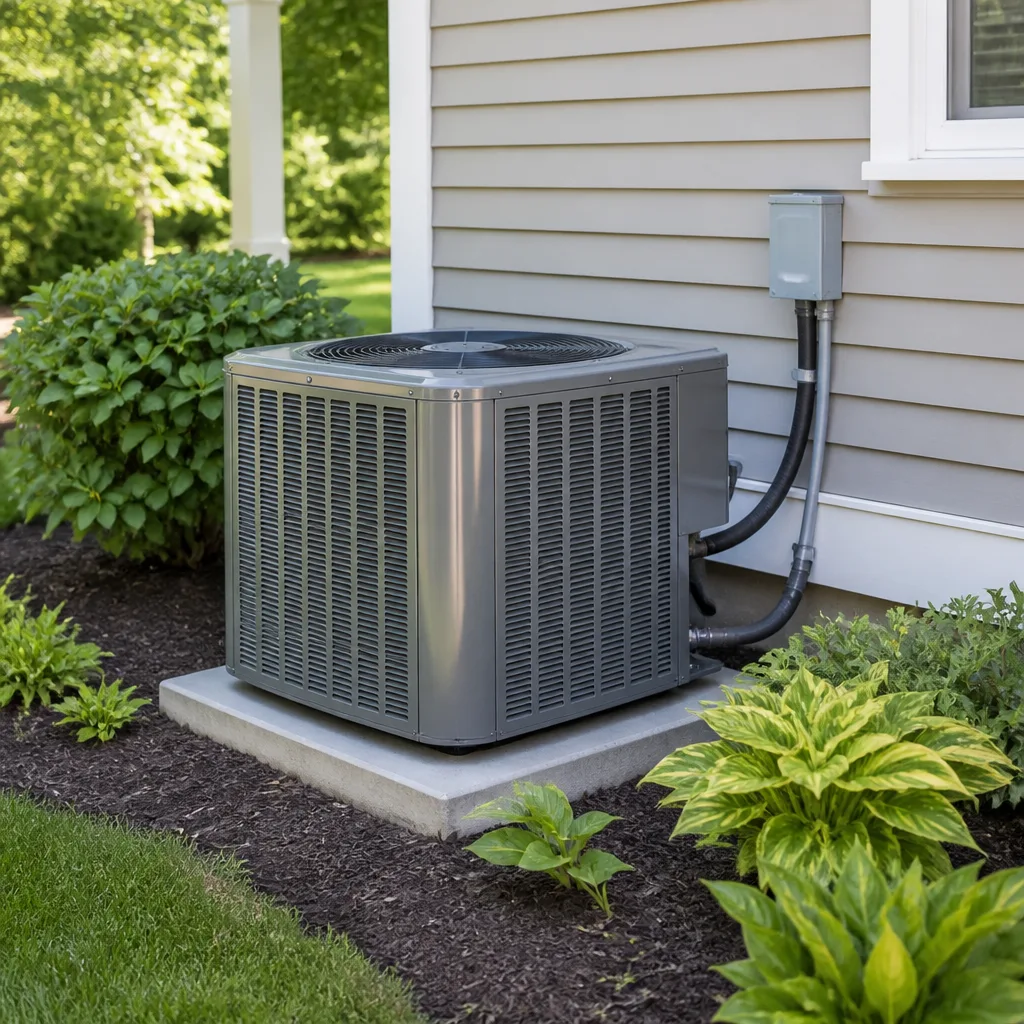
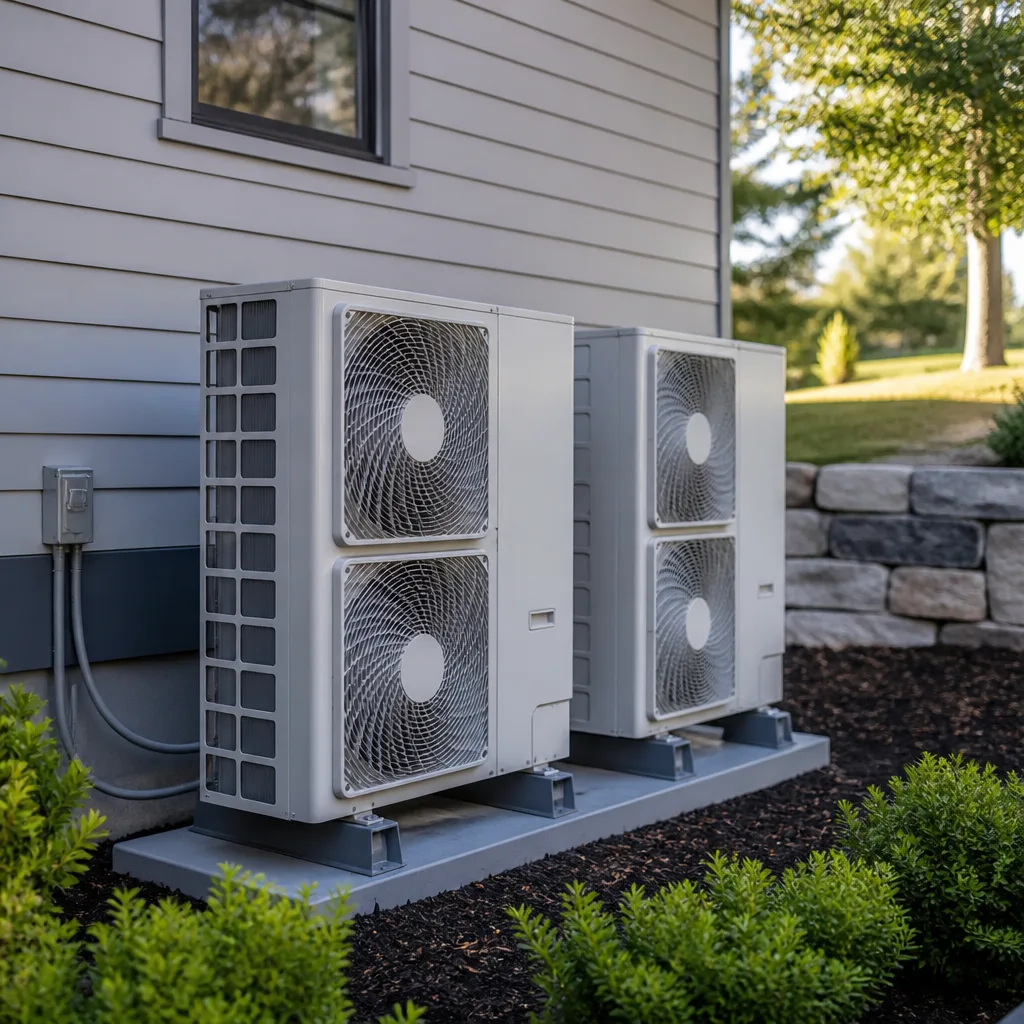
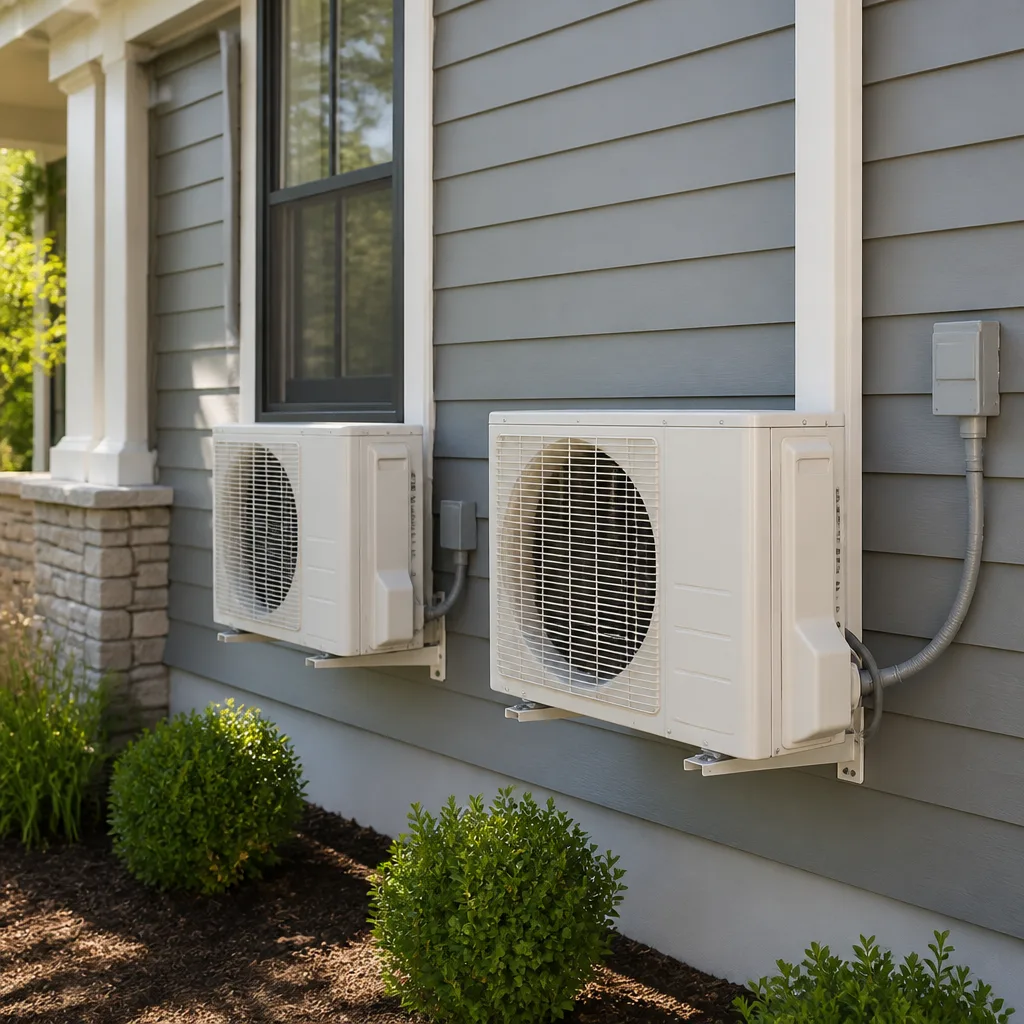
 Before
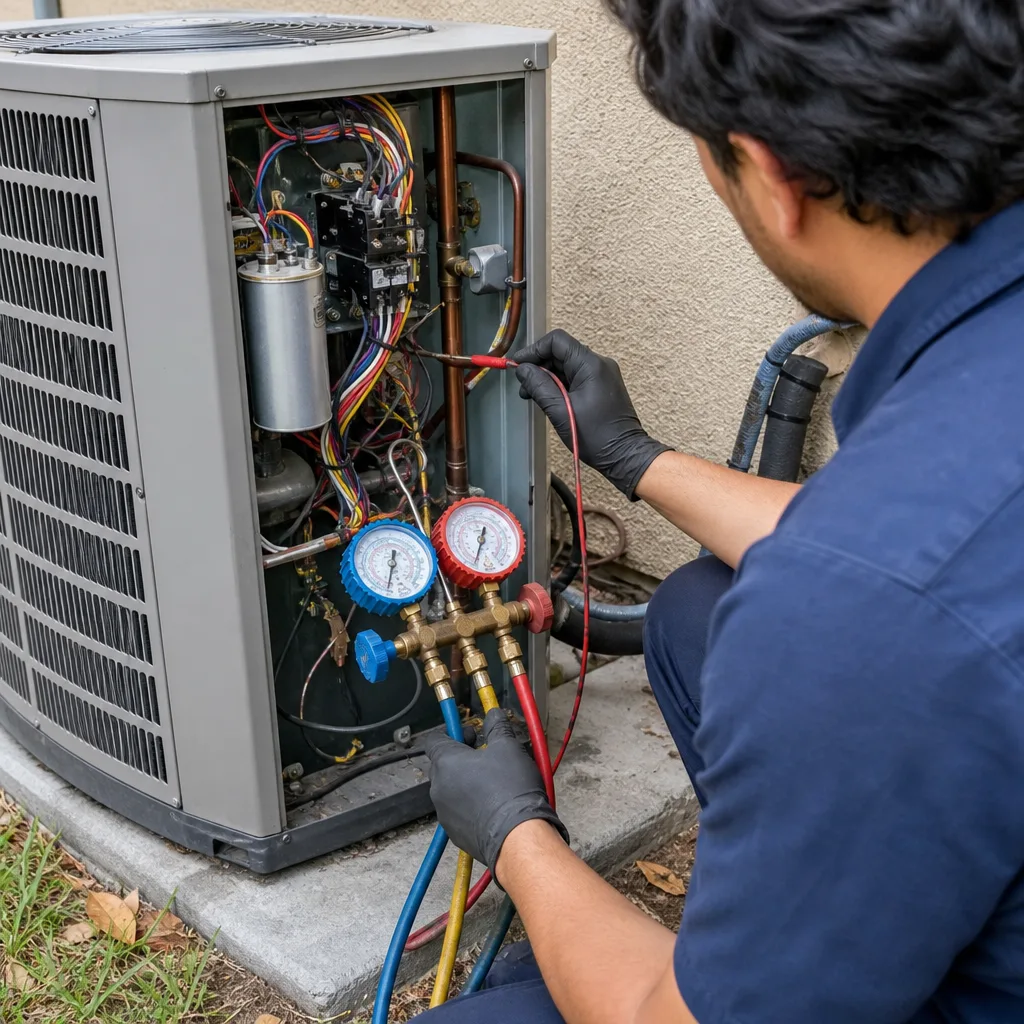 After
After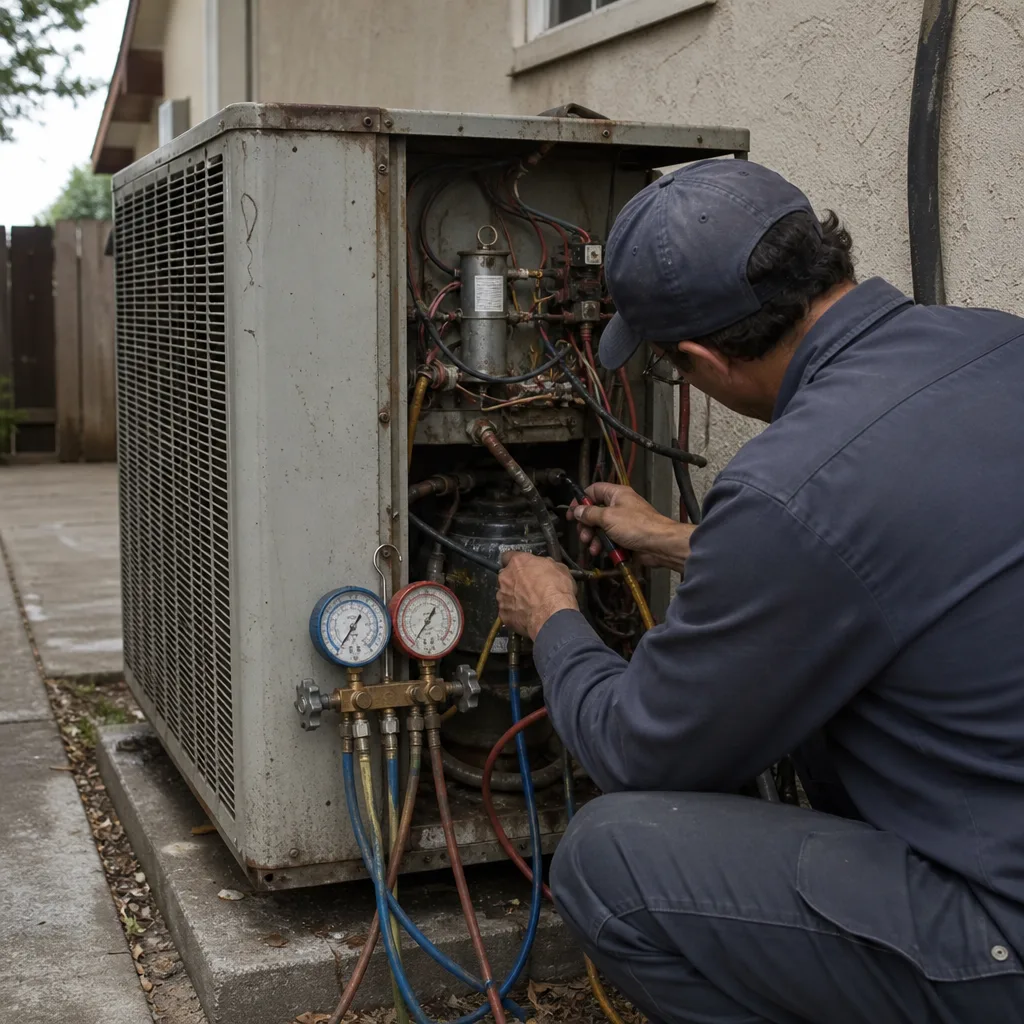 Before
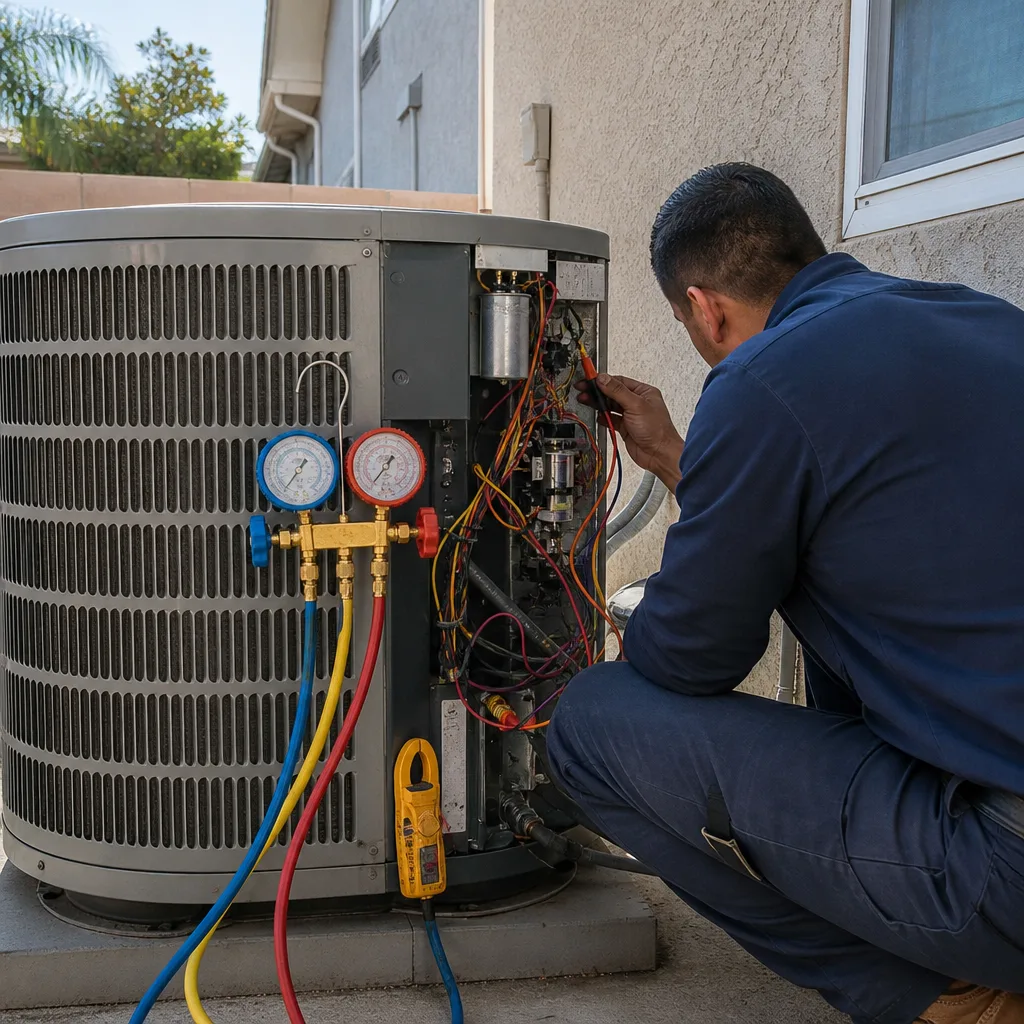 After
After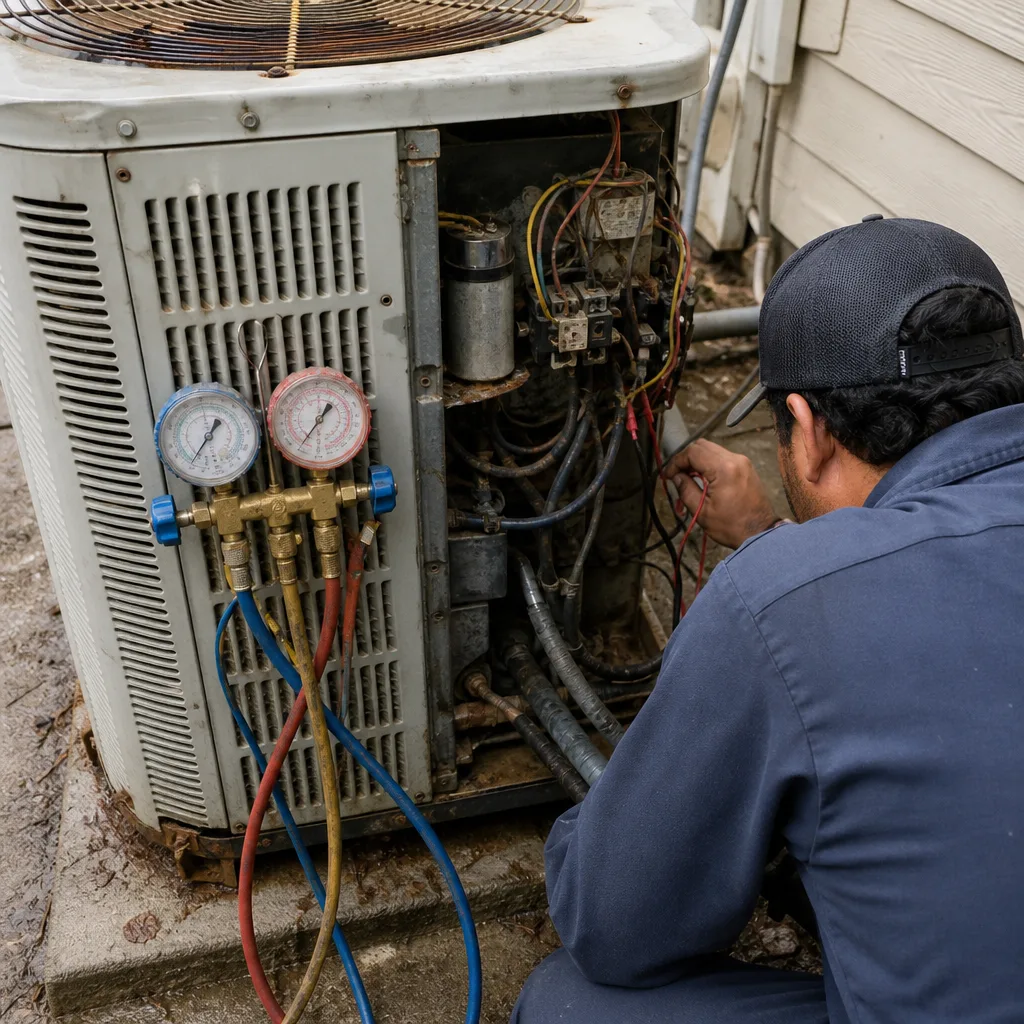 Before
 After
AfterRheem Capacitor Replacement: The Los Angeles Owner’s Guide
Rheem capacitor replacement in Los Angeles typically runs $175 – $385 installed, parts and labor included, depending on whether it’s a single dual-run capacitor or a separate start capacitor on a larger condensing unit. We stock Rheem-compatible capacitors on our trucks and can usually get your system running the same day you call. The way most LA homeowners find out is the air handler humming but the outdoor unit not spinning up, or the compressor struggling to start on a hot afternoon when it’s been cycling hard.
A capacitor is the electrical component that gives your compressor and fan motor the jolt they need to start turning, and then keeps voltage steady while they run. In Los Angeles, where AC units run hard from June through October, capacitors take a beating from heat and constant cycling. When one fails, the system either won’t start at all or runs with the fan turning slowly and the compressor overheating.
We’re Dalton Heating & Air, a Garrison Partners company operating under The Garrison Standard since 2003. We’re an independent Rheem service provider, not affiliated with Rheem corporate, which means we can install both OEM Rheem capacitors and quality aftermarket equivalents without waiting on a manufacturer parts pipeline. The price is in writing before any work starts. Every repair carries a full-year written guarantee. That’s how we’ve done it in LA for over two decades.
Which Rheem Models This Applies To
Most Rheem residential condensing units from the last 20 years use either a dual-run capacitor (one can, two ratings inside, handling both the compressor and the outdoor fan) or separate run and start capacitors on higher-end and larger-tonnage systems. The common Rheem series you’ll see around Los Angeles include the RA13, RA14, RA16, RA17, and the Classic and Prestige lines, plus the newer Endeavor series. The capacitor spec you’re looking for is printed right on the side of the old part: microfarad rating (µF) and voltage, like 45/5 µF at 440 VAC. That number has to match, not just be close.
Here’s a compatibility gotcha most people don’t know: Rheem has used different capacitor configurations in the same model family depending on the year and the specific compressor inside. Two RA14 units sitting side by side in a duplex can have different capacitor needs. This matters because installing a capacitor with the wrong microfarad rating won’t just fail to start the motor, it can shorten the compressor’s life. The microfarad rating controls the phase shift that gets the motor turning. Too high and the motor runs hot. Too low and it never gets up to speed.
The OEM-versus-aftermarket decision on Rheem capacitors is simpler than people think. Rheem doesn’t manufacture capacitors. They source them from the same manufacturers as reputable aftermarket brands: AmRad, Titan HD, Genteq, and Mars. The OEM part gets a Rheem label and a markup. A good aftermarket capacitor from a known manufacturer performs identically and often carries a better warranty. We carry both, and our techs will show you the failed part, show you the replacement, and put the choice in writing before we proceed.
Signs Your Rheem Capacitor Replacement Is Failing
- Outdoor unit hums but the fan doesn’t spin. The compressor or fan motor is getting power but not enough starting torque. The capacitor has lost its ability to hold and release the charge that kicks the motor over. If you hear that hum for more than a few seconds, shut the system off at the thermostat and the breaker, it’s overheating the motor windings.
- The compressor short-cycles. The unit starts, runs a few minutes, shuts off, and tries again. A weak capacitor can’t maintain the voltage the compressor needs under load, so the system trips on thermal overload. In LA’s inland valleys, where afternoon temps push past 95°F, this gets worse through the day.
- The fan spins slowly or starts only with a manual push. If you turn the system on and the fan blades turn like they’re moving through syrup, the capacitor has lost capacitance. It’s borderline. Some people push the blade with a stick to get it going. Don’t, that’s how you lose a finger or damage the motor shaft. Call us instead.
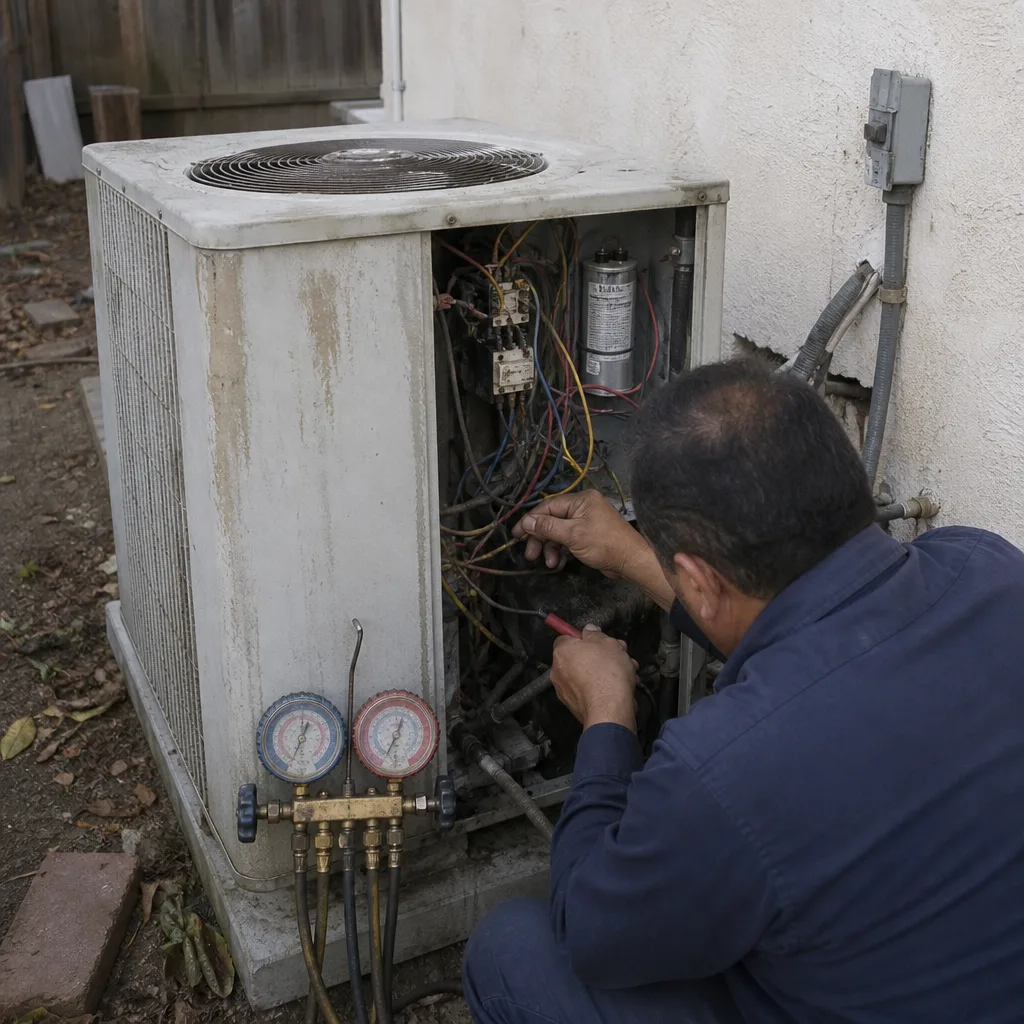
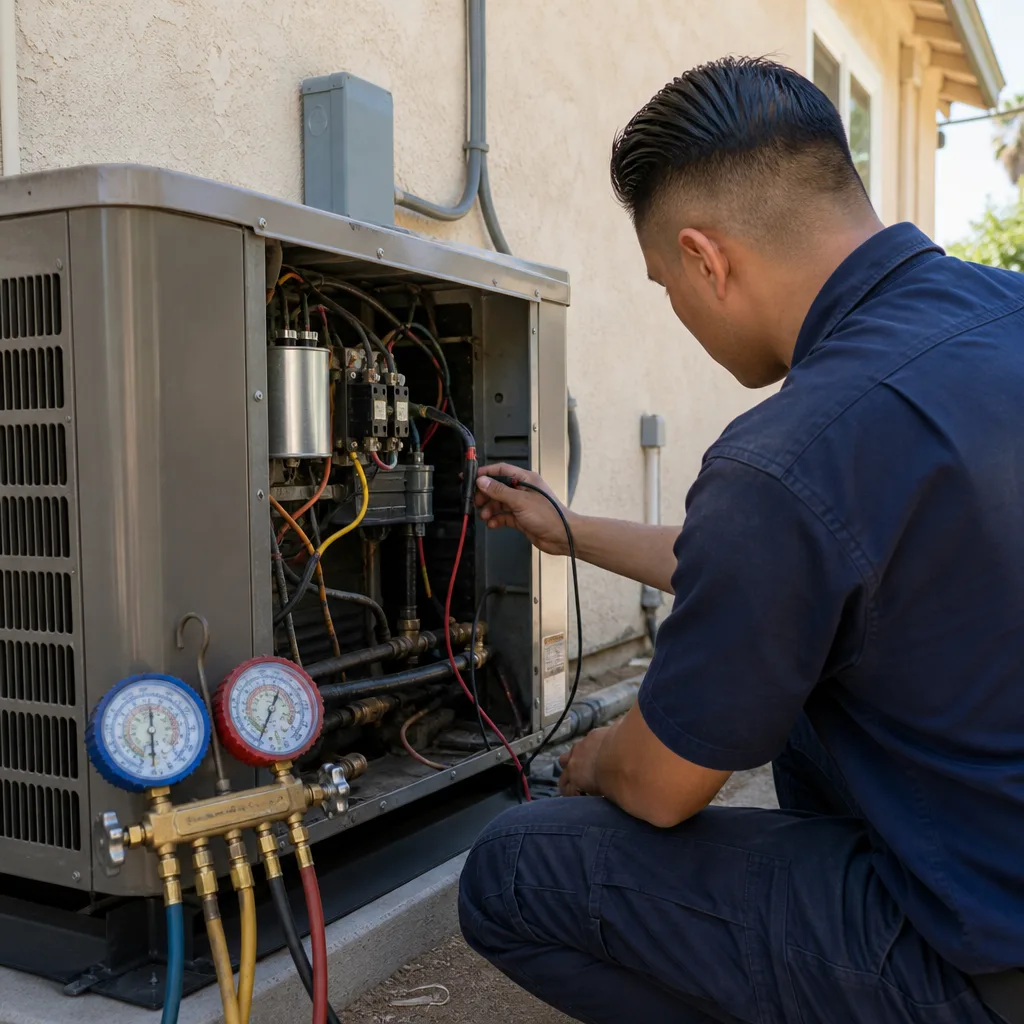
- Visible bulging, leaking, or a burnt smell at the capacitor. A failed capacitor often swells at the top or splits its casing, leaking dielectric fluid. You’ll see it if the tech opens the service panel. Sometimes you’ll smell an acrid, electrical odor near the unit. That’s the capacitor cooking from the inside, and it’s a sign the system has been struggling for a while.
- AC runs but the house doesn’t cool, and the air from the vents feels weak. This one’s sneaky. The outdoor fan runs at reduced speed, coil pressure stays high, and the system can’t reject heat properly. The house feels muggy, the unit runs constantly, and your SCE bill climbs. Reduced capacitor output is the silent culprit we find on a lot of no-cool calls across Los Angeles.
Replacement Cost & What’s Included
In Los Angeles, a Rheem capacitor replacement with Dalton Heating & Air runs $175 – $385 installed. The spread comes down to the type of capacitor and the labor involved. A common dual-run capacitor (like a 45/5 µF for a 3-ton RA14) sits at the lower end: part and labor in the $175 – $240 range. A separate start capacitor with a potential relay on a larger unit runs a bit more, and if there’s a second capacitor for the indoor blower or a hard-start kit to install as recommended insurance, that pushes toward the higher end.
Here’s the breakdown of what that price includes:
- Service call to your Los Angeles home, with arrival inside the stated window, not a four-hour spread.
- Diagnosis to confirm the capacitor is the failed part, not a symptom of a deeper issue like a failing compressor or a voltage problem at the disconnect.
- The capacitor itself, matched to your Rheem unit’s exact microfarad and voltage rating. OEM or a name-brand aftermarket part, your choice, shown to you before install.
- Installation and testing under load, with amp draw verification so the new part isn’t masking another problem.
- A written price before any work starts, so the number you’re quoted is the number you pay.
- A written one-year guarantee on the repair. If that capacitor fails inside 365 days, we come back at no charge. That’s the Garrison Standard, and it’s non-negotiable on every job we do.
One honest note: if your capacitor has failed because the compressor is drawing high amps due to age or wear, a new capacitor is a band-aid, not a cure. We’ll tell you that plainly if it’s the case, and we won’t sell you a replacement without explaining what’s actually going on.
DIY or Call Us?
Capacitors store a charge even when the system is powered down, and discharging one improperly can give you a serious shock or burn. The service panel on a Rheem condensing unit contains wiring that runs at 240 volts, and the capacitor itself holds enough residual energy to hurt you minutes after the panel is off. This is the one part on your system where I’ll say it straight: do not open the panel if you’re not trained to do it safely. Unlike changing an air filter or cleaning the drain line, this isn’t a household chore.
What you can safely do is confirm what the system is doing and tell us what the house feels like. That’s usually enough to know where to start. If the unit hums, the fan doesn’t spin, and the house is warming up, that points hard at a capacitor or a failed fan motor. If the breaker trips immediately, that’s a different issue and cutting power and calling us is the right move either way. A capacitor swap itself is a 30-minute job for a trained tech with the right part on the truck. What makes it expensive for DIYers is buying the wrong part, installing it wrong, or getting hurt trying.
Call (361) 306-9515. The tech who answers can tell you what the likely fix costs before we even come out, and the diagnostic fee is credited toward the repair if you proceed.
FAQs
A Rheem capacitor in Los Angeles typically lasts 5 – 10 years, but the heat and hard running of LA summers can cut that to as little as 3 or 4 years. Capacitors degrade faster when they’re exposed to sustained high temperatures, and units on south-facing walls or in tight enclosures with poor airflow fail sooner. If your system runs 8+ hours a day from June through September, expect to replace the capacitor at least once during the system’s life. Call (361) 306-9515 and we’ll check yours during a tune-up, before it strands you on a 100°F day.
No. A capacitor that has lost its microfarad rating, bulged, or leaked cannot be repaired. The internal dielectric material has broken down, and there’s no way to restore it. The only fix is a replacement, and it’s one of the least expensive parts on your Rheem system to swap. Trying to “get by” with a failing capacitor risks a compressor that costs thousands to replace.
A Rheem capacitor replacement typically takes 30 – 45 minutes from panel-off to panel-on, assuming the capacitor is the only failed component. Most of that time is confirming the diagnosis, testing the new capacitor’s microfarad reading before install, and verifying amp draw after the unit starts. If you call us before noon, there’s a good chance the job is done before dinnertime. Call (361) 306-9515 and we’ll get you on the schedule.
Yes. Our trucks carry the common Rheem capacitor ratings: 5/5, 7.5/5, 10/5, 35/5, 40/5, 45/5, 50/5, 55/5, and 60/5 microfarad dual-run capacitors, plus a range of start capacitors and potential relays. We also stock capacitors compatible with the other major brands we service: Carrier, Trane, and Lennox. If your Rheem unit uses an unusual spec, we can usually source it same day from our local supply houses in the San Fernando Valley or South LA.
Call (361) 306-9515 for a free estimate. We answer live, 24/7, and give you a written price before any work starts. That’s The Garrison Standard, on every call, without exception.
Written by Marco Benitez, Owner & Lead HVAC Technician, Dalton Heating & Air at Dalton Heating & Air, serving Los Angeles and nearby areas.